
Ocean Tides Unit Standards 5 E 3 B
Ocean Tides
Unit Standards 5. E. 3 B. 2 Develop and use models to explain the effect of the movement of ocean water (including waves, currents, and tides) on the ocean shore zone (including beaches, barrier islands, estuaries, and inlets). 5. E. 3 B. 3 Construct scientific arguments to support claims that human activities (such as conservation efforts or pollution) affect the land oceans of Earth. 5. E. 3 B. 4 Define problems caused by natural processes or human activities and test possible solutions to reduce the impact on landforms and the ocean shore zone.
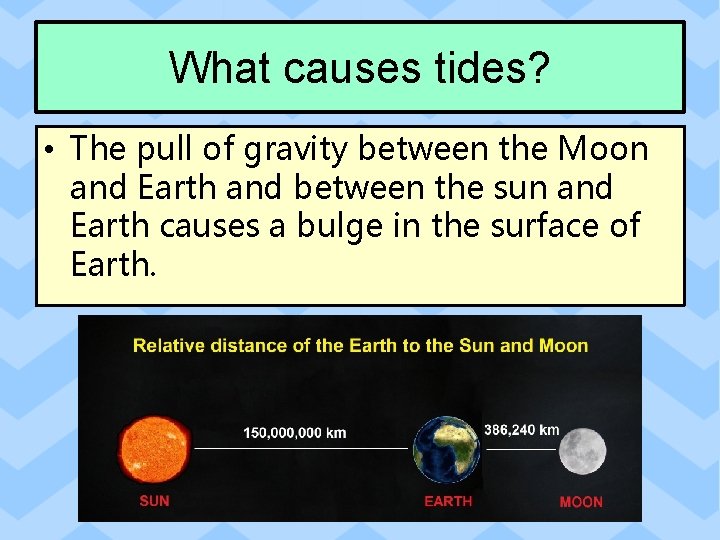
What causes tides? • The pull of gravity between the Moon and Earth and between the sun and Earth causes a bulge in the surface of Earth.
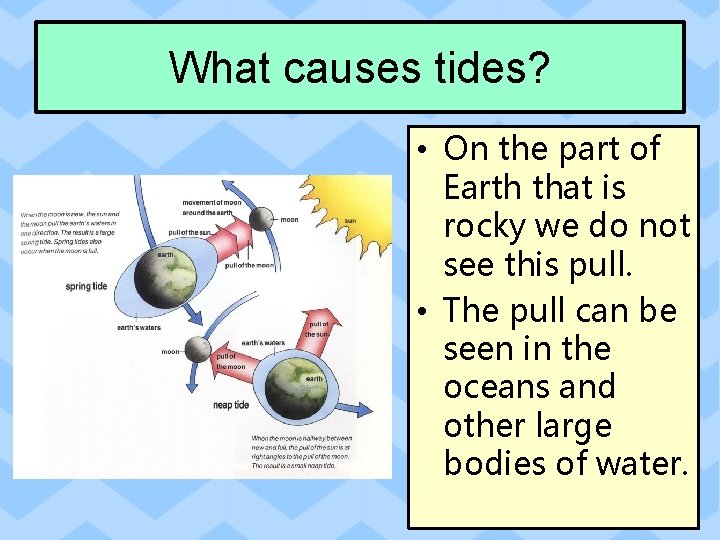
What causes tides? • On the part of Earth that is rocky we do not see this pull. • The pull can be seen in the oceans and other large bodies of water.
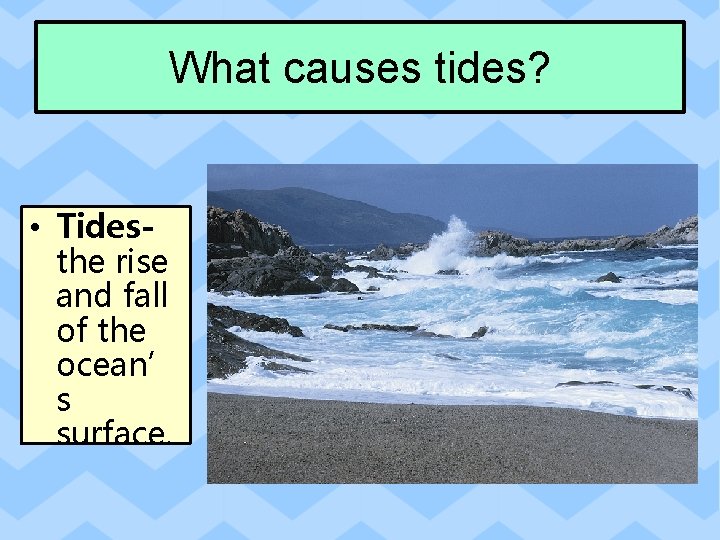
What causes tides? • Tidesthe rise and fall of the ocean’ s surface.
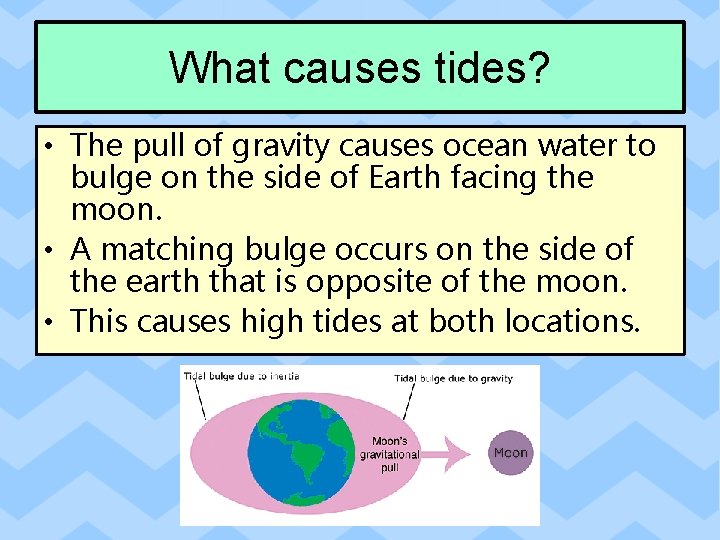
What causes tides? • The pull of gravity causes ocean water to bulge on the side of Earth facing the moon. • A matching bulge occurs on the side of the earth that is opposite of the moon. • This causes high tides at both locations.
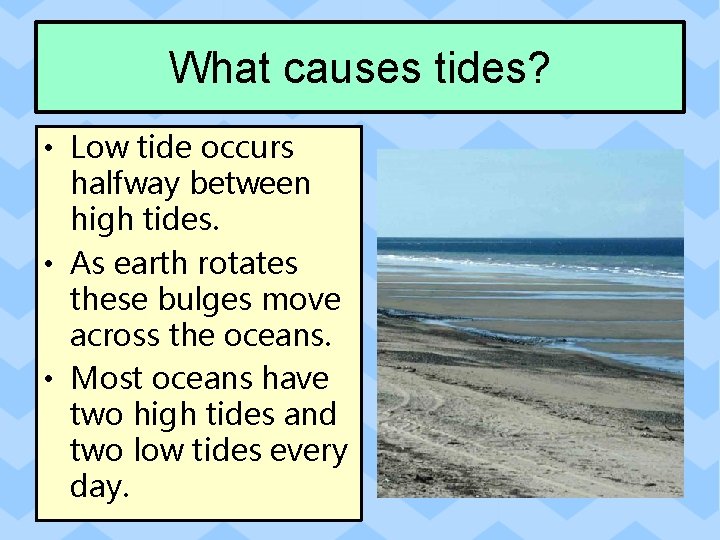
What causes tides? • Low tide occurs halfway between high tides. • As earth rotates these bulges move across the oceans. • Most oceans have two high tides and two low tides every day.

What causes tides? • About twice per month, near the new and full moon phases, the sun and moon line up and pull in the same direction. • This causes higher high tides and lower low tides. • This is called Spring tides.
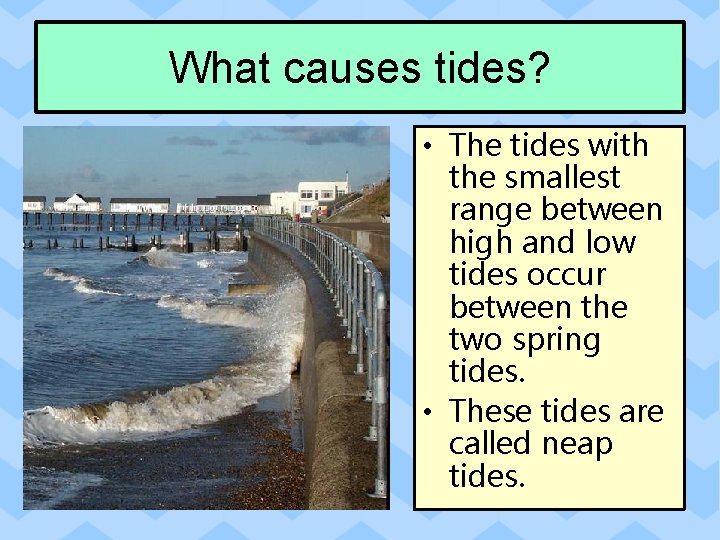
What causes tides? • The tides with the smallest range between high and low tides occur between the two spring tides. • These tides are called neap tides.
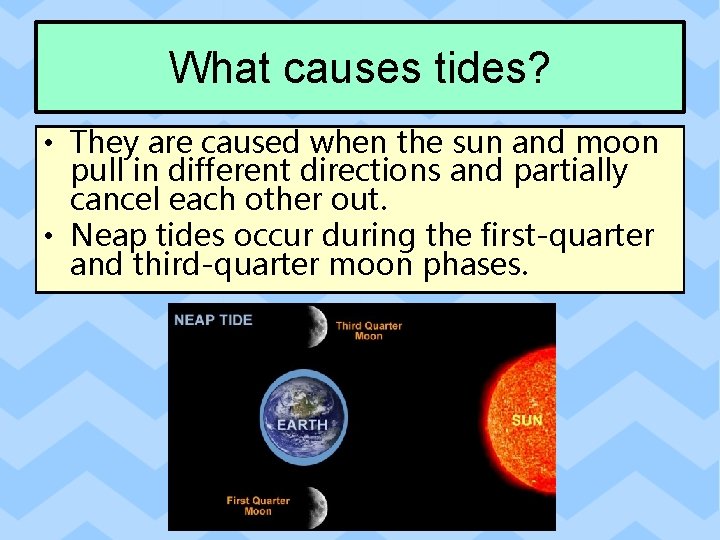
What causes tides? • They are caused when the sun and moon pull in different directions and partially cancel each other out. • Neap tides occur during the first-quarter and third-quarter moon phases.
- Slides: 10