
Ocean Surface Circulation Motion in the Ocean Part
- Slides: 29
Ocean Surface Circulation Motion in the Ocean, Part I, or Why does the ocean have currents, and why do they move in circles?
Two types of Ocean Circulation: è Surface Circulation -- Wind-driven è Deep Circulation -- Density (T, S) driven
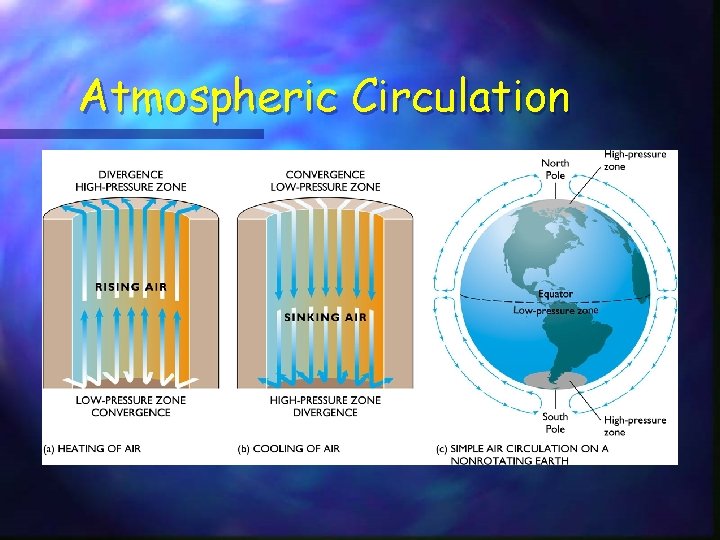
Atmospheric Circulation
Temperature and Pressure F As the Earth’s surface is heated, air is warmed, expands and rises (Low P) F Warm air carries water vapor F In the upper atmosphere the air cools and sinks (High P) F This round-trip is called a “cell”
Things get interesting! è On a rotating planet, moving objects appear to be deflected è Why is this?
Coriolis Deflection F Apparent force due to Earth’s rotation F Deflection in path of motion when viewed from a rotating reference frame F Gustave-Gaspard Coriolis (1835) F Familiar from merry-go-rounds F Significant only for slow velocities and large distances (not toilets and billiards!)
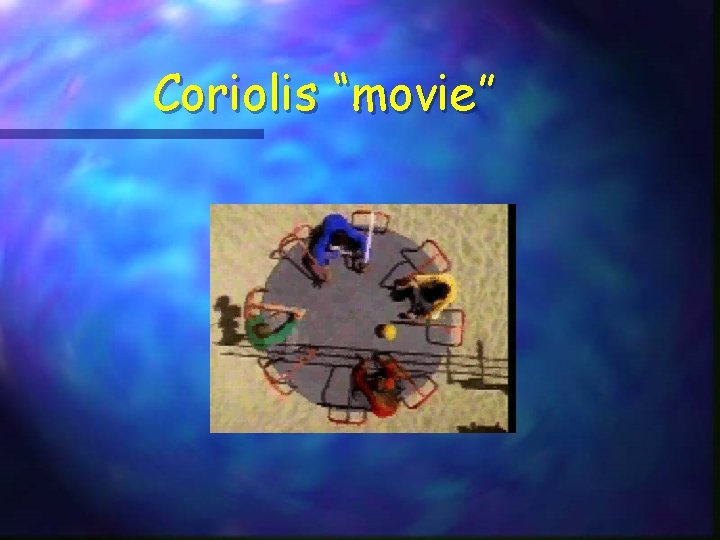
Coriolis “movie”
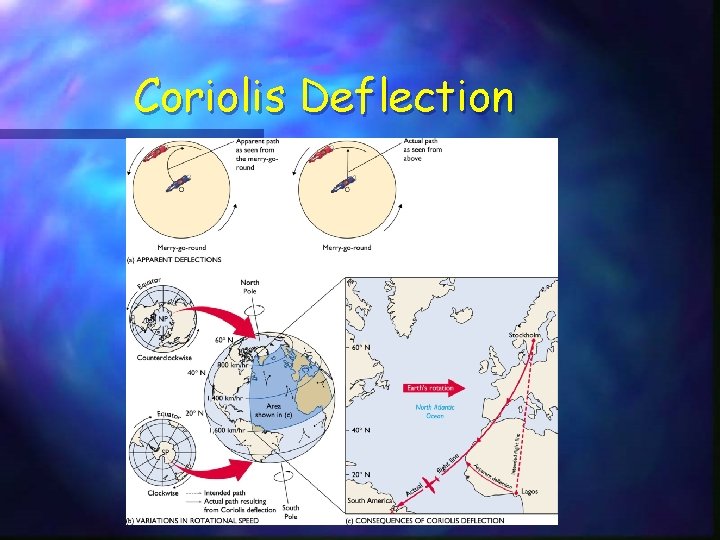
Coriolis Deflection
Consequences of Coriolis F Moving fluids (atmosphere and ocean) turn to the right in the Northern Hemisphere F Moving fluids (atmosphere and ocean) turn to the left in the Southern Hemisphere
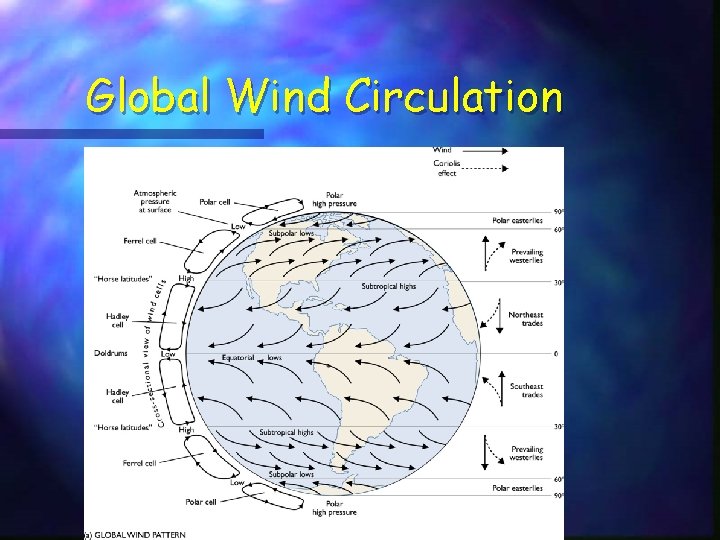
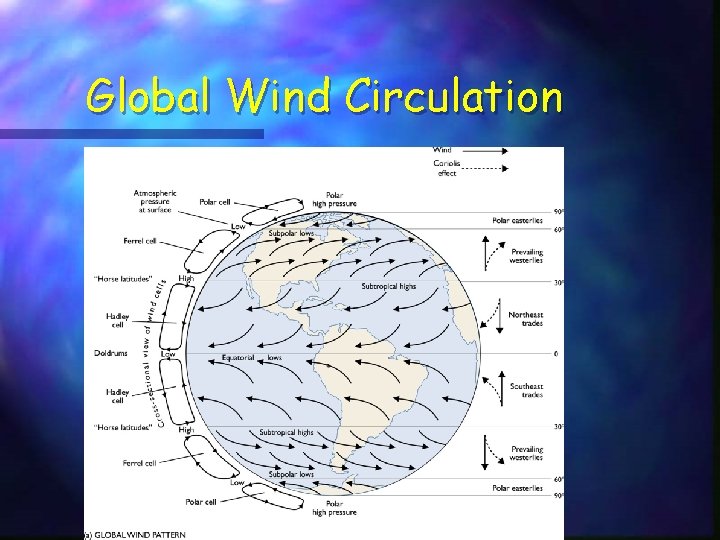
Global Wind Circulation
Wind-Driven Ocean Circulation F Steady winds produce waves and set the surface water in motion F Moving water is deflected to the right (N. Hemisphere) or left (S. Hemisphere) F This starts the main “gyre” motion of the surface ocean
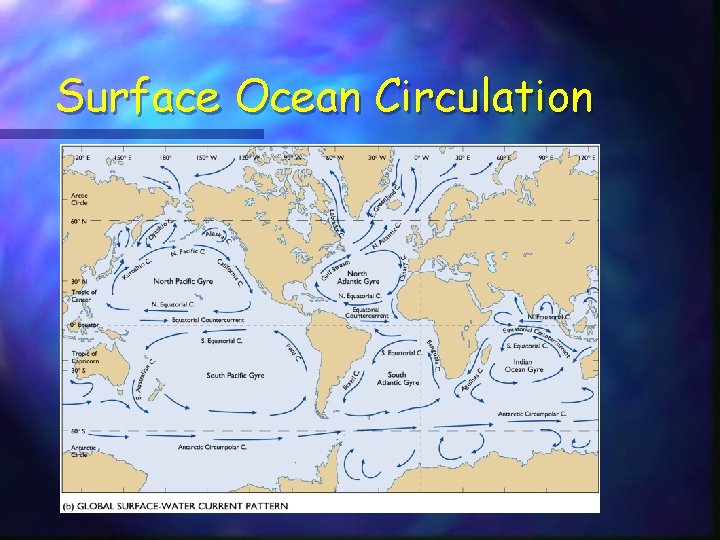
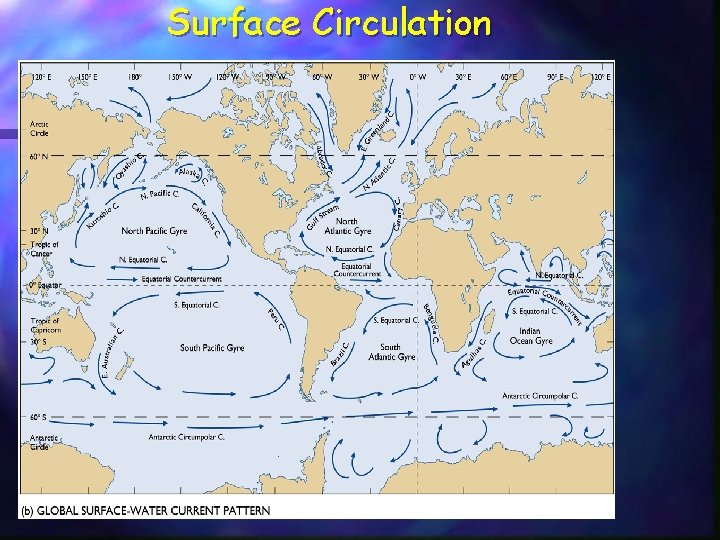
Surface Ocean Circulation
Main Features F Five large gyres F Antarctic Circumpolar Current F Equatorial Countercurrent F Velocities vary -- fastest are meters/sec
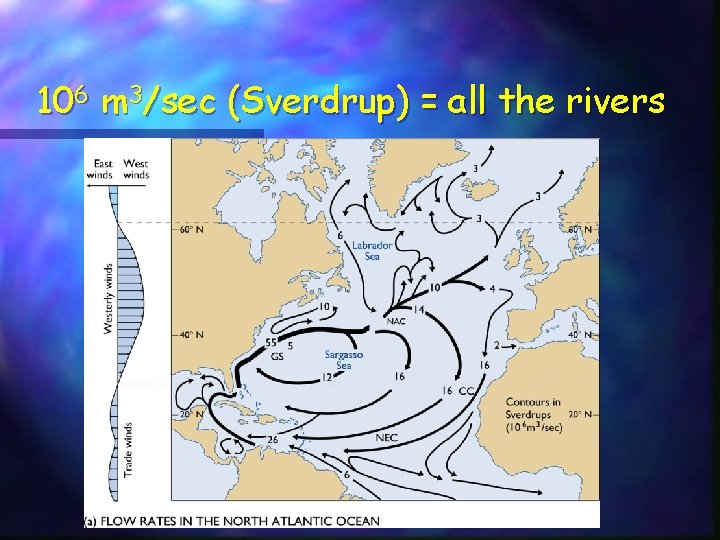
106 m 3/sec (Sverdrup) = all the rivers
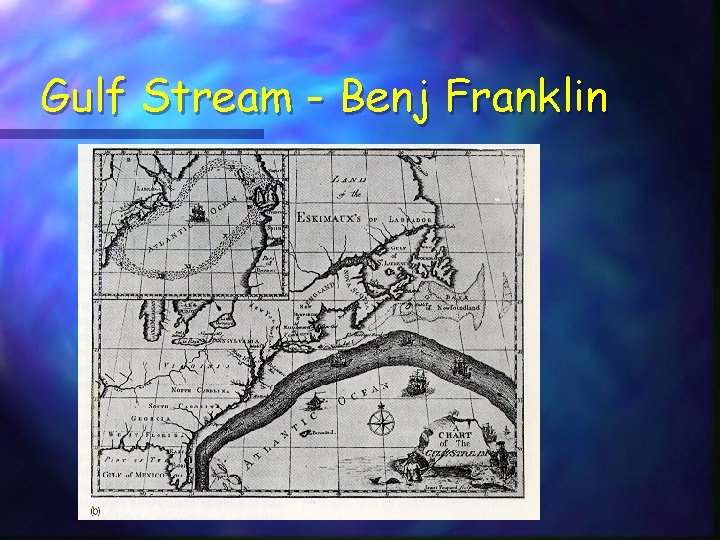
Gulf Stream - Benj Franklin
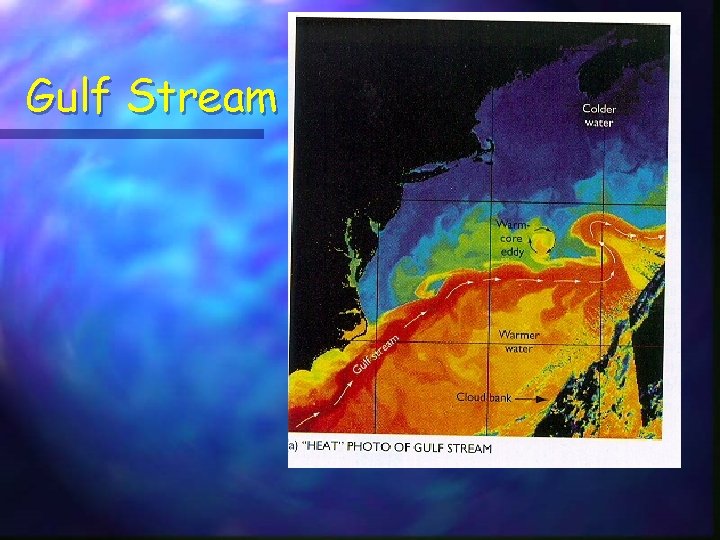
Gulf Stream
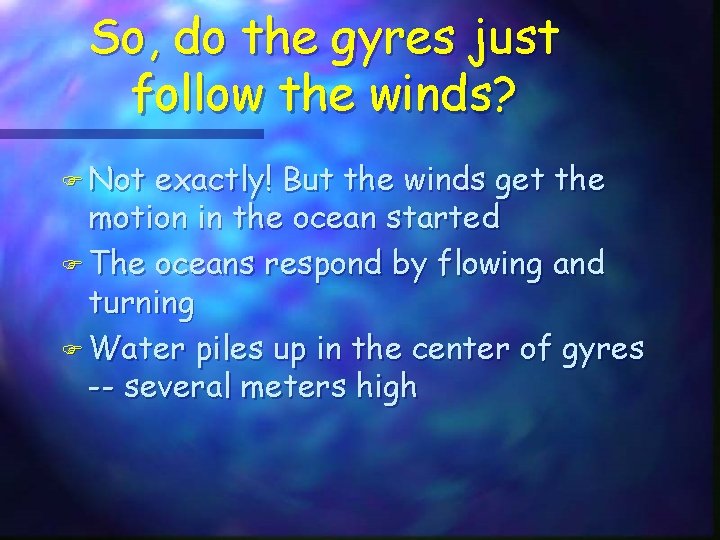
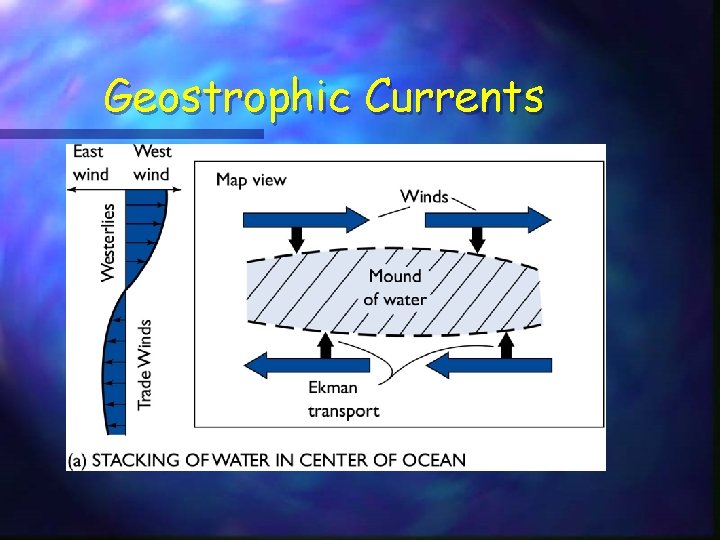
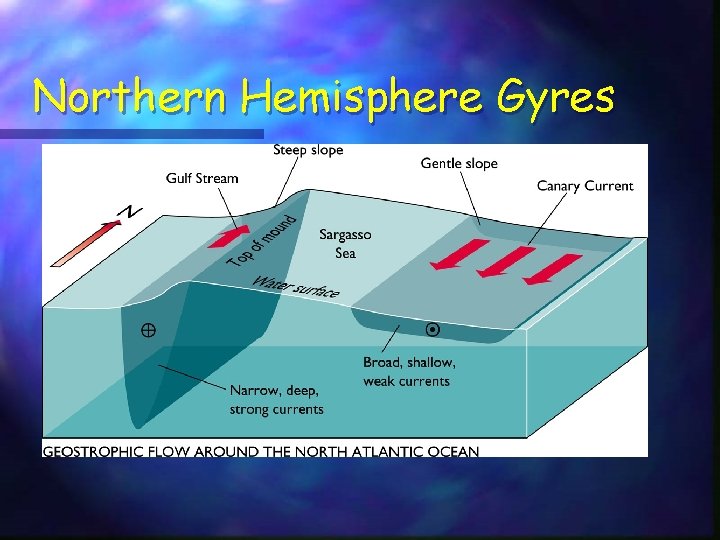
So, do the gyres just follow the winds? F Not exactly! But the winds get the motion in the ocean started F The oceans respond by flowing and turning F Water piles up in the center of gyres -- several meters high
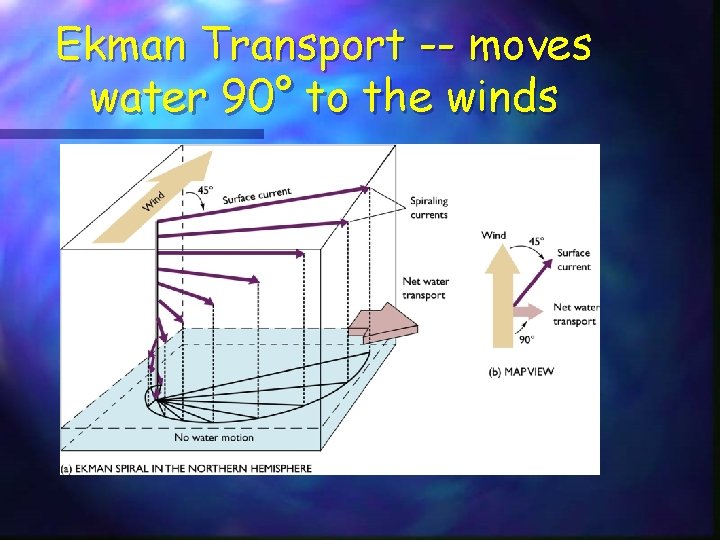
Ekman Transport -- moves water 90° to the winds
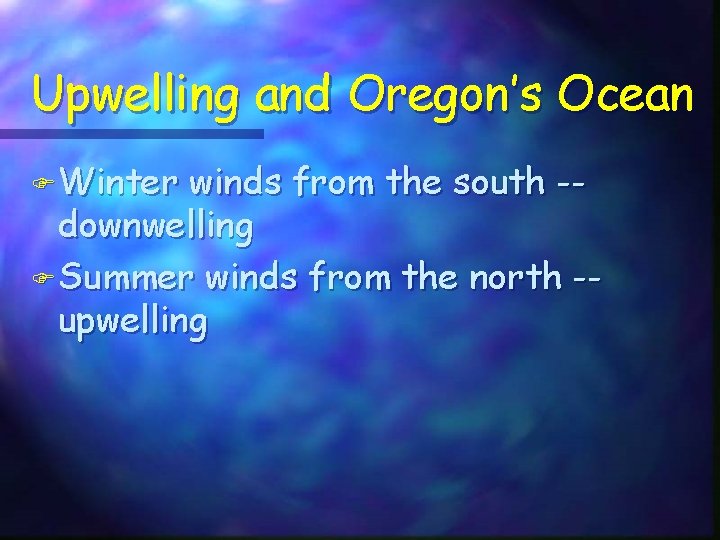
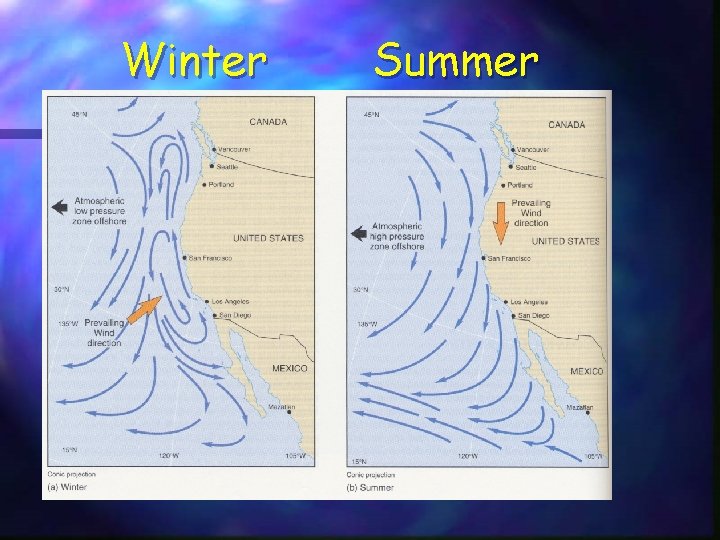
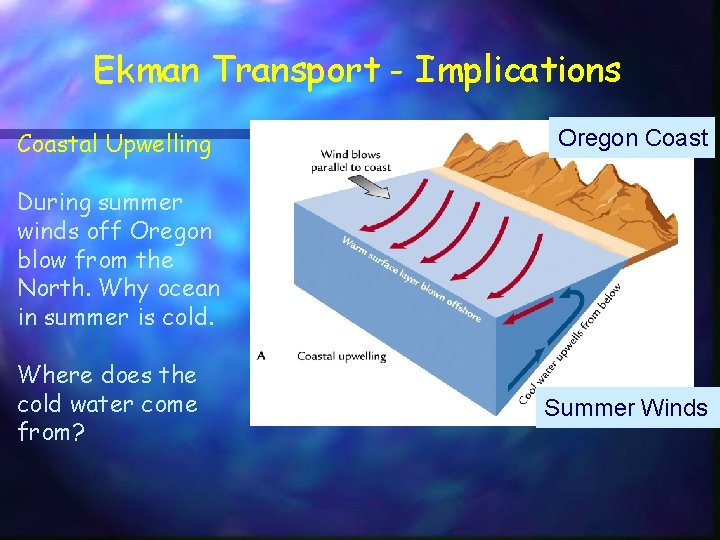
Upwelling and Oregon’s Ocean F Winter winds from the south -downwelling F Summer winds from the north -upwelling
Winter Summer
Ekman Transport - Implications Coastal Upwelling Oregon Coast During summer winds off Oregon blow from the North. Why ocean in summer is cold. Where does the cold water come from? Summer Winds
Global Wind Circulation
Geostrophic Currents
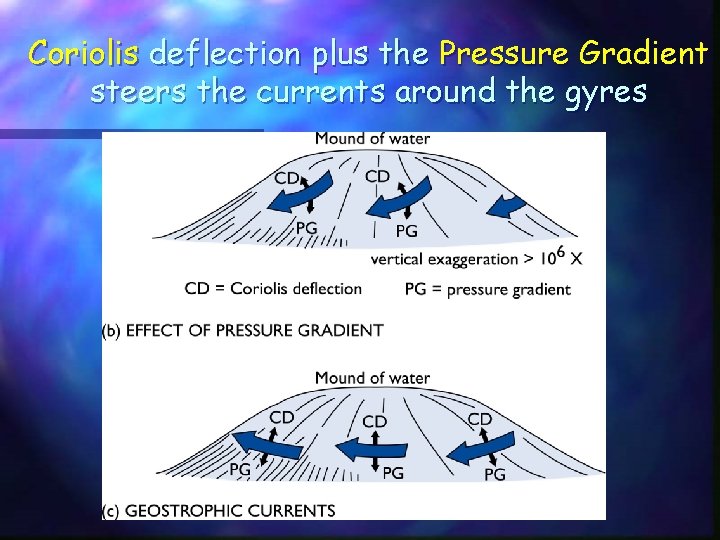
Coriolis deflection plus the Pressure Gradient steers the currents around the gyres
Northern Hemisphere Gyres
Surface Circulation
How do we track ocean circulation? F Fixed Buoys -- measure current speed and direction F Drifters -- travel with the currents and transmit their location
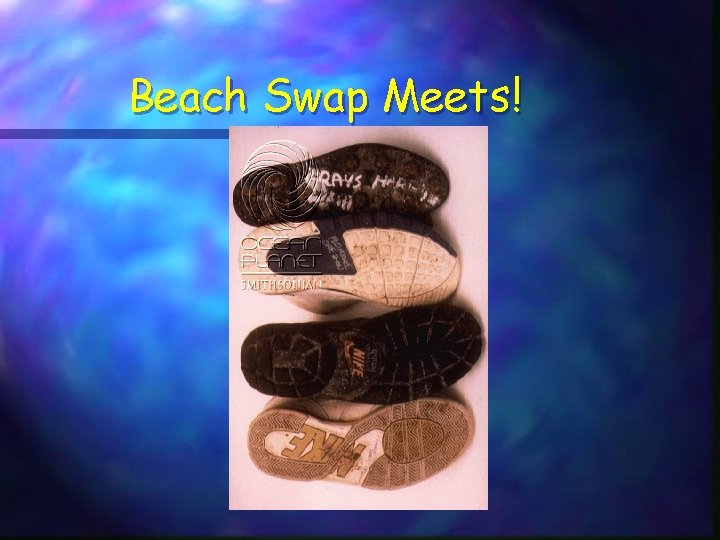
Beach Swap Meets!
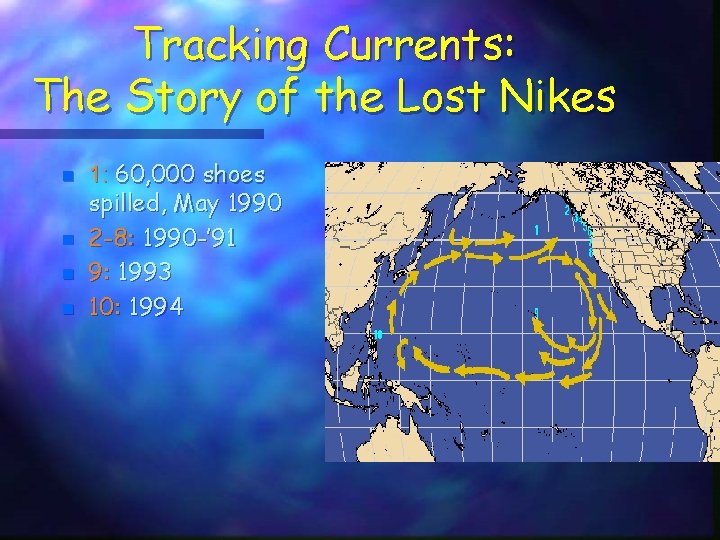
Tracking Currents: The Story of the Lost Nikes n n 1: 60, 000 shoes spilled, May 1990 2 -8: 1990 -’ 91 9: 1993 10: 1994