
Ocean Salinity Unit Oceanography What are the most
- Slides: 12
Ocean Salinity Unit: Oceanography
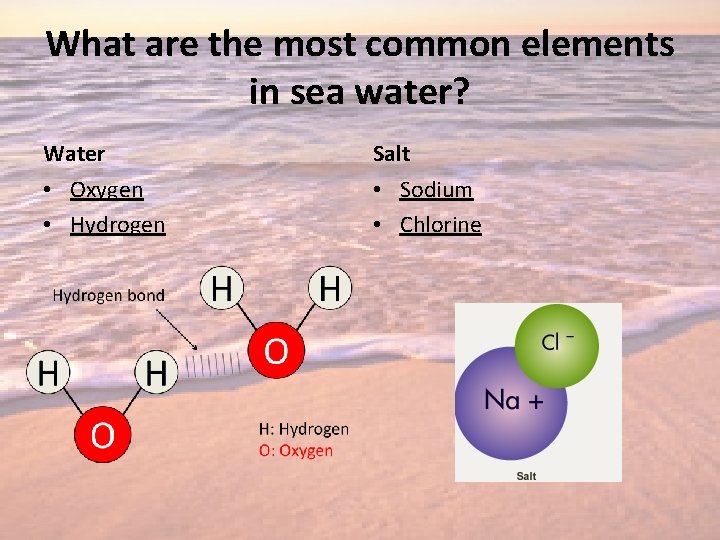
What are the most common elements in sea water? Water Salt • Oxygen • Hydrogen • Sodium • Chlorine
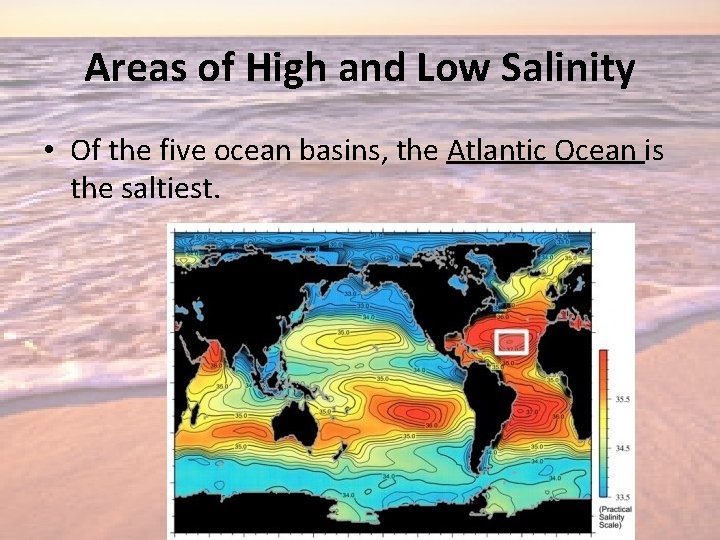
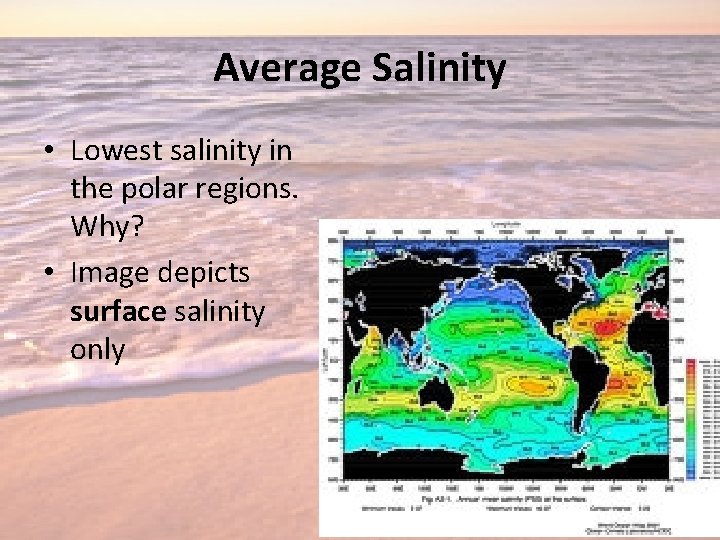
Areas of High and Low Salinity • Of the five ocean basins, the Atlantic Ocean is the saltiest.
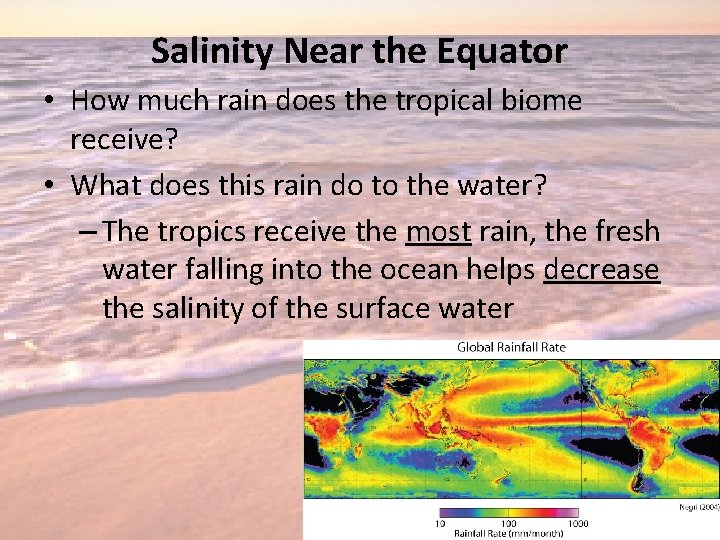
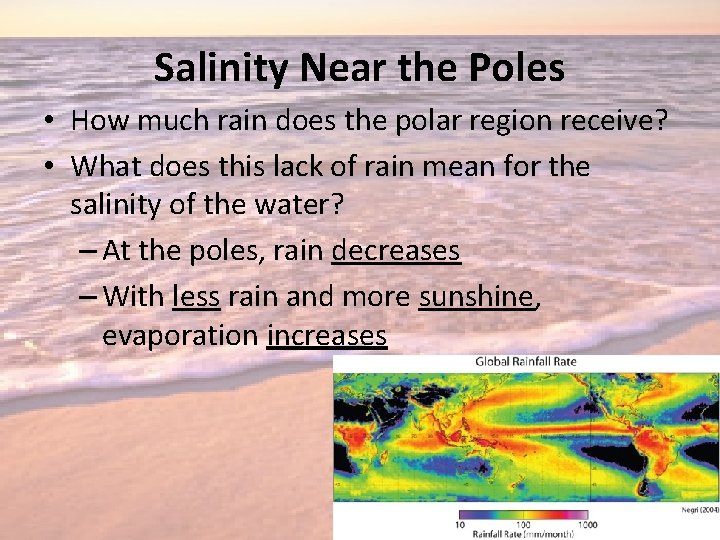
Salinity Near the Equator • How much rain does the tropical biome receive? • What does this rain do to the water? – The tropics receive the most rain, the fresh water falling into the ocean helps decrease the salinity of the surface water
Salinity Near the Poles • How much rain does the polar region receive? • What does this lack of rain mean for the salinity of the water? – At the poles, rain decreases – With less rain and more sunshine, evaporation increases
Salinity Near the Poles • What is the salt content of the ice caps in the polar region? • What does the melting of the ice caps mean for the salinity of the water? – Melting of the ice caps causes a decrease in the surface salinity.
The Saltiest Locations • The saltiest locations in the ocean are: – Regions where evaporation is highest – In large bodies of water where there is no outlet into the ocean. – The Red Sea and Persian Gulf contain the saltiest ocean water due to very high evaporation and little fresh water inflow.
Temperature and Salinity • As temperature decreases to 40 o. F (4 o. C) the molecules slow, water contracts and the density increases • Below 40 o. F the molecules begin to bond to each other and as they do, the water begins to expand again, decreasing the density
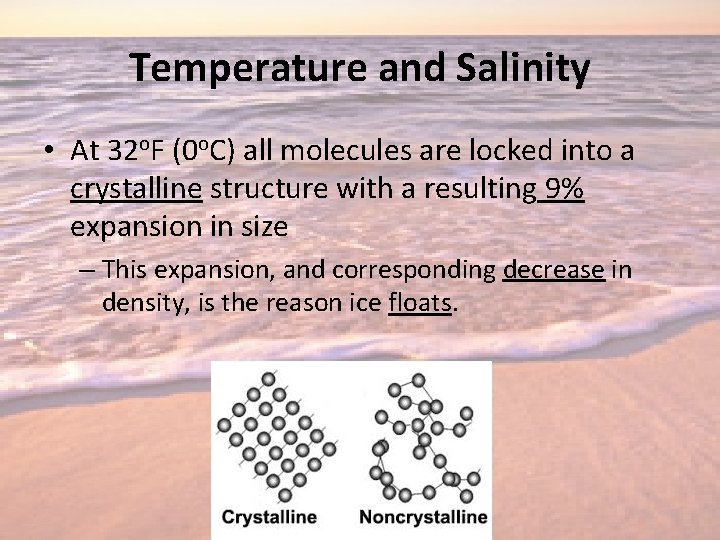
Temperature and Salinity • At 32 o. F (0 o. C) all molecules are locked into a crystalline structure with a resulting 9% expansion in size – This expansion, and corresponding decrease in density, is the reason ice floats.
Temperature and Salinity • Adding salt to water lowers the freezing temperature – Water with a salinity of 17‰ freezes at about 30°F (-1°C) – 35‰ water freezes at about 28. 5°F (-2 C) • Sea ice contains very little salt (about 1/10 th the amount of salt that sea water has). Why? – Ice does not include sea salt in its crystal structure.
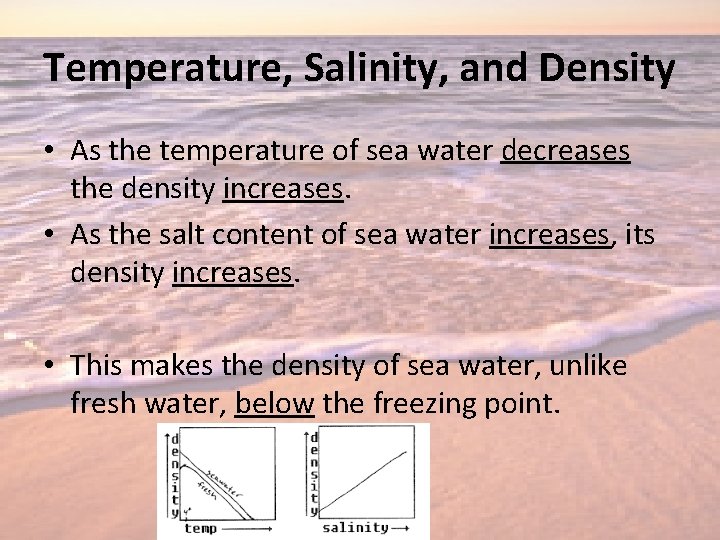
Temperature, Salinity, and Density • As the temperature of sea water decreases the density increases. • As the salt content of sea water increases, its density increases. • This makes the density of sea water, unlike fresh water, below the freezing point.
Average Salinity • Lowest salinity in the polar regions. Why? • Image depicts surface salinity only