
Ocean Life Energy Flow 10 000 Leagues Under
- Slides: 20
Ocean Life: Energy Flow 10, 000 Leagues Under the Sea Biology
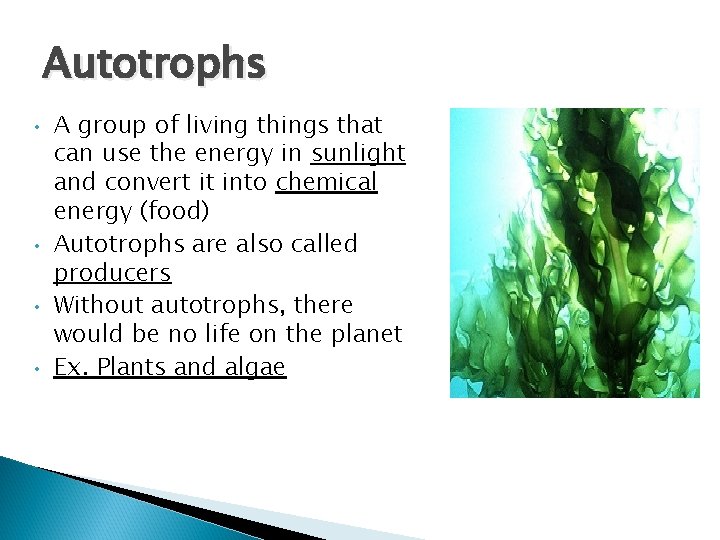
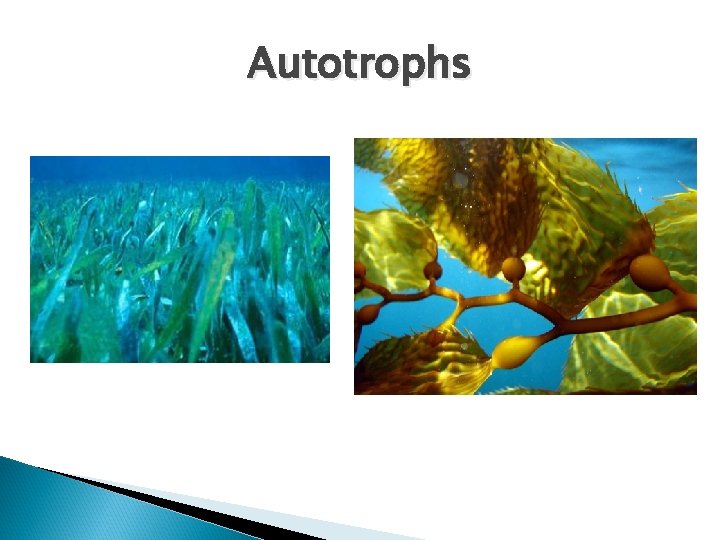
Autotrophs • • A group of living things that can use the energy in sunlight and convert it into chemical energy (food) Autotrophs are also called producers Without autotrophs, there would be no life on the planet Ex. Plants and algae
Autotrophs
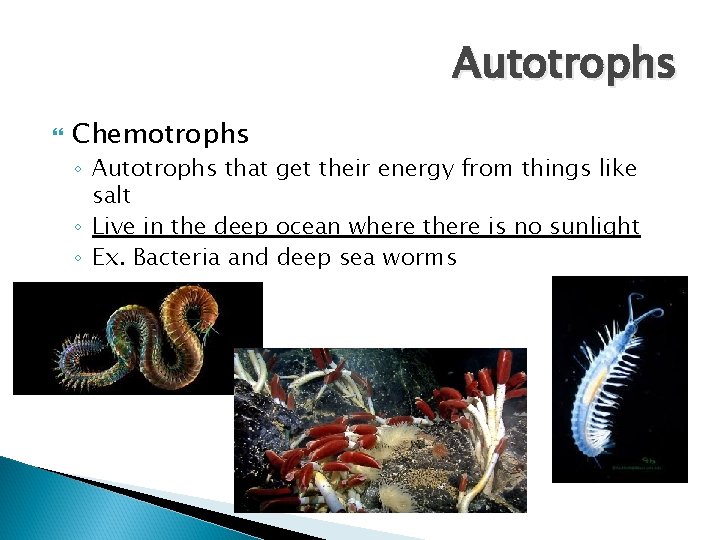
Autotrophs Chemotrophs ◦ Autotrophs that get their energy from things like salt ◦ Live in the deep ocean where there is no sunlight ◦ Ex. Bacteria and deep sea worms
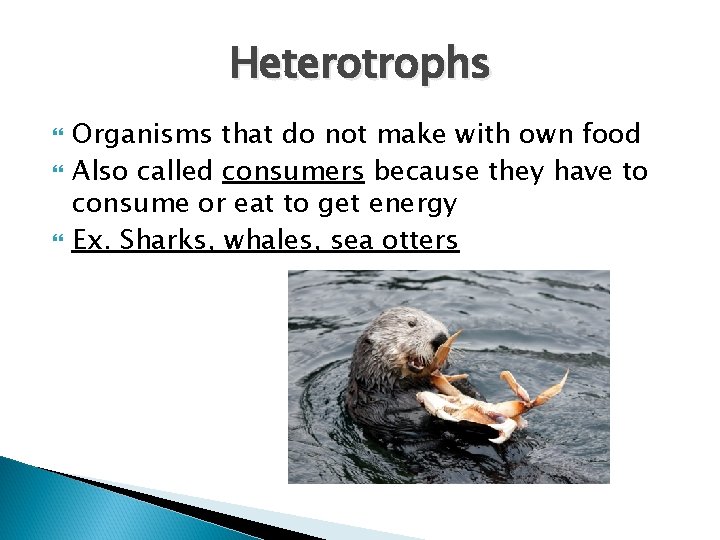
Heterotrophs Organisms that do not make with own food Also called consumers because they have to consume or eat to get energy Ex. Sharks, whales, sea otters
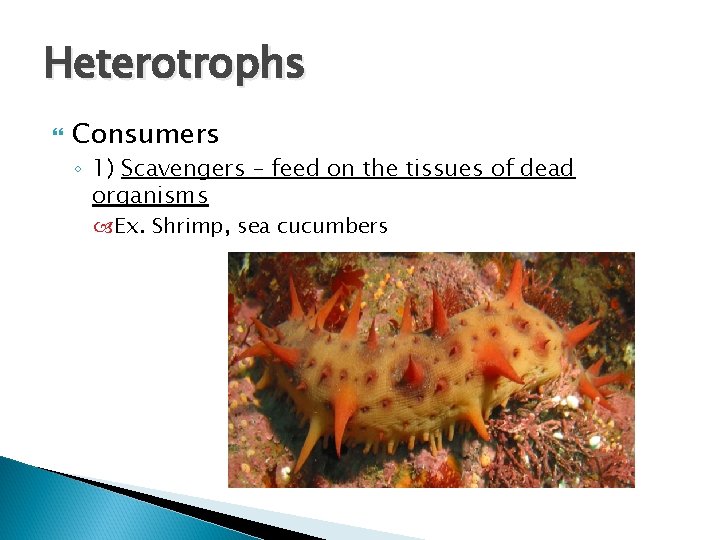
Heterotrophs Consumers ◦ 1) Scavengers – feed on the tissues of dead organisms Ex. Shrimp, sea cucumbers
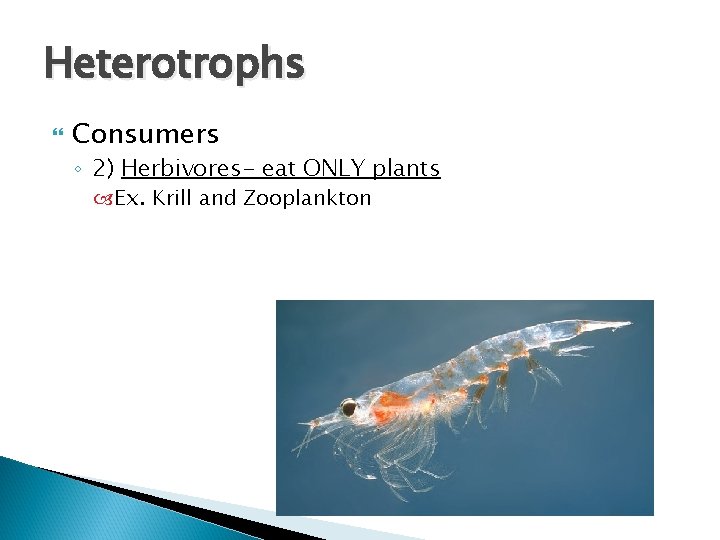
Heterotrophs Consumers ◦ 2) Herbivores- eat ONLY plants Ex. Krill and Zooplankton
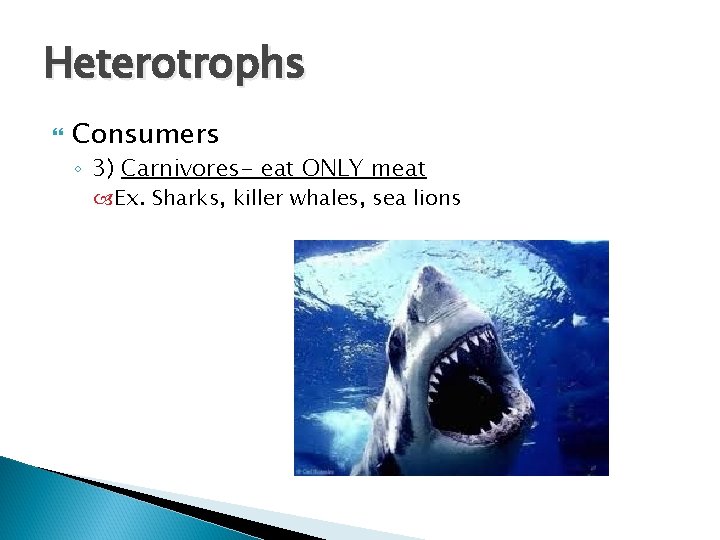
Heterotrophs Consumers ◦ 3) Carnivores- eat ONLY meat Ex. Sharks, killer whales, sea lions
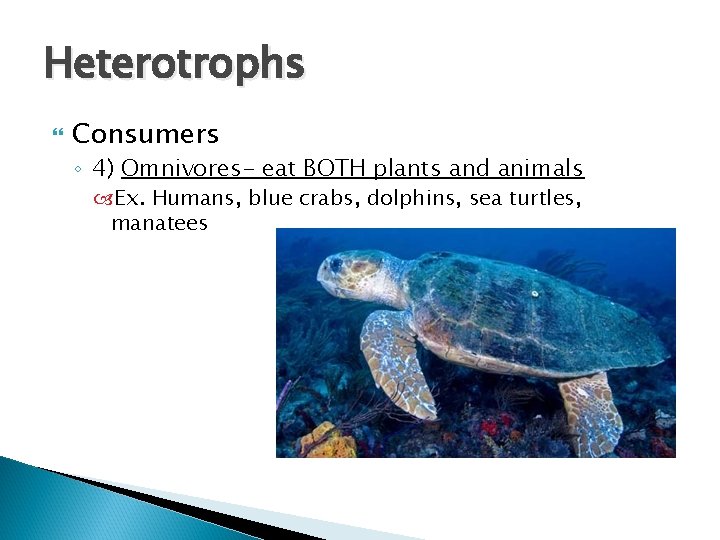
Heterotrophs Consumers ◦ 4) Omnivores- eat BOTH plants and animals Ex. Humans, blue crabs, dolphins, sea turtles, manatees
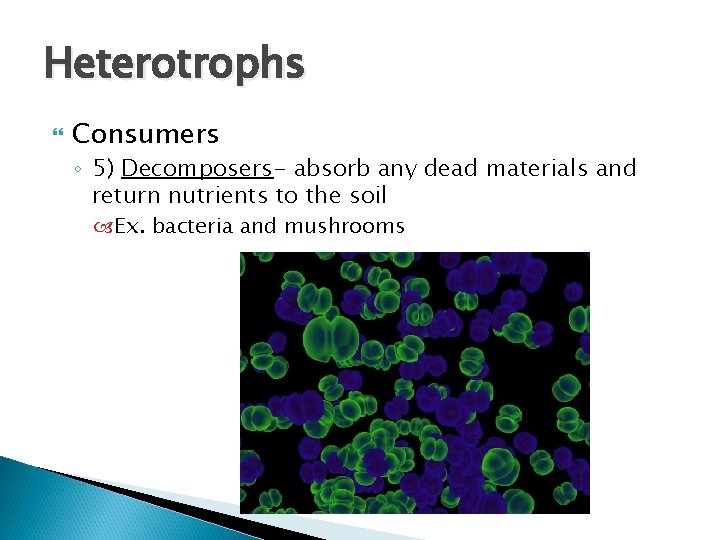
Heterotrophs Consumers ◦ 5) Decomposers- absorb any dead materials and return nutrients to the soil Ex. bacteria and mushrooms
Transfer of Energy When one organism eats another, they only get 10% of the energy from their food Ex. shark eats a fish it only get 10% of the energy that fish had Most energy is lost as heat
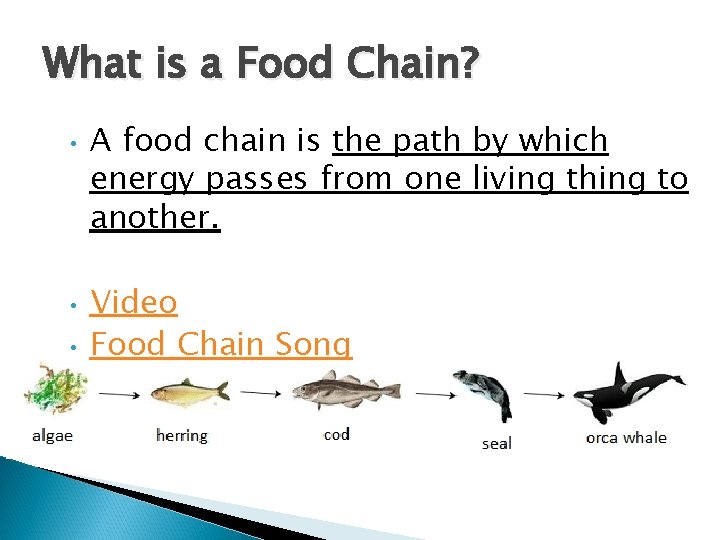
What is a Food Chain? • • • A food chain is the path by which energy passes from one living thing to another. Video Food Chain Song
Types of Food Chains Aquatic- Water-related food chains with sea plants and animals Terrestrial- Land-related food chains with land plants and animals
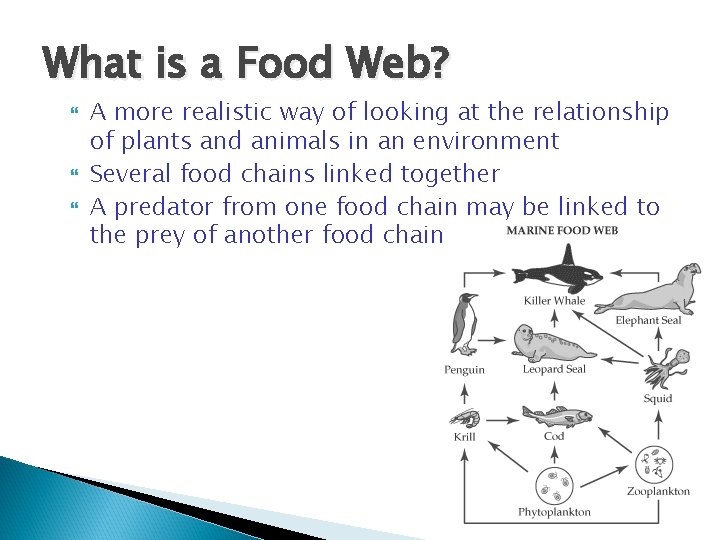
What is a Food Web? A more realistic way of looking at the relationship of plants and animals in an environment Several food chains linked together A predator from one food chain may be linked to the prey of another food chain
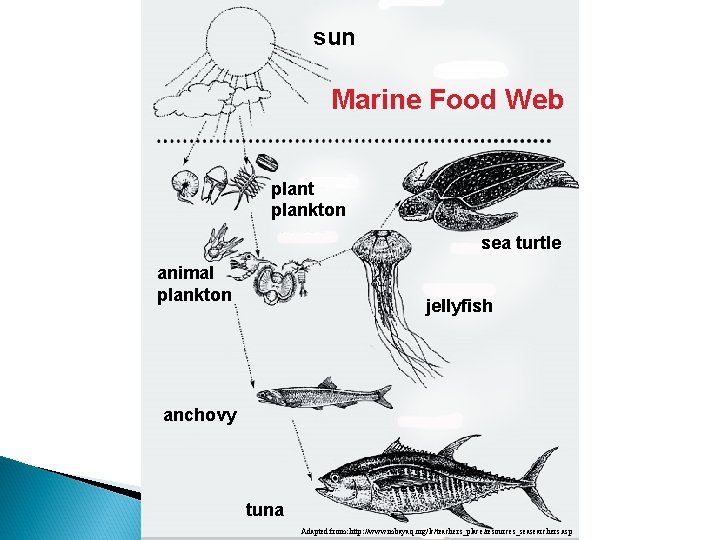
sun Marine Food Web plant plankton sea turtle animal plankton jellyfish anchovy tuna Adapted from: http: //www. mbayaq. org/lc/teachers_place/resources_seasearchers. asp
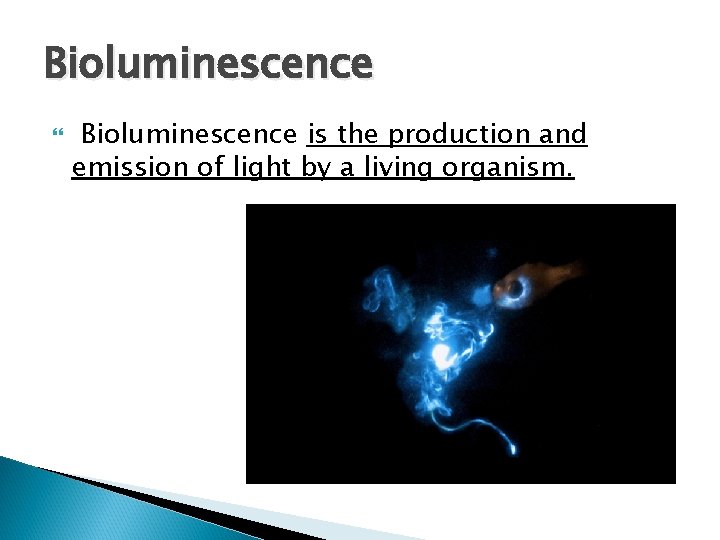
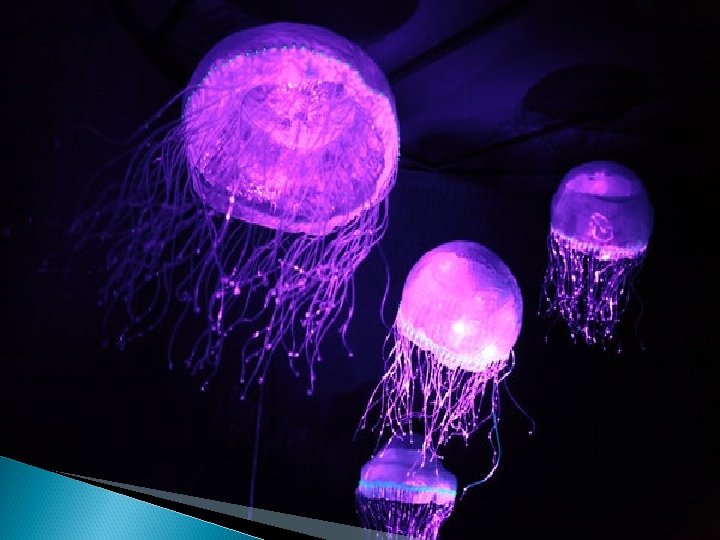
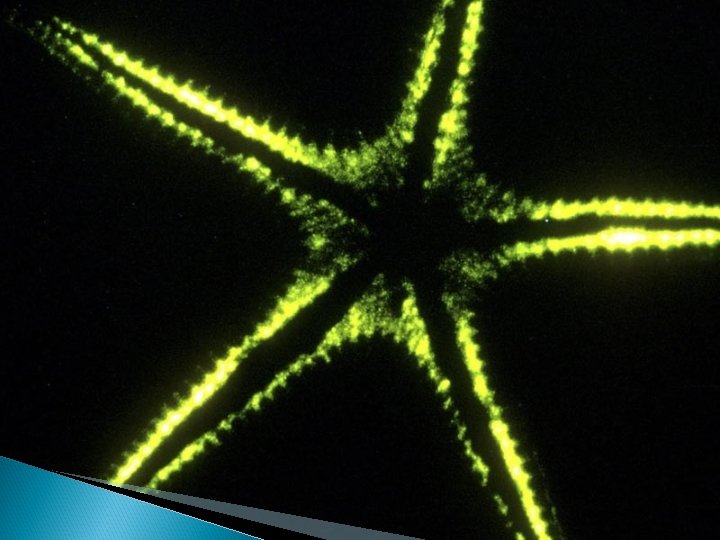
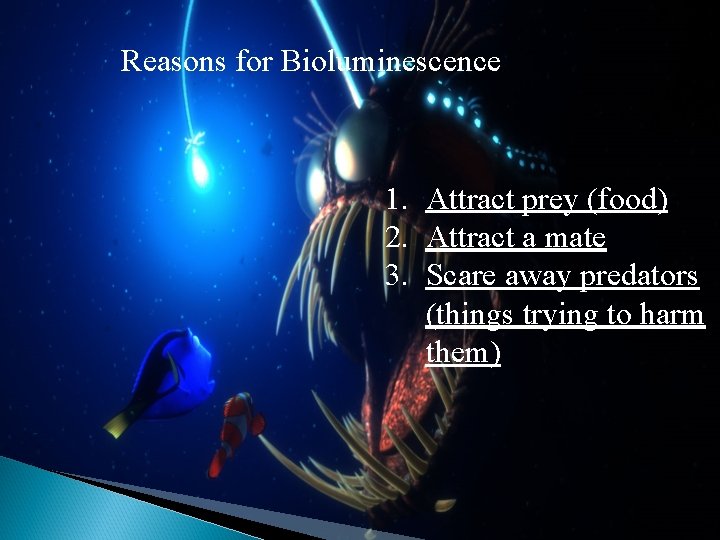
Bioluminescence is the production and emission of light by a living organism.
Reasons for Bioluminescence 1. Attract prey (food) 2. Attract a mate 3. Scare away predators (things trying to harm them)
Creatures of Light Video is 50 minutes; first 6 minutes is a good intro clip Video Ted Talk deep water organisms http: //ed. ted. com/lessons/deep-oceanmysteries-and-wonders Vampire Squid https: //www. youtube. com/watch? v=G 4 U 0 v. G 2 bxy 0