
Ocean Iron Fertilization Evaluating the Potential of a

- Slides: 19
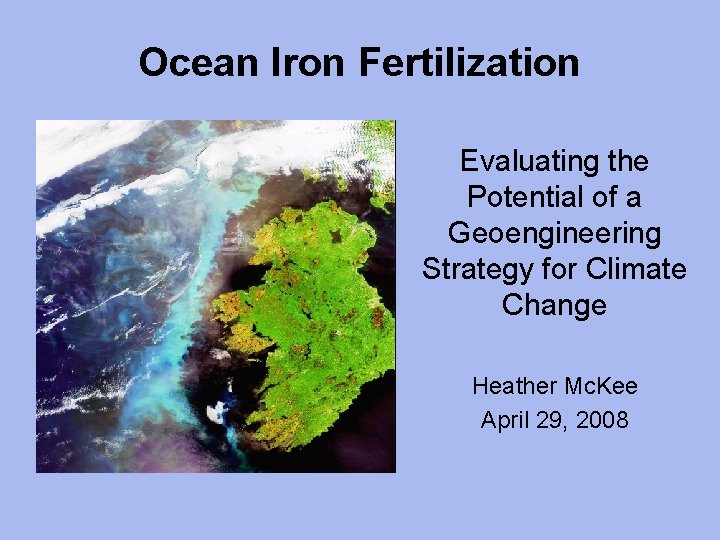
Ocean Iron Fertilization Evaluating the Potential of a Geoengineering Strategy for Climate Change Heather Mc. Kee April 29, 2008
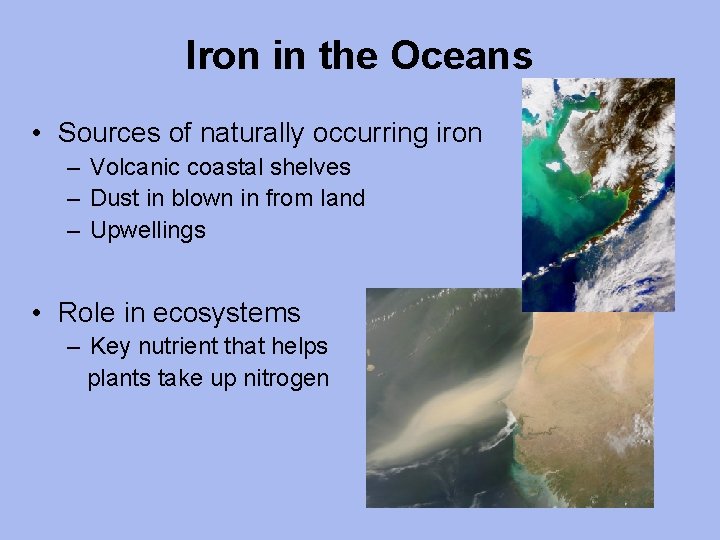
Iron in the Oceans • Sources of naturally occurring iron – Volcanic coastal shelves – Dust in blown in from land – Upwellings • Role in ecosystems – Key nutrient that helps plants take up nitrogen
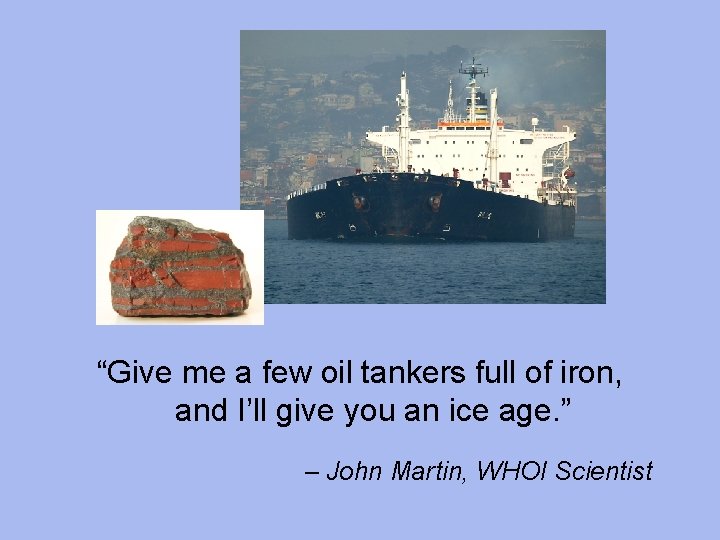
“Give me a few oil tankers full of iron, and I’ll give you an ice age. ” – John Martin, WHOI Scientist
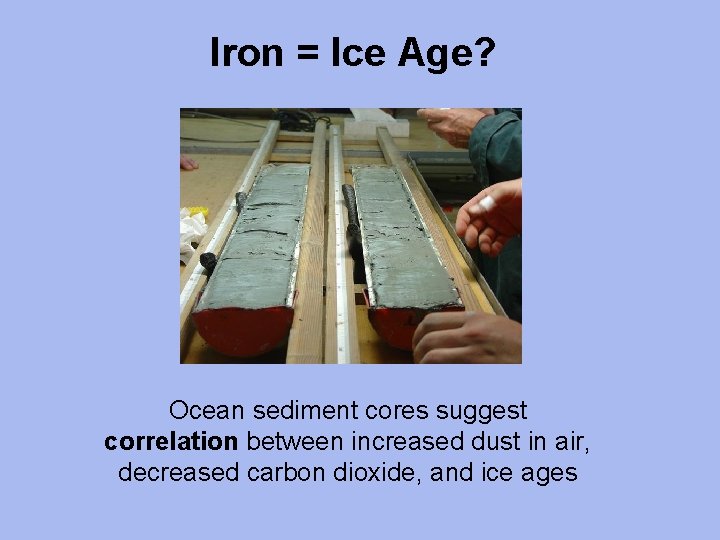
Iron = Ice Age? Ocean sediment cores suggest correlation between increased dust in air, decreased carbon dioxide, and ice ages
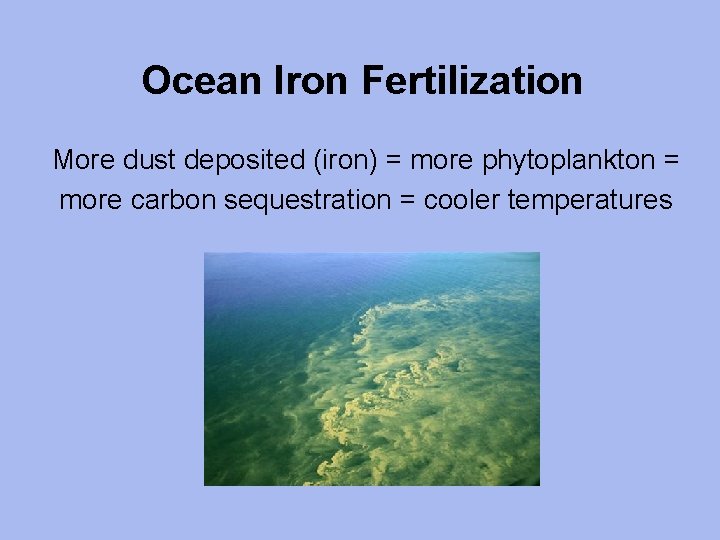
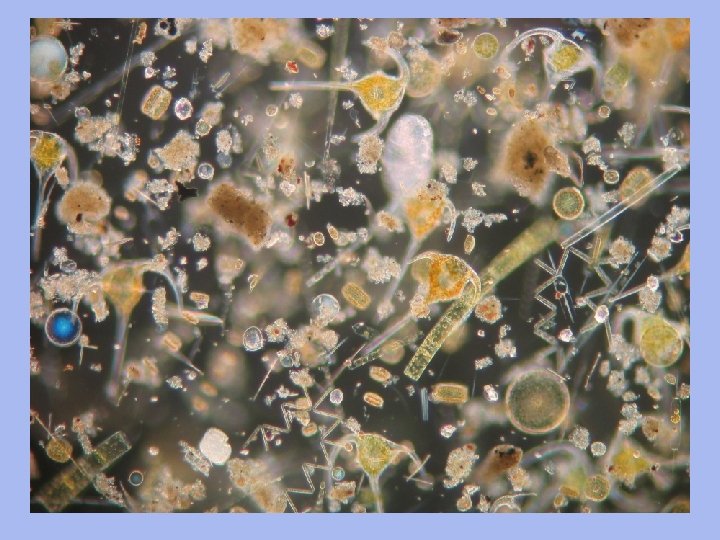
Ocean Iron Fertilization More dust deposited (iron) = more phytoplankton = more carbon sequestration = cooler temperatures
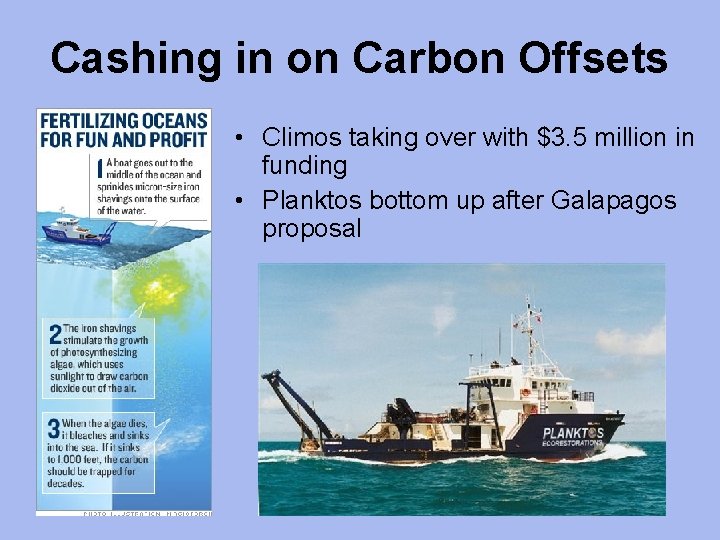
Cashing in on Carbon Offsets • Climos taking over with $3. 5 million in funding • Planktos bottom up after Galapagos proposal
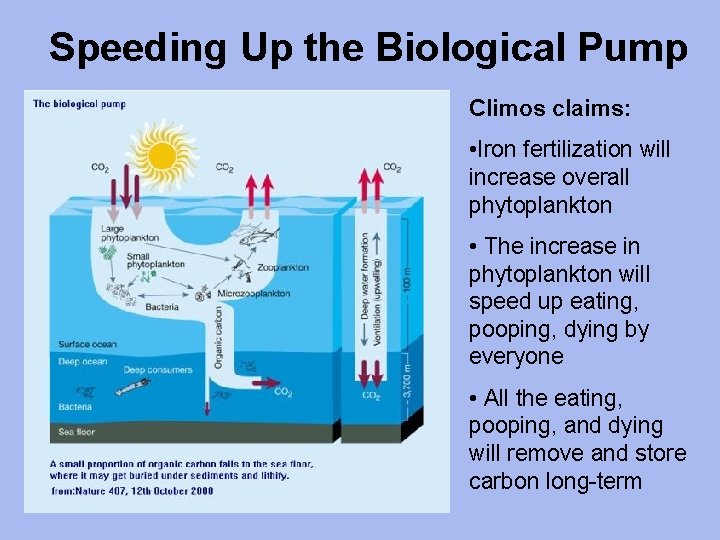
Speeding Up the Biological Pump Climos claims: • Iron fertilization will increase overall phytoplankton • The increase in phytoplankton will speed up eating, pooping, dying by everyone • All the eating, pooping, and dying will remove and store carbon long-term
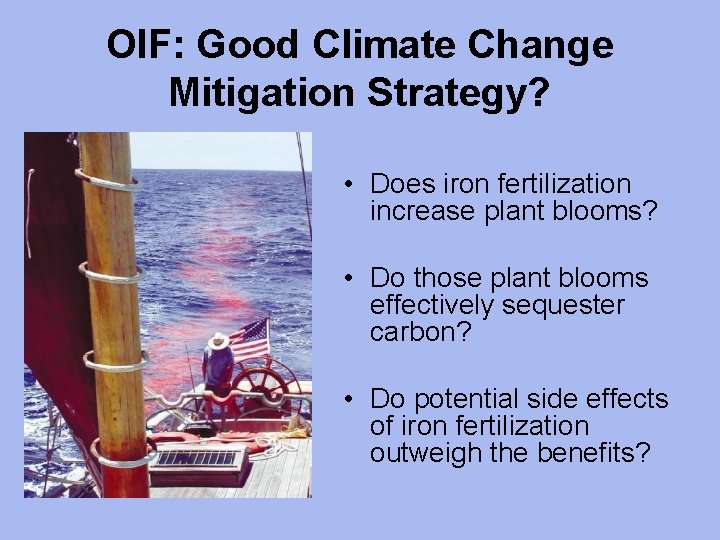
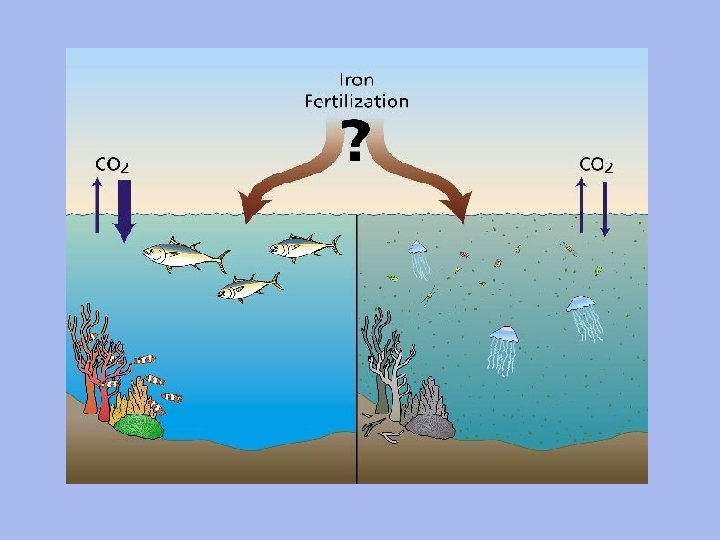
OIF: Good Climate Change Mitigation Strategy? • Does iron fertilization increase plant blooms? • Do those plant blooms effectively sequester carbon? • Do potential side effects of iron fertilization outweigh the benefits?
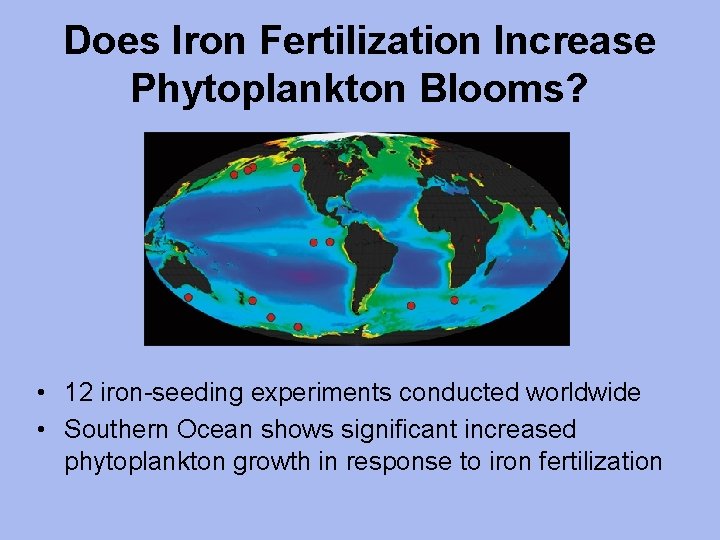
Does Iron Fertilization Increase Phytoplankton Blooms? • 12 iron-seeding experiments conducted worldwide • Southern Ocean shows significant increased phytoplankton growth in response to iron fertilization
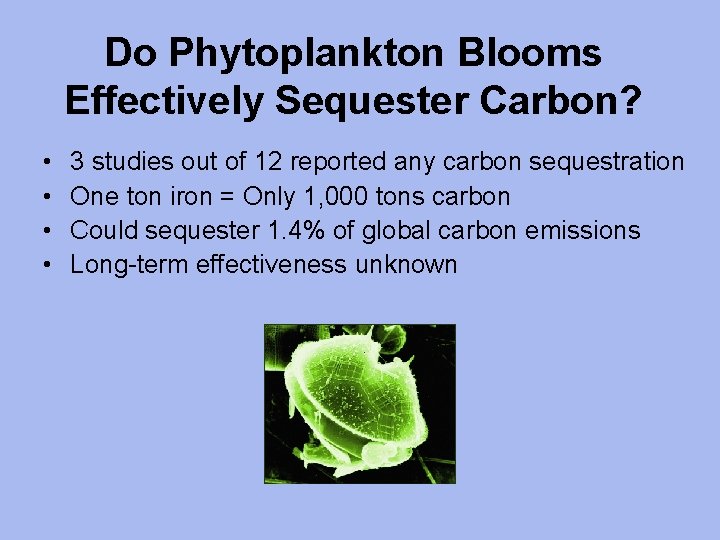
Do Phytoplankton Blooms Effectively Sequester Carbon? • • 3 studies out of 12 reported any carbon sequestration One ton iron = Only 1, 000 tons carbon Could sequester 1. 4% of global carbon emissions Long-term effectiveness unknown
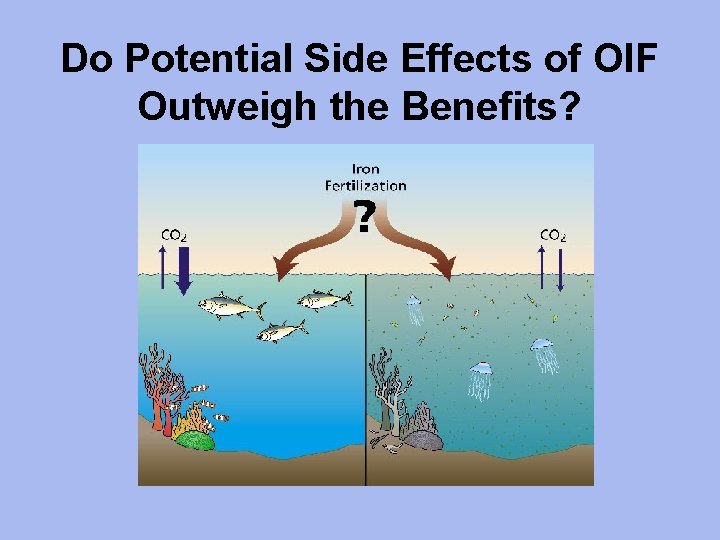
Do Potential Side Effects of OIF Outweigh the Benefits?
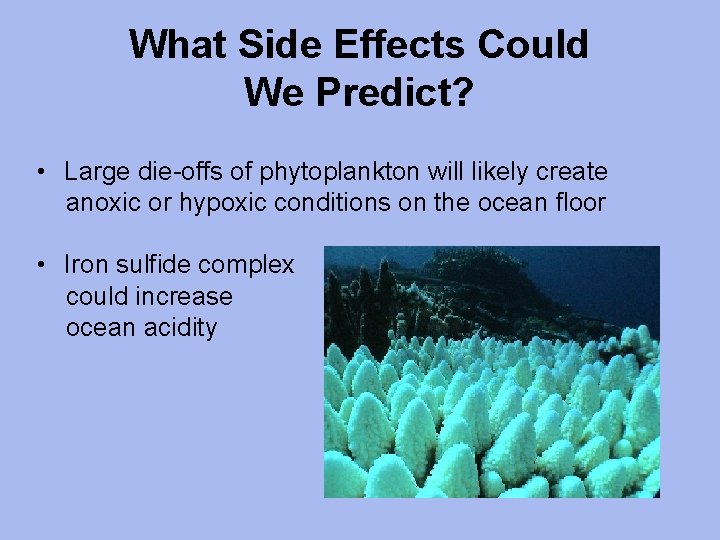
What Side Effects Could We Predict? • Large die-offs of phytoplankton will likely create anoxic or hypoxic conditions on the ocean floor • Iron sulfide complex could increase ocean acidity
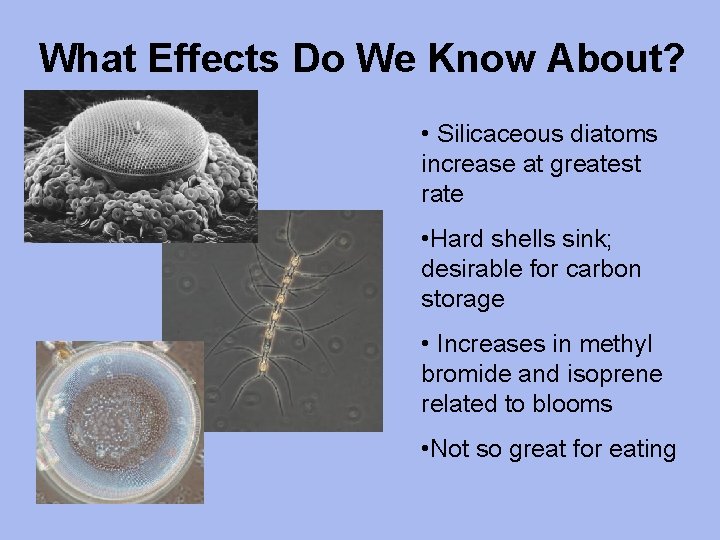
What Effects Do We Know About? • Silicaceous diatoms increase at greatest rate • Hard shells sink; desirable for carbon storage • Increases in methyl bromide and isoprene related to blooms • Not so great for eating
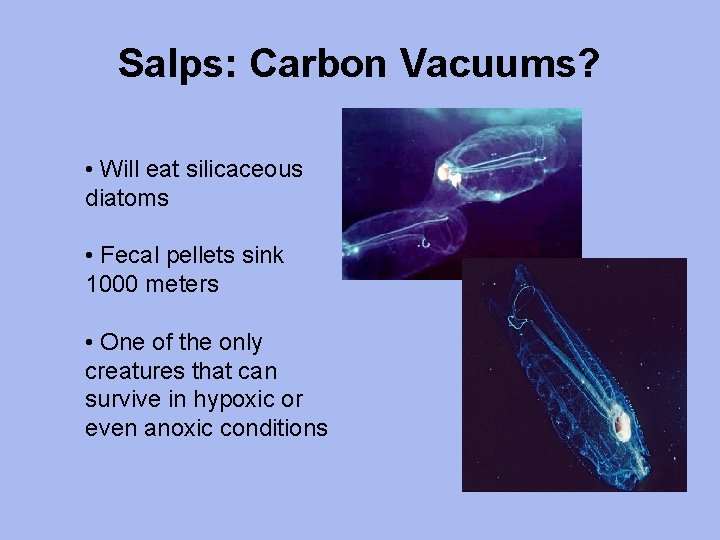
Salps: Carbon Vacuums? • Will eat silicaceous diatoms • Fecal pellets sink 1000 meters • One of the only creatures that can survive in hypoxic or even anoxic conditions
What Precautionary Principle? “This is an incremental thing. If you start to see that it’s going wrong, then you can roll back. Taking the first step does not inevitably mean that you have to go the whole road. ” -Watson of Planktos
What’s Driving OIF Research? • Iron ore costs $69/ton (+shipping, staff, sulfate costs) • 1 ton iron = 1, 000 pounds carbon sequestered • Currently limited to voluntary offset market at $5/ton • Maximum profit of $4, 931 per ton of iron dumped, nearly a 70 x return on initial cost of materials