
Ocean Enterprise Unlocking a Secret Zdenka Willis Director

- Slides: 22
Ocean Enterprise Unlocking a Secret Zdenka Willis Director, US IOOS Program Office NOAA- National Ocean Service
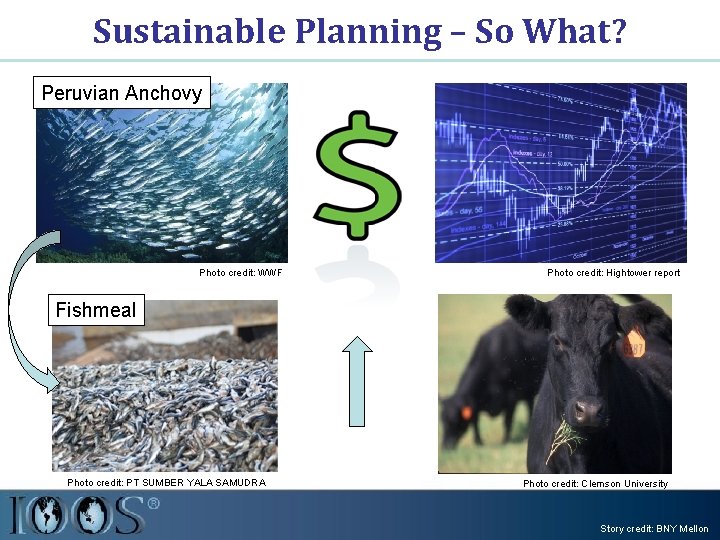
Sustainable Planning – So What? Peruvian Anchovy Photo credit: WWF Photo credit: Hightower report Fishmeal Photo credit: PT SUMBER YALA SAMUDRA Photo credit: Clemson University Story credit: BNY Mellon
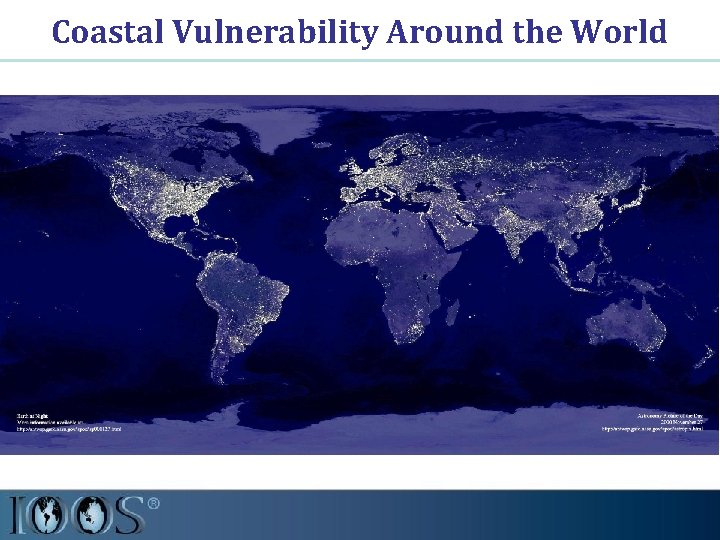
Coastal Vulnerability Around the World
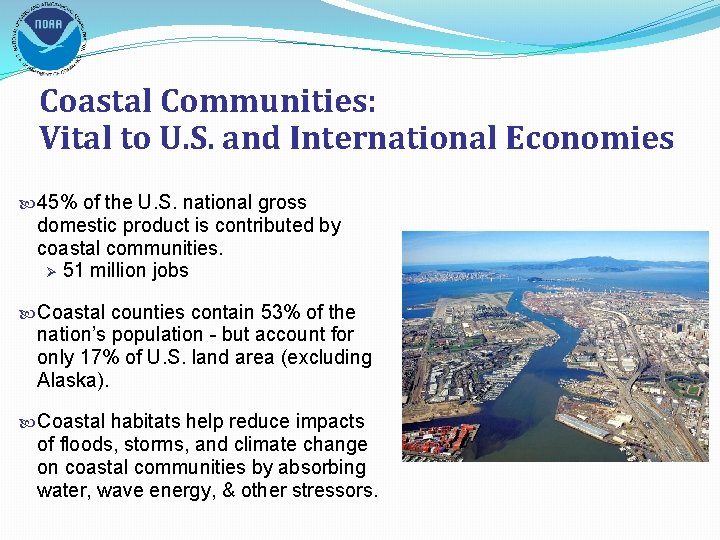
Coastal Communities: Vital to U. S. and International Economies 45% of the U. S. national gross domestic product is contributed by coastal communities. Ø 51 million jobs Coastal counties contain 53% of the nation’s population - but account for only 17% of U. S. land area (excluding Alaska). Coastal habitats help reduce impacts of floods, storms, and climate change on coastal communities by absorbing water, wave energy, & other stressors.
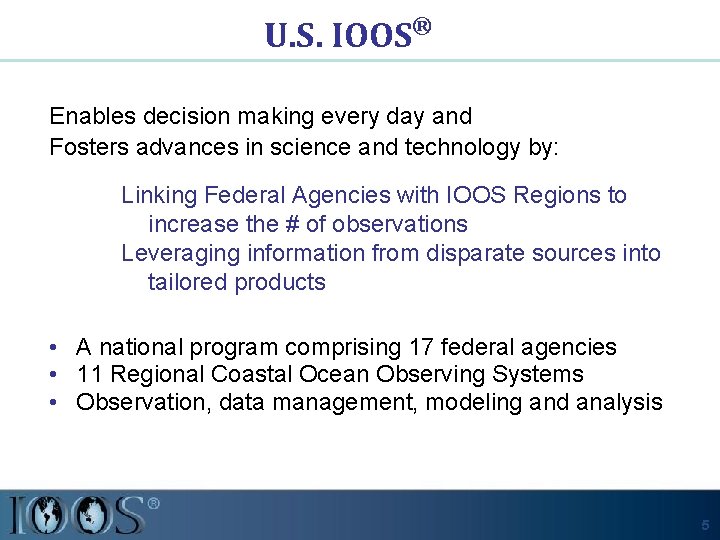
U. S. IOOS® Enables decision making every day and Fosters advances in science and technology by: Linking Federal Agencies with IOOS Regions to increase the # of observations Leveraging information from disparate sources into tailored products • A national program comprising 17 federal agencies • 11 Regional Coastal Ocean Observing Systems • Observation, data management, modeling and analysis 5
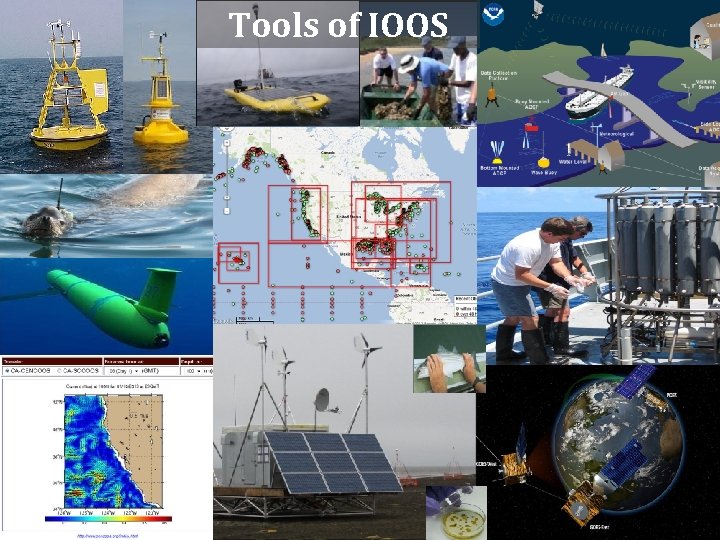
Tools of IOOS
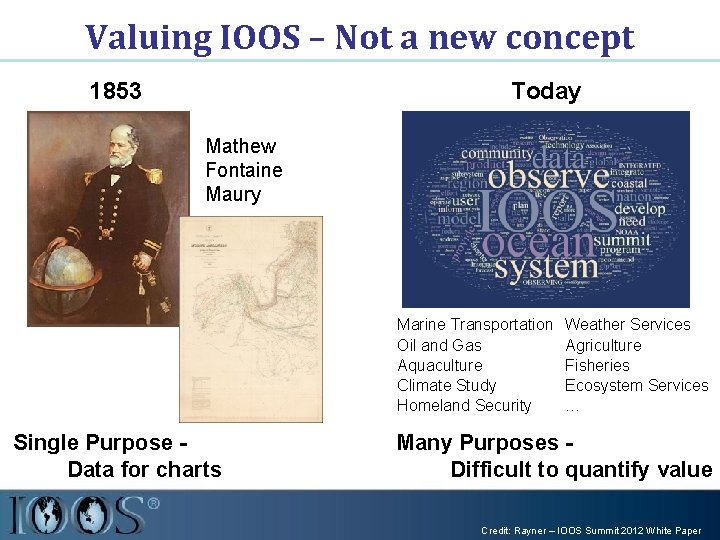
Valuing IOOS – Not a new concept 1853 Today Mathew Fontaine Maury Marine Transportation Oil and Gas Aquaculture Climate Study Homeland Security Single Purpose Data for charts Weather Services Agriculture Fisheries Ecosystem Services … Many Purposes Difficult to quantify value Credit: Rayner – IOOS Summit 2012 White Paper
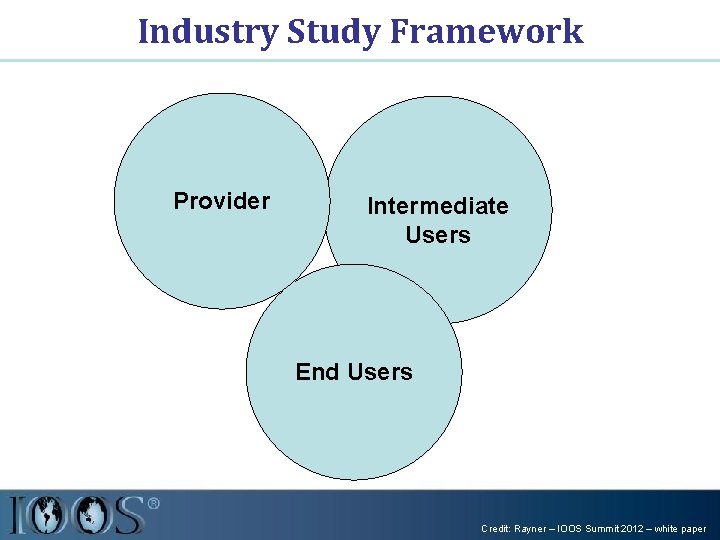
Industry Study Framework Provider Intermediate Users End Users Credit: Rayner – IOOS Summit 2012 – white paper
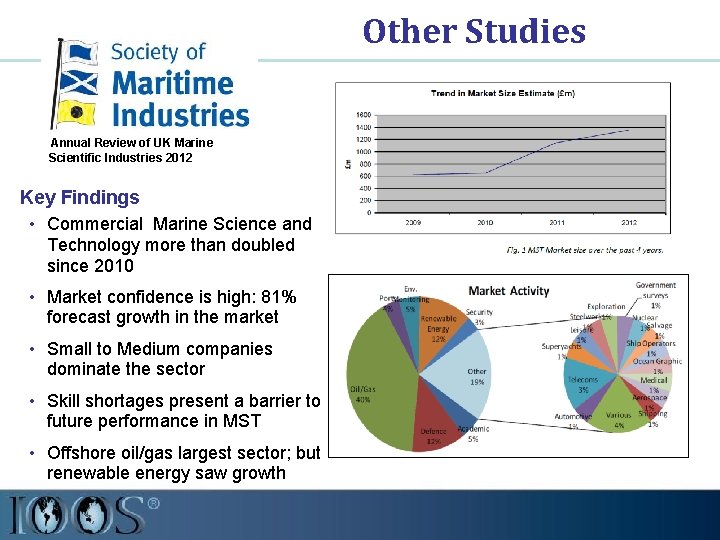
Other Studies Annual Review of UK Marine Scientific Industries 2012 Key Findings • Commercial Marine Science and Technology more than doubled since 2010 • Market confidence is high: 81% forecast growth in the market • Small to Medium companies dominate the sector • Skill shortages present a barrier to future performance in MST • Offshore oil/gas largest sector; but renewable energy saw growth
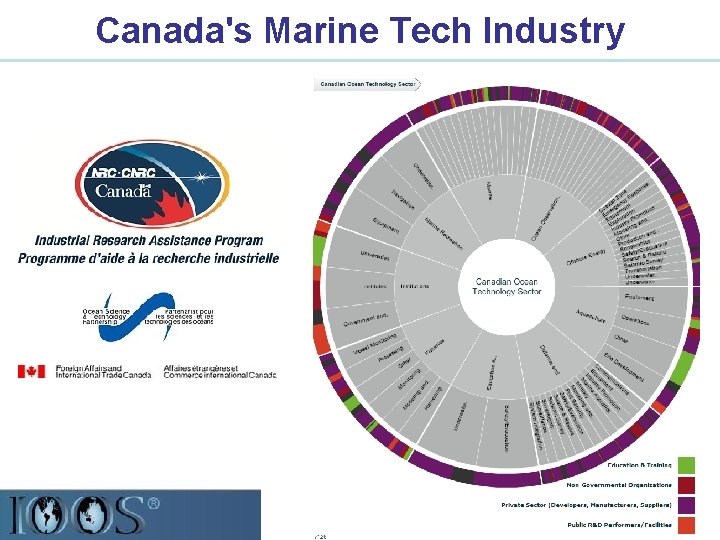
Canada's Marine Tech Industry
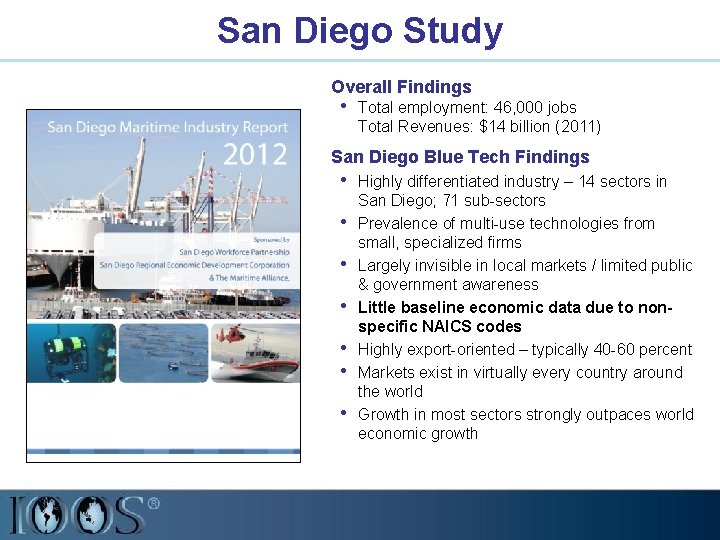
San Diego Study Overall Findings • Total employment: 46, 000 jobs Total Revenues: $14 billion (2011) San Diego Blue Tech Findings • • Highly differentiated industry – 14 sectors in San Diego; 71 sub-sectors Prevalence of multi-use technologies from small, specialized firms Largely invisible in local markets / limited public & government awareness Little baseline economic data due to nonspecific NAICS codes Highly export-oriented – typically 40 -60 percent Markets exist in virtually every country around the world Growth in most sectors strongly outpaces world economic growth
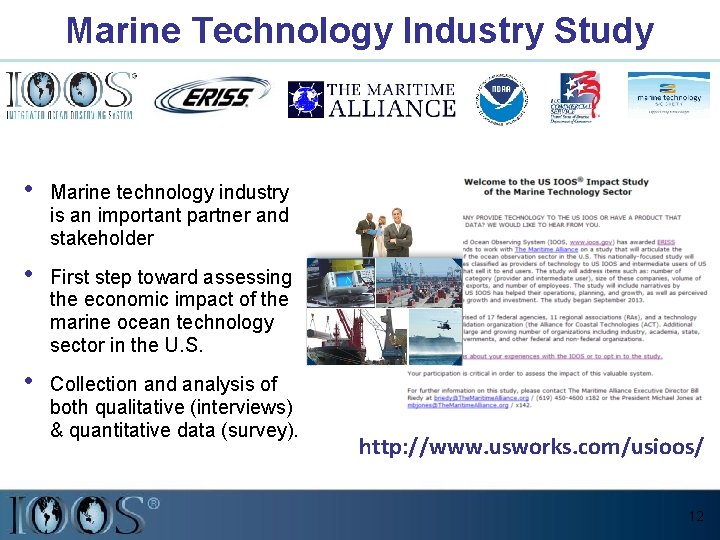
Marine Technology Industry Study • Marine technology industry is an important partner and stakeholder • First step toward assessing the economic impact of the marine ocean technology sector in the U. S. • Collection and analysis of both qualitative (interviews) & quantitative data (survey). http: //www. usworks. com/usioos/ 12
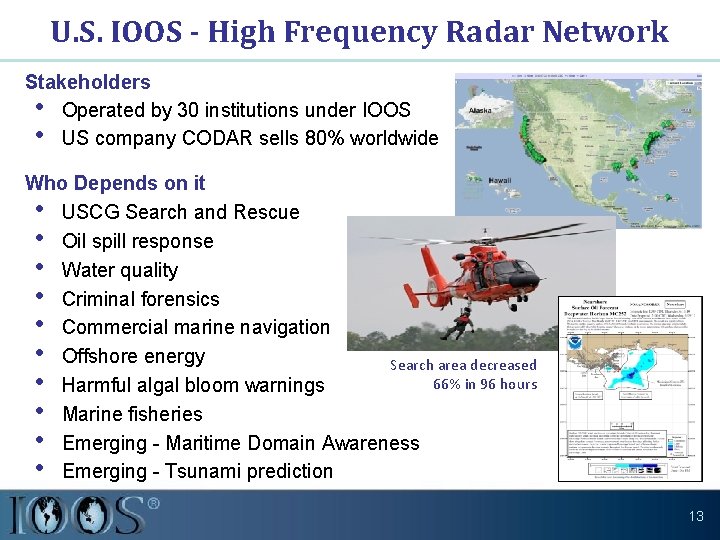
U. S. IOOS - High Frequency Radar Network Stakeholders • Operated by 30 institutions under IOOS • US company CODAR sells 80% worldwide Who Depends on it • USCG Search and Rescue • Oil spill response • Water quality • Criminal forensics • Commercial marine navigation • Offshore energy Search area decreased 66% in 96 hours • Harmful algal bloom warnings • Marine fisheries • Emerging - Maritime Domain Awareness • Emerging - Tsunami prediction 13
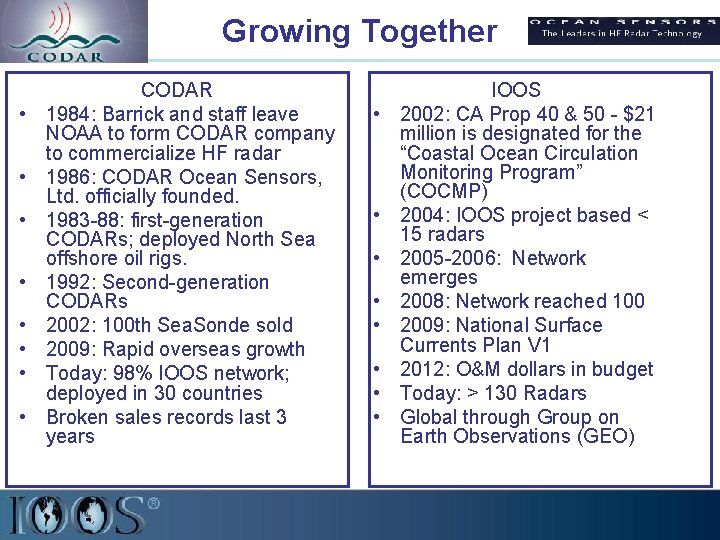
Growing Together • • CODAR 1984: Barrick and staff leave NOAA to form CODAR company to commercialize HF radar 1986: CODAR Ocean Sensors, Ltd. officially founded. 1983 -88: first-generation CODARs; deployed North Sea offshore oil rigs. 1992: Second-generation CODARs 2002: 100 th Sea. Sonde sold 2009: Rapid overseas growth Today: 98% IOOS network; deployed in 30 countries Broken sales records last 3 years • • IOOS 2002: CA Prop 40 & 50 - $21 million is designated for the “Coastal Ocean Circulation Monitoring Program” (COCMP) 2004: IOOS project based < 15 radars 2005 -2006: Network emerges 2008: Network reached 100 2009: National Surface Currents Plan V 1 2012: O&M dollars in budget Today: > 130 Radars Global through Group on Earth Observations (GEO)
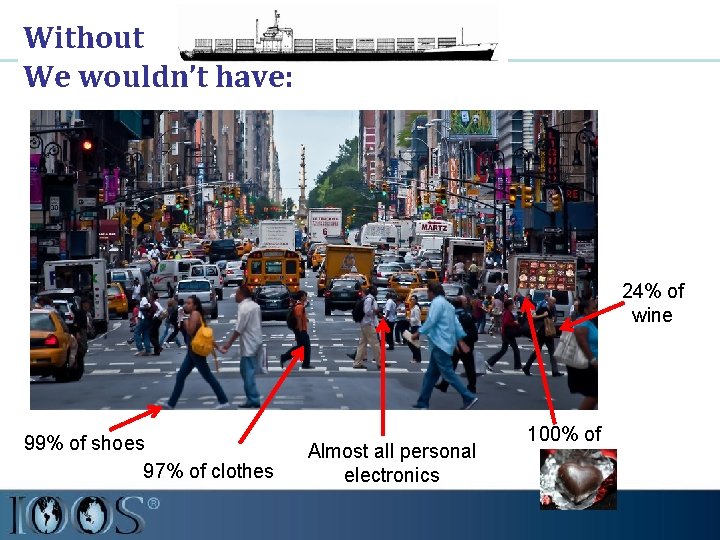
Without We wouldn’t have: 24% of wine 99% of shoes 97% of clothes Almost all personal electronics 100% of
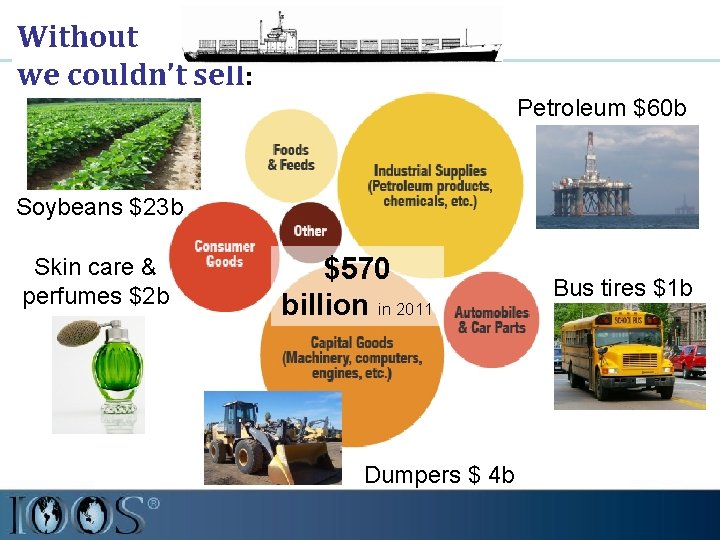
Without we couldn’t sell: Petroleum $60 b Soybeans $23 b Skin care & perfumes $2 b $570 billion in 2011 Dumpers $ 4 b Bus tires $1 b
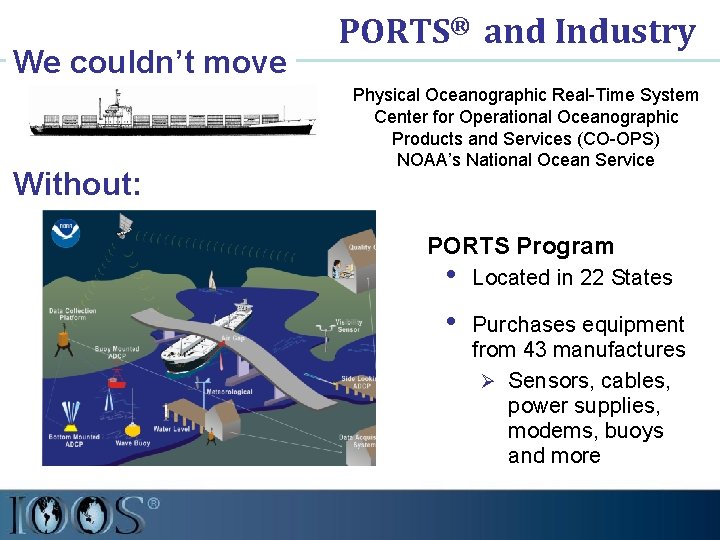
We couldn’t move Without: PORTS® and Industry Physical Oceanographic Real-Time System Center for Operational Oceanographic Products and Services (CO-OPS) NOAA’s National Ocean Service PORTS Program • • Located in 22 States Purchases equipment from 43 manufactures Ø Sensors, cables, power supplies, modems, buoys and more
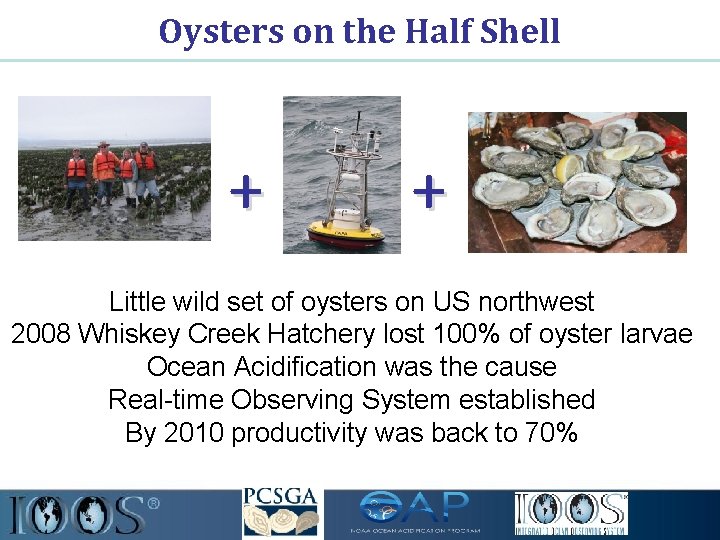
Oysters on the Half Shell + + Little wild set of oysters on US northwest 2008 Whiskey Creek Hatchery lost 100% of oyster larvae Ocean Acidification was the cause Real-time Observing System established By 2010 productivity was back to 70%
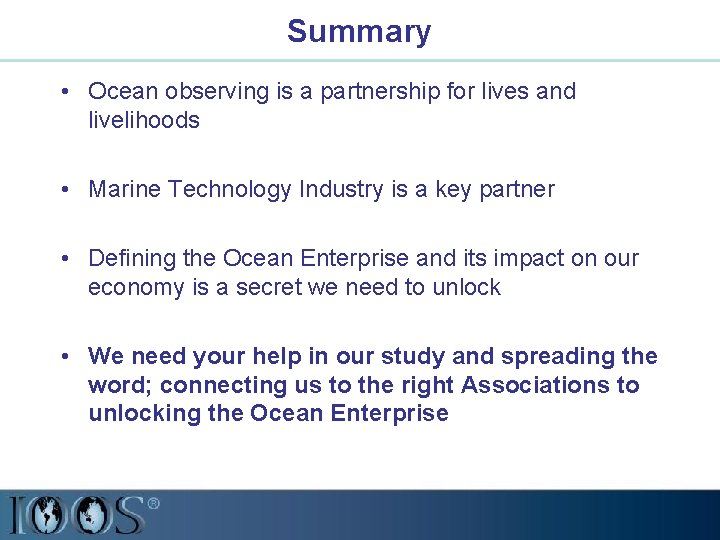
Summary • Ocean observing is a partnership for lives and livelihoods • Marine Technology Industry is a key partner • Defining the Ocean Enterprise and its impact on our economy is a secret we need to unlock • We need your help in our study and spreading the word; connecting us to the right Associations to unlocking the Ocean Enterprise
Questions
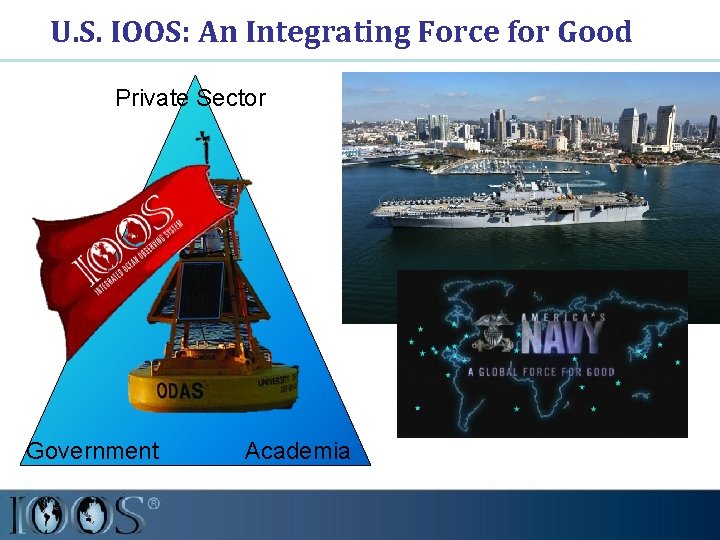
U. S. IOOS: An Integrating Force for Good Private Sector Government Academia
Thank You Please Visit the U. S. IOOS Website ioos. noaa. gov