
Ocean Dynamics Stratified Rotating Flow 1 Homogeneous Geostrophic
- Slides: 17
Ocean Dynamics Stratified Rotating Flow 1
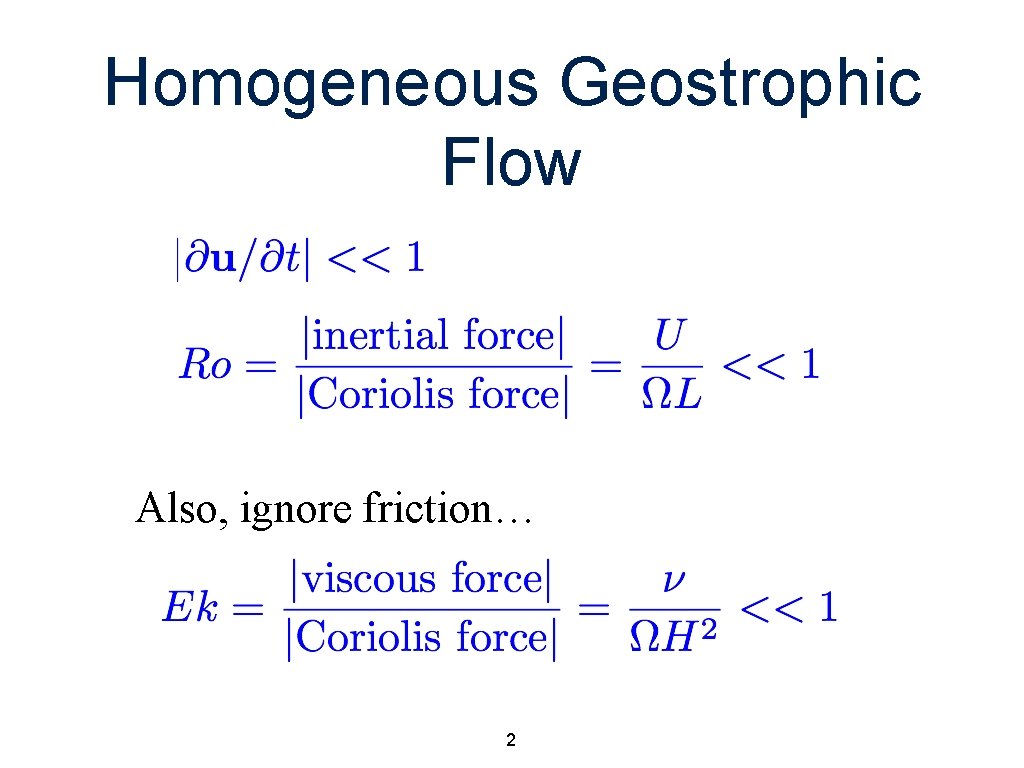
Homogeneous Geostrophic Flow Also, ignore friction… 2
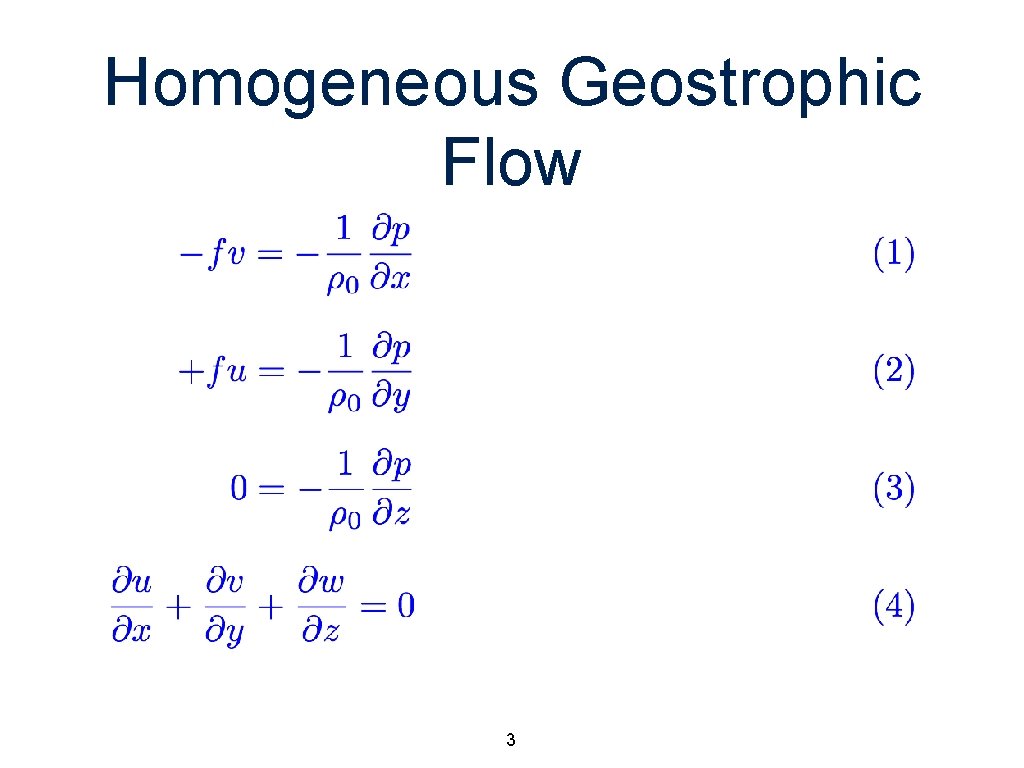
Homogeneous Geostrophic Flow 3
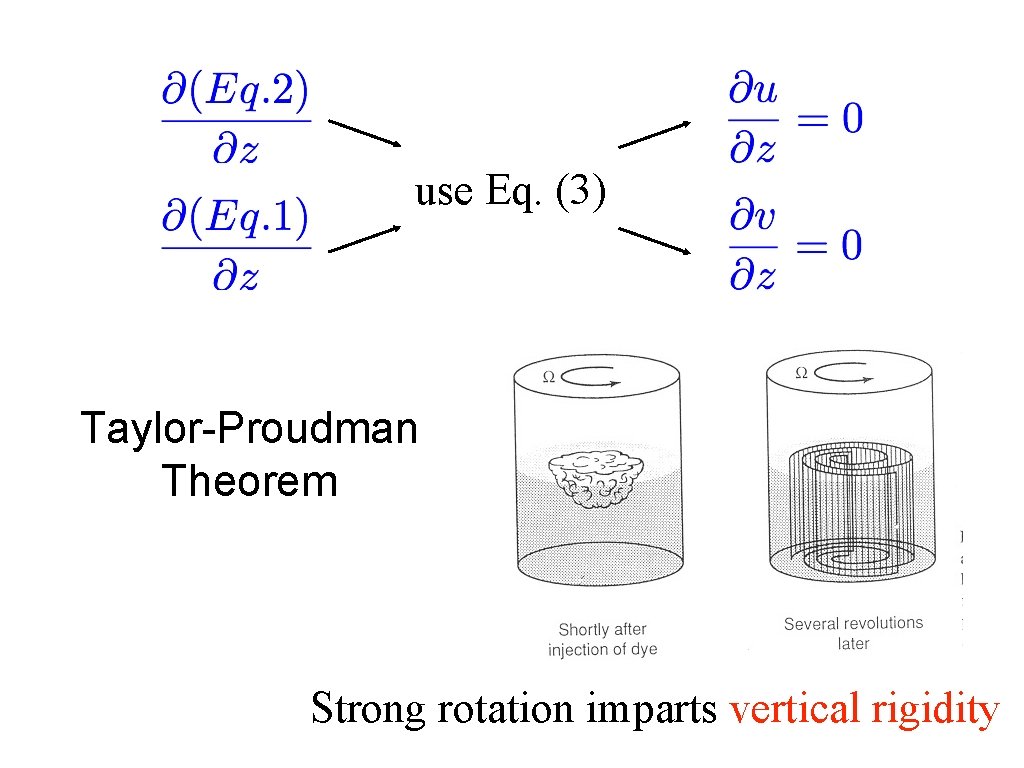
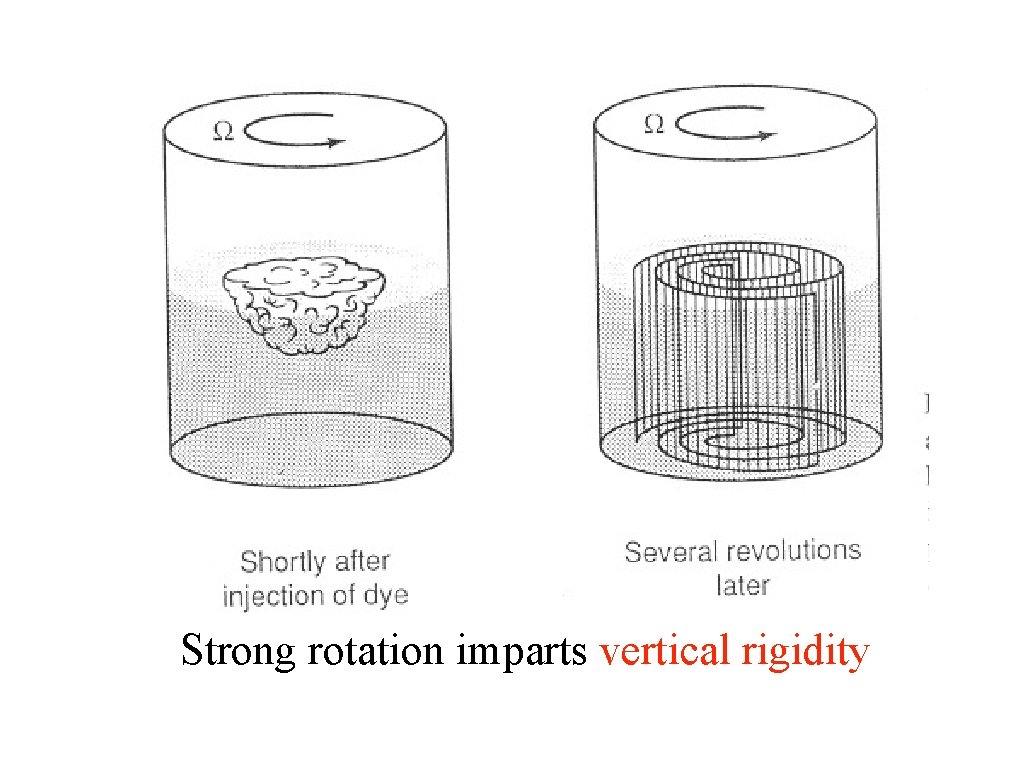
use Eq. (3) Taylor-Proudman Theorem Strong rotation imparts vertical rigidity
Strong rotation imparts vertical rigidity
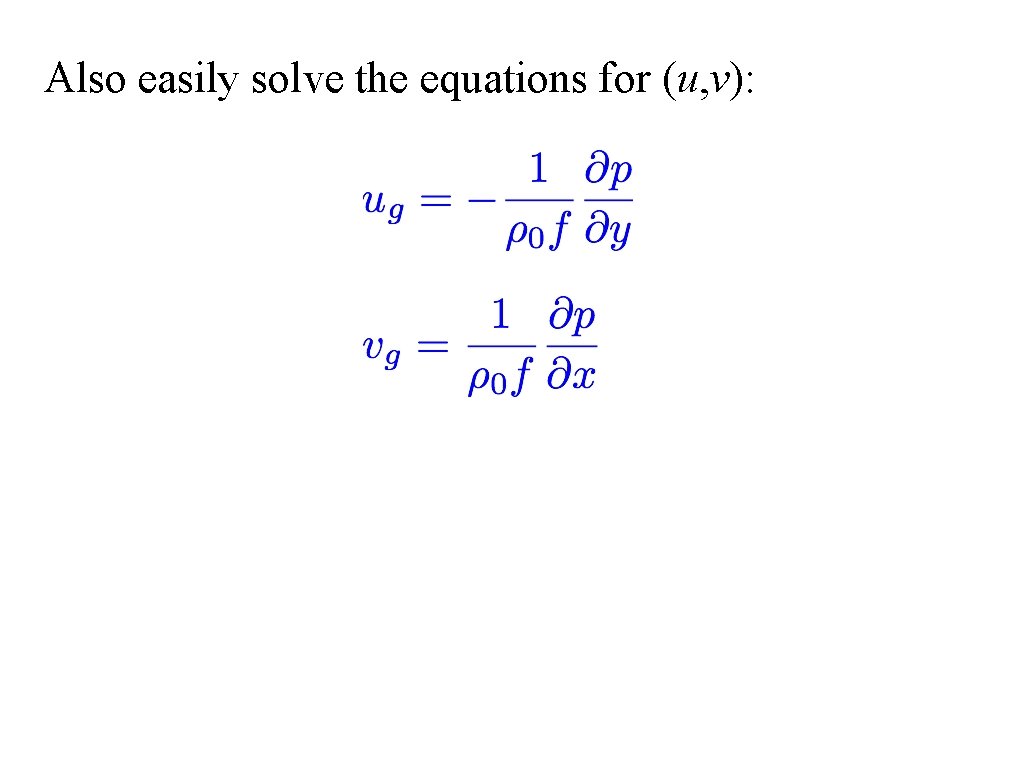
Also easily solve the equations for (u, v):
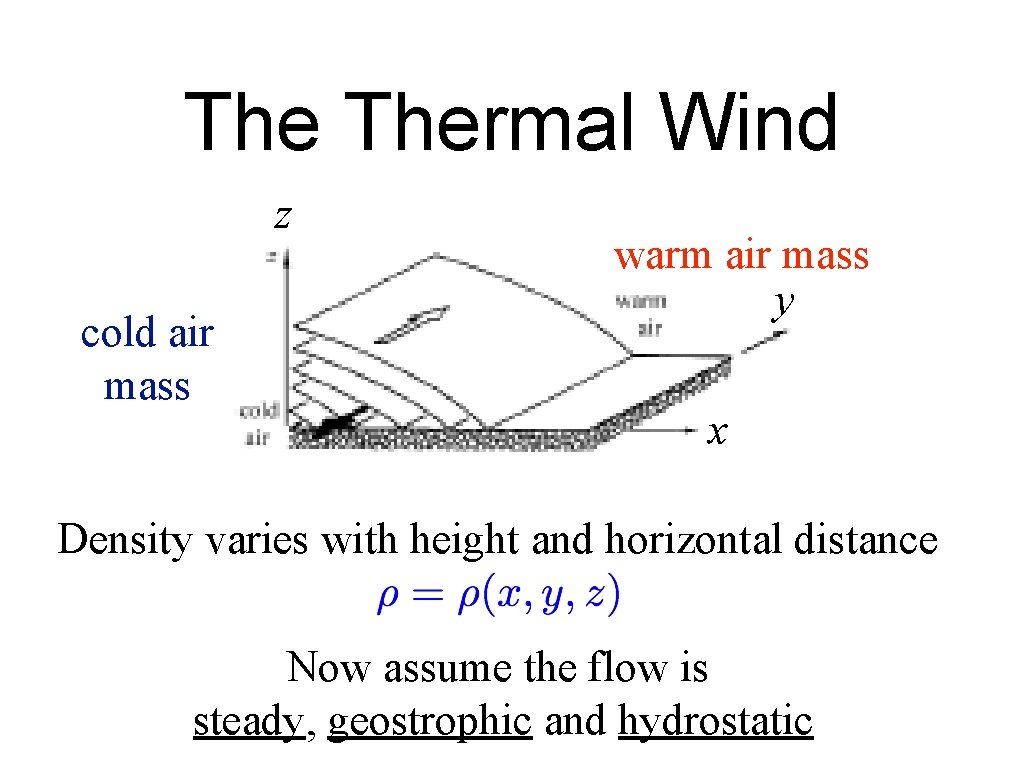
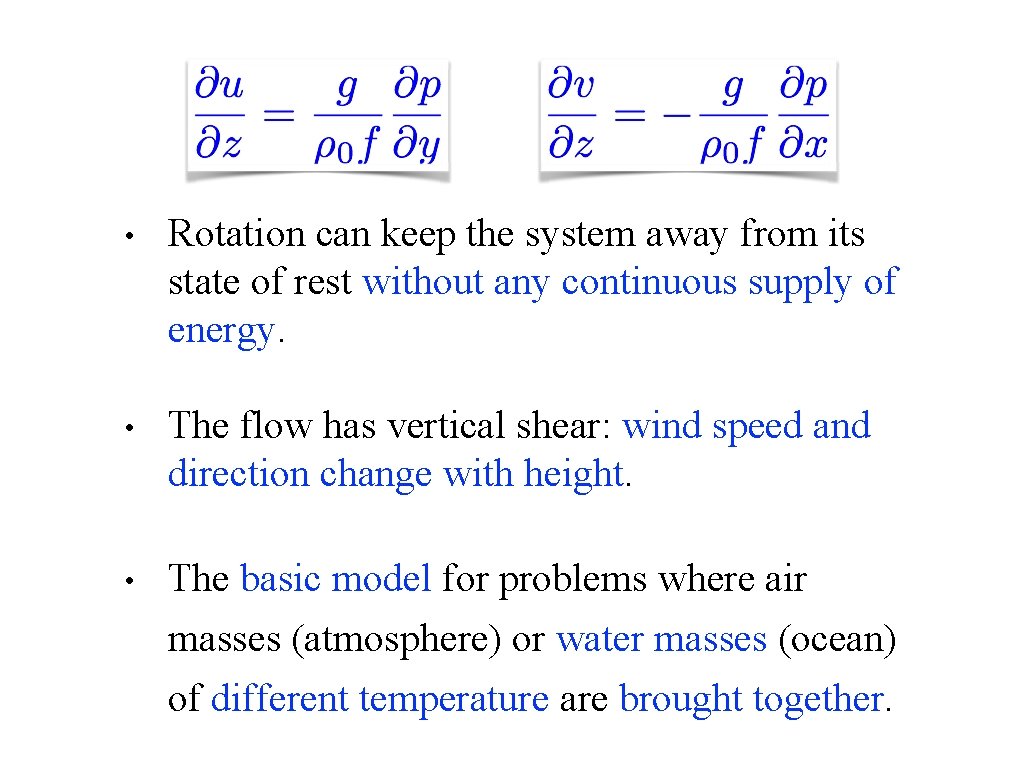
The Thermal Wind z cold air mass warm air mass y x Density varies with height and horizontal distance Now assume the flow is steady, geostrophic and hydrostatic
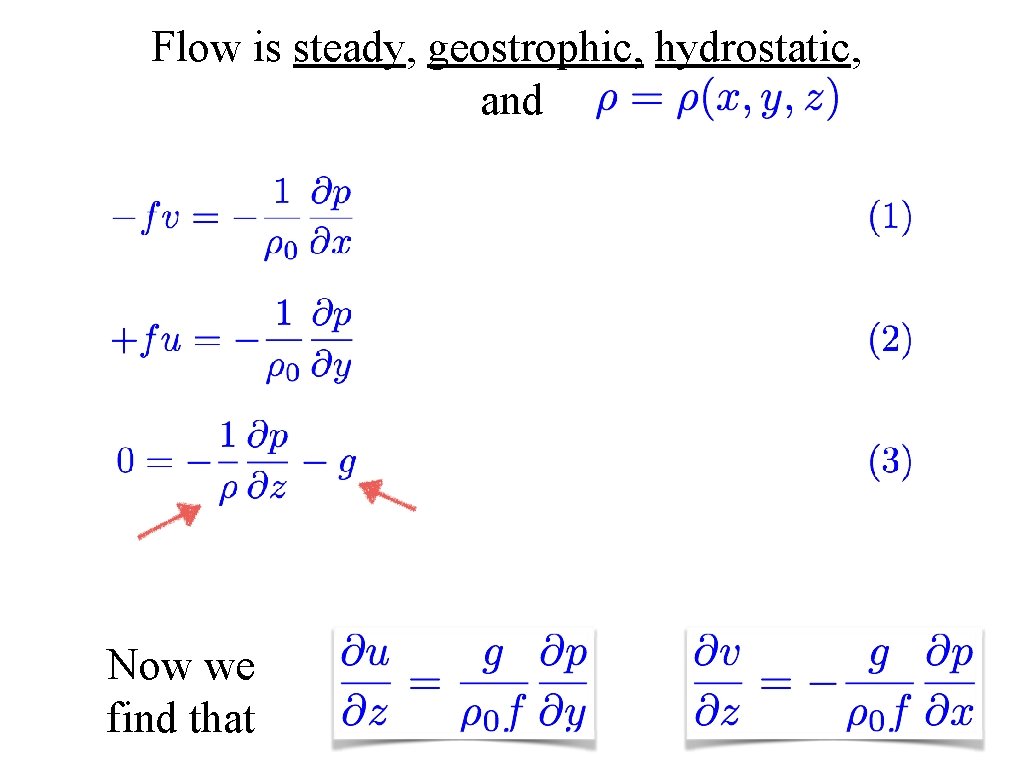
Flow is steady, geostrophic, hydrostatic, and Now we find that
• Rotation can keep the system away from its state of rest without any continuous supply of energy. • The flow has vertical shear: wind speed and direction change with height. • The basic model for problems where air masses (atmosphere) or water masses (ocean) of different temperature are brought together.
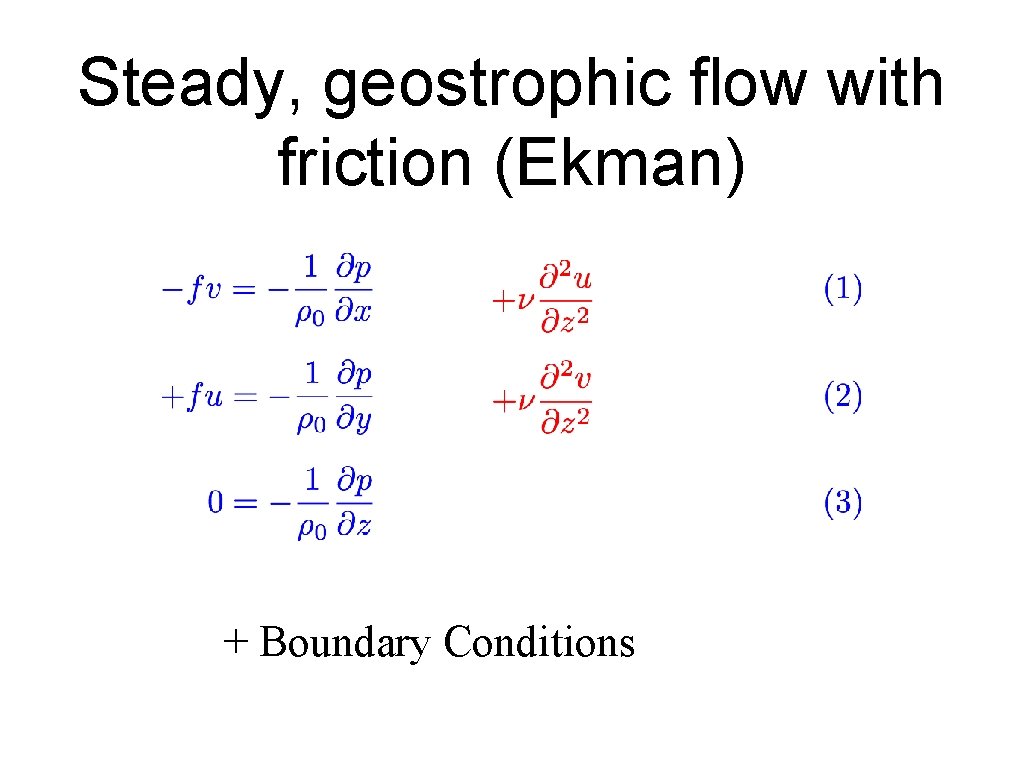
Steady, geostrophic flow with friction (Ekman) + Boundary Conditions
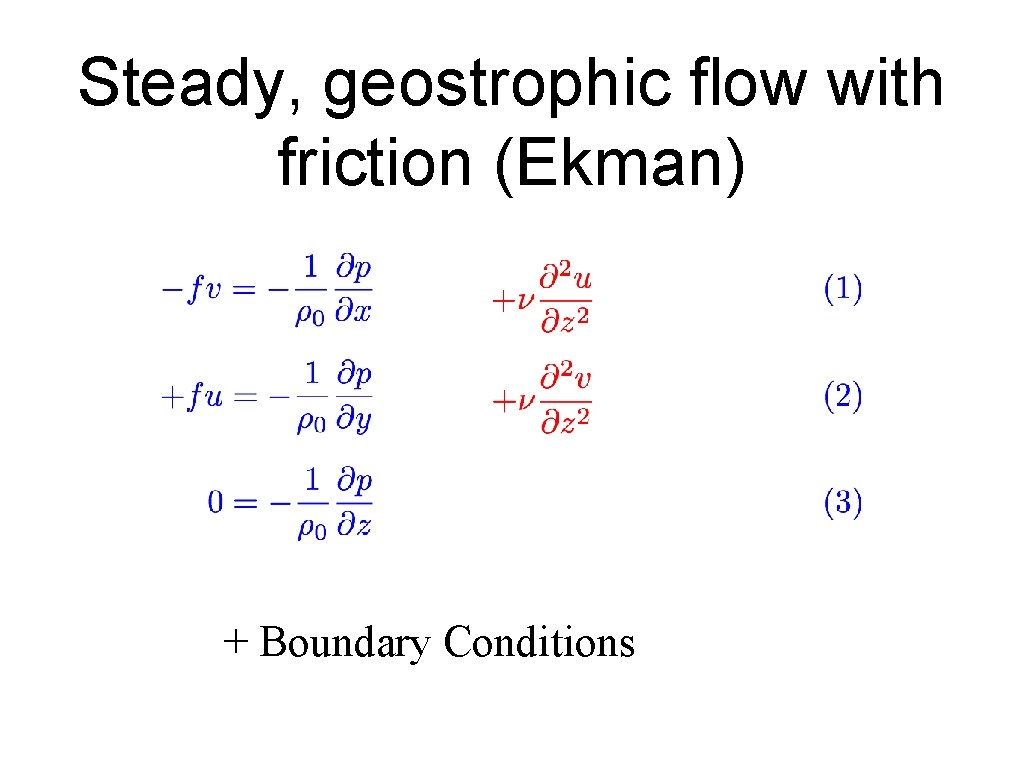
Steady, geostrophic flow with friction (Ekman) + Boundary Conditions
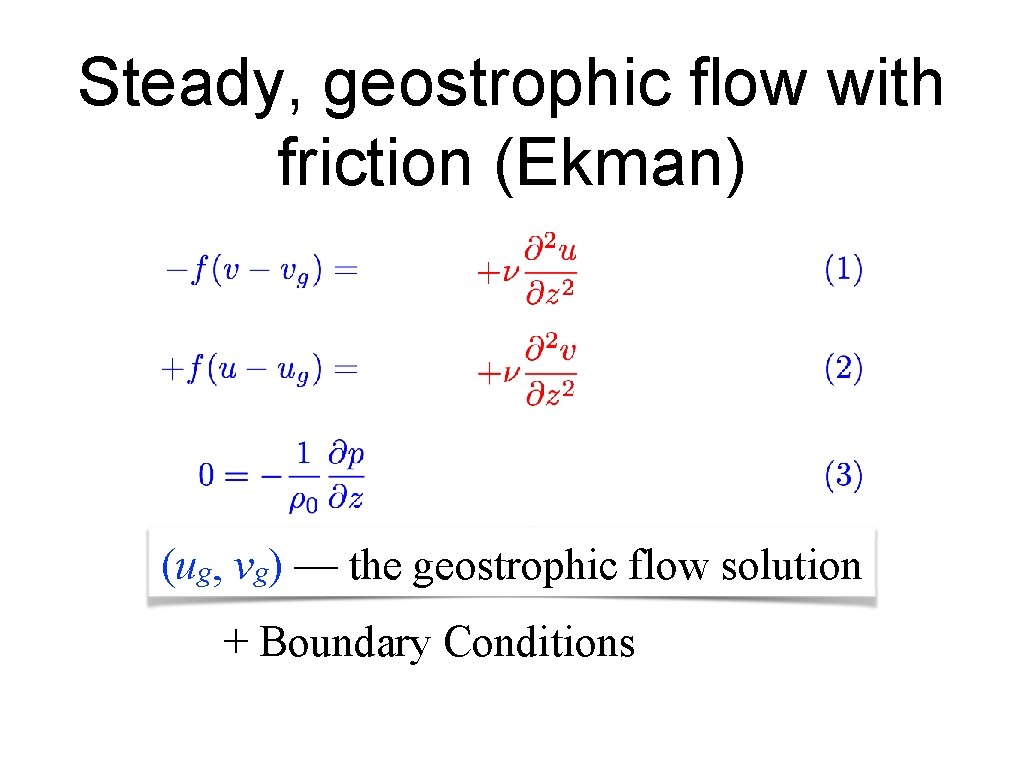
Steady, geostrophic flow with friction (Ekman) (ug, vg) — the geostrophic flow solution + Boundary Conditions
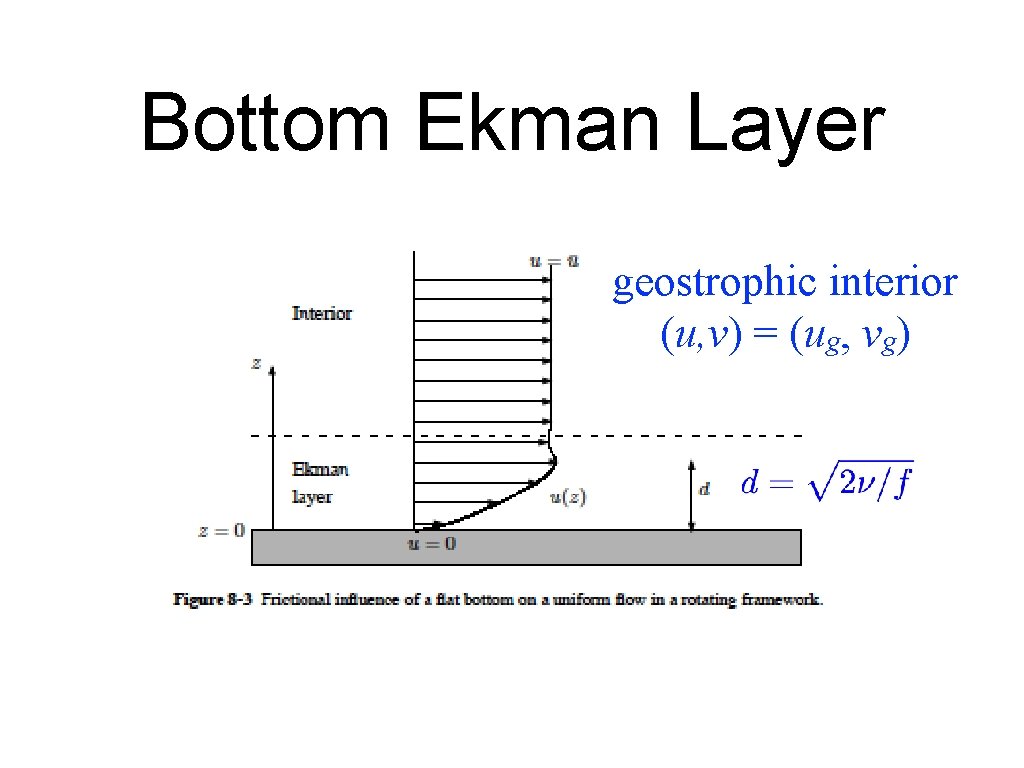
Bottom Ekman Layer geostrophic interior (u, v) = (ug, vg)
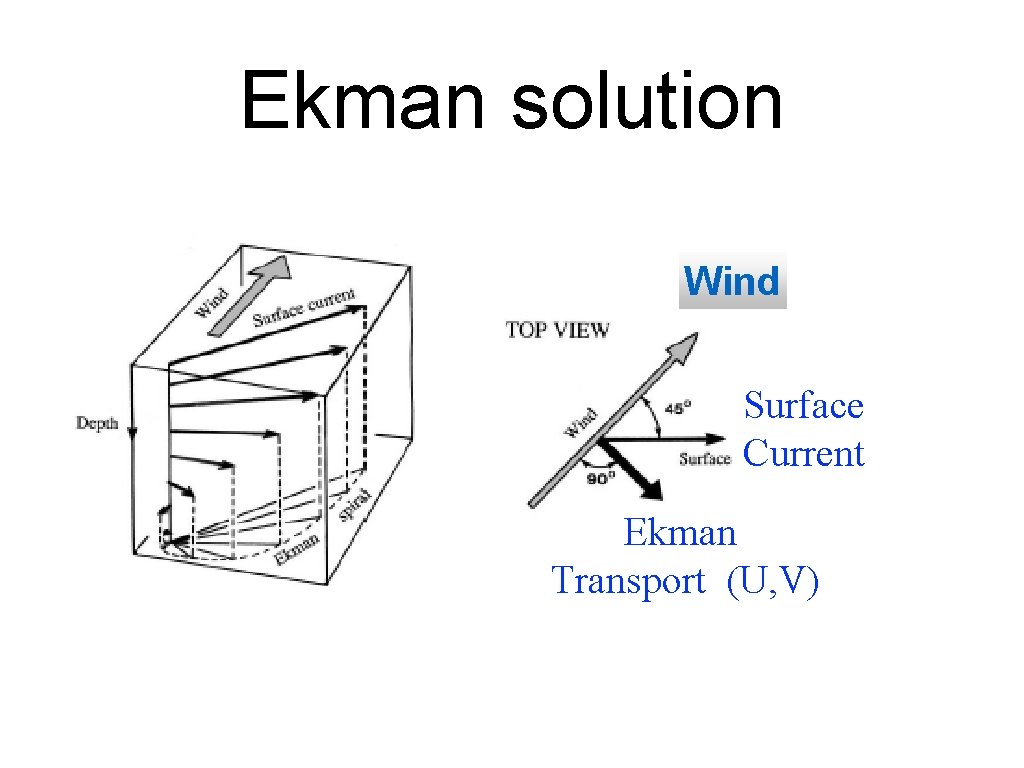
Ekman solution Wind Surface Current Ekman Transport (U, V)
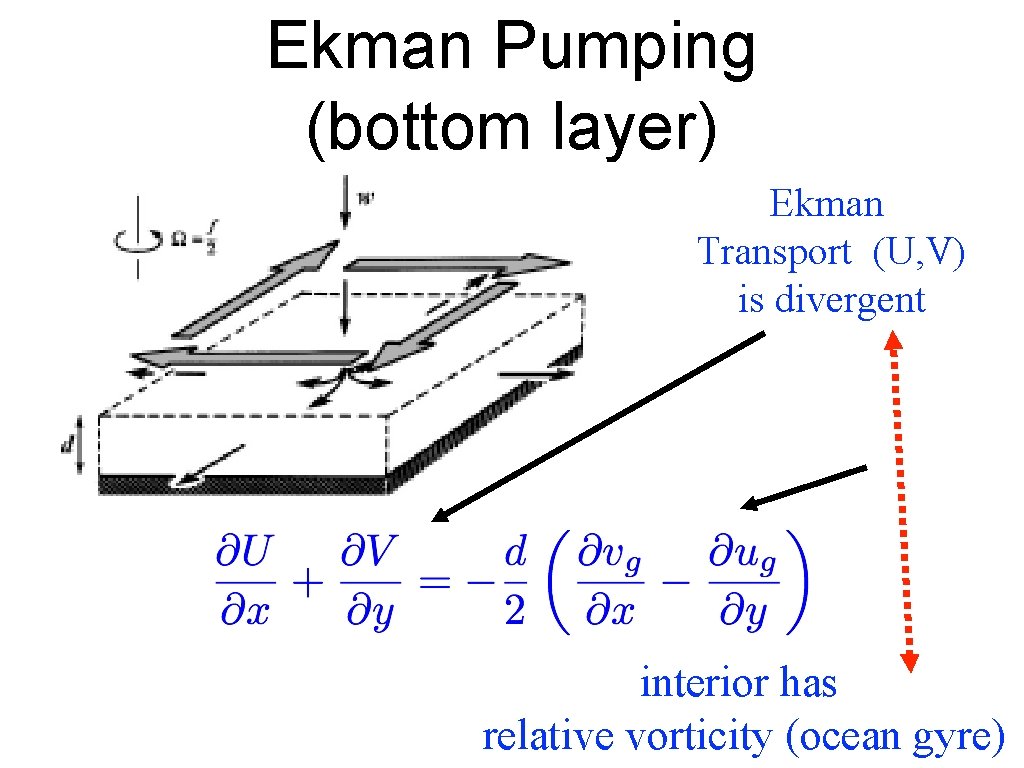
Ekman Pumping (bottom layer) Ekman Transport (U, V) is divergent interior has relative vorticity (ocean gyre)
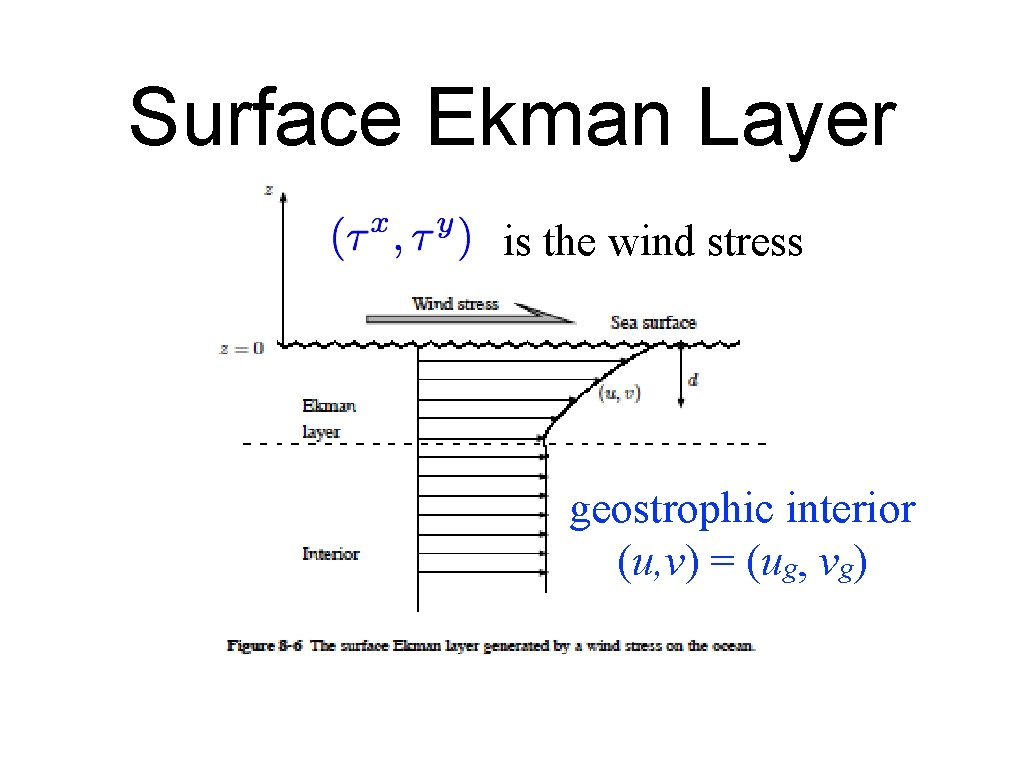
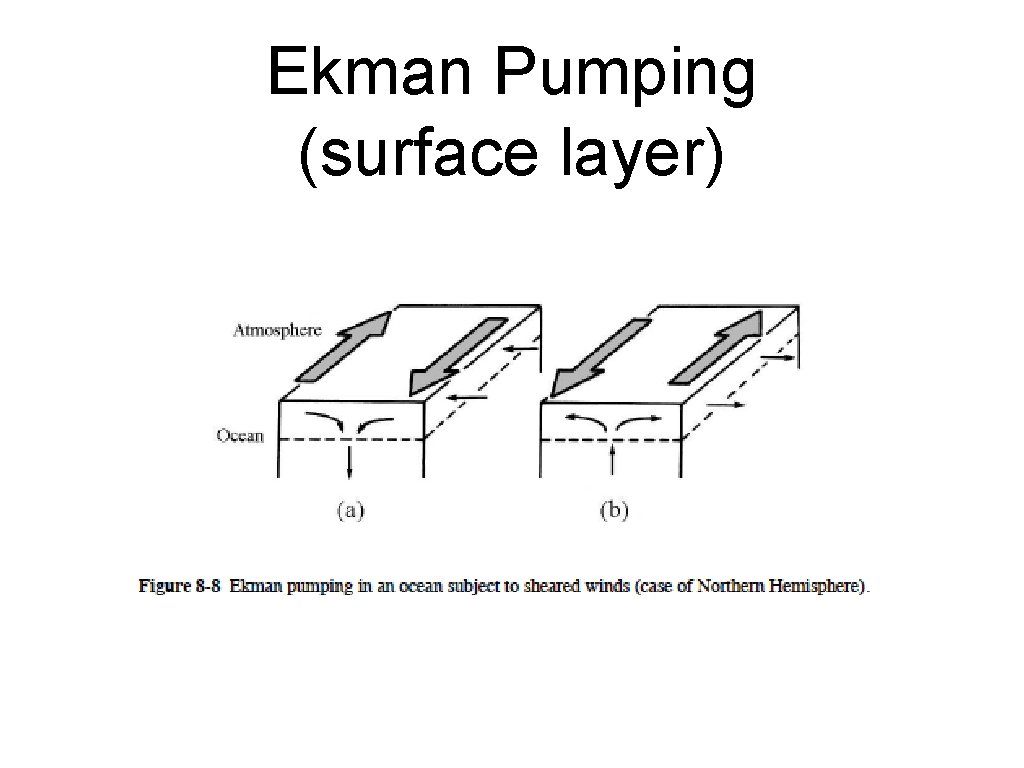
Surface Ekman Layer is the wind stress geostrophic interior (u, v) = (ug, vg)
Ekman Pumping (surface layer)