
Ocean depths temperature and Pressure Eric Angat Teacher
- Slides: 15
Ocean depths, temperature, and Pressure Eric Angat Teacher
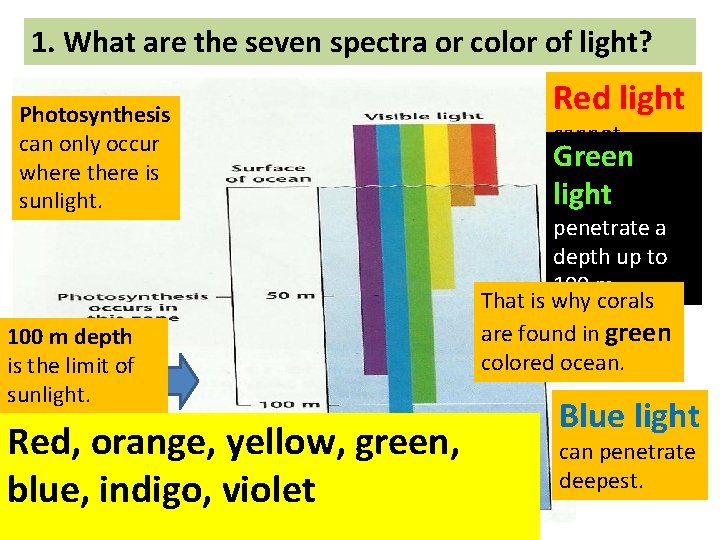
1. What are the seven spectra or color of light? Photosynthesis can only occur where there is sunlight. 100 m depth is the limit of sunlight. Red, orange, yellow, green, blue, indigo, violet Red light cannot Green penetrate deep. light can penetrate a depth up to 100 m That is why corals are found in green colored ocean. Blue light can penetrate deepest.
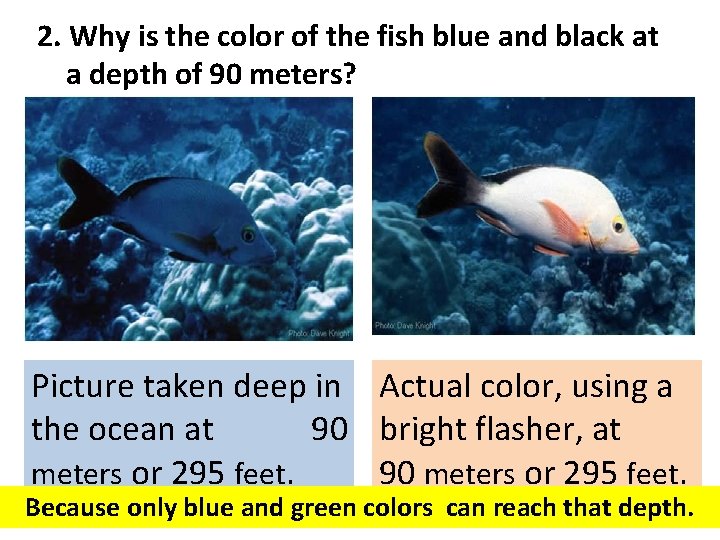
2. Why is the color of the fish blue and black at a depth of 90 meters? Picture taken deep in Actual color, using a the ocean at 90 bright flasher, at meters or 295 feet. 90 meters or 295 feet. Because only blue and green colors can reach that depth. http: //disc. sci. gsfc. nasa. gov/education-and-outreach/additional/science-focus/ocean-color/oceanblue. shtml
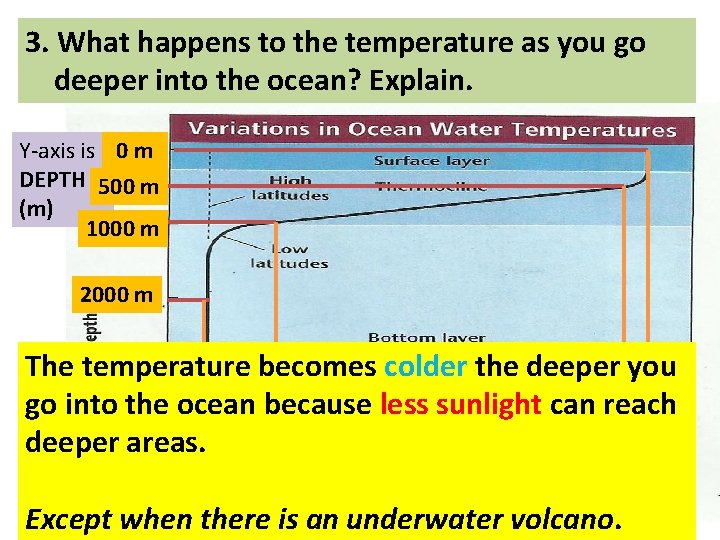
3. What happens to the temperature as you go deeper into the ocean? Explain. Y-axis is 0 m DEPTH 500 m (m) 1000 m 2000 m The temperature becomes colder the deeper you go into the ocean because less sunlight can reach deeper areas. Except 5 C X-axis is TEMPERATURE (C) 2324 2 C when there is an underwater volcano. C C
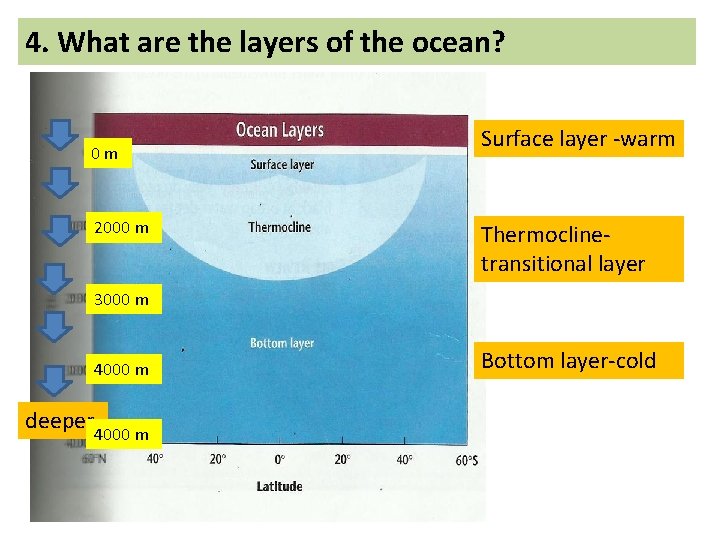
4. What are the layers of the ocean? 0 m 2000 m Surface layer -warm Thermoclinetransitional layer 3000 m 4000 m deeper 4000 m Bottom layer-cold
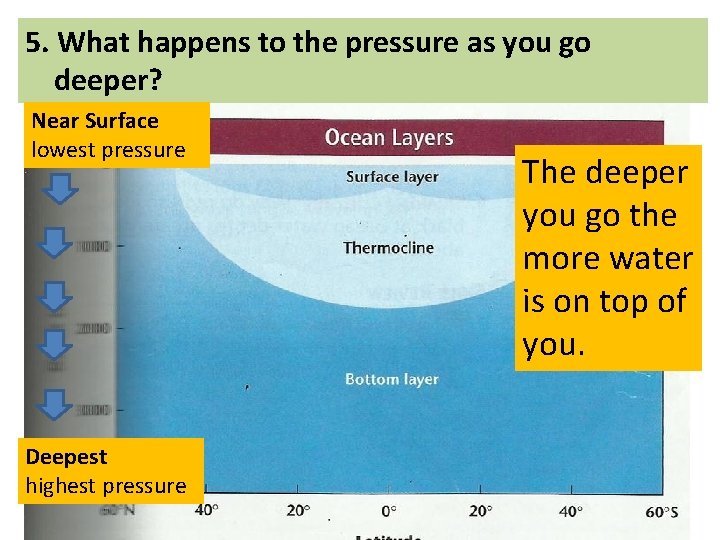
5. What happens to the pressure as you go deeper? Near Surface lowest pressure Deepest highest pressure The deeper you go the more water is on top of you.
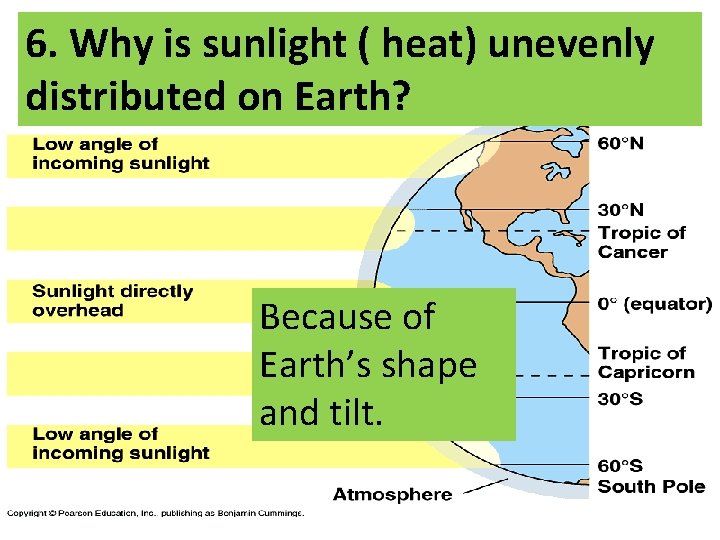
6. Why is sunlight ( heat) unevenly distributed on Earth? Because of Earth’s shape and tilt.
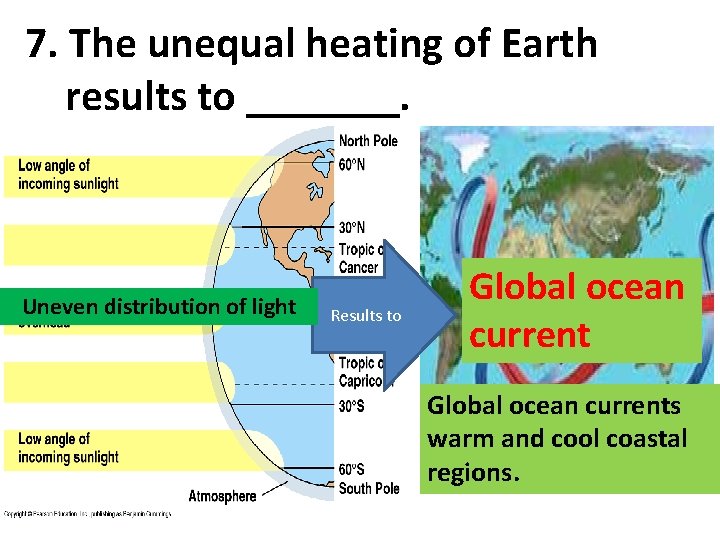
7. The unequal heating of Earth results to _______. Uneven distribution of light Results to Global ocean currents warm and cool coastal regions.
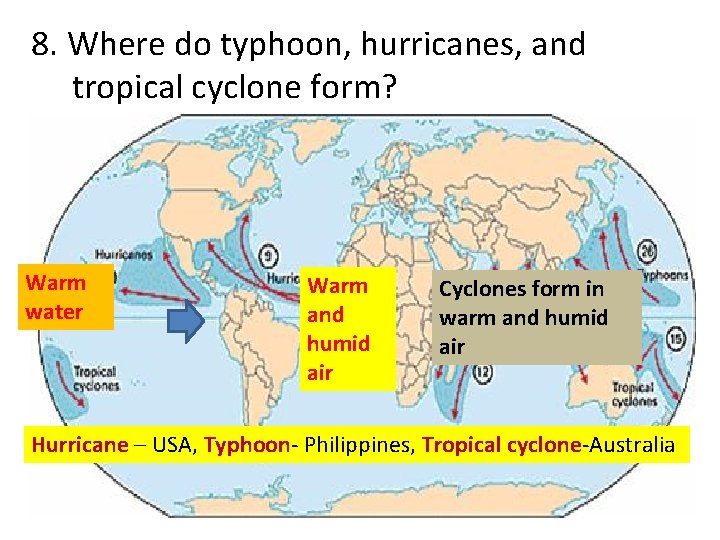
8. Where do typhoon, hurricanes, and tropical cyclone form? Warm water Warm and humid air Cyclones form in warm and humid air Hurricane – USA, Typhoon- Philippines, Tropical cyclone-Australia
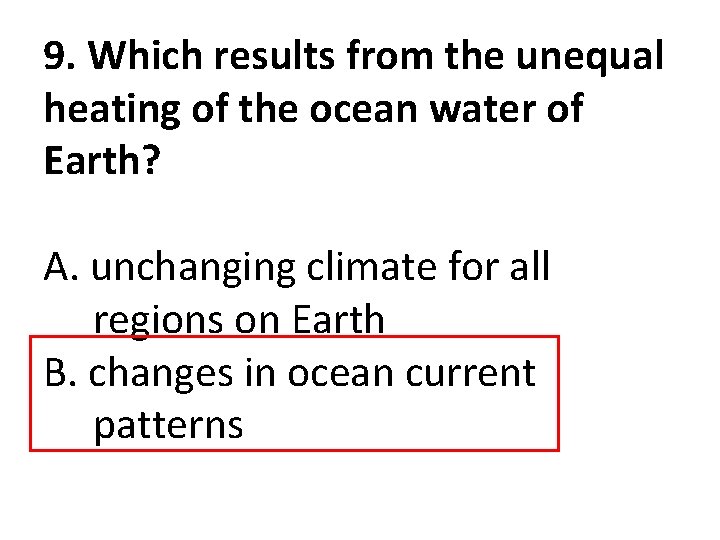
9. Which results from the unequal heating of the ocean water of Earth? A. unchanging climate for all regions on Earth B. changes in ocean current patterns
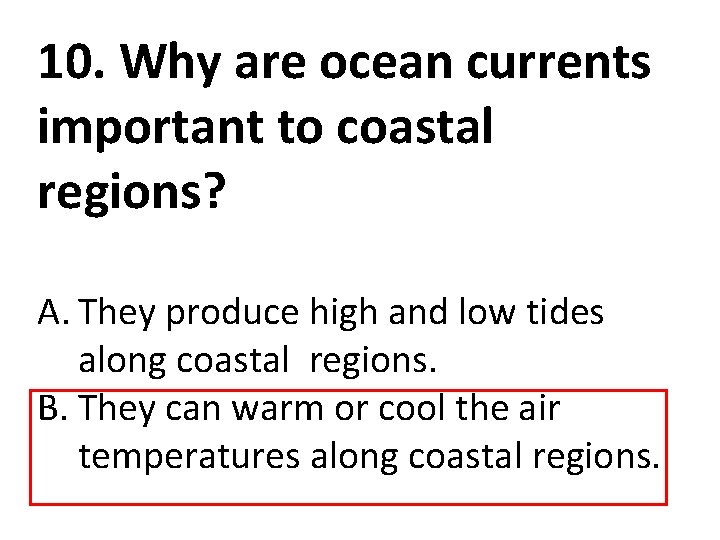
10. Why are ocean currents important to coastal regions? A. They produce high and low tides along coastal regions. B. They can warm or cool the air temperatures along coastal regions.
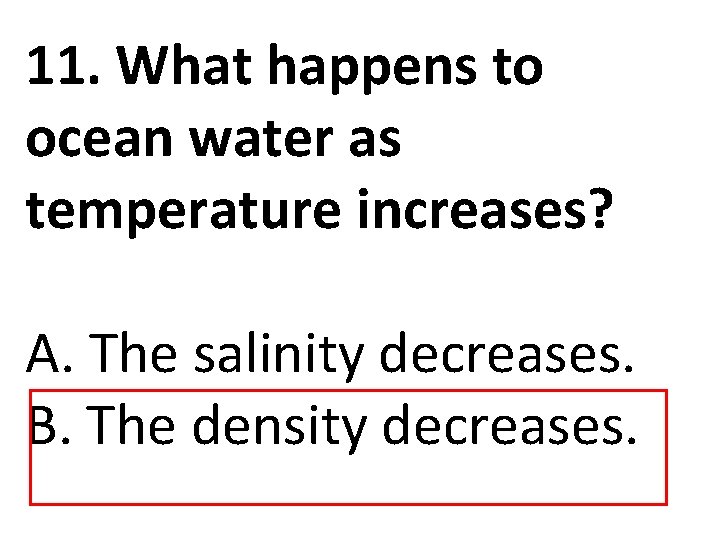
11. What happens to ocean water as temperature increases? A. The salinity decreases. B. The density decreases.
12. What type of weather occurs when a cold front and a warm front collide? A. fair weather B. rainy weather
13. What type of weather occurs when a cold air mass replaces a warm air mass? A. clouds and heavy rain B. sunshine and dry
14. What safety precautions should a person take if stranded on a wide field during a thunderstorm? A. stand under a tree to get out of the rain B. crawl into a ditch or low lying area