
Ocean Currents Why is Ocean Circulation Important Transport
- Slides: 20
Ocean Currents
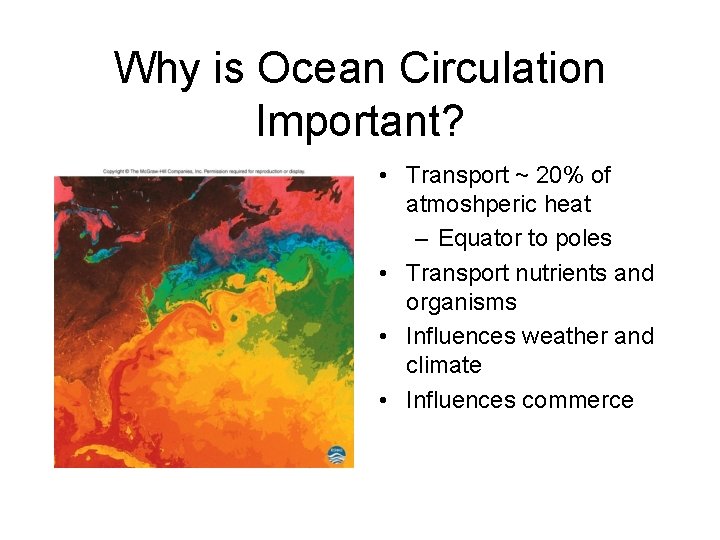
Why is Ocean Circulation Important? • Transport ~ 20% of atmoshperic heat – Equator to poles • Transport nutrients and organisms • Influences weather and climate • Influences commerce
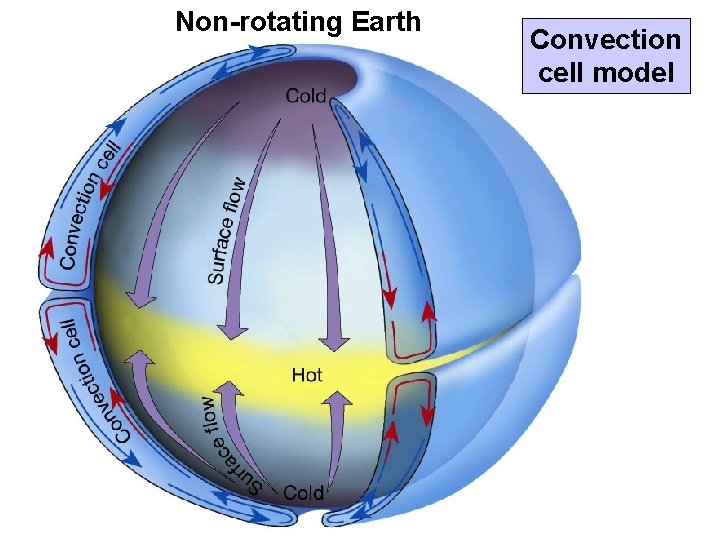
Non-rotating Earth Convection cell model
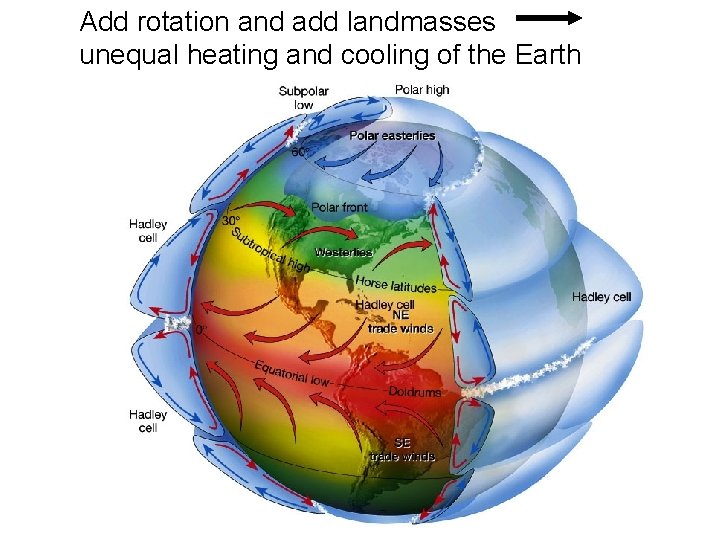
Add rotation and add landmasses unequal heating and cooling of the Earth
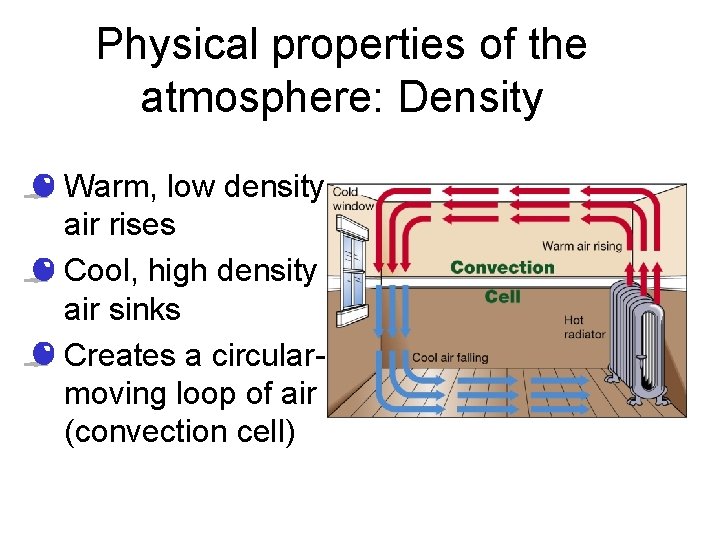
Physical properties of the atmosphere: Density • Warm, low density air rises • Cool, high density air sinks • Creates a circular- moving loop of air (convection cell)
Answer the question in your comp book. Why is it important to learn about the ocean currents?
Physical properties of the atmosphere: Water vapor • Cool air cannot hold much water vapor, so is typically dry • Warm air can hold more water vapor, so is typically moist • Water vapor decreases the density of air
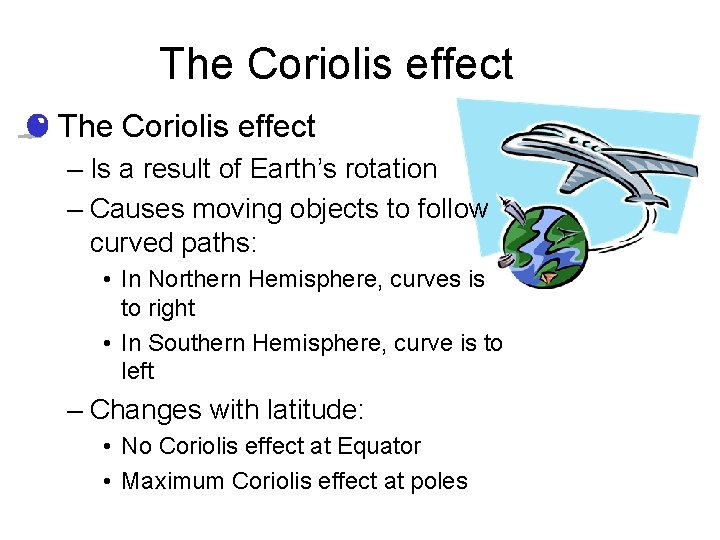
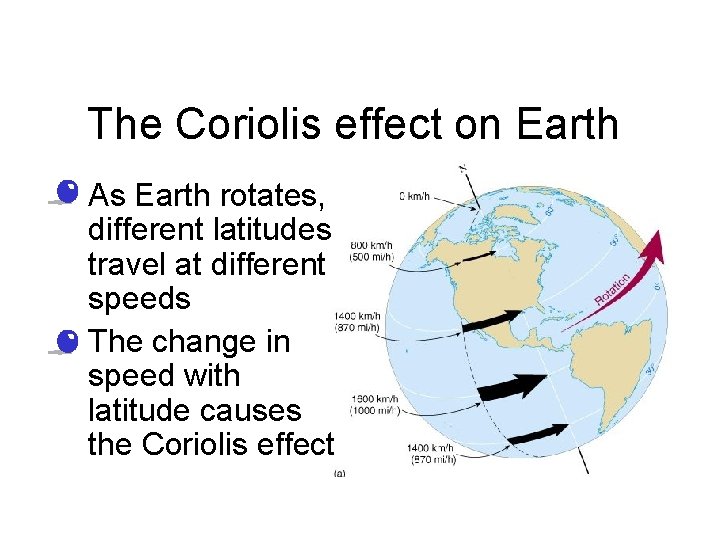
The Coriolis effect • The Coriolis effect – Is a result of Earth’s rotation – Causes moving objects to follow curved paths: • In Northern Hemisphere, curves is to right • In Southern Hemisphere, curve is to left – Changes with latitude: • No Coriolis effect at Equator • Maximum Coriolis effect at poles
The Coriolis effect on Earth • As Earth rotates, different latitudes travel at different speeds • The change in speed with latitude causes the Coriolis effect
What is Coriolis effect, and how does it effect the earth ?
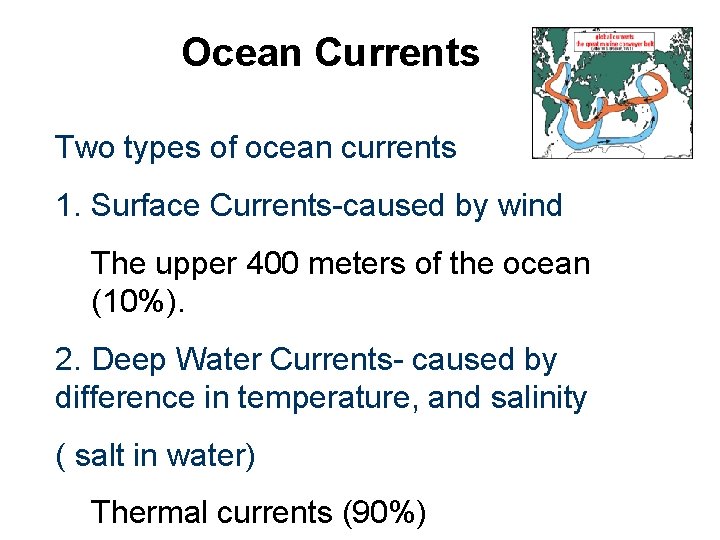
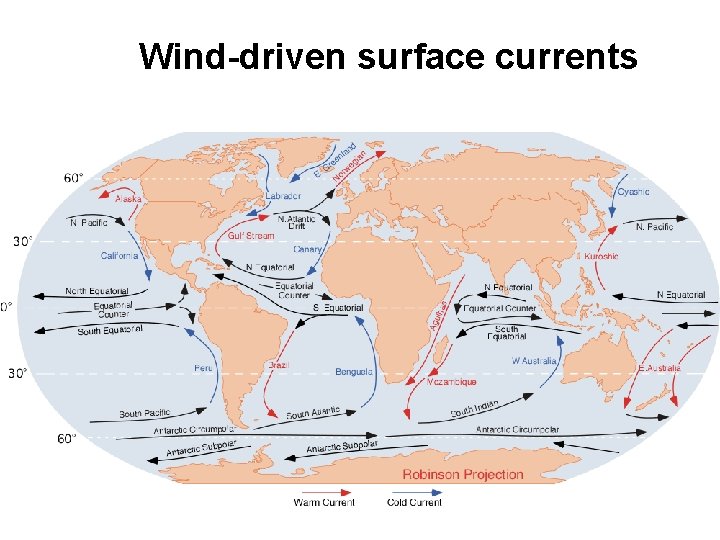
Ocean Currents Two types of ocean currents 1. Surface Currents-caused by wind The upper 400 meters of the ocean (10%). 2. Deep Water Currents- caused by difference in temperature, and salinity ( salt in water) Thermal currents (90%)
Surface Currents Forces 1. Solar Heating (temp, density) 2. Winds 3. Coriolis
Wind-driven surface currents
Wind-Driven and Density-Driven Currents • Wind-driven currents occur in the uppermost 100 m or less-surface currents • Density differences causes by salinity and temperature produce very slow flows in deeper watersdeep water currents.
1. Research and define density. 2. Name the two types of ocean currents, and how are they caused?
Winds and surface water • Wind blowing over the ocean can move it due to frictional drag. • Waves create the necessary roughness for wind to couple with water. • One “rule of thumb” holds that wind blowing for 12 hrs at 100 cm per sec will produce a 2 cm per sec current (about 2% of the wind speed)
Upwelling and downwelling Vertical movement of water ( ) – Upwelling = movement of deep water to surface • Hoists cold, nutrient-rich water to surface • Produces high productivities and abundant marine life – Downwelling = movement of surface water down • Moves warm, nutrient-depleted surface water down • Not associated with high productivities or abundant marine life
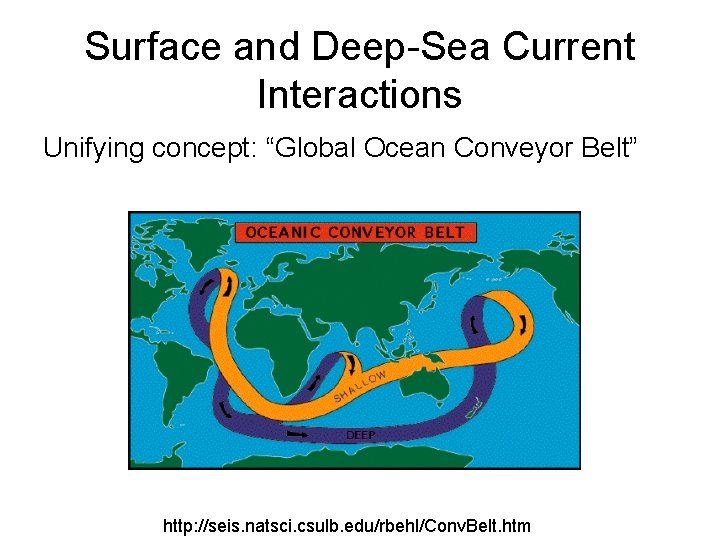
Surface and Deep-Sea Current Interactions Unifying concept: “Global Ocean Conveyor Belt” http: //seis. natsci. csulb. edu/rbehl/Conv. Belt. htm
Describe what is global conveyor belt?
Heat Transport by Currents • Surface currents play significant roles in transport heat energy from equatorial waters towards the poles • May serve as “heat sources” to cooler air, “heat sinks” from warmer • Evaporation leaves high percentage of salts in the water.