
Ocean Currents Why is Ocean Circulation Important Transport

- Slides: 25
Ocean Currents
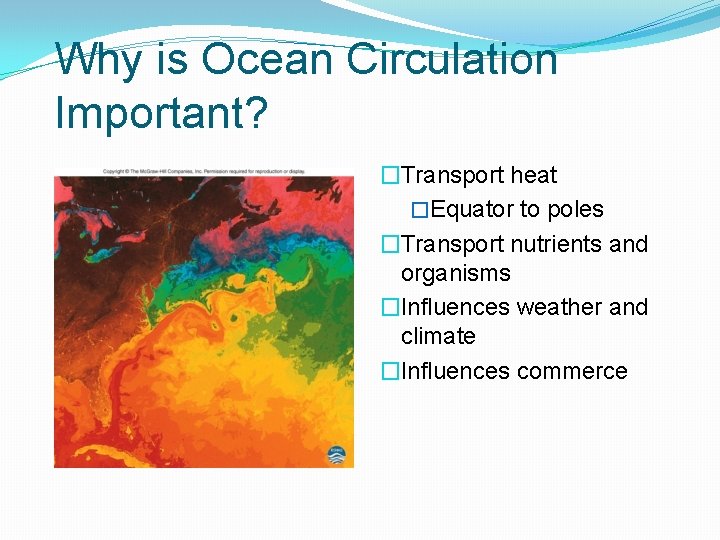
Why is Ocean Circulation Important? �Transport heat �Equator to poles �Transport nutrients and organisms �Influences weather and climate �Influences commerce
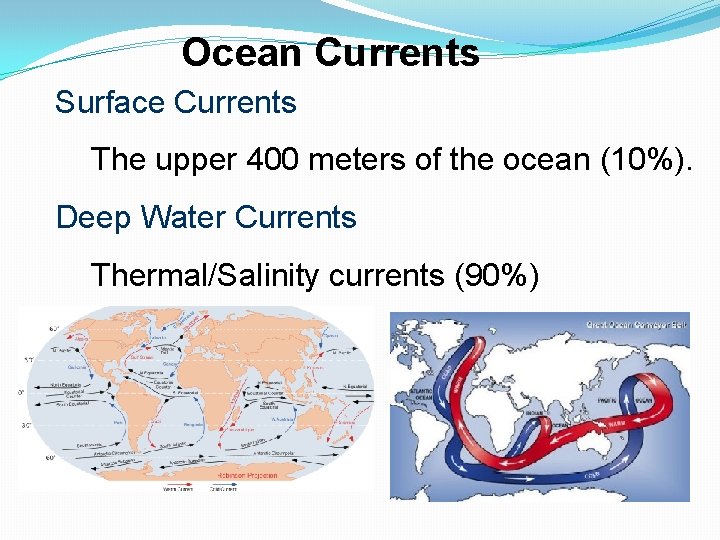
Ocean Currents Surface Currents The upper 400 meters of the ocean (10%). Deep Water Currents Thermal/Salinity currents (90%)
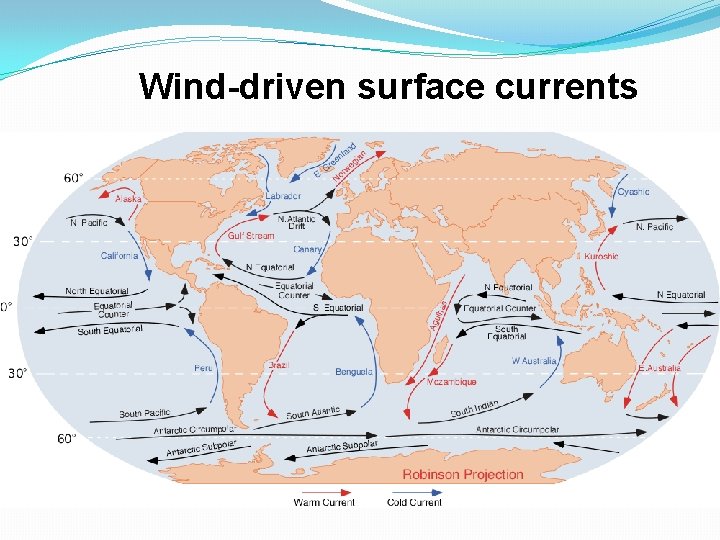
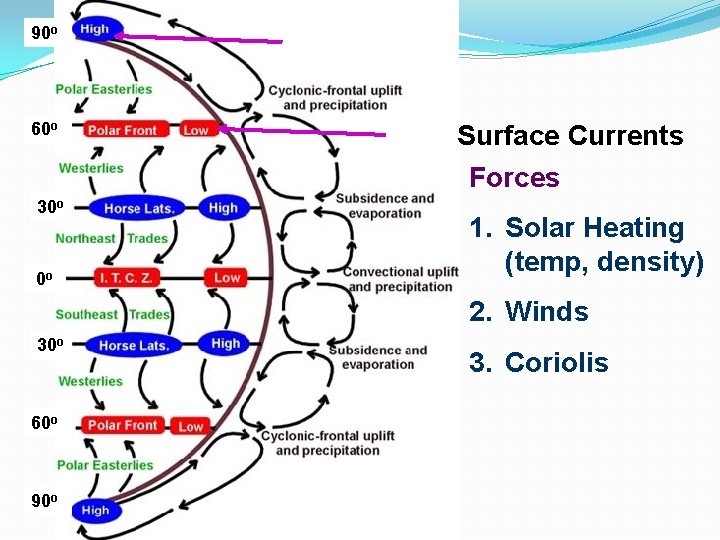
Wind-driven surface currents
90 o 60 o Surface Currents Forces 30 o 0 o 1. Solar Heating (temp, density) 2. Winds 30 o 60 o 90 o 3. Coriolis
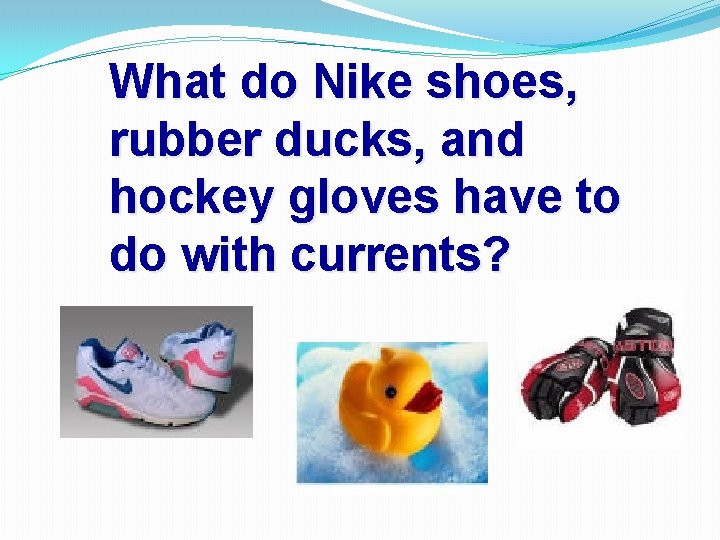
What do Nike shoes, rubber ducks, and hockey gloves have to do with currents?
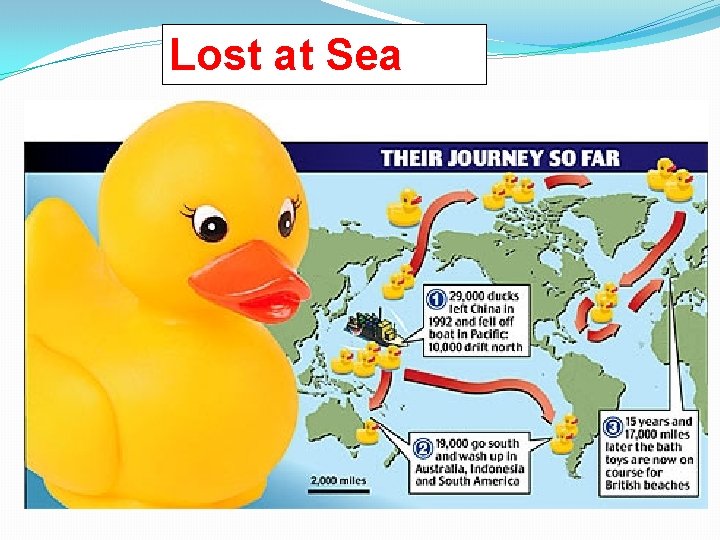
Lost at Sea
Duckie Progress • January 1992 - shipwrecked in the Pacific Ocean, off the coast of China • November 1992 - half had drifted north to the Bering Sea and Alaska; the other half went south to Indonesia and Australia • 1995 to 2000 - spent five years in the Arctic ice floes, slowly working their way through the glaciers 2001 - the duckies bobbed over the place where the Titanic had sunk • 2003 - they were predicted to begin washing up onshore in New England, but only one was spotted in Maine • 2007 - a couple duckies and frogs were found on the beaches of Scotland southwest England.
2004 -2007 Barber’s Point
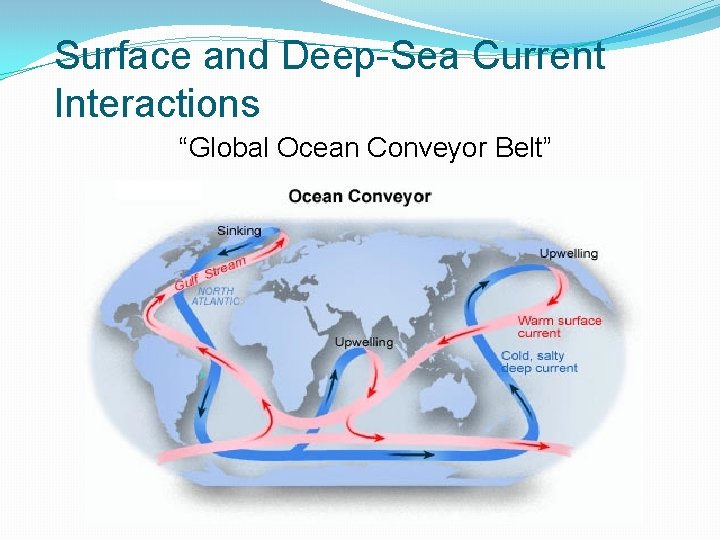
Surface and Deep-Sea Current Interactions “Global Ocean Conveyor Belt”
Transport by Currents �Surface currents play significant roles in transport heat energy from equatorial waters towards the poles �Currents also involved with gas exchanges, especially O 2 and CO 2 �Nutrient exchanges important within surface waters (including outflow from continents) and deeper waters (upwelling and downwelling) �Pollution dispersal �Impact on fisheries and other resources
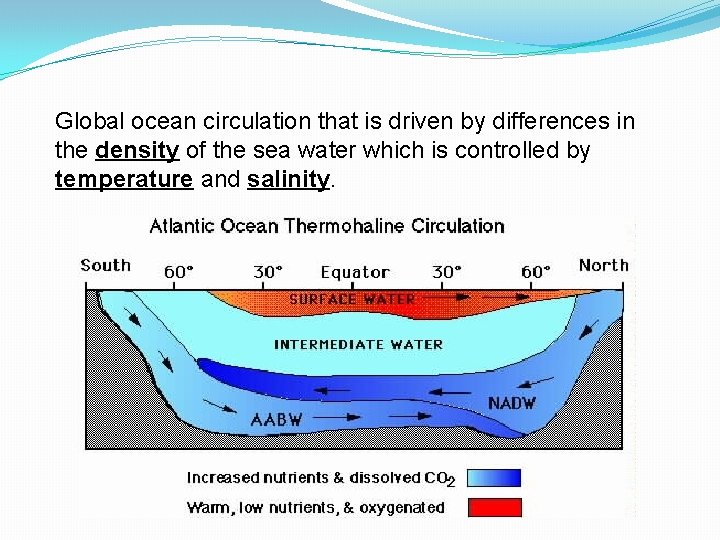
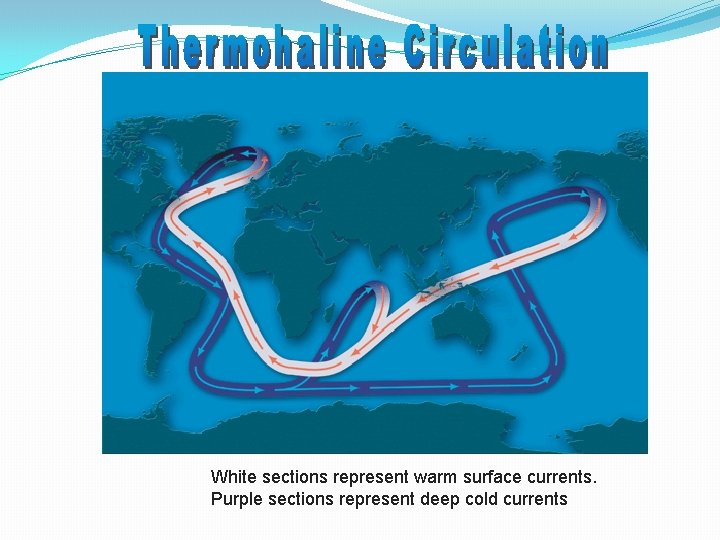
Global ocean circulation that is driven by differences in the density of the sea water which is controlled by temperature and salinity.
White sections represent warm surface currents. Purple sections represent deep cold currents
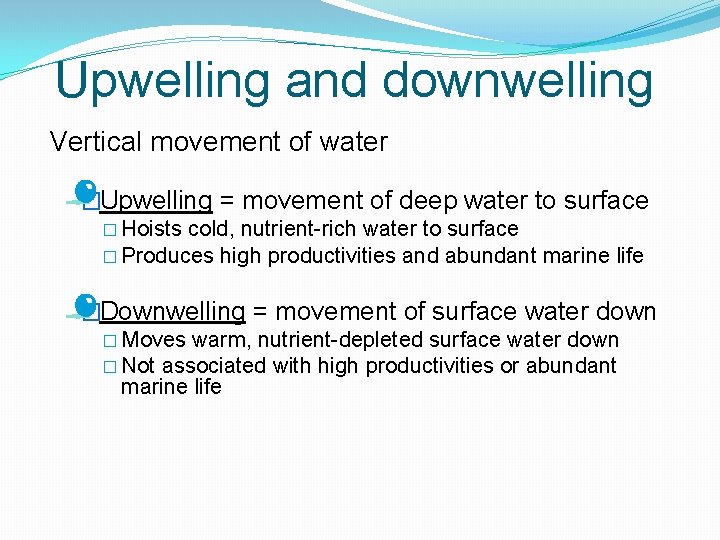
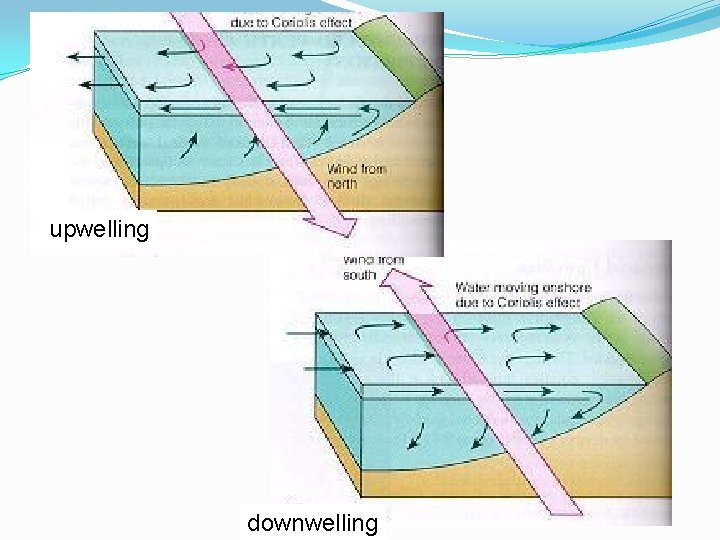
Upwelling and downwelling Vertical movement of water �Upwelling = movement of deep water to surface � Hoists cold, nutrient-rich water to surface � Produces high productivities and abundant marine life �Downwelling = movement of surface water down � Moves warm, nutrient-depleted surface water down � Not associated with high productivities or abundant marine life
upwelling downwelling
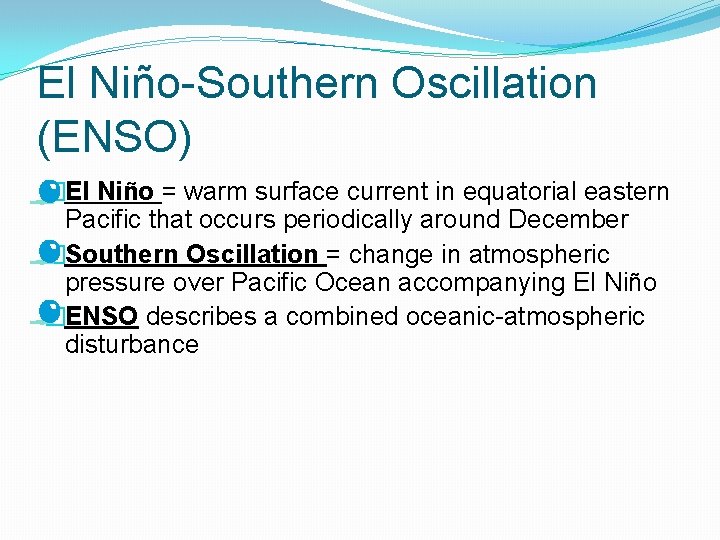
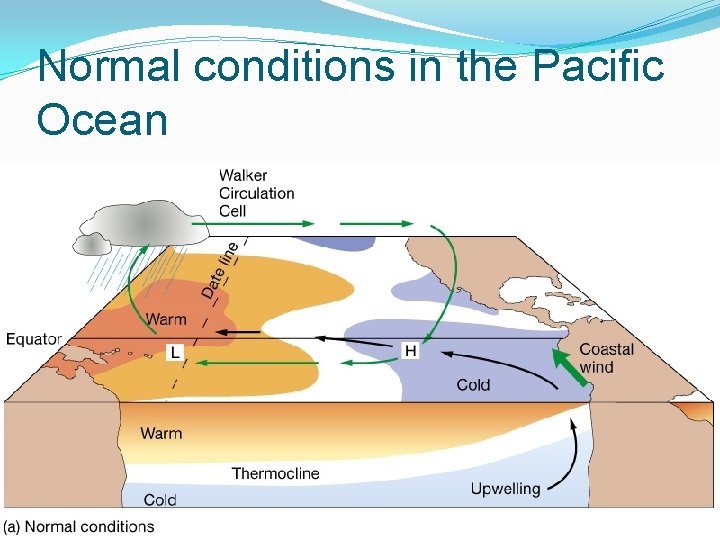
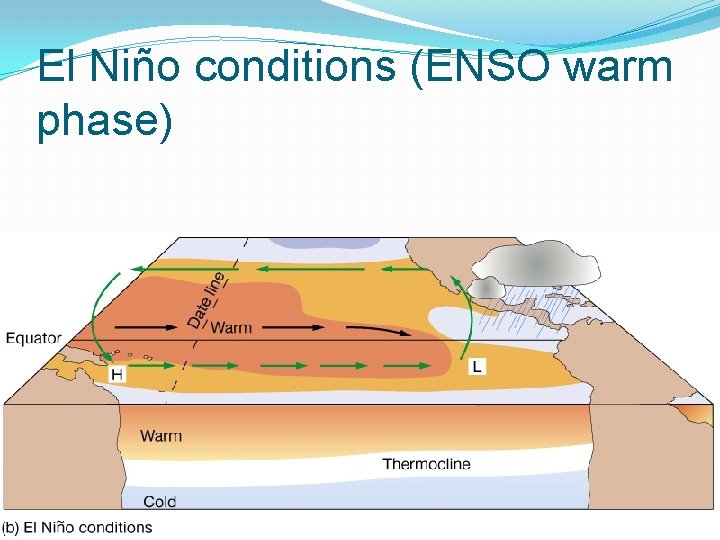
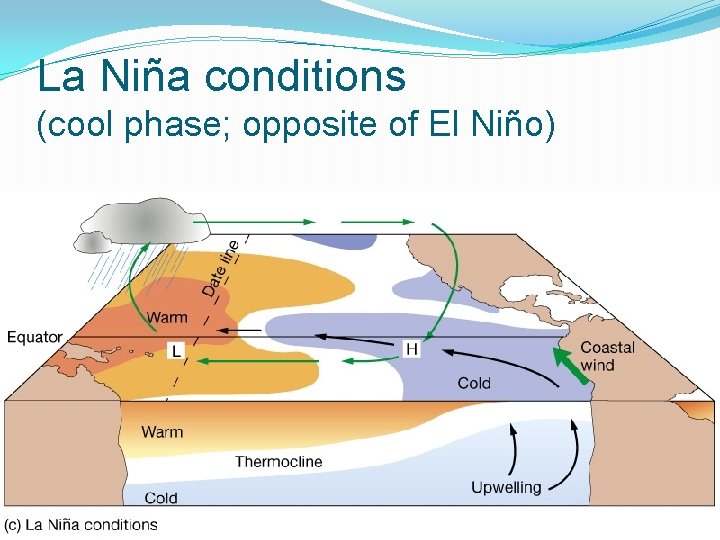
El Niño-Southern Oscillation (ENSO) �El Niño = warm surface current in equatorial eastern Pacific that occurs periodically around December �Southern Oscillation = change in atmospheric pressure over Pacific Ocean accompanying El Niño �ENSO describes a combined oceanic-atmospheric disturbance
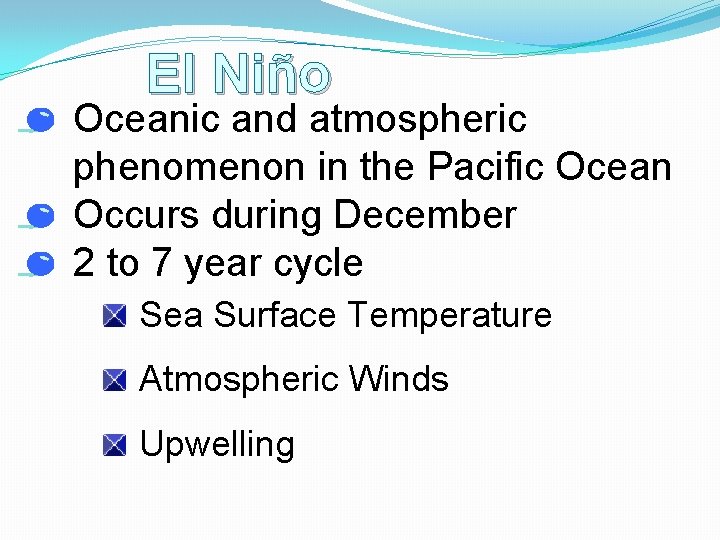
El Niño • Oceanic and atmospheric phenomenon in the Pacific Ocean • Occurs during December • 2 to 7 year cycle Sea Surface Temperature Atmospheric Winds Upwelling
Normal conditions in the Pacific Ocean
El Niño conditions (ENSO warm phase)
La Niña conditions (cool phase; opposite of El Niño)
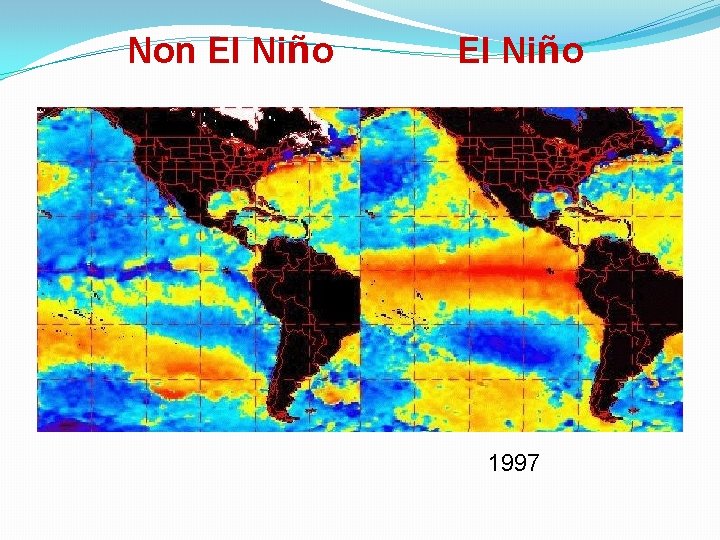
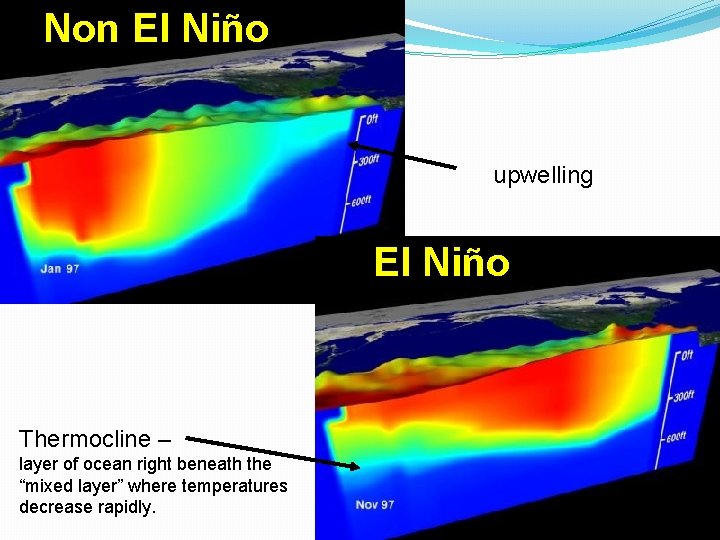
Non El Niño 1997
Non El Niño upwelling El Niño Thermocline – layer of ocean right beneath the “mixed layer” where temperatures decrease rapidly.
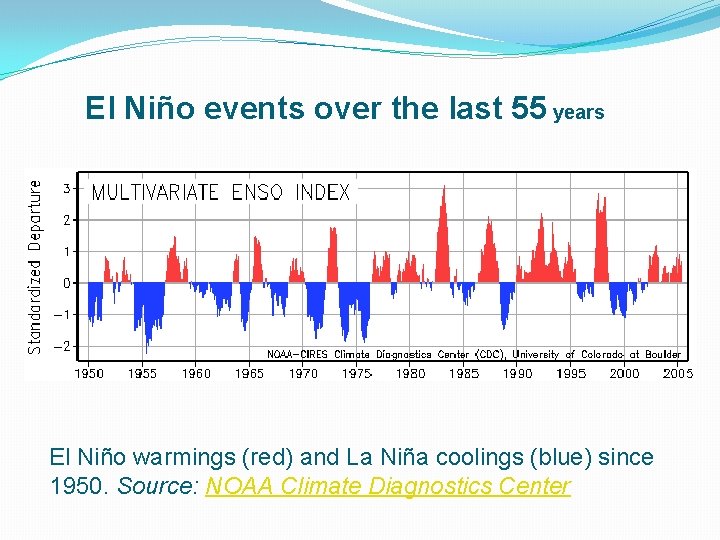
El Niño events over the last 55 years El Niño warmings (red) and La Niña coolings (blue) since 1950. Source: NOAA Climate Diagnostics Center
World Wide Effects of El Niño • Weather patterns • Marine Life • Economic resources El Nino Animation
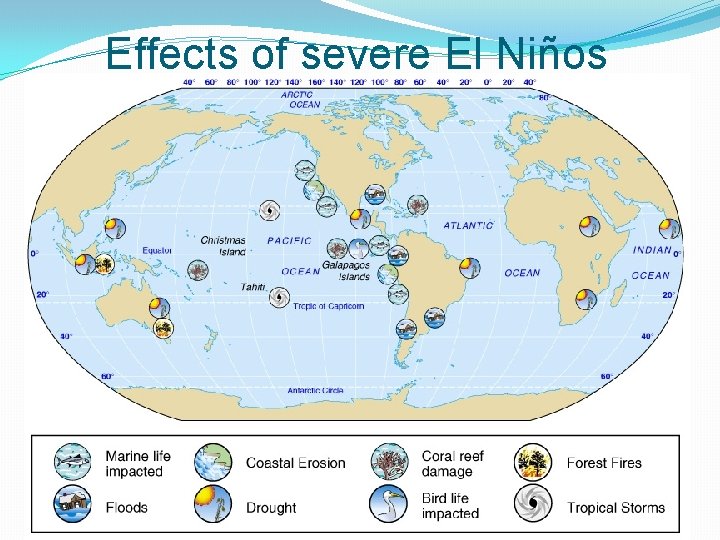
Effects of severe El Niños