
Ocean Currents the motion of water Can you
- Slides: 22
Ocean Currents the motion of water
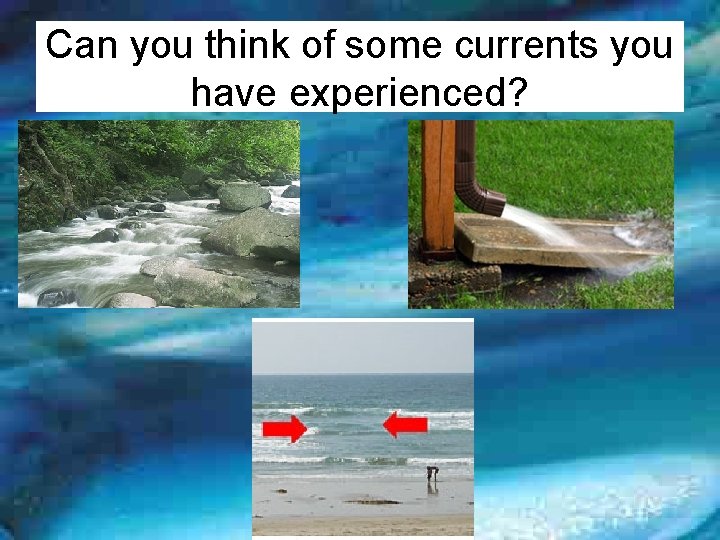
Can you think of some currents you have experienced?
Can you think of some currents you have experienced?
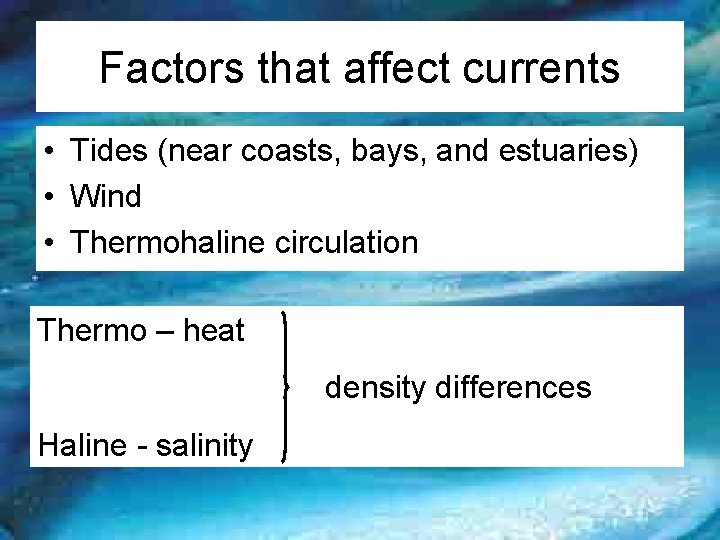
Factors that affect currents • Tides (near coasts, bays, and estuaries) • Wind • Thermohaline circulation Thermo – heat density differences Haline - salinity
Surface Ocean Current Coastal currents Driven by local winds Open ocean Driven by global wind systems
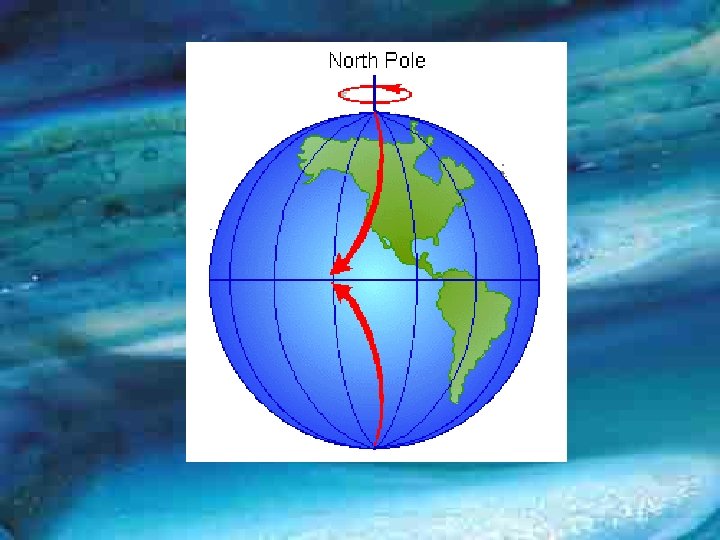
Coriolis Effect • Due to spinning of the earth • Air deflected – Right in northern hemisphere – Left in southern hemisphere • Result: curved paths
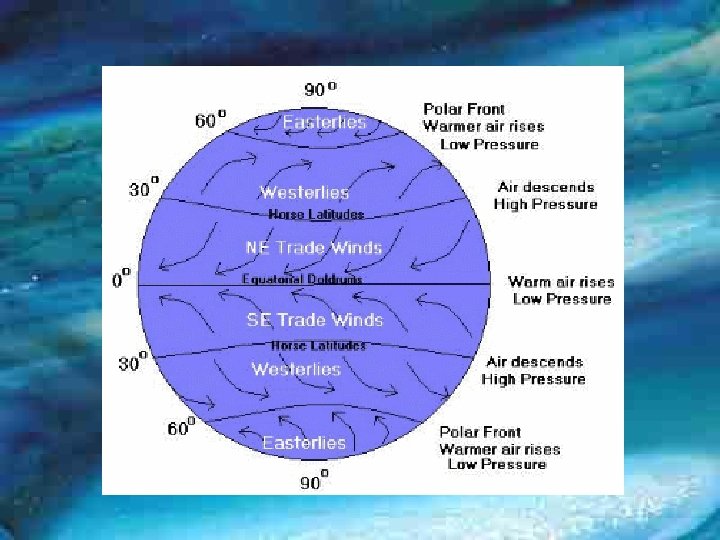
Trade Winds • • • Northern Hemisphere Warm air moves away from equator Deflected right About 30° North, some cools and decends Cooled air blows northeast to southwest (back toward equator) • Southern Hemisphere: same in reverse (southeast to northwest)
Doldrums • Cooled air masses meet again around 5° North and South • “Cancel” each other out • Result: calm winds
Westerlies • Winds that did not cool and return to the equator, continue on to the poles
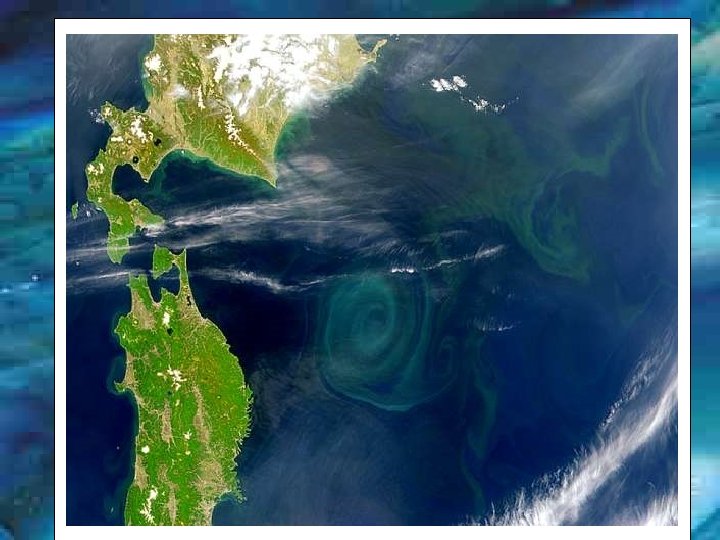
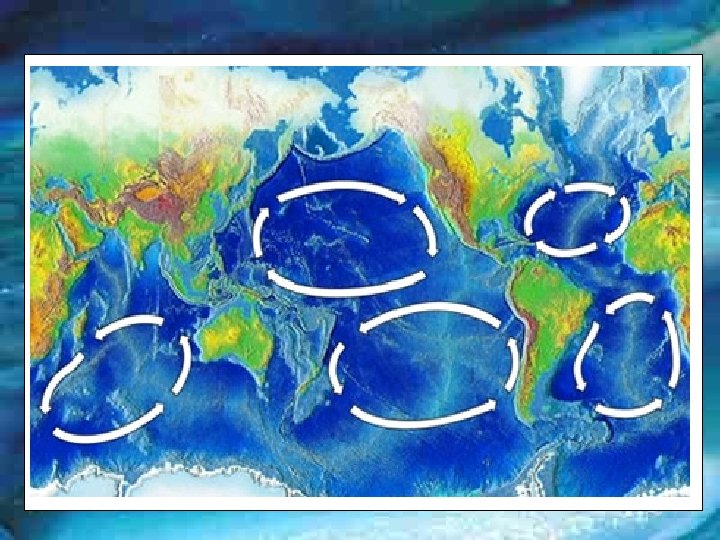
Result of the Winds • Winds drag on water’s surface • Push water in direction wind is blowing • Coriolis effect occurs on water just as it does on wind • Gyres – major spirals of ocean-circling current • No circling at the equator • 5 major ocean-wide gyres: North Atlantic, South Atlantic, North Pacific, South Pacific, Indian Ocean
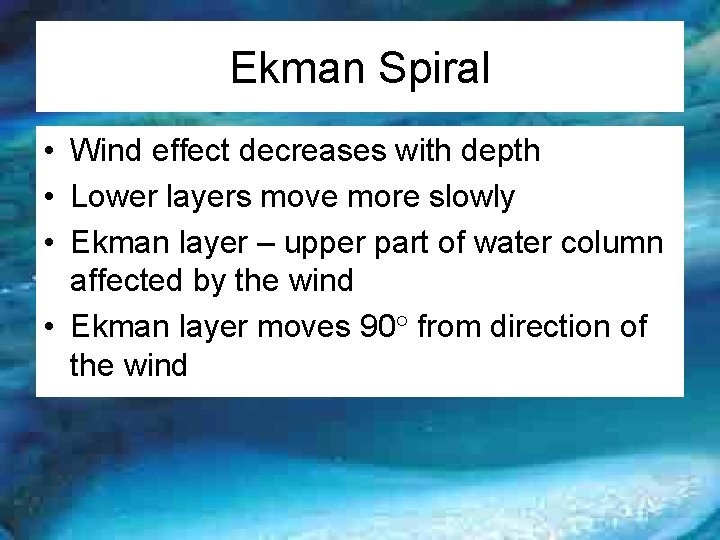
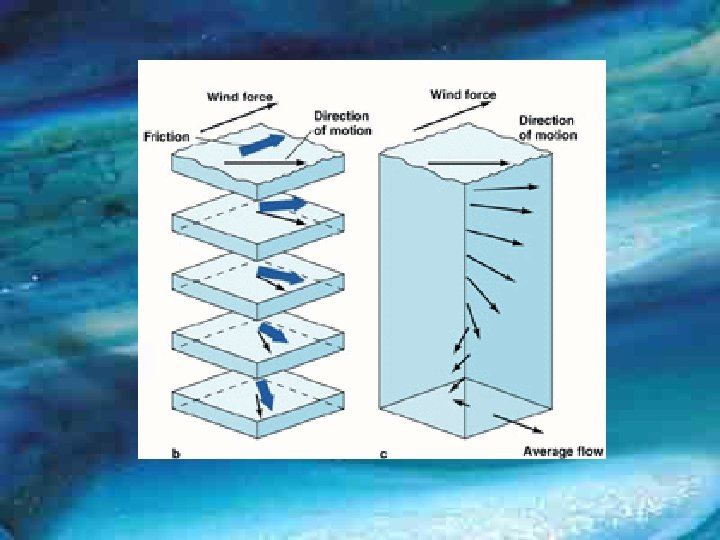
Ekman Spiral • Wind effect decreases with depth • Lower layers move more slowly • Ekman layer – upper part of water column affected by the wind • Ekman layer moves 90° from direction of the wind
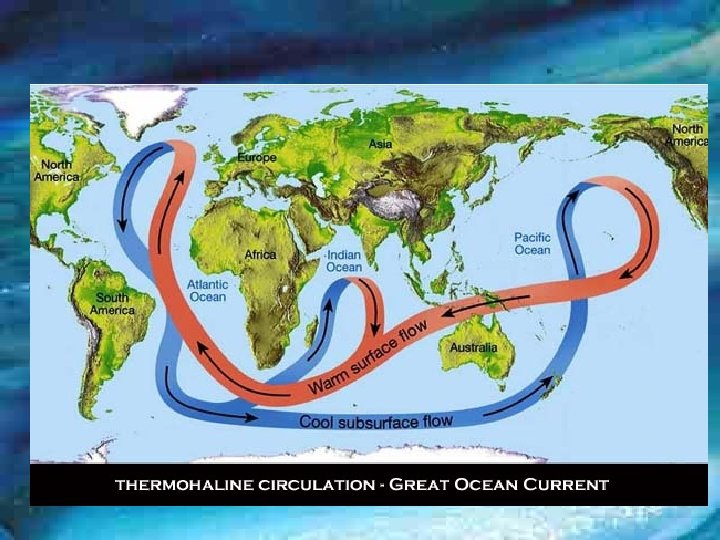
Thermohaline Currents The “Global Conveyor Belt” What do you think happens to water in the North Atlantic near the pole? Cools…freezes…ice forms Saltier because salt does not freeze
Thermohaline Currents What happens to colder, denser water? It sinks! Surface water moves in to replace it, creates a current.
Thermohaline Currents The “Global Conveyor Belt” What do you think happens to water at the poles?
Thermohaline Current • Much slower than surface currents. • Estimate: 1 “particle” of water would take 1, 000 years to completely circle the earth on the Global Conveyor Belt • Illustrates the importance of “One World Ocean”