
OCEAN CURRENTS Ocean currents are driven by a
OCEAN CURRENTS Ocean currents are driven by a combination of temperature, gravity, prevailing winds, the Coriolis effect, and the locations of continents. Warm water, like warm air, expands and rises. Gyres- the large-scale patterns of water circulation. The ocean surface currents rotate in a clockwise direction in the Northern Hemisphere and a counterclockwise direction in the Southern Hemisphere.
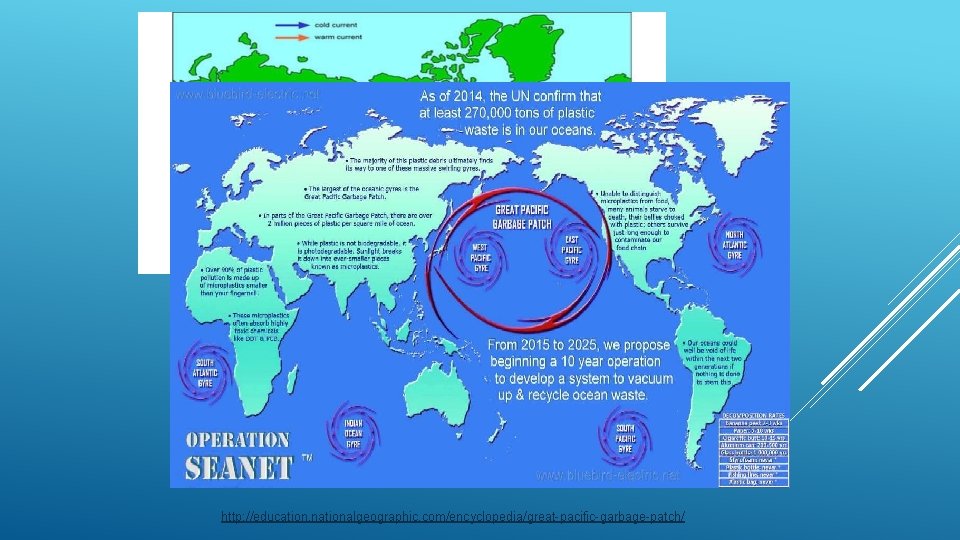
http: //education. nationalgeographic. com/encyclopedia/great-pacific-garbage-patch/
UPWELLING Upwelling- as the surface currents separate from one another, deeper waters rise and replace the water that has moved away. This upward movement of water brings nutrients from the ocean bottom that supports the large populations of producers, which in turn support large populations of fish.
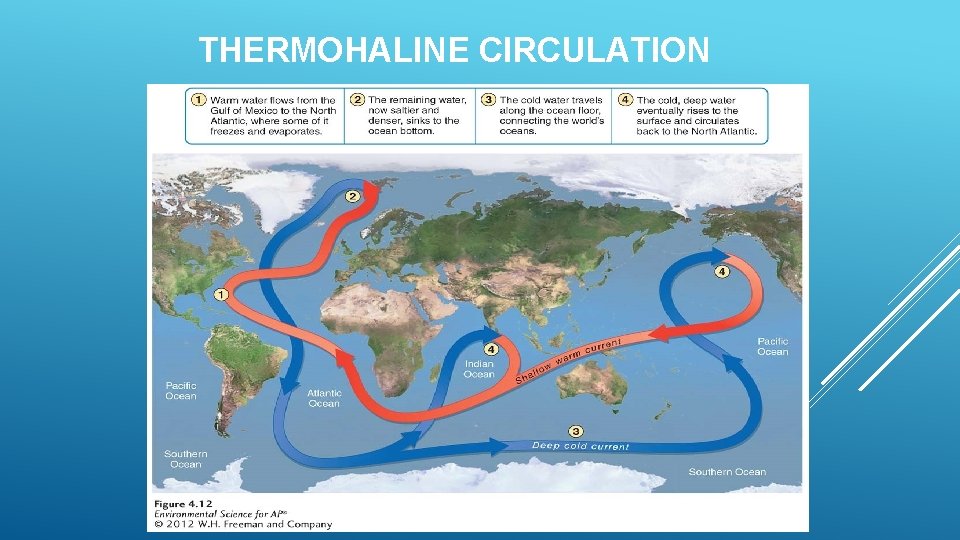
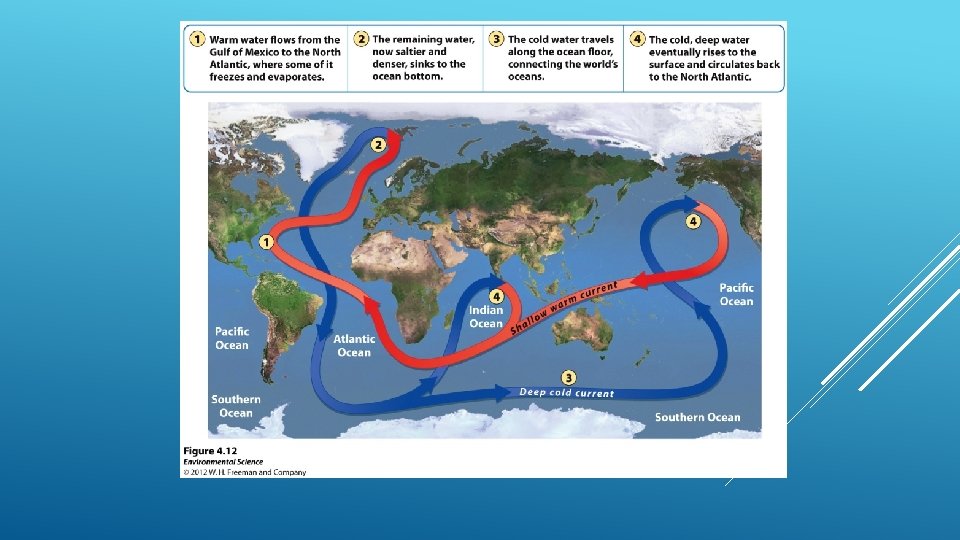
THERMOHALINE CIRCULATION Thermohaline circulation- another oceanic circulation that drives the mixing of surface water and deep water. Scientists believe this process is crucial for moving heat and nutrients around the globe. Thermohaline circulation appears to be driven by surface waters that contain unusually large amounts of salt.
THERMOHALINE CIRCULATION Some of the water that flows from the Gulf of Mexico to the North Atlantic freezes or evaporates, and the salt that remains behind increases the salt concentration of the water. This cold, salty water is relatively dense, so it sinks to the bottom of the ocean, mixing with deeper ocean waters. These two processes create the movement necessary to drive a deep, cold current that slowly moves past Antarctica and northward to the northern Pacific Ocean.
THERMOHALINE CIRCULATION
HEAT TRANSPORT Ocean currents can affect the temperature of nearby landmasses. For example, England's average winter temperature is approximately 20 ˚ C (36˚F) warmer than Newfoundland, Canada, which is located at a similar latitude. Global warming concern Melting of the Glaciers
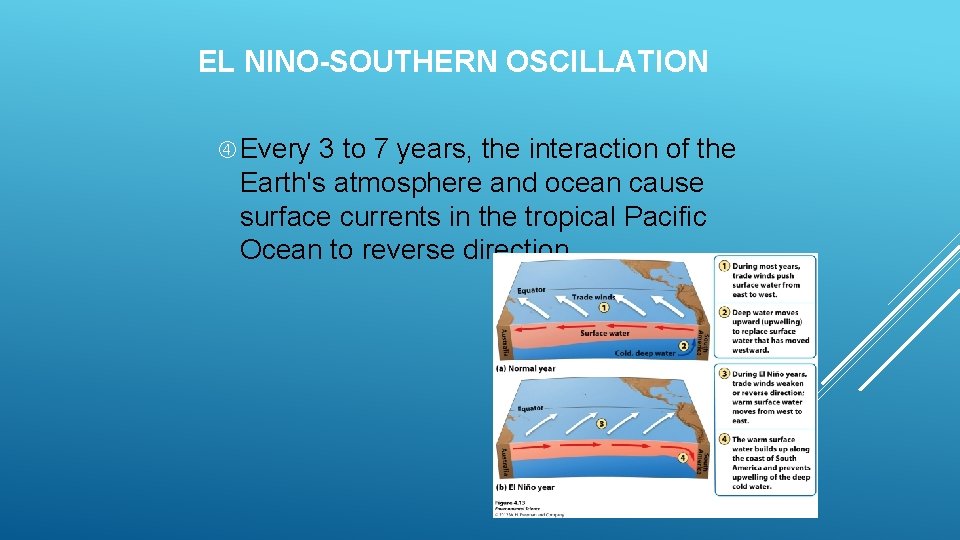
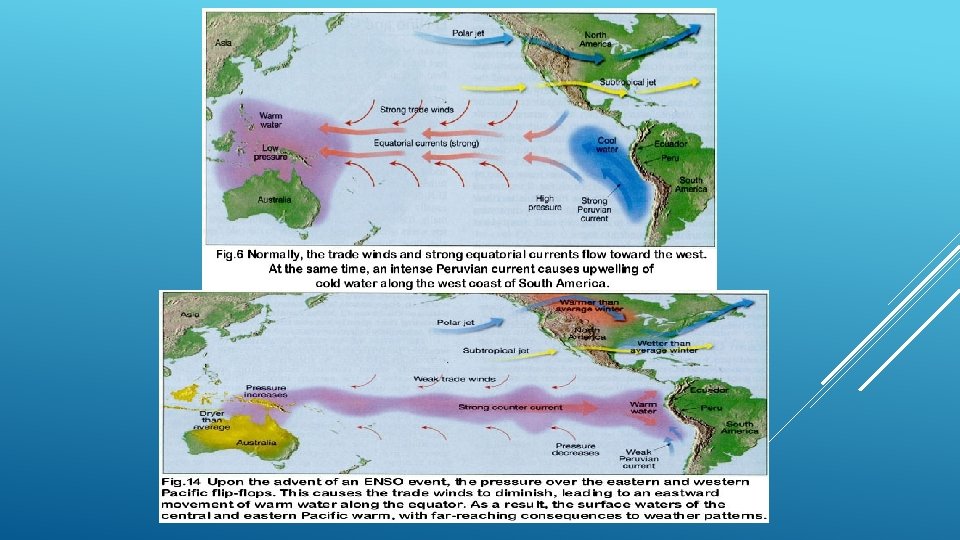
EL NINO-SOUTHERN OSCILLATION Every 3 to 7 years, the interaction of the Earth's atmosphere and ocean cause surface currents in the tropical Pacific Ocean to reverse direction.
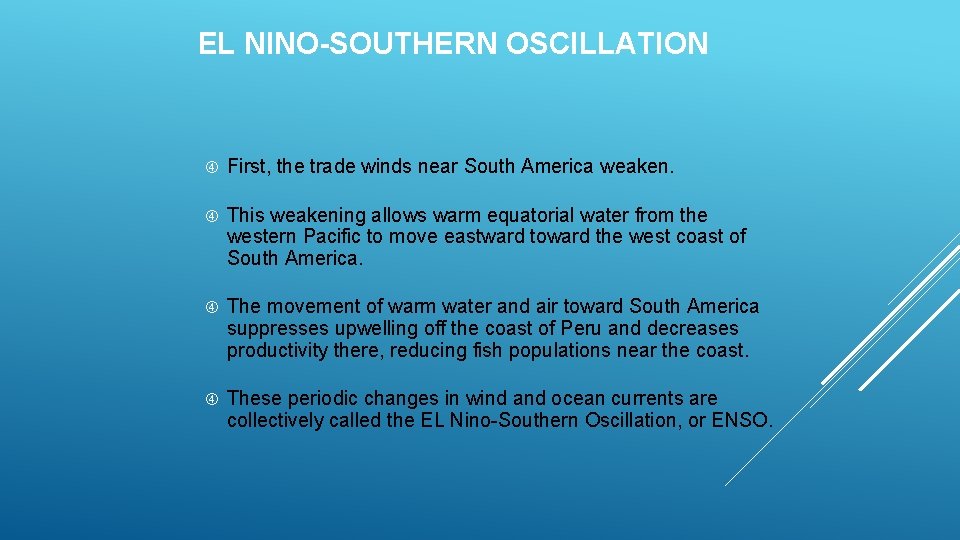
EL NINO-SOUTHERN OSCILLATION First, the trade winds near South America weaken. This weakening allows warm equatorial water from the western Pacific to move eastward toward the west coast of South America. The movement of warm water and air toward South America suppresses upwelling off the coast of Peru and decreases productivity there, reducing fish populations near the coast. These periodic changes in wind and ocean currents are collectively called the EL Nino-Southern Oscillation, or ENSO.
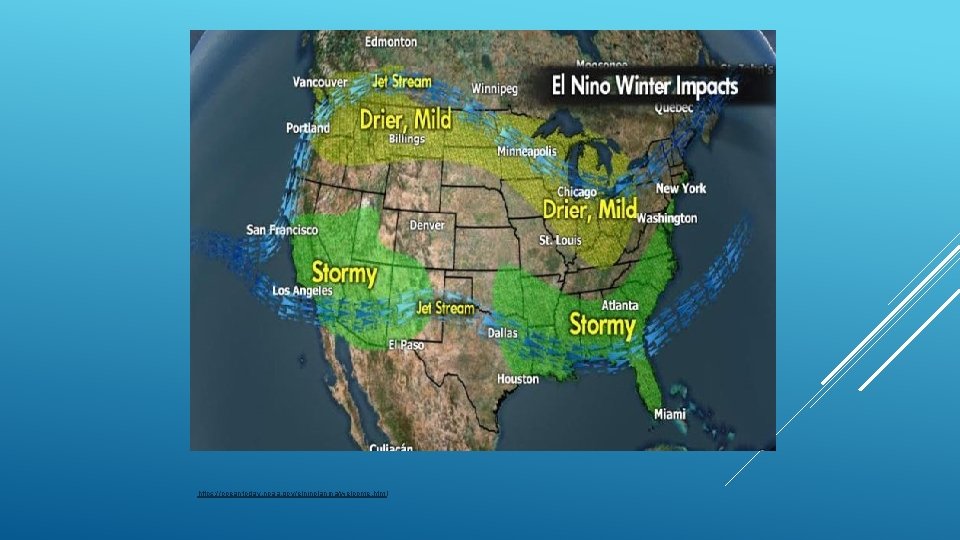
https: //oceantoday. noaa. gov/elninolanina/welcome. html
CHAPTER REVIEW Most important concepts are Layers of the Earth’s atmosphere How temperature changes in each layer The processes that affect climate How ocean currents influence weather and climate on Earth Be familiar with the different types of biomes A general understanding of biomes
- Slides: 13