
Ocean Circulation Objectives This lecture include Currents their
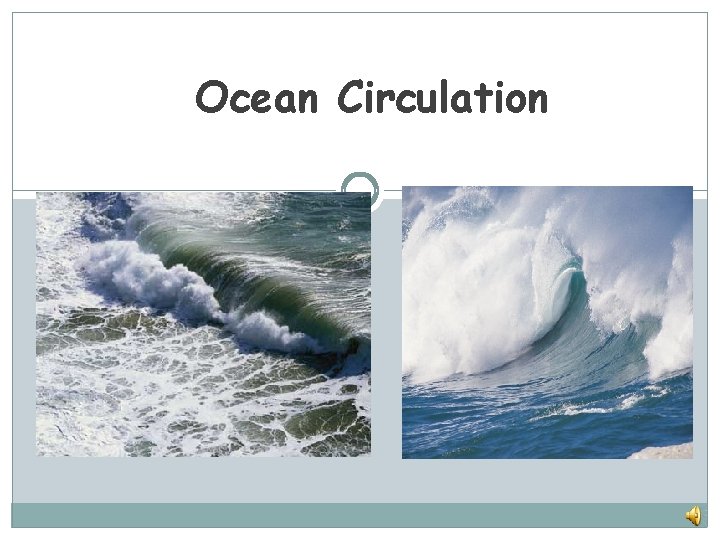
Ocean Circulation
Objectives This lecture include Currents their origin , Movement from poles to equator and from equator to poles Tides, their nature, causes, Types of Tides Tsunami and its effects on shore Waves , their nature, causes,
Ocean Circulation It includes Currents Waves Tides Tsunami
I. Currents A. B. C. D. Ocean water contains horizontal, stream-like movements of water called ocean currents. There are two main Types of current Cold Warm
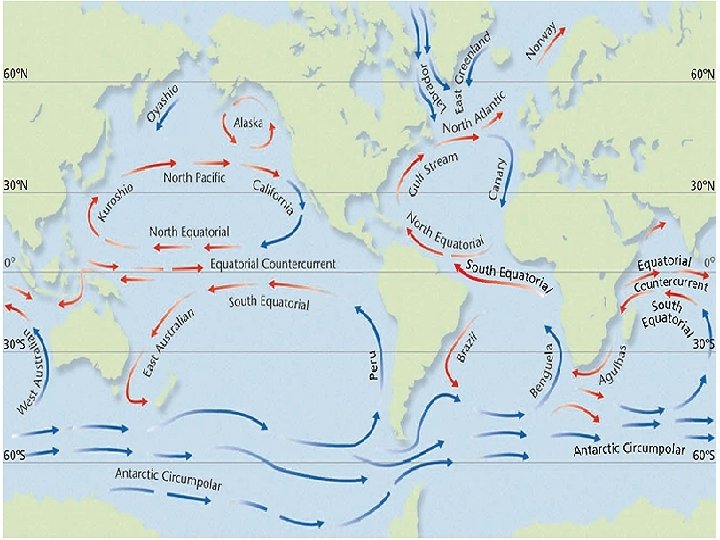
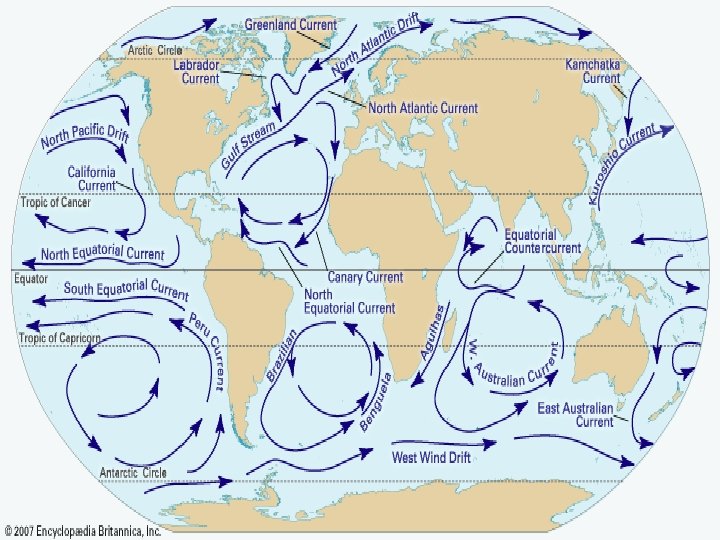
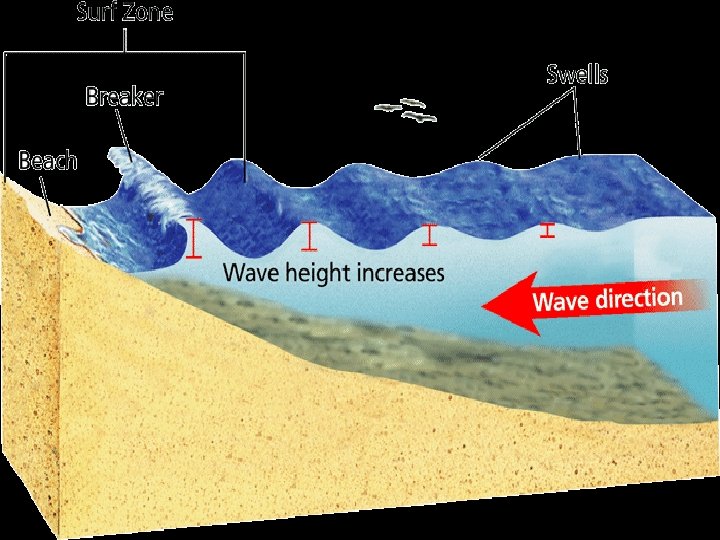
II. Waves 1. A Wave is a rhythmic movement that carries energy through matter or space. 2. When a wave passes through the ocean, individual water molecules move up and down in a circular motion but they do not move forward or backward
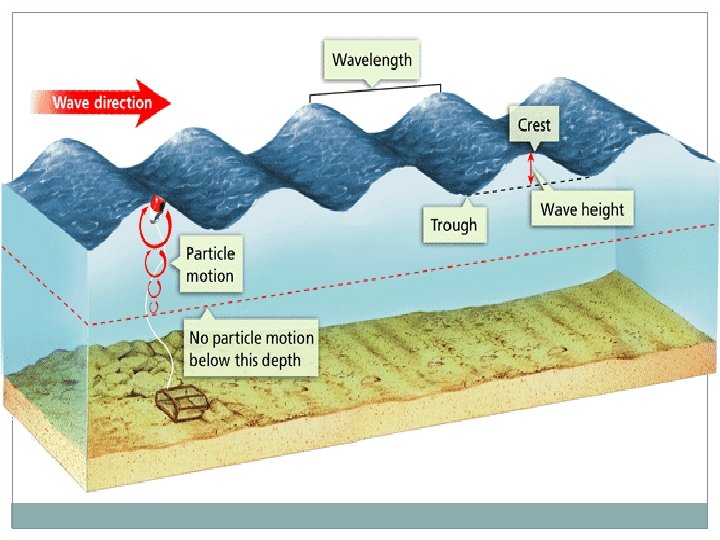
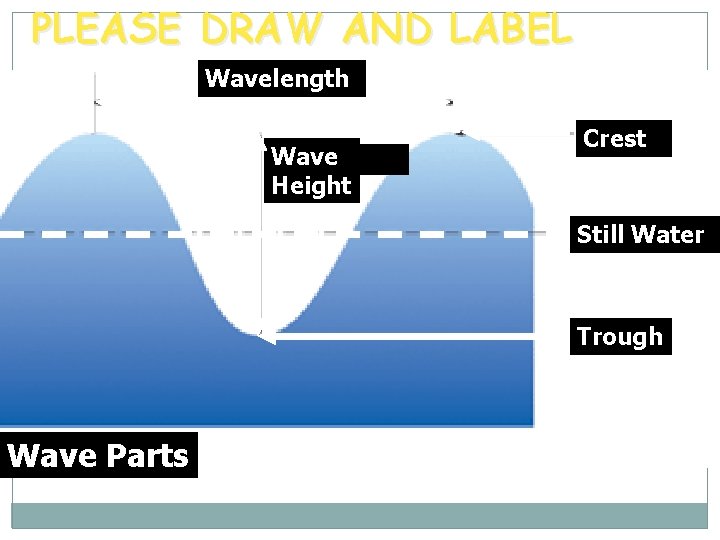
PLEASE DRAW AND LABEL Wavelength Wave Height Crest Still Water Trough Wave Parts
Cause of Waves a. Wind When wind blows across a body of water, friction causes the water to move along with the wind. Wave Height depends on – Wind speed Distance over which the wind blows Length of time the wind blows
i. Tsunamis were once called Tidal waves, but they have nothing to do with the tides. 6 b. Earthquakes- Waves caused by earthquakes are called Tsunamis
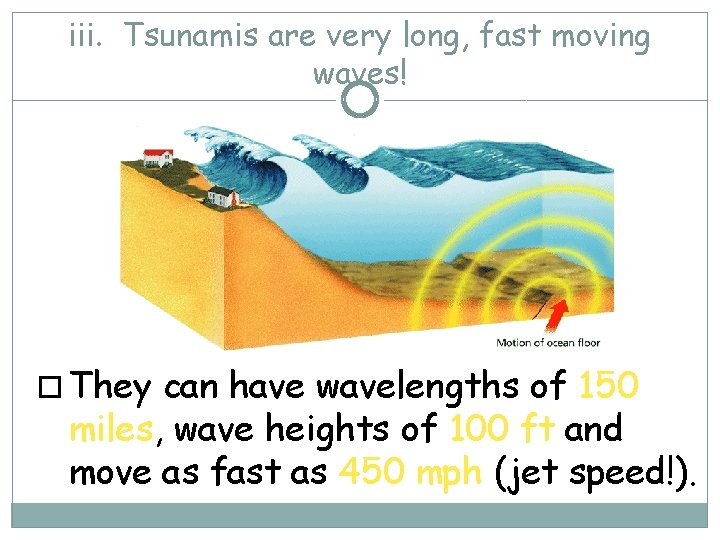
iii. Tsunamis are very long, fast moving waves! They can have wavelengths of 150 miles, wave heights of 100 ft and move as fast as 450 mph (jet speed!).
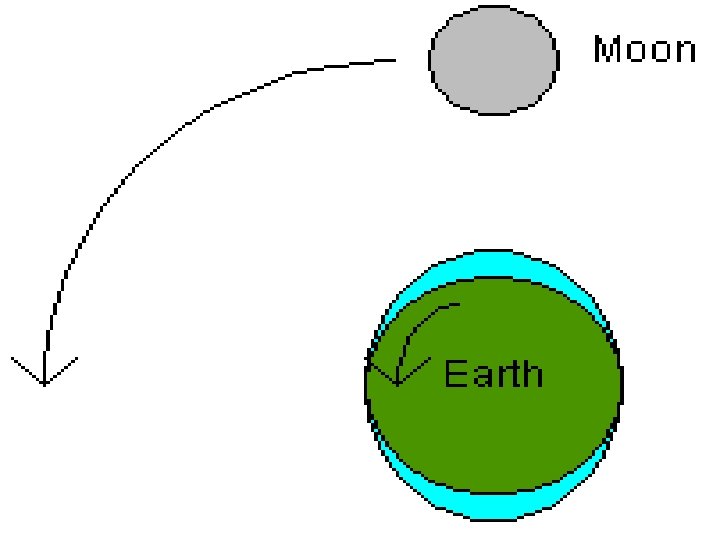
iv. Gravitational Effect of the Moon Two big bulges of water form on the Earth: one directly under the moon another on the exact opposite side As the Earth spins, the bulges follow the moon. These are normal daily tides
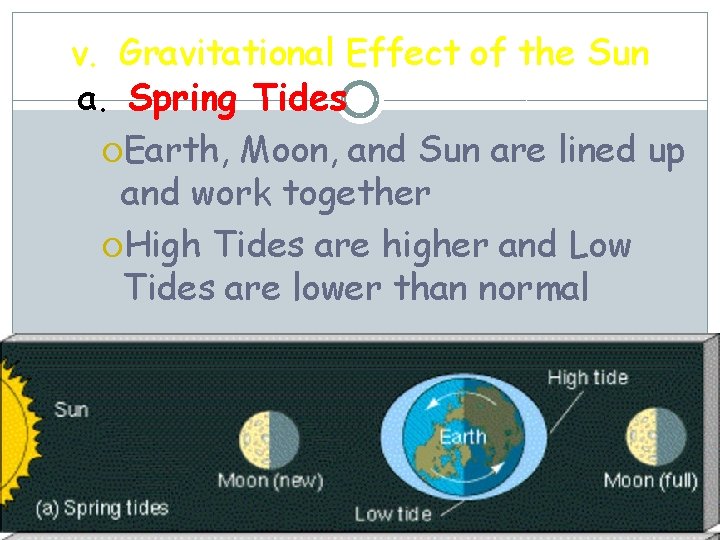
v. Gravitational Effect of the Sun a. Spring Tides Earth, Moon, and Sun are lined up and work together High Tides are higher and Low Tides are lower than normal
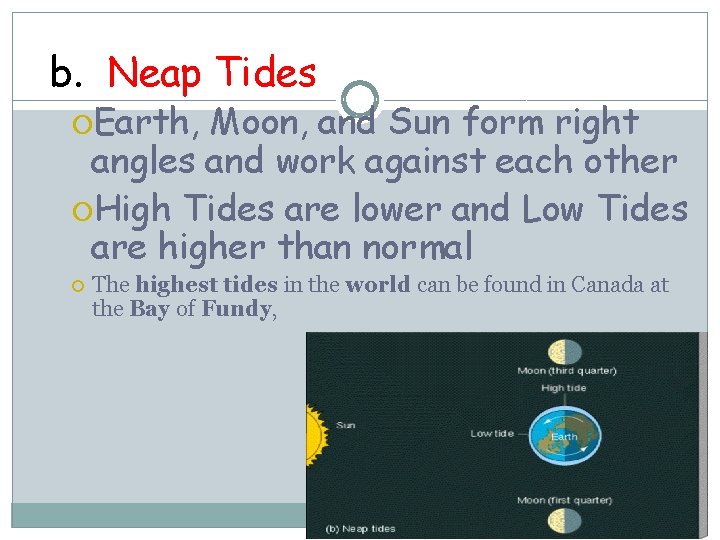
b. Neap Tides Earth, Moon, and Sun form right angles and work against each other High Tides are lower and Low Tides are higher than normal The highest tides in the world can be found in Canada at the Bay of Fundy,
- Slides: 18