
Ocean Circulation II Ekman transport Geostrophic currents Ocean
- Slides: 33
Ocean Circulation II Ekman transport & Geostrophic currents
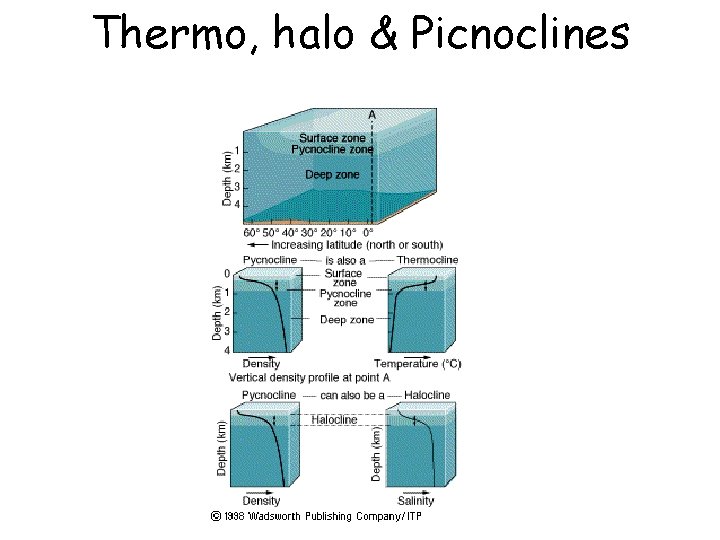
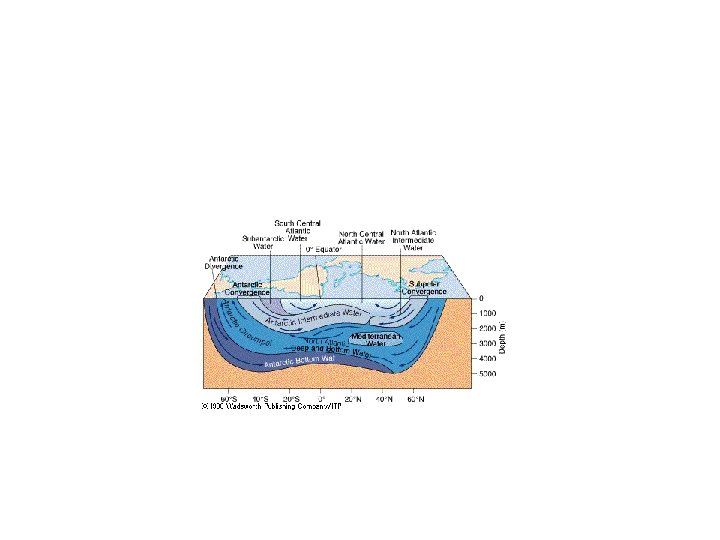
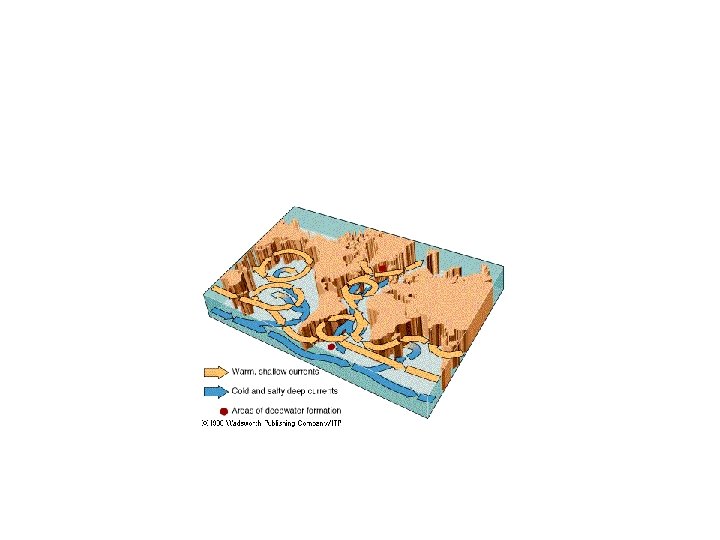
Ocean Circulation 1. Surface Circulation Wind Driven – – – Ekman Transport and Geostrophic Currents Surface layer and Picnocline zone 0 – 50, 100 m / 50, 100 m - ~1000 m Affects ~25% of total water mass Fast (1 -2 m/s) 2. Deep Circulation Density Driven – – Thermohaline Circulation Below Picnocline zone (>~1000 m) Affects ~75% of total water mass Slow (~ m/day)
Surface Ocean Circulation • • Ekman Spiral Geostrophic Currents Open Ocean Currents Global Surface Circulation
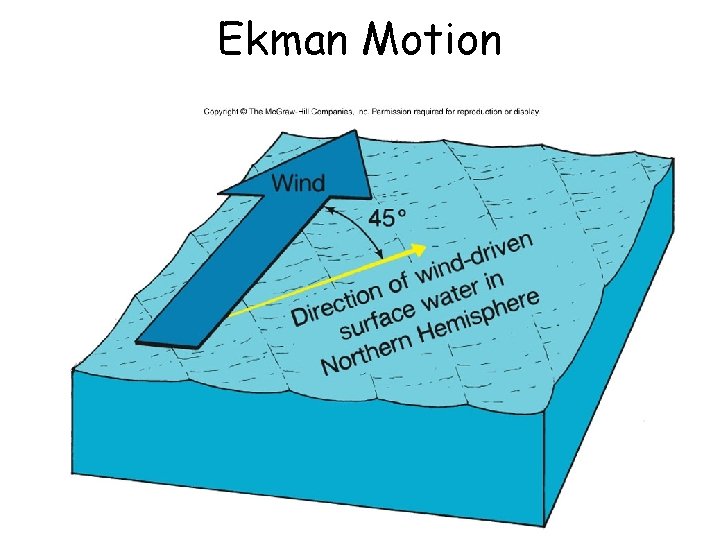
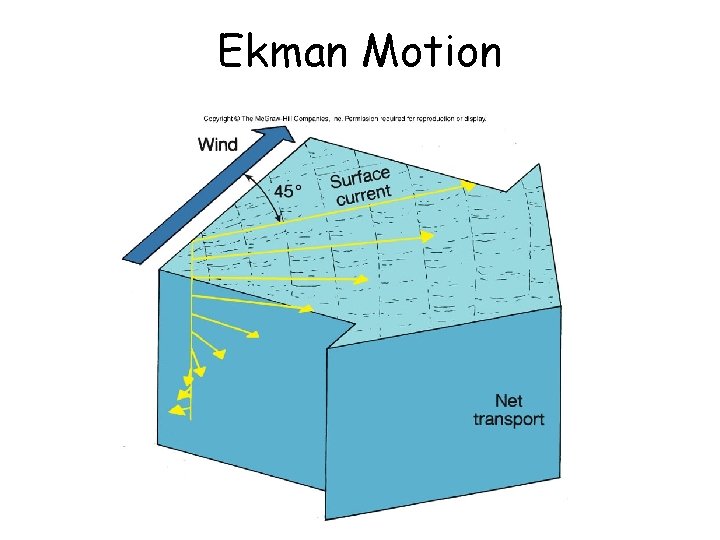
Ekman Motion
Ekman Motion
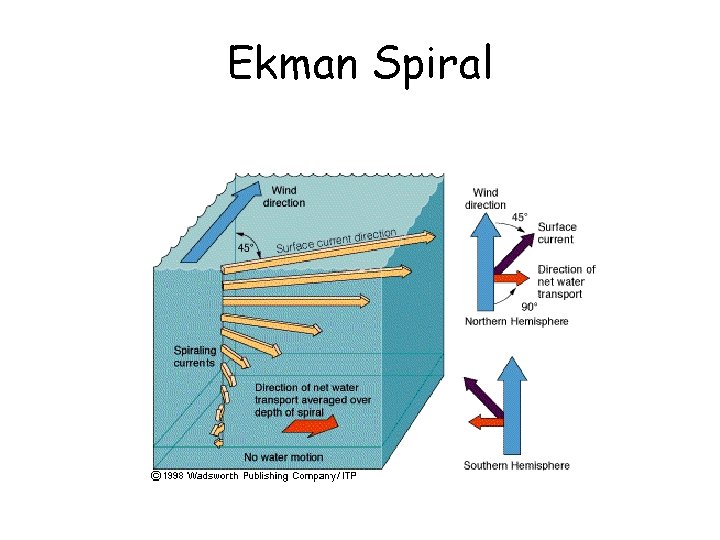
Ekman Spiral
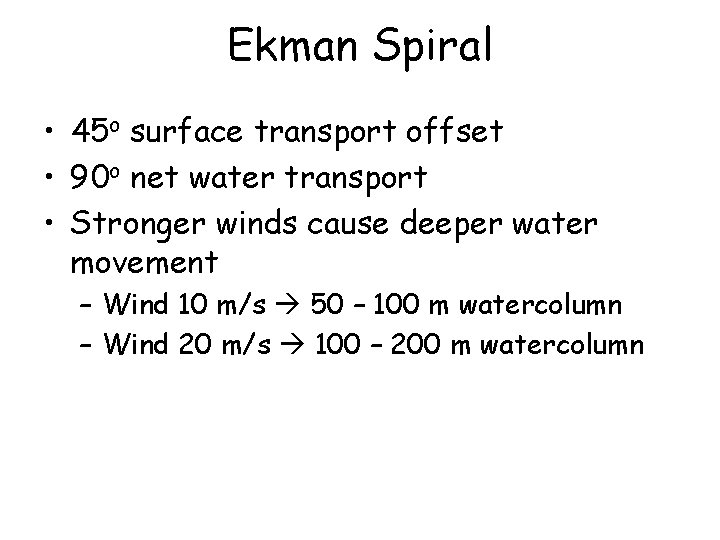
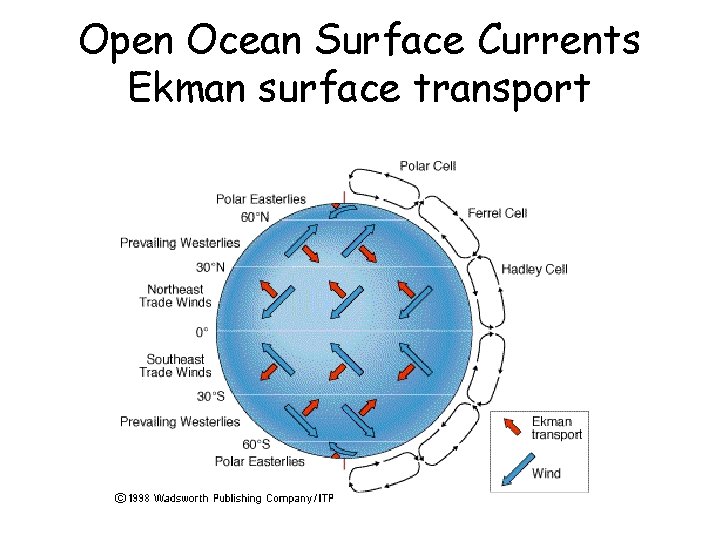
Ekman Spiral • 45 o surface transport offset • 90 o net water transport • Stronger winds cause deeper water movement – Wind 10 m/s 50 – 100 m watercolumn – Wind 20 m/s 100 – 200 m watercolumn
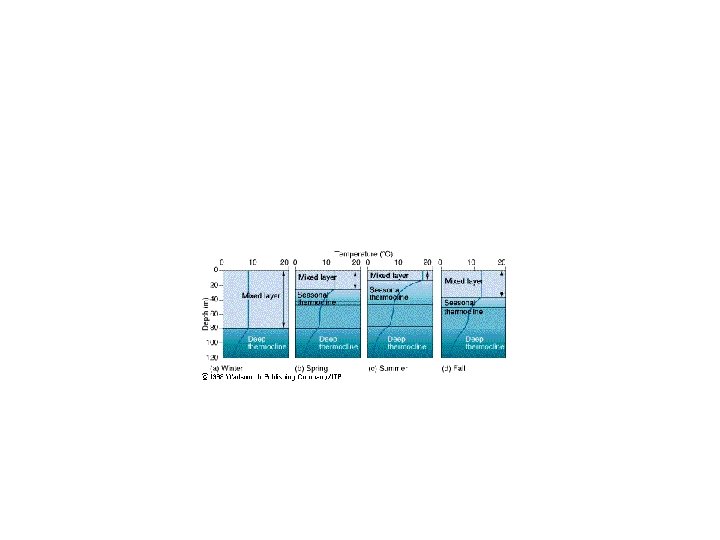
Thermo, halo & Picnoclines
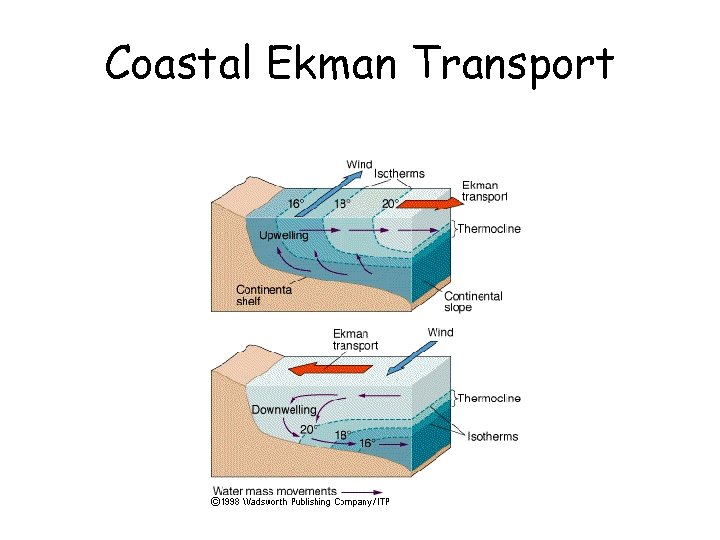
Coastal Ekman Transport
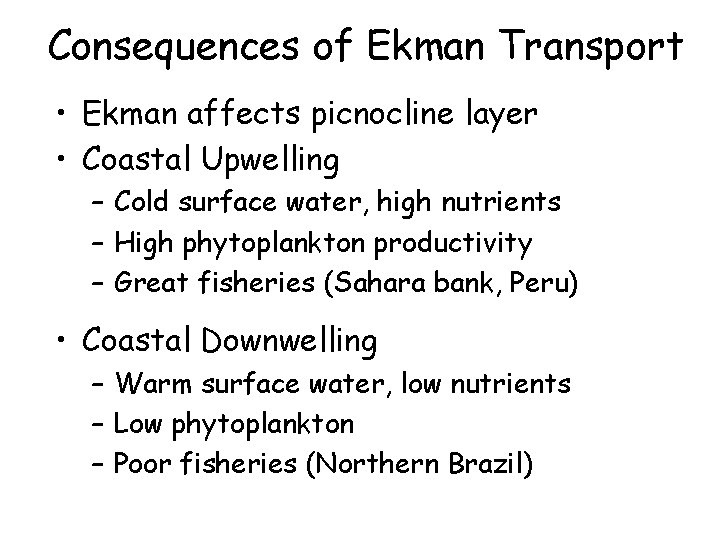
Consequences of Ekman Transport • Ekman affects picnocline layer • Coastal Upwelling – Cold surface water, high nutrients – High phytoplankton productivity – Great fisheries (Sahara bank, Peru) • Coastal Downwelling – Warm surface water, low nutrients – Low phytoplankton – Poor fisheries (Northern Brazil)
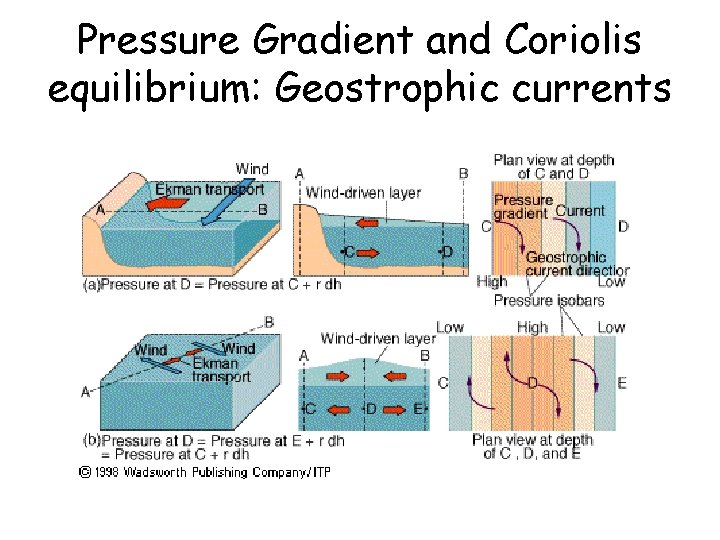
Pressure Gradient and Coriolis equilibrium: Geostrophic currents
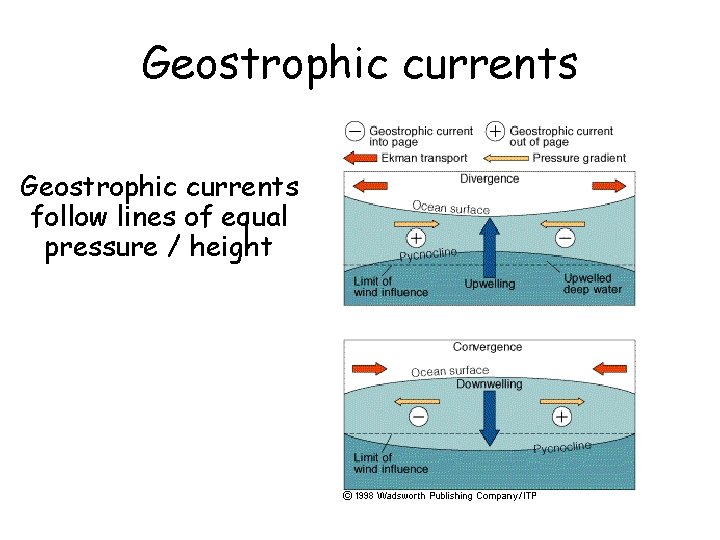
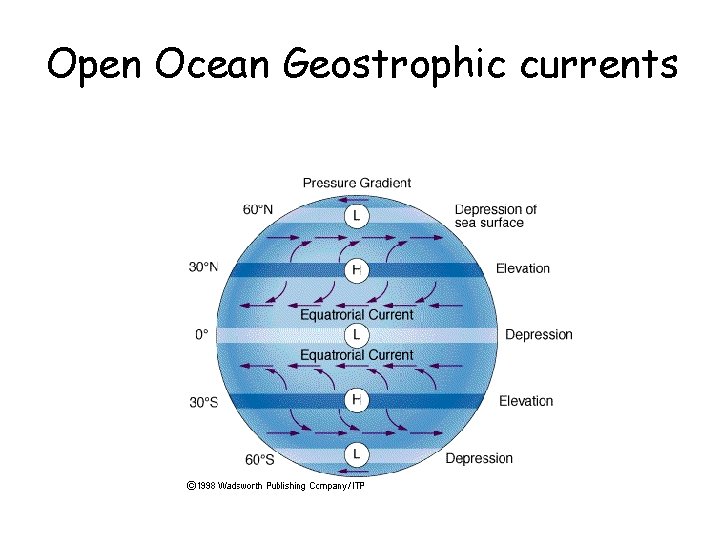
Geostrophic currents follow lines of equal pressure / height
Open Ocean Surface Currents Ekman surface transport
Open Ocean Geostrophic currents
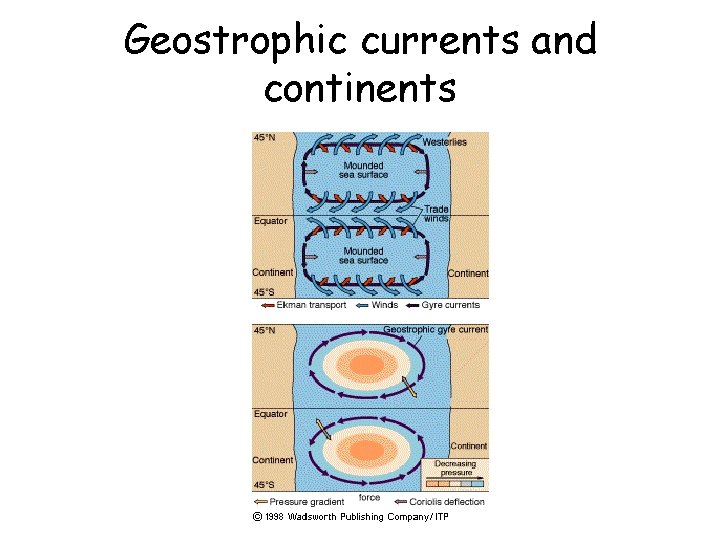
Geostrophic currents and continents
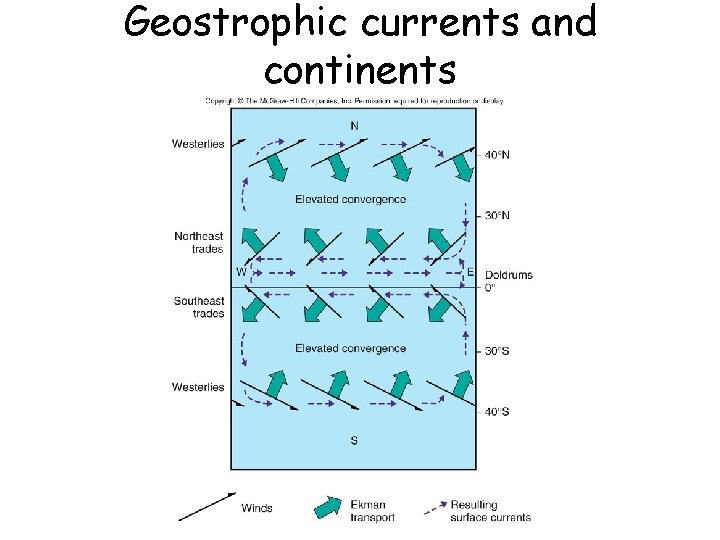
Geostrophic currents and continents
Upwelling and Downwelling Convergence and Divergence • Downwelling – Convergence – Subtropical Gyres – Sargasso Sea example of Geostrophic current • Upwelling – Divergence
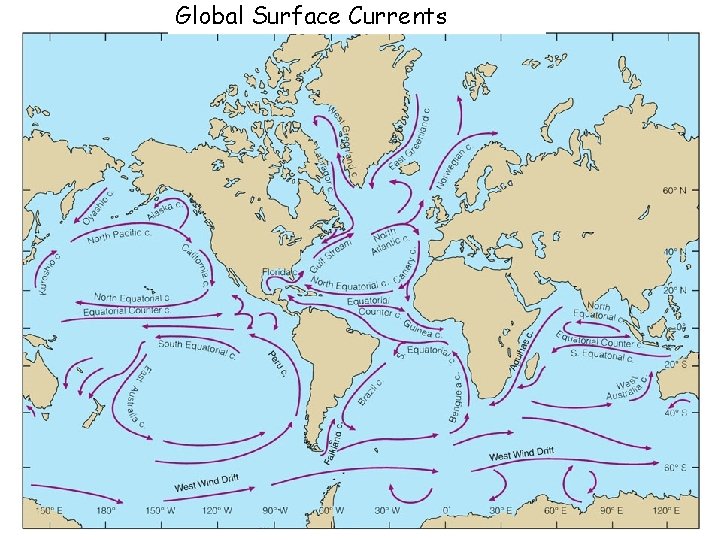
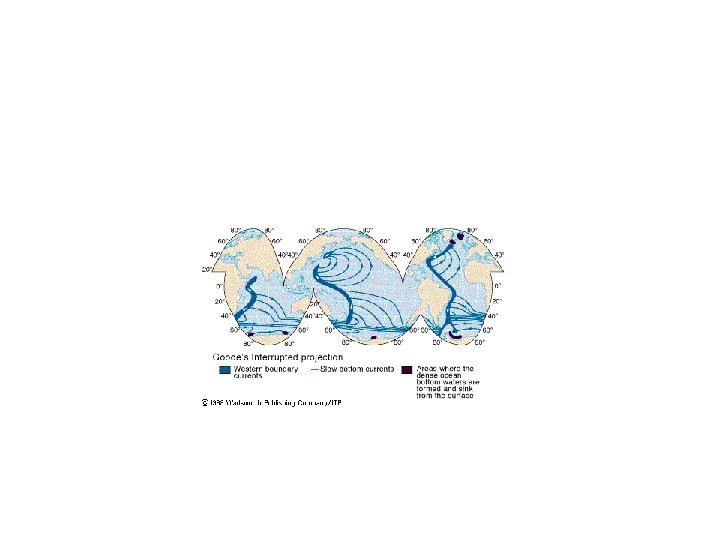
Global Surface Currents
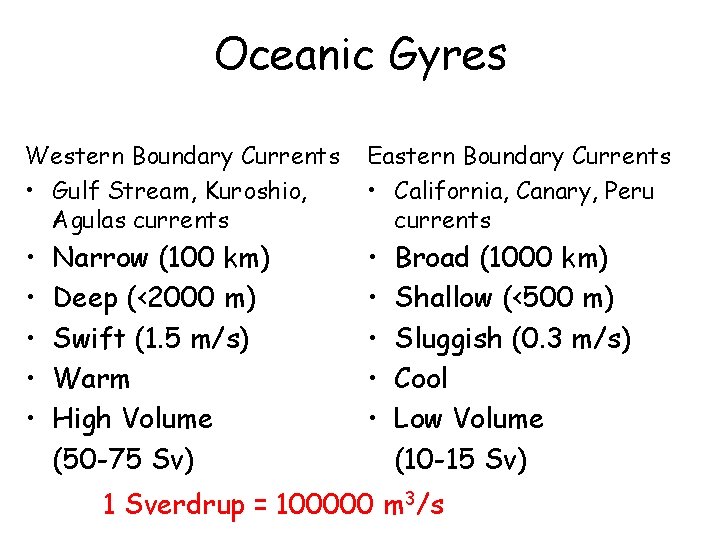
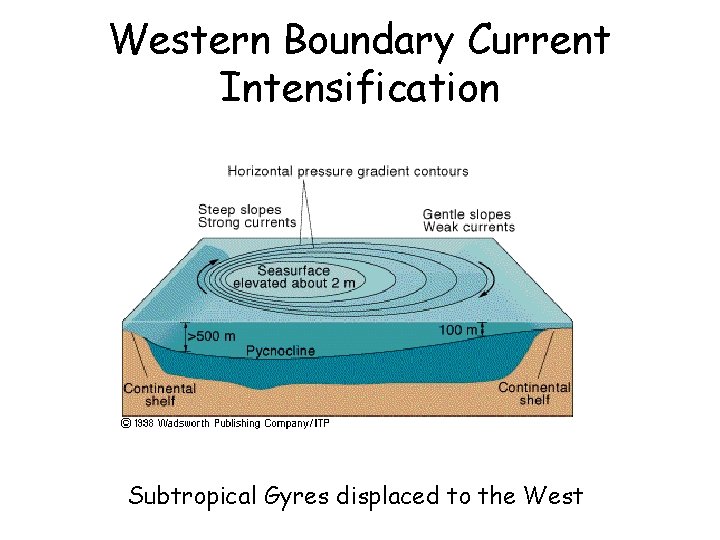
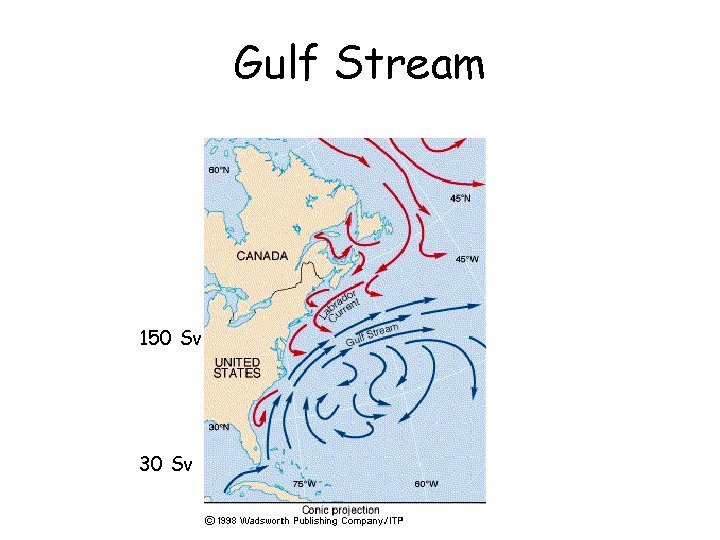
Oceanic Gyres Western Boundary Currents • Gulf Stream, Kuroshio, Agulas currents Eastern Boundary Currents • California, Canary, Peru currents • • • Narrow (100 km) Deep (<2000 m) Swift (1. 5 m/s) Warm High Volume (50 -75 Sv) Broad (1000 km) Shallow (<500 m) Sluggish (0. 3 m/s) Cool Low Volume (10 -15 Sv) 1 Sverdrup = 100000 m 3/s
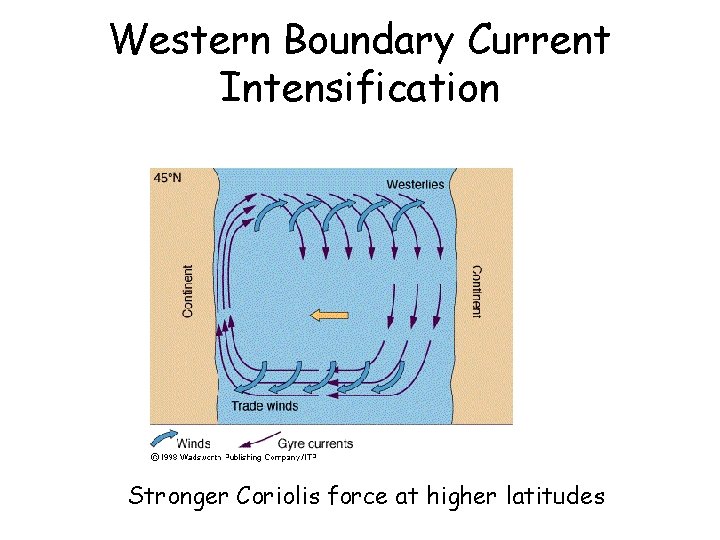
Western Boundary Current Intensification Stronger Coriolis force at higher latitudes
Western Boundary Current Intensification Subtropical Gyres displaced to the West
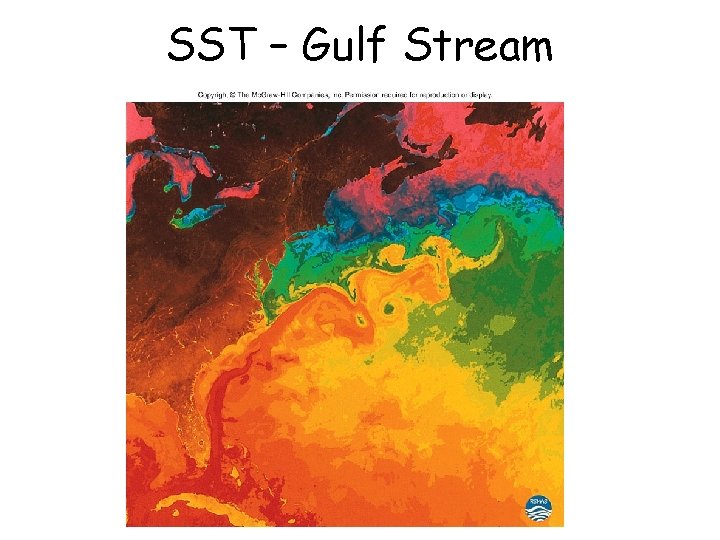
Gulf Stream 150 Sv 30 Sv
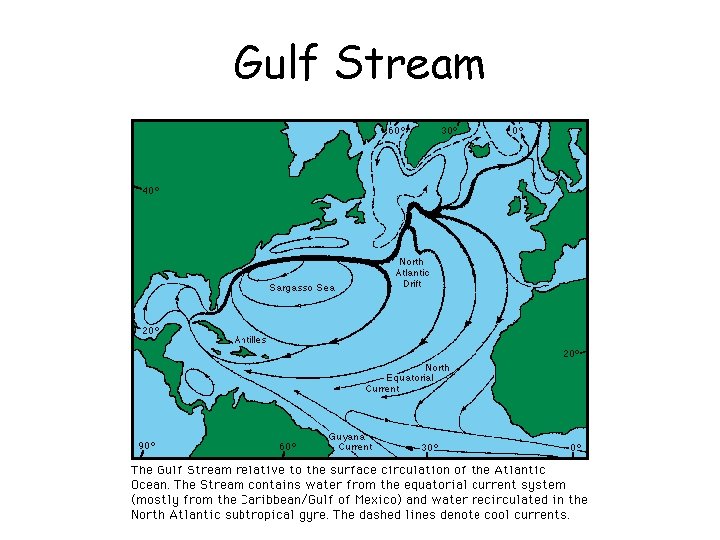
Gulf Stream
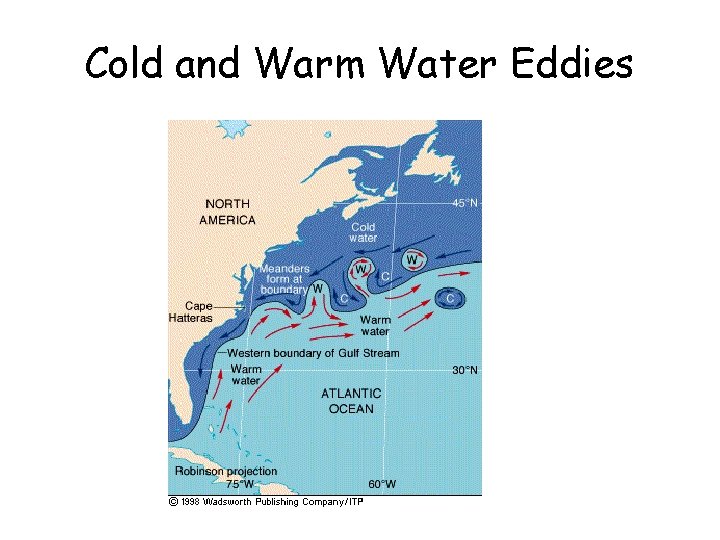
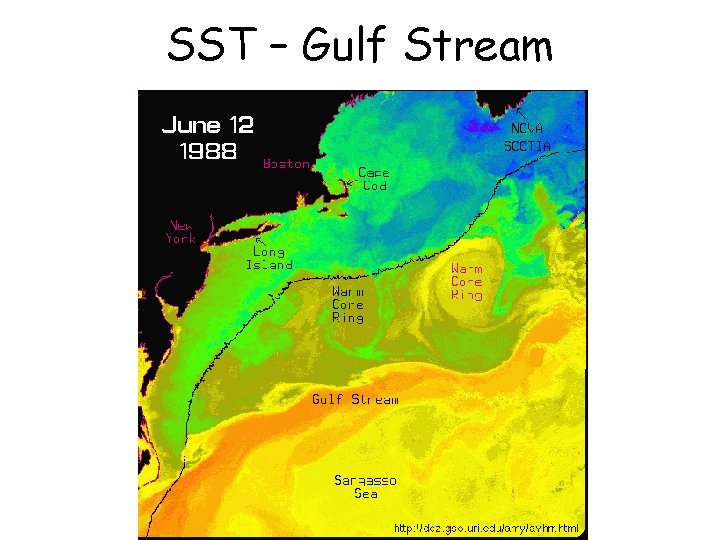
Cold and Warm Water Eddies
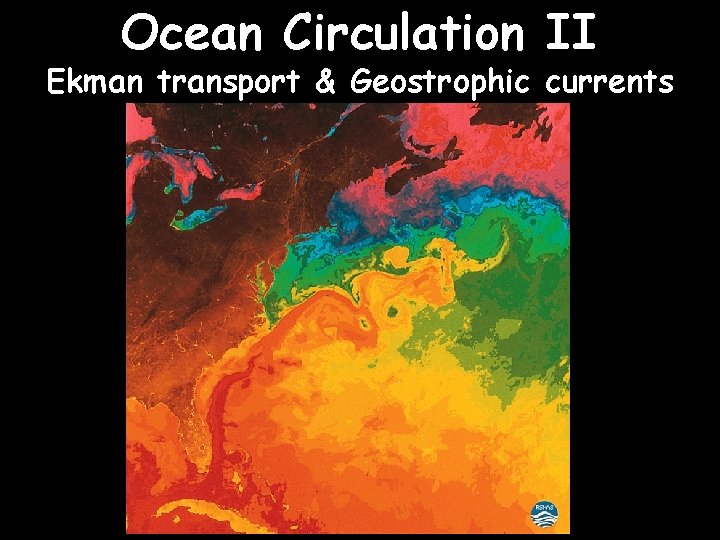
SST – Gulf Stream
SST – Gulf Stream
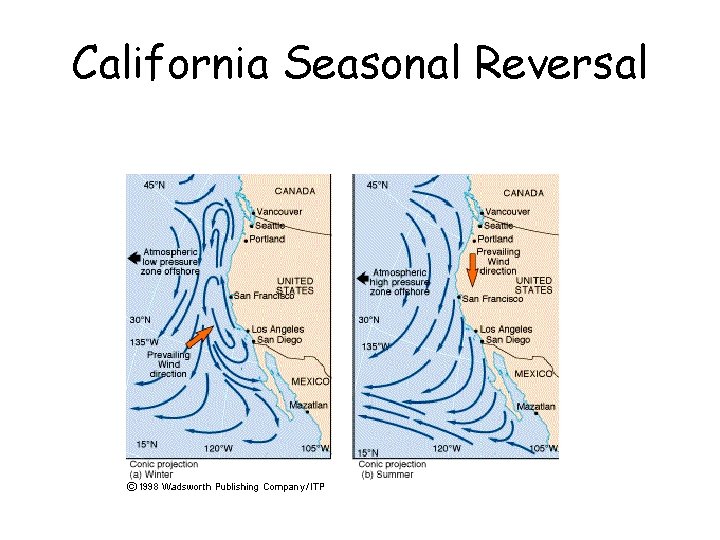
California Seasonal Reversal
The End