
Ocean and Science Chapter 11 Marine Life and
- Slides: 41
Ocean and Science Chapter 11 Marine Life and the Marine Environment November 26 -28, 2013 Young-Heon Jo
Chapter Overview • There are more than 250, 000 identified marine species. • Most live in sunlit surface seawater. • A species’ success depends on the ability to – find food, – avoid predation, – reproduce, and – cope with physical barriers to movement. • Marine organisms are adapted to the ocean’s physical properties.
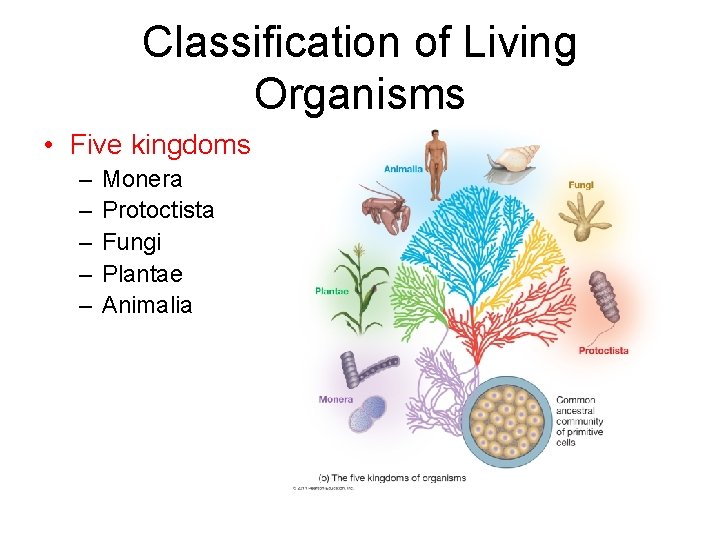
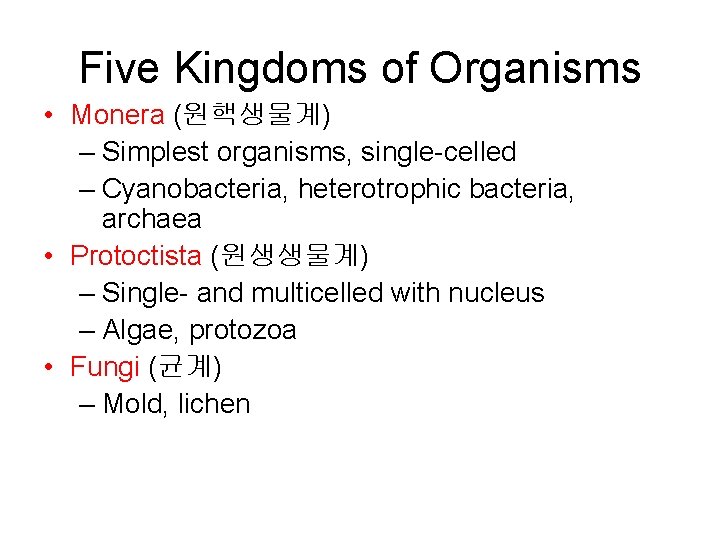
Classification of Living Organisms • Five kingdoms – – – Monera Protoctista Fungi Plantae Animalia
Five Kingdoms of Organisms • Monera (원핵생물계) – Simplest organisms, single-celled – Cyanobacteria, heterotrophic bacteria, archaea • Protoctista (원생생물계) – Single- and multicelled with nucleus – Algae, protozoa • Fungi (균계) – Mold, lichen
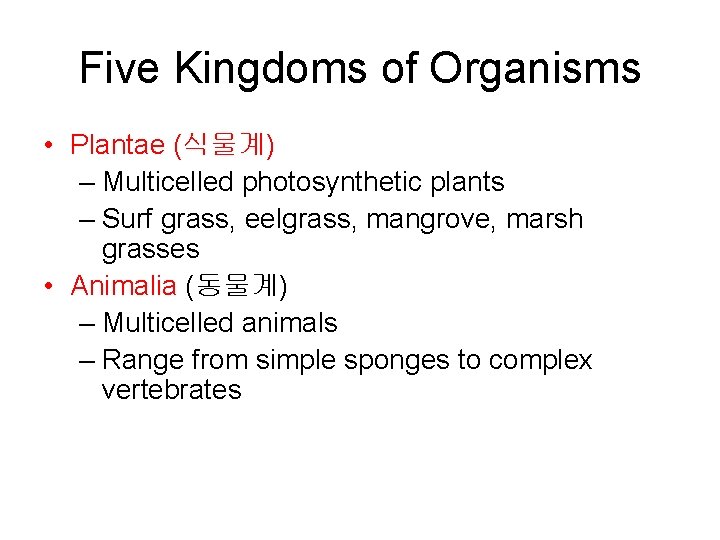
Five Kingdoms of Organisms • Plantae (식물계) – Multicelled photosynthetic plants – Surf grass, eelgrass, mangrove, marsh grasses • Animalia (동물계) – Multicelled animals – Range from simple sponges to complex vertebrates
Taxonomic Classification • Carolus Linnaeus – 1758 – Developed basis of modern classification of organisms • Taxonomy – systematic classification of organisms – Physical characteristics – Genetic information
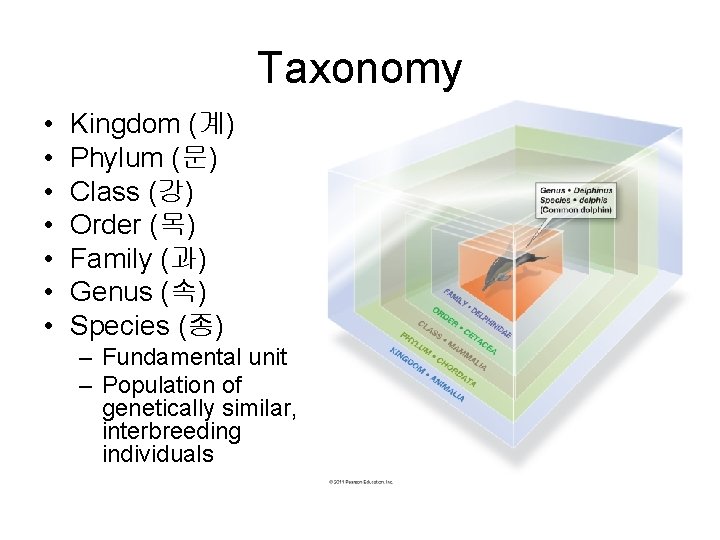
Taxonomy • • Kingdom (계) Phylum (문) Class (강) Order (목) Family (과) Genus (속) Species (종) – Fundamental unit – Population of genetically similar, interbreeding individuals
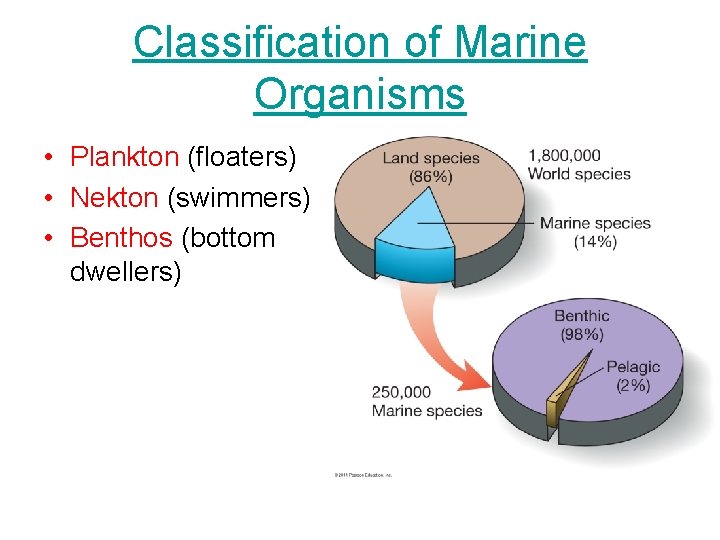
Classification of Marine Organisms • Plankton (floaters) • Nekton (swimmers) • Benthos (bottom dwellers)
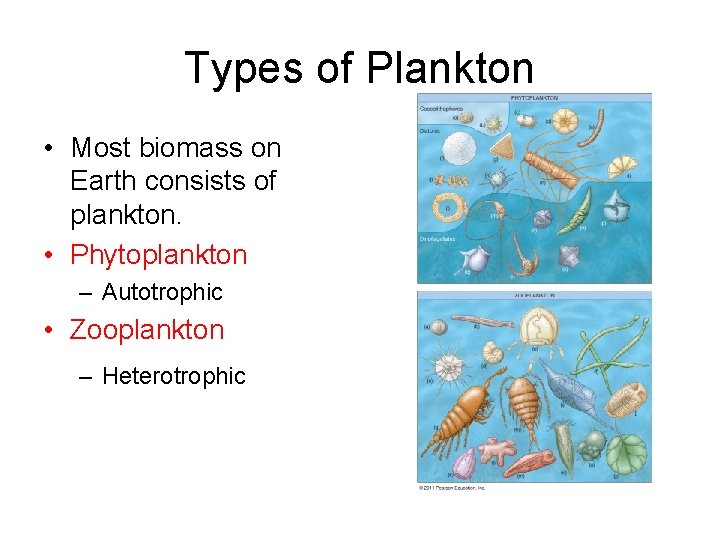
Types of Plankton • Most biomass on Earth consists of plankton. • Phytoplankton – Autotrophic • Zooplankton – Heterotrophic
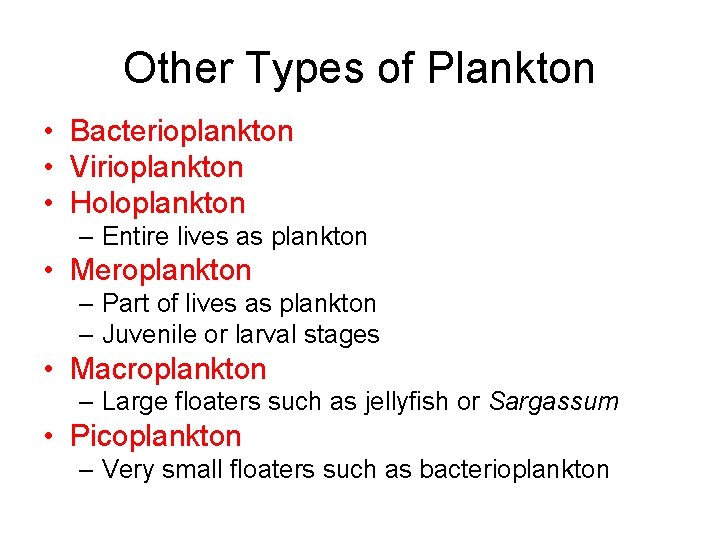
Other Types of Plankton • Bacterioplankton • Virioplankton • Holoplankton – Entire lives as plankton • Meroplankton – Part of lives as plankton – Juvenile or larval stages • Macroplankton – Large floaters such as jellyfish or Sargassum • Picoplankton – Very small floaters such as bacterioplankton
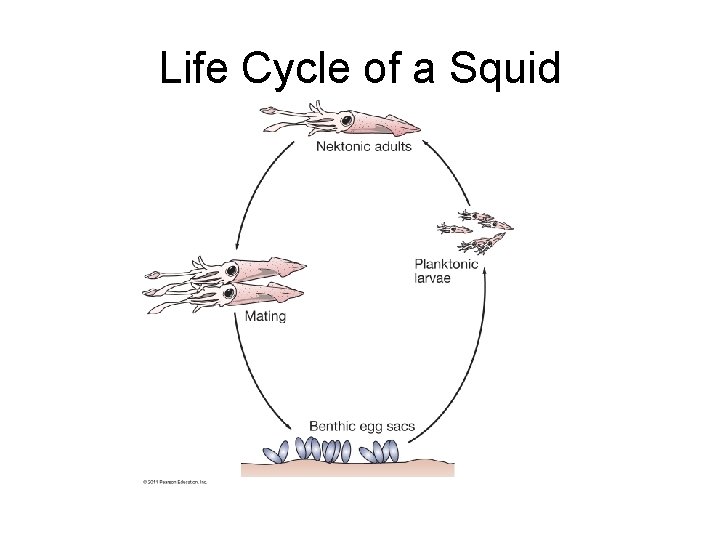
Life Cycle of a Squid
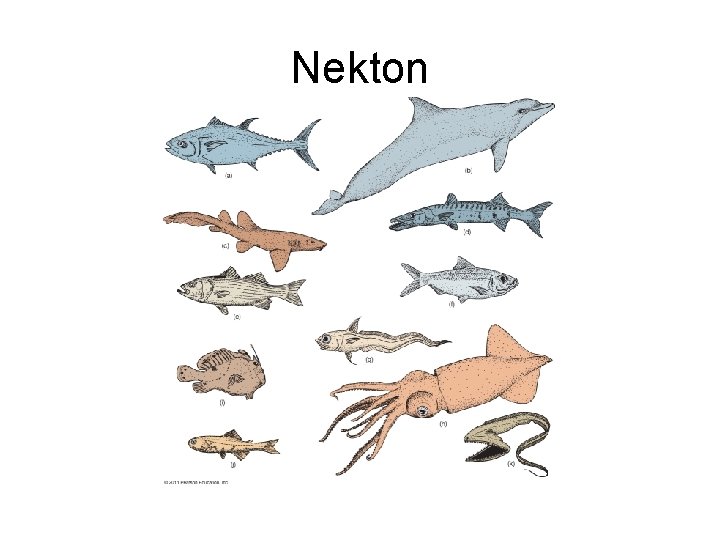
Nekton (유영동물) • • Independent swimmers Most adult fish and squid Marine mammals Marine reptiles
Nekton
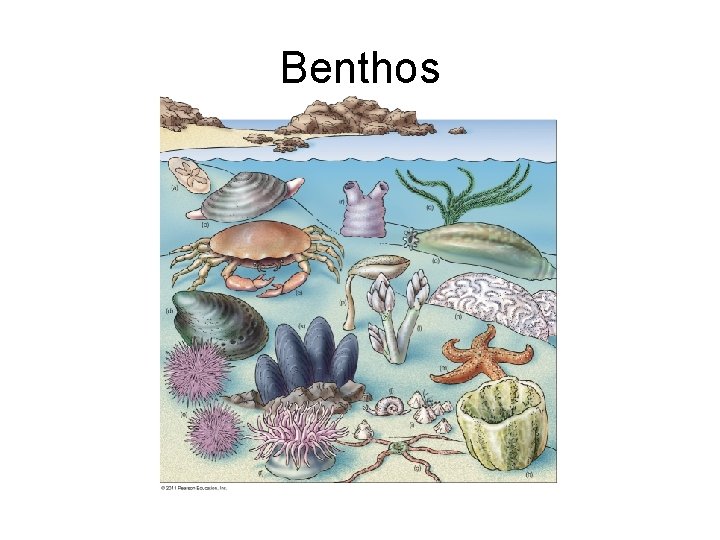
Benthos (저서생물) • Epifauna live on the surface of the sea floor. • Infauna live buried in sediments. • Nektobenthos swim or crawl through water above the seafloor. • Benthos are most abundant in shallower water. • Many live in perpetual darkness, coldness, and stillness.
Benthos
Hydrothermal Vent Communities • • Abundant and large deep-ocean benthos Discovered in 1977 Associated with hot vents Bacteria-like archaeon produce food using heat and chemicals.
Number of Marine Species • • More land species than marine species Ocean has relatively uniform conditions Less adaptation required, less speciation Marine species overwhelmingly benthic (98%) rather than pelagic (2%)
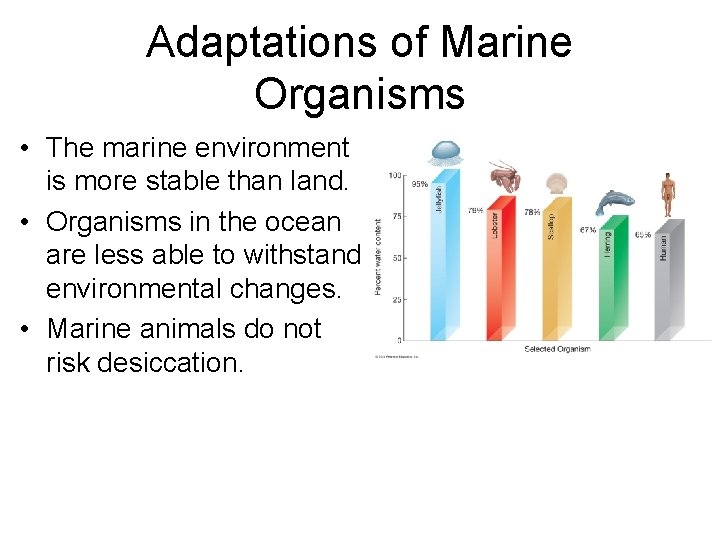
Adaptations of Marine Organisms • The marine environment is more stable than land. • Organisms in the ocean are less able to withstand environmental changes. • Marine animals do not risk desiccation.
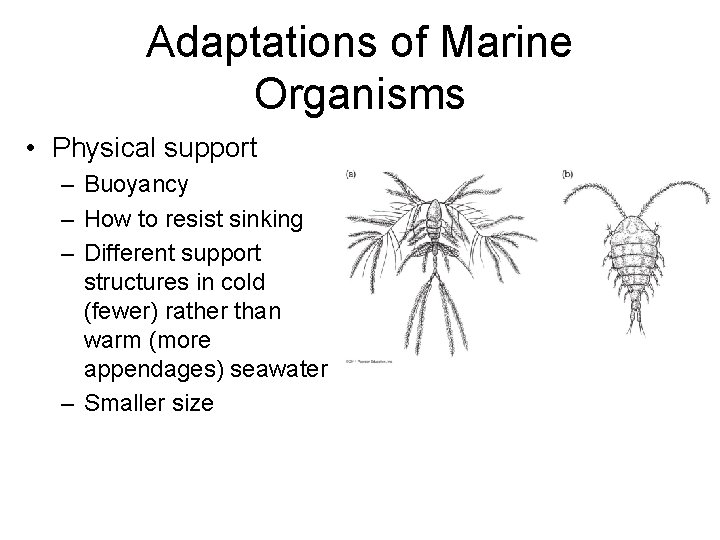
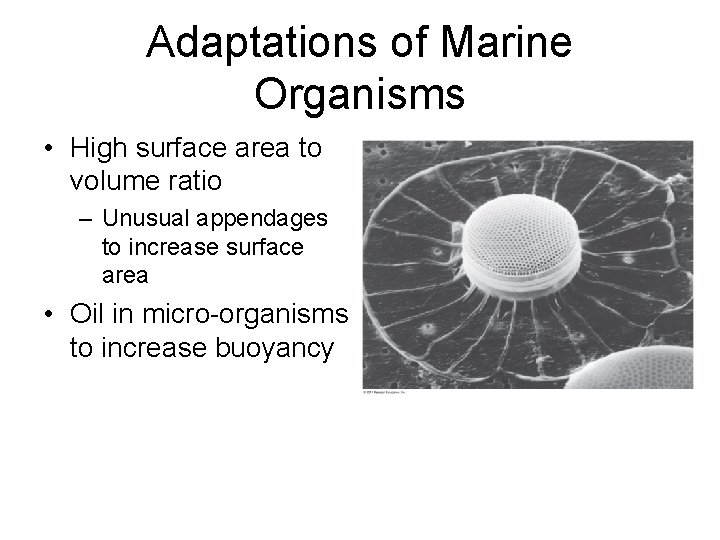
Adaptations of Marine Organisms • Physical support – Buoyancy – How to resist sinking – Different support structures in cold (fewer) rather than warm (more appendages) seawater – Smaller size
Adaptations of Marine Organisms • High surface area to volume ratio – Unusual appendages to increase surface area • Oil in micro-organisms to increase buoyancy
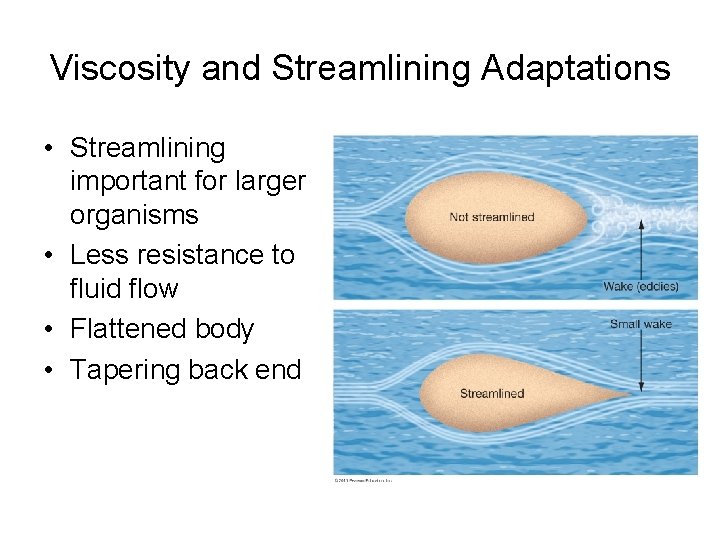
Viscosity and Streamlining Adaptations • Streamlining important for larger organisms • Less resistance to fluid flow • Flattened body • Tapering back end
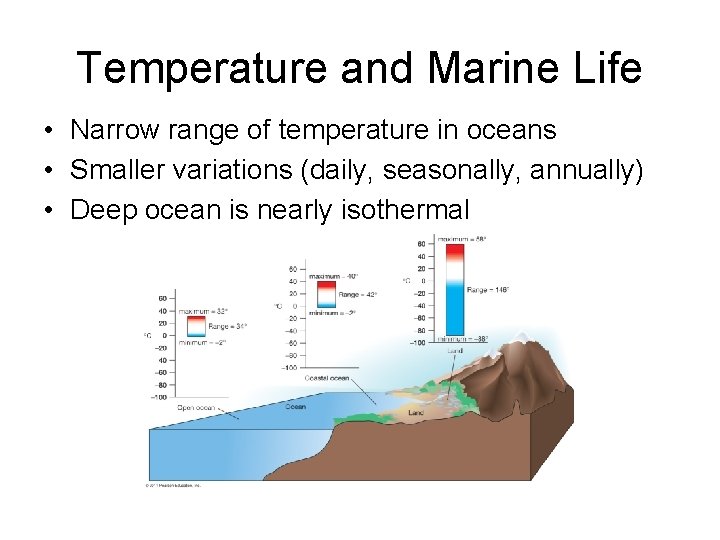
Temperature and Marine Life • Narrow range of temperature in oceans • Smaller variations (daily, seasonally, annually) • Deep ocean is nearly isothermal
Ocean Temperature • More stable than land for four reasons – Higher heat capacity of water – Ocean warming reduced by evaporation – Solar radiation penetrates deeply into ocean layers – Ocean mixing
Cold vs. Warm Water Species • Smaller in cooler seawater • More appendages in warmer seawater • Tropical organisms grow faster, live shorter, reproduce more often • More species in warmer seawater • More biomass in cooler seawater (upwelling)
Temperature and Marine Organisms • Stenothermal (협온성) – Organisms withstand small variation in temperature – Typically live in open ocean • Eurythermal ( 광온성) – Organisms withstand large variation in temperature – Typically live in coastal waters
Salinity and Marine Organisms • Stenohaline (헙염성) – Organisms withstand only small variation in salinity – Typically live in open ocean • Euryhaline (광염성) – Organisms withstand large variation in salinity – Typically live in coastal waters, e. g. , estuaries
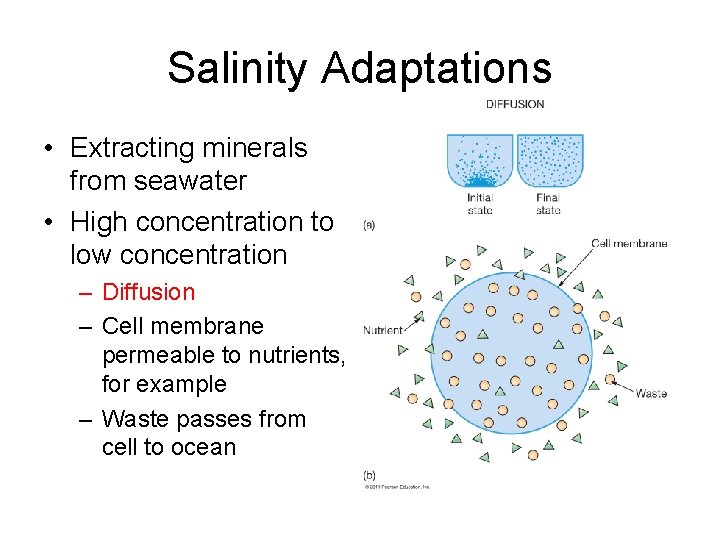
Salinity Adaptations • Extracting minerals from seawater • High concentration to low concentration – Diffusion – Cell membrane permeable to nutrients, for example – Waste passes from cell to ocean
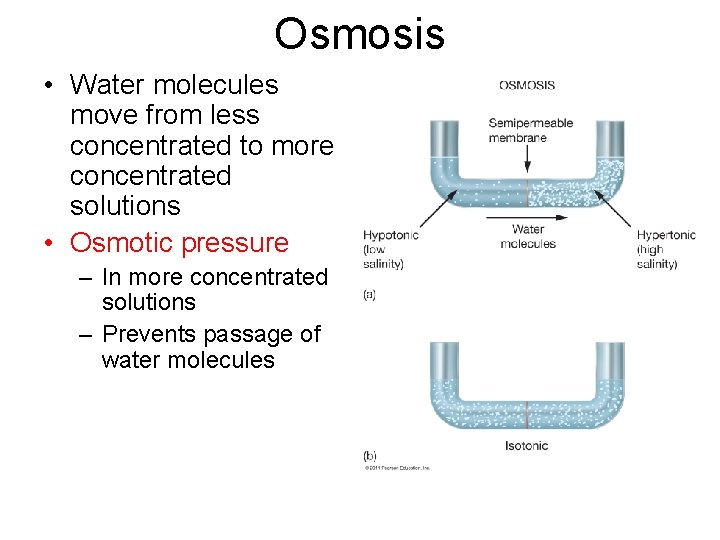
Osmosis • Water molecules move from less concentrated to more concentrated solutions • Osmotic pressure – In more concentrated solutions – Prevents passage of water molecules
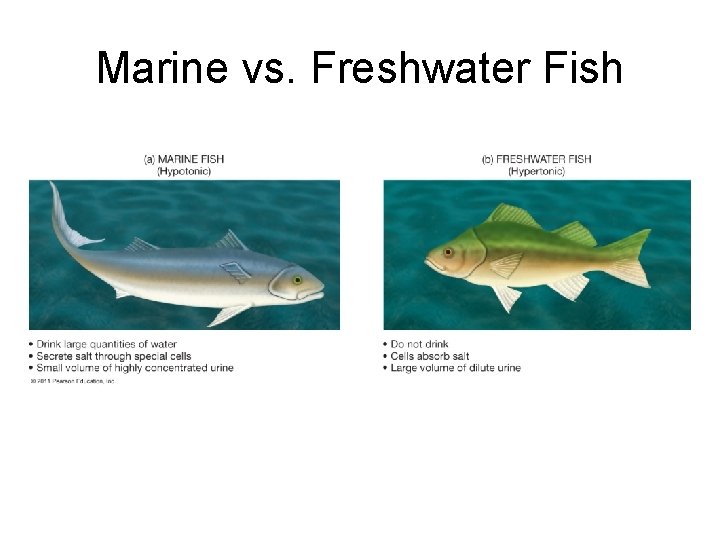
Marine vs. Freshwater Fish
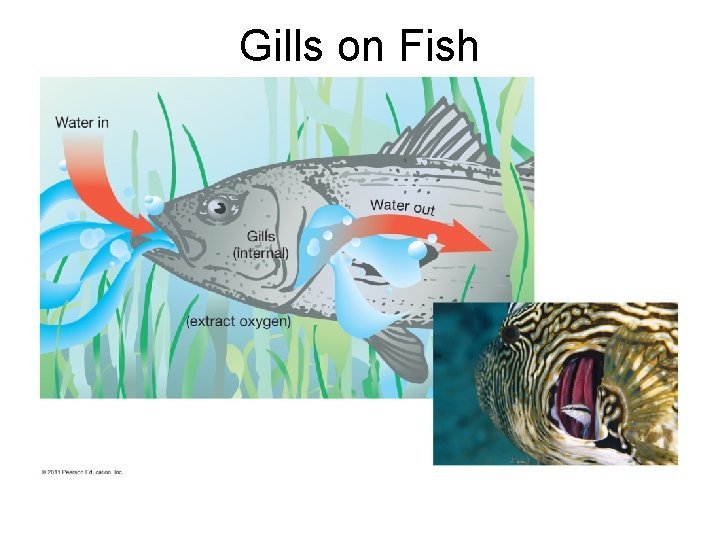
Dissolved Gases • Animals extract dissolved oxygen (O 2) from seawater through gills. • Gills exchange oxygen and carbon dioxide directly with seawater. • Low marine oxygen levels can kill fish. • Gill structure and location varies among animals.
Gills on Fish
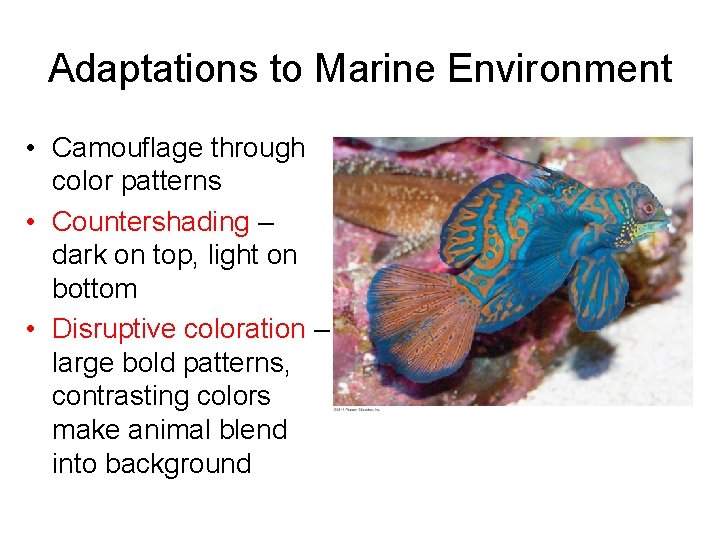
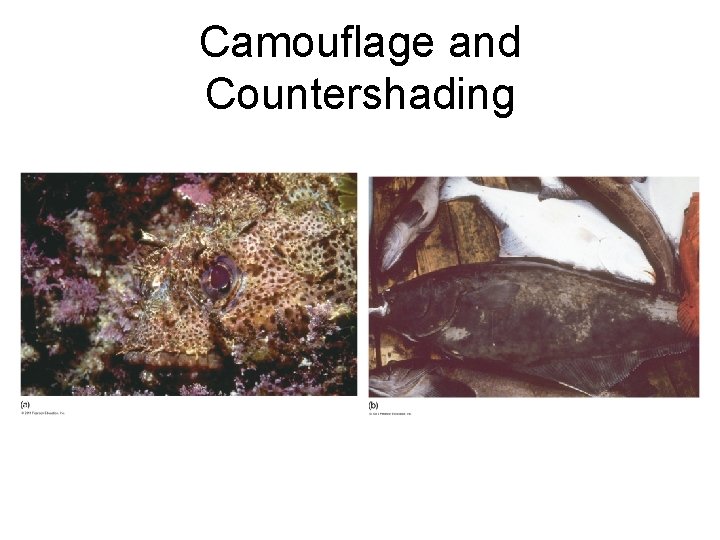
Adaptations to Marine Environment • Camouflage through color patterns • Countershading – dark on top, light on bottom • Disruptive coloration – large bold patterns, contrasting colors make animal blend into background
Camouflage and Countershading
Divisions of the Marine Environment • Pelagic (open sea) – Neritic (< 200 meters) and oceanic • Benthic (sea floor) – Subneritic and suboceanic
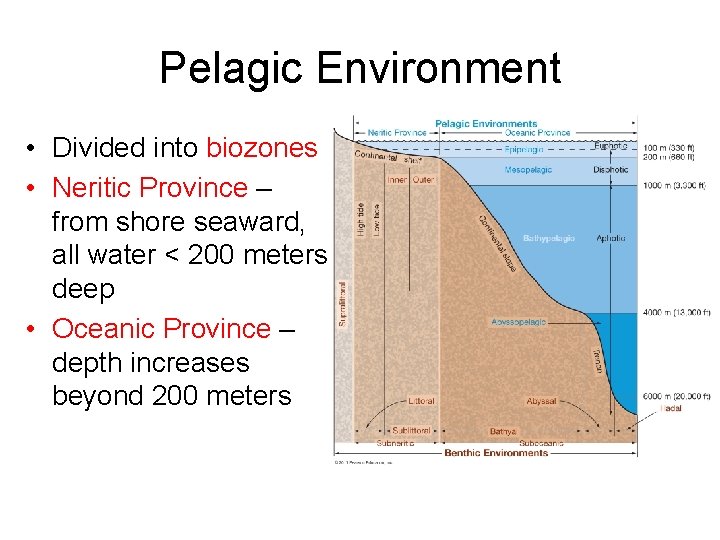
Pelagic Environment • Divided into biozones • Neritic Province – from shore seaward, all water < 200 meters deep • Oceanic Province – depth increases beyond 200 meters
Oceanic Province • Further subdivided into four biozones • Epipelagic – Only zone to support photosynthesis – Dissolved oxygen decreases around 200 meters • Mesopelagic – Organisms capable of bioluminescence common • Bathypelagic • Abyssopelagic
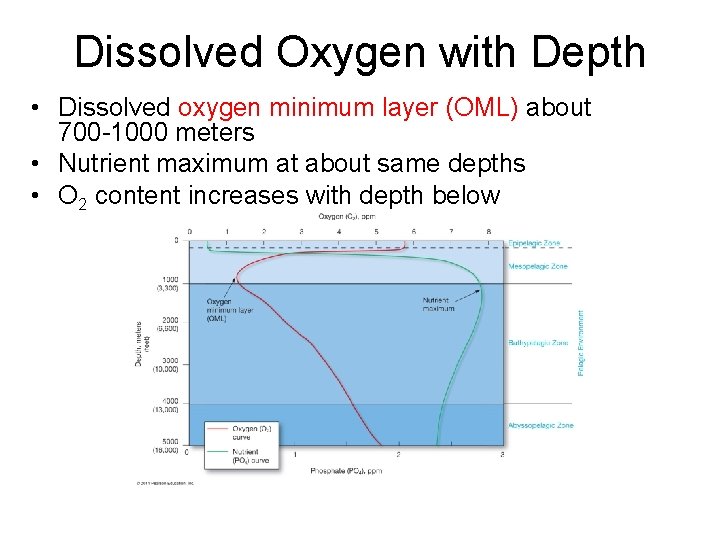
Dissolved Oxygen with Depth • Dissolved oxygen minimum layer (OML) about 700 -1000 meters • Nutrient maximum at about same depths • O 2 content increases with depth below
Ocean Zones Based on Light Availability • Euphotic – surface to where enough light exists to support photosynthesis • Disphotic – small but measurable quantities of light • Aphotic – no light
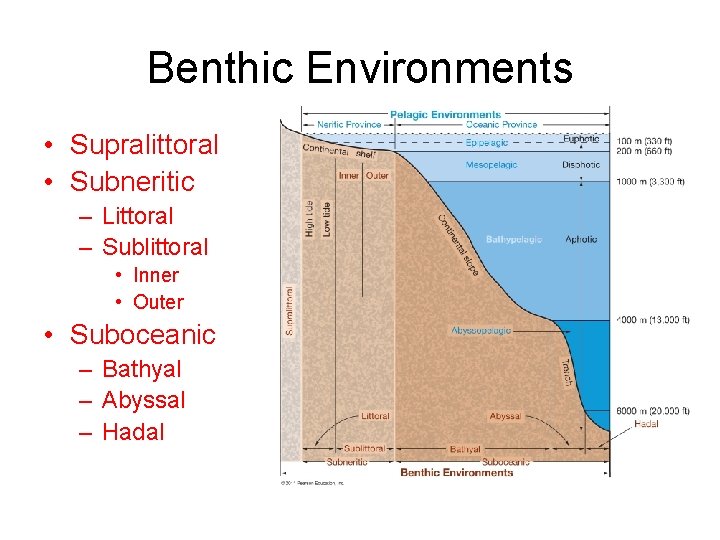
Benthic Environments • Supralittoral • Subneritic – Littoral – Sublittoral • Inner • Outer • Suboceanic – Bathyal – Abyssal – Hadal
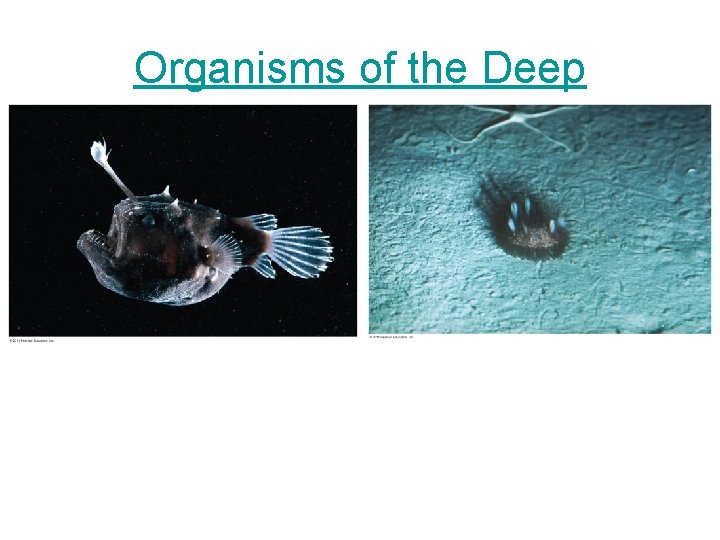
Organisms of the Deep