
Occurrence of Radium224 Radium226 and Radium228 in Aquifers
- Slides: 25
Occurrence of Radium-224, Radium-226, and Radium-228 in Aquifers Used Primarily for Drinking Water in the United States: Retrospective Survey of Results from 1987 to 2004 Zoltan Szabo , Eric Jacobsen, Jeffrey M Fischer, Thomas F Kraemer, and Vincent T de. Paul U. S. Geological Survey
OBJECTIVES • Where does Ra occur? • Are there geochemical or geological features on National and local scales that help evaluate occurrence of Ra? • Is measurement of gross alpha helpful?
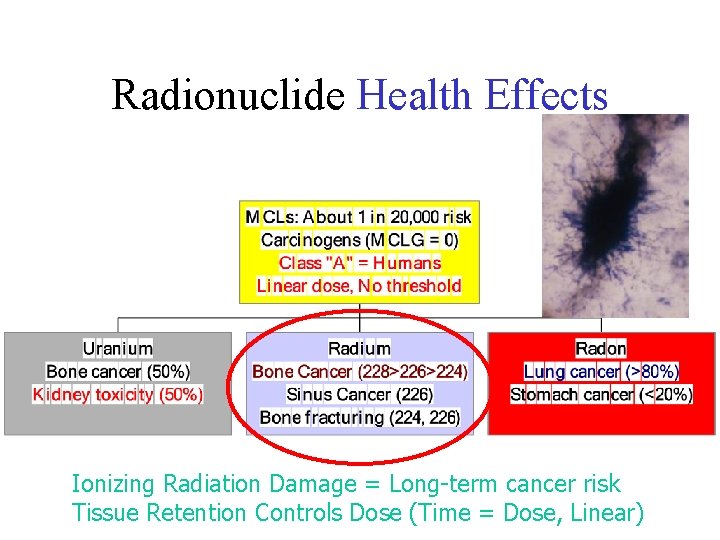
Radionuclide Health Effects Ionizing Radiation Damage = Long-term cancer risk Tissue Retention Controls Dose (Time = Dose, Linear)
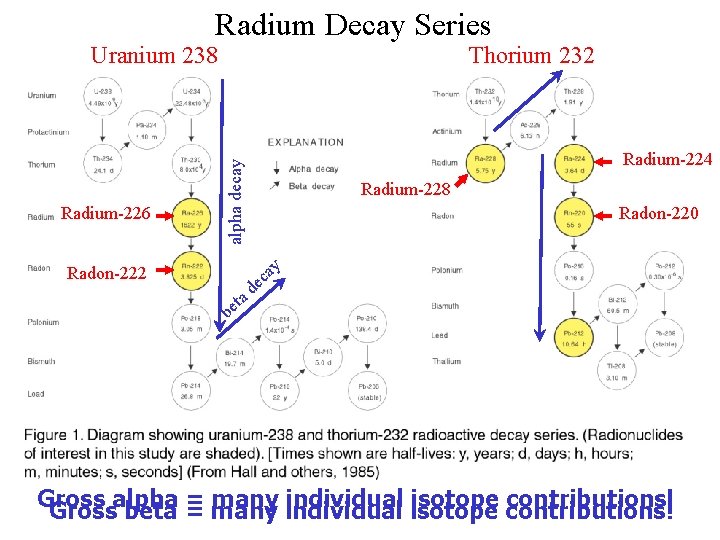
Radium Decay Series Uranium 238 Radium-224 alpha decay Radium-226 Thorium 232 Radium-228 Radon-220 y Radon-222 b a et a ec d Gross alpha = many individual isotope contributions! Gross beta = many individual isotope contributions!
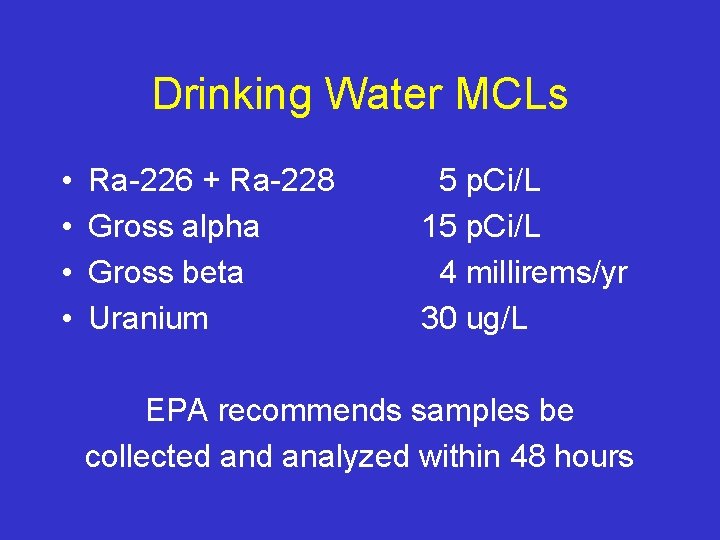
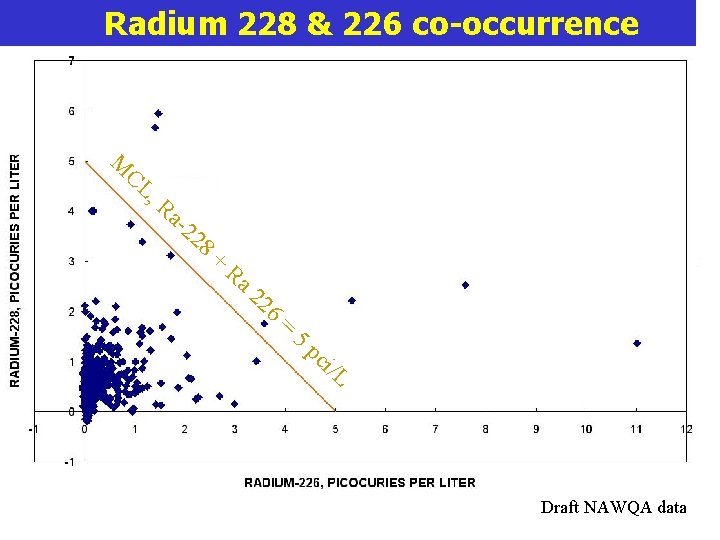
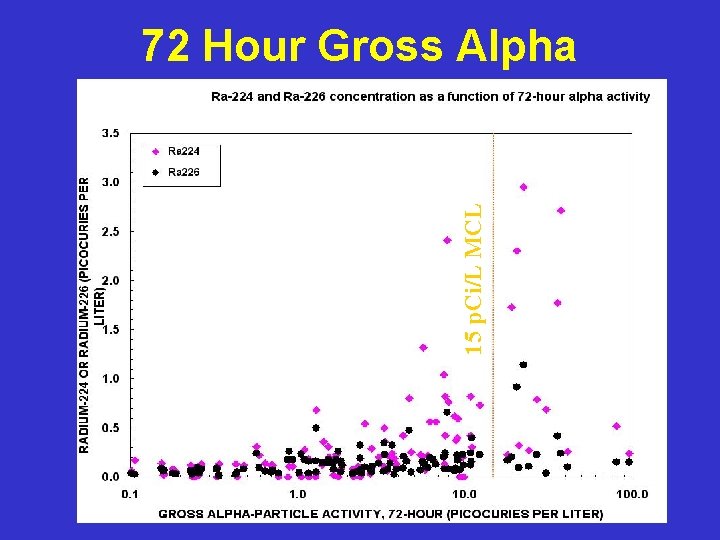
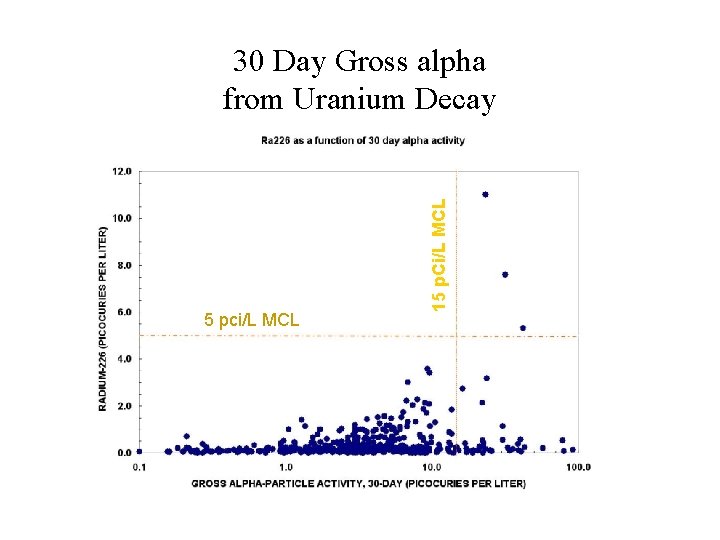
Drinking Water MCLs • • Ra-226 + Ra-228 Gross alpha Gross beta Uranium 5 p. Ci/L 15 p. Ci/L 4 millirems/yr 30 ug/L EPA recommends samples be collected analyzed within 48 hours
Where does Ra occur?
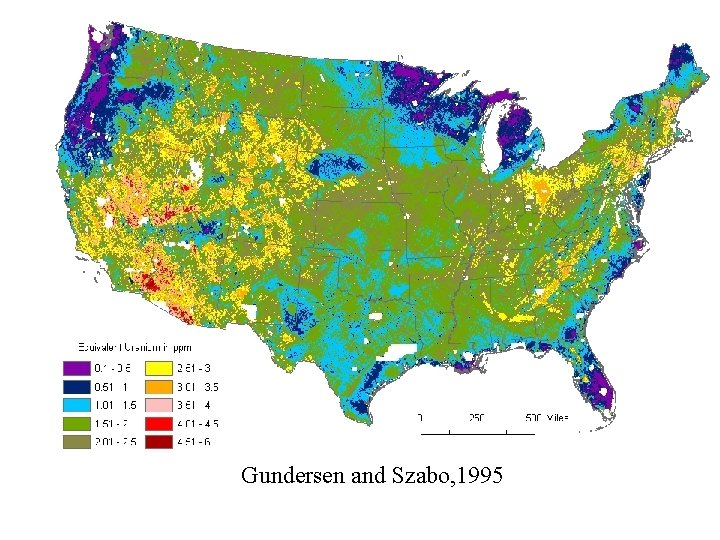
Gundersen and Szabo, 1995
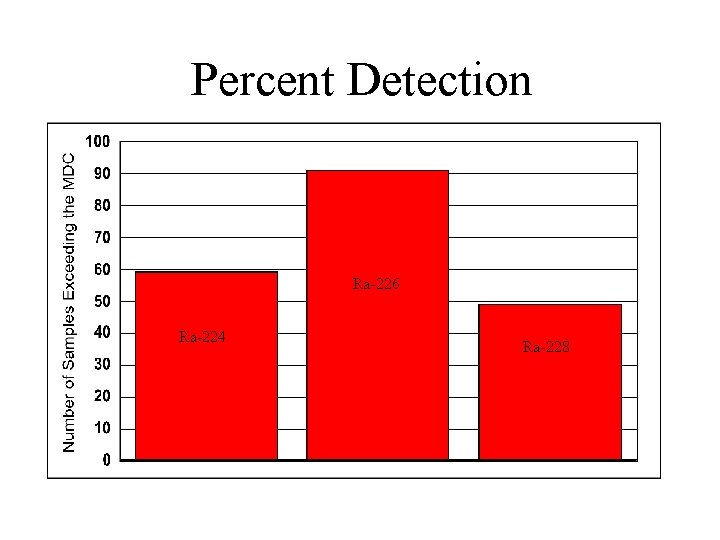
Percent Detection Ra-226 Ra-224 Ra-228
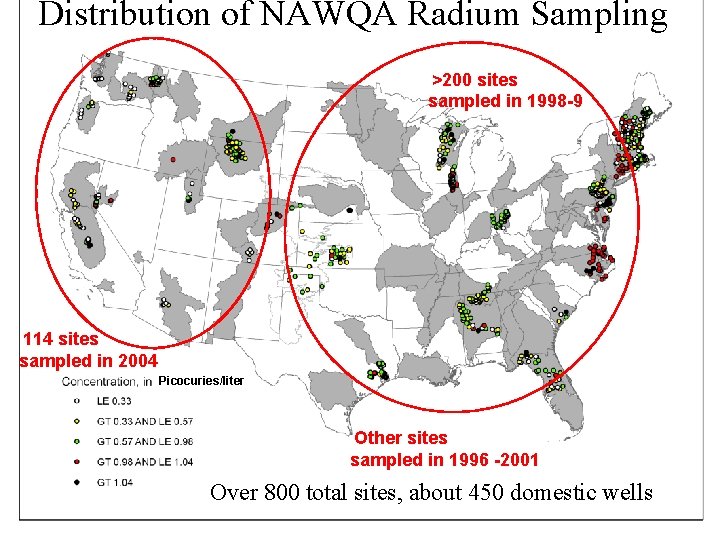
Distribution of NAWQA Radium Sampling >200 sites sampled in 1998 -9 114 sites sampled in 2004 Picocuries/liter Other sites sampled in 1996 -2001 Over 800 total sites, about 450 domestic wells
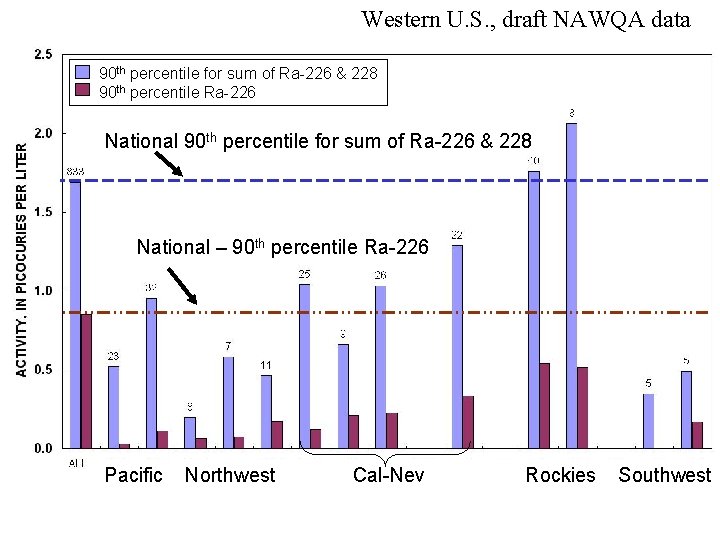
Western U. S. , draft NAWQA data 90 th percentile for sum of Ra-226 & 228 90 th percentile Ra-226 National 90 th percentile for sum of Ra-226 & 228 National – 90 th percentile Ra-226 Pacific Northwest Cal-Nev Rockies Southwest
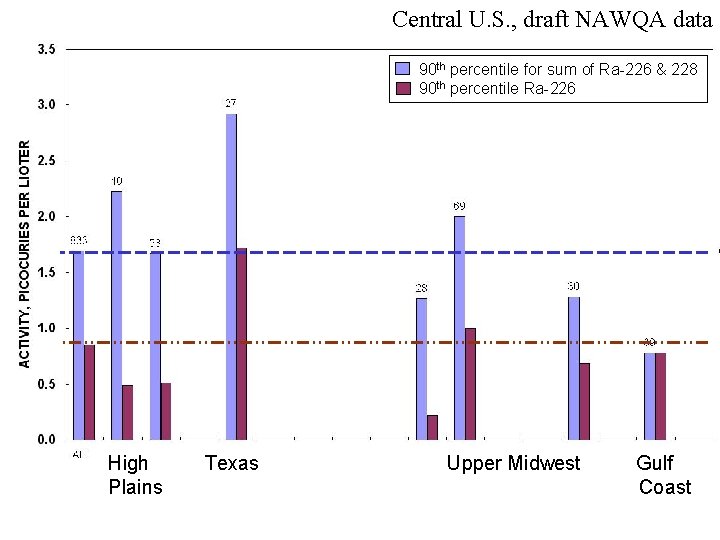
Central U. S. , draft NAWQA data 90 th percentile for sum of Ra-226 & 228 90 th percentile Ra-226 High Plains Texas Upper Midwest Gulf Coast
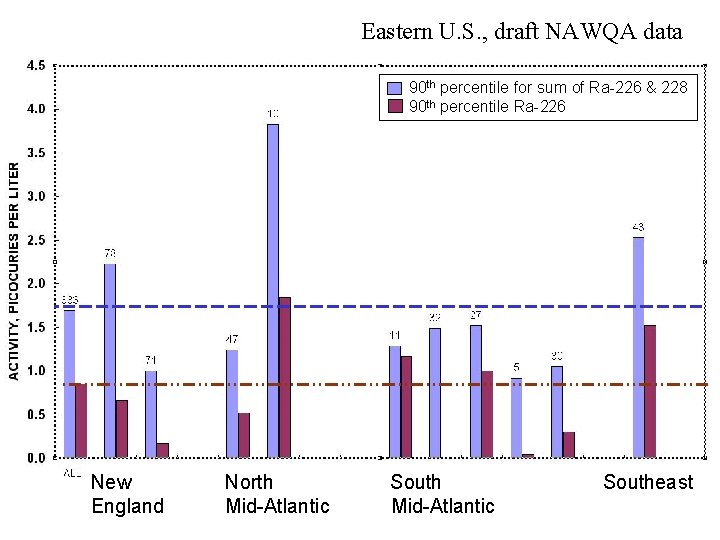
Eastern U. S. , draft NAWQA data 90 th percentile for sum of Ra-226 & 228 90 th percentile Ra-226 New England North Mid-Atlantic Southeast
Radium 228 & 226 co-occurrence M CL , R a- 22 8 + Ra 22 6 = 5 pc i /L Draft NAWQA data
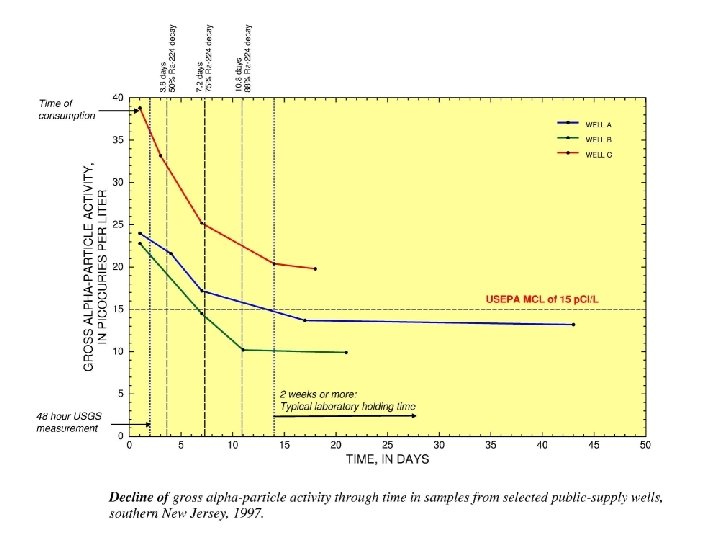
15 p. Ci/L MCL 72 Hour Gross Alpha
5 pci/L MCL 15 p. Ci/L MCL 30 Day Gross alpha from Uranium Decay
Are there geochemical or geological features on National (NAWQA) and local scales that help evaluate occurrence of Ra?
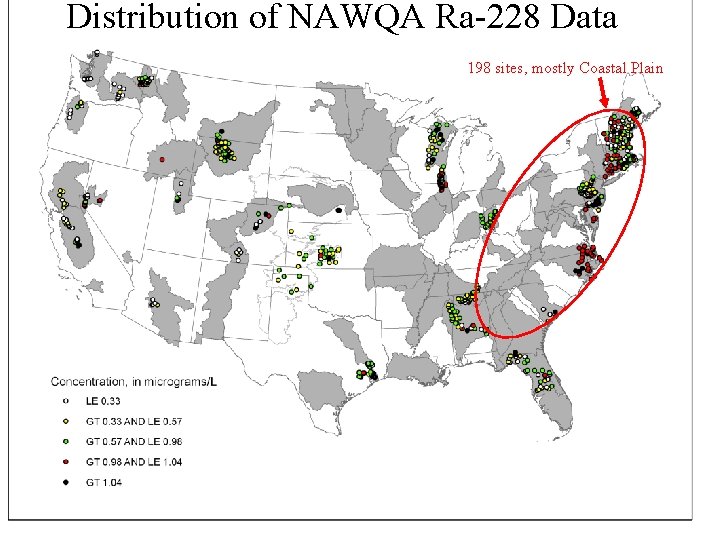
Distribution of NAWQA Ra-228 Data 198 sites, mostly Coastal Plain
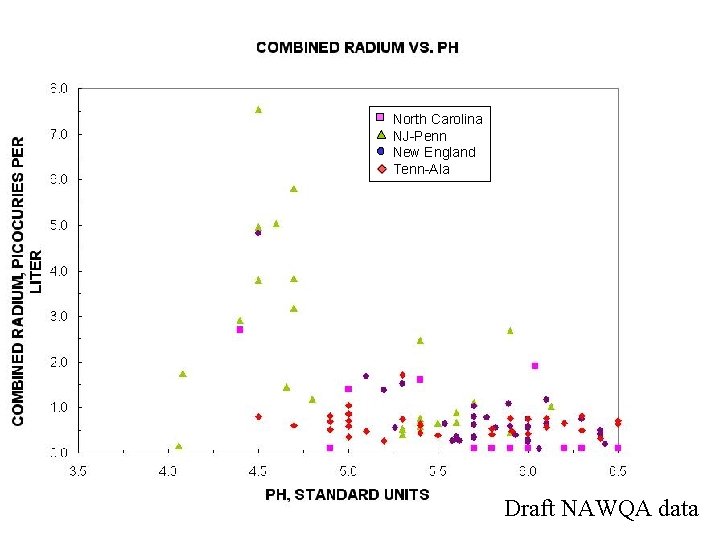
North Carolina NJ-Penn New England Tenn-Ala Draft NAWQA data
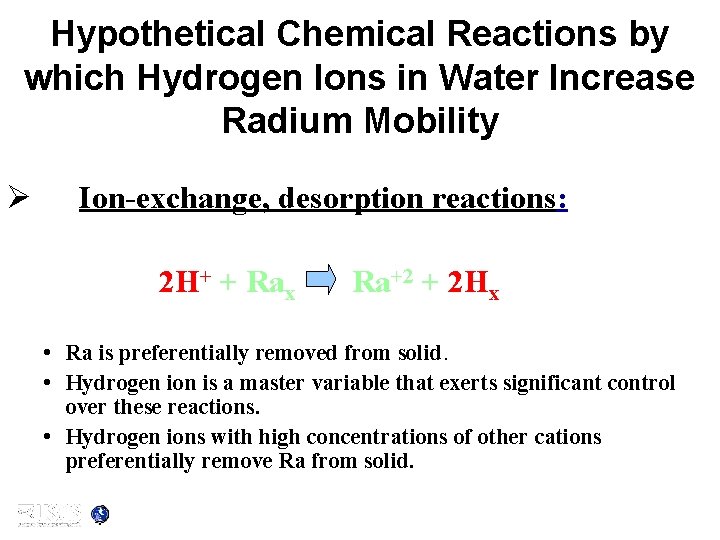
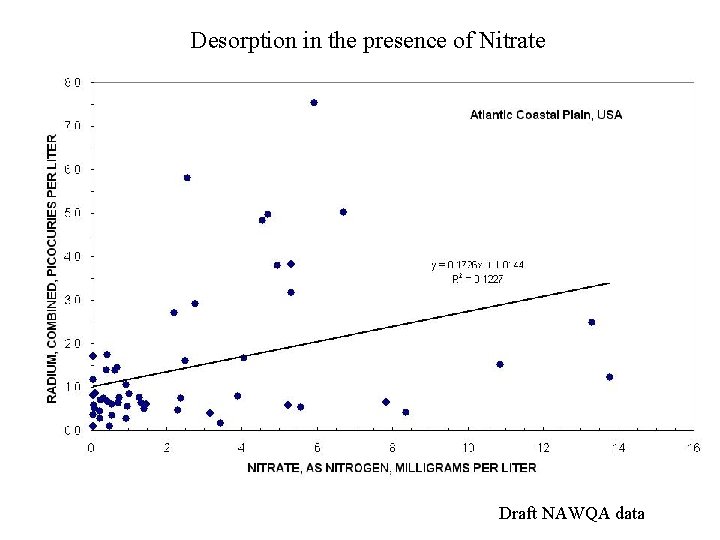
Hypothetical Chemical Reactions by which Hydrogen Ions in Water Increase Radium Mobility Ø Ion-exchange, desorption reactions: 2 H+ + Rax Ra+2 + 2 Hx • Ra is preferentially removed from solid. • Hydrogen ion is a master variable that exerts significant control over these reactions. • Hydrogen ions with high concentrations of other cations preferentially remove Ra from solid.
Desorption in the presence of Nitrate Draft NAWQA data
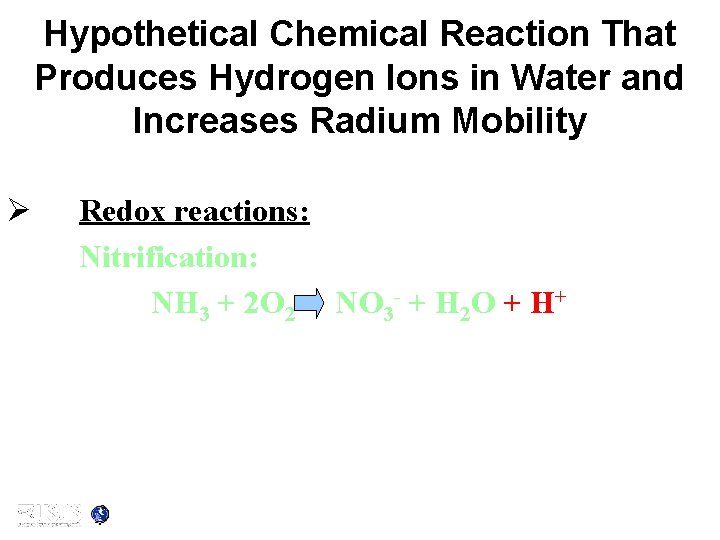
Hypothetical Chemical Reaction That Produces Hydrogen Ions in Water and Increases Radium Mobility Ø Redox reactions: Nitrification: NH 3 + 2 O 2 NO 3 - + H 2 O + H+
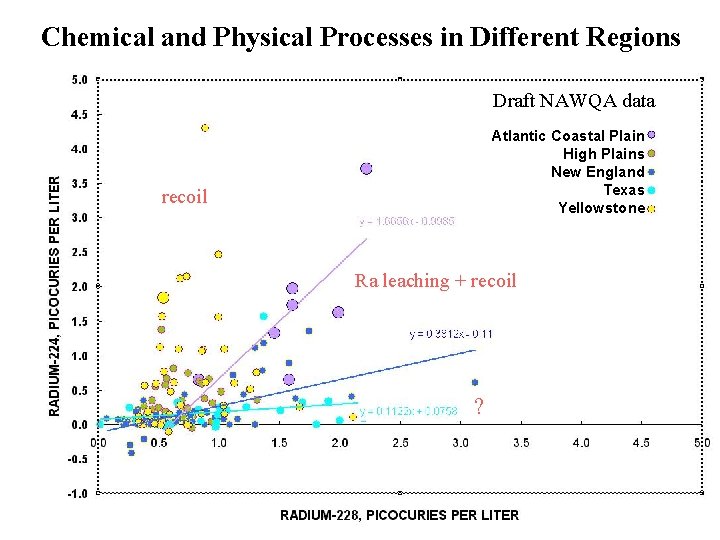
Chemical and Physical Processes in Different Regions Draft NAWQA data Atlantic Coastal Plain High Plains New England Texas Yellowstone recoil Ra leaching + recoil ?
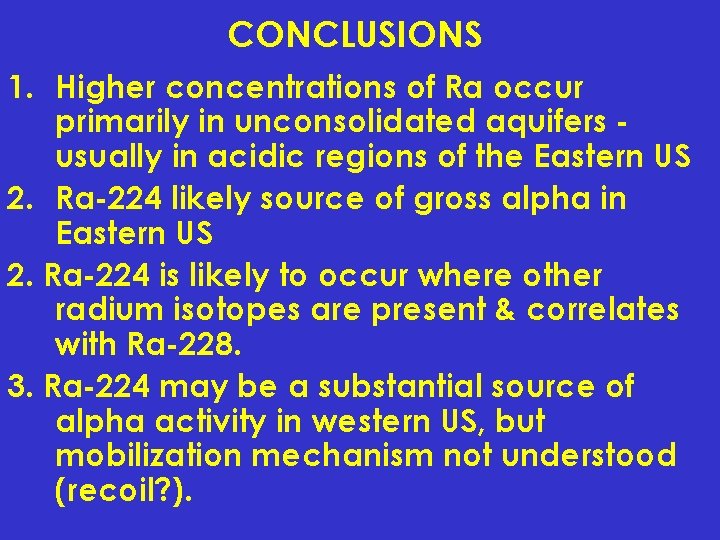
CONCLUSIONS 1. Higher concentrations of Ra occur primarily in unconsolidated aquifers usually in acidic regions of the Eastern US 2. Ra-224 likely source of gross alpha in Eastern US 2. Ra-224 is likely to occur where other radium isotopes are present & correlates with Ra-228. 3. Ra-224 may be a substantial source of alpha activity in western US, but mobilization mechanism not understood (recoil? ).
CONCLUSIONS 4. Further characterization of geochemical implications for monitoring programs and treatment applications is warranted! More data collection and analysis is planned Contacts: Zoltan Szabo ZSzabo@USGS. GOV 609 -771 -3929 Jeff Fischer@USGS. GOV 609 -771 -3953