
Occurrence of infectious diseases Biomedical Technology Part two
Occurrence of infectious diseases Biomedical Technology Part two Public Health Organizations
Epidemiology • The study of the “occurrence of disease” in populations. (General populations, all males, all females, age groups, etc. ) • Epidemiologists are concerned not only with infectious diseases, but also with noninfectious diseases such as cancer and atherosclerosis, and with environmental diseases such as lead poisoning.
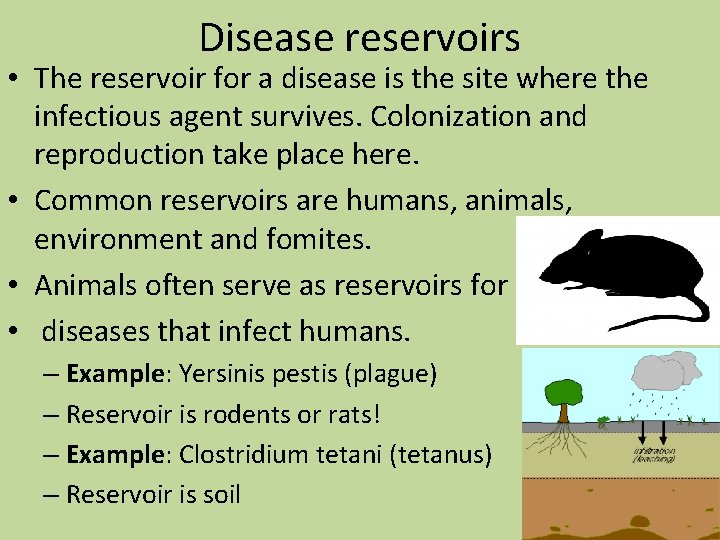
Disease reservoirs • The reservoir for a disease is the site where the infectious agent survives. Colonization and reproduction take place here. • Common reservoirs are humans, animals, environment and fomites. • Animals often serve as reservoirs for • diseases that infect humans. – Example: Yersinis pestis (plague) – Reservoir is rodents or rats! – Example: Clostridium tetani (tetanus) – Reservoir is soil
Portal of Exit • The route by which the infectious agent leaves the reservoir to be transferred to a susceptible HOST. • The agent leaves the body “catches a ride” through body secretions such as: • Saliva sputum • Blood draining wounds • Semen vaginal secretions • Urine feces
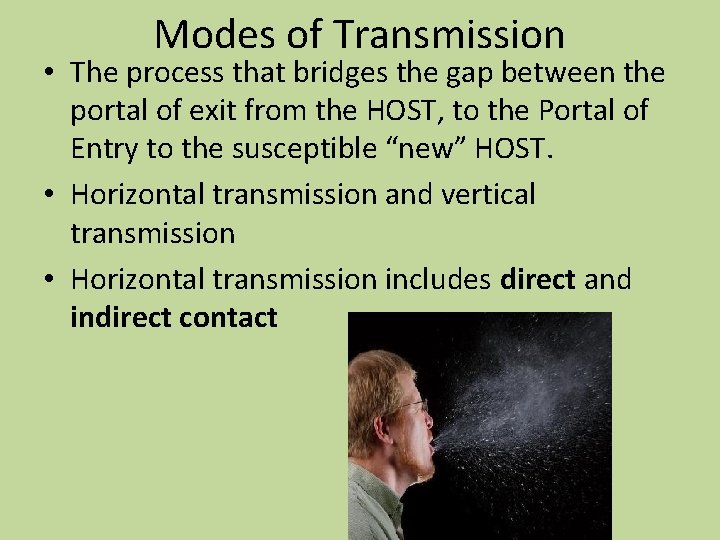
Modes of Transmission • The process that bridges the gap between the portal of exit from the HOST, to the Portal of Entry to the susceptible “new” HOST. • Horizontal transmission and vertical transmission • Horizontal transmission includes direct and indirect contact
Direct Contact Transmission • Occurs when an individual is infected by contact with the reservoir • Examples: touching an infected person, being bitten by an infected animal or insect, STD’s, colds, flu
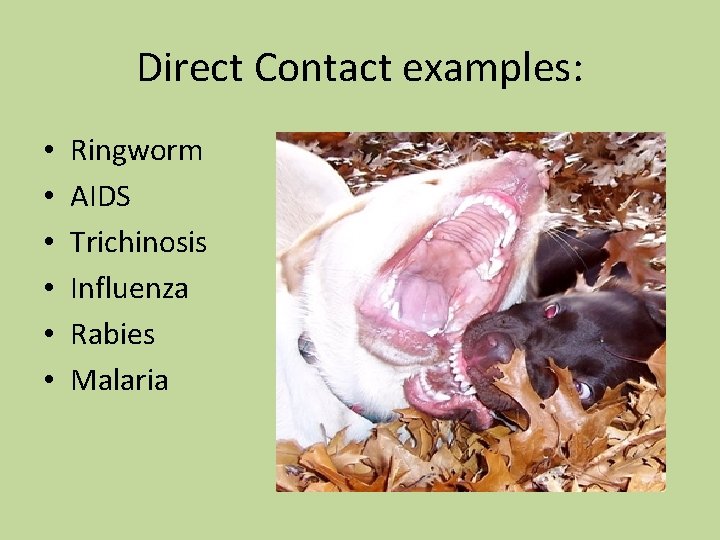
Direct Contact examples: • • • Ringworm AIDS Trichinosis Influenza Rabies Malaria
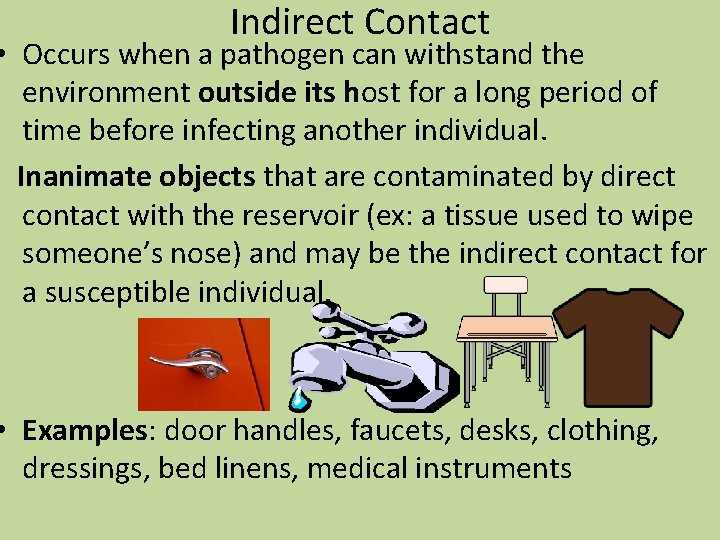
Indirect Contact • Occurs when a pathogen can withstand the environment outside its host for a long period of time before infecting another individual. Inanimate objects that are contaminated by direct contact with the reservoir (ex: a tissue used to wipe someone’s nose) and may be the indirect contact for a susceptible individual. • Examples: door handles, faucets, desks, clothing, dressings, bed linens, medical instruments
Indirect Contact cont. • Ingesting food and beverages contaminated by contact with a disease reservoir. • Fecal-oral route of transmission. • Sewage, contaminated water that is used for drinking, washing, or preparing foods. • Soil contaminated from water, spills, toxins, etc. • Hurricaine or flooding- munincipalities • Are damaged or destroyed • Concerns about safe water

Vertical Transmission • Transmission of disease from parent to child during the processes of reproduction, fetal development, or birth. – Examples of diseases: – AIDS – herpes→
HOST DEFENSES AGAINST INFECTIOUS DISEASES
Nonspecific Mechanisms • Nonspecific mechanisms are the body’s primary defense against disease. • They include anatomical barriers ( skin, nasal opening, skull, vertebral column) to invading pathogens, • physiological deterrents (tears, vaginal secretions, saliva, blood, sweat, tissue fluids) to pathogens, • and the presence of normal flora • (“good bacteria”)
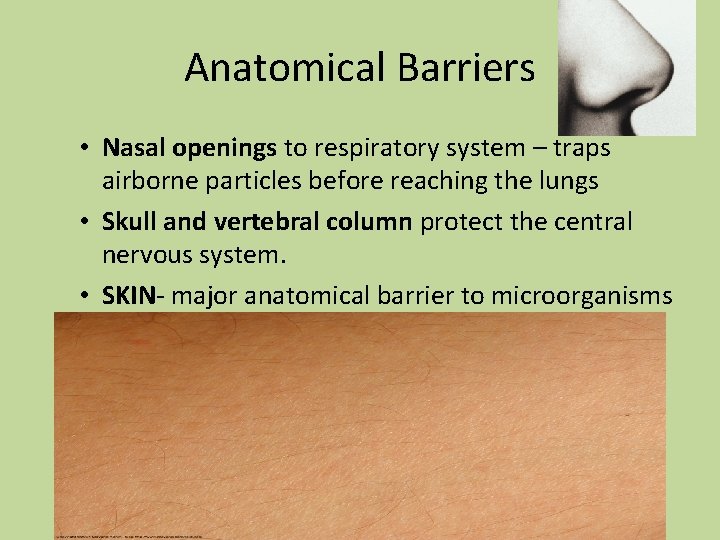
Anatomical Barriers • Nasal openings to respiratory system – traps airborne particles before reaching the lungs • Skull and vertebral column protect the central nervous system. • SKIN- major anatomical barrier to microorganisms
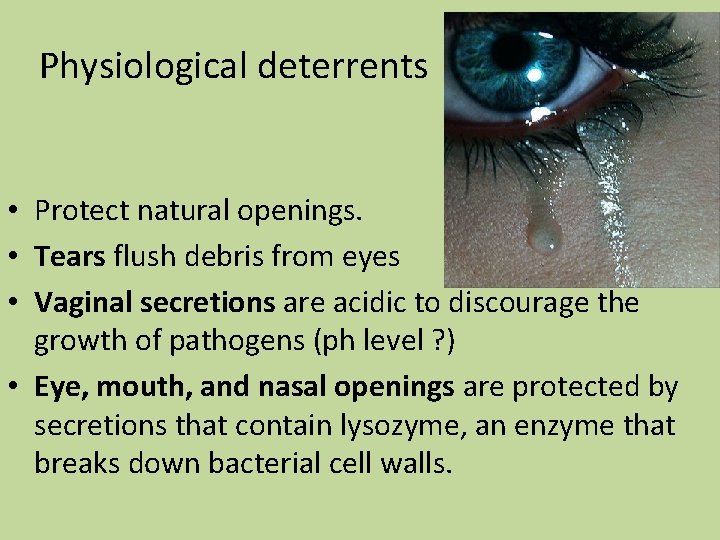
Physiological deterrents • Protect natural openings. • Tears flush debris from eyes • Vaginal secretions are acidic to discourage the growth of pathogens (ph level ? ) • Eye, mouth, and nasal openings are protected by secretions that contain lysozyme, an enzyme that breaks down bacterial cell walls.
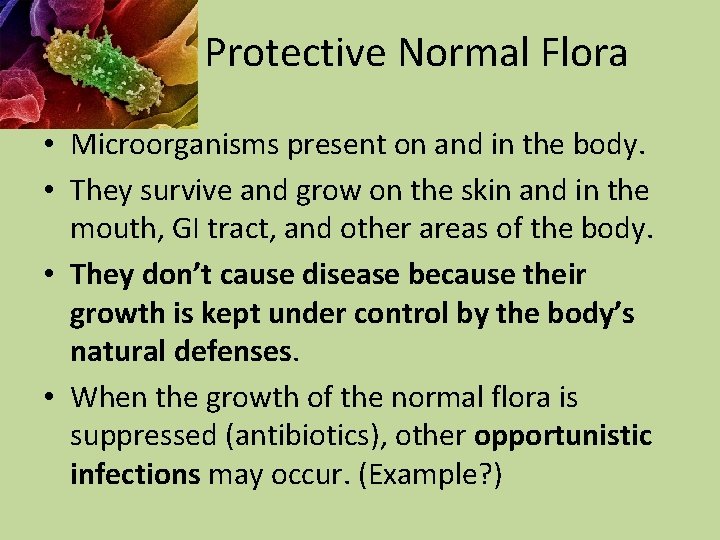
Protective Normal Flora • Microorganisms present on and in the body. • They survive and grow on the skin and in the mouth, GI tract, and other areas of the body. • They don’t cause disease because their growth is kept under control by the body’s natural defenses. • When the growth of the normal flora is suppressed (antibiotics), other opportunistic infections may occur. (Example? )
Immunity • When a host encounters an antigen • (foreign body) that triggers a specific immune response for the second or later time, the memory lymphocyte recognize it and quickly begin multiplying. (Remembers it) • Memory cells allow the pathogen to be fought off more quickly with each new exposure. • This same response explains the effectiveness of vaccination for preventing even the first occurrence of many diseases.
Vaccination • Vaccines contain either a killed or weakened strain (attenuated) of a particular pathogen, OR solution containing antigens from the pathogens. • The body’s immune system will respond to these vaccines as if they contain the actual pathogen, even though the vaccine is NOT capable of causing disease. • As a result, memory lymphocytes will be present and respond rapidly when the actual pathogen is encountered.
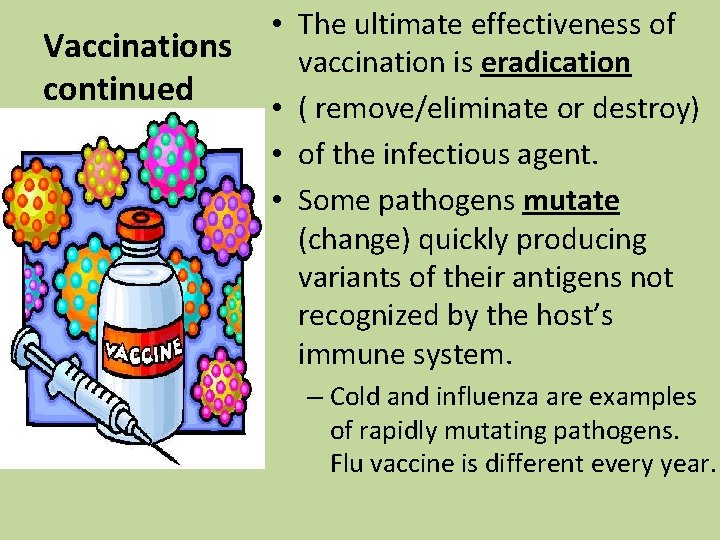
Vaccinations continued • The ultimate effectiveness of vaccination is eradication • ( remove/eliminate or destroy) • of the infectious agent. • Some pathogens mutate (change) quickly producing variants of their antigens not recognized by the host’s immune system. – Cold and influenza are examples of rapidly mutating pathogens. Flu vaccine is different every year.
Who is at risk? • Age- as a person gets older, immunity declines. Why? • Concurrent disease- other disorders or diseases • Stress- a compromised emotional state has lower defense mechanisms • Immune/vaccine status • Lifestyle choices • Occupation • Nutritional status • Hereditary
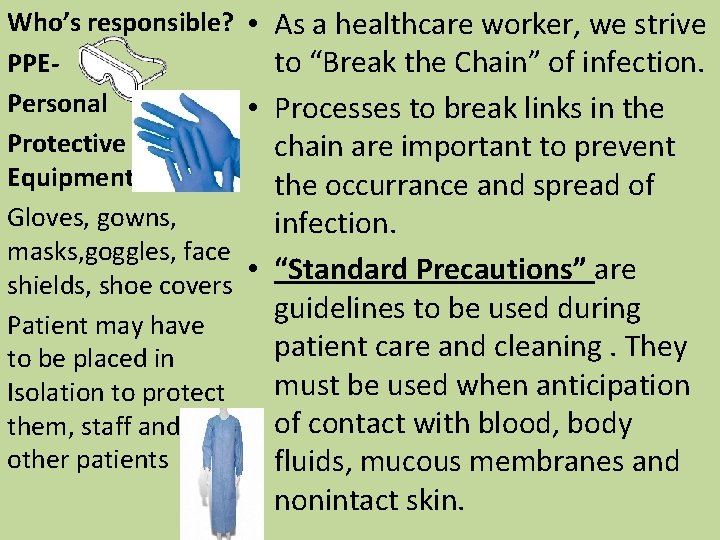
Who’s responsible? • As a healthcare worker, we strive PPEto “Break the Chain” of infection. Personal • Processes to break links in the Protective chain are important to prevent Equipment the occurrance and spread of Gloves, gowns, infection. masks, goggles, face • “Standard Precautions” are shields, shoe covers guidelines to be used during Patient may have patient care and cleaning. They to be placed in must be used when anticipation Isolation to protect of contact with blood, body them, staff and other patients fluids, mucous membranes and nonintact skin.
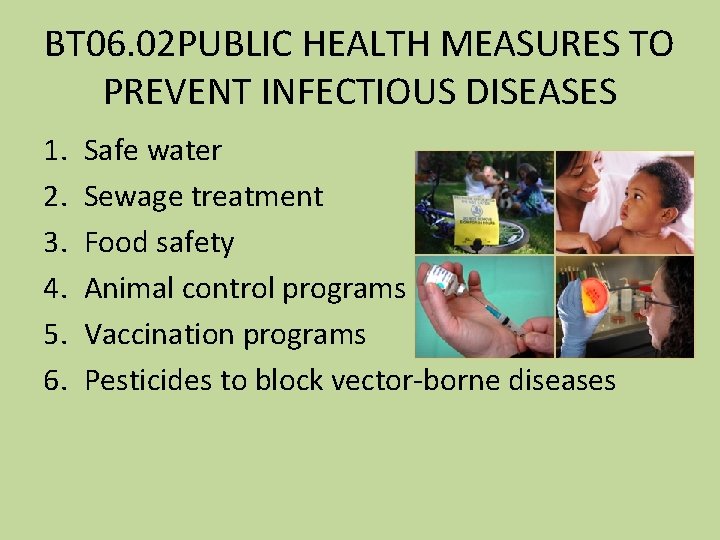
BT 06. 02 PUBLIC HEALTH MEASURES TO PREVENT INFECTIOUS DISEASES 1. 2. 3. 4. 5. 6. Safe water Sewage treatment Food safety Animal control programs Vaccination programs Pesticides to block vector-borne diseases
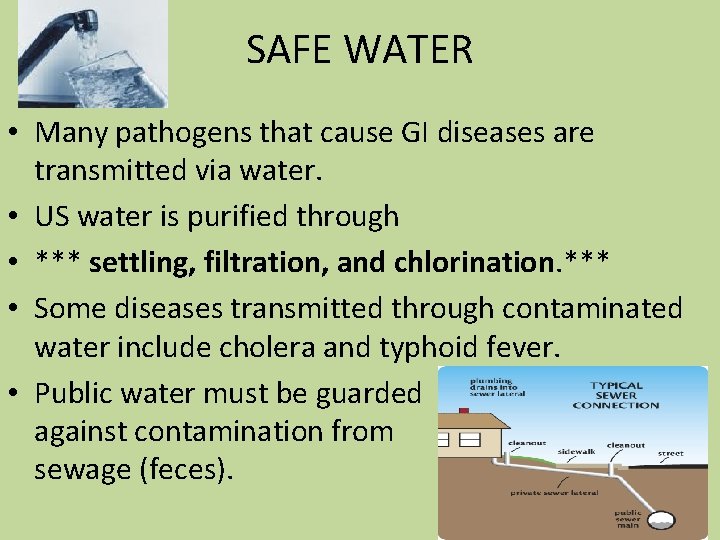
SAFE WATER • Many pathogens that cause GI diseases are transmitted via water. • US water is purified through • *** settling, filtration, and chlorination. *** • Some diseases transmitted through contaminated water include cholera and typhoid fever. • Public water must be guarded against contamination from sewage (feces).
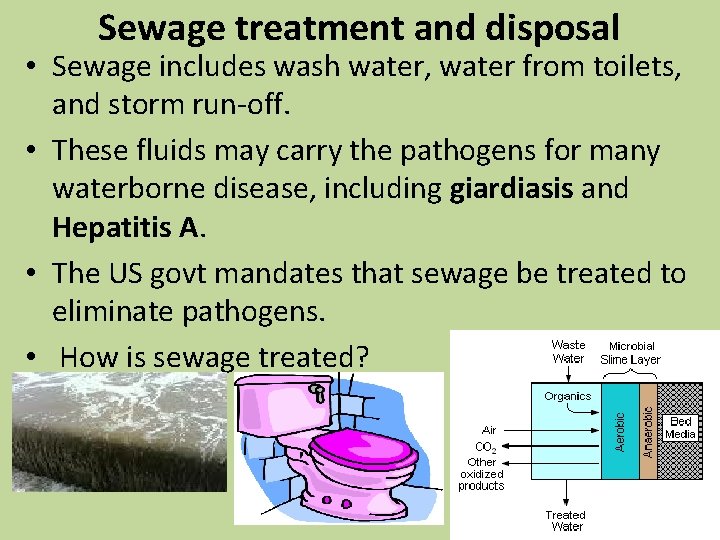
Sewage treatment and disposal • Sewage includes wash water, water from toilets, and storm run-off. • These fluids may carry the pathogens for many waterborne disease, including giardiasis and Hepatitis A. • The US govt mandates that sewage be treated to eliminate pathogens. • How is sewage treated?
Food safety programs • The US has many standards, inspection • plans, and regulations about food prep, handling, and distribution. • Milk is pasteurized and dated for sale and is analyzed periodically for contamination. • Restaurants and supermarkets are inspected.
Animal Control Programs • Animals are carriers of many diseases that also affect humans. • Domestic herds are inspected • Rabid animals are destroyed • Rat control programs in place in urban areas – major component in public health efforts
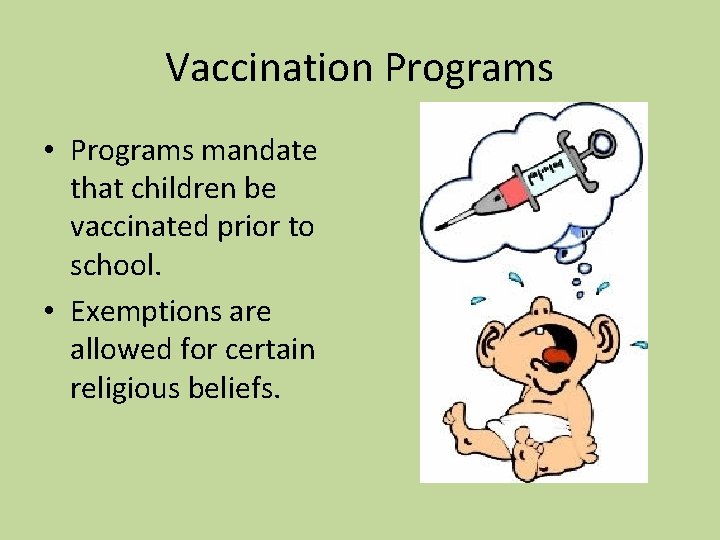
Vaccination Programs • Programs mandate that children be vaccinated prior to school. • Exemptions are allowed for certain religious beliefs.
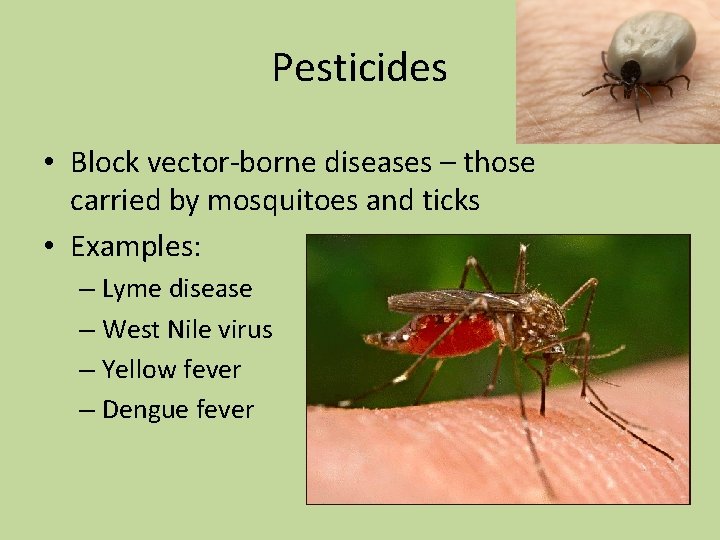
Pesticides • Block vector-borne diseases – those carried by mosquitoes and ticks • Examples: – Lyme disease – West Nile virus – Yellow fever – Dengue fever
Public Health Organizations • Enforce regulation, provide public health services • NIH (National Institutes of Health) supports health related RESEARCH • CDC (Centers for Disease Control & Prevention) INVESTIGATES disease outbreaks • FDA ( Food & Drug Administration) monitors safety of food, medicines and other products • WHO (World Health Organization) provides INTERNATIONAL surveillance and control of disease
- Slides: 28