
OCCUPATIONAL THERAPYS ROLE IN SCLERODERMA SYMPTOM MANAGEMENT Presented
- Slides: 18
OCCUPATIONAL THERAPY'S ROLE IN SCLERODERMA SYMPTOM MANAGEMENT Presented by Kim Forehand, MOTR/L
WHAT EXACTLY IS AN OCCUPATIONAL THERAPIST? WHO WE ARE: nationally certified, state-licensed therapists, most commonly part of a multi-disciplinary team; educational requirement including obtaining a Master’s Degree in Occupational Therapy Core curriculum includes classes in anatomy, physiology, mental health, life span development, pediatrics, geriatrics, task analysis, environmental modification, splinting/orthotics, and motor development OTs help people across the lifespan participate in the things they want and need to do through therapeutic use of everyday activities. (Big Hint: Occupation—what occupies your time? )
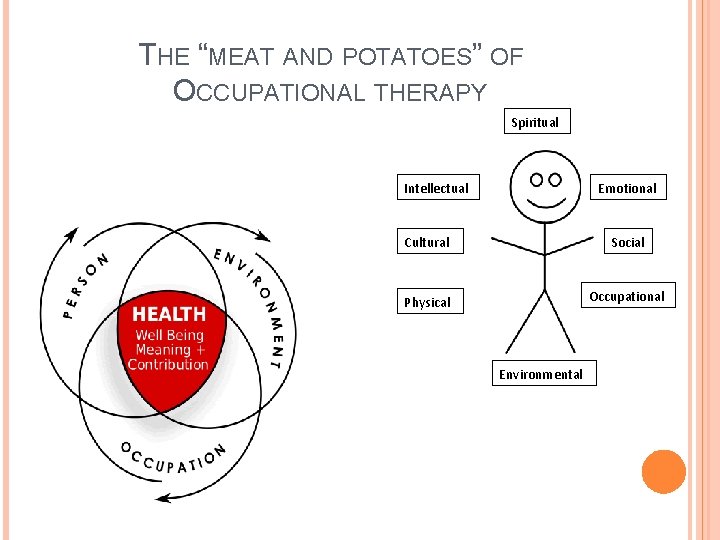
THE “MEAT AND POTATOES” OF OCCUPATIONAL THERAPY Spiritual Intellectual Emotional Cultural Social Physical Occupational Environmental
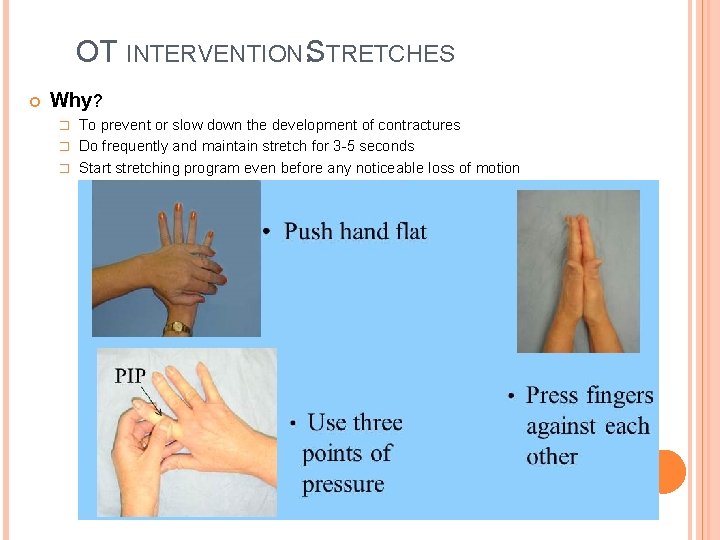
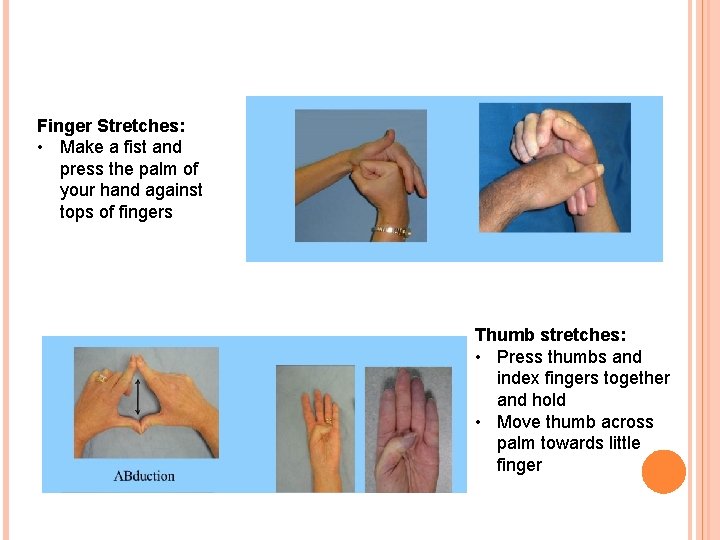
OT INTERVENTION: STRETCHES Why? To prevent or slow down the development of contractures � Do frequently and maintain stretch for 3 -5 seconds � Start stretching program even before any noticeable loss of motion �
Finger Stretches: • Make a fist and press the palm of your hand against tops of fingers Thumb stretches: • Press thumbs and index fingers together and hold • Move thumb across palm towards little finger
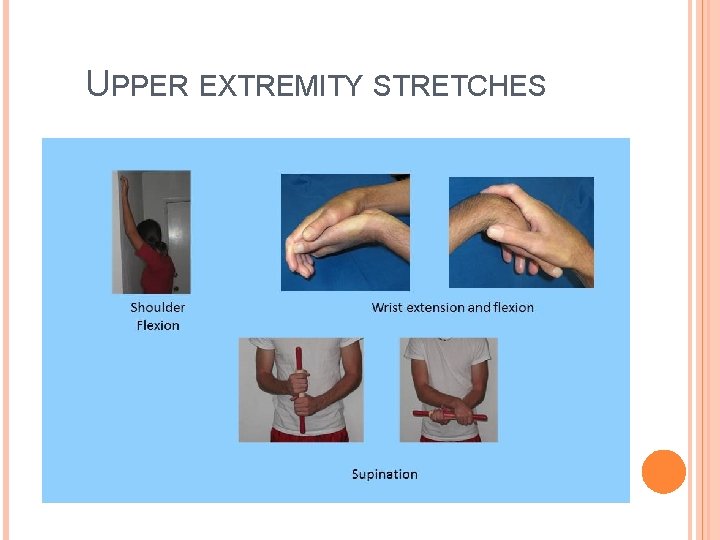
UPPER EXTREMITY STRETCHES
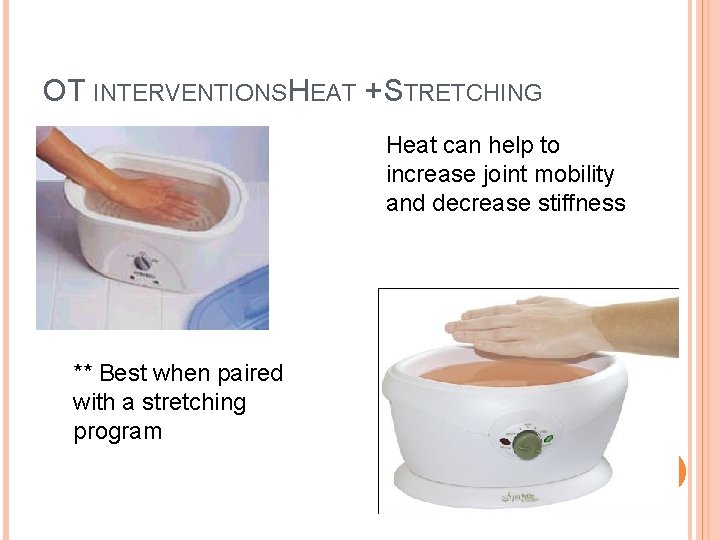
OT INTERVENTIONS: HEAT + STRETCHING Heat can help to increase joint mobility and decrease stiffness ** Best when paired with a stretching program
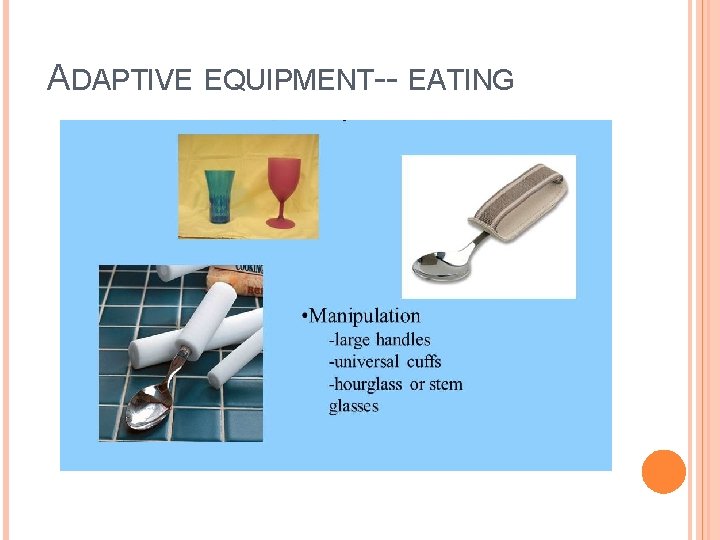
ADAPTIVE EQUIPMENT-- EATING
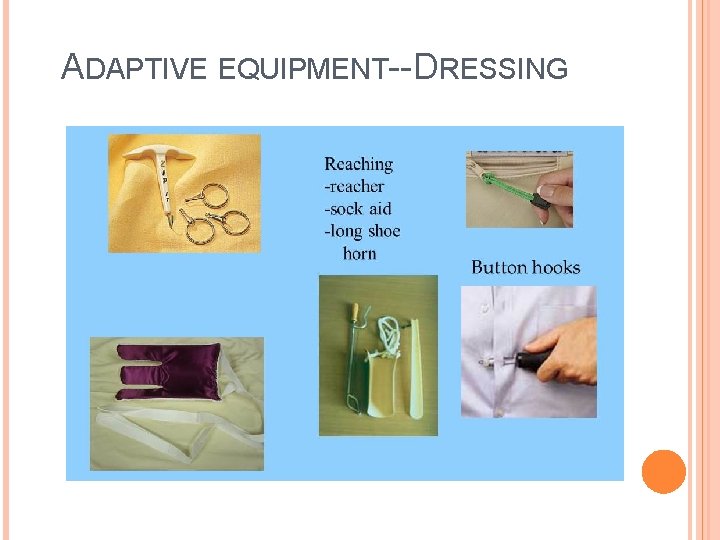
ADAPTIVE EQUIPMENT-- DRESSING
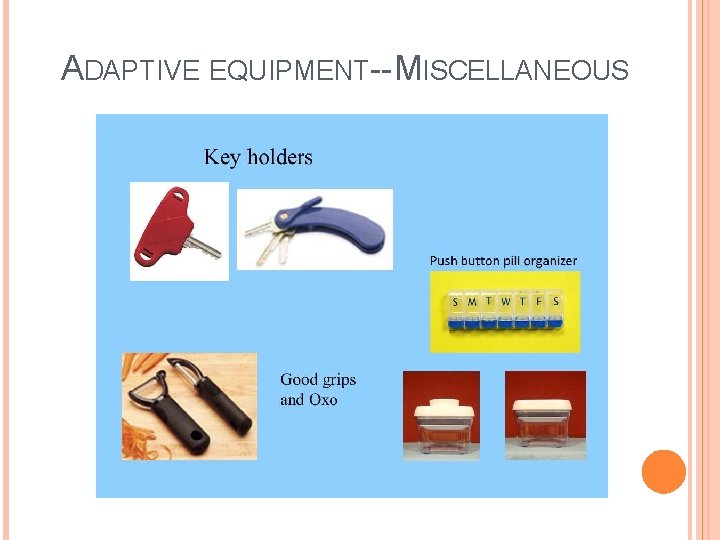
ADAPTIVE EQUIPMENT-- MISCELLANEOUS
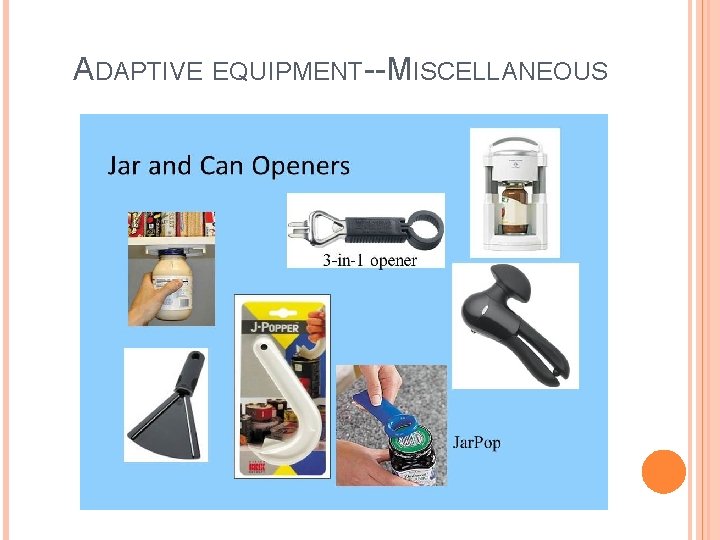
ADAPTIVE EQUIPMENT-- MISCELLANEOUS
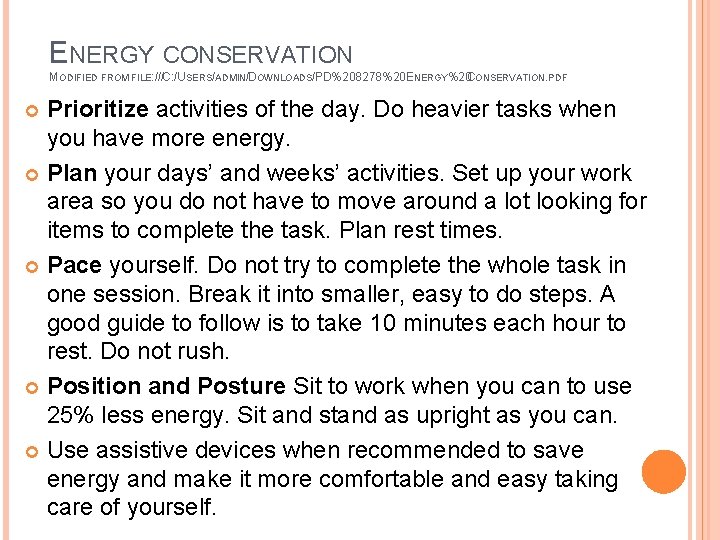
ENERGY CONSERVATION MODIFIED FROM FILE: ///C: /USERS/ADMIN/DOWNLOADS/PD%208278%20 ENERGY%20 CONSERVATION. PDF Prioritize activities of the day. Do heavier tasks when you have more energy. Plan your days’ and weeks’ activities. Set up your work area so you do not have to move around a lot looking for items to complete the task. Plan rest times. Pace yourself. Do not try to complete the whole task in one session. Break it into smaller, easy to do steps. A good guide to follow is to take 10 minutes each hour to rest. Do not rush. Position and Posture Sit to work when you can to use 25% less energy. Sit and stand as upright as you can. Use assistive devices when recommended to save energy and make it more comfortable and easy taking care of yourself.
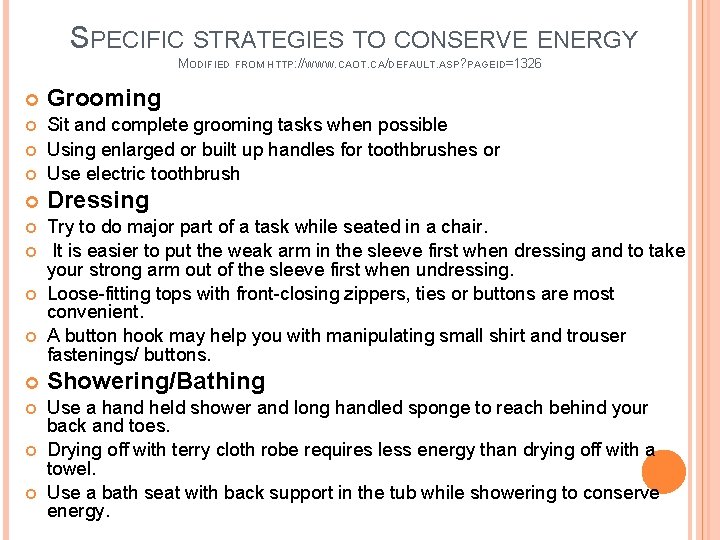
SPECIFIC STRATEGIES TO CONSERVE ENERGY MODIFIED FROM HTTP: //WWW. CAOT. CA/DEFAULT. ASP? PAGEID=1326 Grooming Sit and complete grooming tasks when possible Using enlarged or built up handles for toothbrushes or Use electric toothbrush Dressing Try to do major part of a task while seated in a chair. It is easier to put the weak arm in the sleeve first when dressing and to take your strong arm out of the sleeve first when undressing. Loose-fitting tops with front-closing zippers, ties or buttons are most convenient. A button hook may help you with manipulating small shirt and trouser fastenings/ buttons. Showering/Bathing Use a hand held shower and long handled sponge to reach behind your back and toes. Drying off with terry cloth robe requires less energy than drying off with a towel. Use a bath seat with back support in the tub while showering to conserve energy.
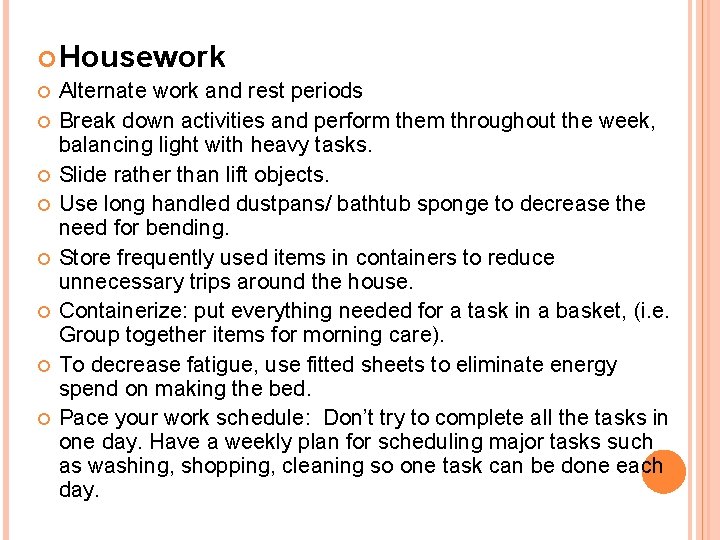
Housework Alternate work and rest periods Break down activities and perform them throughout the week, balancing light with heavy tasks. Slide rather than lift objects. Use long handled dustpans/ bathtub sponge to decrease the need for bending. Store frequently used items in containers to reduce unnecessary trips around the house. Containerize: put everything needed for a task in a basket, (i. e. Group together items for morning care). To decrease fatigue, use fitted sheets to eliminate energy spend on making the bed. Pace your work schedule: Don’t try to complete all the tasks in one day. Have a weekly plan for scheduling major tasks such as washing, shopping, cleaning so one task can be done each day.
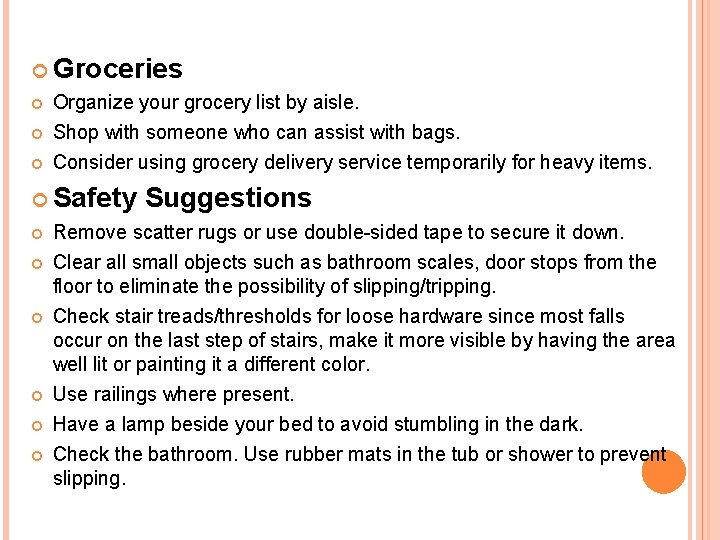
Groceries Organize your grocery list by aisle. Shop with someone who can assist with bags. Consider using grocery delivery service temporarily for heavy items. Safety Suggestions Remove scatter rugs or use double-sided tape to secure it down. Clear all small objects such as bathroom scales, door stops from the floor to eliminate the possibility of slipping/tripping. Check stair treads/thresholds for loose hardware since most falls occur on the last step of stairs, make it more visible by having the area well lit or painting it a different color. Use railings where present. Have a lamp beside your bed to avoid stumbling in the dark. Check the bathroom. Use rubber mats in the tub or shower to prevent slipping.
ADDRESSING THE WHOLE PERSON Relaxation Guided imagery Deep breathing practices
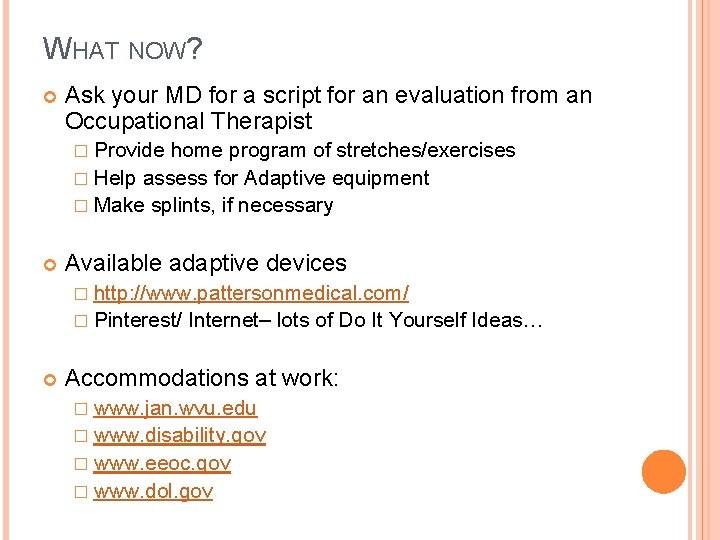
WHAT NOW? Ask your MD for a script for an evaluation from an Occupational Therapist � Provide home program of stretches/exercises � Help assess for Adaptive equipment � Make splints, if necessary Available adaptive devices � http: //www. pattersonmedical. com/ � Pinterest/ Internet– lots of Do It Yourself Ideas… Accommodations at work: � www. jan. wvu. edu � www. disability. gov � www. eeoc. gov � www. dol. gov
REFERENCES Most information and graphics used from: � Poole, J. (2012). Lecture: Occupational Therapy and Scleroderma (Systemic Sclerosis). Retrieved from http: //www. occupationaltherapy. com/E/2088/1056003/5 50 aac 6 a 6 f 74414 a 8 b http: //www. scleroderma. org/ http: //www. caot. ca/default. asp? pageid=1326 file: ///C: /Users/admin/Downloads/PD%208278%20 Energy%20 Conservation. pdf