
OCCUPATIONAL LIVER TOXICITY Dr Majid Golabadi Occupational Medicine
OCCUPATIONAL LIVER TOXICITY Dr Majid Golabadi Occupational Medicine Specialist
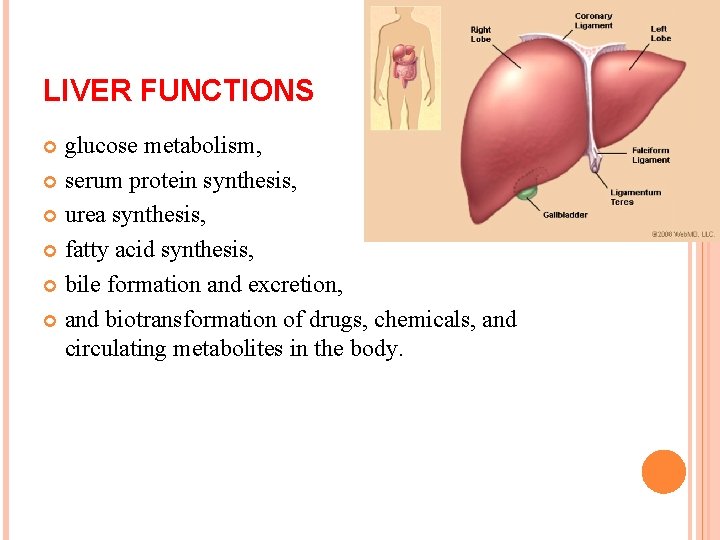
LIVER FUNCTIONS glucose metabolism, serum protein synthesis, urea synthesis, fatty acid synthesis, bile formation and excretion, and biotransformation of drugs, chemicals, and circulating metabolites in the body.

the target organ of many occupational and environmental chemicals plays a central role in their detoxification and elimination. Bacterial and viral infections and certain chemical and physical agents encountered in the workplace also involve the liver
DETECTION OF OCCUPATIONAL LIVER DISEASE With the exception of a few chemicals hepatic injury from industrial exposure does not differ clinically or morphologically from drug-induced damage (including damage caused by ethanol). difficult to differentiate occupational from non occupational causes on the basis of screening tests.
HEPATIC TOXIC DISORDERS ACCORDING TO THEIR ETIOLOGY Viral hepatitis, Physical agents Chemical-induced injuries,
LIVER DISORDERS INDUCED BY PHYSICAL AGENTS Environmentally induced hyperthermia (heat stroke) can cause acute hepatic injury Exposure to a cumulative dose of ionizing radiation
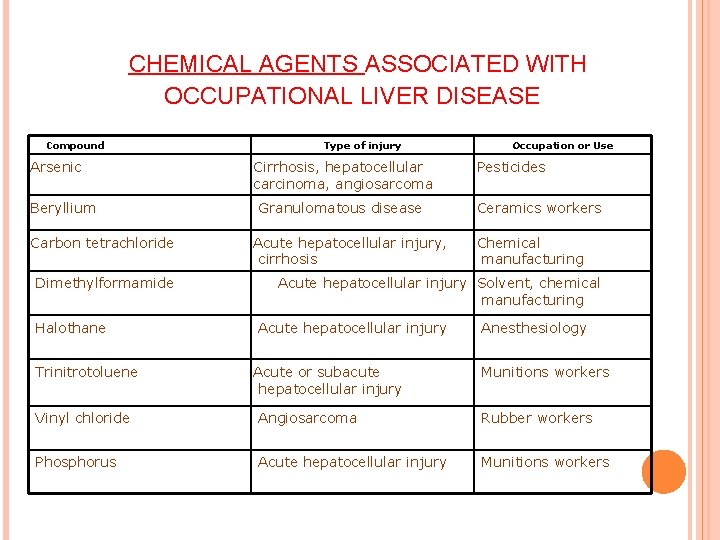
CHEMICAL AGENTS ASSOCIATED WITH OCCUPATIONAL LIVER DISEASE Compound Arsenic Beryllium Carbon tetrachloride Dimethylformamide Halothane Trinitrotoluene Type of injury Cirrhosis, hepatocellular carcinoma, angiosarcoma Granulomatous disease Acute hepatocellular injury, cirrhosis Occupation or Use Pesticides Ceramics workers Chemical manufacturing Acute hepatocellular injury Solvent, chemical manufacturing Acute hepatocellular injury Acute or subacute hepatocellular injury Anesthesiology Munitions workers Vinyl chloride Angiosarcoma Rubber workers Phosphorus Acute hepatocellular injury Munitions workers
ROUTES OF EXPOSURE Inhalation is probably the most important (volatile solvents ) percutaneous absorption: lipophilic substances. absorbed through the skin , ( TNT, 4, 4 -diamino-diphenylmethane, tetrachloroethylene, PCBs, and dimethylformamide ), Ingestion: Oral intake of hepatotoxic agents is usually of importance only in the rare case of acciden tal ingestion, although mouth breathing and gum and tobacco chewing can increase the amount of gaseous substances absorbed during the workday.

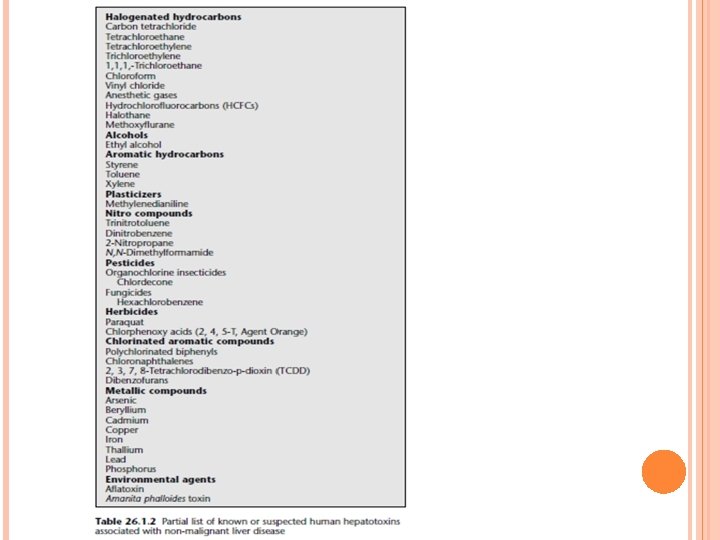
CLASSIFICATION OF CHEMICAL HEPATOTOXINS

MECHANISMS OF TOXICITY Category of Agent Incidence Intrinsic toxin Direct Indirect Cytotoxic Cholestatic Host idiosyncrasy Hypersensitivity Metabolic abnormality Experimental Reproducibility High Yes Low No No Dose Dependent Yes Example Carbon tetrachloride Yes No No Dimethylnitrosamine Methylene dianiline Phenytoin Isoniazid
HEPATIC INJURY ACUTE HEPATIC INJURY SUBACUTE HEPATIC NECROSIS CHRONIC HEPATIC INJURY
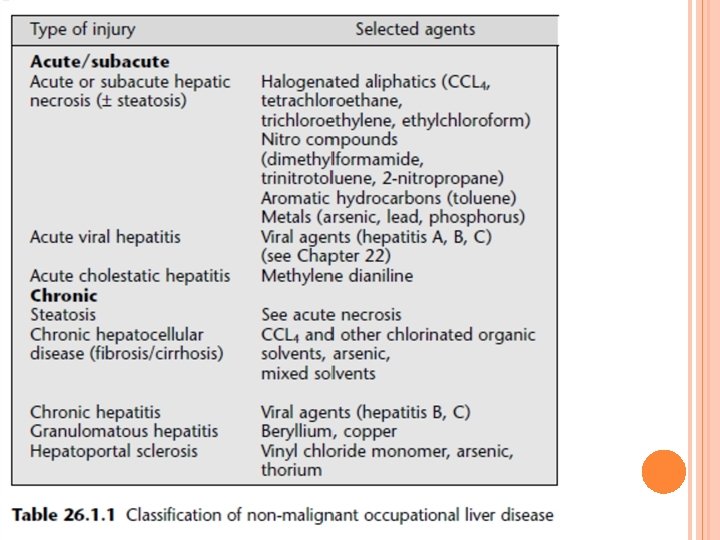
ACUTE HEPATIC INJURY The latency period is relatively short (24 -48 hours), and clinical symptoms are often of extrahepatic origin. Anorexia, nausea, vomiting, jaundice, and hepatomeg aly are often present.
SUBACUTE HEPATIC NECROSIS smoldering illness with delayed onset of jaundice. It usually follows repeated exposure to relatively small doses of a hepato-toxin. The onset of anorexia, nausea, and vomiting accom panied by hepatomegaly and jaundice may occur after sev eral weeks to months of exposure and may lead variably to recovery or to fulminant hepatic failure.
CHRONIC HEPATIC INJURY continuing or repeated injury caused by prolonged exposure: cirrhosis and fibrosis, hepatoportal sclerosis, hepatic porphyria, and neoplasia.
INFLAMMATORY LIVER DISORDERS (HEPATITIS) These disorders are long-term conditions that may progress inexorably to cirrhosis and hepatic failure The primary causes of hepatic inflammation are infections by the hepatitis B and C viruses, and chemical hepatitis
CHOLESTATIC INJURY The cholestatic lesion resulting in diminution or cessation of bile flow and retention of bile salts and bilirubin. The appearance of jaundice is an outstanding characteristic of the disorder. Acute cholestatic liver injury is rare but has been reported following exposure to the chemical methylene dianiline (MDA), an aromatic amine used as an epoxy resin hardener.
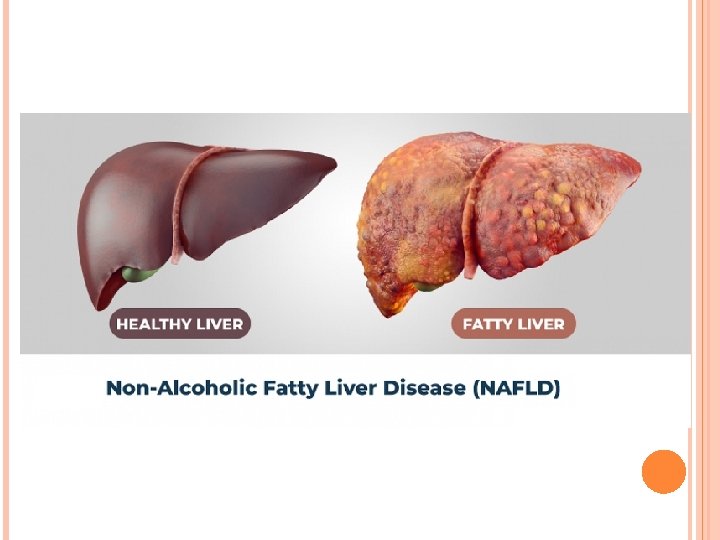
FATTY LIVER (STEATOSIS) Steatosis is defined morphologically as greater than 5% of the hepatocytes containing fat other disorders, including diabetes mellitus, hypertriglyceridemia, and obesity. marked steatosis is more commonly seen in exposure to chronic hepatotoxic agents occupational exposure to styrene, toluene, trichloroethane (TCE), TNT, arsenical pesticide, chlorinated aliphatic solvents (such as CCl 4, methyl chloroform, and TCE) and low-level exposure to dimethylformamide (DMF)
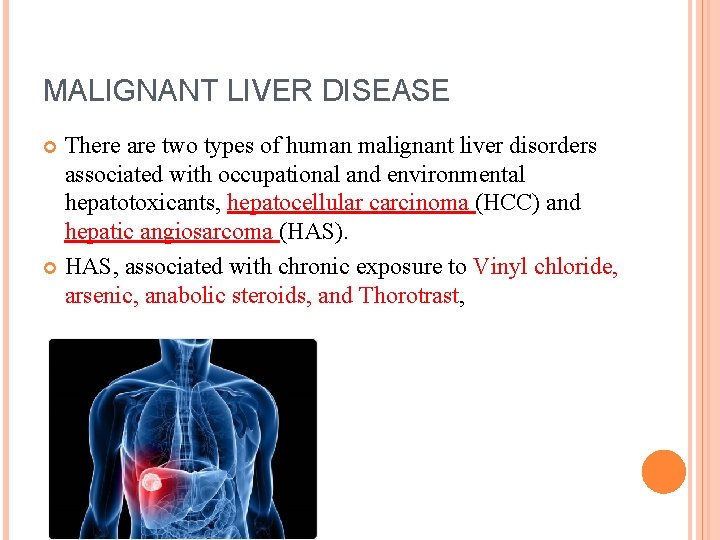
MALIGNANT LIVER DISEASE There are two types of human malignant liver disorders associated with occupational and environmental hepatotoxicants, hepatocellular carcinoma (HCC) and hepatic angiosarcoma (HAS). HAS, associated with chronic exposure to Vinyl chloride, arsenic, anabolic steroids, and Thorotrast,
DIAGNOSTIC TESTS It is common practice to measure liver enzymes periodically in workers exposed to a known hepatotoxin
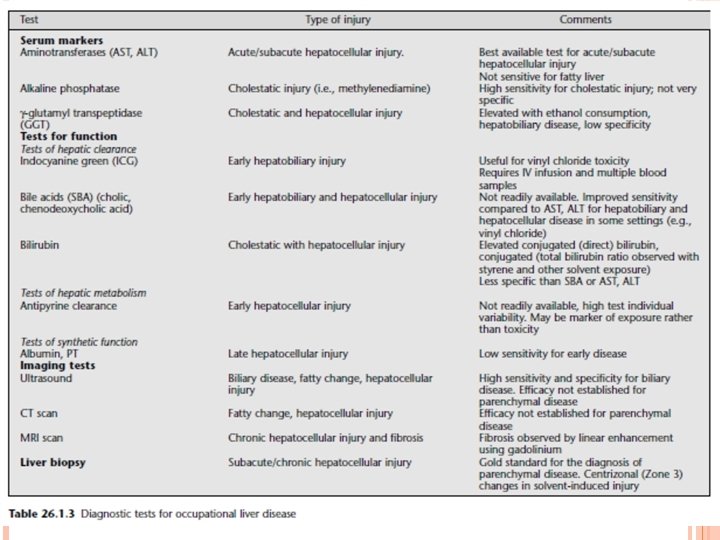
SEROLOGIC MARKERS FOR LIVER FUNCTION The detection of elevated activity of hepatic enzymes reflecting the release of these intracellular proteins into blood Enzyme release usually results from increased hepatocyte membrane permeability caused by the liver damage
two groups of enzymes, based on specificity and sensitivity, are used as serologic markers for different types of liver injury The first group of enzymes includes alkaline phosphatase (ALP), 5'-nucleotidase (5'-NT), and gammaglutamyltranspeptidase (GGT). Elevated serum activities of these proteins appear to reflect cholestatic injury.
SECOND GROUP those that are more sensitive to cytotoxic hepatic injury. (a) enzymes that are less specific and reflect injury to extrahepatic tissue, for example, aspartate aminotransferase (AST or SGOT) and lactic dehydrogenase (LDH); (b) enzymes found mainly in the liver, for example, alanine aminotransferase (ALT or SGPT); and (c) enzymes that are very specific the liver, for example, ornithine carbamyltransferase (OCT) and sorbitol dehydrogenase (SDH).
AST and ALT are probably the most frequently used serum markers of hepatic damage, In general, a two- to threefold elevation is seen in chronic hepatocellular injury or less severe acute injury the pattern of transaminase elevation can be helpful in distinguishing alcoholic liver disease from other hepatotoxic injury. Alcohol selectively inhibits ALT activity, often resulting in an AST/ALT ratio of more than 1 in alcohol-related liver disorders. In contrast, other hepatotoxin- and viral-induced hepatic injury usually results in an AST/ALT ratio of <1.
SURVEILLANCE serum transaminases remain the test of choice for routine sur veillance of such populations. preemployment baseline measurement of serum transaminases may be helpful in establishing causal ity for purposes of workers' compensation where a claim is made alleging industrial liver disease. ultrasonography of the liver has been used in surveillance of vinyl chloride-exposed workers

MANAGEMENT Further toxic exposure should be minimized and removal of the person from workplace should be considered.

- Slides: 30