
Occupational Hematology 1 Human red blood cells erythrocytes
Occupational Hematology 1
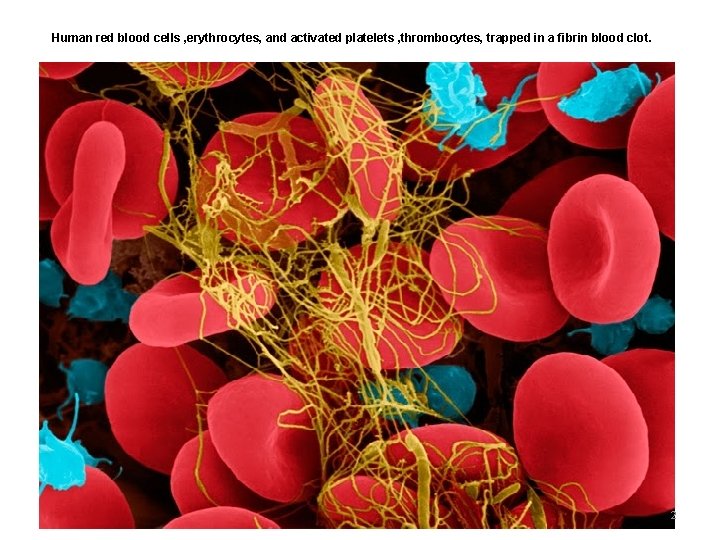
Human red blood cells , erythrocytes, and activated platelets , thrombocytes, trapped in a fibrin blood clot. 2
Exposure to hematotoxins may affect : ► RBC survival (denaturation & hemolysis) ► Metabolism ( porphyria ) ► Formation ( aplasia ) ► Morphology & function ( preleukemia & leukemia ) ► Coagulation ( thrombocytopenia ) 3
DISORDERS ASSOSIATED WITH SHORTENED RBC SURVIVAL 4
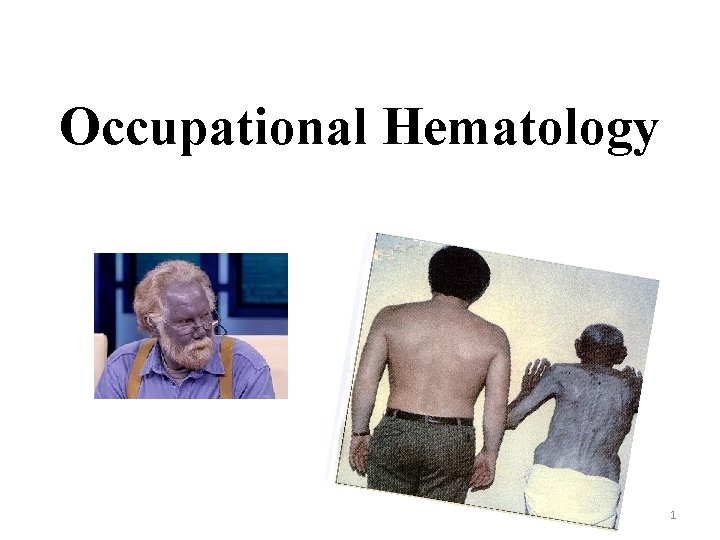
Methemoglobinemia : First recognized in 1800 , when coal tars converted to many products, such as anilines , nitrobenzens and quinones. Workers work in this plants known as blue workers. 5
Aniline ◘ Aromatic nitro & amino compounds are used as intermediates in the synthesis of : ¤ aniline dyes , ¤ ¤ rubber industry , production of pesticides , plastics , paints & varnishes. ◘ readily penetrate intact skin (through intact skin ever through clothing ). Other routs : lung , ingestion. ◘ converted in liver to phenylhydroxylamine ( a catalyst in mediating hemoglobine oxidation ). 6
Clinical presentation ◘ Symptoms vary depending on the concentration of met. Hb. ◘ Most case are mild & transient (asymptomatic blueness of lips and nails bed). ◘ Pulse oximetry may indicate normoxia or mild hypoxia not reflective of severity of met. Hb. ◘ ABG may show a normal o 2 tension ( Po 2 ) ; co-oxmetery will reveal met. Hb reliably. 7
Prevention ◘ The most important is preventing atomospheric & cutanous exposure to oxidizing chemicals such as coal tar products. ◘ Identification of susceptible individuals ; ( G 6 PD. D ) ◘ Biologic monitoring : measurment of meth. Hb & retic count. 8
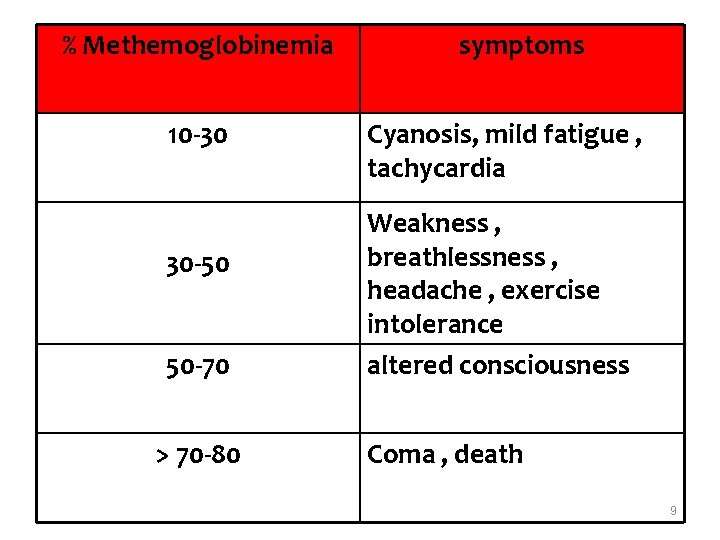
% Methemoglobinemia 10 -30 30 -50 50 -70 > 70 -80 symptoms Cyanosis, mild fatigue , tachycardia Weakness , breathlessness , headache , exercise intolerance altered consciousness Coma , death 9
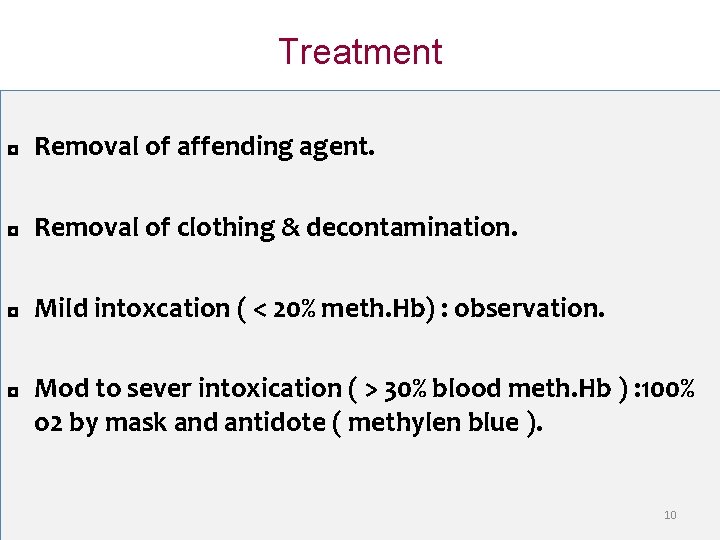
Treatment ◘ Removal of affending agent. ◘ Removal of clothing & decontamination. ◘ Mild intoxcation ( < 20% meth. Hb) : observation. ◘ Mod to sever intoxication ( > 30% blood meth. Hb ) : 100% o 2 by mask and antidote ( methylen blue ). 10
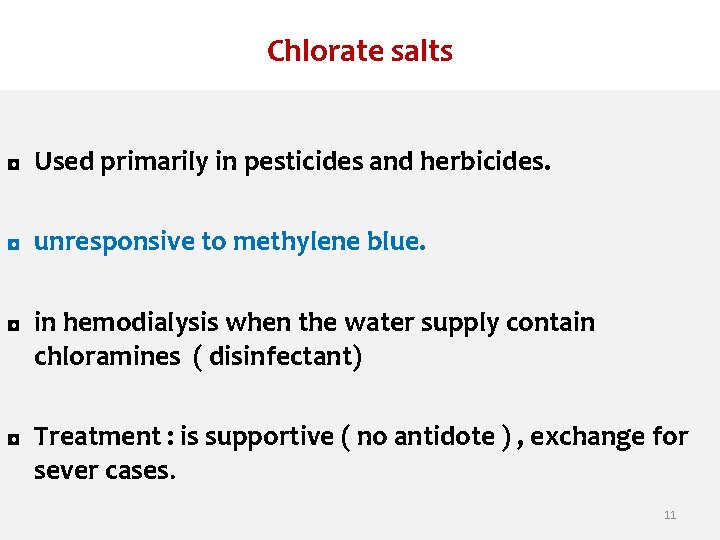
Chlorate salts ◘ Used primarily in pesticides and herbicides. ◘ unresponsive to methylene blue. ◘ in hemodialysis when the water supply contain chloramines ( disinfectant) ◘ Treatment : is supportive ( no antidote ) , exchange for sever cases. 11
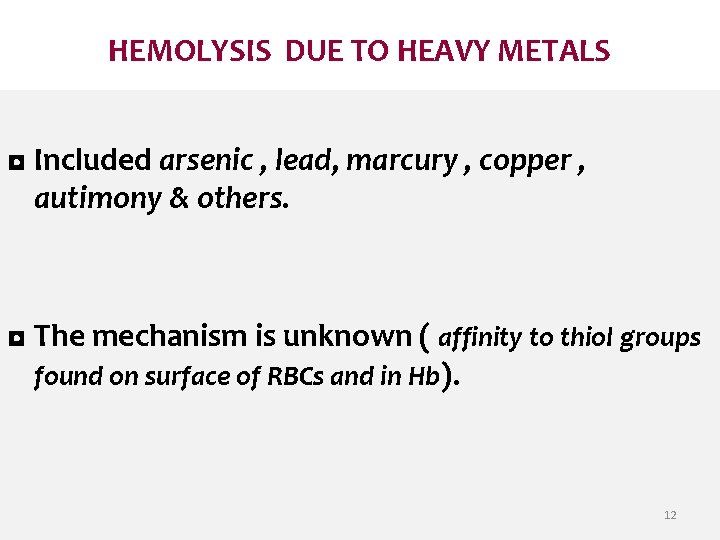
HEMOLYSIS DUE TO HEAVY METALS ◘ Included arsenic , lead, marcury , copper , autimony & others. ◘ The mechanism is unknown ( affinity to thiol groups found on surface of RBCs and in Hb). 12
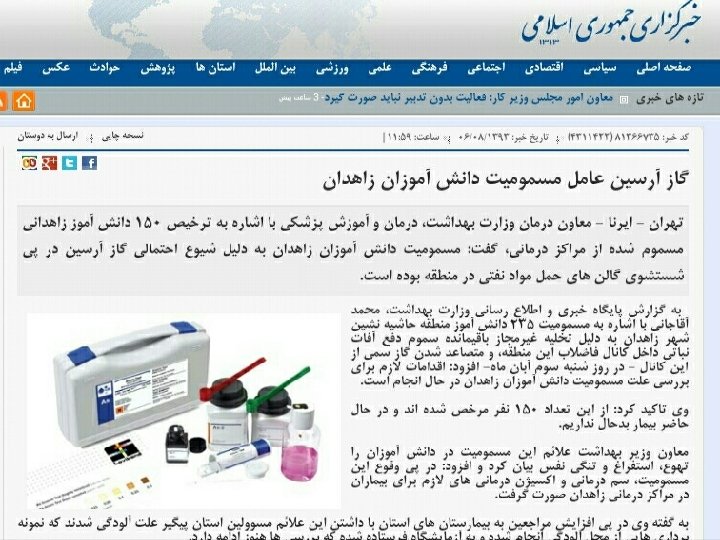
HEAVY METALS Arsine ◘ Arsine is 2. 5 time denser than air. ◘ Most occ. Exposure : smelting, refining & chemical industries. ◘Respiratory tract is the most imprtant portal of entry. 13
14
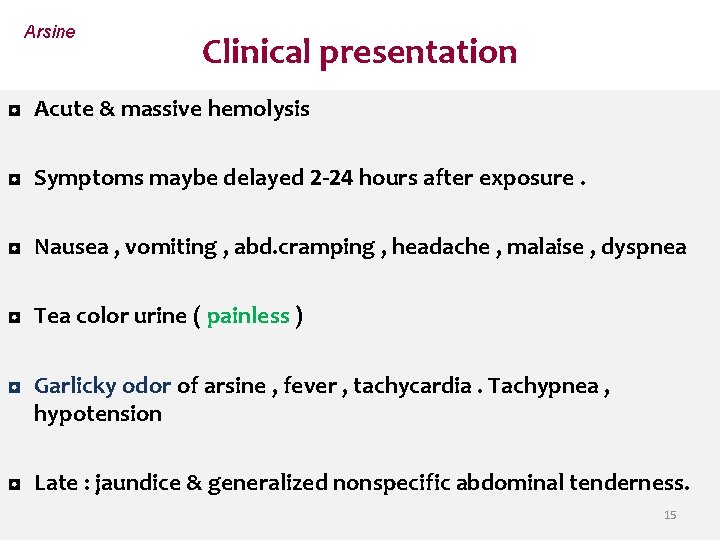
Arsine Clinical presentation ◘ Acute & massive hemolysis ◘ Symptoms maybe delayed 2 -24 hours after exposure. ◘ Nausea , vomiting , abd. cramping , headache , malaise , dyspnea ◘ Tea color urine ( painless ) ◘ Garlicky odor of arsine , fever , tachycardia. Tachypnea , hypotension ◘ Late : jaundice & generalized nonspecific abdominal tenderness. 15
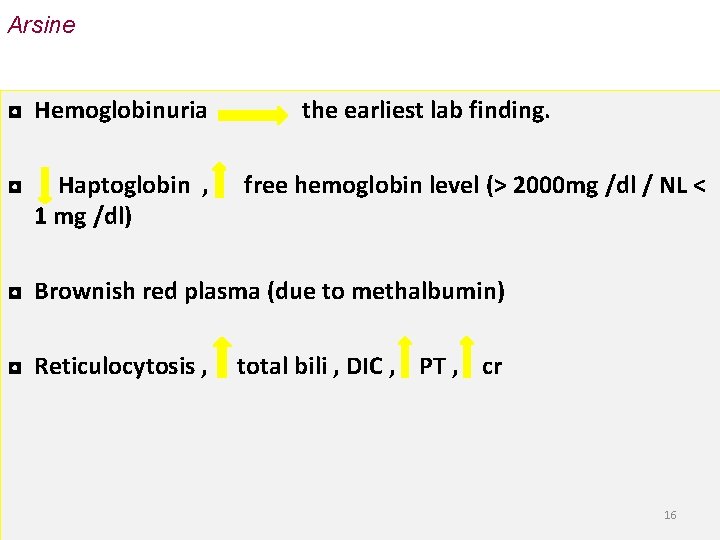
Arsine ◘ Hemoglobinuria ◘ Haptoglobin , 1 mg /dl) the earliest lab finding. free hemoglobin level (> 2000 mg /dl / NL < ◘ Brownish red plasma (due to methalbumin) ◘ Reticulocytosis , total bili , DIC , PT , cr 16
Treatment ( arsine ) ◘ Vigorous hydration , exchange transfusion ( for sever hemolysis) 17
lead ◘ Sever hemolysis is rare ( high atmospheric exposure; power sanding & use of blowtorch) 18
copper ◘ Copper sulfat is used ( in india ) as white washing & leather industry. ◘ Toxicity : ( ingestion or suicidal ) hemolysis , meth. Hb , RF & death. ◘ Th. X : nonspecific , supportive; transfusion & hemodialysis. 19
THE PORPHYRIAS 20
THE PORPHYRIAS ◘ Characterized by abnormalities result in ab. NL accumulation of heme precursors. ◘ Clinical syndroms include : neurotoxicity or cutanous photosensitivity. 21
THE PORPHYRIAS cont ◘ Cutaneous photosensitivity ◘ This is the result of the relatively urine – insoluble heme precursors uroporphyrin III , coproporphyrin III & protoporphyrin VI , fluorescing in the skin following absorbtion of 400 nm electromagnetic radiation. ◘ Discoloration of teeth and occasionally hemolysis of erythrocytes. 22
THE PORPHYRIAS cont Hexachlorobenzene ◘ Out break of aquired P( cutanous ) in turkey between 1955 -58 ◘ kara yara or black sore. ◘ Mortality rate was 95% among breast feed infants. ◘ pembe yara ( pink sore) 23
Herbicides: § A number of report from Dicholorophenol & Tricholorophenol Aluminum: § A porphyria cutana tarda like syndrome is described in patients with chronic renal failure on regular hemolysis. Vinyl chloride: § Is a known hepatotoxin § Studies & report of elevation of urinary coproporphyrin & manifestation of dx. 24
lead ◘ Lead intoxication ( > 60 mg/dl in adults & > 25 mgr/dl in children ) cause sings & symptoms similar to acut intermmitent porphyria. (classic : abd. pain , constipation , vomiting ) ◘ Other charactricties : neuromuscular pain , paresis, paralysis , paresthesia , diarrhea , seizures. 25
Differences between classic acute I. porphyria & lead toxicity : 1. Increase in neuropsychiatric singns in acute intermittent pophyria 2. Anemia in lead intoxication ( microcytic anemia with basophilic stippling of erythrocytes & sideroblasts in BM). 26
Treatment ( porphyrias ) Avoiding exposure ? ? Phlebotomy ( in case of iron overload ). High dose carbohydrate or hematin. For lead : prevention is best Rx; chelators. 27
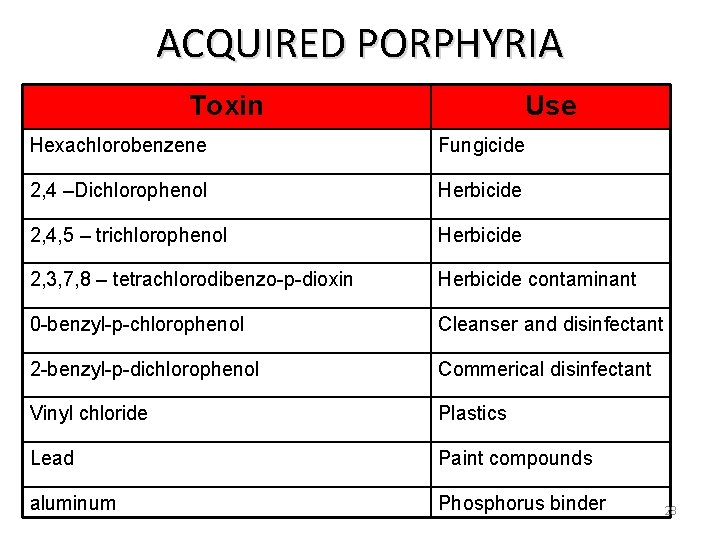
ACQUIRED PORPHYRIA Toxin Use Hexachlorobenzene Fungicide 2, 4 –Dichlorophenol Herbicide 2, 4, 5 – trichlorophenol Herbicide 2, 3, 7, 8 – tetrachlorodibenzo-p-dioxin Herbicide contaminant 0 -benzyl-p-chlorophenol Cleanser and disinfectant 2 -benzyl-p-dichlorophenol Commerical disinfectant Vinyl chloride Plastics Lead Paint compounds aluminum Phosphorus binder 28
DISORDERS ASSOCIATED WITH DECREASED OXYGEN SATURATION 29
DISORDERS ASSOCIATED WITH DECREASED OXYGEN SATURATION 1 - carbon monoxide poisoning : ◘ Odorless – colorless , nonirritating gas produced by the incomplete combustion of organic materials. ( hydrocarbons). ◘ Workers at risk : automobile mechanics , fire fighters , chemical workers exposed to methylene chloride. (converted to co in vivo). 30
Clinical findings ( co ) ◘ General malaise , headache , nausea , dyspnea , vomiting , alteration in mental ◘ Symptom of anoxia without cyanosis (cherry – red - color) Lab findings ◘ Chronic low level : polycythemia - higher level : hypoxia ◘ Level less than 6% : impairment in vision and time discrimination ◘ 40 -60 % : altretion in mental status & death ◘ Blood carboxyhemoglobin level can be elevated after intense exposure of short duration and after chronic low level 31
Treatment ( co ) ◘ Low level without symptoms : removal form source of exposure ◘ Higher level or symptomatic : hyperbaric o 2 ◘ Prevention : adequate ventilation 32
WORK – RELATED APLASTIC ANEMIA & HEMATOLOGIC CA 33
WORK – RELATED APLASTIC ANEMIA & HEMATOLOGIC CA aplastic anemia ◘ 50 % idiopatic & 50% secondary ( drugs , chemicals , radiation infection & immonologic mechanism ). ◘ Of secondary largely is caused by theraputic drugs. 34
Benzene ◘ Exposure : rubber manufacturing , shoe making , petroleum & chemical production , printing , steel working. ◘ Great variation in susceptibility seen & evidence of poisoning sometimes appearing after weeks or years. ◘ Direct relation of amount & duration of exposure. ◘ Prognosis is better than idiopathic ( up to 40% recovery). ◘ Association with acute no lymphocytic leukemia & CML. ◘ Treatment : supportive ( transfusion & G. M. C. S. F), BM transplantation. 35
Ionizing radiation ◘ Dose – dependent manner. ◘ Internal exposure & external exposure ( more common). ◘ The most common late disturbance is leukemia. 36
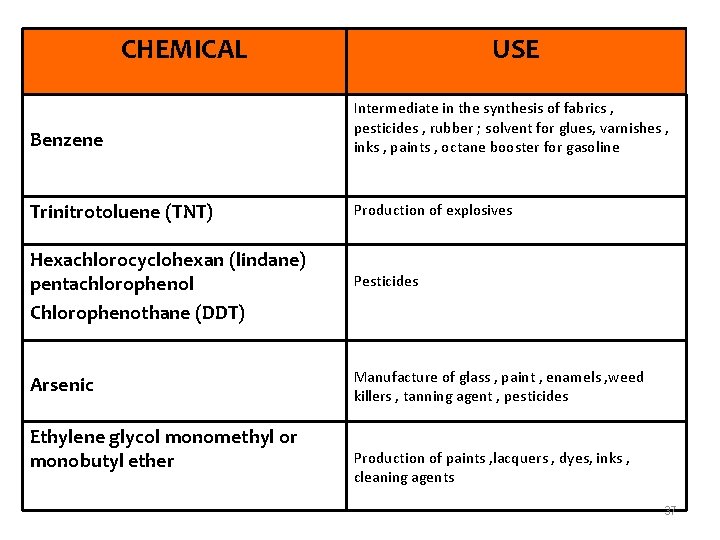
CHEMICAL USE Benzene Intermediate in the synthesis of fabrics , pesticides , rubber ; solvent for glues, varnishes , inks , paints , octane booster for gasoline Trinitrotoluene (TNT) Production of explosives Hexachlorocyclohexan (lindane) pentachlorophenol Chlorophenothane (DDT) Pesticides Arsenic Manufacture of glass , paint , enamels , weed killers , tanning agent , pesticides Ethylene glycol monomethyl or monobutyl ether Production of paints , lacquers , dyes, inks , cleaning agents 37
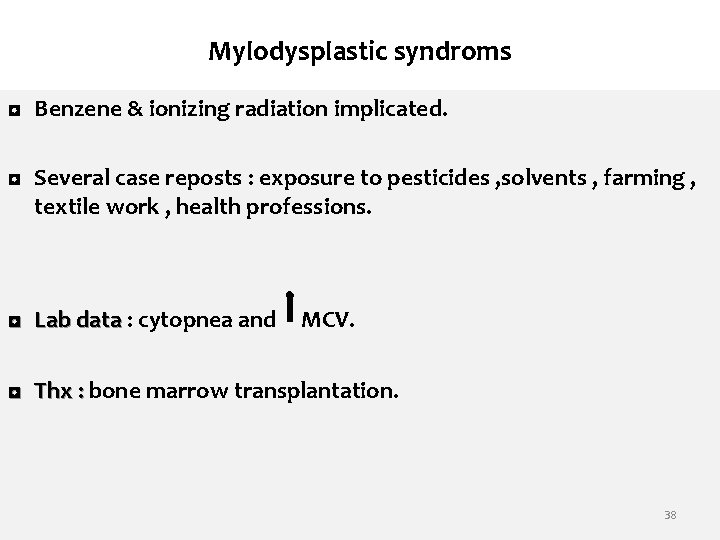
Mylodysplastic syndroms ◘ Benzene & ionizing radiation implicated. ◘ Several case reposts : exposure to pesticides , solvents , farming , textile work , health professions. ◘ Lab data : cytopnea and MCV. ◘ Thx : bone marrow transplantation. 38
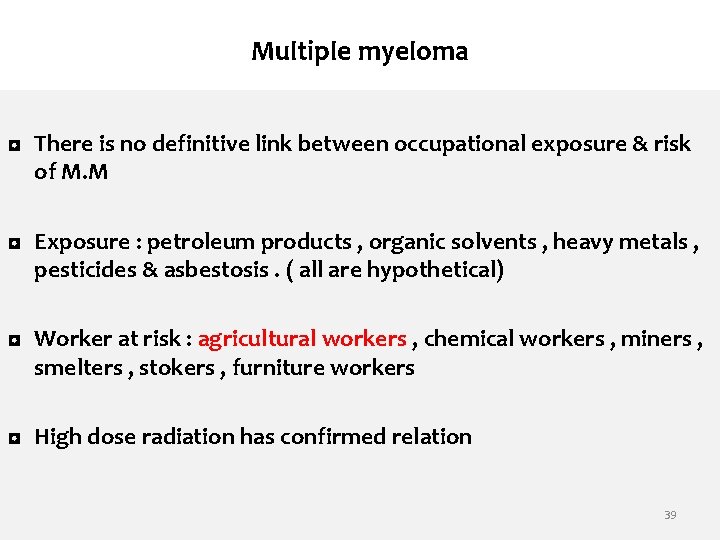
Multiple myeloma ◘ There is no definitive link between occupational exposure & risk of M. M ◘ Exposure : petroleum products , organic solvents , heavy metals , pesticides & asbestosis. ( all are hypothetical) ◘ Worker at risk : agricultural workers , chemical workers , miners , smelters , stokers , furniture workers ◘ High dose radiation has confirmed relation 39
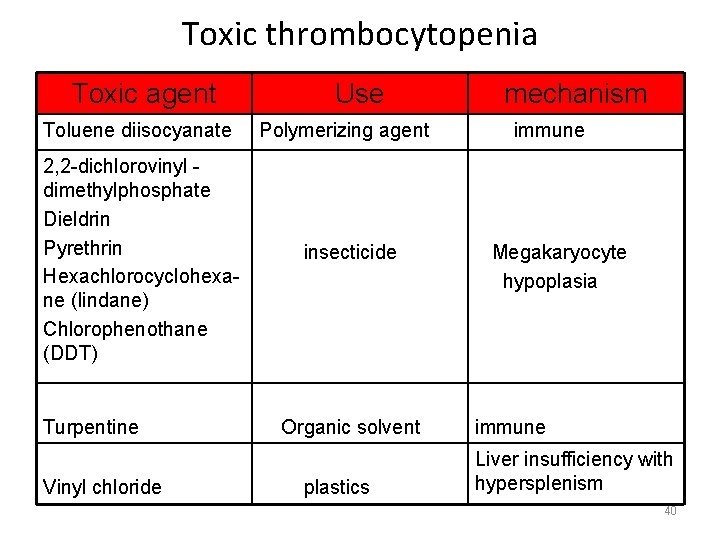
Toxic thrombocytopenia Toxic agent Use Toluene diisocyanate Polymerizing agent 2, 2 -dichlorovinyl dimethylphosphate Dieldrin Pyrethrin Hexachlorocyclohexane (lindane) Chlorophenothane (DDT) insecticide Turpentine Vinyl chloride Organic solvent plastics mechanism immune Megakaryocyte hypoplasia immune Liver insufficiency with hypersplenism 40

Thanks for your kind attention 41
- Slides: 41