
Occupational Health Management Programme Occupational Health Management Programme
- Slides: 21
Occupational Health Management Programme
Occupational Health Management Programme • • Chemical Hazard Control Hearing Conservation Industrial Ventilation Industrial Hygiene Monitoring Medical Surveillance Respiratory Protection Confined Space Work First-Aid facilities
Occupational Health Management Programme • • • Policy and strategy Register of chemicals Provision and application of MSDS Selection and procurement procedures Labelling and warning signs Storage of Chemicals Safe handling procedures Hazard assessment and control Personal protection equipment
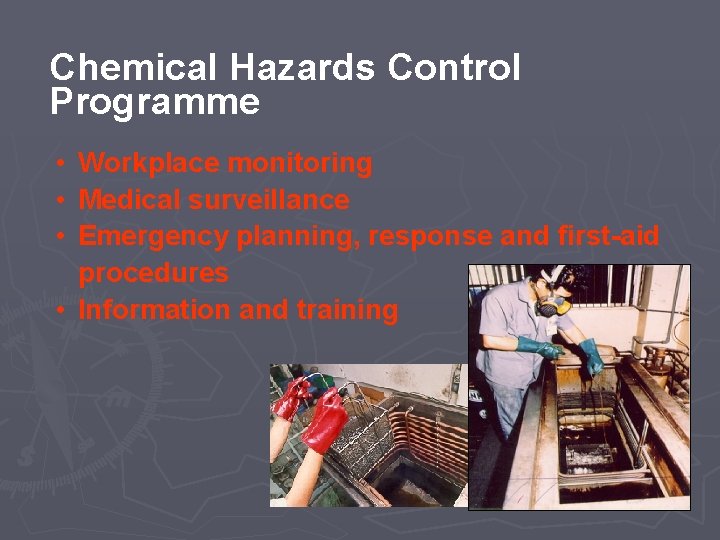
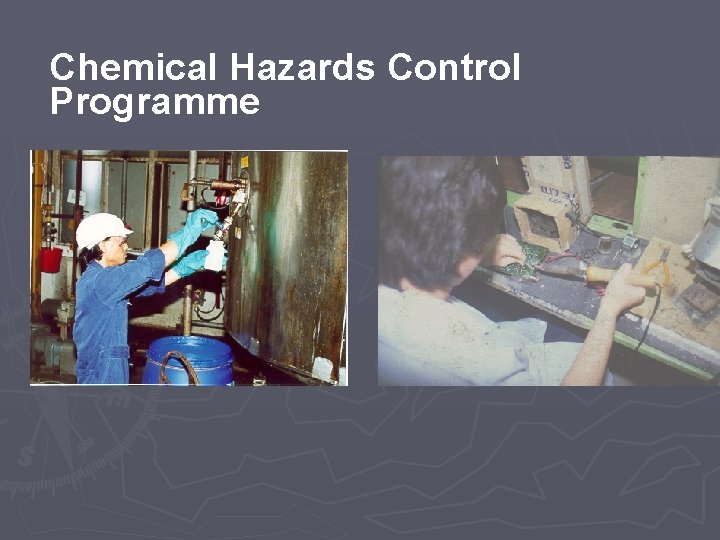
Chemical Hazards Control Programme • Workplace monitoring • Medical surveillance • Emergency planning, response and first-aid procedures • Information and training
Chemical Hazards Control Programme
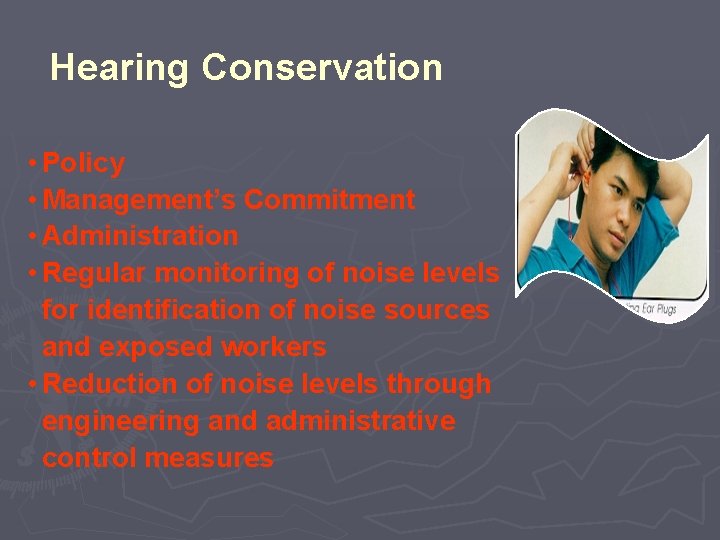
Hearing Conservation • Policy • Management’s Commitment • Administration • Regular monitoring of noise levels for identification of noise sources and exposed workers • Reduction of noise levels through engineering and administrative control measures
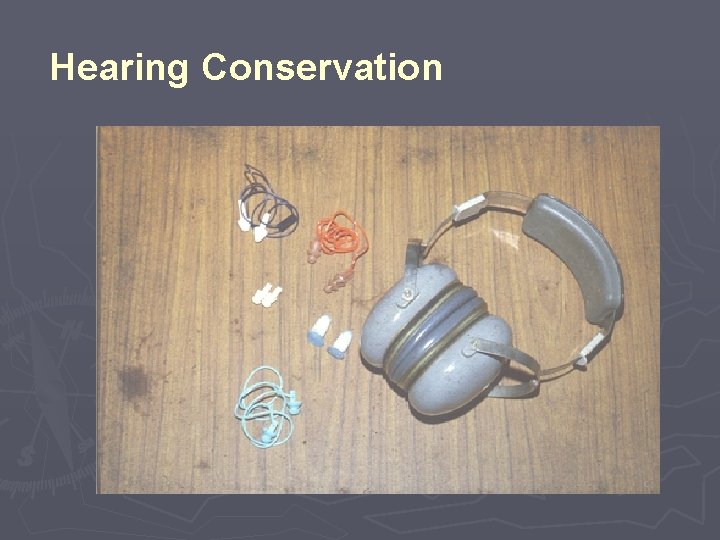
Hearing Conservation • Selection and provision of hearing protectors and supervision of their usage • Posting of warning signs and labelling of noisy new machines • Periodic audiometric examinations of exposed workers for early detection of hearing loss • Health Education • CP-76 Selection, Use and Maintenance of Hearing Protectors
Hearing Conservation
Industrial Ventilation • • The engineering drawings Testing of new LEV systems for checking Regular testing and maintenance Persons involved in the design or vetting of the design, testing and maintenance of LEV systems should have received appropriate training
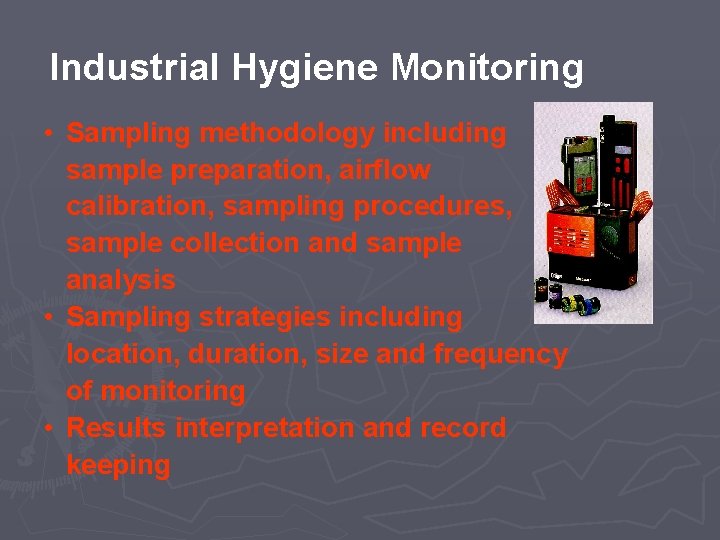
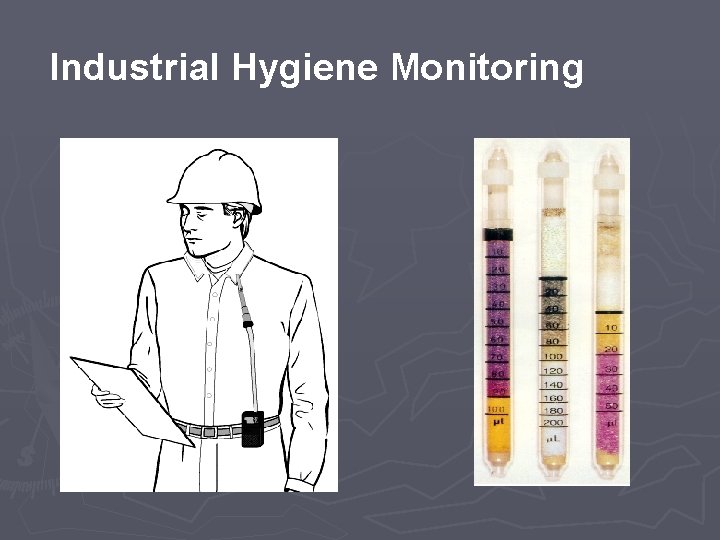
Industrial Hygiene Monitoring • Sampling methodology including sample preparation, airflow calibration, sampling procedures, sample collection and sample analysis • Sampling strategies including location, duration, size and frequency of monitoring • Results interpretation and record keeping
Industrial Hygiene Monitoring
Medical Surveillance • Factories (Medical Examinations) Regulations Workers are required to undergo periodic medical examinations if exposed to arsenic, asbestos, benzene, cadmium, raw cotton, lead, manganese, organophosphates, perchloroethylene, silica, tar, pitch, bitumen, creosote, trichloroethylene, vinyl chloride and excessive noise.
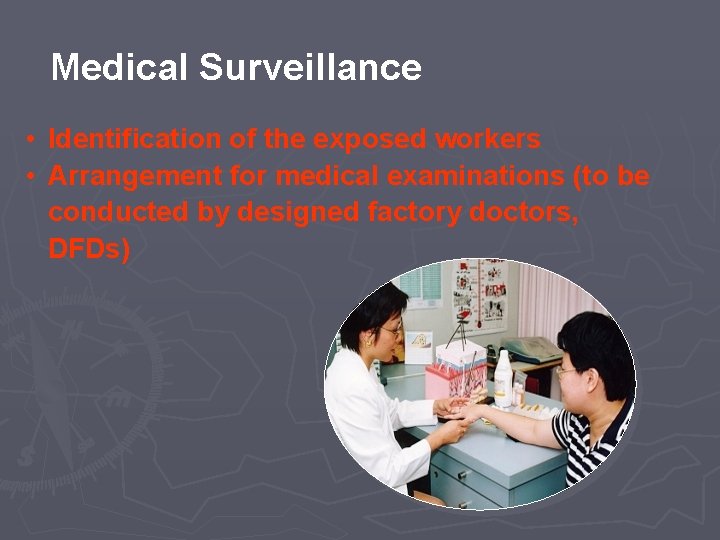
Medical Surveillance • Identification of the exposed workers • Arrangement for medical examinations (to be conducted by designed factory doctors, DFDs)
Medical Surveillance • Evaluation of the results of medical examinations • Taking appropriate actions based on the results • Maintenance of the medical records
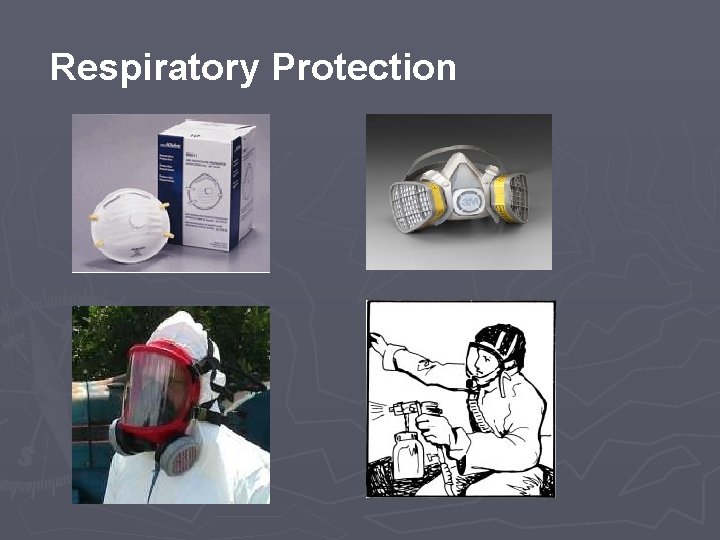
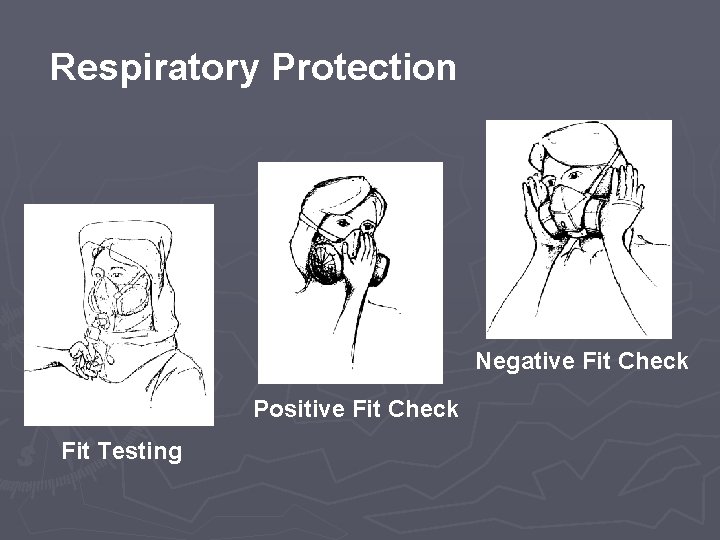
Respiratory Protection • Identification the need of respiratory protection • Selection of suitable respirators • Medical evaluation of users to ensure that they are physically fit to wear respirators • Training employees on respirator use, limitations, fitting, care & maintenance • Fit testing to ensure proper fit and adequate protection
Respiratory Protection • Supervision and checking the usage of respirators • On-going workplace surveillance for changes in process, materials or work practices that might affect respirator usage • CP 74 - Selection, Use and Maintenance of Respiratory protection devices
Respiratory Protection
Respiratory Protection Negative Fit Check Positive Fit Check Fit Testing
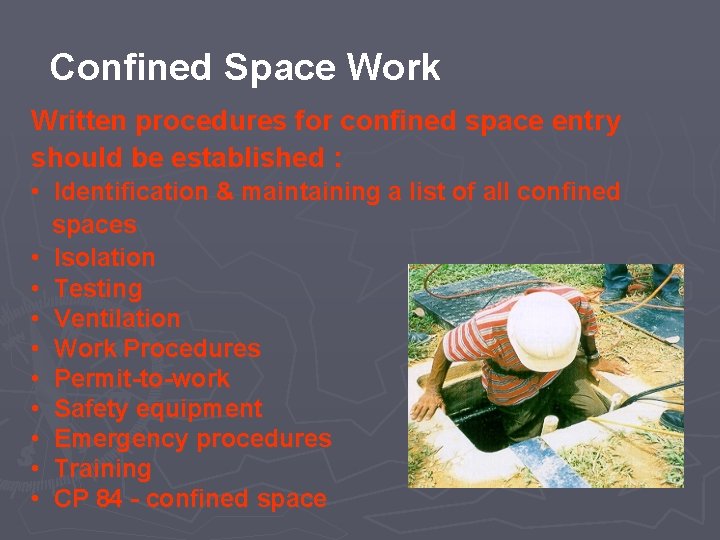
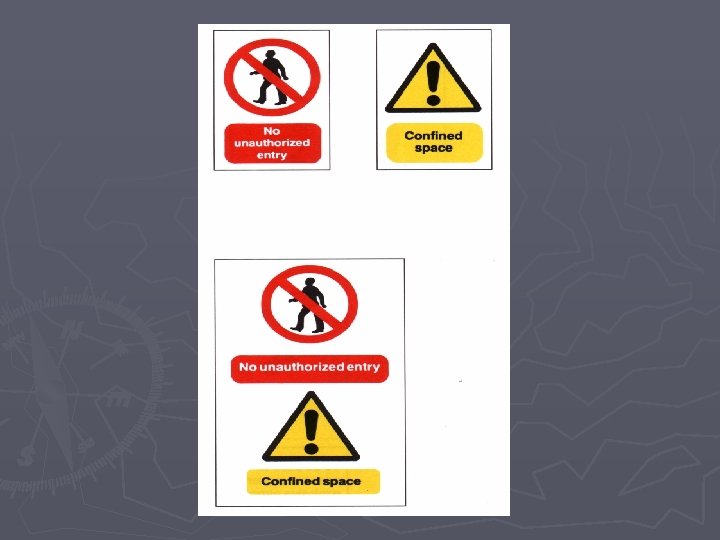
Confined Space Work Written procedures for confined space entry should be established : • Identification & maintaining a list of all confined spaces • Isolation • Testing • Ventilation • Work Procedures • Permit-to-work • Safety equipment • Emergency procedures • Training • CP 84 - confined space
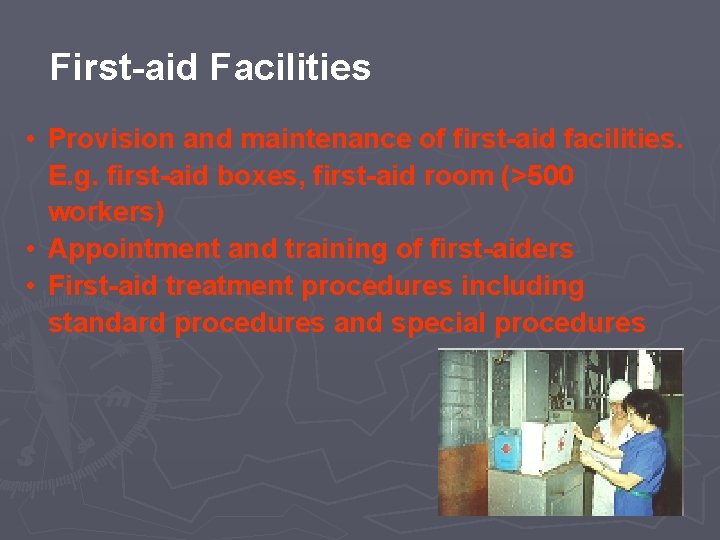
First-aid Facilities • Provision and maintenance of first-aid facilities. E. g. first-aid boxes, first-aid room (>500 workers) • Appointment and training of first-aiders • First-aid treatment procedures including standard procedures and special procedures