
Occupational Health and Safety Program Introduction OSHA has













- Slides: 29
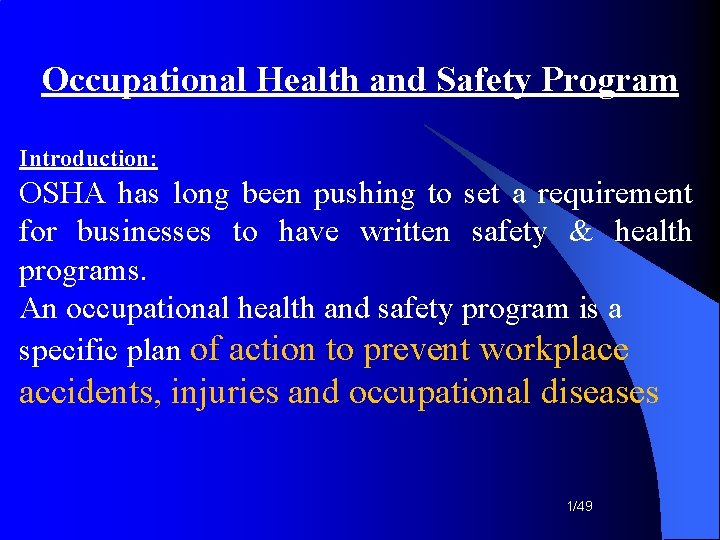
Occupational Health and Safety Program Introduction: OSHA has long been pushing to set a requirement for businesses to have written safety & health programs. An occupational health and safety program is a specific plan of action to prevent workplace accidents, injuries and occupational diseases 1/49
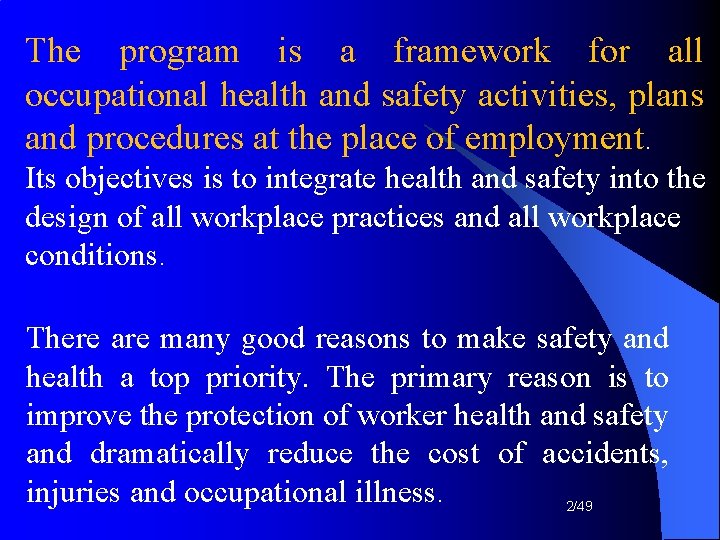
The program is a framework for all occupational health and safety activities, plans and procedures at the place of employment. Its objectives is to integrate health and safety into the design of all workplace practices and all workplace conditions. There are many good reasons to make safety and health a top priority. The primary reason is to improve the protection of worker health and safety and dramatically reduce the cost of accidents, injuries and occupational illness. 2/49
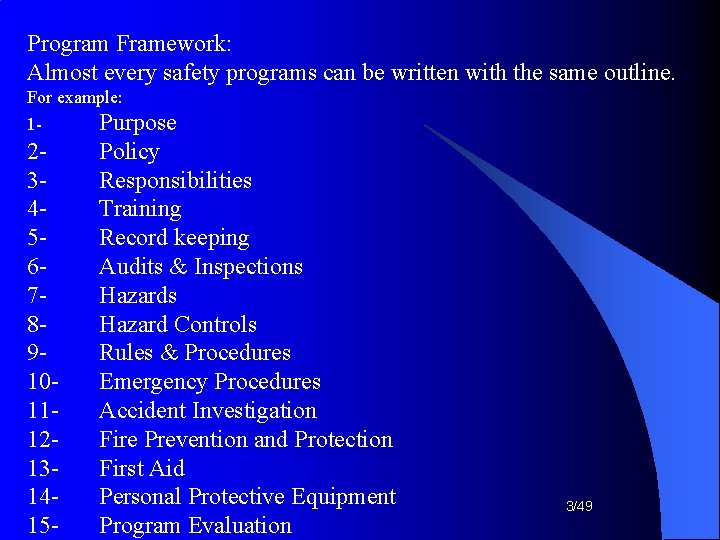
Program Framework: Almost every safety programs can be written with the same outline. For example: 1 - 23456789101112131415 - Purpose Policy Responsibilities Training Record keeping Audits & Inspections Hazard Controls Rules & Procedures Emergency Procedures Accident Investigation Fire Prevention and Protection First Aid Personal Protective Equipment Program Evaluation 3/49
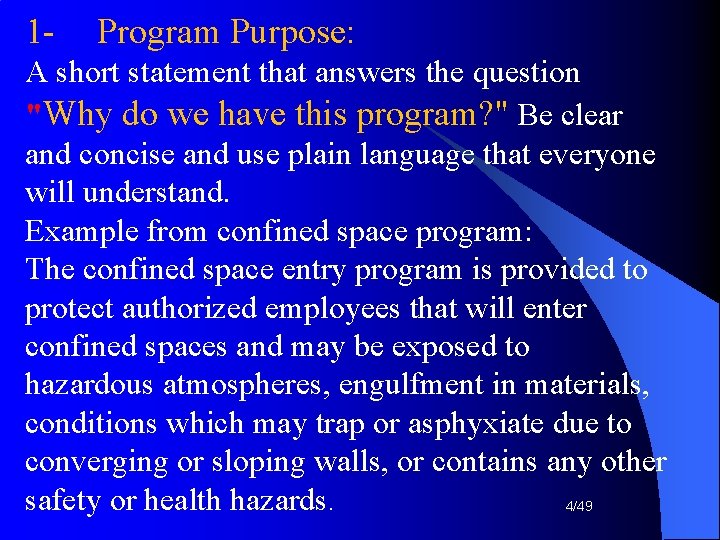
1 - Program Purpose: A short statement that answers the question "Why do we have this program? " Be clear and concise and use plain language that everyone will understand. Example from confined space program: The confined space entry program is provided to protect authorized employees that will enter confined spaces and may be exposed to hazardous atmospheres, engulfment in materials, conditions which may trap or asphyxiate due to converging or sloping walls, or contains any other safety or health hazards. 4/49
2 Policy: A short statement of company policy that conveys management support and intentions of the specific program. Example from an asbestos program: It is the policy of {Company} that only qualified employees are allowed to conduct any asbestos repairs, maintenance or removal. All unqualified employees must be protected from exposure to asbestos fibers by isolating and controlling access to all affected areas during asbestos work 5/49
A qualified supervisor shall be available at asbestos controlled work sites during all activities. Proper personal protective equipment, vacuum and filters must be used and properly maintained 6/49
3 - Responsibilities: This section allows you to specifically spell out who is responsible for what parts of the program. Everyone has a part to play: management, supervisors and employees. Some programs will have specific responsibilities for specific management positions, such as Respiratory Protection or Ergonomic Program Administrators. 7/49
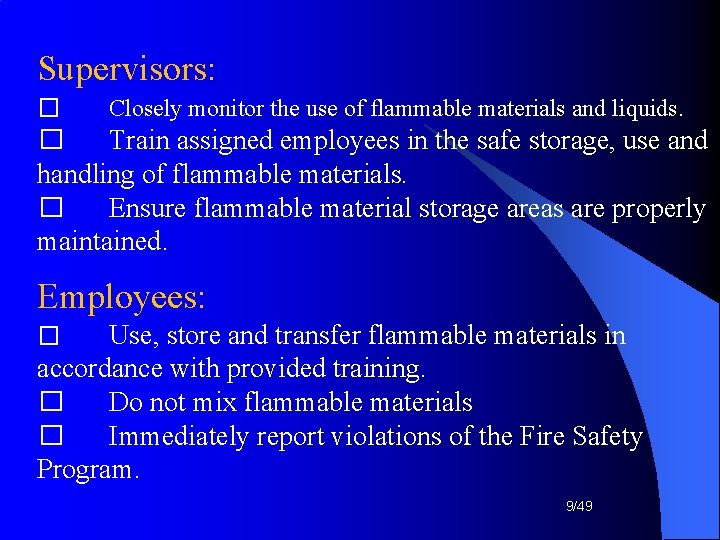
Example from a Fire Prevention Program: Management: � Ensure all fire prevention methods are established and enforced. � Ensure fire suppression systems such as sprinklers and extinguishers are periodically inspected and maintained to a high degree of working order � Train supervisors to use fire extinguishers for incipient fires. � Train employees on evacuation routes and procedures 8/49
Supervisors: � Closely monitor the use of flammable materials and liquids. � Train assigned employees in the safe storage, use and handling of flammable materials. � Ensure flammable material storage areas are properly maintained. Employees: Use, store and transfer flammable materials in accordance with provided training. � Do not mix flammable materials � Immediately report violations of the Fire Safety Program. � 9/49
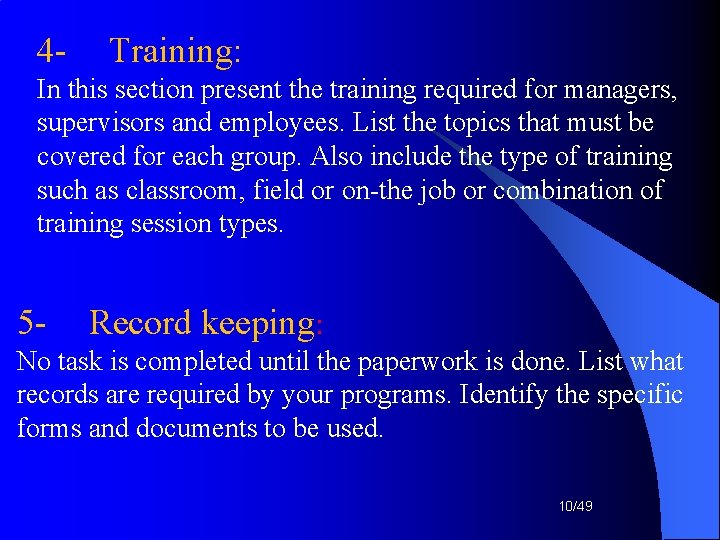
4 - Training: In this section present the training required for managers, supervisors and employees. List the topics that must be covered for each group. Also include the type of training such as classroom, field or on-the job or combination of training session types. 5 - Record keeping: No task is completed until the paperwork is done. List what records are required by your programs. Identify the specific forms and documents to be used. 10/49
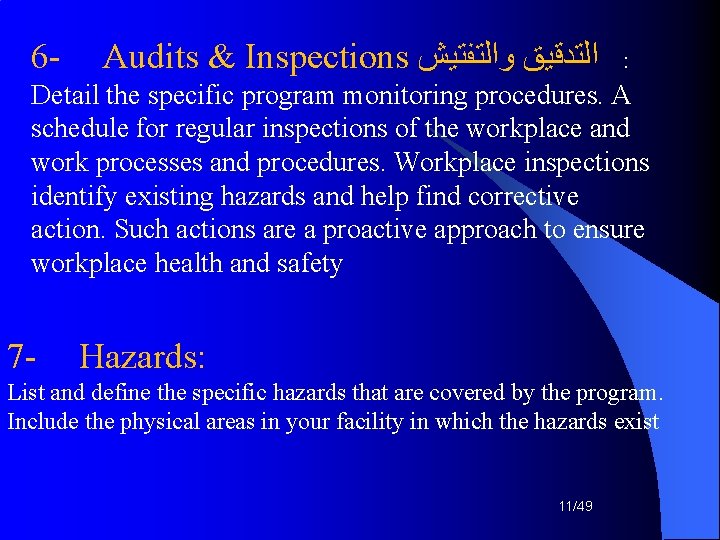
6 - Audits & Inspections ﺍﻟﺘﺪﻗﻴﻖ ﻭﺍﻟﺘﻔﺘﻴﺶ : Detail the specific program monitoring procedures. A schedule for regular inspections of the workplace and work processes and procedures. Workplace inspections identify existing hazards and help find corrective action. Such actions are a proactive approach to ensure workplace health and safety 7 - Hazards: List and define the specific hazards that are covered by the program. Include the physical areas in your facility in which the hazards exist 11/49
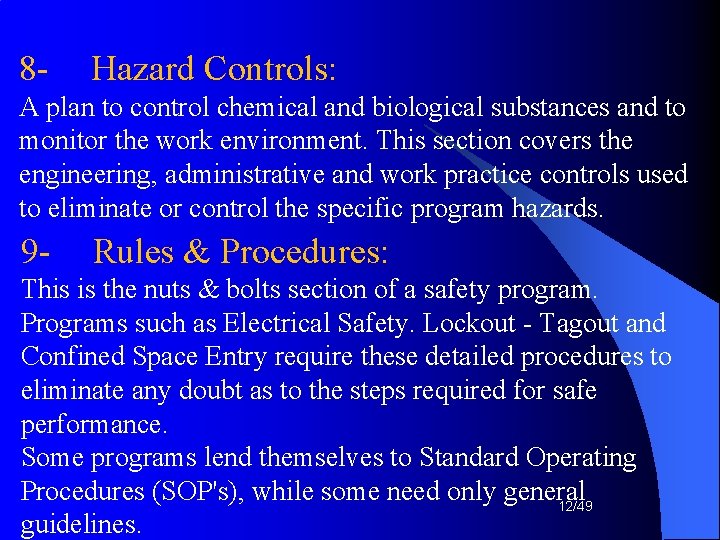
8 - Hazard Controls: A plan to control chemical and biological substances and to monitor the work environment. This section covers the engineering, administrative and work practice controls used to eliminate or control the specific program hazards. 9 - Rules & Procedures: This is the nuts & bolts section of a safety program. Programs such as Electrical Safety. Lockout - Tagout and Confined Space Entry require these detailed procedures to eliminate any doubt as to the steps required for safe performance. Some programs lend themselves to Standard Operating Procedures (SOP's), while some need only general 12/49 guidelines.
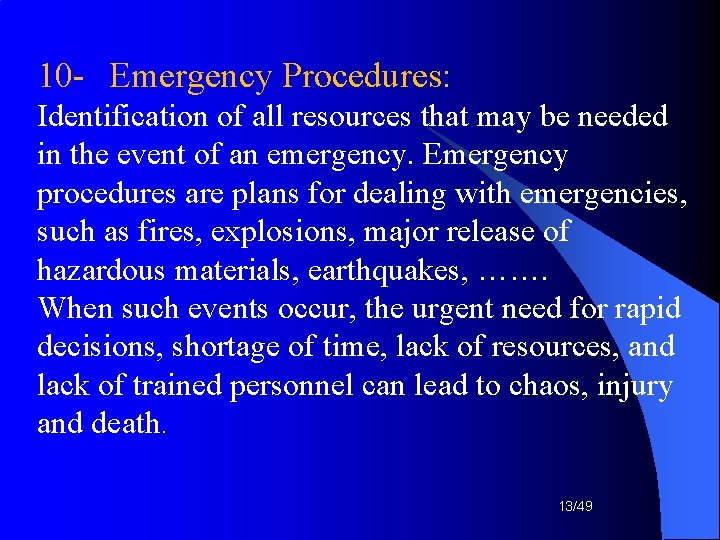
10 - Emergency Procedures: Identification of all resources that may be needed in the event of an emergency. Emergency procedures are plans for dealing with emergencies, such as fires, explosions, major release of hazardous materials, earthquakes, ……. When such events occur, the urgent need for rapid decisions, shortage of time, lack of resources, and lack of trained personnel can lead to chaos, injury and death. 13/49
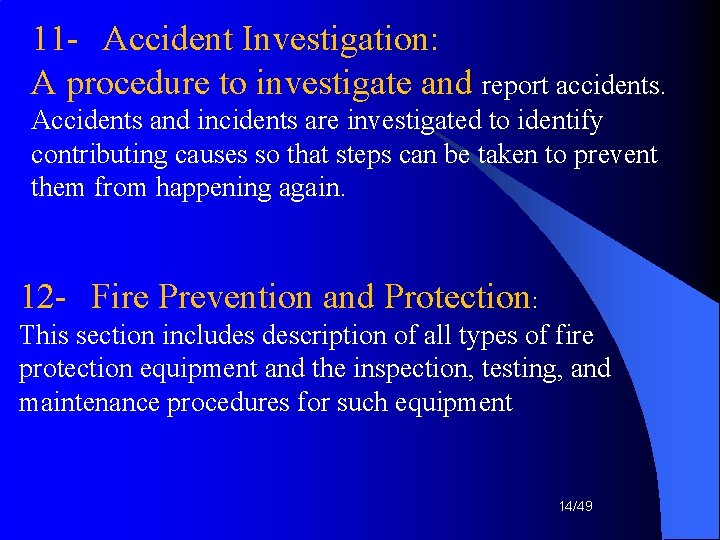
11 - Accident Investigation: A procedure to investigate and report accidents. Accidents and incidents are investigated to identify contributing causes so that steps can be taken to prevent them from happening again. 12 - Fire Prevention and Protection: This section includes description of all types of fire protection equipment and the inspection, testing, and maintenance procedures for such equipment 14/49
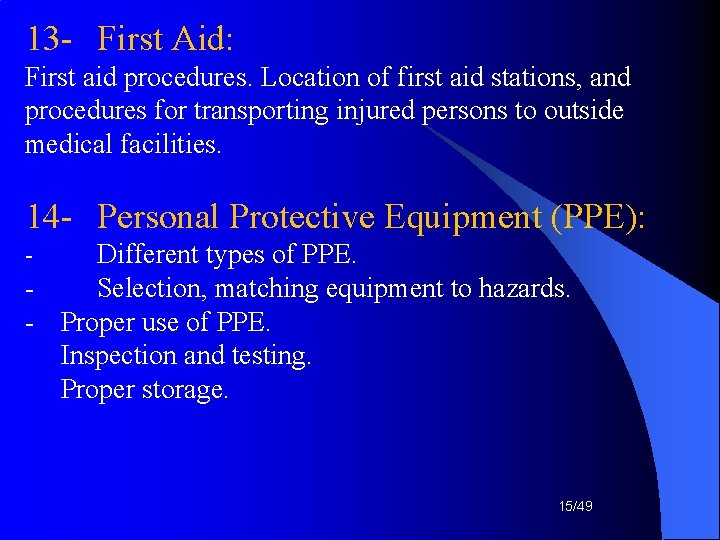
13 - First Aid: First aid procedures. Location of first aid stations, and procedures for transporting injured persons to outside medical facilities. 14 - Personal Protective Equipment (PPE): Different types of PPE. Selection, matching equipment to hazards. - Proper use of PPE. Inspection and testing. Proper storage. - 15/49
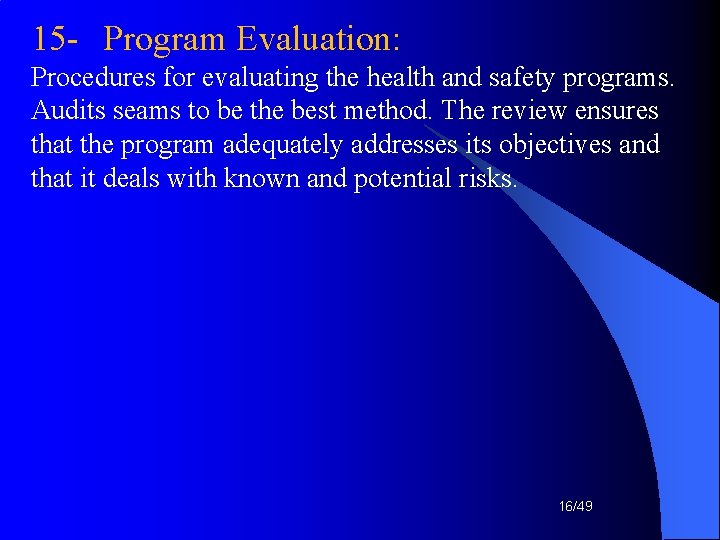
15 - Program Evaluation: Procedures for evaluating the health and safety programs. Audits seams to be the best method. The review ensures that the program adequately addresses its objectives and that it deals with known and potential risks. 16/49
17/49
18/49
19/49
20/49
21/49
22/49
23/49
24/49
25/49
26/49
27/49
28/49
29/49