
Occupational Exposure to Tuberculosis TB Presented by This
Occupational Exposure to Tuberculosis (TB) Presented by: This presentation was created by the N. C. Department of Labor for safety and health training.
Objectives l Provide a basic understanding regarding the transmission and pathogenesis of M. tuberculosis (TB) l Discuss the epidemiology of TB in the United States and North Carolina l Provide an overview regarding the enforcement procedures for occupational exposure to TB This presentation was created by the N. C. Department of Labor for safety and health training.
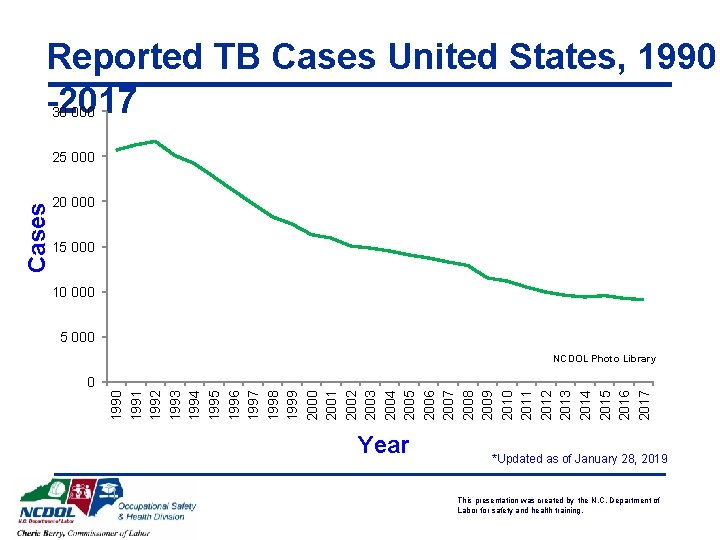
Reported TB Cases United States, 1990 -2017 30 000 20 000 15 000 10 000 5 000 NCDOL Photo Library 0 1991 1992 1993 1994 1995 1996 1997 1998 1999 2000 2001 2002 2003 2004 2005 2006 2007 2008 2009 2010 2011 2012 2013 2014 2015 2016 2017 Cases 25 000 Year *Updated as of January 28, 2019 This presentation was created by the N. C. Department of Labor for safety and health training.
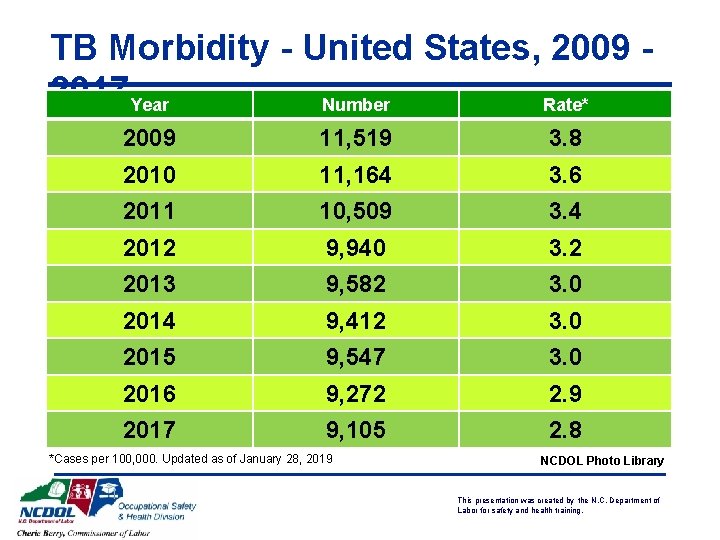
TB Morbidity - United States, 2009 2017 Year Number Rate* 2009 11, 519 3. 8 2010 11, 164 3. 6 2011 10, 509 3. 4 2012 9, 940 3. 2 2013 9, 582 3. 0 2014 9, 412 3. 0 2015 9, 547 3. 0 2016 9, 272 2. 9 2017 9, 105 2. 8 *Cases per 100, 000. Updated as of January 28, 2019 NCDOL Photo Library This presentation was created by the N. C. Department of Labor for safety and health training.
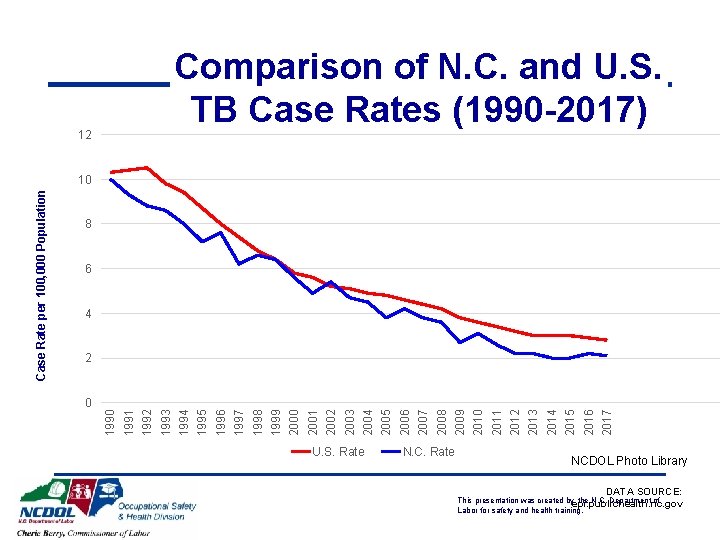
Comparison of N. C. and U. S. TB Case Rates (1990 -2017) 12 8 6 4 U. S. Rate N. C. Rate 2017 2016 2015 2014 2013 2012 2011 2010 2009 2008 2007 2006 2005 2004 2003 2002 2001 2000 1999 1998 1997 1996 1995 1994 1993 1992 0 1991 2 1990 Case Rate per 100, 000 Population 10 NCDOL Photo Library DATA SOURCE: This presentation was created byepi. publichealth. nc. gov the N. C. Department of Labor for safety and health training.
North Carolina 2017 TB Cases l North Carolina’s Tuberculosis Case Rate decreased from 3. 8 to 2. 1 from 2007 through 2017 - During the same time frame, Tuberculosis Case Rate in the United States decreased from 4. 4 to 2. 8 This presentation was created by the N. C. Department of Labor for safety and health training.
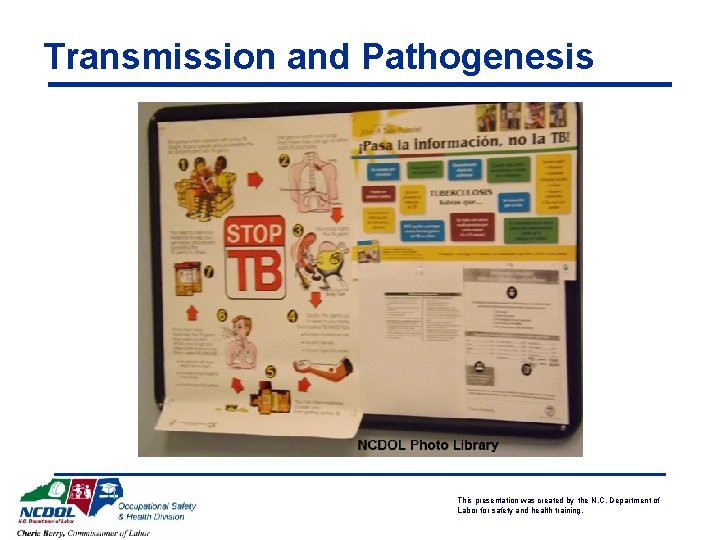
Transmission and Pathogenesis This presentation was created by the N. C. Department of Labor for safety and health training.

Transmission of M. Tuberculosis l Spread by droplet nuclei (1 -5 micrometers) l Expelled when person with infectious TB coughs, sneezes, speaks, or sings l Close contacts at highest risk of becoming infected l Transmission occurs from person with infectious TB disease (Not latent TB infection) This presentation was created by the N. C. Department of Labor for safety and health training.
Probability of TB Transmission l Infectiousness of person with TB l Environment in which exposure occurred l Duration of exposure l Virulence of the organism This presentation was created by the N. C. Department of Labor for safety and health training.

TB Pathogenesis – Latent TB Infection l Once inhaled, bacteria travel to lung alveoli and establish infection l 2 -12 weeks after infection, immune response limits activity; infection is detectable l Some bacteria survive and remain dormant but viable for years (Latent TB Infection, or LTBI) This presentation was created by the N. C. Department of Labor for safety and health training.
TB Pathogenesis - Latent TB Infection l Persons with LTBI are: - Asymptomatic - Not infectious l LTBI formerly diagnosed only with tuberculin skin test (TST) l Now Quanti. Feron® – TB Gold Test (QFT-G) can be used This presentation was created by the N. C. Department of Labor for safety and health training.
TB Pathogenesis - Active TB Disease l LTBI progresses to TB disease in: - Small number of persons soon after infection - 5 -10% of people with untreated LTBI sometime during lifetime - About 10% of people with Human Immunodeficiency Virus (HIV) and untreated LTBI per year This presentation was created by the N. C. Department of Labor for safety and health training.
Pathogenesis l 10% of infected people with normal immune systems develop TB at some point in life l HIV strongest risk factor for development of TB, if infected - Risk of developing TB disease 7 -10% each year l Certain medical conditions increase risk that TB infection will progress to TB disease This presentation was created by the N. C. Department of Labor for safety and health training.
Conditions That Increase Risk … … of progression to TB disease l HIV infection l Substance abuse l Recent infection l Chest radiograph findings suggestive of previous TB l Diabetes mellitus l Silicosis l Cancer of the head and neck This presentation was created by the N. C. Department of Labor for safety and health training.
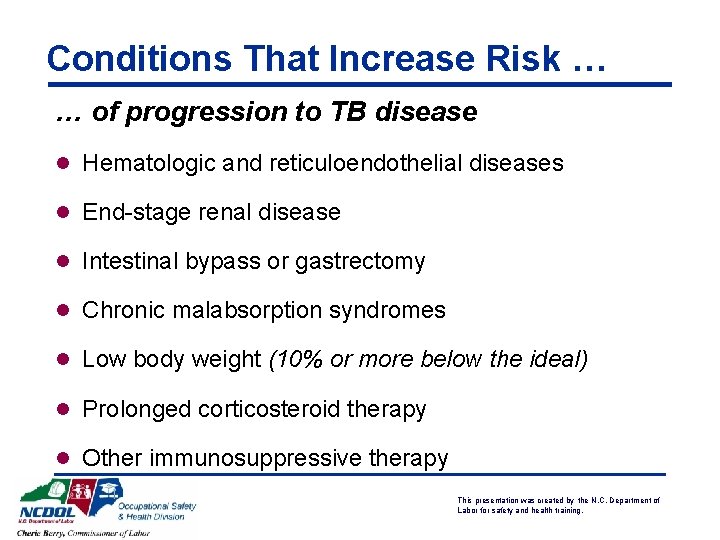
Conditions That Increase Risk … … of progression to TB disease l Hematologic and reticuloendothelial diseases l End-stage renal disease l Intestinal bypass or gastrectomy l Chronic malabsorption syndromes l Low body weight (10% or more below the ideal) l Prolonged corticosteroid therapy l Other immunosuppressive therapy This presentation was created by the N. C. Department of Labor for safety and health training.
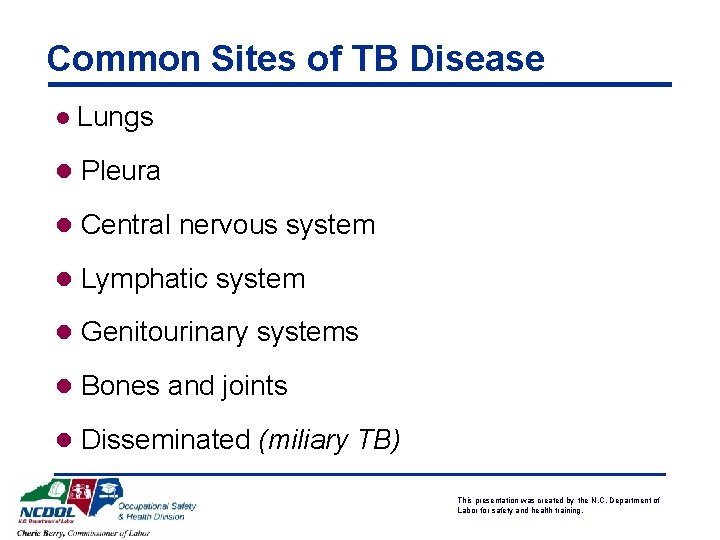
Common Sites of TB Disease l Lungs l Pleura l Central nervous system l Lymphatic system l Genitourinary systems l Bones and joints l Disseminated (miliary TB) This presentation was created by the N. C. Department of Labor for safety and health training.
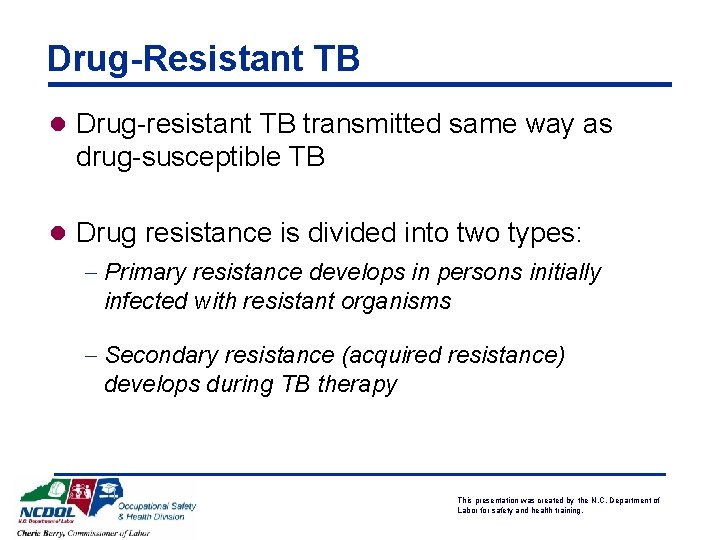
Drug-Resistant TB l Drug-resistant TB transmitted same way as drug-susceptible TB l Drug resistance is divided into two types: - Primary resistance develops in persons initially infected with resistant organisms - Secondary resistance (acquired resistance) develops during TB therapy This presentation was created by the N. C. Department of Labor for safety and health training.
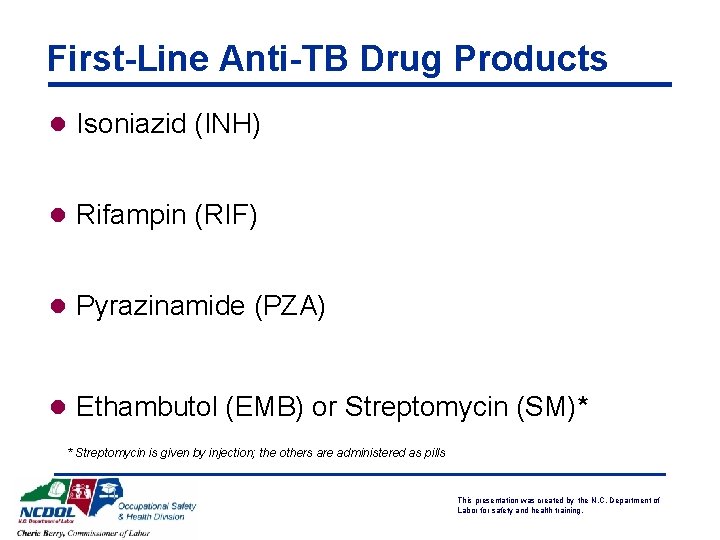
First-Line Anti-TB Drug Products l Isoniazid (INH) l Rifampin (RIF) l Pyrazinamide (PZA) l Ethambutol (EMB) or Streptomycin (SM)* * Streptomycin is given by injection; the others are administered as pills This presentation was created by the N. C. Department of Labor for safety and health training.
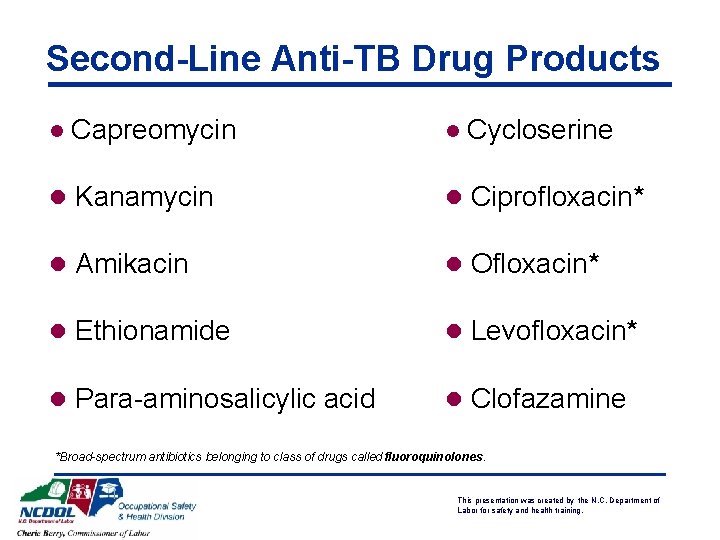
Second-Line Anti-TB Drug Products l Capreomycin l Cycloserine l Kanamycin l Ciprofloxacin* l Amikacin l Ofloxacin* l Ethionamide l Levofloxacin* l Para-aminosalicylic acid l Clofazamine *Broad-spectrum antibiotics belonging to class of drugs called fluoroquinolones. This presentation was created by the N. C. Department of Labor for safety and health training.
OSHA Instruction CPL 02 -02 -078 Enforcement Procedures and Scheduling for Occupational Exposure to Tuberculosis This presentation was created by the N. C. Department of Labor for safety and health training.
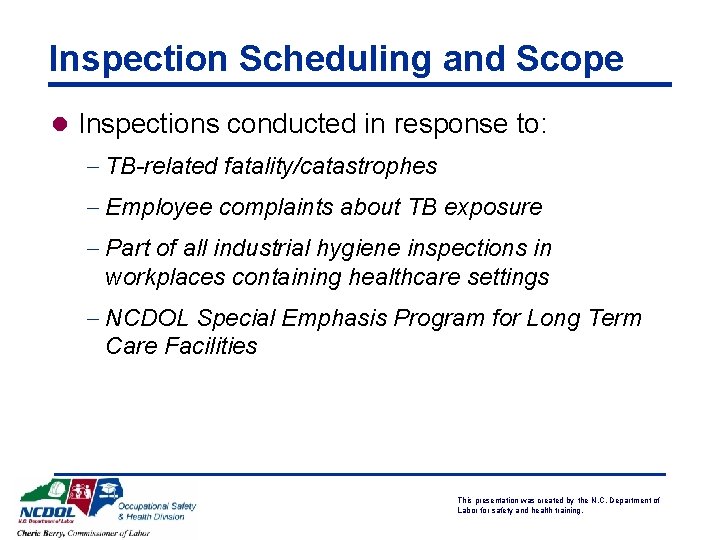
Inspection Scheduling and Scope l Inspections conducted in response to: - TB-related fatality/catastrophes - Employee complaints about TB exposure - Part of all industrial hygiene inspections in workplaces containing healthcare settings - NCDOL Special Emphasis Program for Long Term Care Facilities This presentation was created by the N. C. Department of Labor for safety and health training.
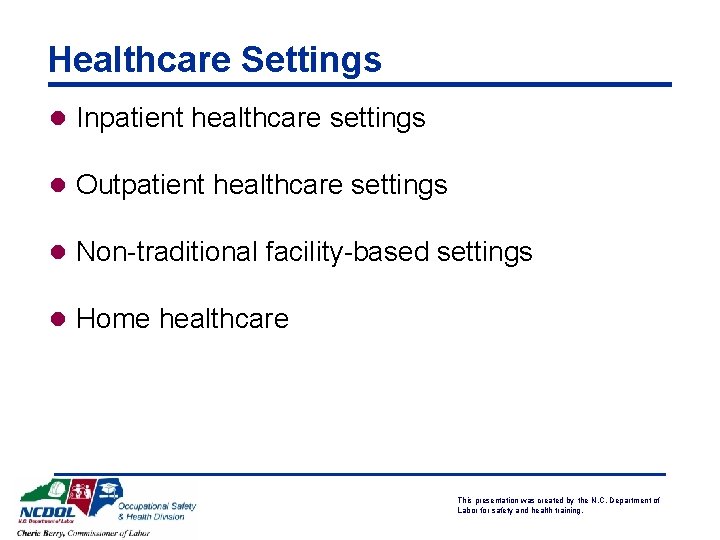
Healthcare Settings l Inpatient healthcare settings l Outpatient healthcare settings l Non-traditional facility-based settings l Home healthcare This presentation was created by the N. C. Department of Labor for safety and health training.
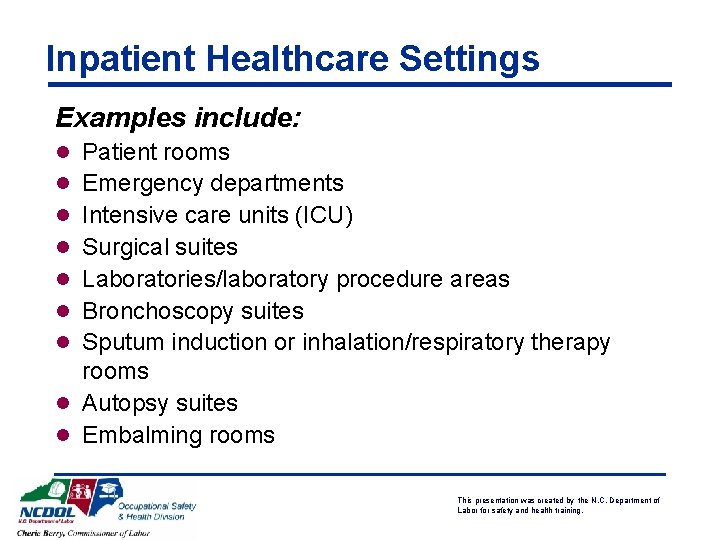
Inpatient Healthcare Settings Examples include: l Patient rooms l Emergency departments l Intensive care units (ICU) l Surgical suites l Laboratories/laboratory procedure areas l Bronchoscopy suites l Sputum induction or inhalation/respiratory therapy rooms l Autopsy suites l Embalming rooms This presentation was created by the N. C. Department of Labor for safety and health training.
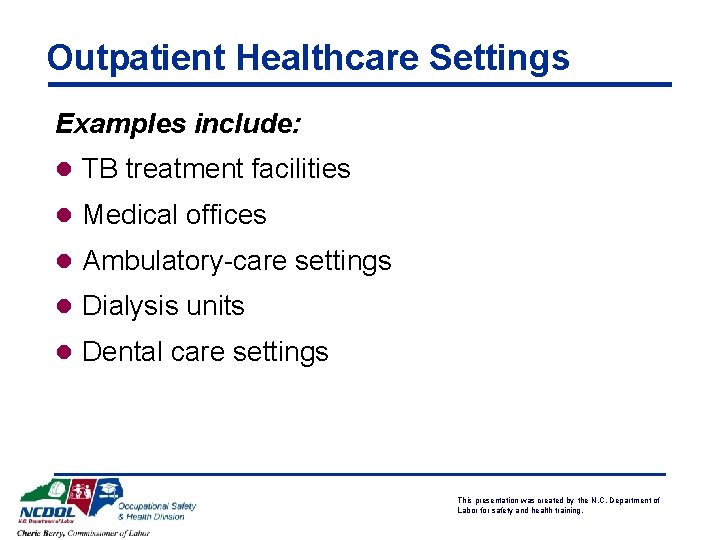
Outpatient Healthcare Settings Examples include: l TB treatment facilities l Medical offices l Ambulatory-care settings l Dialysis units l Dental care settings This presentation was created by the N. C. Department of Labor for safety and health training.
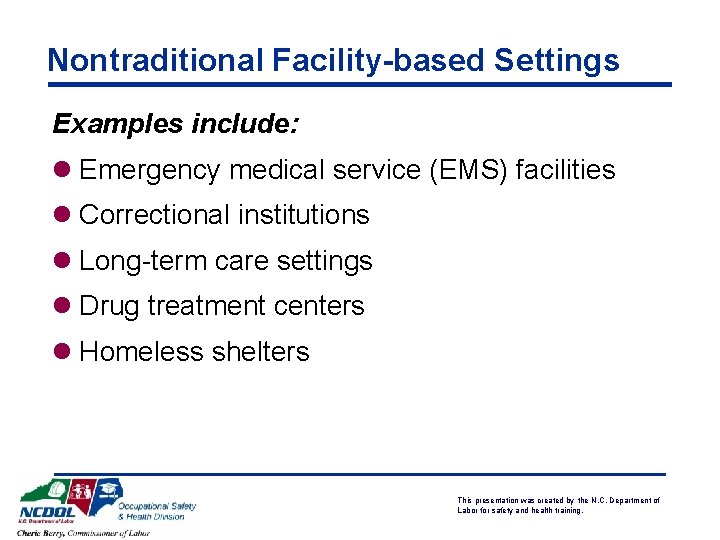
Nontraditional Facility-based Settings Examples include: l Emergency medical service (EMS) facilities l Correctional institutions l Long-term care settings l Drug treatment centers l Homeless shelters This presentation was created by the N. C. Department of Labor for safety and health training.
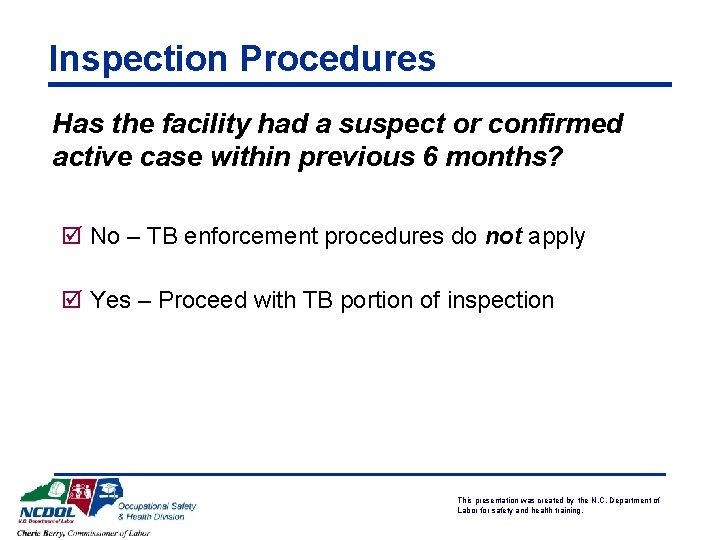
Inspection Procedures Has the facility had a suspect or confirmed active case within previous 6 months? No – TB enforcement procedures do not apply Yes – Proceed with TB portion of inspection This presentation was created by the N. C. Department of Labor for safety and health training.
Inspection Procedures l Employer’s TB plan will be verified through employee interviews and direct observation where feasible l When smoke-trail visualization tests are used - Be prepared to present safety data sheet (SDS) for smoke - Use testing methods for airborne infection isolation rooms (AIIR) in Appendix B This presentation was created by the N. C. Department of Labor for safety and health training.
Citation Policy Employers of employees occupationally exposed to TB must comply with the following provisions: NCGS 95 -129(1) – General Duty Clause 29 CFR 1910. 134 – Respiratory Protection 29 CFR 1910. 145 – Accident Prevention Signs and Tags 29 CFR 1910. 1020 – Access to Employee Exposure and Medical Records 29 CFR 1904 – Recording and Reporting Occupational Injuries and Illnesses 29 CFR 1910. 132 – Personal Protective Equipment, General Requirements This presentation was created by the N. C. Department of Labor for safety and health training.
General Duty Clause l NCGS: 95 -129(1) - Each employer shall furnish to each of his employees conditions of employment and a place of employment which are free from recognized hazards that are causing or are likely to cause death or serious injury or serious physical harm to his employees This presentation was created by the N. C. Department of Labor for safety and health training.
General Duty Clause Violation l Four Required Elements 1)The employer failed to keep the workplace free of a hazard to which employees of that employer were exposed; 2)The hazard was recognized in the industry; 3)The hazard was causing or likely to cause death or serious physical harm; and 4)There was a feasible and useful abatement method to correct (abate) the hazard. This presentation was created by the N. C. Department of Labor for safety and health training.
Invoking the General Duty Clause l The basis of a General Duty Clause violation is exposure to the hazard, not the absence of a particular abatement method This presentation was created by the N. C. Department of Labor for safety and health training.
Recognizing Exposure to a Serious Hazard l Employers with employees: - Working in one of the high risk occupational settings - Not provided with appropriate protection, and - Who have occupational exposure to TB This presentation was created by the N. C. Department of Labor for safety and health training.
Occupational Exposure to Tuberculosis l Exposure to exhaled air of an individual with suspected or confirmed pulmonary TB disease, or l Employee exposure without appropriate protection to a high hazard procedure performed on individual with suspected or confirmed infectious TB disease and which has potential to generate infectious airborne droplet nuclei This presentation was created by the N. C. Department of Labor for safety and health training.
High Hazard Procedures l Aerosolized medication treatment l Bronchoscopy l Sputum induction l Endotracheal intubation and suctioning procedures l Emergency dental procedures l Endoscopic procedures l Autopsies conducted in hospitals This presentation was created by the N. C. Department of Labor for safety and health training.
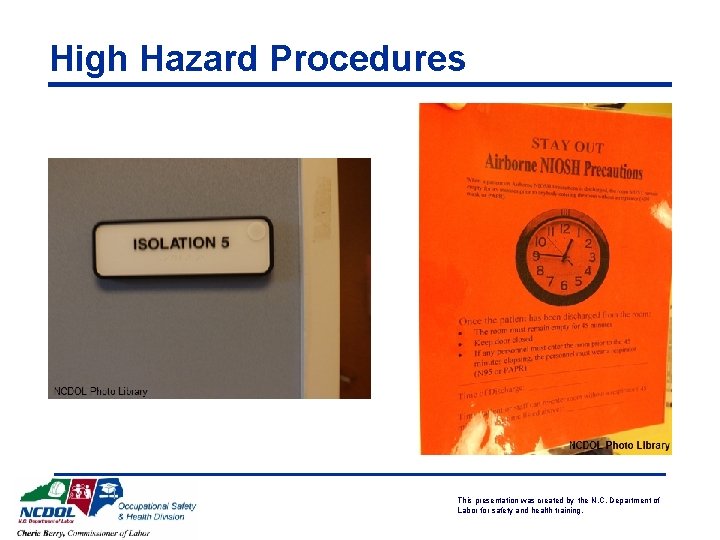
High Hazard Procedures This presentation was created by the N. C. Department of Labor for safety and health training.
Feasible and Useful Abatement Methods l Early identification of patient/client - Employer must implement a protocol for early identification of individuals with active TB - Program must identify and characterize each area within the facility (See 2005 CDC Guidelines, pp. 910 and Appendix B – TB Risk Assessment Worksheet) This presentation was created by the N. C. Department of Labor for safety and health training.
Medical Surveillance l Initial exams - TB Skin Tests (TST) or - BAMT (Blood assay for Mycobacterium tuberculosis) - At no cost to: » Current potentially exposed employees » All new employees prior to exposure This presentation was created by the N. C. Department of Labor for safety and health training.
TST or BAMT l Two-step baseline TST or one BAMT upon hire l TST/BAMT to be offered at time and location convenient to workers l BAMT - Alternative to TST - Only single test required to establish baseline This presentation was created by the N. C. Department of Labor for safety and health training.
Medical Surveillance l Periodic evaluations - TBT/BAMT to be conducted for workers in the following categories: » Potential ongoing transmission – as needed in the investigation of potential ongoing transmission » Medium risk – annually » Low risk – none » Exemption for workers with documented history of disease, positive test result or who have documented completion of treatment for disease or preventive therapy for infection l Reassessment is required following exposure or change in health This presentation was created by the N. C. Department of Labor for safety and health training.
Medical Surveillance l Case management of infected employees must include: - Protocol for new converters - Conversion to positive TST or BAMT to be followed ASAP by appropriate evaluations » Physical » Laboratory » Radiographic - Work restrictions for infectious employees This presentation was created by the N. C. Department of Labor for safety and health training.
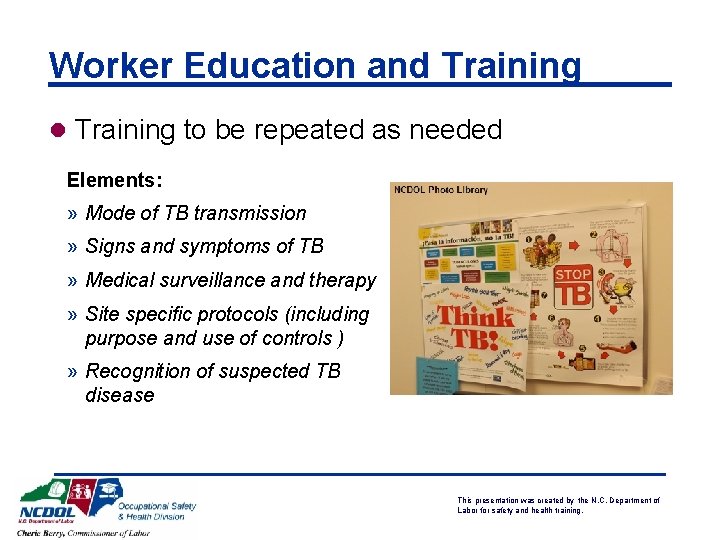
Worker Education and Training l Training to be repeated as needed Elements: » Mode of TB transmission » Signs and symptoms of TB » Medical surveillance and therapy » Site specific protocols (including purpose and use of controls ) » Recognition of suspected TB disease This presentation was created by the N. C. Department of Labor for safety and health training.
Engineering Controls l Individuals with suspected or confirmed infectious TB disease must be placed in an AIIR l High hazard procedures must be performed in: - AIIR isolation treatment rooms - AIIR isolation rooms, local exhaust booths and/or local exhaust hoods This presentation was created by the N. C. Department of Labor for safety and health training.
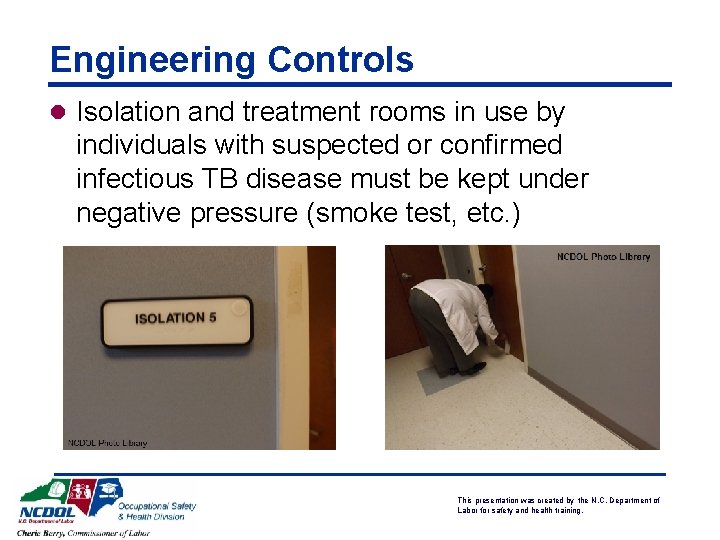
Engineering Controls l Isolation and treatment rooms in use by individuals with suspected or confirmed infectious TB disease must be kept under negative pressure (smoke test, etc. ) This presentation was created by the N. C. Department of Labor for safety and health training.
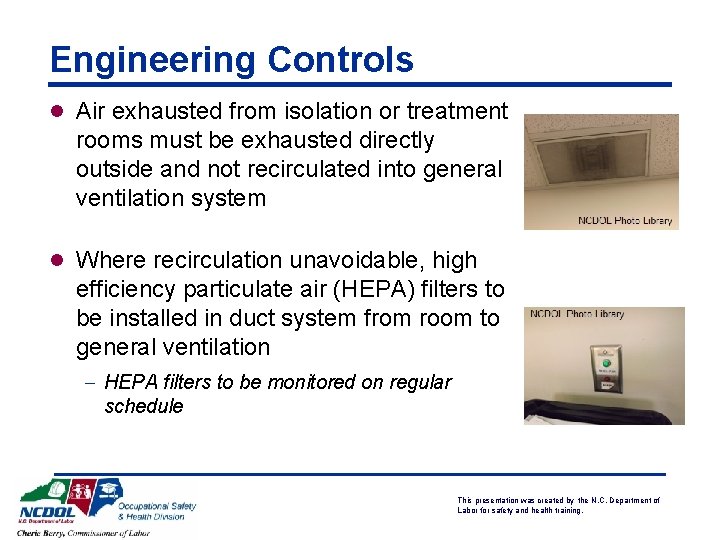
Engineering Controls l Air exhausted from isolation or treatment rooms must be exhausted directly outside and not recirculated into general ventilation system l Where recirculation unavoidable, high efficiency particulate air (HEPA) filters to be installed in duct system from room to general ventilation - HEPA filters to be monitored on regular schedule This presentation was created by the N. C. Department of Labor for safety and health training.
Engineering Controls l All potentially contaminated air which is ducted through facility must be kept under negative pressure until safely discharged outside (i. e. , away from occupied areas and air intakes), or l Air from isolation and treatment rooms must be decontaminated by a recognized process (e. g. , HEPA filter) before recirculated back to isolation/treatment room. l Use of UV radiation as the sole means of decontamination shall not be used. This presentation was created by the N. C. Department of Labor for safety and health training.
Engineering Controls l If high hazard procedures performed within airborne infection isolation or treatment rooms - Without source control or local exhaust ventilation and droplets released into environment - Purge time interval must be imposed during which respirators required when entering room l Interim or supplemental ventilation units equipped with HEPA filters are acceptable This presentation was created by the N. C. Department of Labor for safety and health training.
Respiratory Protection 1910. 134(a)(2) l Respirators shall be provided by the employer when such equipment is necessary to protect the health of the employee. l The employer shall provide the respirators which are applicable and suitable for the purpose intended. l The employer shall be responsible for the establishment and maintenance of a respiratory protection program which shall include the requirements outlined in paragraph (c) of this section. l The program shall cover each employee required by this section to use a respirator. This presentation was created by the N. C. Department of Labor for safety and health training.
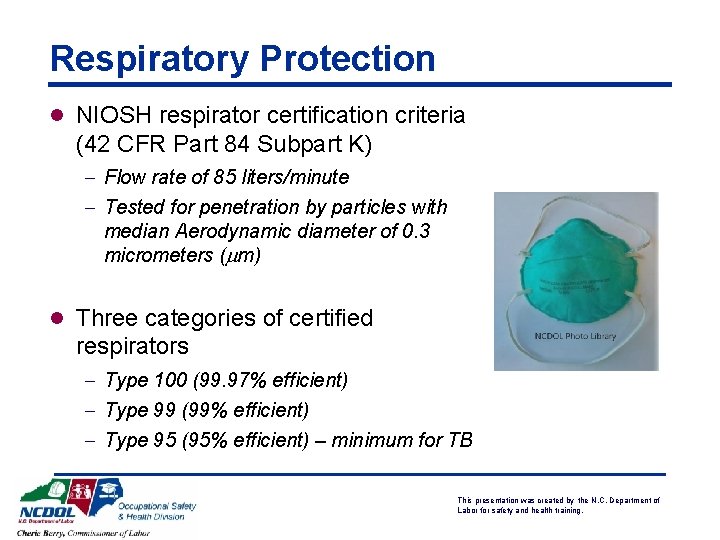
Respiratory Protection l NIOSH respirator certification criteria (42 CFR Part 84 Subpart K) - Flow rate of 85 liters/minute - Tested for penetration by particles with median Aerodynamic diameter of 0. 3 micrometers ( m) l Three categories of certified respirators - Type 100 (99. 97% efficient) - Type 99 (99% efficient) - Type 95 (95% efficient) – minimum for TB This presentation was created by the N. C. Department of Labor for safety and health training.
Respiratory Protection l HEPA respirators or respirators certified under 42 CFR Part 84 Subpart K are required: - When workers enter rooms housing individuals with suspected or confirmed infectious TB - When workers present during performance of high hazard procedures on individuals with suspected or confirmed infectious TB - When emergency medical response personnel or others transport, in a closed a vehicle, an individual with suspected or confirmed infectious TB This presentation was created by the N. C. Department of Labor for safety and health training.
Respirator Program Requirements 1910. 134(c) l Written operating procedures l Inspection and maintenance l Proper selection l Work area surveillance l Training and fitting l Inspection/evaluation of l Cleaning and disinfecting program l Approved respirators l Storage This presentation was created by the N. C. Department of Labor for safety and health training.
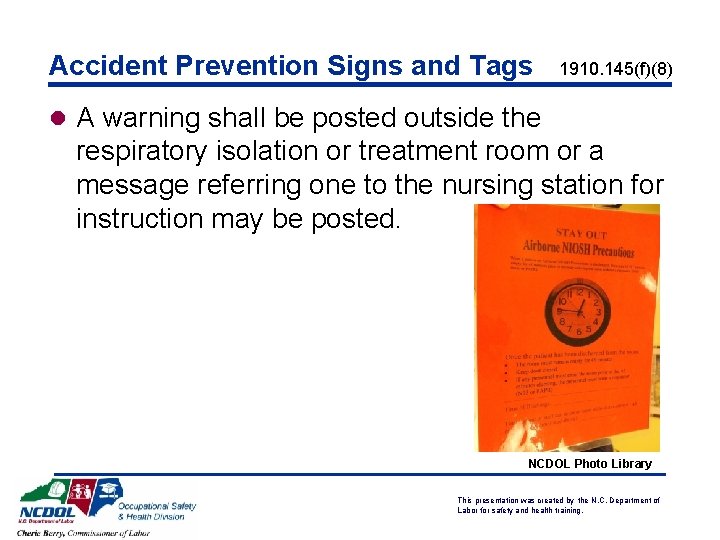
Accident Prevention Signs and Tags 1910. 145(f)(8) l A warning shall be posted outside the respiratory isolation or treatment room or a message referring one to the nursing station for instruction may be posted. NCDOL Photo Library This presentation was created by the N. C. Department of Labor for safety and health training.
Accident Prevention Signs and Tags 1910. 145 l A signal word/phrase (“Danger, ” “Caution, ” “Biological Hazard, ” or “BIOHAZARD”), or l Biohazard symbol l Biological hazard tags are also required on air transport components (e. g. , fans, ducts, filters) that transport contaminated air This presentation was created by the N. C. Department of Labor for safety and health training.
Employee Medical/Exposure Records 1910. 1020 l Employee access to records - A record concerning employee exposure to TB is an employee exposure record. - A record of TB skin test or BAMT results and medical evaluations and treatment are employee medical records. This presentation was created by the N. C. Department of Labor for safety and health training.
OSHA 300 Log 1904. 11/1904. 33 l Both TB infections (positive skin test) and TB disease are recordable l Original entry must be updated if TB infection progresses to TB disease during 5 year maintenance period This presentation was created by the N. C. Department of Labor for safety and health training.
OSHA 300 Log 1904. 11 l Case need not be recorded if: - Worker lives in household with known active case; - Public Health Department identified the worker as a contact of a person with active TB (where contact is unrelated to the workplace); or - Medical investigation shows infection caused by exposure away from work or not related to the workplace. This presentation was created by the N. C. Department of Labor for safety and health training.
Outreach and Assistance l N. C. Department of Labor 1 -800 -NC-LABOR http: //www. labor. nc. gov l Consultative Services 1 -800 -NC-LABOR or 919 -707 -7846 l Education, Training and Technical Assistance 1 -800 -NC-LABOR or 919 -707 -7876 l NIOSH 1 -800 -35 -NIOSH http: //www. cdc. gov/niosh/homepage. html This presentation was created by the N. C. Department of Labor for safety and health training.
Thank You For Attending! Final Questions? This presentation was created by the N. C. Department of Labor for safety and health training.
- Slides: 57