
OCCUPATIONAL ERGONOMICS Chapter 6 PSYCHOPHYSICS PSYCHOPHYSICS Learning Objectives
OCCUPATIONAL ERGONOMICS Chapter 6 PSYCHOPHYSICS
PSYCHOPHYSICS Learning Objectives: At the conclusion of this chapter, learners will be able to perform the following: Demonstrate knowledge of basic psychophysical theory n Describe key psychophysical methodologies used in ergonomics n Utilize psychophysical theory to enhance the design of work tasks and other human-engineered systems n 2
PSYCHOPHYSICS Introduction This approach is concerned with human sensation associated with external physical stimuli. n Sensations differ in both quality and magnitude. n Vision, hearing or tactile sensation vary in degree from acute to dull, loud to soft, and light to heavy n In general, sensory reactions to stimuli are measured using more than, different than or same as technique. n 3

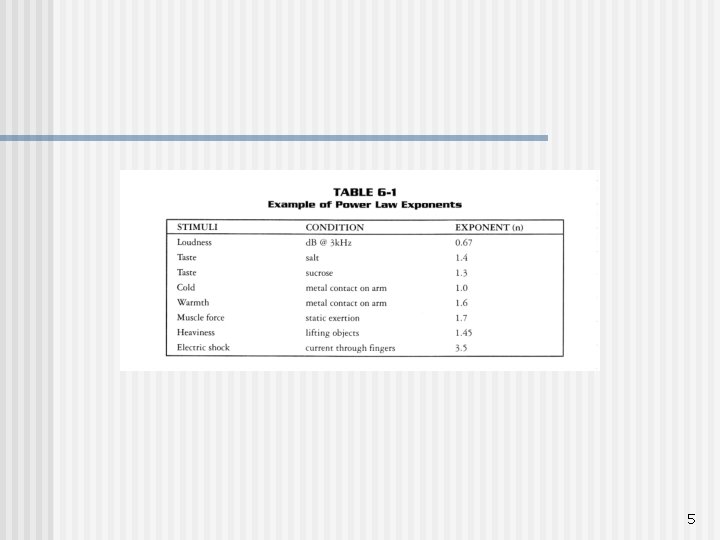
PSYCHOPHYSICS Stevens Power Law S = k. In where, S = sensory magnitude K = constant, dependent upon unit of measurement of stimulus I = intensity of physical stimulus n = exponent that is experimentally determined for each sensory continuum. 4
5
PSYCHOPHYSICS Psychophysics and Ergonomics n n n Typical objective of psychophysical approach in ergonomics is to quantify tolerance to occupational stress. Serves as an effective tool in the absence of well-defined biomechanical or physiological model. Offers an opportunity to examine worker perception of tasks. Providing realistic objective criteria is a key to successful implementation of this approach 6

PSYCHOPHYSICS (contd. ) Psychophysical Methods 1. Method of Constant Stimuli Absolute Thresholds Difference Thresholds or Point of Subjective Equality 2. Method of Limits Absolute Thresholds Difference Thresholds 7

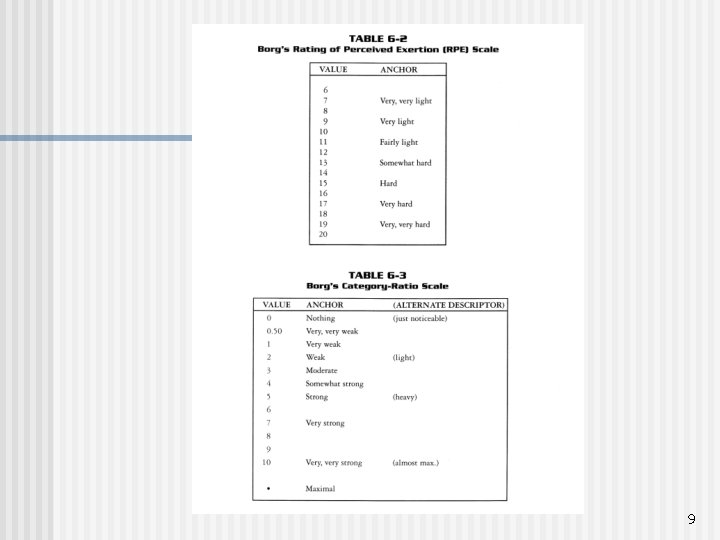
PSYCHOPHYSICS (contd. ) Psychophysical Methods (contd. ) 3. Method of Adjustment 4. Method of Ratio-Scaling Borg’s Rating of Perceived Exertion(RPE) Scale Ergonomic Uses of Psychophysical Data 8
9
- Slides: 9