
Occupation Focused Housing Adaptations Practice Rachel Russell Ph
- Slides: 24
Occupation Focused Housing Adaptations Practice Rachel Russell Ph. D Candidate
Why is being occupation focused important?
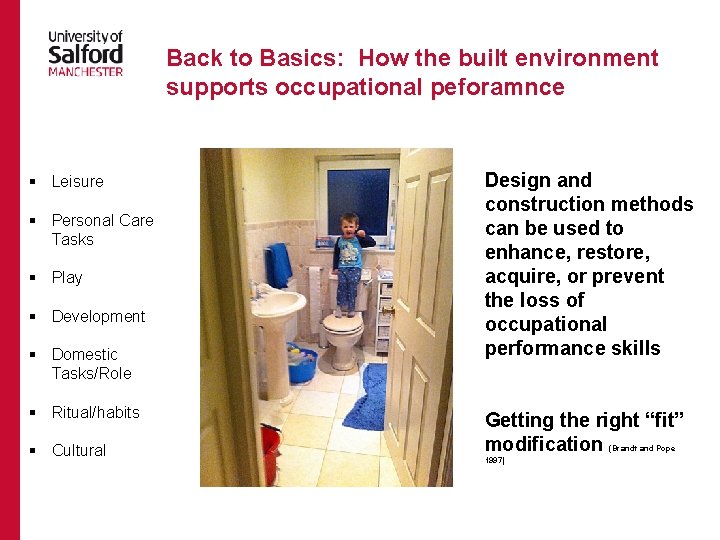
Back to Basics: How the built environment supports occupational peforamnce § Leisure § Personal Care Tasks § Play § Development § Domestic Tasks/Role § Ritual/habits § Cultural Design and construction methods can be used to enhance, restore, acquire, or prevent the loss of occupational performance skills Getting the right “fit” modification (Brandt and Pope 1997)
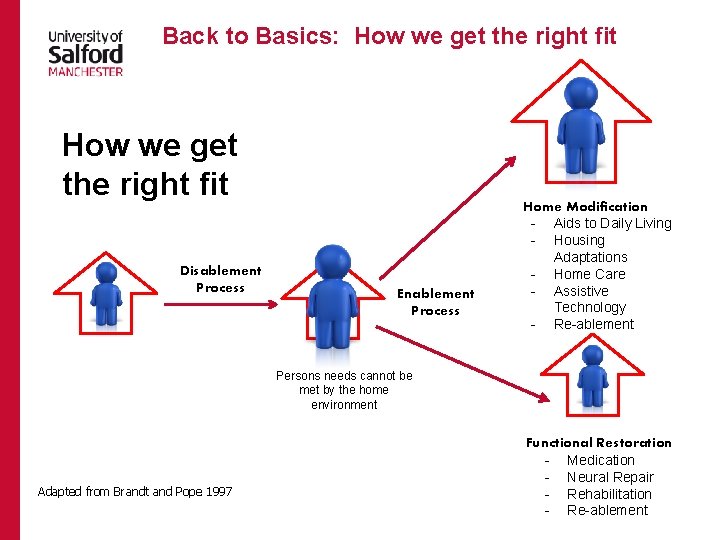
Back to Basics: How we get the right fit Disablement Process Enablement Process Home Modification - Aids to Daily Living - Housing Adaptations - Home Care - Assistive Technology - Re-ablement Persons needs cannot be met by the home environment Adapted from Brandt and Pope 1997 Functional Restoration - Medication - Neural Repair - Rehabilitation - Re-ablement
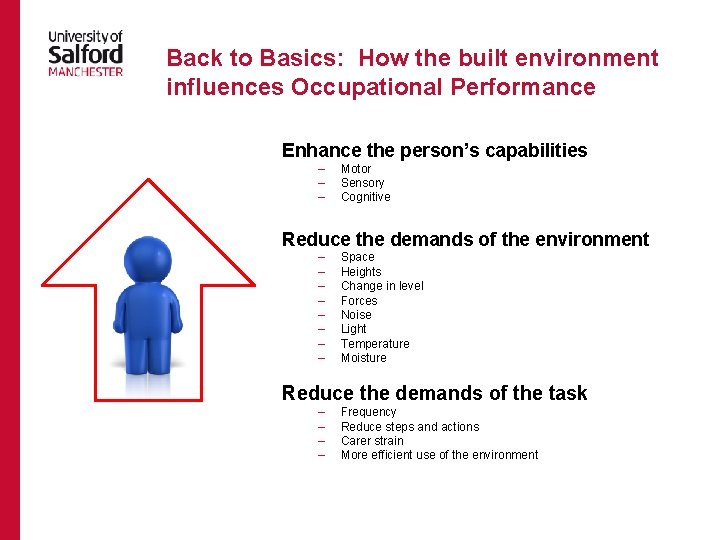
Back to Basics: How the built environment influences Occupational Performance Enhance the person’s capabilities – – – Motor Sensory Cognitive Reduce the demands of the environment – – – – Space Heights Change in level Forces Noise Light Temperature Moisture Reduce the demands of the task – – Frequency Reduce steps and actions Carer strain More efficient use of the environment
Why I have done the research: Some authors have been critical of the process used by OTs when modifying home environments. • Don’t fully explore what client require from a modification. Accessibility Vs Usability (Fange & Iwarrson 2005) • Focus on a narrow spectrum of Person, Environment and Task fit Heywood (2004) A poor home modification process leads to an adaptation that does not provide the right Fail to adopt a collaborative approach with people needing a fit for the person, resulting in financial wastefinds andit modification, and when OTs do collaborate the individual confusing (Nordharm et al 2009)to the person. potential (Hocking 1999 and Heywood 2004 ) • • Lack the ability to effectively analyse how recommended home modifications will enhance occupational performance (Palmon 2004, Bridges 2007)
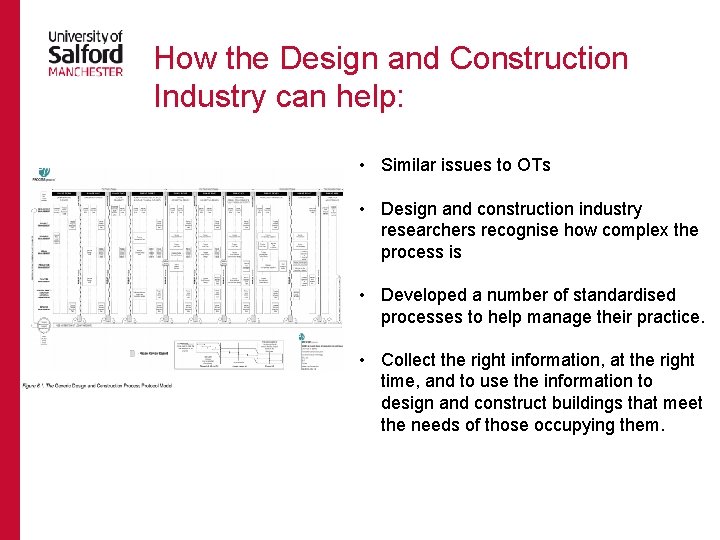
How the Design and Construction Industry can help: • Similar issues to OTs • Design and construction industry researchers recognise how complex the process is • Developed a number of standardised processes to help manage their practice. • Collect the right information, at the right time, and to use the information to design and construct buildings that meet the needs of those occupying them.
What part 1 of my research showed… We need an occupationfocused design and construction process that helps us collect the: – Right information – At the right time – Guides us to use the information in the right way – So at the end, we have the right adaptation
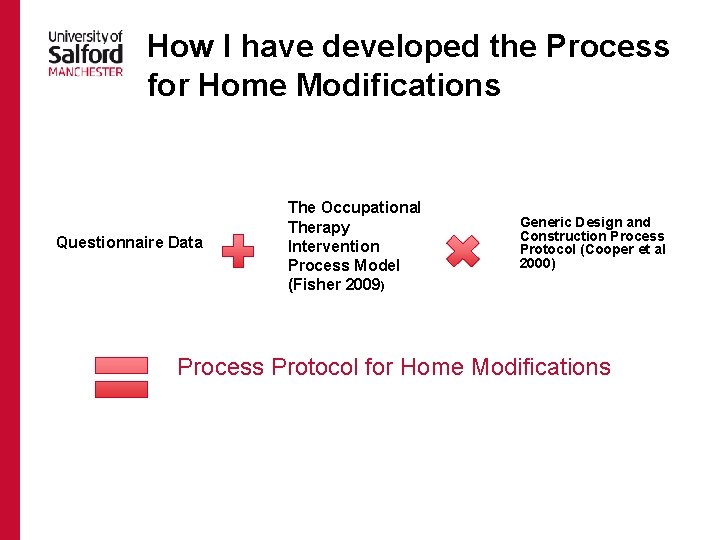
How I have developed the Process for Home Modifications Questionnaire Data The Occupational Therapy Intervention Process Model (Fisher 2009) Generic Design and Construction Process Protocol (Cooper et al 2000) Process Protocol for Home Modifications
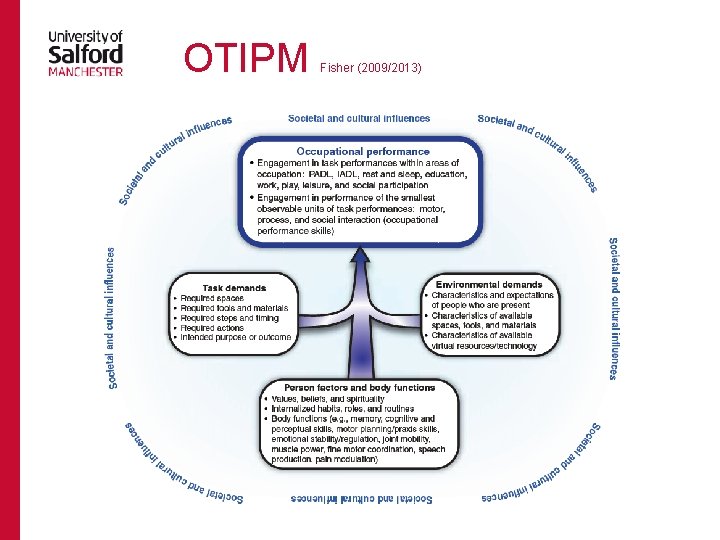
OTIPM Fisher (2009/2013)
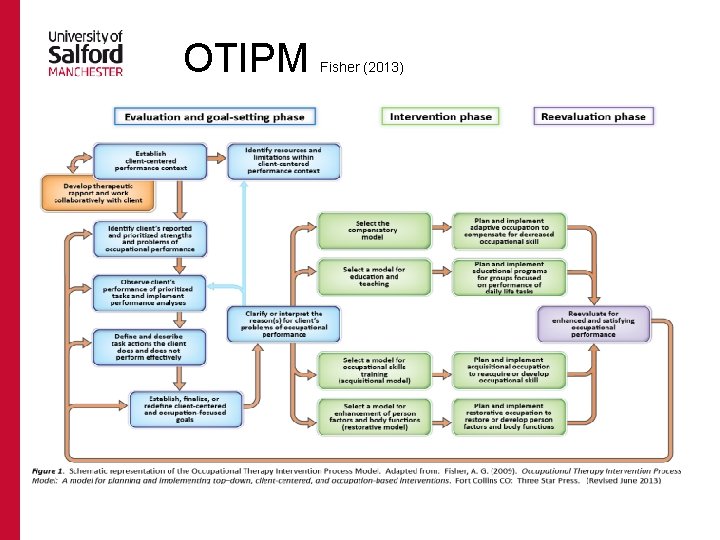
OTIPM Fisher (2013)
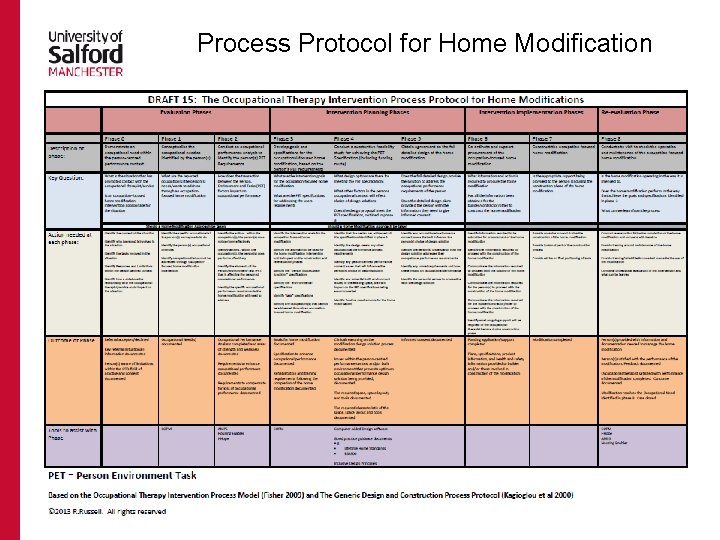
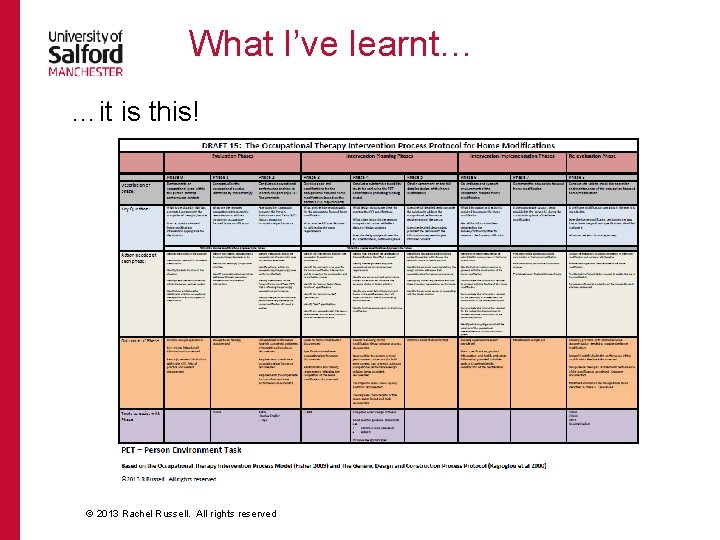
Process Protocol for Home Modification © 2013 Rachel Russell. All rights reserved
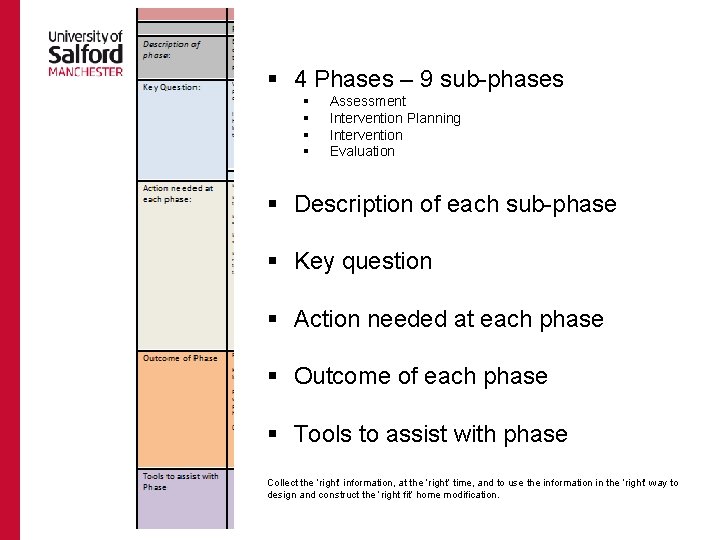
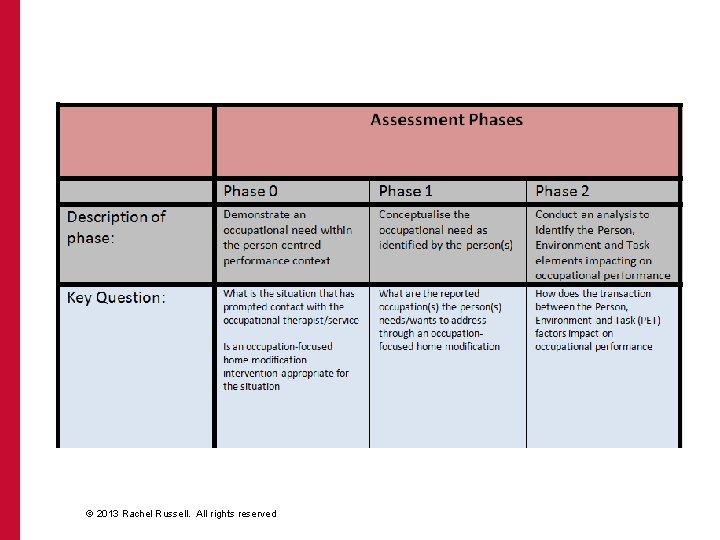
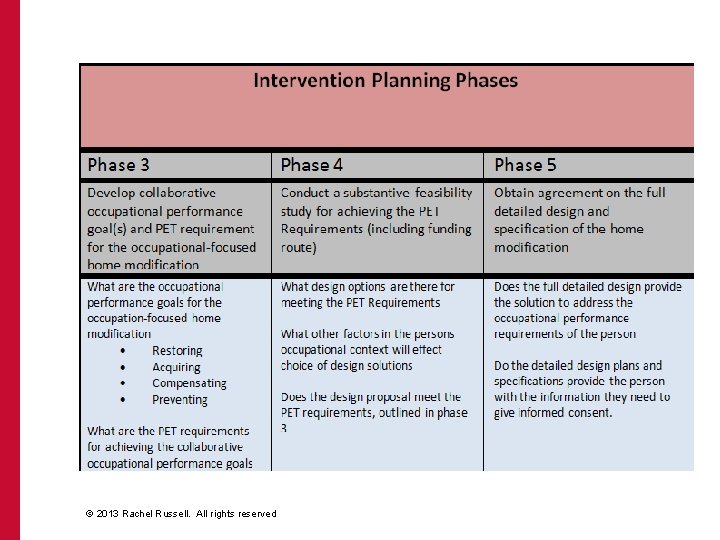
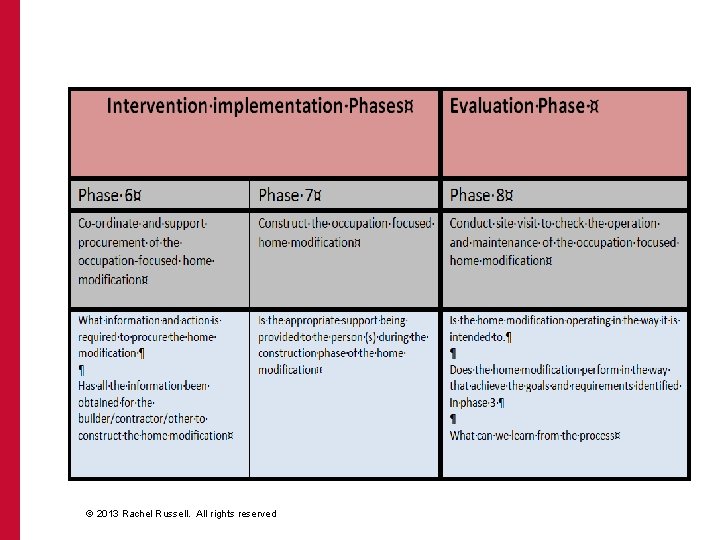
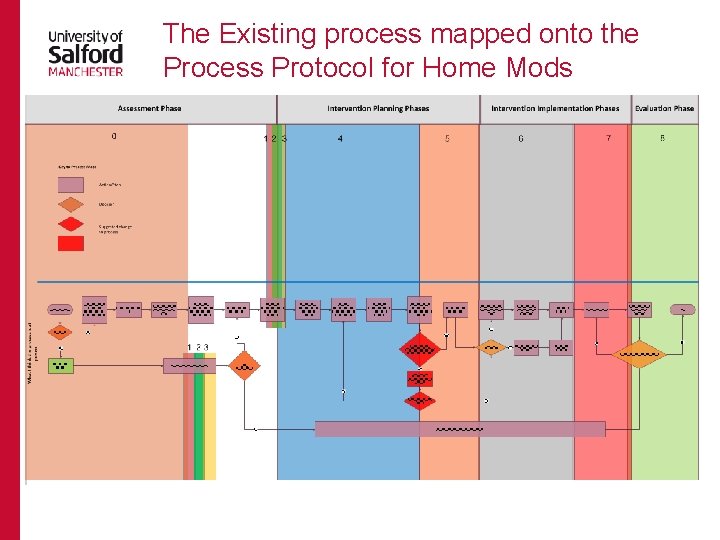
§ 4 Phases – 9 sub-phases § § Assessment Intervention Planning Intervention Evaluation § Description of each sub-phase § Key question § Action needed at each phase § Outcome of each phase § Tools to assist with phase Collect the ‘right’ information, at the ‘right’ time, and to use the information in the ‘right’ way to design and construct the ‘right fit’ home modification.
© 2013 Rachel Russell. All rights reserved
© 2013 Rachel Russell. All rights reserved
© 2013 Rachel Russell. All rights reserved
Part 2: Trying the Process Protocol out with a team of Housing OT’s Proof of concept approach: • Identified why the team wanted to use the Process Protocol • Mapped the existing process • Identified what the team needed to do to implement the Process Protocol • Implemented the changes • March 2014 – September 2014
What the team were wanting to achieve • Occupation-focused • Encourage consistency of practice amongst the team • Understand how the OT process fits within the existing housing adaptations process • Promote the role of OT in the Housing Team • Understand the role of OT in the design and construction process
The Existing process mapped onto the Process Protocol for Home Mods
Feedback from the proof of concept: • It was helpful to have clear stages and a step-by-step guide to the home modification process, as we realised that we had a tendency to cram multiple stages into one visit • The protocol focusses us on each different step in the process, making sure that nothing is left out and that the client is consulted at every stage • We have developed a product information sheet for use with clients as a result of this • Examine our current practice, and how we fit within our wider team and with other services • Illustrate our role to colleagues in other professions, and explain our involvement in the major adaptation process • Use as an induction tool with new OT staff
What I’ve learnt so far… The intervention is not this…
What I’ve learnt… …it is this! © 2013 Rachel Russell. All rights reserved
…to conclude! • Theory can be our alley • OTs should feel proud about the role they play in design and construction of home modifications • The design and construction process is our intervention • We need to question if we are using the most appropriate intervention to support our “clients” • The Home Modification Process Protocol may be away to support out practice
Thank you • Rachel Russell twitter @Bronteot • MSc Assistive Living (Distance learning course) • SURFACE @MAID (University of Salford) http: //www. salford. ac. uk/built-environment/researchcentres/surface • Please e-mail if you want a copy of the presentation and references • r. russell@edu. salford. ac. uk