
Obstarczyk weebly com th 8 Americas History Chapter
Obstarczyk. weebly. com th 8 America’s History, Chapter 4 Review Growth, Diversity, and Conflict (1720 - 1763)
New England’s Freehold Society • Farm Families: Women in the Household Economy – Women were subordinate to men; expected to be silent around company – Often did work around the house – Often had 6 -7 children by their 40 s • Farm Property: Inheritance – Many New England immigrants sought to own land – Children of wealthy families received land when they married – Once married, the wife lost all property rights to her husband • Freehold Society in Crisis: – As population grew, less land was available for children – Farmers grew maize – Eventually, New England focused on livestock
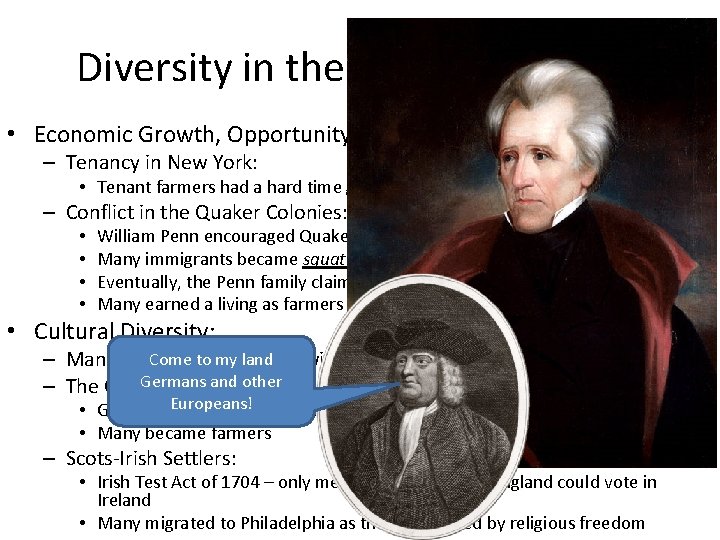
Diversity in the Middle Colonies • Economic Growth, Opportunity, and Conflict: – Tenancy in New York: • Tenant farmers had a hard time gaining land wealth – Conflict in the Quaker Colonies: • • William Penn encouraged Quakers and Protestants to move to Pennsylvania Many immigrants became squatters – illegally settling on land Eventually, the Penn family claimed Indian land near Philadelphia Many earned a living as farmers and storekeepers • Cultural Diversity: Come to my land – Many immigrants married within their own ethnic groups Germans and other – The German Influx: • Germans Europeans! left Germany due to conscription, religious freedom, and taxes • Many became farmers – Scots-Irish Settlers: • Irish Test Act of 1704 – only members of Church of England could vote in Ireland • Many migrated to Philadelphia as they were lured by religious freedom
Diversity in the Middle Colonies Cont. • Religion and Politics: – By the 1740 s, Quakers were a minority in Pennsylvania – Scots-Irish were hostile towards Indians
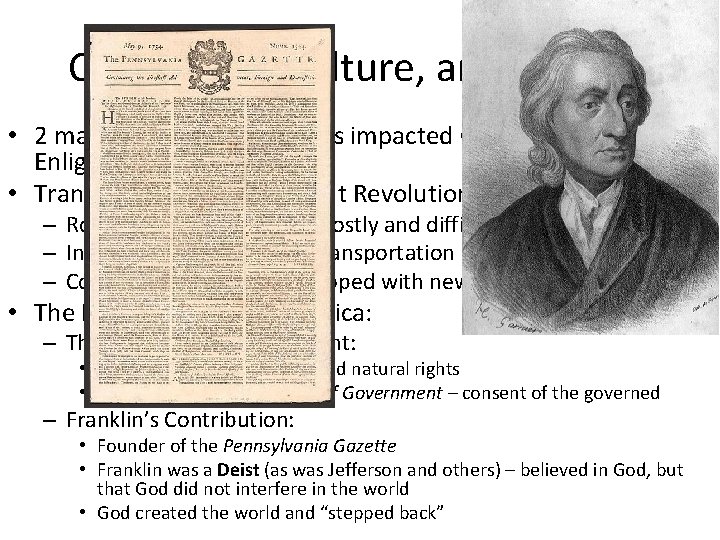
Commerce, Culture, and Identity • 2 major cultural movements impacted Colonial America – Enlightenment and Pietism • Transportation and the Print Revolution: – Roads developed slowly – costly and difficult to build – Information increased as transportation increased – Colonial newspapers developed with news from Europe • The Enlightenment in America: – The European Enlightenment: • Stressed human reasoning and natural rights • John Locke – Two Treatises of Government – consent of the governed – Franklin’s Contribution: • Founder of the Pennsylvania Gazette • Franklin was a Deist (as was Jefferson and others) – believed in God, but that God did not interfere in the world • God created the world and “stepped back”
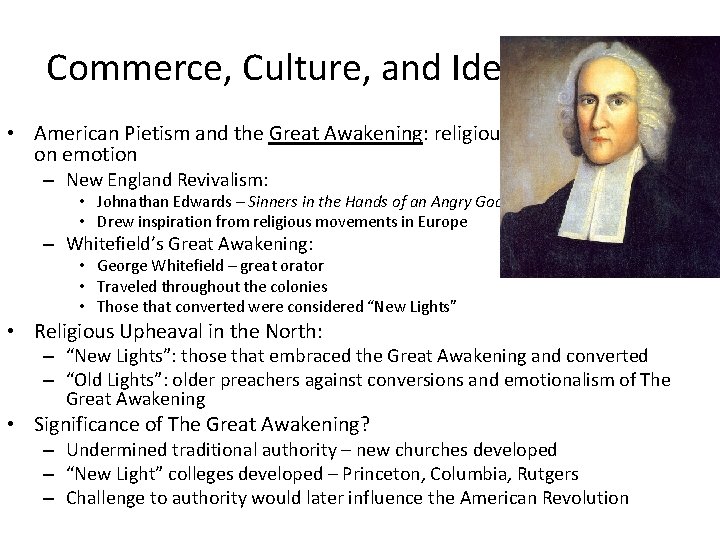
Commerce, Culture, and Identity Cont. • American Pietism and the Great Awakening: religious revival heavily based on emotion – New England Revivalism: • Johnathan Edwards – Sinners in the Hands of an Angry God • Drew inspiration from religious movements in Europe – Whitefield’s Great Awakening: • George Whitefield – great orator • Traveled throughout the colonies • Those that converted were considered “New Lights” • Religious Upheaval in the North: – “New Lights”: those that embraced the Great Awakening and converted – “Old Lights”: older preachers against conversions and emotionalism of The Great Awakening • Significance of The Great Awakening? – Undermined traditional authority – new churches developed – “New Light” colleges developed – Princeton, Columbia, Rutgers – Challenge to authority would later influence the American Revolution
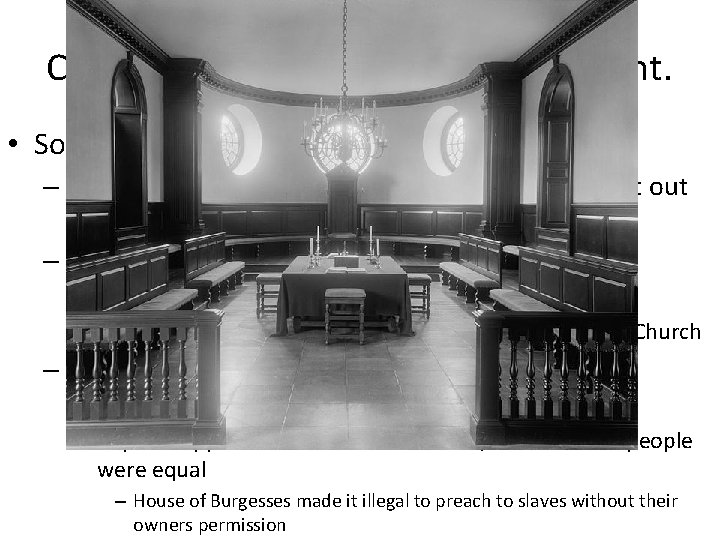
Commerce, Culture, and Identity Cont. • Social and Religious Conflict in the South: – Many African Americans and poor whites were left out by Anglican ministers – The Presbyterian Revival: • Many converted in Virginia and other areas • Diversity in religion challenged tax supported Anglican-Church – The Baptist Insurgency: • Focused on adult baptism – “born again” • Baptism appealed to African Americans; belief that all people were equal – House of Burgesses made it illegal to preach to slaves without their owners permission
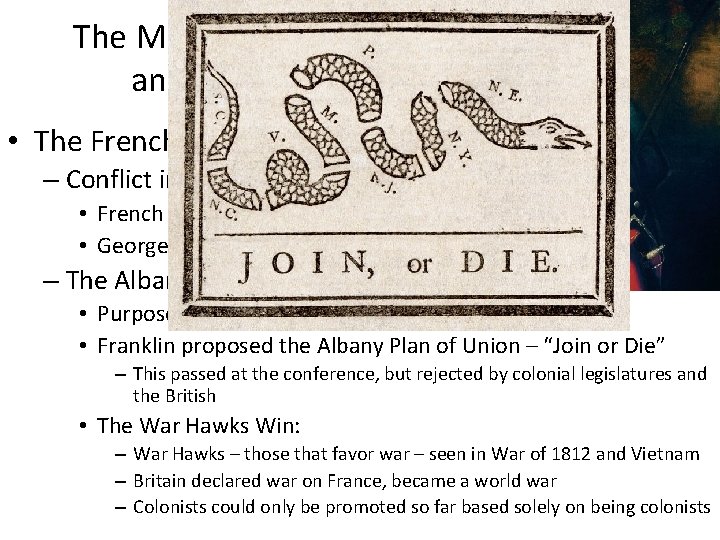
The Midcentury Challenge: War, Trade, and Social Conflict, 1750 - 1763 • The French and Indian War: – Conflict in the Ohio Valley: • French built forts in the Ohio Valley – PA and OH • George Washington essentially started the war in PA – The Albany Congress: • Purpose was to keep Iroquois on the side of the British • Franklin proposed the Albany Plan of Union – “Join or Die” – This passed at the conference, but rejected by colonial legislatures and the British • The War Hawks Win: – War Hawks – those that favor war – seen in War of 1812 and Vietnam – Britain declared war on France, became a world war – Colonists could only be promoted so far based solely on being colonists
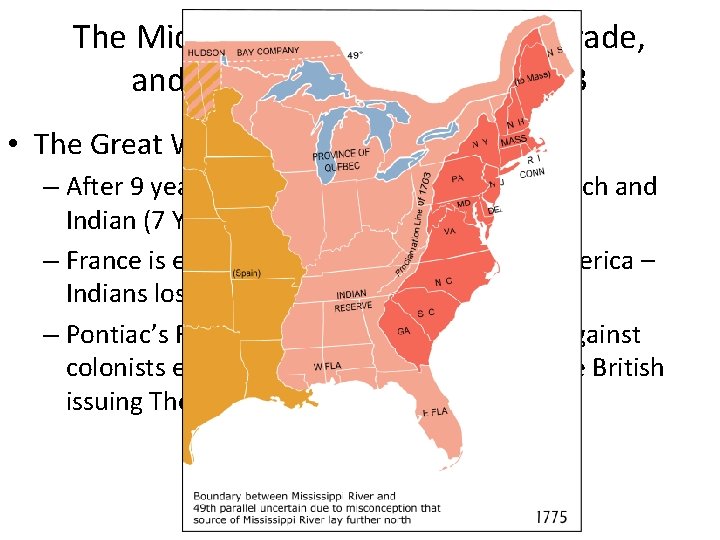
The Midcentury Challenge: War, Trade, and Social Conflict, 1750 - 1763 • The Great War for Empire: – After 9 years of fighting, Britain wins the French and Indian (7 Years’ War) – France is essentially removed from North America – Indians lost a valuable trading partner – Pontiac’s Rebellion (1763): Indian rebellion against colonists encroaching on their land, led to the British issuing The Proclamation Line of 1763
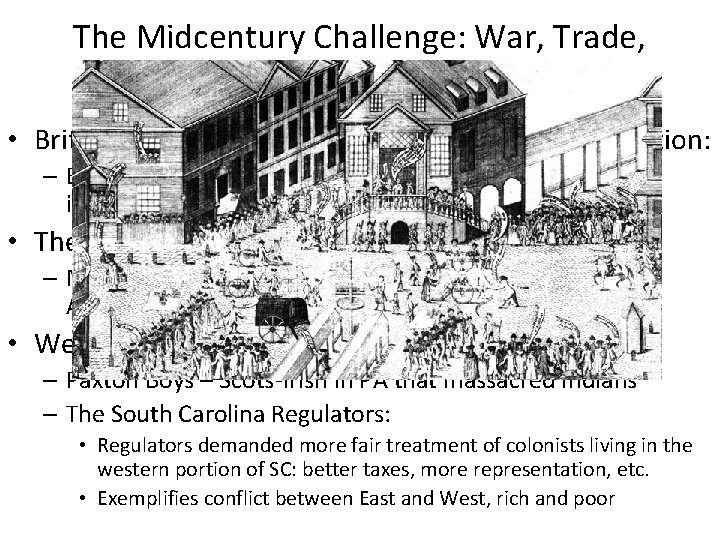
The Midcentury Challenge: War, Trade, and Social Conflict, 1750 - 1763 • British Industrial Growth and the Consumer Revolution: – Britain experienced a consumer revolution that led to increased debt for colonists • The Struggle for Land in the East: – More and more colonial farmers sought land near the Appalachian Mountains (would be an issue in 1763) • Western Rebels and Regulators: – Paxton Boys – Scots-Irish in PA that massacred Indians – The South Carolina Regulators: • Regulators demanded more fair treatment of colonists living in the western portion of SC: better taxes, more representation, etc. • Exemplifies conflict between East and West, rich and poor
Quick Recap • Middle Colonies, especially PA, were ethnically and religiously diverse • Enlightenment ideas changed society and encouraged individuals to question authority • The First Great Awakening created religious diversity and questioned traditional authority • The French and Indian (7 Years’ War) removed France from North America and ended salutary neglect • Paxton Boys and Regulators demonstrated tensions between “east” and “west”
- Slides: 11