
Observing the Universe From the Lens to Multiwavelength
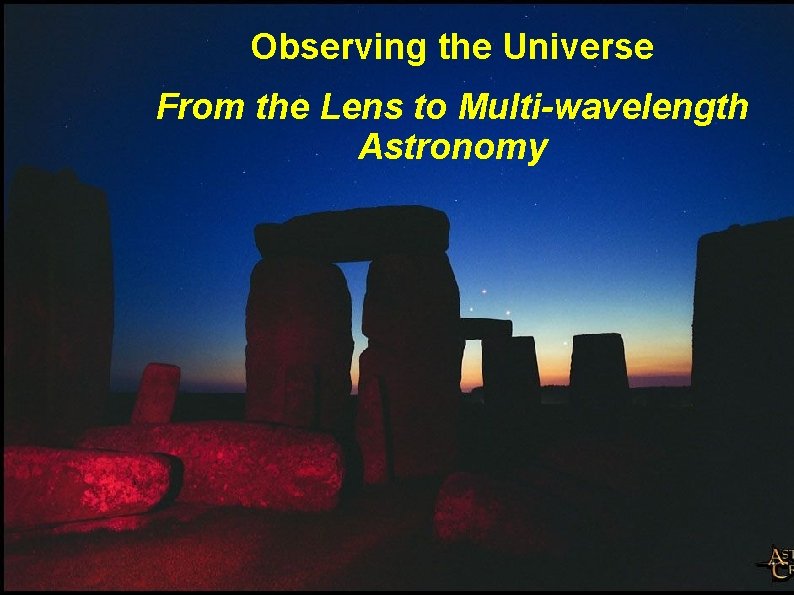
Observing the Universe From the Lens to Multi-wavelength Astronomy

Outline History Modern Observatories The Electromagnetic Spectrum Multi-wavelength Astronomy Radio Astronomy Sub-mm, IR Astronomy X-ray Astronomy Gamma-ray Astronomy
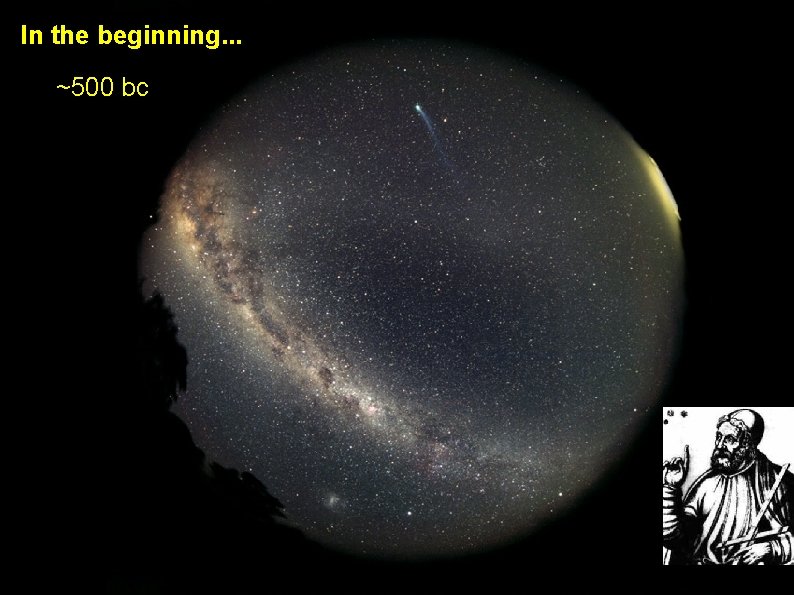
In the beginning. . . ~500 bc
Planetary Motion http: //www. syz. co m/DU/mac/animat ions/planetarymoti on. html
Post-Renaissance Developments
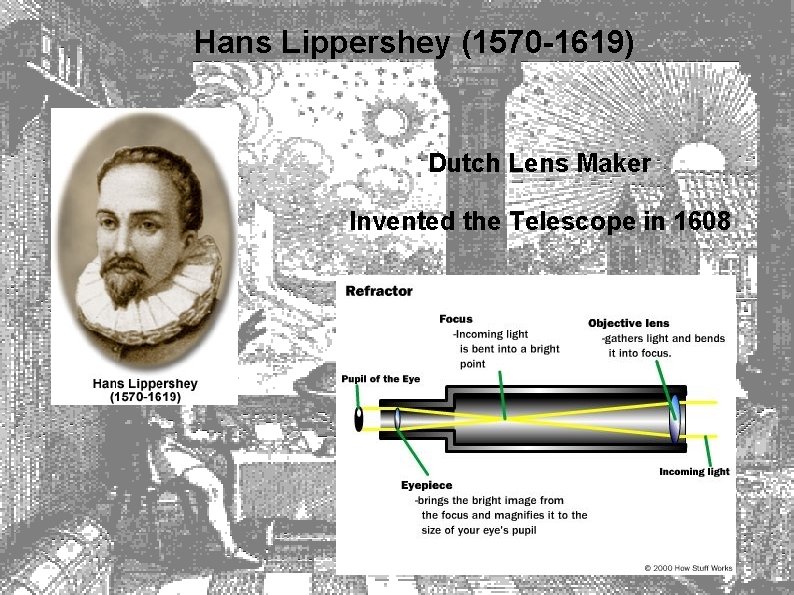
Hans Lippershey (1570 -1619) Dutch Lens Maker Invented the Telescope in 1608
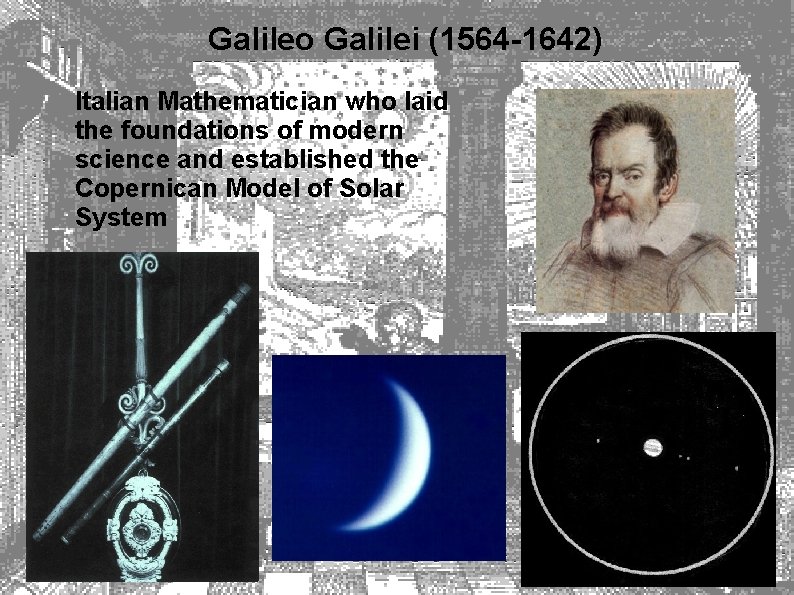
Galileo Galilei (1564 -1642) Italian Mathematician who laid the foundations of modern science and established the Copernican Model of Solar System
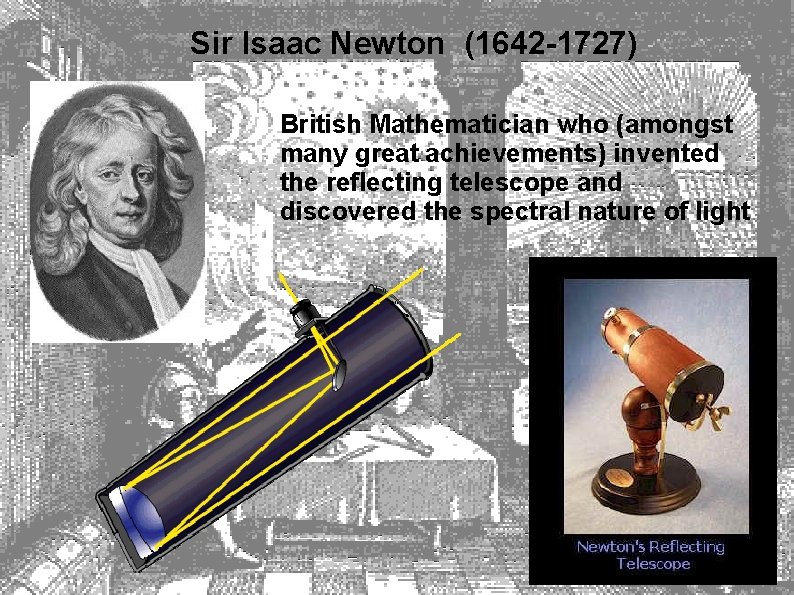
Sir Isaac Newton (1642 -1727) British Mathematician who (amongst many great achievements) invented the reflecting telescope and discovered the spectral nature of light
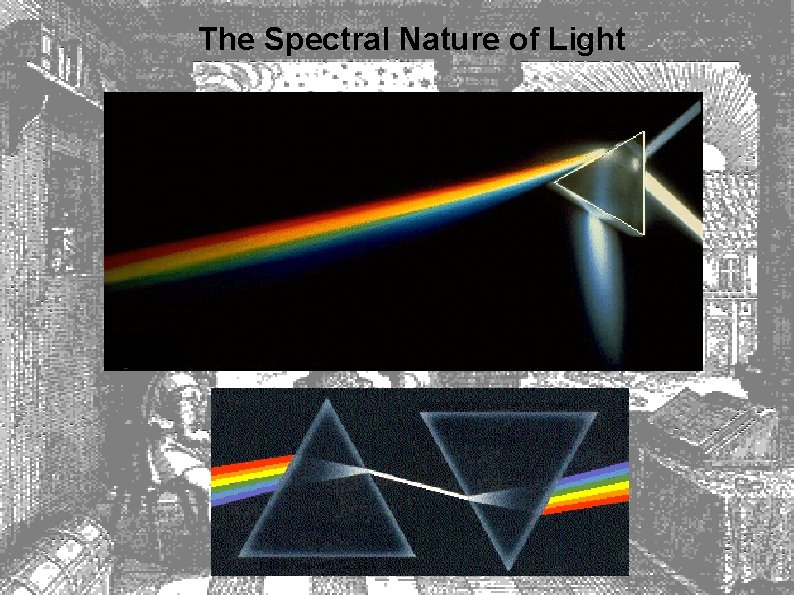
The Spectral Nature of Light
The Development of Astrophysics and Modern Astronomy (or build a bigger telescope)
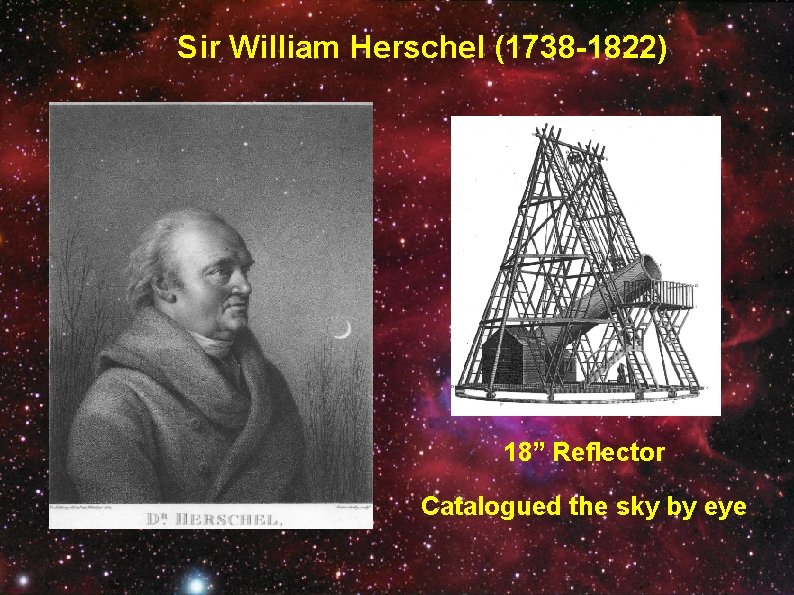
Sir William Herschel (1738 -1822) 18” Reflector Catalogued the sky by eye
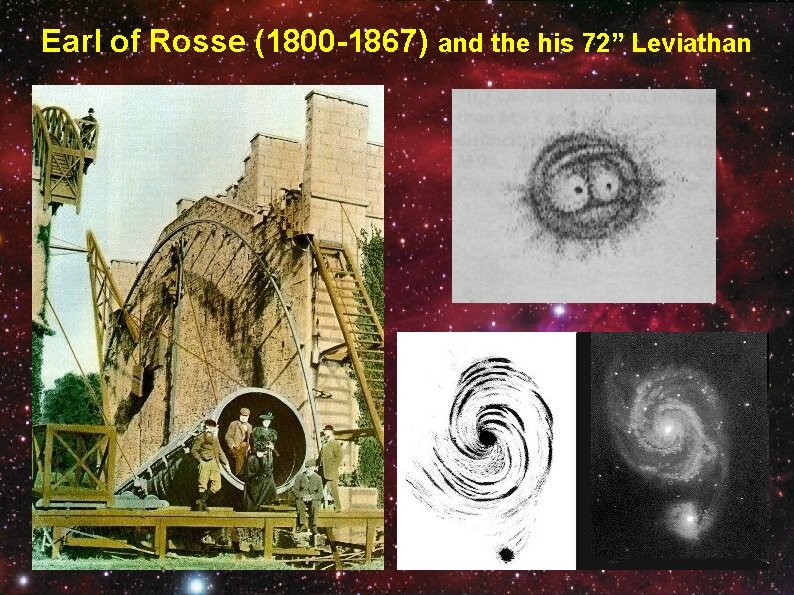
Earl of Rosse (1800 -1867) and the his 72” Leviathan
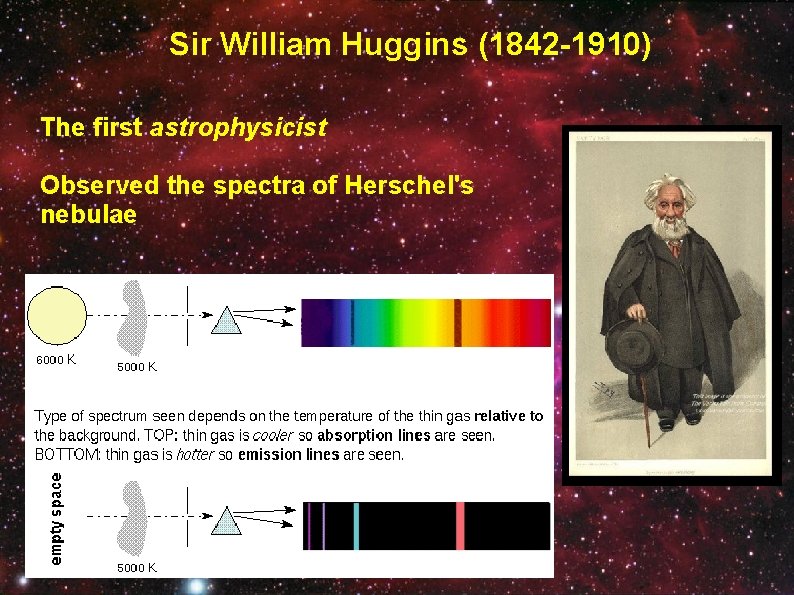
Sir William Huggins (1842 -1910) The first astrophysicist Observed the spectra of Herschel's nebulae
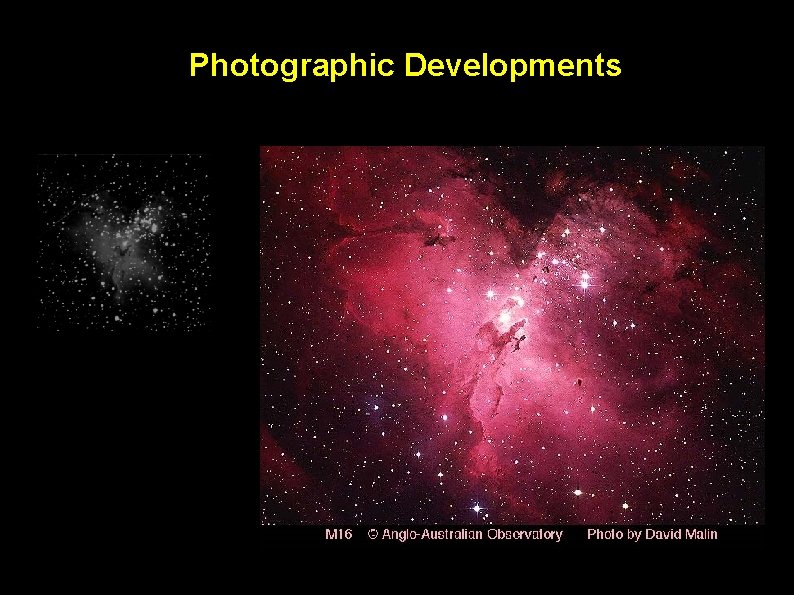
Photographic Developments
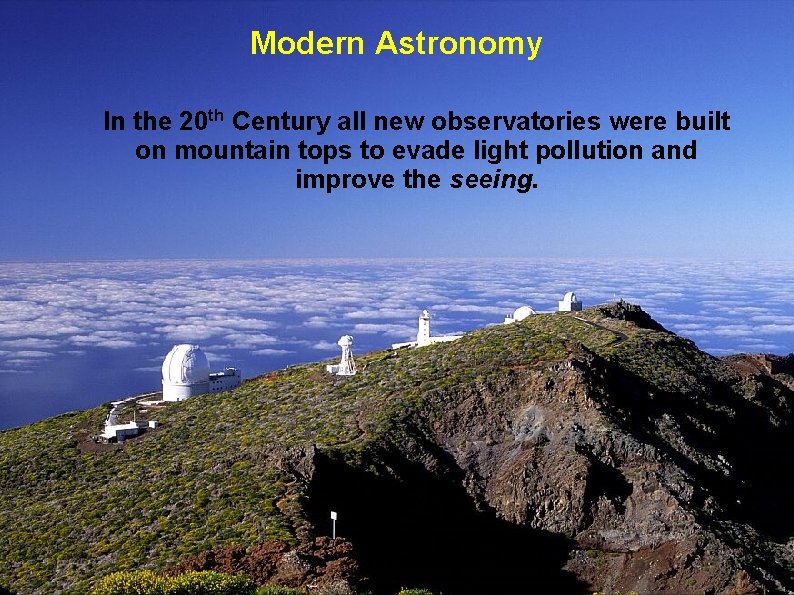
Modern Astronomy In the 20 th Century all new observatories were built on mountain tops to evade light pollution and improve the seeing.
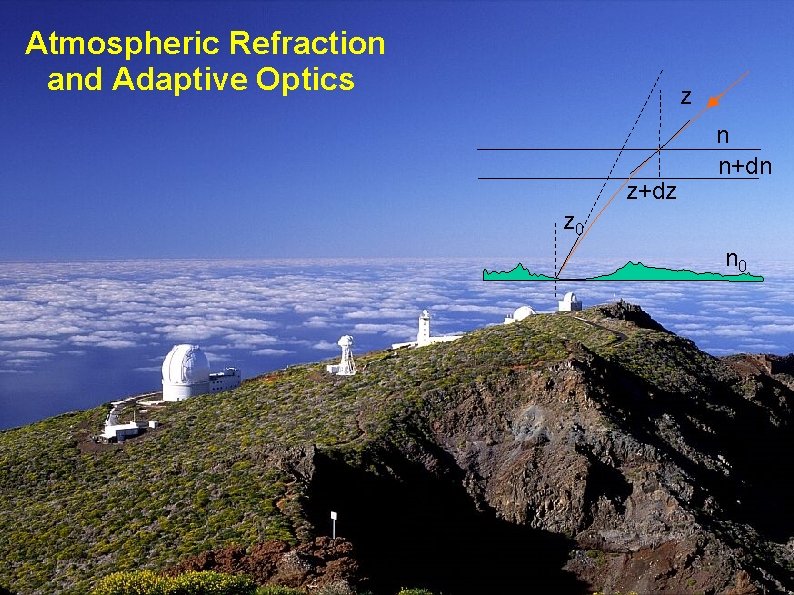
Atmospheric Refraction and Adaptive Optics z z+dz n n+dn z 0 n 0
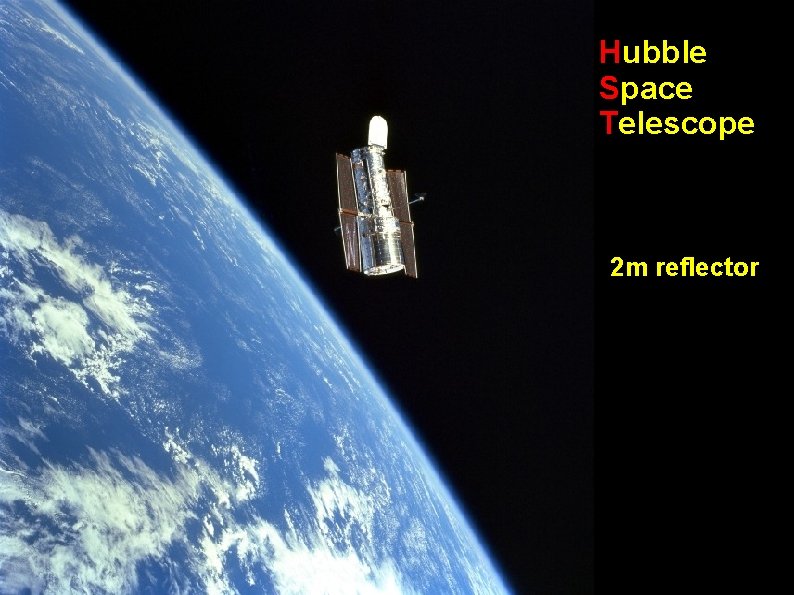
Hubble Space Telescope 2 m reflector
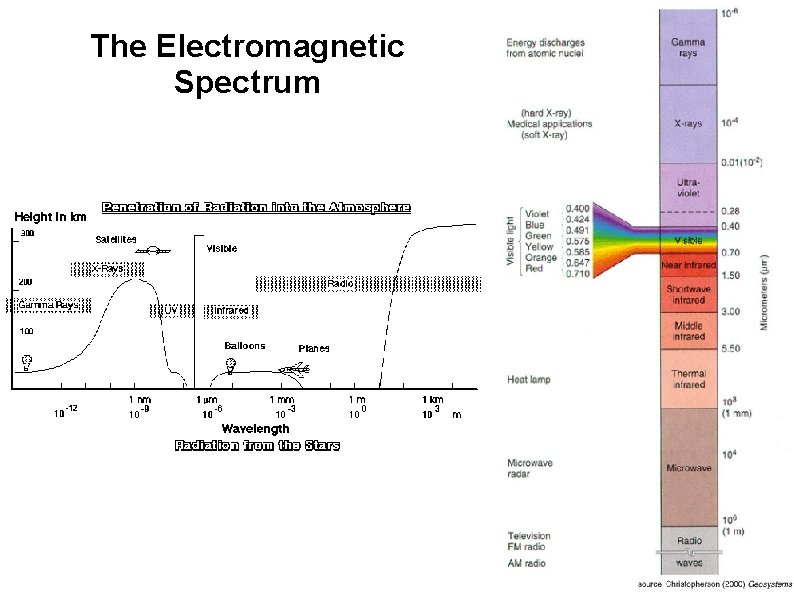
The Electromagnetic Spectrum
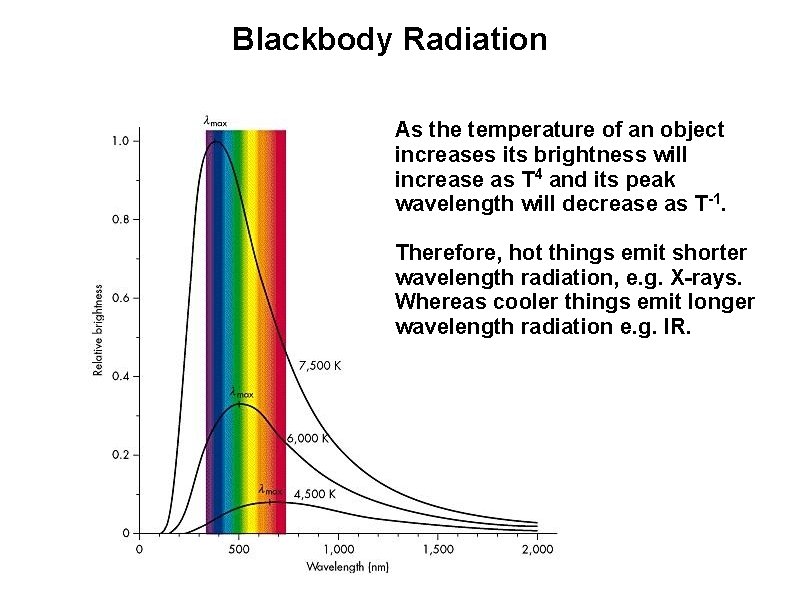
Blackbody Radiation As the temperature of an object increases its brightness will increase as T 4 and its peak wavelength will decrease as T-1. Therefore, hot things emit shorter wavelength radiation, e. g. X-rays. Whereas cooler things emit longer wavelength radiation e. g. IR.
Radio Astronomy q ∝l/D Karl Guthe Jansky (1905 -1950) Grote Reber (1911 -2002)

Radio Interferometry
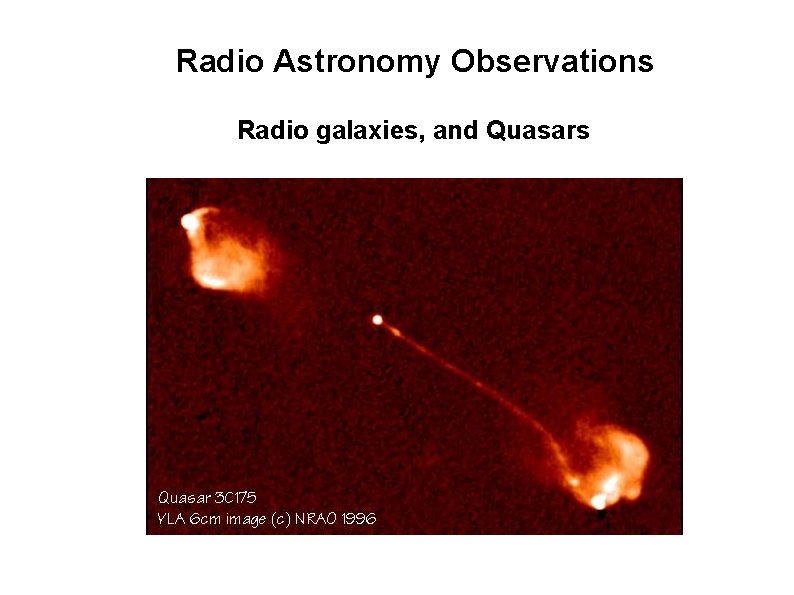
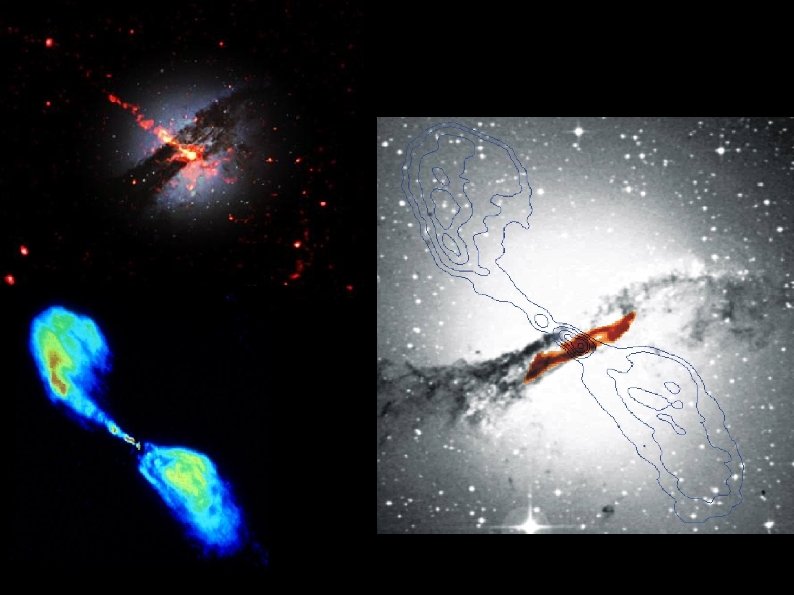
Radio Astronomy Observations Radio galaxies, and Quasars

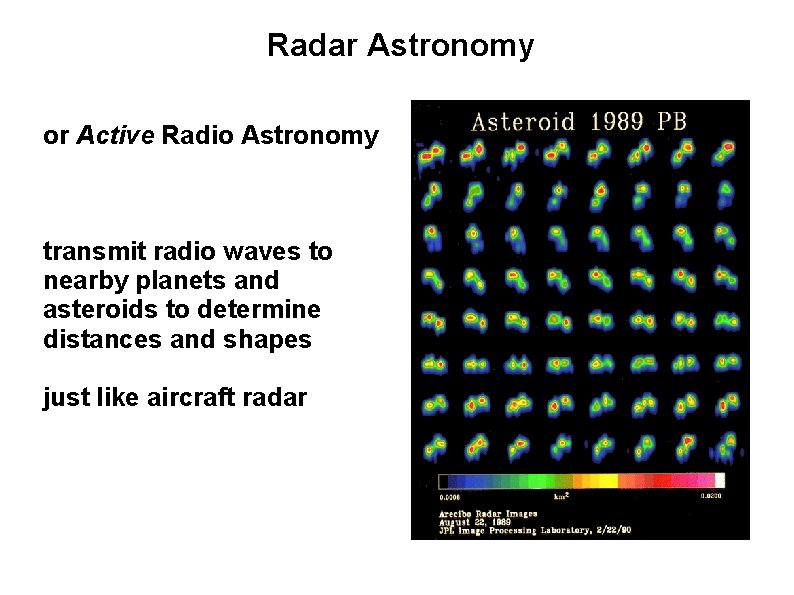
Radar Astronomy or Active Radio Astronomy transmit radio waves to nearby planets and asteroids to determine distances and shapes just like aircraft radar
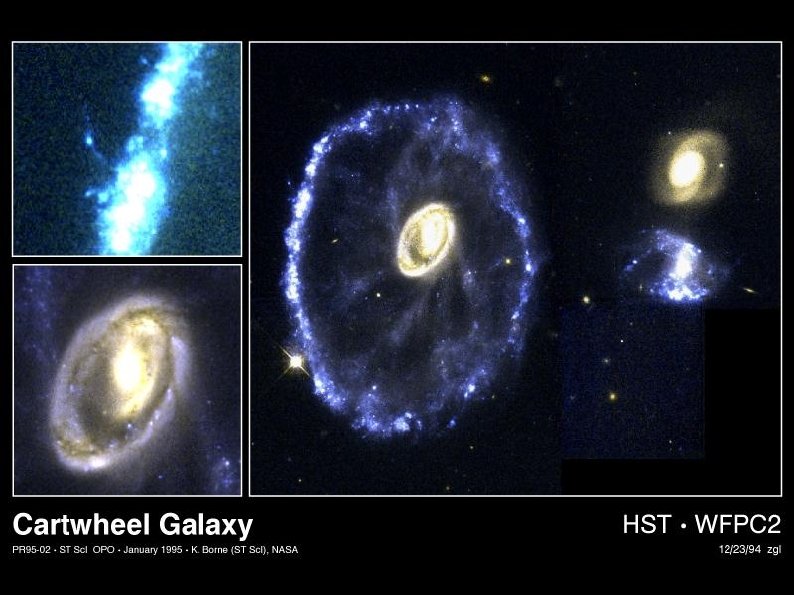
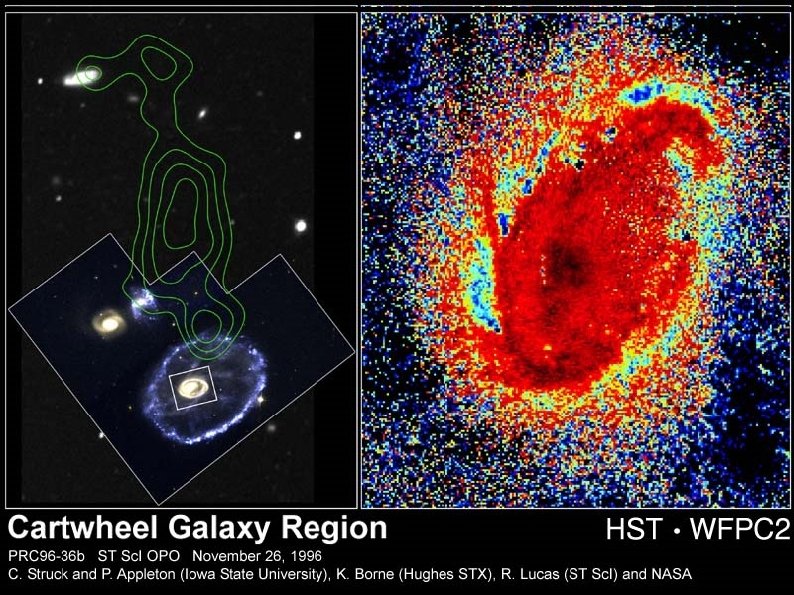

X-ray Astronomy XMM Satellite
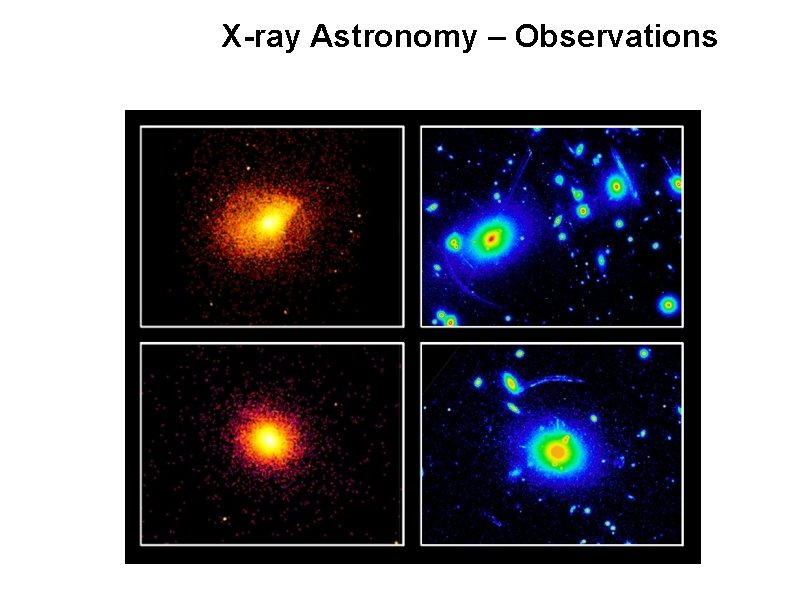
X-ray Astronomy – Observations
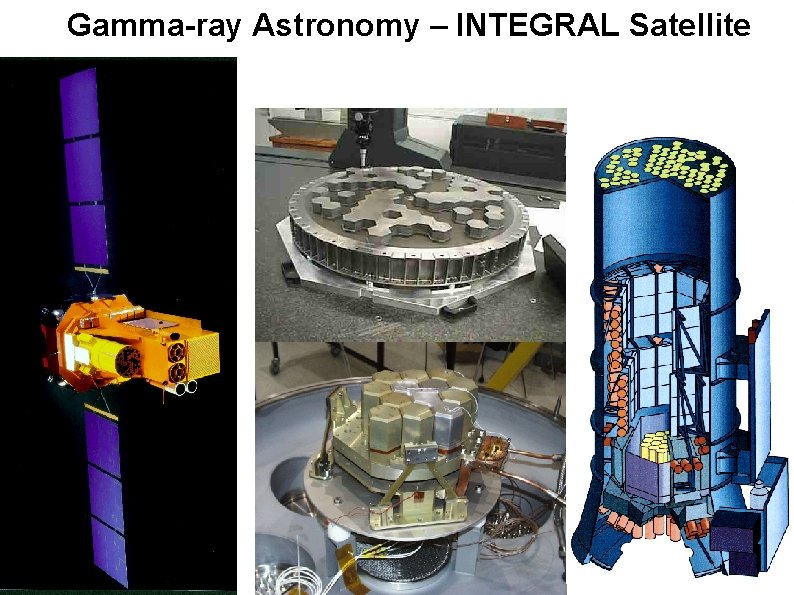
Gamma-ray Astronomy – INTEGRAL Satellite
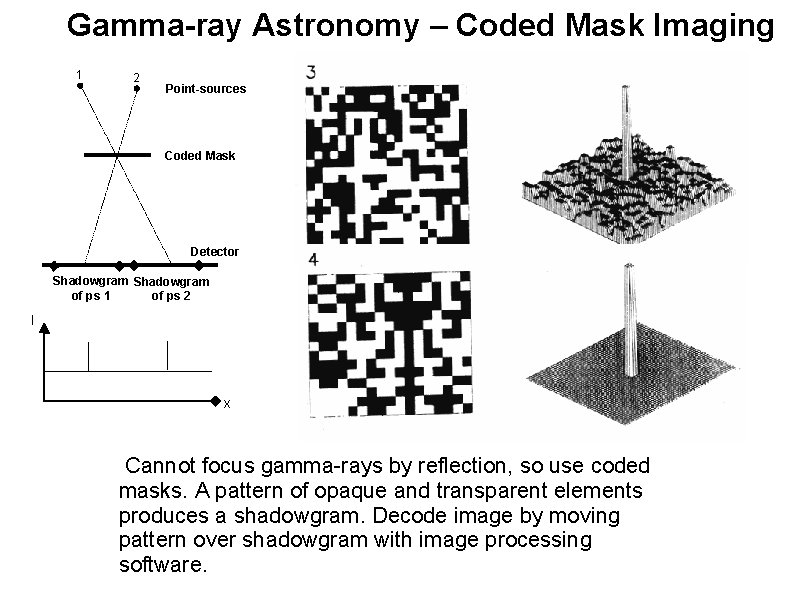
Gamma-ray Astronomy – Coded Mask Imaging 1 2 Point-sources Coded Mask Detector Shadowgram of ps 1 of ps 2 I x Cannot focus gamma-rays by reflection, so use coded masks. A pattern of opaque and transparent elements produces a shadowgram. Decode image by moving pattern over shadowgram with image processing software.
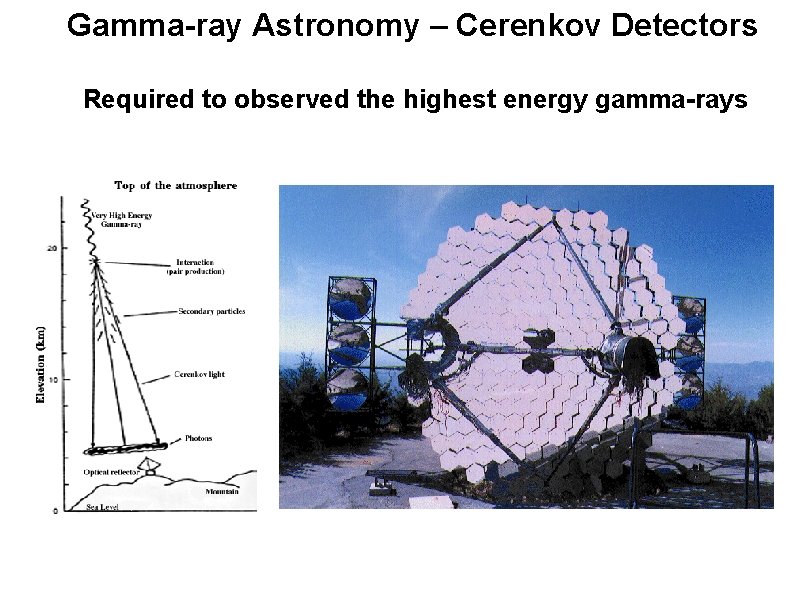
Gamma-ray Astronomy – Cerenkov Detectors Required to observed the highest energy gamma-rays
- Slides: 34