
Observing Cosmic Dawn with the LWA1 Jackie Monkiewicz
Observing Cosmic Dawn with the LWA-1 Jackie Monkiewicz Arizona State University PIs: Judd Bowman (ASU), Greg Taylor (UNM) Jake Hartman (JPL) Jayce Dowell, Joe Craig (UNM) Steve Ellingson (Virginia Tech)
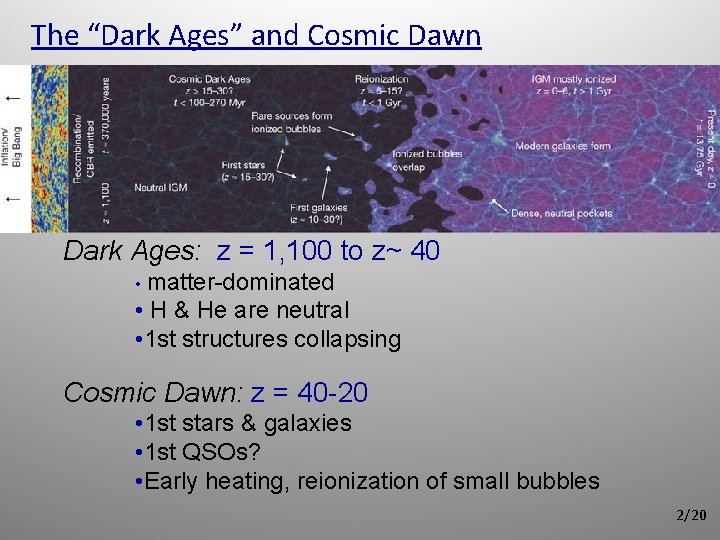
The “Dark Ages” and Cosmic Dawn Dark Ages: z = 1, 100 to z~ 40 • matter-dominated • H & He are neutral • 1 st structures collapsing Cosmic Dawn: z = 40 -20 • 1 st stars & galaxies • 1 st QSOs? • Early heating, reionization of small bubbles 2/20
Cosmic Dawn project purpose: Detect/constrain signal of 1 st generation of stars in 21 -cm absorption of hydrogen at z ~ 30 REQUIRES: 1. Low frequency experiment, 10 -100 MHz LWA-1 2. Long Integration time 3. Very accurate bandpass calibration 4. Novel beamforming techniques 3/20
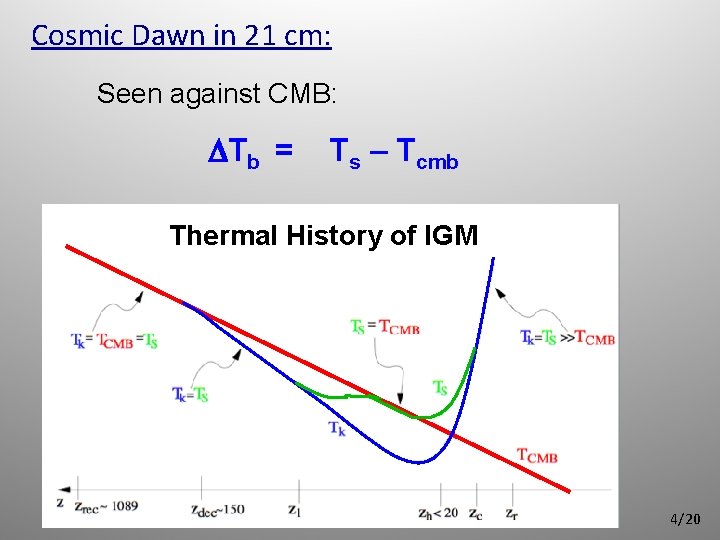
Cosmic Dawn in 21 cm: Seen against CMB: DTb = Ts – Tcmb Thermal History of IGM (Furlanetto 2006, Pritchard & Loeb 2010) 4/20
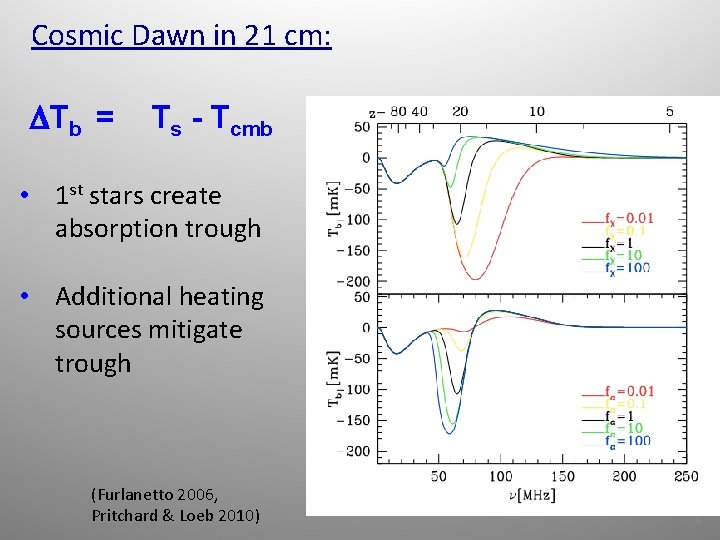
Cosmic Dawn in 21 cm: DTb = Ts - Tcmb • 1 st stars create absorption trough • Additional heating sources mitigate trough (Furlanetto 2006, Pritchard & Loeb 2010) 5
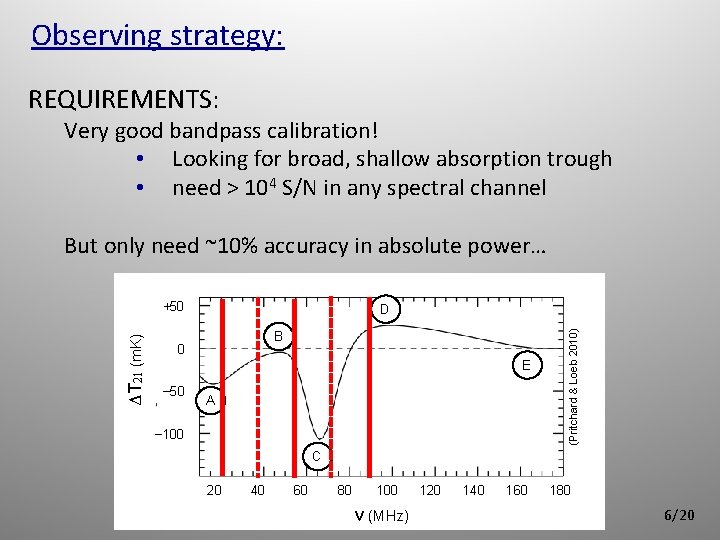
Observing strategy: REQUIREMENTS: Very good bandpass calibration! • Looking for broad, shallow absorption trough • need > 104 S/N in any spectral channel But only need ~10% accuracy in absolute power… D B 0 E − 50 A − 100 (Pritchard & Loeb 2010) ΔT 21 (m. K) +50 C 20 40 60 80 100 ν (MHz) 120 140 160 180 6/20
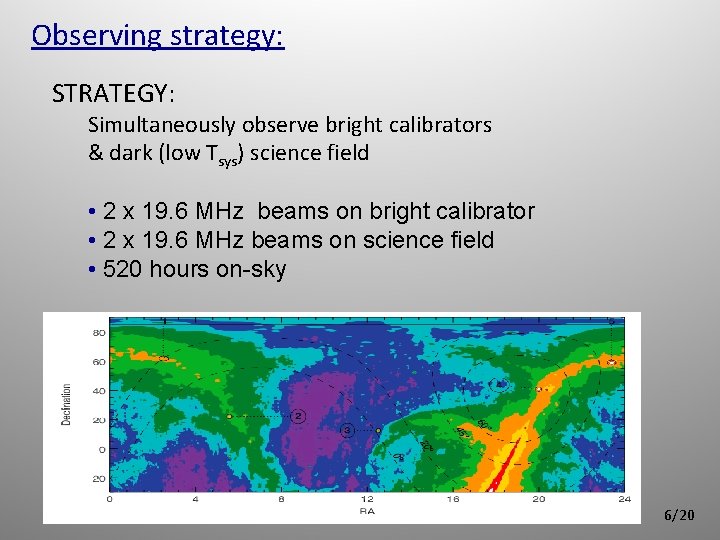
Observing strategy: STRATEGY: Simultaneously observe bright calibrators & dark (low Tsys) science field • 2 x 19. 6 MHz beams on bright calibrator • 2 x 19. 6 MHz beams on science field • 520 hours on-sky 6/20
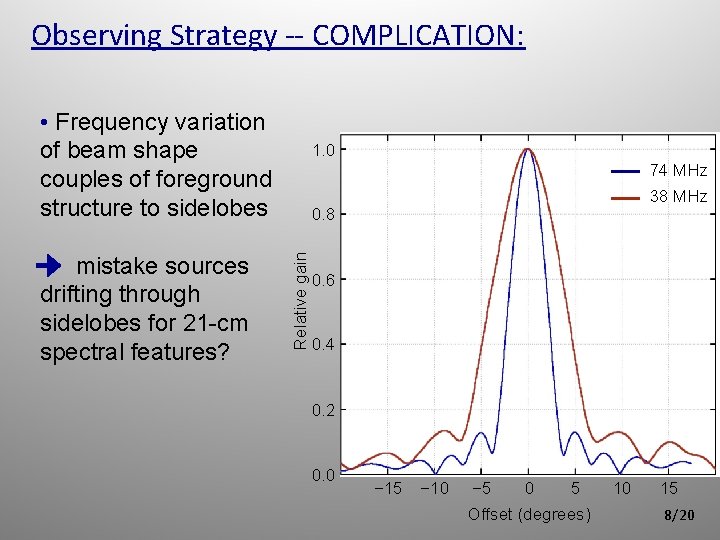
Observing Strategy -- COMPLICATION: • Frequency variation of beam shape couples of foreground structure to sidelobes 74 MHz 38 MHz 0. 8 Relative gain mistake sources drifting through sidelobes for 21 -cm spectral features? 1. 0 0. 6 0. 4 0. 2 0. 0 − 15 − 10 − 5 0 5 Offset (degrees) 10 15 8/20
Novel Beamforming Strategies: Mitigate potential foreground-frequency coupling of sidelobes: 1. Defocusing (e. g. gaussian smoothing) 2. Sidelobe steering 3. Nulling 4. Sidelobe shimmering 5. “Optimized” beam-forming (account for mutual coupling of antennas) 9/20
Work to date: • Learning the LWA Software Library! (and PYTHON in general) • Phase-and-Sum Beamforming with TBN • Raster Mapping of TBN Beam (pseudo-beams) 10/20
Phase-and-Sum Beamforming: TBN data: narrow bandwidth ( < 100 k. Hz) Commissioning scripts for TBN (J. Dowell): (follows “Fun with TBN” memo, S. Ellingson) 1. Fringe all antenna outlier stand #258 (simple. Fringe. py ) 2. Fringe stop on bright source --- Cyg A or flaring Sun back out delay coefficients (solve. Coeffs. py) 3. Use array geometry to point beam (form. Beam. py) 11/20
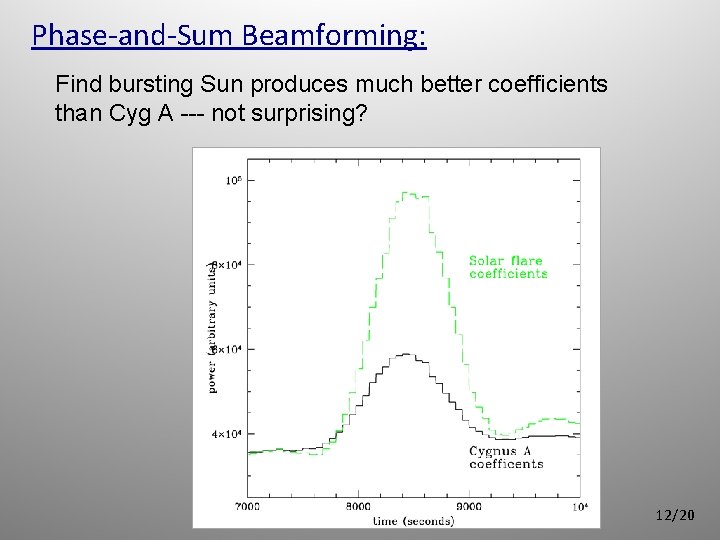
Phase-and-Sum Beamforming: Find bursting Sun produces much better coefficients than Cyg A --- not surprising? 12/20
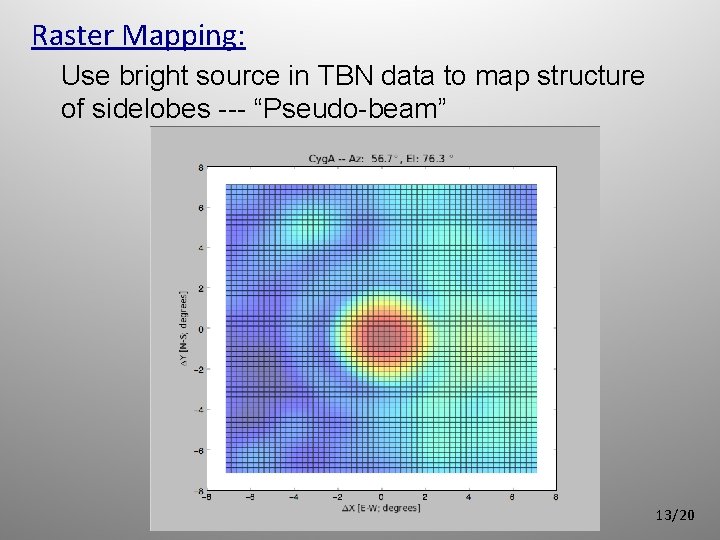
Raster Mapping: Use bright source in TBN data to map structure of sidelobes --- “Pseudo-beam” 13/20
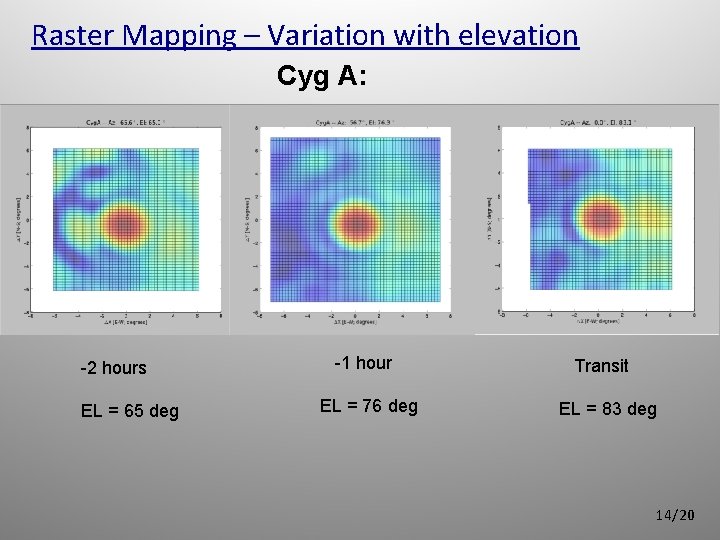
Raster Mapping – Variation with elevation Cyg A: -2 hours EL = 65 deg -1 hour EL = 76 deg Transit EL = 83 deg 14/20
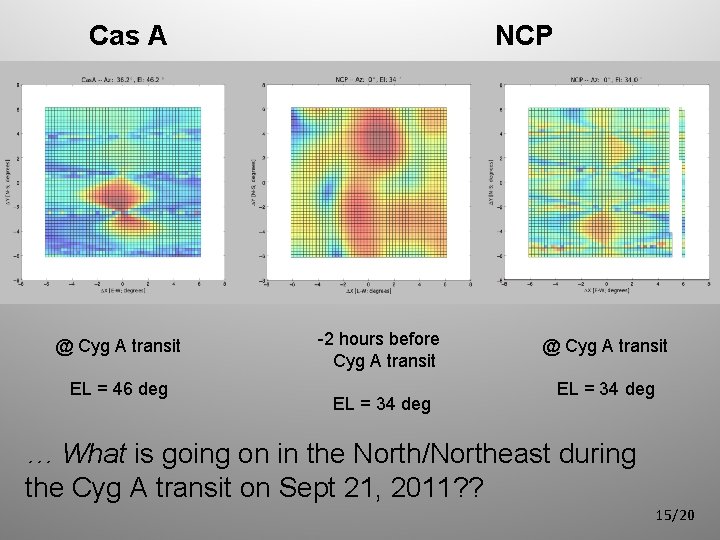
Cas A @ Cyg A transit EL = 46 deg NCP -2 hours before Cyg A transit EL = 34 deg @ Cyg A transit EL = 34 deg … What is going on in the North/Northeast during the Cyg A transit on Sept 21, 2011? ? 15/20
PASI started recording Sept 23, 2011: http: //www. phys. unm. edu/~lwa/lwatv/55827. mov 16
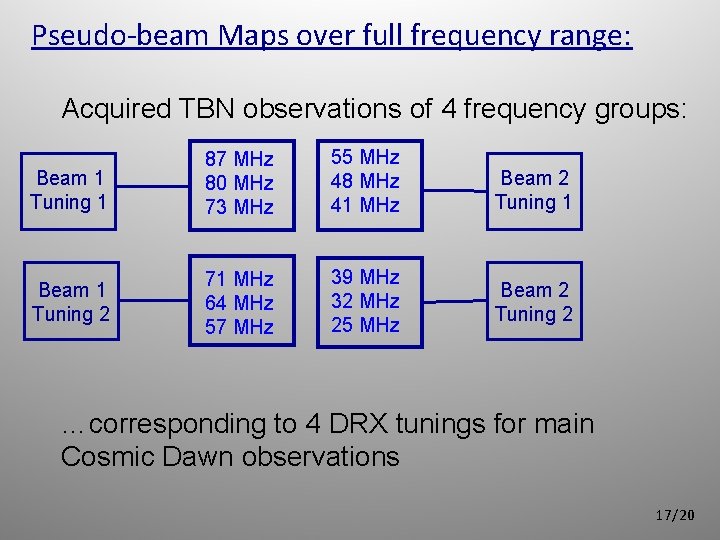
Pseudo-beam Maps over full frequency range: Acquired TBN observations of 4 frequency groups: Beam 1 Tuning 1 87 MHz 80 MHz 73 MHz 55 MHz 48 MHz 41 MHz Beam 2 Tuning 1 Beam 1 Tuning 2 71 MHz 64 MHz 57 MHz 39 MHz 32 MHz 25 MHz Beam 2 Tuning 2 …corresponding to 4 DRX tunings for main Cosmic Dawn observations 17/20
Test our Beamforming Strategies: Which is the “quickest and dirtiest”? 1. Defocusing (e. g. gaussian smoothing) 2. Sidelobe steering 3. Nulling 4. Sidelobe shimmering 5. “Optimized” beam-forming (account for mutual coupling of antennas) 18/17
Test our Beamforming Strategies: Which is the “quickest and dirtiest”? 1. Defocusing (e. g. gaussian smoothing) 2. Sidelobe steering 3. Nulling 4. Sidelobe shimmering 5. “Optimized” beam-forming (account for mutual coupling of antennas) 19/17
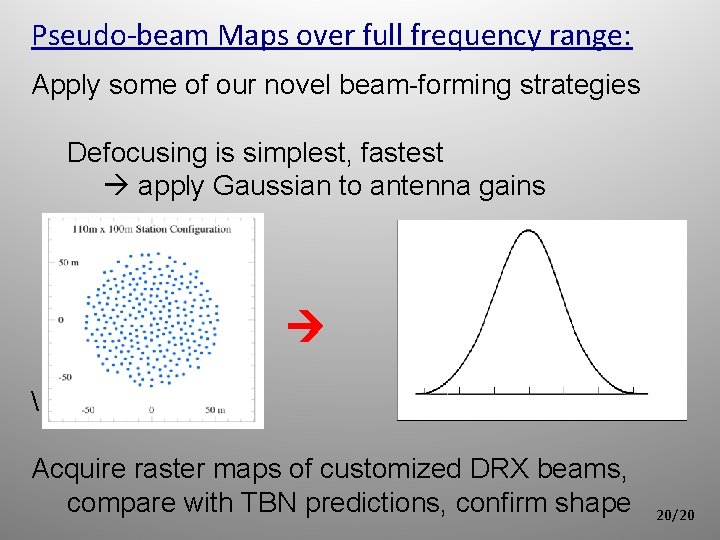
Pseudo-beam Maps over full frequency range: Apply some of our novel beam-forming strategies Defocusing is simplest, fastest apply Gaussian to antenna gains Acquire raster maps of customized DRX beams, compare with TBN predictions, confirm shape 20/20
LWA-OCD Project Outputs: Beamforming: Detailed measurements of beam Strategies for custom beamforming Deep integrations: Very high S/N spectra of bright calibrators Very high S/N spectra of diffuse Galaxy (including high-level H recombination lines) • Serendipitous radio transients Lots of opportunity for RFI mitigation! Detection/contraints on First Light absorption trough. END 21/20
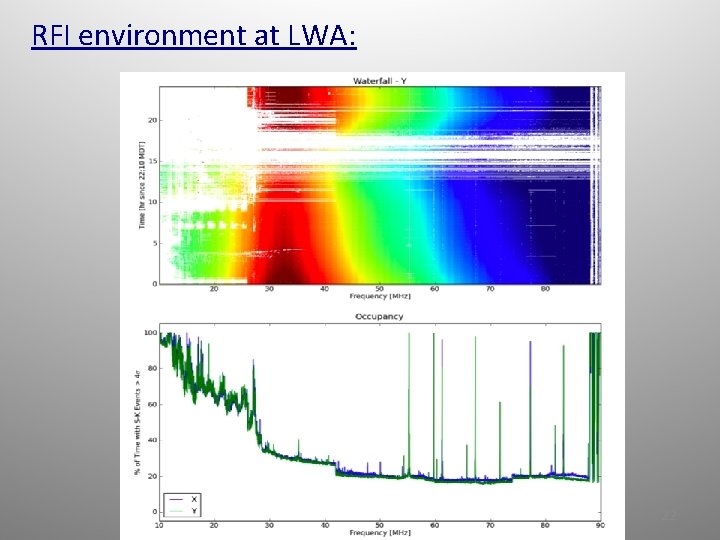
RFI environment at LWA: 22
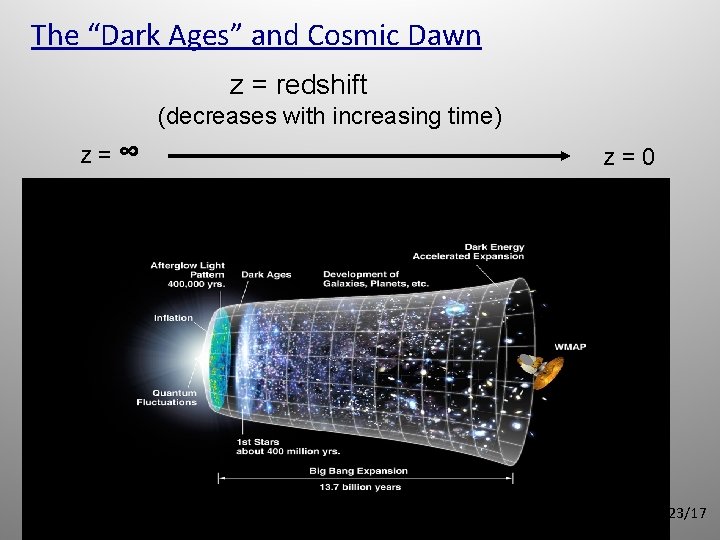
The “Dark Ages” and Cosmic Dawn z = redshift (decreases with increasing time) z =∞ z=0 23/17
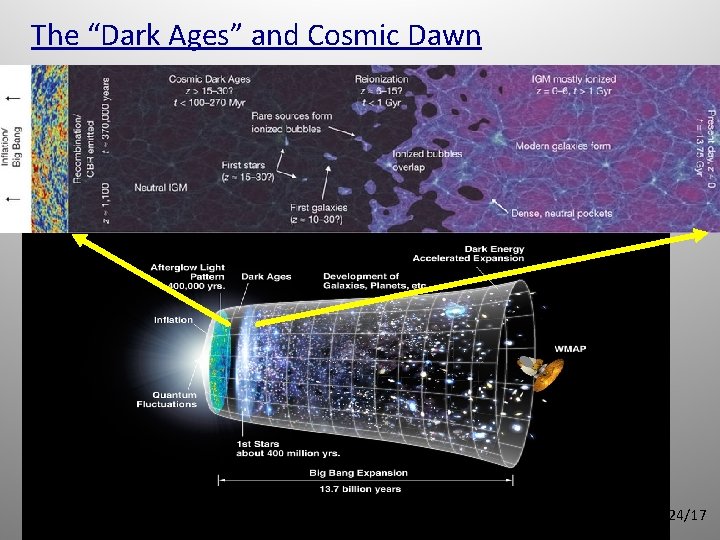
The “Dark Ages” and Cosmic Dawn 24/17
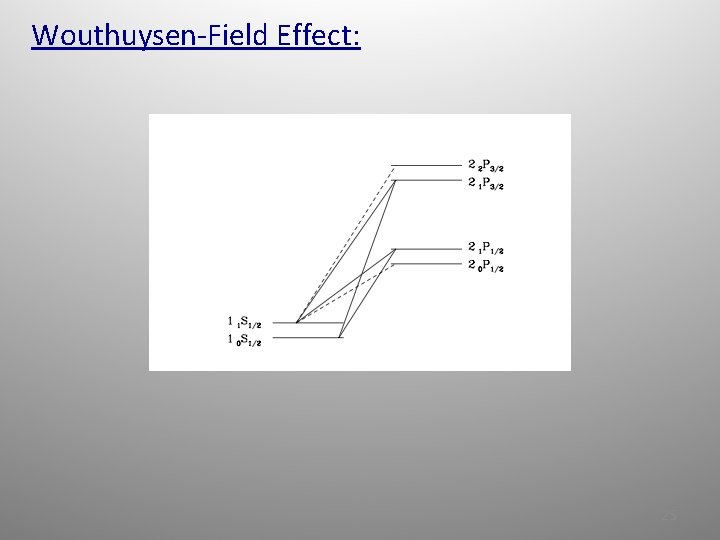
Wouthuysen-Field Effect: 25
Phase-and-sum Beamforming: • Use bright source to back out coefficients • Only works for narrow (< 10 KHz bandwidth) insensitive to 2 p offsets Delay-and-sum Beamforming: • Do phase-and-sum over full LWA frequency range • Solve for true delays for each antenna 26/17
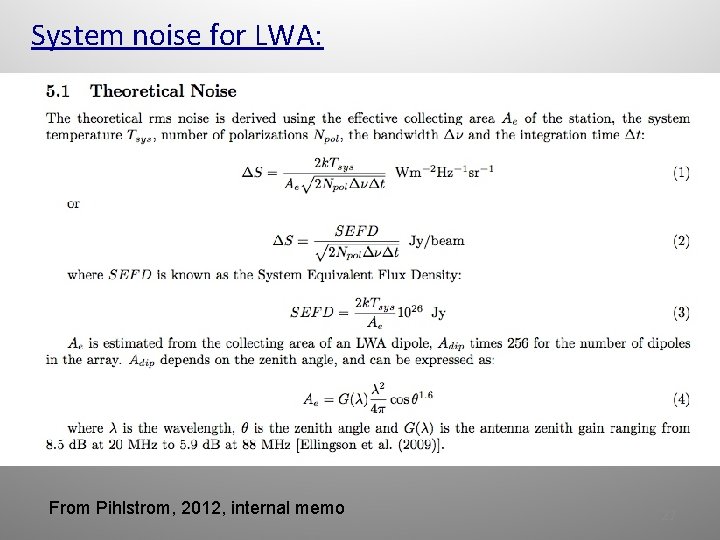
System noise for LWA: From Pihlstrom, 2012, internal memo 27

Acronyms: 28
- Slides: 28