
Observations of Vortex Dynamics on Jupiter and What
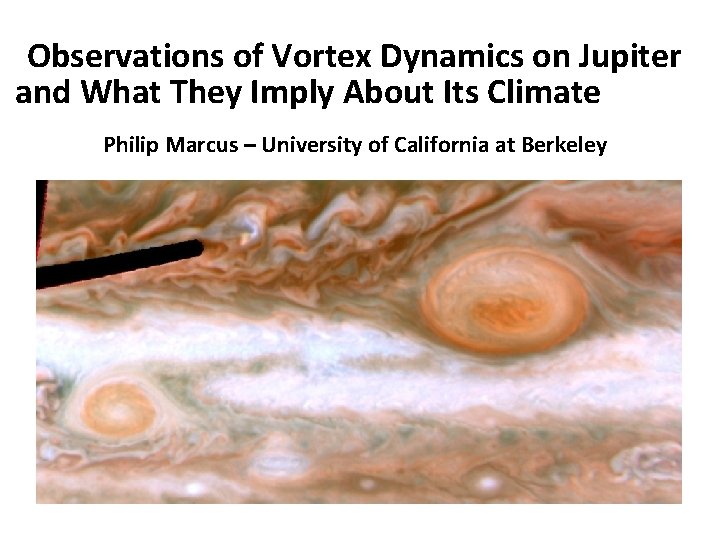
Observations of Vortex Dynamics on Jupiter and What They Imply About Its Climate Philip Marcus – University of California at Berkeley
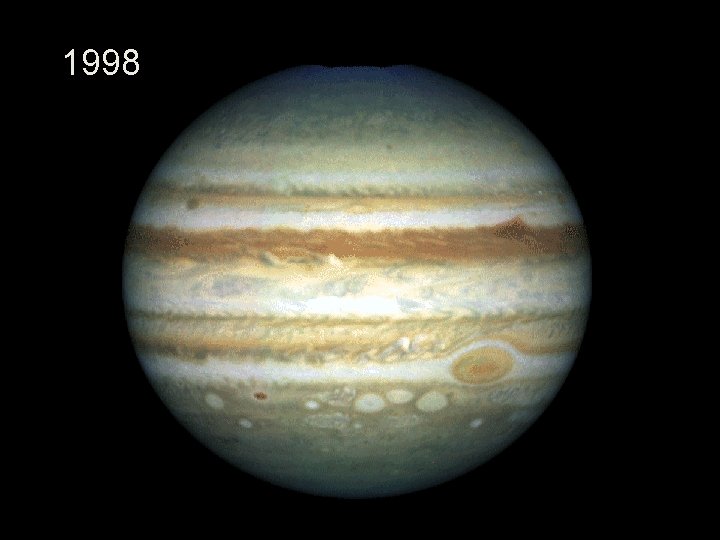
1998
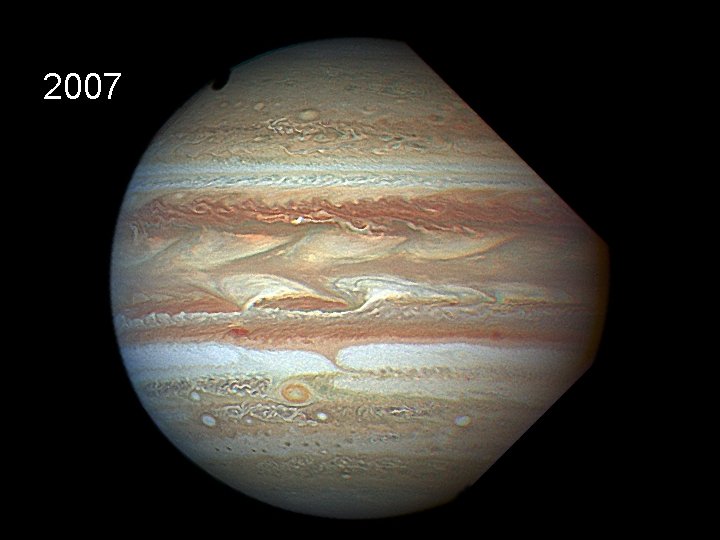
2007
Climate Change on Jupiter? • Starting in 2001 we began publishing claims that Jupiter would have a significant climate change • Predicted first observable consequences would be seen in 2006 • Temperature changes of 10 o or more
A Change From What? • Our general picture of Jupiter is from the era of the Voyager fly-bys in the late 1970’s • In agreement with ground-based telescope photographs • Hints of change from Galileo and Hubble observations
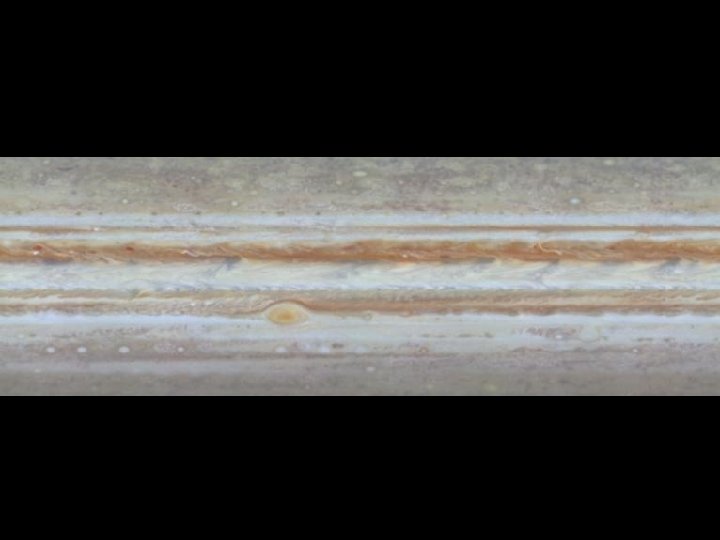
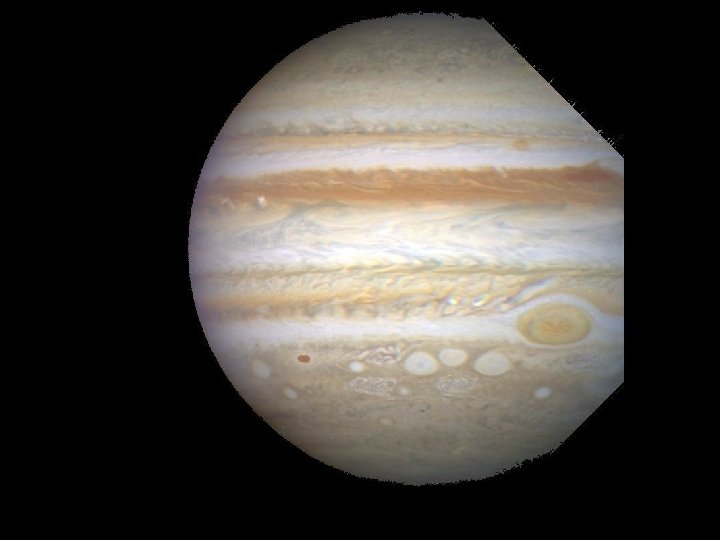
Jet Streams, Vortices & Turbulence • 12 Eastward-going and 12 Westward-going jet streams ~50 -100 m/sec • Long-lived vortices – Red Spot, 3 White Ovals – 90% are Anti-Cyclones • Turbulence is ~2 m/sec
Remote Sensing • Are Long-Lived Clouds Vortices? • If so, are the cyclones or anticyclones? • Can there be long-lived vortices that are not associated with clouds?
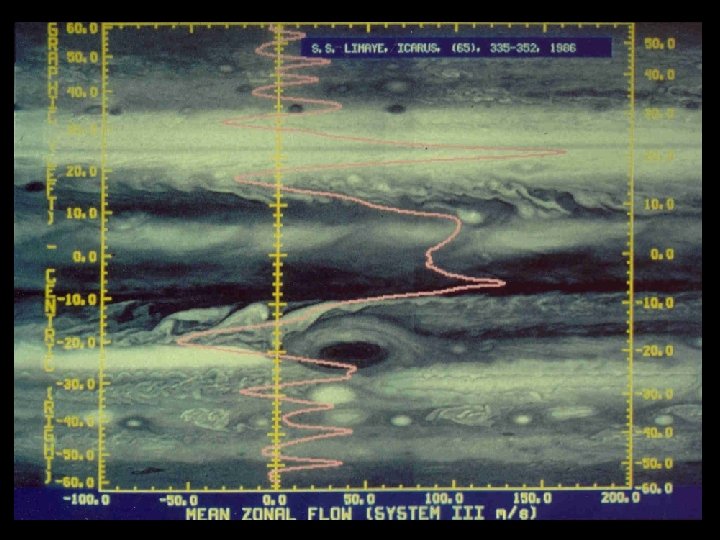
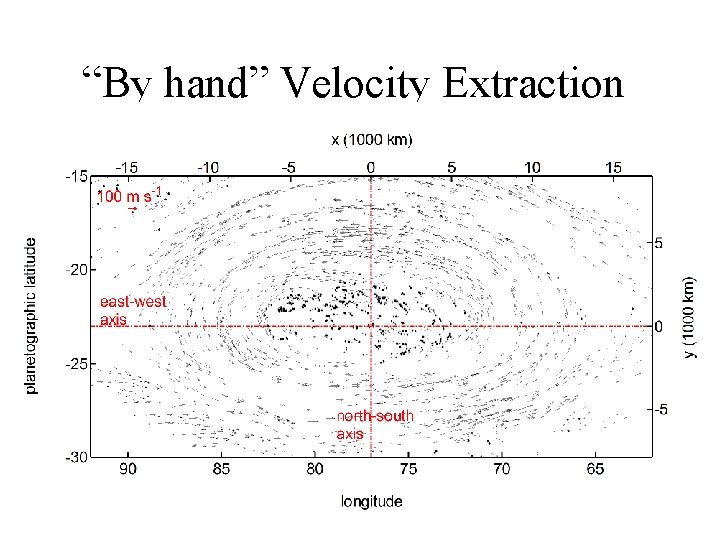
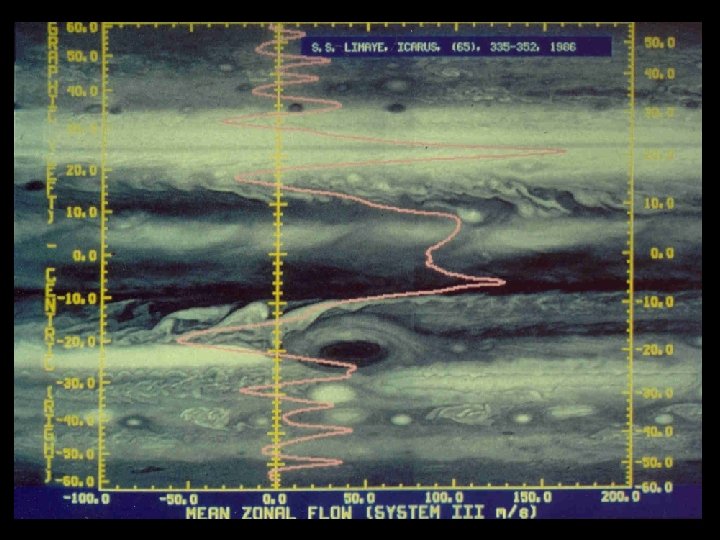
“By hand” Velocity Extraction
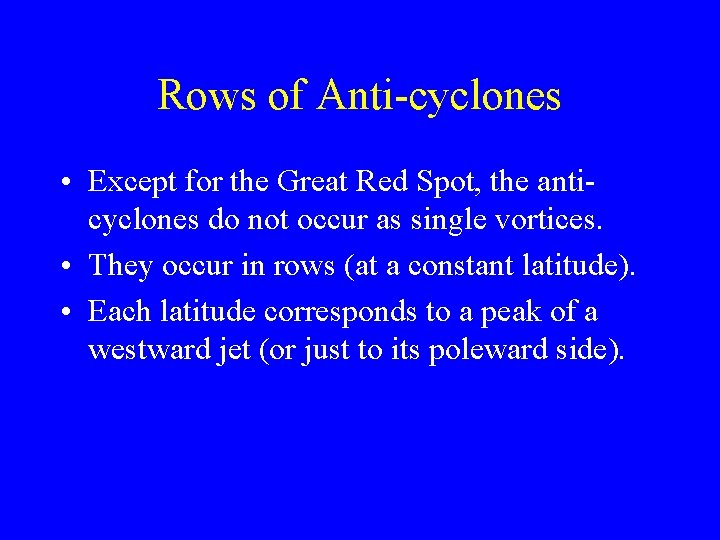
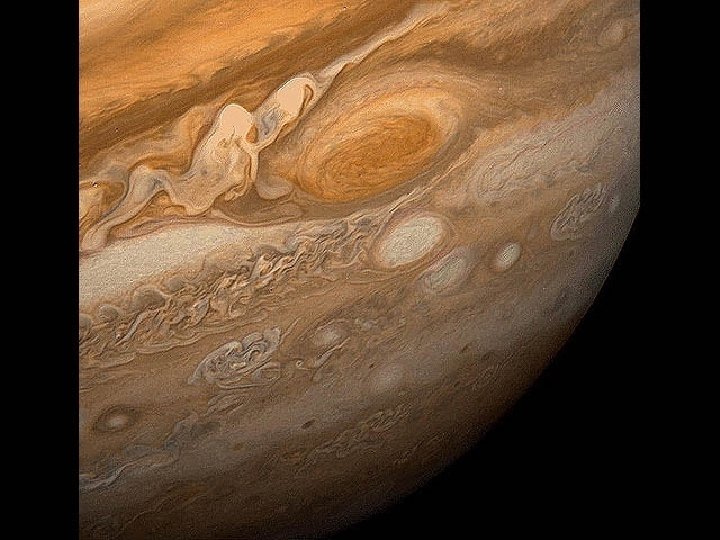
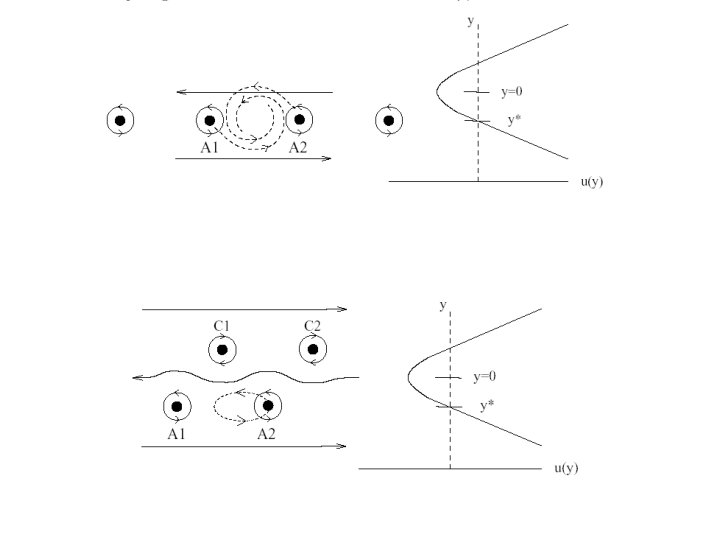
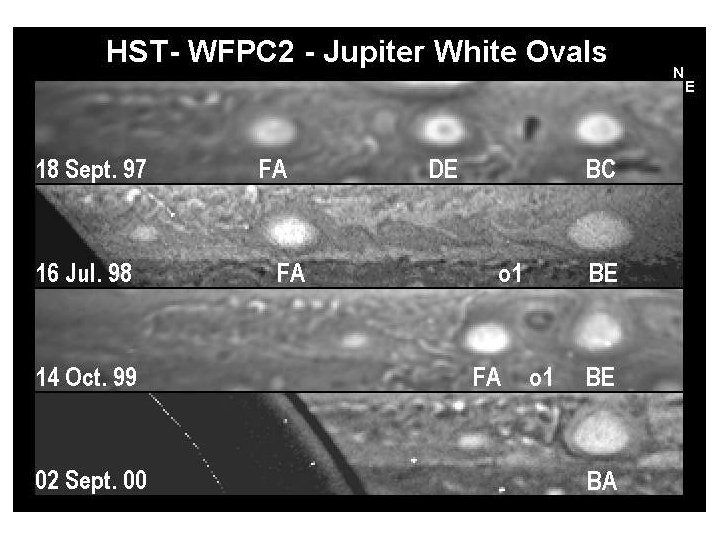
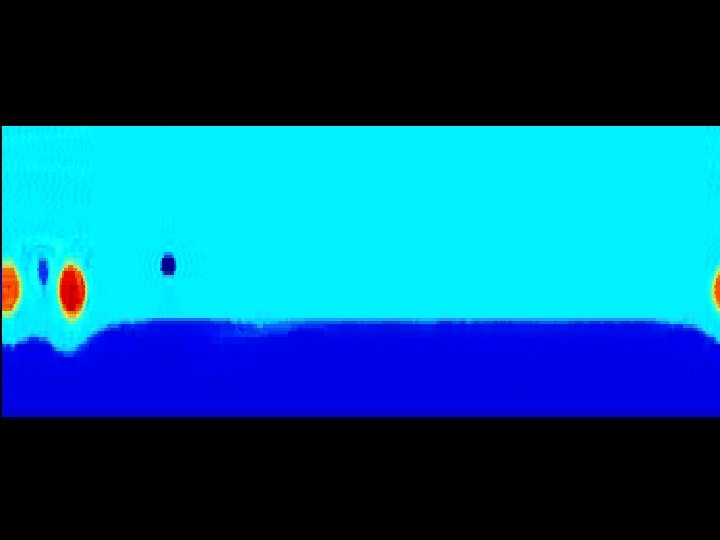
Rows of Anti-cyclones • Except for the Great Red Spot, the anticyclones do not occur as single vortices. • They occur in rows (at a constant latitude). • Each latitude corresponds to a peak of a westward jet (or just to its poleward side).

Quasi-geostrophic Stream function Potential vorticity q ≡ ∇2 - /Lr 2 + β y + bottom(y)/Lr 2 Vorticity = ∇2 Rossby deformation radius Lr ≡ (N/f) H (2000 km) Vertical pressure scale height H (30 km) D q /D t =0
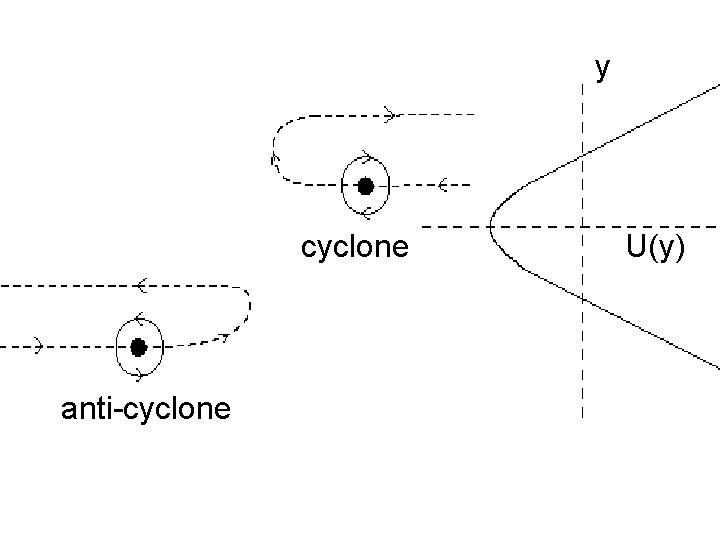
y cyclone anti-cyclone U(y)
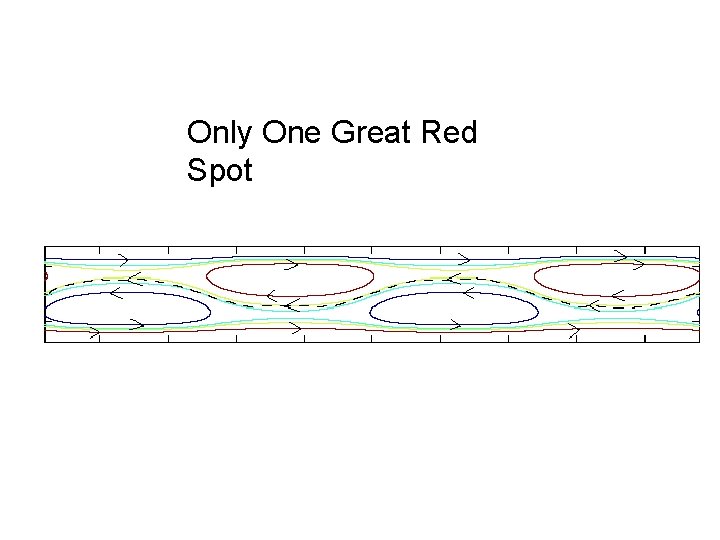
Only One Great Red Spot
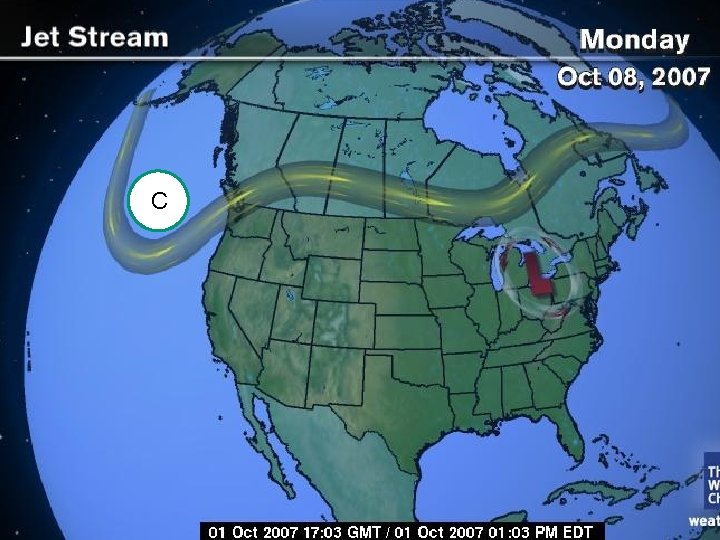
C
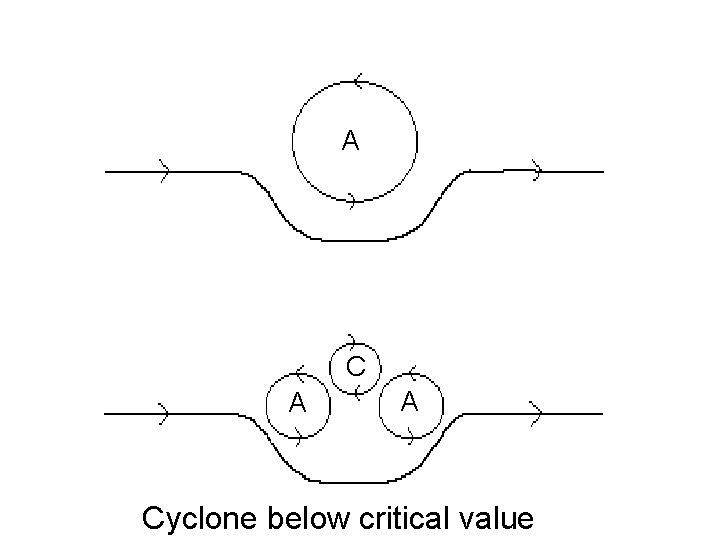
A C C A A Cyclone below critical value
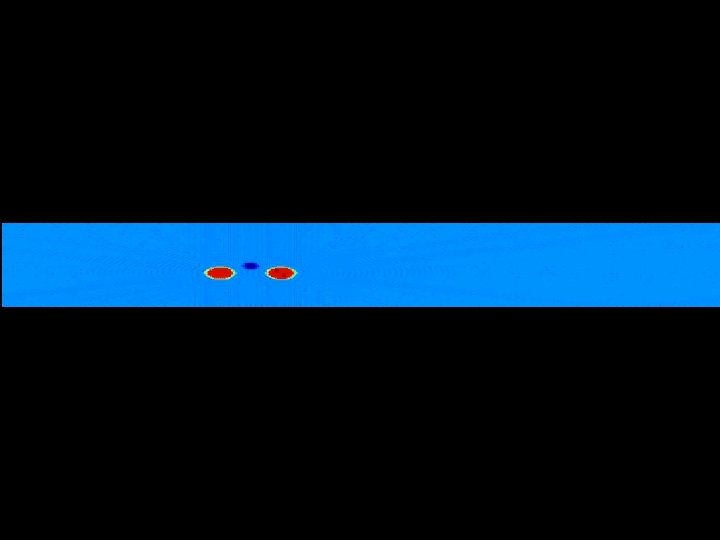
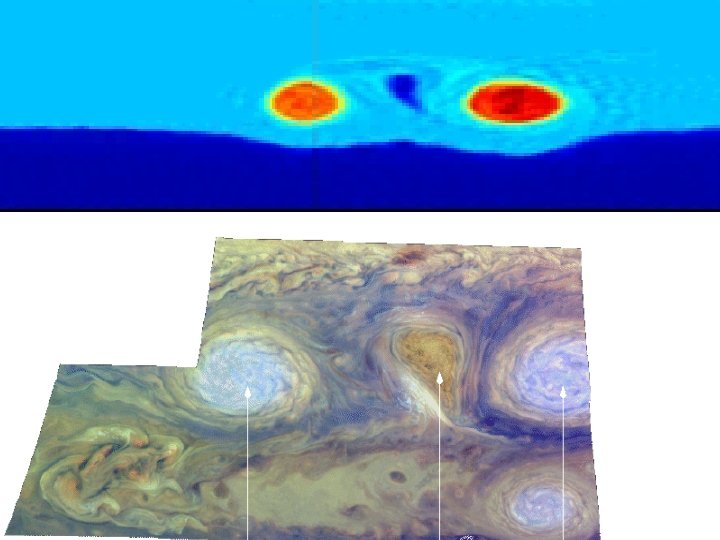
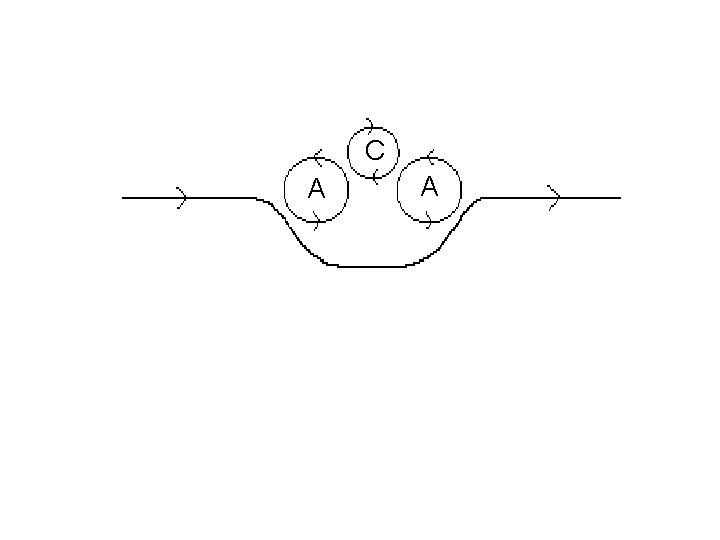
C A A
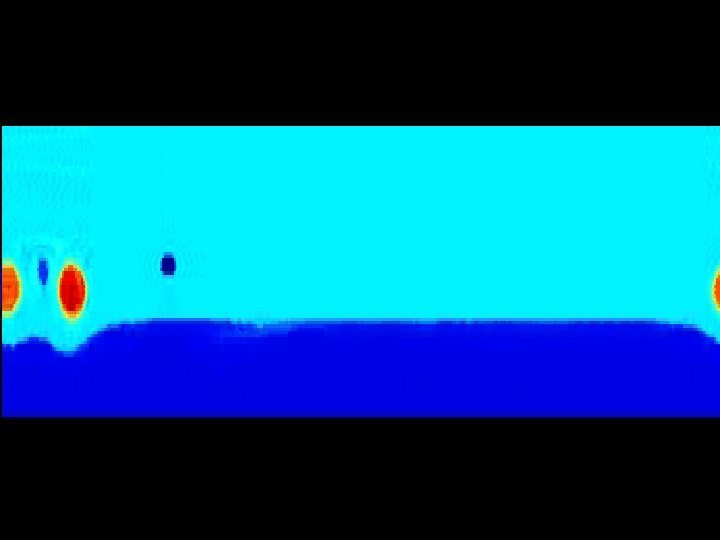
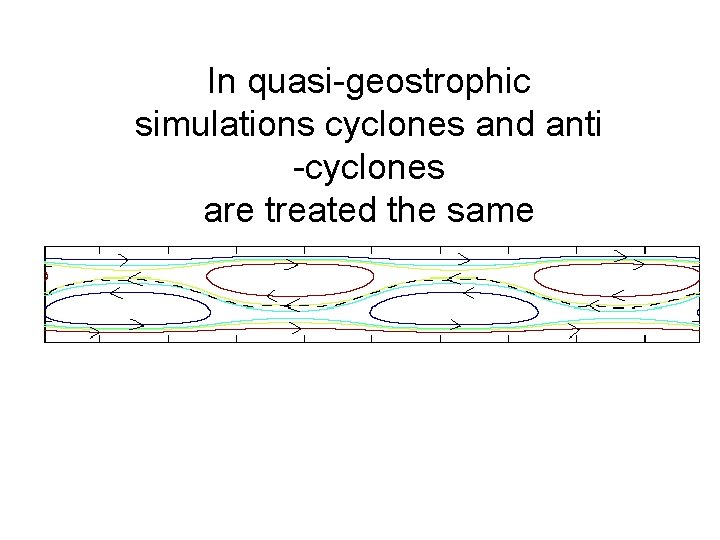
In quasi-geostrophic simulations cyclones and anti -cyclones are treated the same
The Case for Cyclones • Dynamically necessary to prevent anticyclones from merging • Dynamically necessary to change drift directions of the anti-cyclones • Allowed by the equations of motion (3 D, 2 D-shallow-water, 2 D-quasi-geostrophic)
Streamlines are not particle pathlines • Clouds are NH 3 ice crystals • Created with cooling, destroyed with warming • Due to 3 D secondary flow: – Anti-cyclonic regions have upwelling – Cyclonic regions have down-welling • In a sub-adiabatic atmosphere upwelling cools the flow
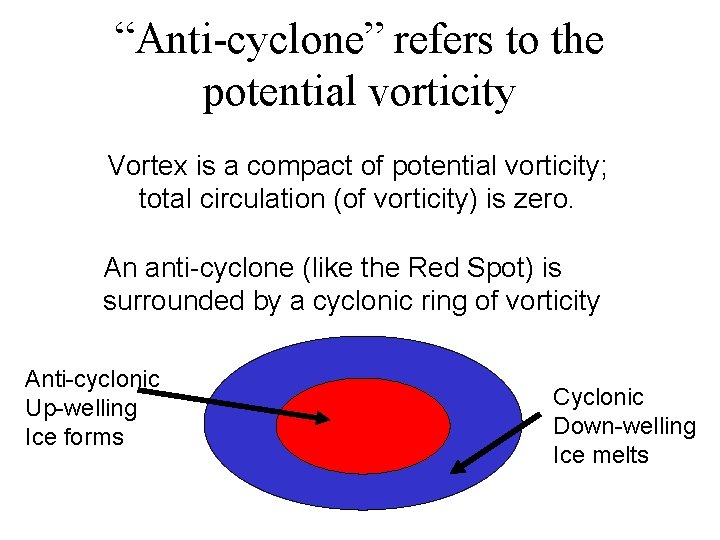
“Anti-cyclone” refers to the potential vorticity Vortex is a compact of potential vorticity; total circulation (of vorticity) is zero. An anti-cyclone (like the Red Spot) is surrounded by a cyclonic ring of vorticity Anti-cyclonic Up-welling Ice forms Cyclonic Down-welling Ice melts
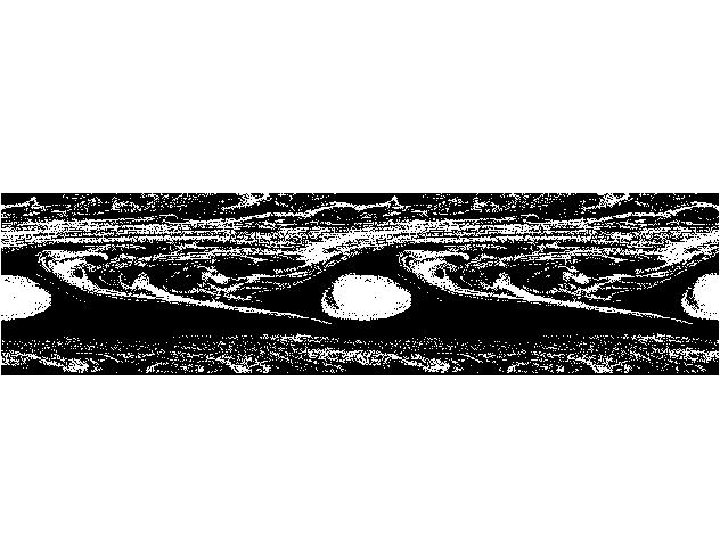
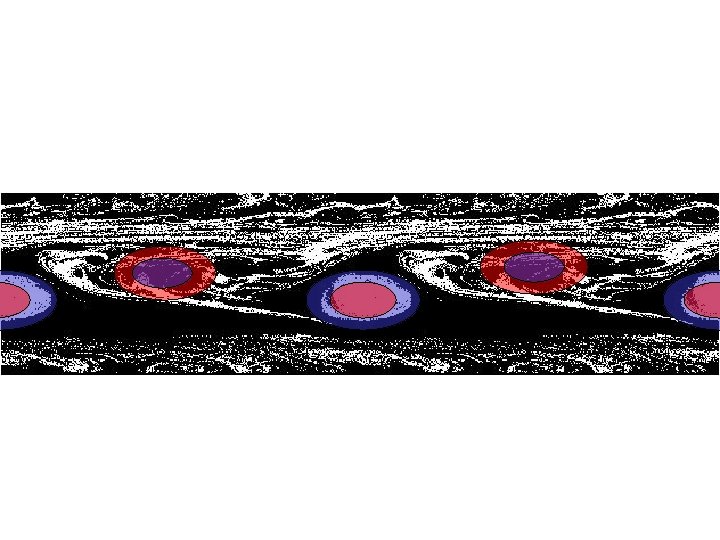
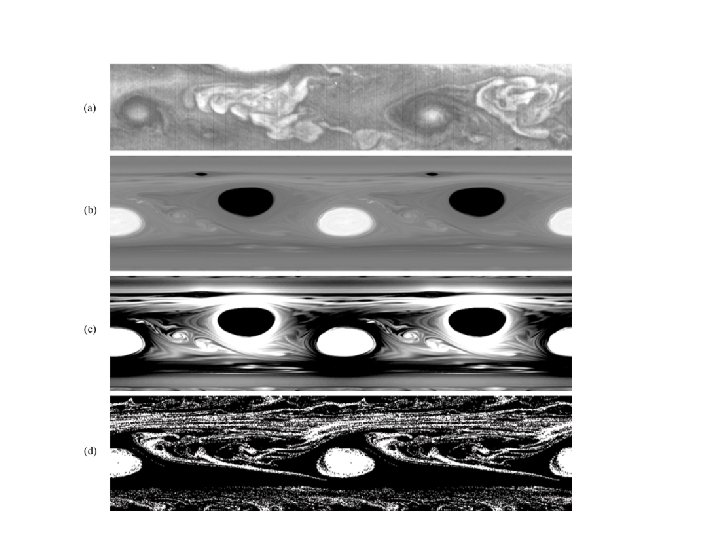
Need for Heat Transport • Voyager (1979) used several instruments to look at multiple wavelengths to measure temperature at the cloud tops. • Surprise! The temp. was isothermal in longitude § 4 K. least half of the heat deposited from the Sun is captured and absorbed in the cloud layer
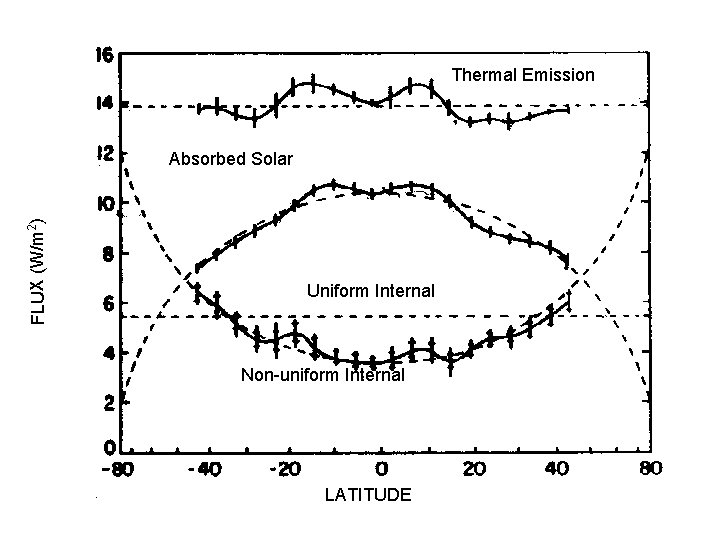
Thermal Emission FLUX (W/m 2) Absorbed Solar Uniform Internal Non-uniform Internal LATITUDE
Need for Heat Transport • Modeling the top of the convective zone with a perfect conductor – still leaves a pole -equator heat differential of 30 K • Including the mixing of heat with the meriodional velocity of the vortex street did not significantly decrease the pole-equator heat differential
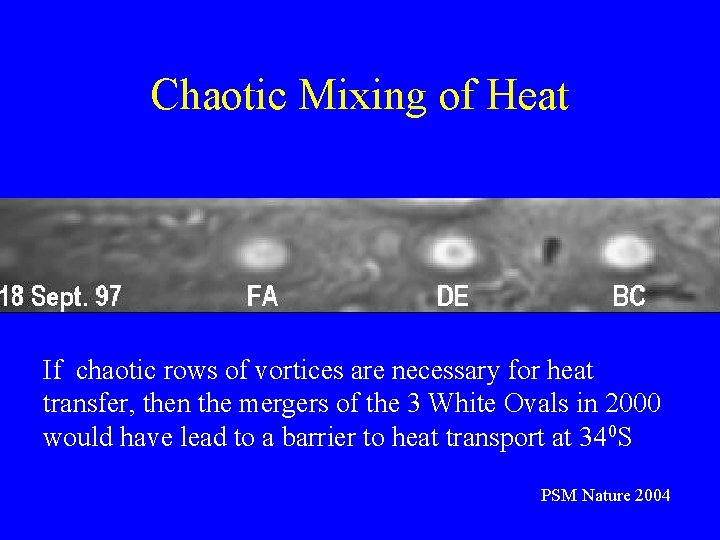
Chaotic Mixing of Heat If chaotic rows of vortices are necessary for heat transfer, then the mergers of the 3 White Ovals in 2000 would have lead to a barrier to heat transport at 340 S PSM Nature 2004
No Thermometers on Jupiter • No space or ground-based telescope since Voyager can measure cloud top temperature • Limited observations coupled with models would work if there were no clouds. • Need to infer temperature changes • But first, let’s revisit the measurements of velocities
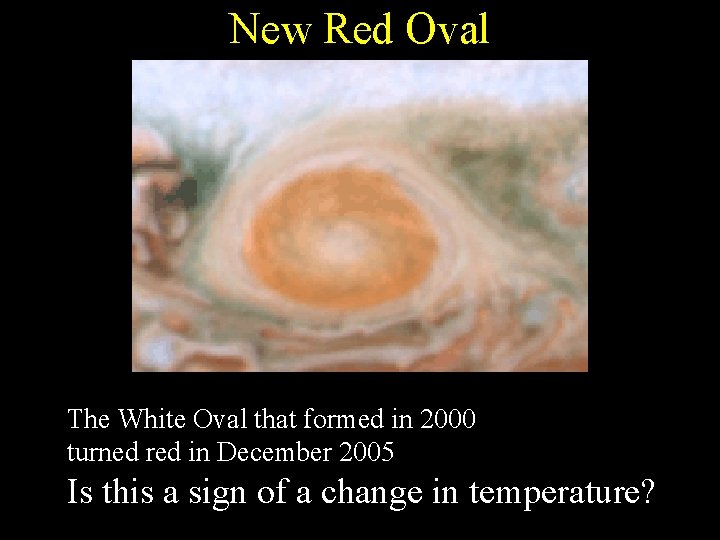
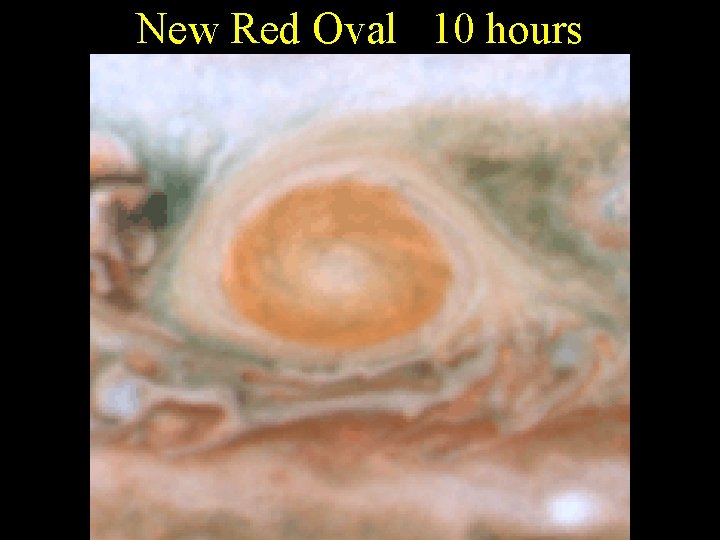
New Red Oval The White Oval that formed in 2000 turned red in December 2005 Is this a sign of a change in temperature?
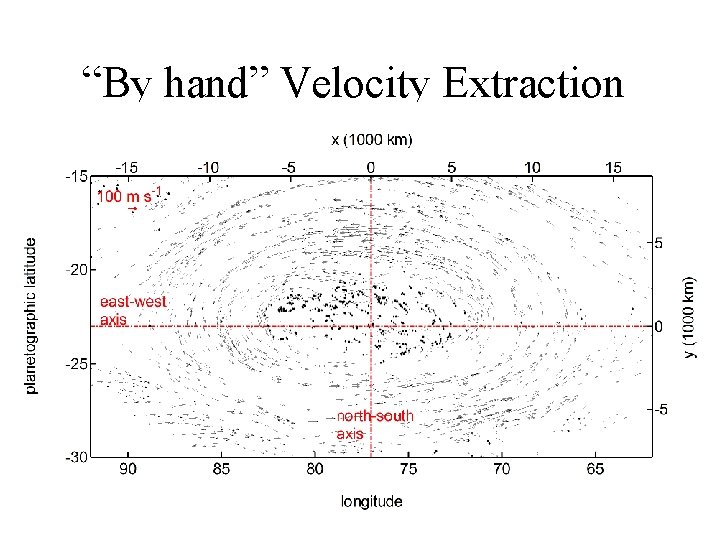
“By hand” Velocity Extraction
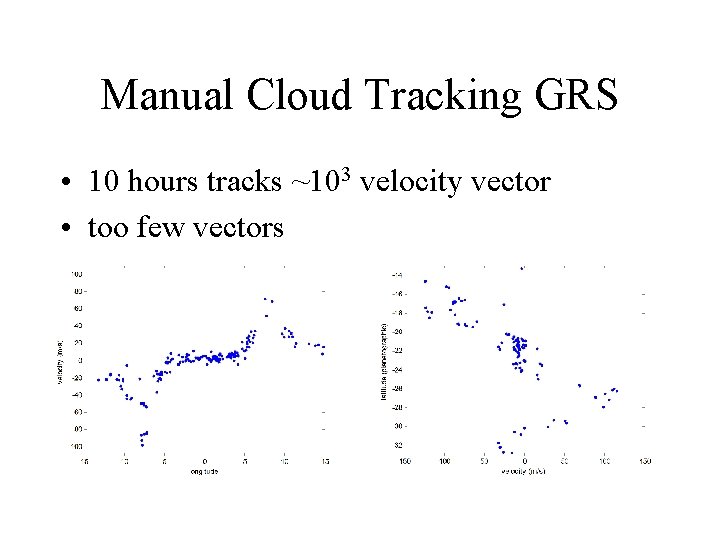
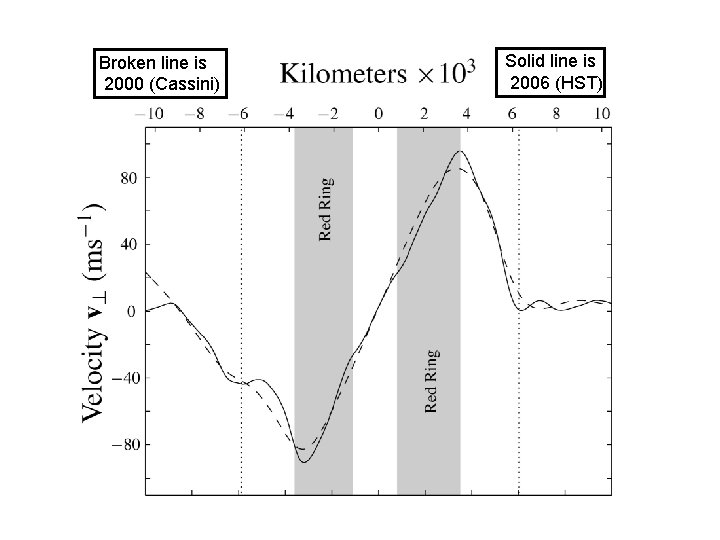
Manual Cloud Tracking GRS • 10 hours tracks ~103 velocity vector • too few vectors • Uncertainty ~10 m/s
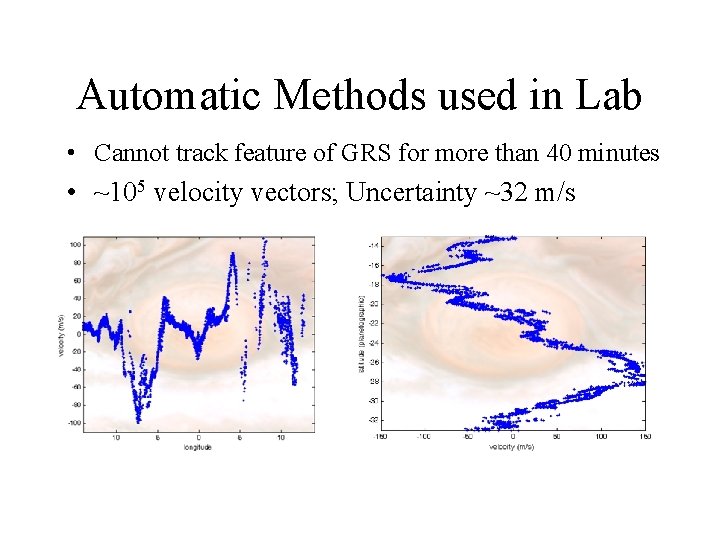
Automatic Methods used in Lab • Cannot track feature of GRS for more than 40 minutes • ~105 velocity vectors; Uncertainty ~32 m/s
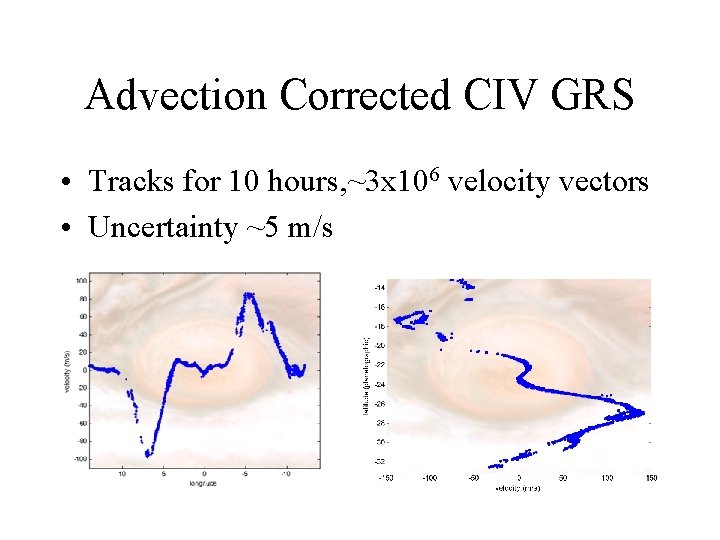
Advection Corrected CIV GRS • Tracks for 10 hours, ~3 x 10⁶ velocity vectors • Uncertainty ~5 m/s
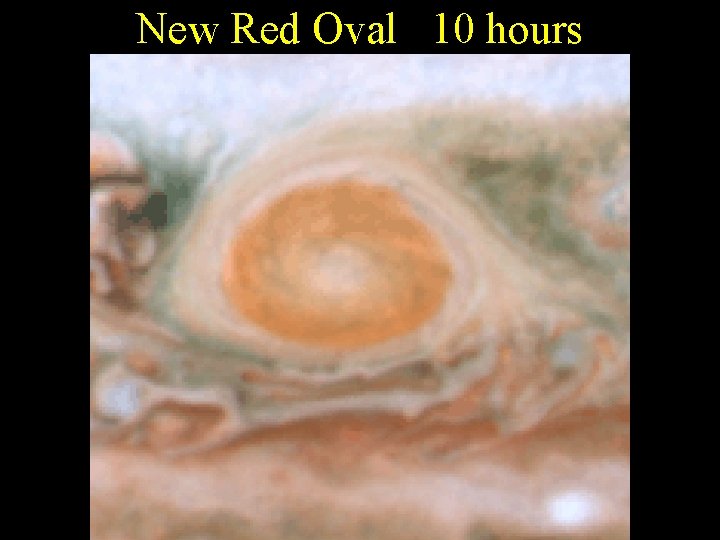
New Red Oval 10 hours
New Red Oval 10 hours
Broken line is 2000 (Cassini) Solid line is 2006 (HST)
2 D Projection At One Elevation • This 2 d slice has not changed, but is that enough to argue that the 3 d shape, size and velocity are also unchanged? • In general, no! • For Jupiter, yes! Due to its strong vertical stratification and rapid rotation
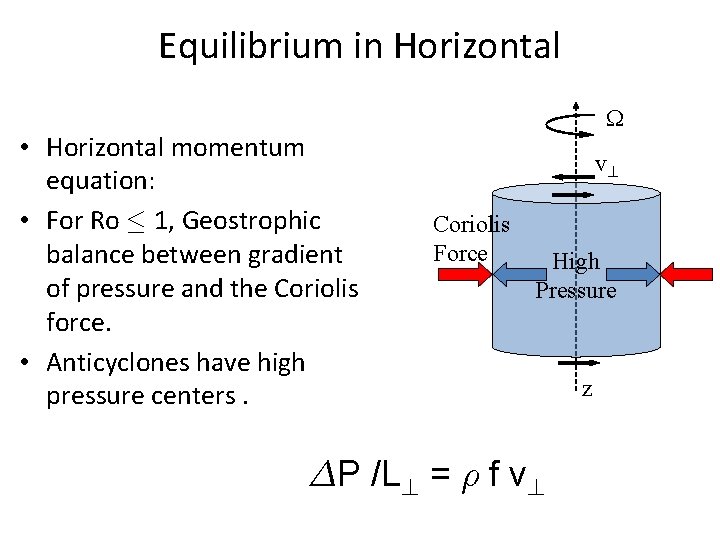
Equilibrium in Horizontal • Horizontal momentum equation: • For Ro · 1, Geostrophic balance between gradient of pressure and the Coriolis force. • Anticyclones have high pressure centers. v? Coriolis Force High Pressure ¢P /L? = ½ f v? z
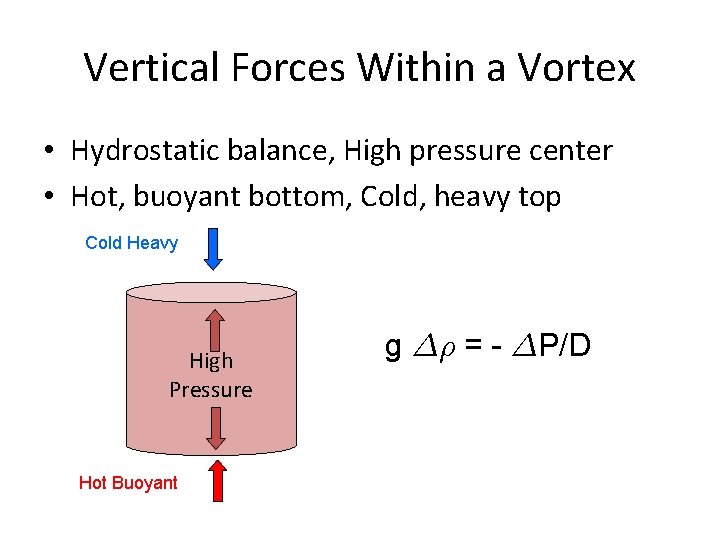
Vertical Forces Within a Vortex • Hydrostatic balance, High pressure center • Hot, buoyant bottom, Cold, heavy top Cold Heavy High Pressure Hot Buoyant g ¢½ = - ¢P/D
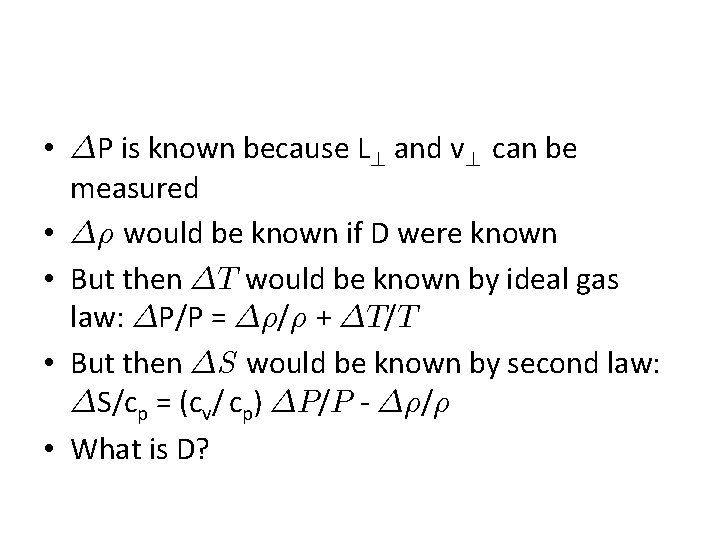
• ¢P is known because L? and v? can be measured • ¢½ would be known if D were known • But then ¢T would be known by ideal gas law: ¢P/P = ¢½/½ + ¢T/T • But then ¢S would be known by second law: ¢S/cp = (cv/ cp) ¢P/P - ¢½/½ • What is D?
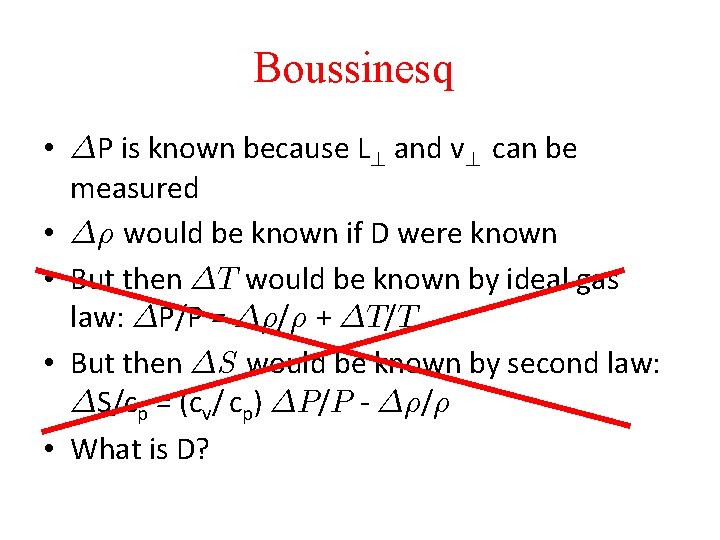
Boussinesq • ¢P is known because L? and v? can be measured • ¢½ would be known if D were known • But then ¢T would be known by ideal gas law: ¢P/P = ¢½/½ + ¢T/T • But then ¢S would be known by second law: ¢S/cp = (cv/ cp) ¢P/P - ¢½/½ • What is D?
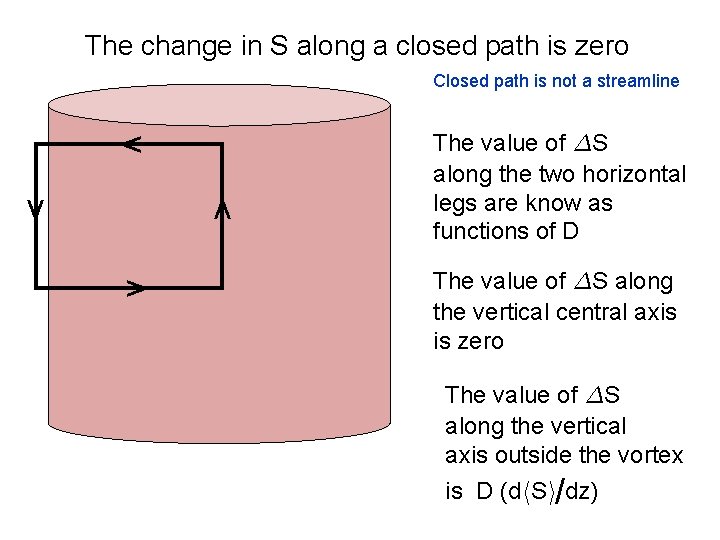
The change in S along a closed path is zero Closed path is not a streamline v v The value of ¢S along the two horizontal legs are know as functions of D The value of ¢S along the vertical central axis is zero The value of ¢S along the vertical axis outside the vortex is D (dh. Si/dz)

The change in S along a closed path is zero v v Closed path is not a streamline The value of ¢½ along the two horizontal legs are know as functions of D The value of ¢½ along the vertical central axis is zero The value of ¢½ along the vertical axis outside the vortex is D (dh½i/ dz)

Boussinesq • ¢P = ½f L? v? (geostrophic) • ¢½ = -¢P /(g. D) = -½f L? v? /(g. D) (hydrostatic) • 0= ½ (N 2 /g) D - ½f L? v? /(g. D) + 0 • D /L? = (N/f) Ro 1/2 + 0
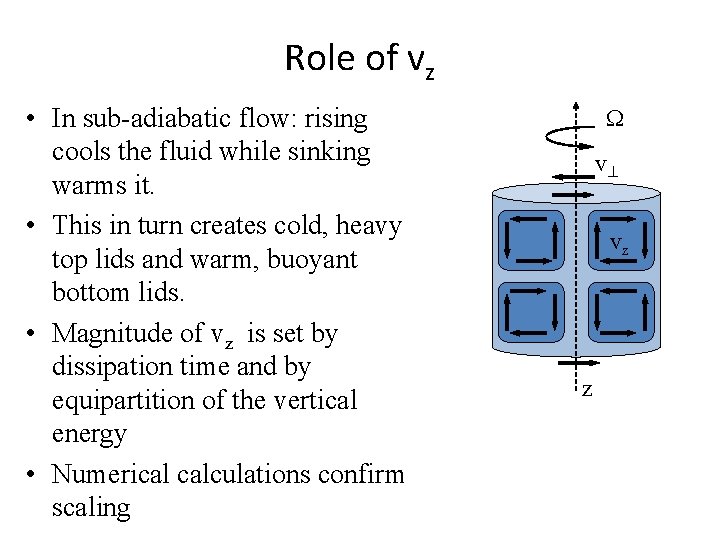
Role of vz • In sub-adiabatic flow: rising cools the fluid while sinking warms it. • This in turn creates cold, heavy top lids and warm, buoyant bottom lids. • Magnitude of vz is set by dissipation time and by equipartition of the vertical energy • Numerical calculations confirm scaling v? vz z
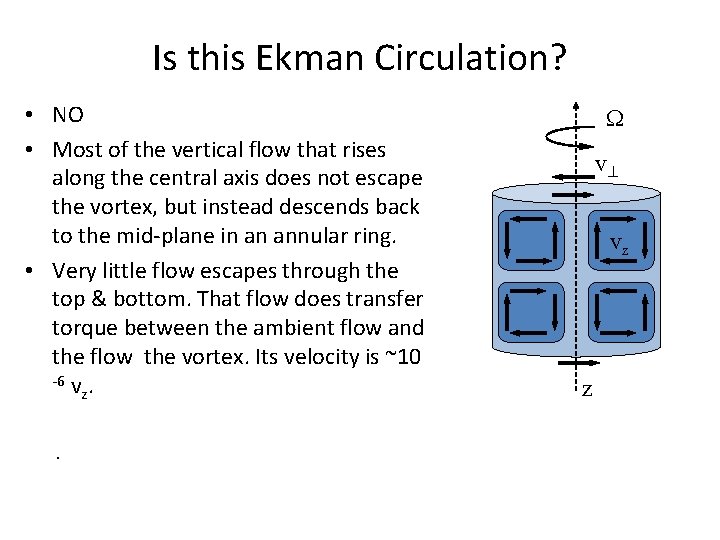
Is this Ekman Circulation? • NO • Most of the vertical flow that rises along the central axis does not escape the vortex, but instead descends back to the mid-plane in an annular ring. • Very little flow escapes through the top & bottom. That flow does transfer torque between the ambient flow and the flow the vortex. Its velocity is ~10 -6 v. z. v? vz z
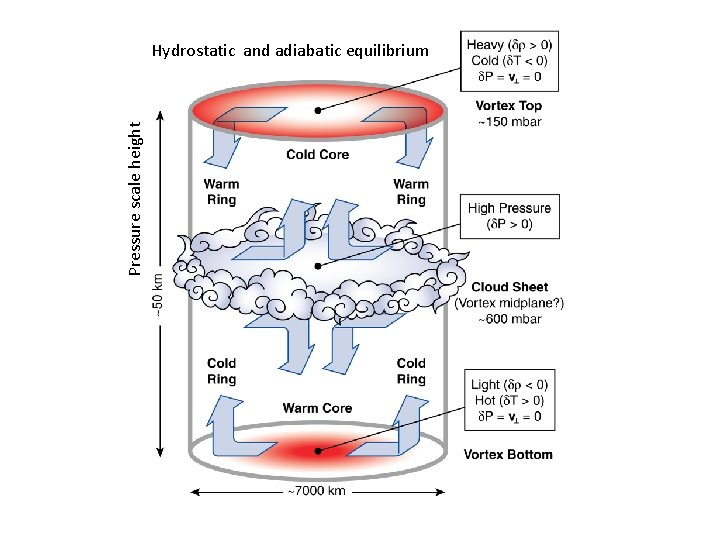
Pressure scale height Hydrostatic and adiabatic equilibrium
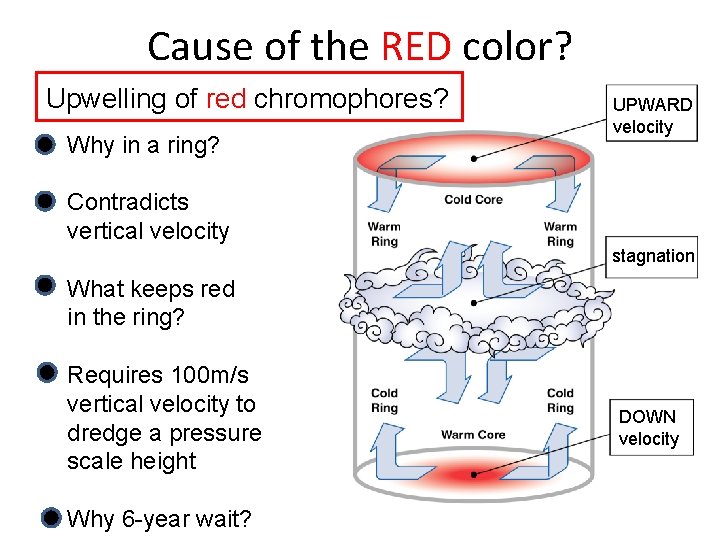
Cause of the RED color? Upwelling of red chromophores? Why in a ring? UPWARD velocity Contradicts vertical velocity stagnation What keeps red in the ring? Requires 100 m/s vertical velocity to dredge a pressure scale height Why 6 -year wait? DOWN velocity
Cloud Layer is Like a Cloud Chamber Bob West • Solid chromophore particulates ices with ammonia ice mantles • Temperature/pressure at their critical values for sublimation/mantling • Red chromophores present everywhere but hidden • Previous subtle hue changes due to small temperature changes
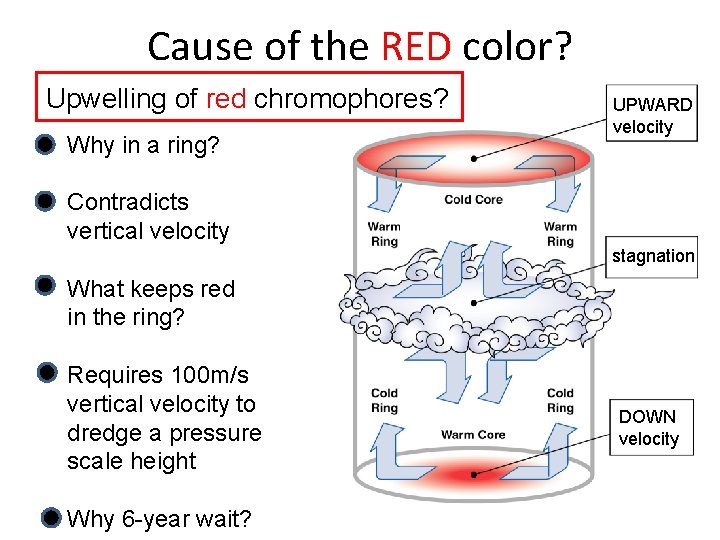
Cause of the RED color? Upwelling of red chromophores? Why in a ring? UPWARD velocity Contradicts vertical velocity stagnation What keeps red in the ring? Requires 100 m/s vertical velocity to dredge a pressure scale height Why 6 -year wait? DOWN velocity
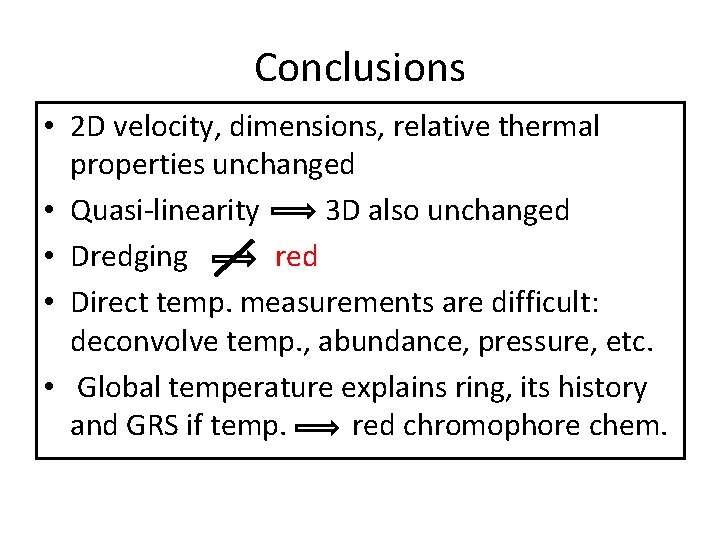
Conclusions • 2 D velocity, dimensions, relative thermal properties unchanged • Quasi-linearity 3 D also unchanged • Dredging red • Direct temp. measurements are difficult: deconvolve temp. , abundance, pressure, etc. • Global temperature explains ring, its history and GRS if temp. red chromophore chem.
- Slides: 65