
OBSERVATIONS Content The importance of observation taking A

OBSERVATIONS
Content • The importance of observation taking • A & B: Respiration, Pulse oximetry • C: pulse, BP ranges & MAP, Pulse pressure, CRT, shock • D: Temperature, Pain Scores
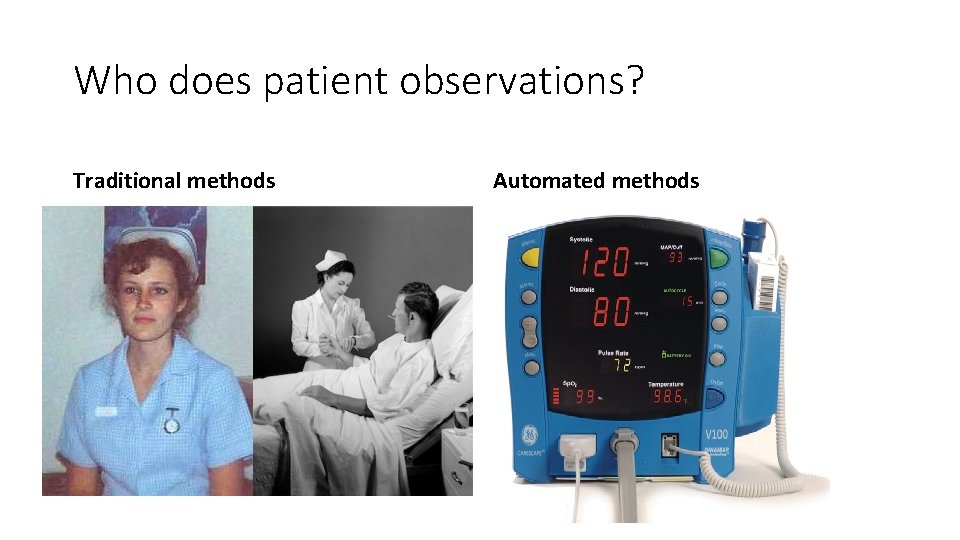
Who does patient observations? Traditional methods Automated methods
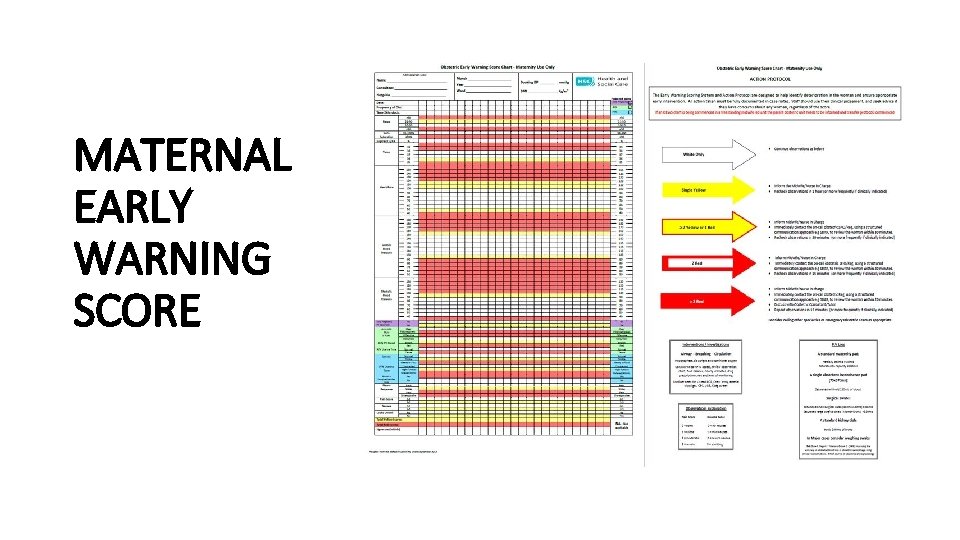
MATERNAL EARLY WARNING SCORE
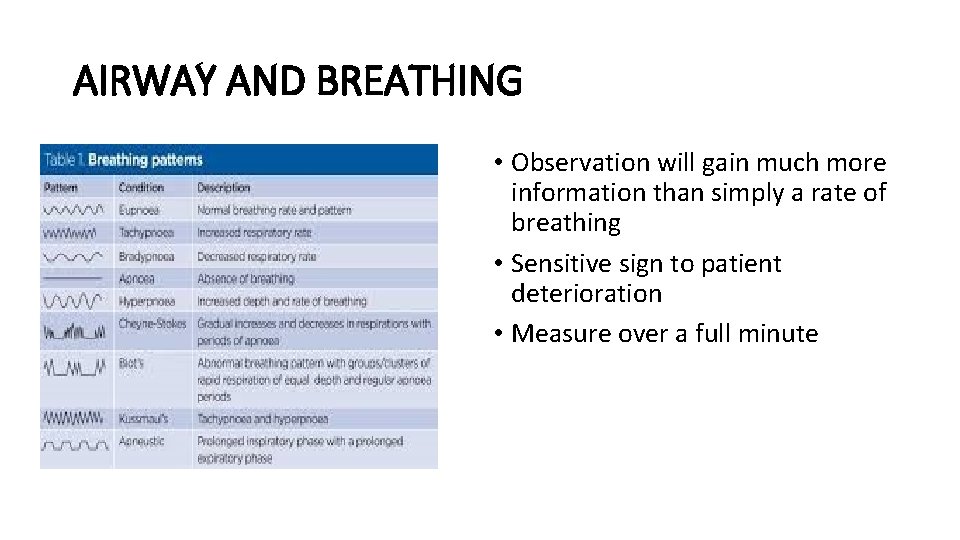
AIRWAY AND BREATHING • Observation will gain much more information than simply a rate of breathing • Sensitive sign to patient deterioration • Measure over a full minute
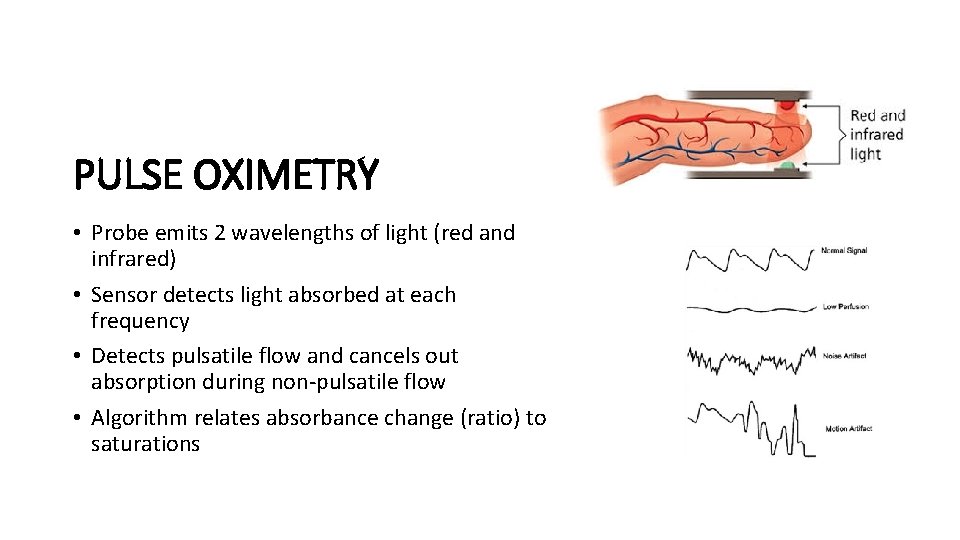
PULSE OXIMETRY • Probe emits 2 wavelengths of light (red and infrared) • Sensor detects light absorbed at each frequency • Detects pulsatile flow and cancels out absorption during non-pulsatile flow • Algorithm relates absorbance change (ratio) to saturations
Inadequate Signal Anaemia Dark Skin Bright external Light Intravenous dye Nail Polish PULSE OXIMETRY – SOME LIMITATIONS Low perfusion Low Reading Venous pulsations such as: Tricuspid Regurgitation Severe right heart failure Tourniquet or BP cuff above probe Unreliable reading Methaemoglobin Carboxyhaemoglobin SPO 2 < 90%
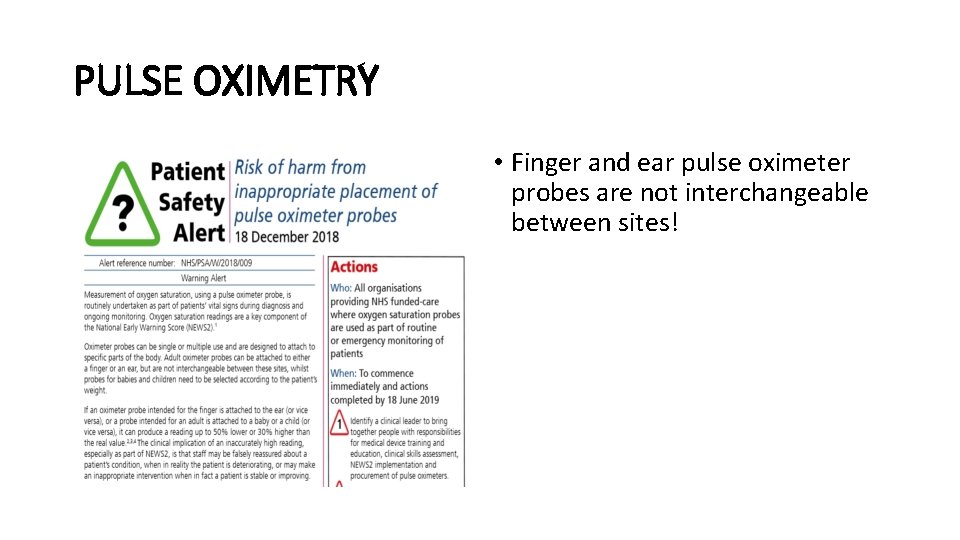
PULSE OXIMETRY • Finger and ear pulse oximeter probes are not interchangeable between sites!
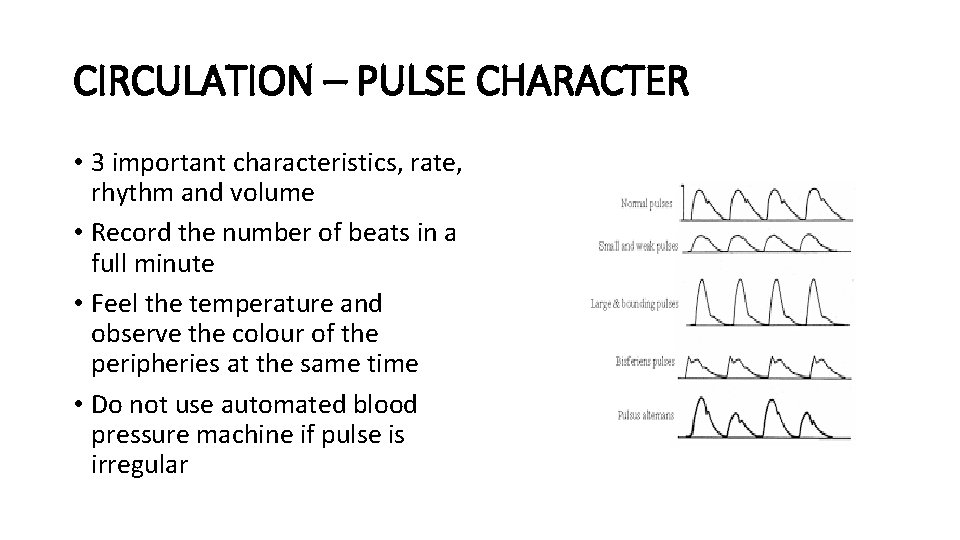
CIRCULATION – PULSE CHARACTER • 3 important characteristics, rate, rhythm and volume • Record the number of beats in a full minute • Feel the temperature and observe the colour of the peripheries at the same time • Do not use automated blood pressure machine if pulse is irregular
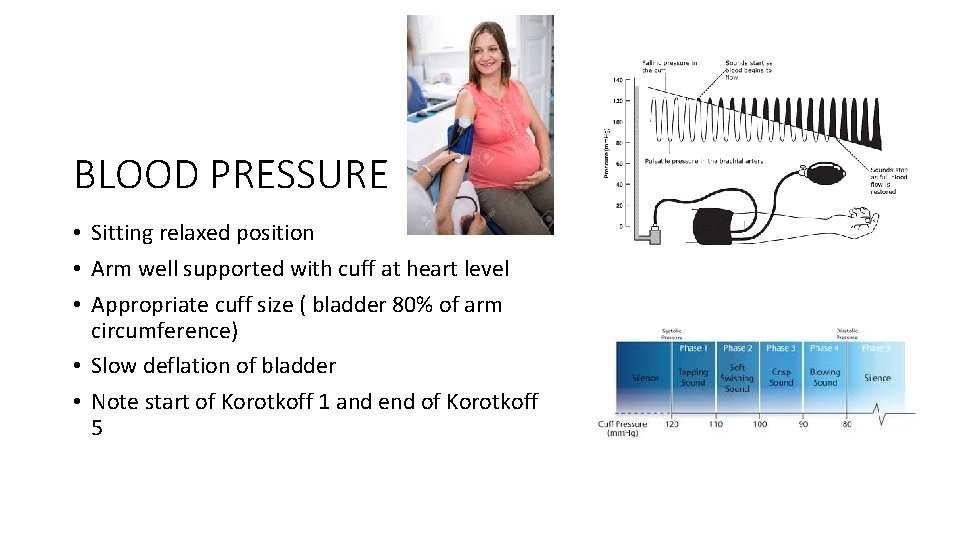
BLOOD PRESSURE • Sitting relaxed position • Arm well supported with cuff at heart level • Appropriate cuff size ( bladder 80% of arm circumference) • Slow deflation of bladder • Note start of Korotkoff 1 and end of Korotkoff 5
BLOOD PRESSURE • Mean arterial pressure (MAP) is the average blood pressure in an individual during a single cardiac cycle • MAP Significantly represents the perfusion pressure to the body’s organs • Estimation: MAP = DP + 1/3 PP or SBP + (2 x DBP) 3
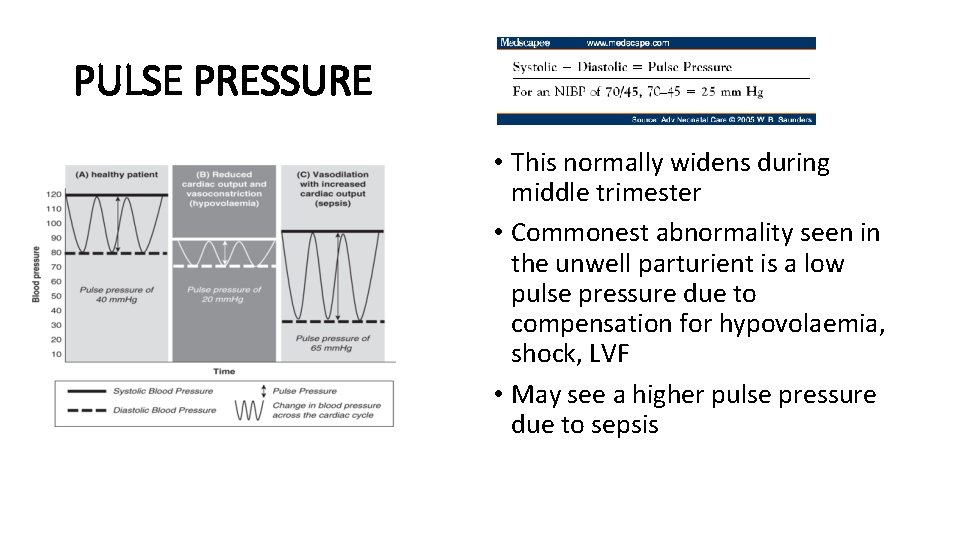
PULSE PRESSURE • This normally widens during middle trimester • Commonest abnormality seen in the unwell parturient is a low pulse pressure due to compensation for hypovolaemia, shock, LVF • May see a higher pulse pressure due to sepsis
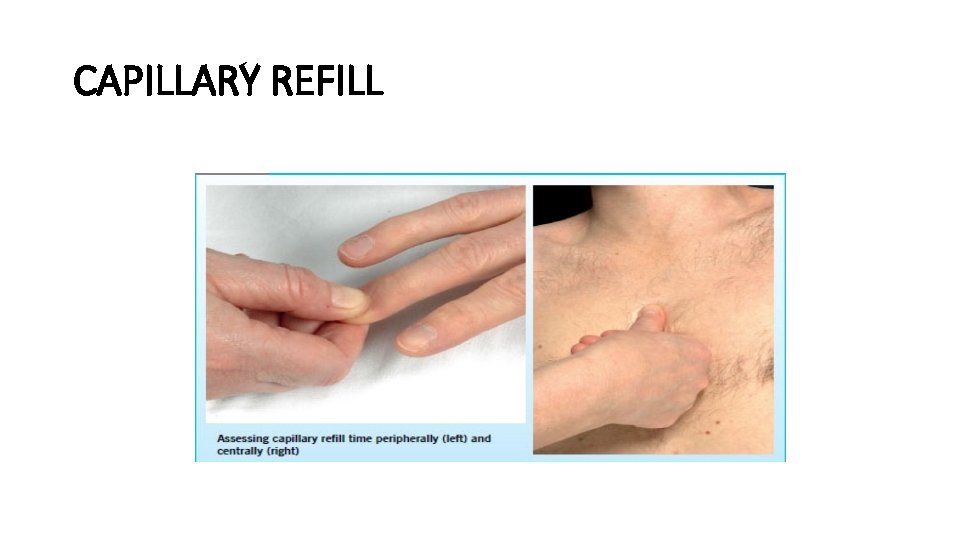
CAPILLARY REFILL
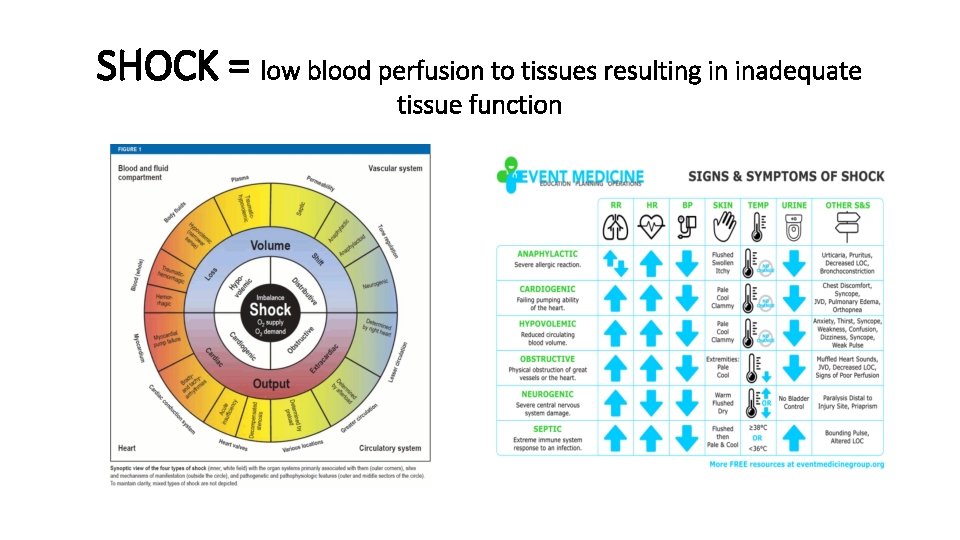
SHOCK = low blood perfusion to tissues resulting in inadequate tissue function
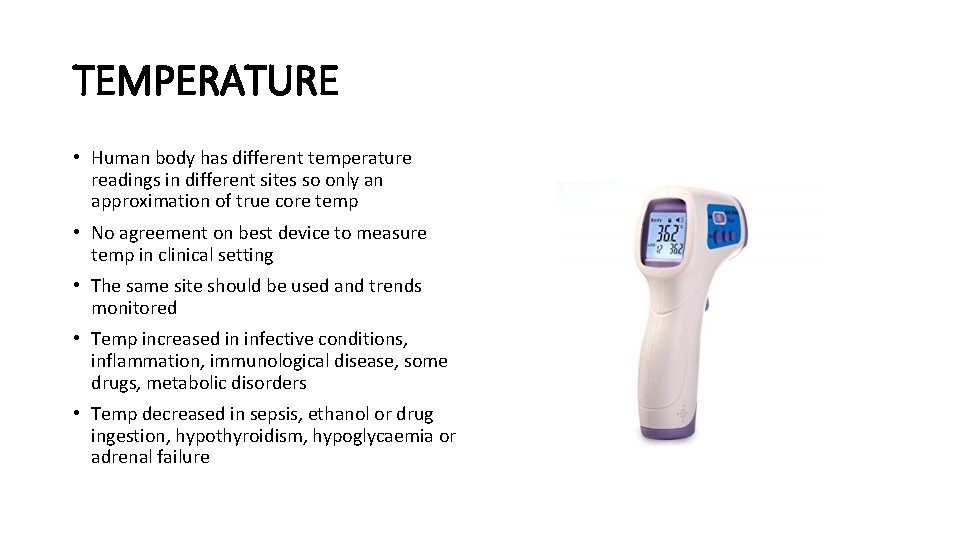
TEMPERATURE • Human body has different temperature readings in different sites so only an approximation of true core temp • No agreement on best device to measure temp in clinical setting • The same site should be used and trends monitored • Temp increased in infective conditions, inflammation, immunological disease, some drugs, metabolic disorders • Temp decreased in sepsis, ethanol or drug ingestion, hypothyroidism, hypoglycaemia or adrenal failure
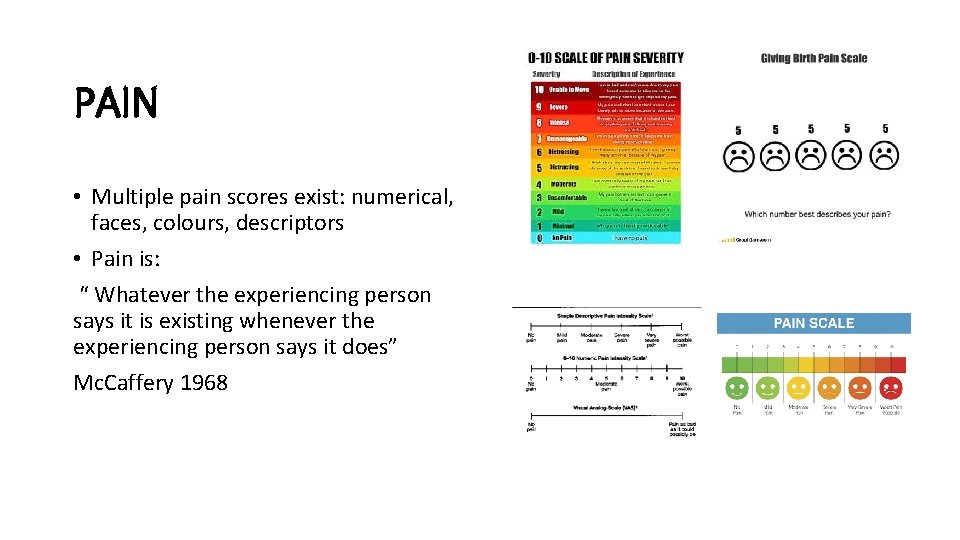
PAIN • Multiple pain scores exist: numerical, faces, colours, descriptors • Pain is: “ Whatever the experiencing person says it is existing whenever the experiencing person says it does” Mc. Caffery 1968

ANY QUESTIONS? Thankyou for listening!
- Slides: 17