
Observational Designs Design Types Experimental Clinical Trials Randomized

Observational Designs
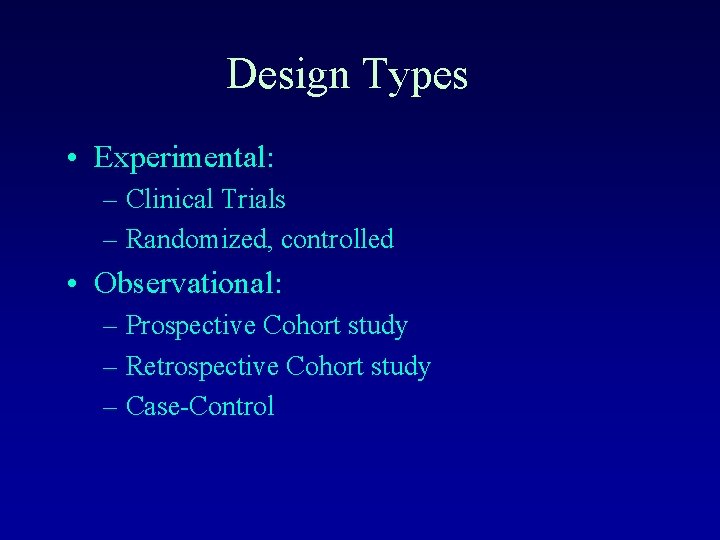
Design Types • Experimental: – Clinical Trials – Randomized, controlled • Observational: – Prospective Cohort study – Retrospective Cohort study – Case-Control
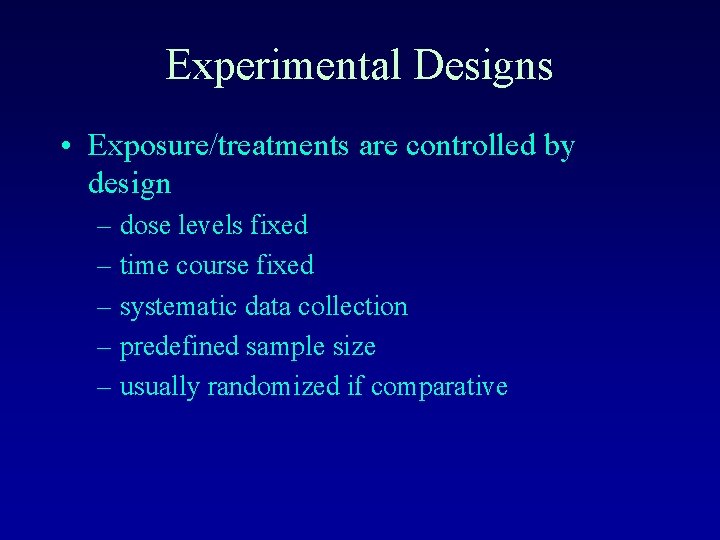
Experimental Designs • Exposure/treatments are controlled by design – dose levels fixed – time course fixed – systematic data collection – predefined sample size – usually randomized if comparative
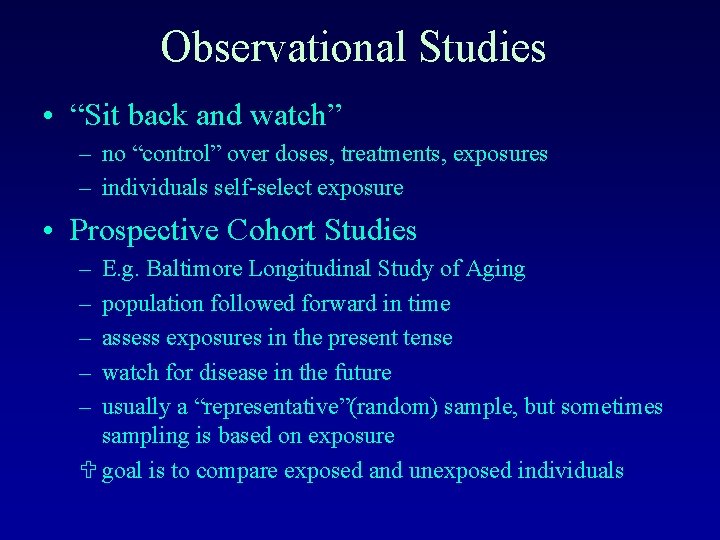
Observational Studies • “Sit back and watch” – no “control” over doses, treatments, exposures – individuals self-select exposure • Prospective Cohort Studies – – – E. g. Baltimore Longitudinal Study of Aging population followed forward in time assess exposures in the present tense watch for disease in the future usually a “representative”(random) sample, but sometimes sampling is based on exposure U goal is to compare exposed and unexposed individuals
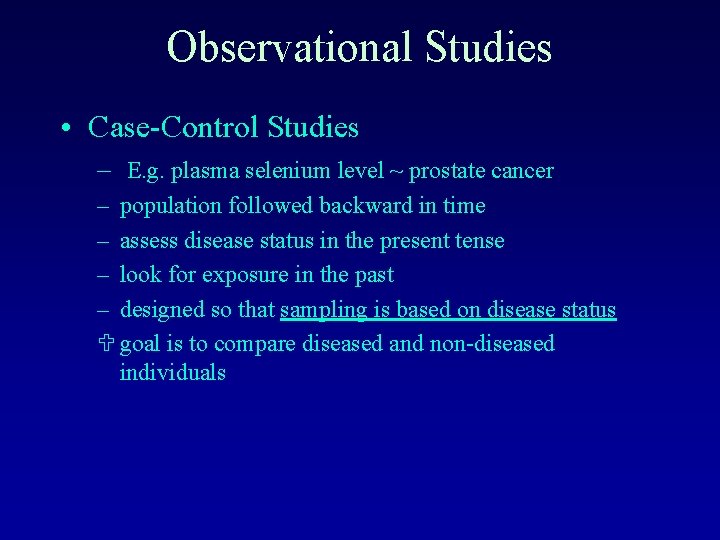
Observational Studies • Case-Control Studies – E. g. plasma selenium level ~ prostate cancer – population followed backward in time – assess disease status in the present tense – look for exposure in the past – designed so that sampling is based on disease status U goal is to compare diseased and non-diseased individuals
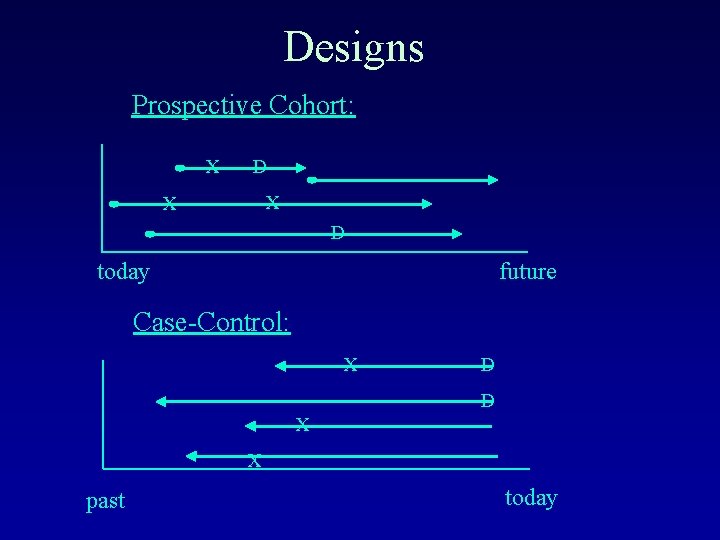
Designs Prospective Cohort: X D X X D today future Case-Control: X D D X X past today
One more to consider • Retrospective cohort study – Similar to prospective cohort because sample tends to be “representative” – Sampling not based on case/disease status – uses historical data (“chart review”) – can be treated the same as prospective cohort study because we are comparing exposed and non-exposed populations
Key difference WHO IS BEING COMPARED? COHORT: EXPOSED VS. UNEXPOSED CASE-CONTROL: DISEASED VS. NONDISEASED
Pros & Cons • Cohort studies are expensive • Cohort studies can (usually) measure exposure precisely • In cohort studies, disease prevalence can be measured • Cohort studies are impractical for study of rare disease. • Can assess temporal relationship • Case control studies are cheap • Case control studies tend to rely on recall for exposure measure • Case control studies don’t allow for measurement of disease prevalence • Case control studies are efficient in rare diseases • Can’t always assess temporal relationship èIn both, inferences can be biased due to confounders èConfounding would be protected against if we could randomize! èBoth allow for inference when randomized clinical trial would be unethical
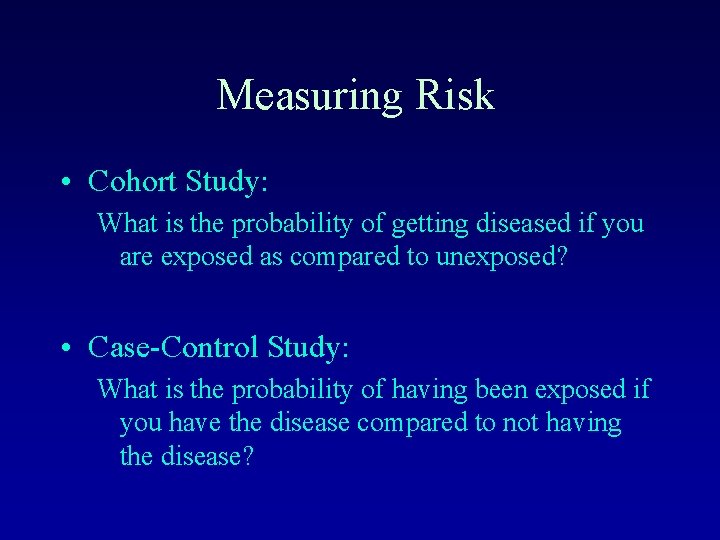
Measuring Risk • Cohort Study: What is the probability of getting diseased if you are exposed as compared to unexposed? • Case-Control Study: What is the probability of having been exposed if you have the disease compared to not having the disease?
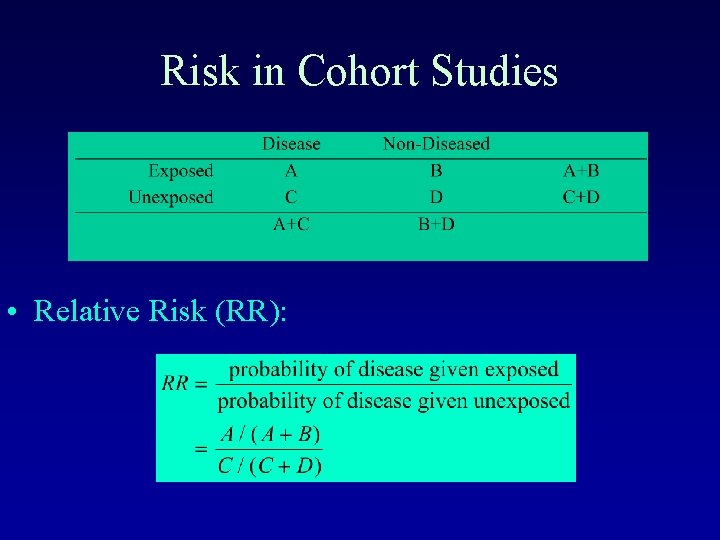
Risk in Cohort Studies • Relative Risk (RR):
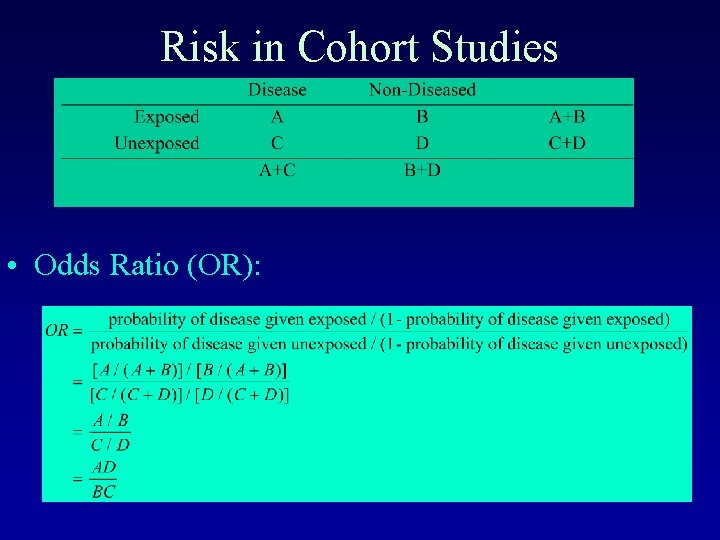
Risk in Cohort Studies • Odds Ratio (OR):
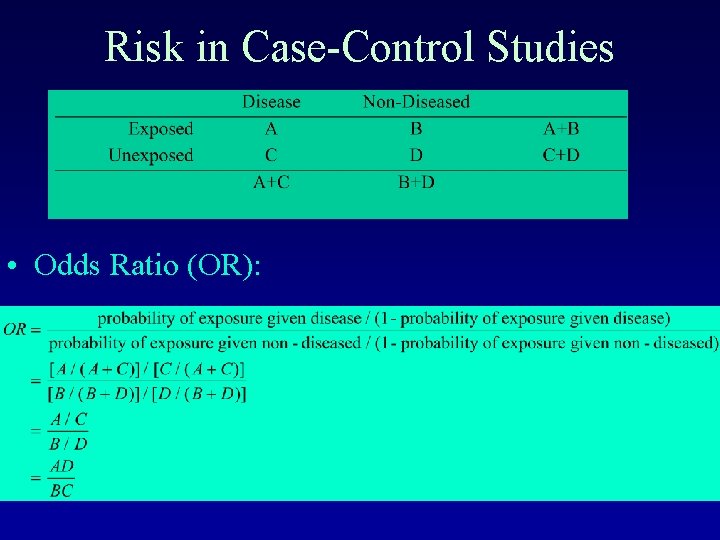
Risk in Case-Control Studies • Odds Ratio (OR):
- Slides: 13