
Observational Astronomy TELESCOPES Active and adaptive optics Kitchin
Observational Astronomy TELESCOPES, Active and adaptive optics Kitchin pp. 51 -129 2/20/2021 1
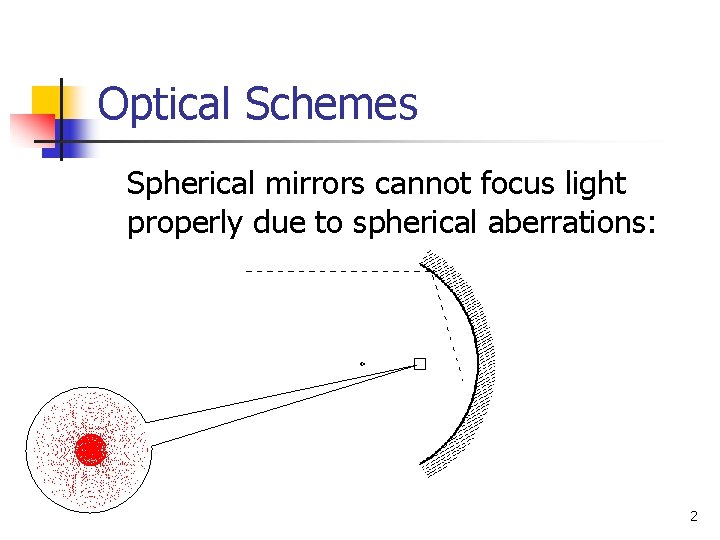
Optical Schemes Spherical mirrors cannot focus light properly due to spherical aberrations: 2
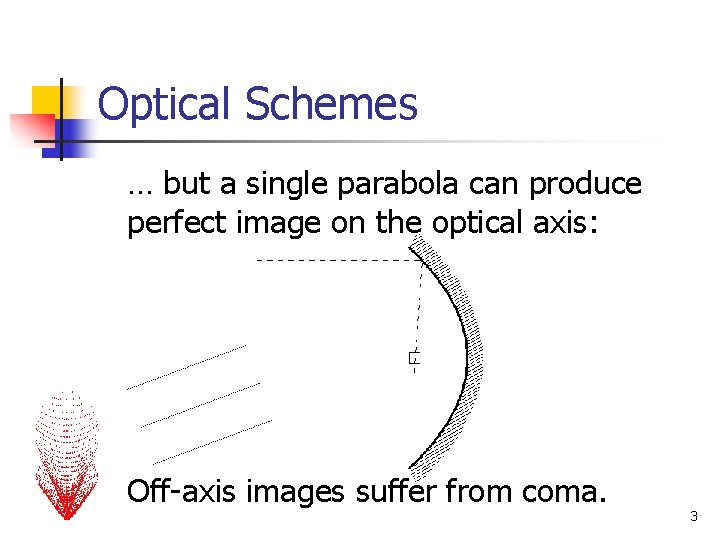
Optical Schemes … but a single parabola can produce perfect image on the optical axis: Off-axis images suffer from coma. 3
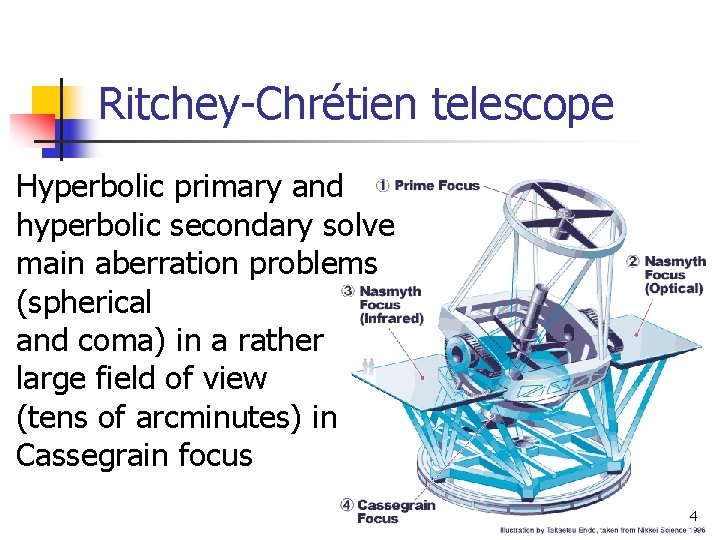
Ritchey-Chrétien telescope Hyperbolic primary and hyperbolic secondary solve main aberration problems (spherical and coma) in a rather large field of view (tens of arcminutes) in Cassegrain focus 4
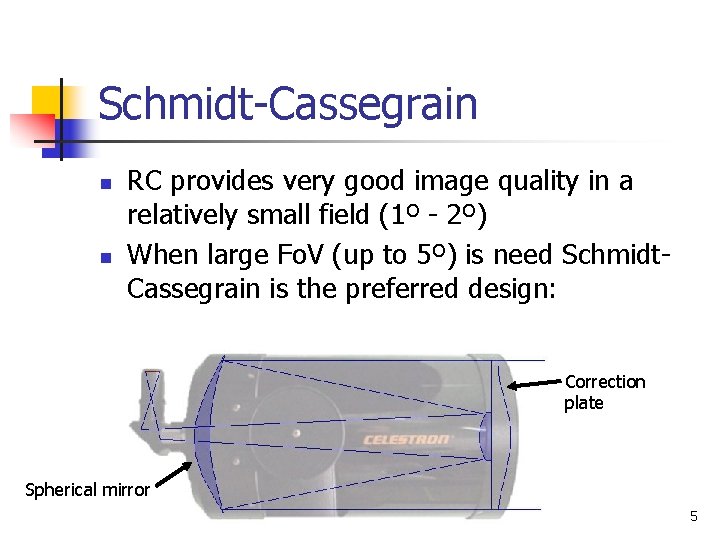
Schmidt-Cassegrain n n RC provides very good image quality in a relatively small field (1º - 2º) When large Fo. V (up to 5º) is need Schmidt. Cassegrain is the preferred design: Correction plate Spherical mirror 5
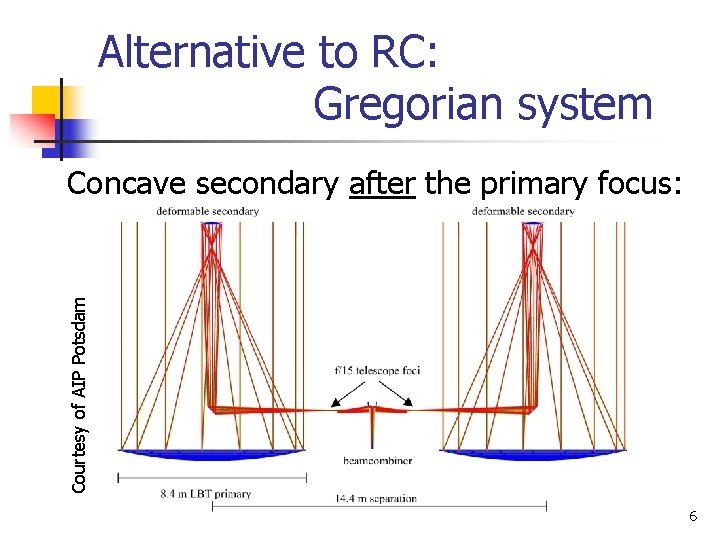
Alternative to RC: Gregorian system Courtesy of AIP Potsdam Concave secondary after the primary focus: 6
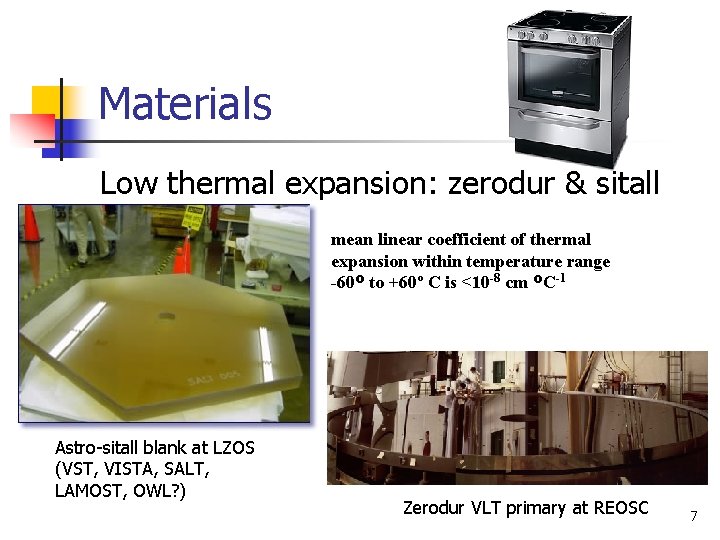
Materials Low thermal expansion: zerodur & sitall mean linear coefficient of thermal expansion within temperature range -60º to +60º С is <10 -8 cm ºC-1 Astro-sitall blank at LZOS (VST, VISTA, SALT, LAMOST, OWL? ) Zerodur VLT primary at REOSC 7
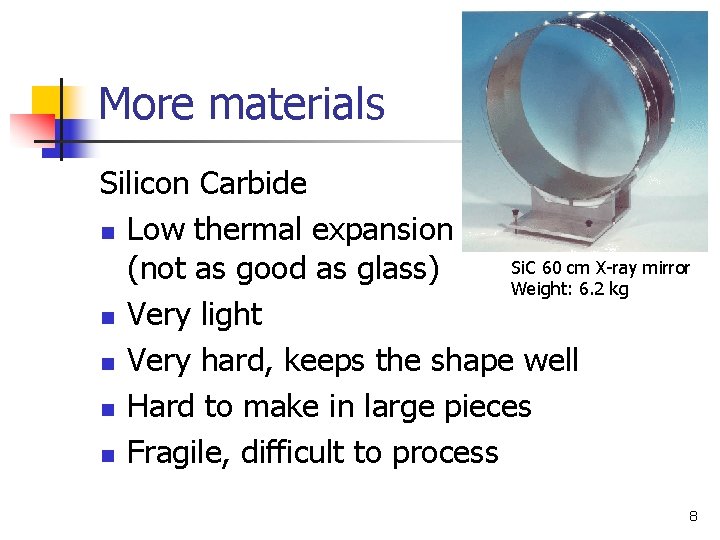
More materials Silicon Carbide n Low thermal expansion Si. C 60 cm X-ray mirror (not as good as glass) Weight: 6. 2 kg n Very light n Very hard, keeps the shape well n Hard to make in large pieces n Fragile, difficult to process 8
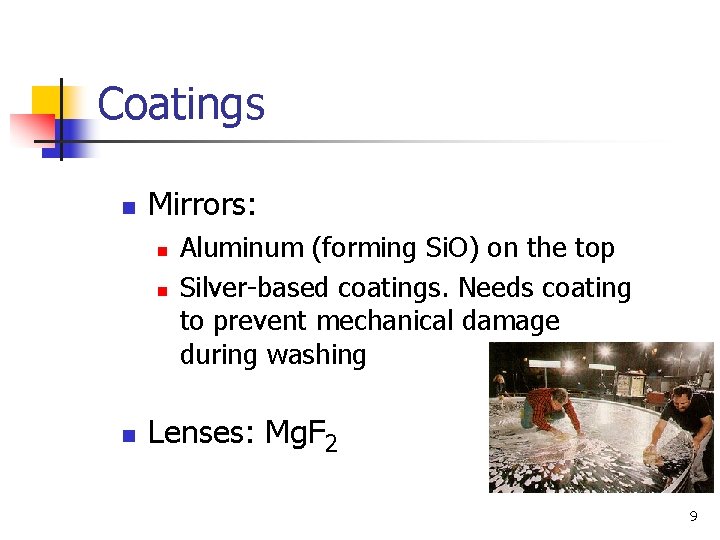
Coatings n Mirrors: n n n Aluminum (forming Si. O) on the top Silver-based coatings. Needs coating to prevent mechanical damage during washing Lenses: Mg. F 2 9
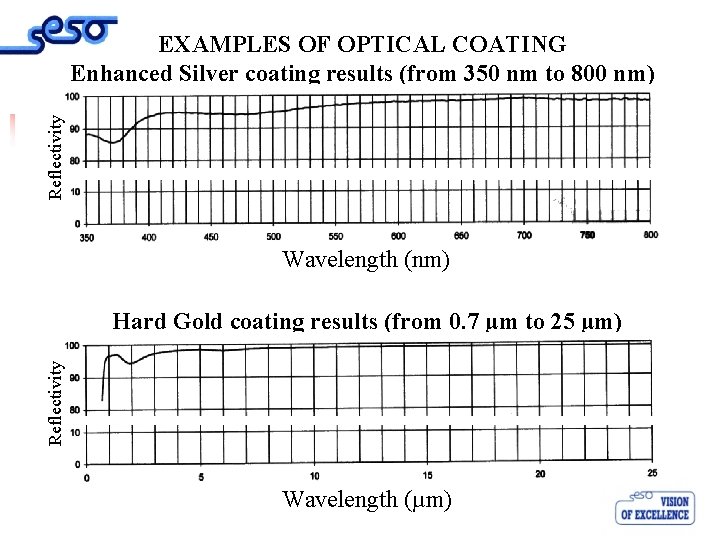
Reflectivity EXAMPLES OF OPTICAL COATING Enhanced Silver coating results (from 350 nm to 800 nm) Wavelength (nm) Reflectivity Hard Gold coating results (from 0. 7 µm to 25 µm) Wavelength (µm) 10
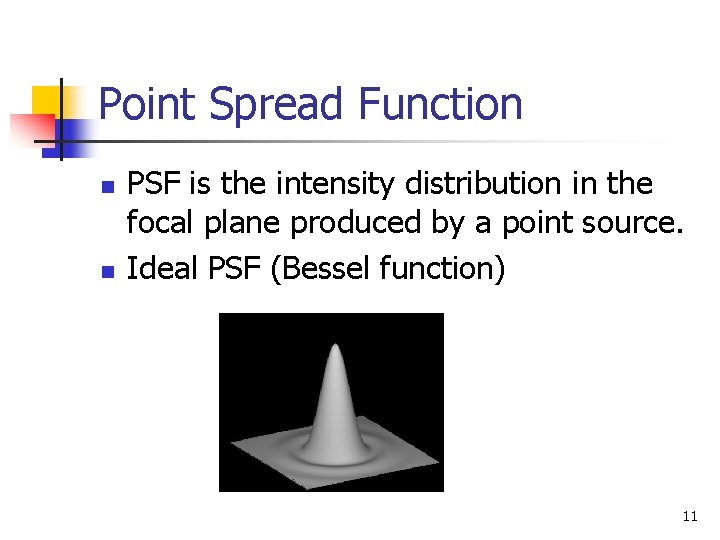
Point Spread Function n n PSF is the intensity distribution in the focal plane produced by a point source. Ideal PSF (Bessel function) 11
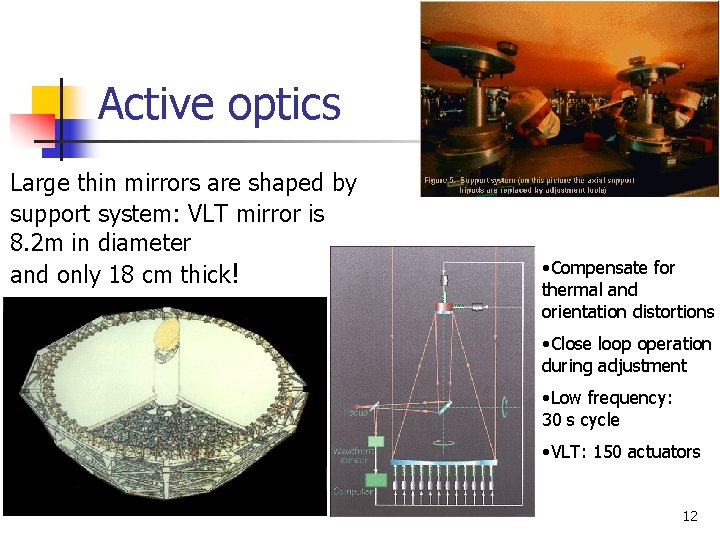
Active optics Large thin mirrors are shaped by support system: VLT mirror is 8. 2 m in diameter and only 18 cm thick! • Compensate for thermal and orientation distortions • Close loop operation during adjustment • Low frequency: 30 s cycle • VLT: 150 actuators 12
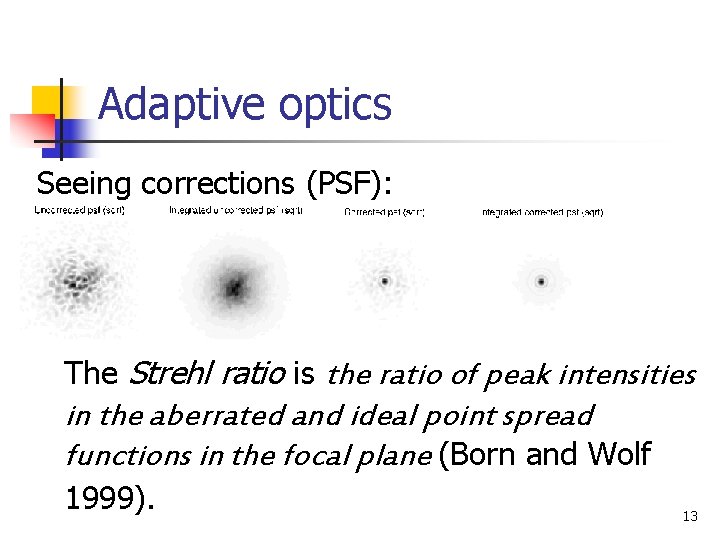
Adaptive optics Seeing corrections (PSF): The Strehl ratio is the ratio of peak intensities in the aberrated and ideal point spread functions in the focal plane (Born and Wolf 1999). 13
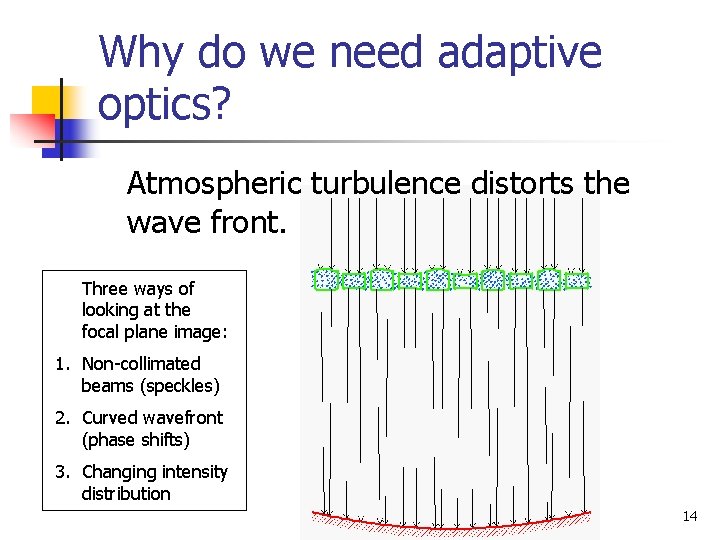
Why do we need adaptive optics? Atmospheric turbulence distorts the wave front. Three ways of looking at the focal plane image: 1. Non-collimated beams (speckles) 2. Curved wavefront (phase shifts) 3. Changing intensity distribution 14
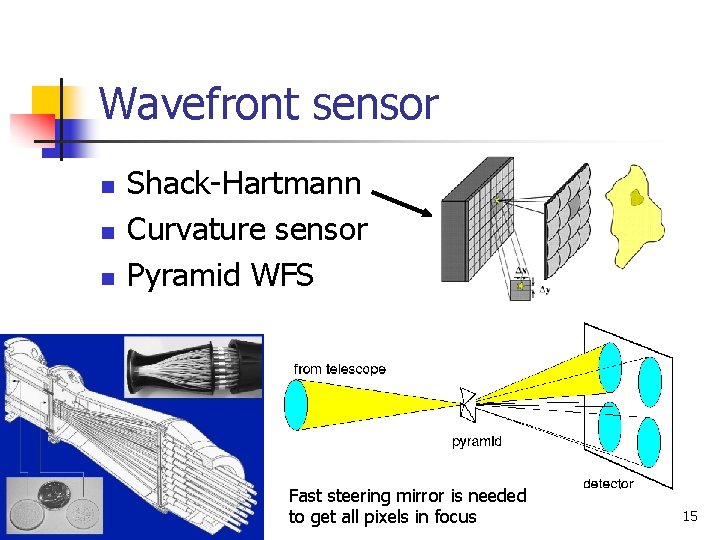
Wavefront sensor n n n Shack-Hartmann Curvature sensor Pyramid WFS Fast steering mirror is needed to get all pixels in focus 15
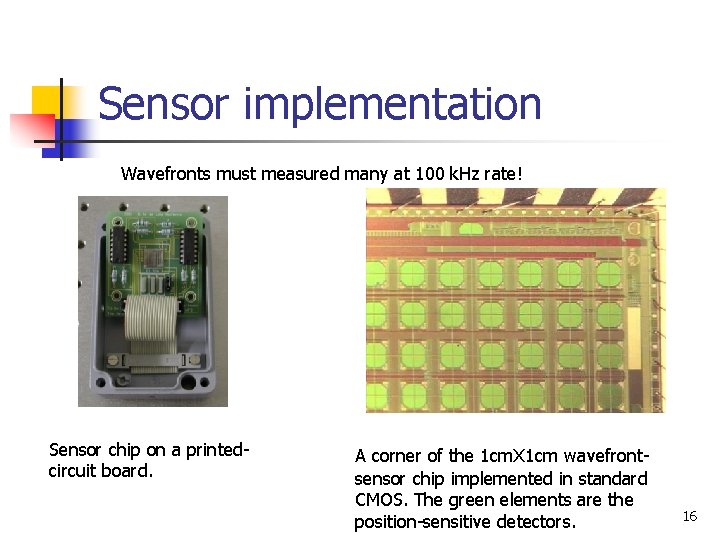
Sensor implementation Wavefronts must measured many at 100 k. Hz rate! Sensor chip on a printedcircuit board. A corner of the 1 cmx 1 cm wavefrontsensor chip implemented in standard CMOS. The green elements are the position-sensitive detectors. 16
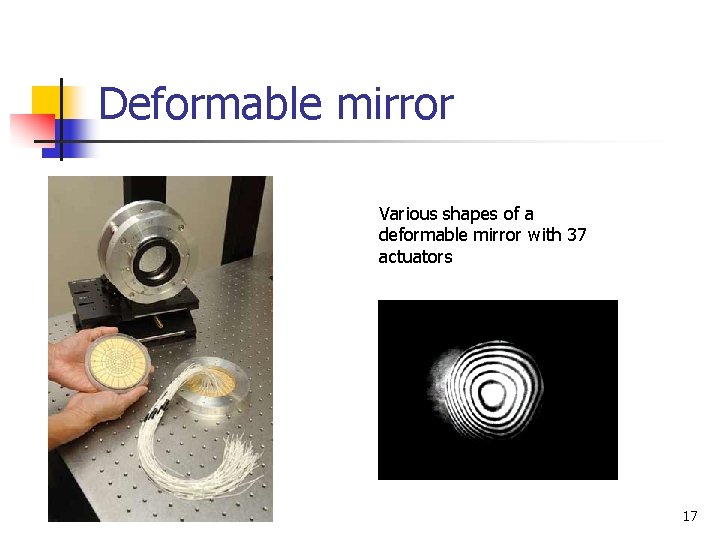
Deformable mirror Various shapes of a deformable mirror with 37 actuators 17
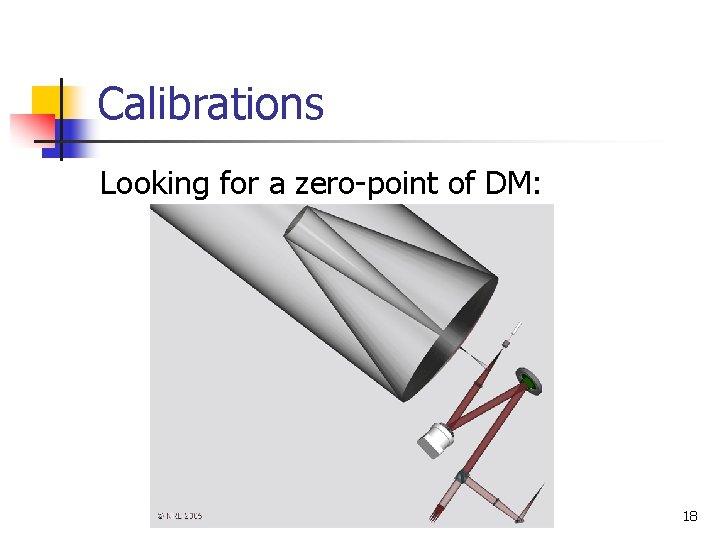
Calibrations Looking for a zero-point of DM: 18
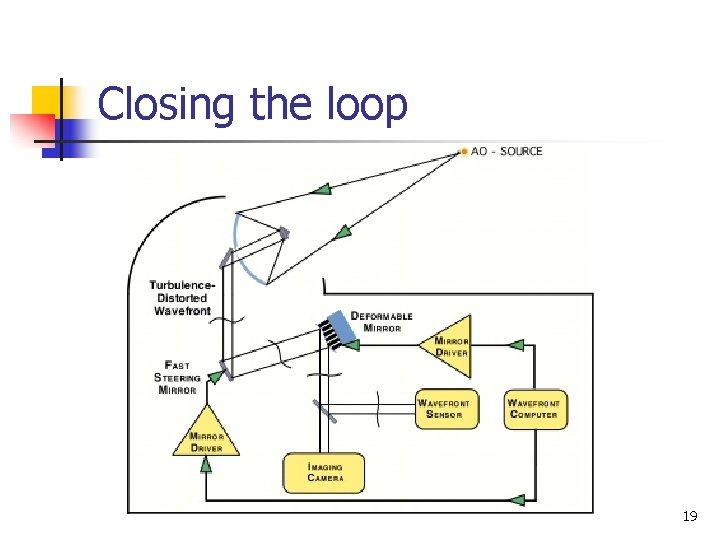
Closing the loop 19
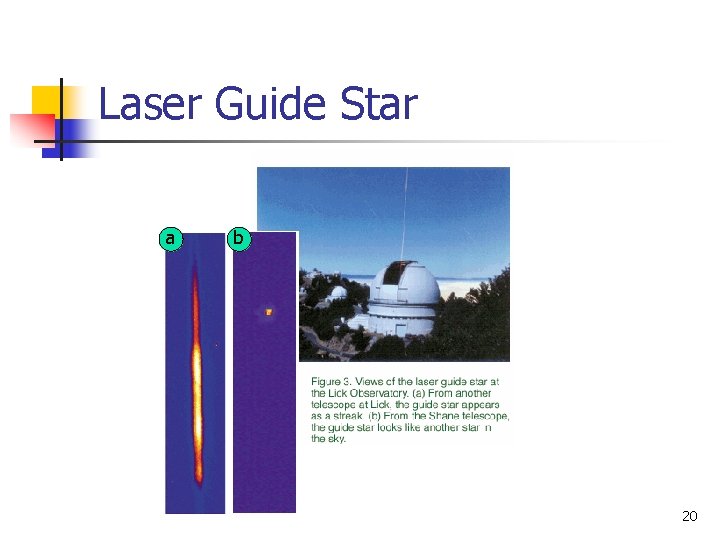
Laser Guide Star a b 20
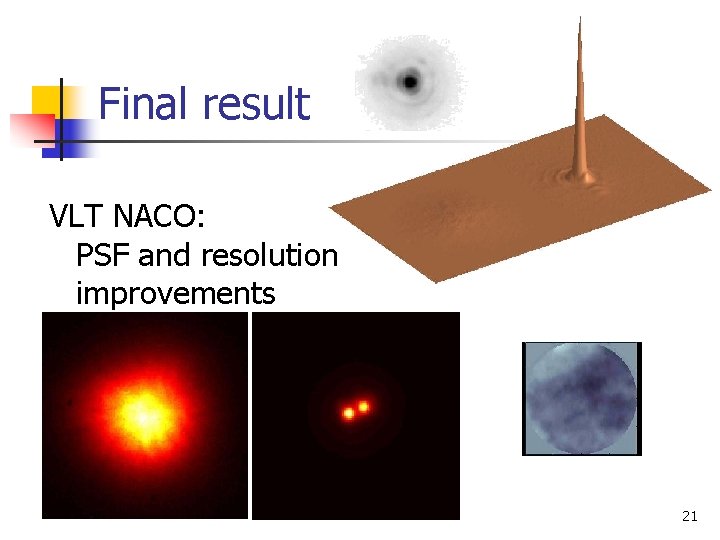
Final result VLT NACO: PSF and resolution improvements 21
Home work n n Find a telescope with Silicon Carbide mirror. Why this material was used? When using adaptive optics what are the pluses and minuses of using natural and laser guide star? 22
Next time… Direct Imaging and Photometry 23
- Slides: 23