
Observation Instrument for Autism Classrooms Dr Karen Berkman
Observation Instrument for Autism Classrooms Dr. Karen Berkman Click now to advance to the next slide
Effective Programs for Children with Autism Spectrum Disorders (National Research Council, 2001 (www. nap. edu) • Intensity matters • Early is better • Family participation is essential • Goals should be individualized and monitored regularly Click now to advance to the next slide

CARD Classroom Observation Instrument Observers should: recognize be use make familiar the more tool the with than as tool all a is be able to explain aspects starting one a subjective observation of point quality for their observations educational structure discussions for programs guiding for students classroom with observations autism Click now to advance to the next slide

Observation Instrument: Heading Click now to advance to the next slide

Observation Instrument: Ratings Click now to advance to the next slide

Observation Instrument: Format ü ü Environmental arrangements ü ü Scheduling, activities and intensity ü ü Core curriculum areas ü ü ü Instruction and Interaction ü Click now to advance to the next slide

Observation instrument: Notations Click now to advance to the next slide
Environmental Arrangement Click now to advance to the next slide
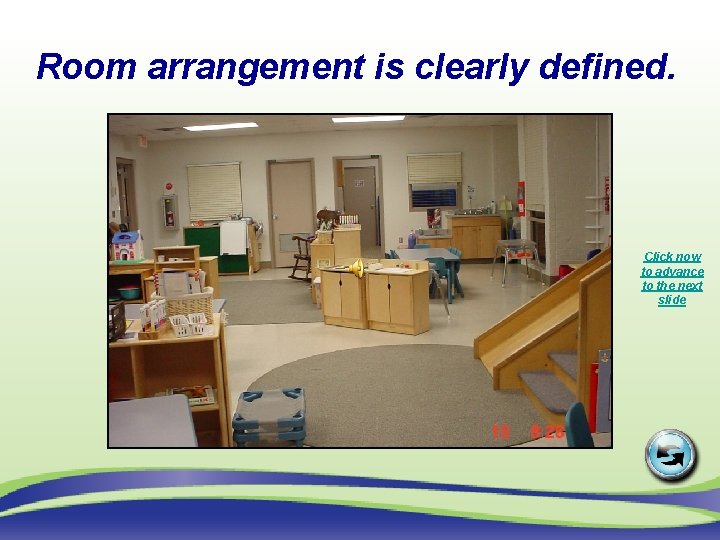
Room arrangement is clearly defined. Click now to advance to the next slide
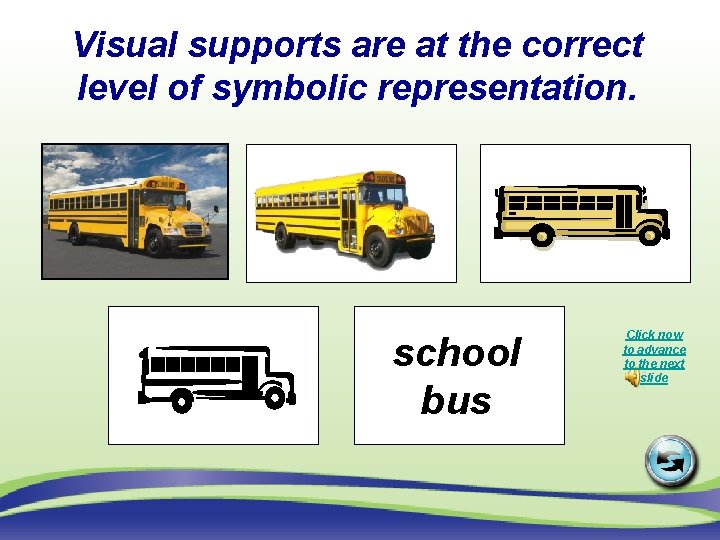
Visual supports are at the correct level of symbolic representation. school bus Click now to advance to the next slide
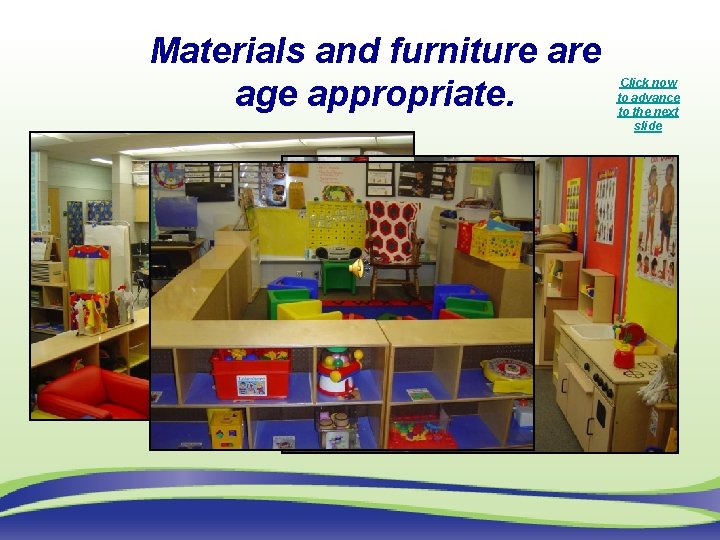
Materials and furniture age appropriate. Click now to advance to the next slide
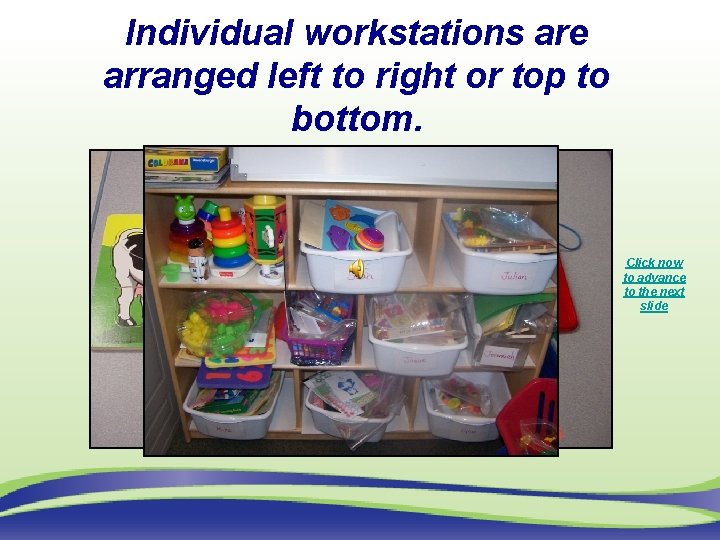
Individual workstations are arranged left to right or top to bottom. Click now to advance to the next slide
Scheduling, Activities, and Intensity Click now to advance to the next slide
Staff schedules are posted. • Who: Shows staff and student assignments • Where: Locations • What: Activities • Prominently posted and checked Click now to advance to the next slide
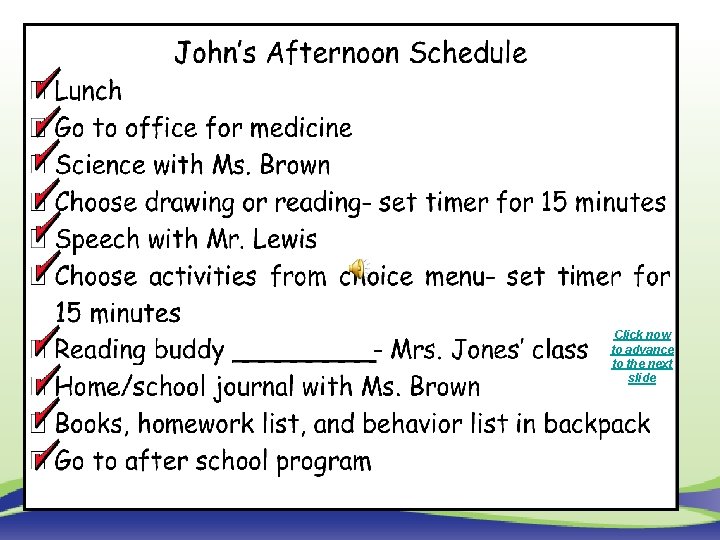
A daily class schedule is posted. • At student’s visual level • Appropriate for students’ level of symbolic understanding • Used throughout the day Click now to advance to the next slide
Schedules reflect appropriate distribution of curriculum. • Age-appropriate materials • Adapted for individual needs, based on IEP goals Click now to advance to the next slide • Each student’s work at his/her instructional level
Schedules reflect a variety of learning formats. • 1: 1 instruction • Small group activities • Large group activities • Independent work • Social interaction/leisure options Click now to advance to the next slide
Individual schedules are available for each student. • Posted for convenient reference • Reflect the student’s understanding of symbolic representation • Checked frequently • Activity completion is consistently indicated • Used with increasing independence Click now to advance to the next slide
Large group transitions are smooth. • Occur infrequently • Supported by environmental arrangement and scheduling Click now to advance to the next slide
Staff/student ratio is adequate. Considerations: • The nature of the instructional activity • Level of student familiarity with the task Click now to advance to the next slide • Environmental factors • Student level of frustration or failure
Activities are language-based. Instructional activities promote communicative exchanges such as requesting, commenting, and asking and/or answering questions. Click now to advance to the next slide
All students are engaged in meaningful activities. Instructional activities are… • Relevant to the student’s educational goals • Interesting and meaningful to the student • Valued by other people Click now to advance to the next slide • Highly structured • Varied in time length and level of motor activity
Staff interacts with every student. • Within a 5 minute time period • Staff interacts with all students at least once Click now to advance to the next slide • During extending instructional activities • Supports learning • Isn’t interfering
Instruction and Interaction Click now to advance to the next slide
Staff communication with students is clear and relevant. • is appropriate to language ability • communication supports are easily accessible at all times. • regular opportunities for dialogue Click now to advance to the next slide
Staff interactions with students are positive. Comments directed toward students follow a ratio of 7: 1 instructive or positive comments to corrective or negative comments. Click now to advance to the next slide
Staff members use systematic instructional strategies. Staff Members: • deliver instructional cues clearly • prompt students as needed • reinforce correct responses • correct errors when needed Click now to advance to the next slide
Staff interact in a professional manner. Communication between staff… is respectful of students and their families • preserves confidentiality • is limited to classroom issues and instruction Click now to advance to the next slide
Classroom staff deliver instruction actively and directly. Staff Members: • Recognize incidental opportunities for instruction in all school settings • Deliver instruction within naturally occurring opportunities Click now to advance to the next slide
All classroom staff are familiar with student learning goals…. and can target individual goals in learning activities. Click now to advance to the next slide
Instructional methods reflect the unique needs of students… and are grounded in research-based practices. Click now to advance to the next slide
Instructional pacing is appropriate. • Promotes a high rate of correct responding • Actively engages student without frustration Click now to advance to the next slide • Correct responses and desired behaviors are reinforced frequently
Instruction is individualized. • Instructional goals, strategies, and materials are individualized for each student • Reinforcers are a natural response to the targeted skills • Planned opportunities for generalization of skills Click now to advance to the next slide
Instruction is an active process. The instructional style of the teacher… • Actively engages students • Preserves students’ dignity • Promotes independence Click now to advance to the next slide
The instructional context is natural. • Generalization of skills • Embedded skills instruction Click now to advance to the next slide
Instruction is intensive. Students with slow rates of learning are provided: • Intense levels of instruction • Daily one-on-one instruction Click now to advance to the next slide
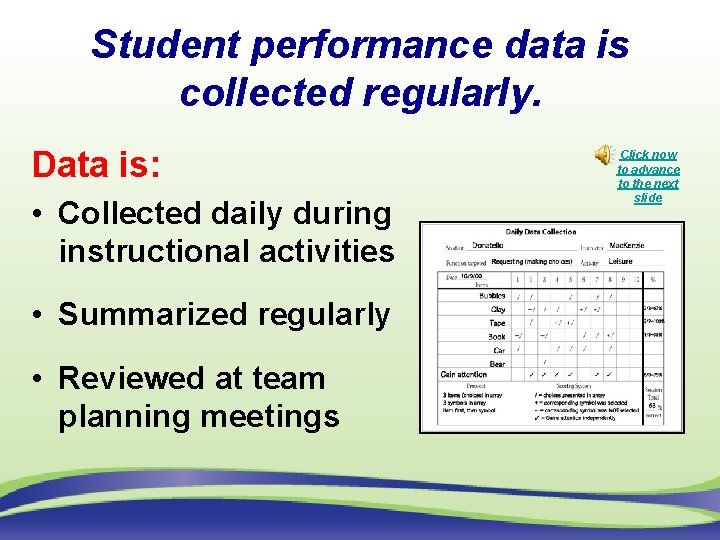
Student performance data is collected regularly. Data is: • Collected daily during instructional activities • Summarized regularly • Reviewed at team planning meetings Click now to advance to the next slide
Communication with parents occurs frequently. • Information is specific to the student • Positive comments and observations • Non-judgmental Click now to advance to the next slide
Instruction and Interaction Click now to advance to the next slide
Communication is continuously promoted. Classroom staff: • create opportunities for spontaneous use of communication skills. Click now to advance to the next slide • foster communication through a variety of instructional approaches.
Communication Supports and Devices • Use of communications supports is encouraged in all situations Click now to advance to the next slide • Students must understand the purpose of the device and be motivated to use it • Students have access to their communication systems at all times.
A proactive approach to behavior is taken. The likelihood of behavior problems is minimized by: Click now to advance to the next slide • offering choice making opportunities • clarifying expectations • positive reinforcement
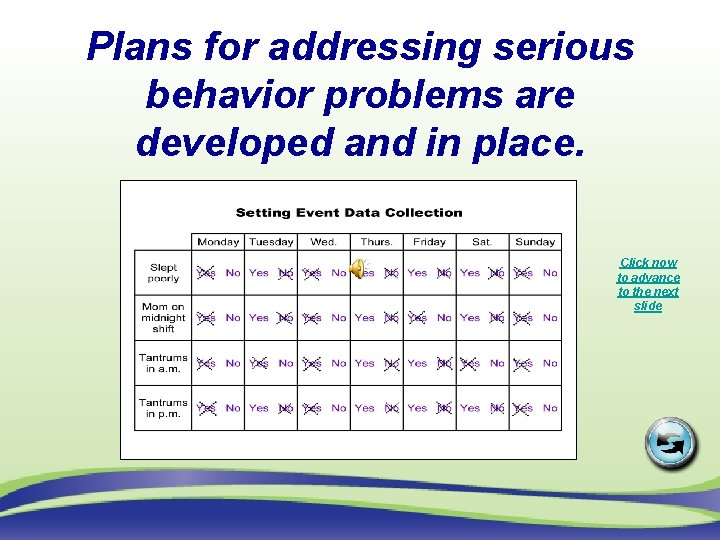
Plans for addressing serious behavior problems are developed and in place. Click now to advance to the next slide
Opportunities for social interaction and friendships are provided. • Instructional priority • Targeted throughout the school day Click now to advance to the next slide • Frequent and varied opportunities to interact with non-disabled peers • Social interactions are planned and supported • Support for peers
Teachers and staff understand the nature of Autism Spectrum Disorders. • • • skills instruction in deficit areas emphasize social interaction skills stress functional communication promote age appropriate engagement maximize independent functioning Click now to advance to the next slide
Using Gathered Information • Examples of appropriate educational practice • Priorities for further programmatic development Click now to advance to the next slide • Priorities for further staff development
Questions? Contact University Of South Florida Center for Autism & Related Disabilities Click arrow to return to the beginning of this tutorial (813) 974 -2532 1 -800 -333 -4530 http: //card-usf. fmhi. usf. edu Press “Escape” to exit this tutorial
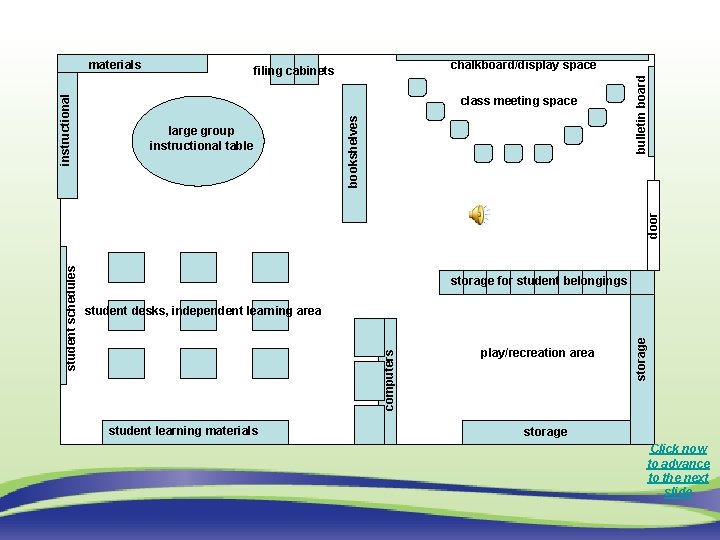
class meeting space storage for student belongings student learning materials play/recreation area storage student desks, independent learning area computers student schedules door large group instructional table bulletin board chalkboard/display space filing cabinets bookshelves instructional materials storage Click now to advance to the next slide
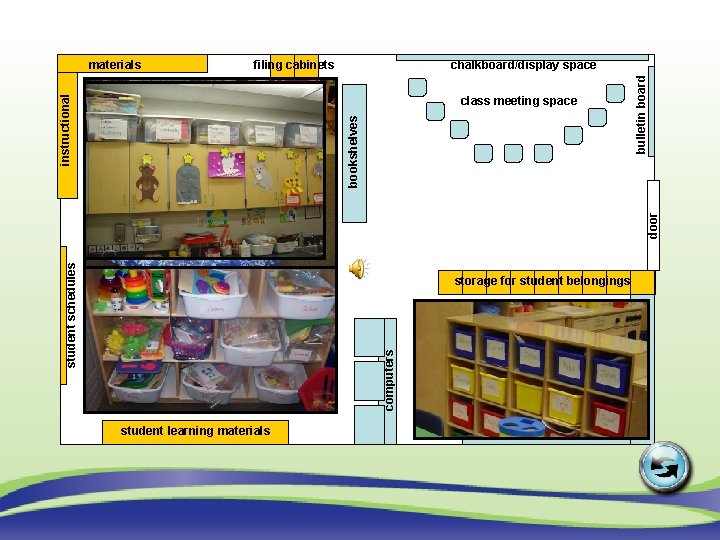
chalkboard/display space class meeting space storagefor forstudentbelongings student learning materials play/recreation area storage student desks, independent learning area computers student schedules door large group Instructional table bulletin board filing cabinets bookshelves instructional materials
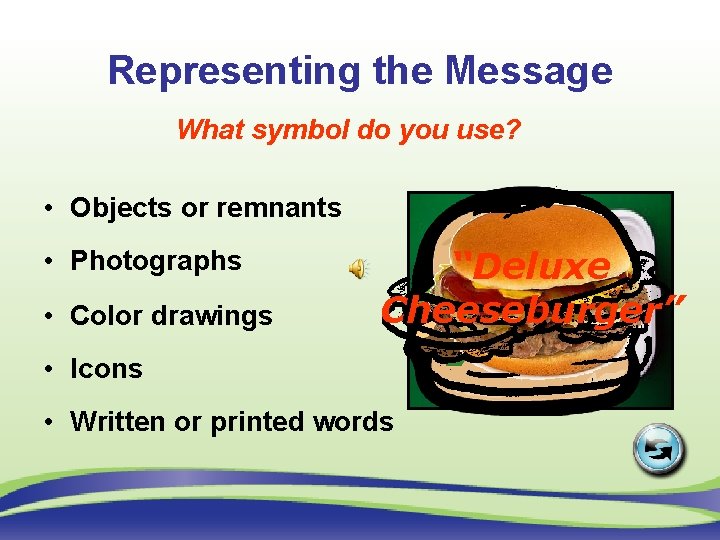
Representing the Message What symbol do you use? • Objects or remnants • Photographs • Color drawings “Deluxe Cheeseburger” • Icons • Written or printed words
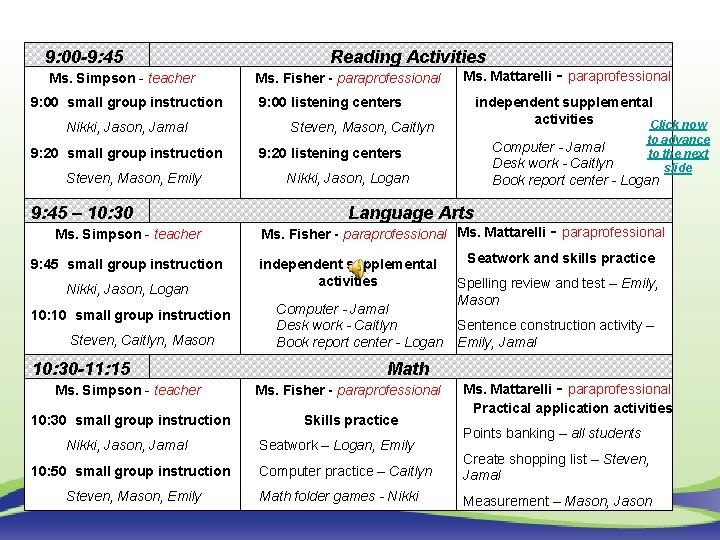
9: 00 -9: 45 Ms. Simpson - teacher 9: 00 small group instruction Nikki, Jason, Jamal 9: 20 small group instruction Steven, Mason, Emily 9: 45 – 10: 30 Ms. Simpson - teacher 9: 45 small group instruction Nikki, Jason, Logan 10: 10 small group instruction Steven, Caitlyn, Mason 10: 30 -11: 15 Reading Activities Ms. Fisher - paraprofessional 9: 00 listening centers Nikki, Jason, Logan Language Arts Ms. Fisher - paraprofessional Ms. Mattarelli Computer - Jamal Desk work - Caitlyn Book report center - Logan Math Ms. Fisher - paraprofessional 10: 30 small group instruction Skills practice 10: 50 small group instruction Steven, Mason, Emily to advance Computer - Jamal to the next Desk work - Caitlyn slide Book report center - Logan 9: 20 listening centers independent supplemental activities Seatwork – Logan, Emily - paraprofessional independent supplemental activities Click now Steven, Mason, Caitlyn Ms. Simpson - teacher Nikki, Jason, Jamal Ms. Mattarelli - paraprofessional Seatwork and skills practice Spelling review and test – Emily, Mason Sentence construction activity – Emily, Jamal Ms. Mattarelli - paraprofessional Practical application activities Points banking – all students Computer practice – Caitlyn Create shopping list – Steven, Jamal Math folder games - Nikki Measurement – Mason, Jason

Monday Time Mrs. Johnson’s Monday Class Activity Assignment 8: 15 – 8: 30 Morning Routine üAssist late arriving students üDeliver attendance to office 8: 30 – 10: 30 Language Arts ügroup 1 – review vocabulary words üAssist students with seat work üMake work copies for math activity üPrep for student snack 10: 30 – 11: 00 Reading 11; 00 - 12: 00 Math 12: 00 - 12: 30 Lunch 12: 30 – 1: 30 Social Studies 1: 30 – 2: 15 Center time 2: 15 -2: 30 Dismissal üAssist students with snack and clean upsupervise restroom break üFacilitate reading activity with John and 3 rd grade peers üSet up and supervise measurement activity üReview practice drill with David and Sam üAssist students to prepare for lunch üSupervise lunch activities üSupport David and Chris in 3 rd grade class activities – facilitate social interaction with peers üSupervise students with gathering materials and belongings üAssist students riding buses 3041 and 7271 to dismissal point
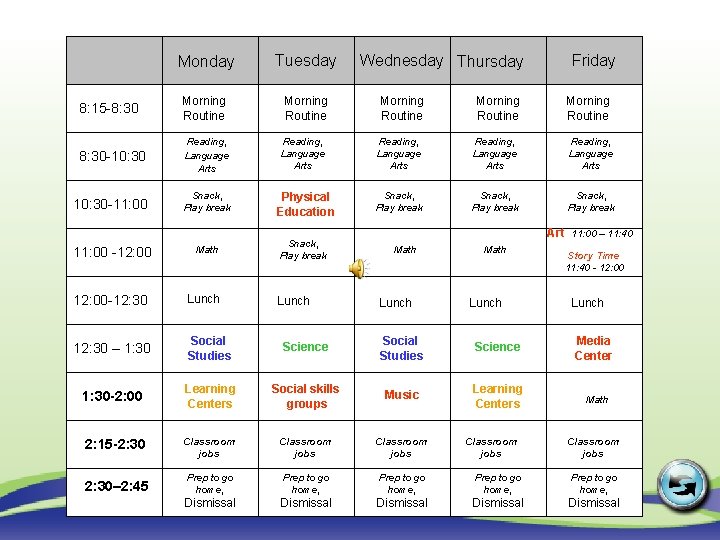
Monday Tuesday 8: 15 -8: 30 Morning Routine 8: 30 -10: 30 Reading, Language Arts Reading, Language Arts 10: 30 -11: 00 Snack, Play break Physical Education Snack, Play break Math Snack, Play break 11: 00 -12: 00 Wednesday Thursday Friday Morning Routine Art 11: 00 – 11: 40 Math Story Time 11: 40 - 12: 00 -12: 30 Lunch 12: 30 – 1: 30 Social Studies Science 1: 30 -2: 00 Learning Centers Social skills groups Music Learning Centers 2: 15 -2: 30 Classroom jobs 2: 30– 2: 45 Prep to go home, Prep to go home, Dismissal Dismissal Lunch Classroom jobs Lunch Media Center Math Classroom jobs
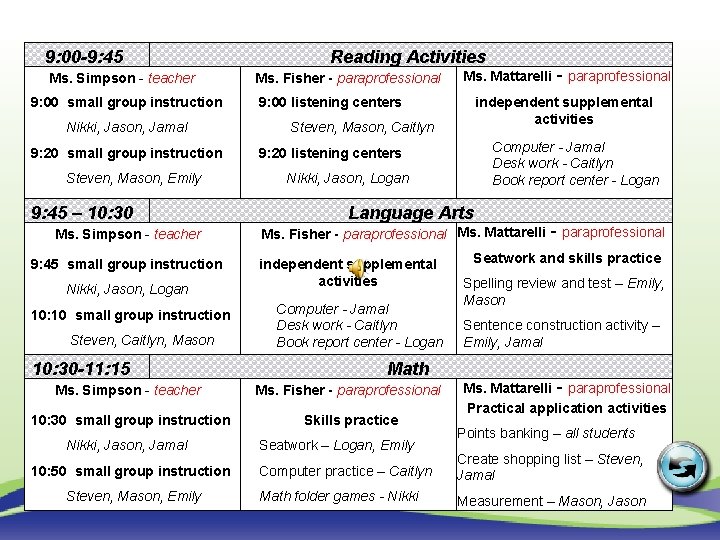
9: 00 -9: 45 Ms. Simpson - teacher 9: 00 small group instruction Nikki, Jason, Jamal 9: 20 small group instruction Steven, Mason, Emily 9: 45 – 10: 30 Ms. Simpson - teacher 9: 45 small group instruction Nikki, Jason, Logan 10: 10 small group instruction Steven, Caitlyn, Mason 10: 30 -11: 15 Reading Activities Ms. Fisher - paraprofessional 9: 00 listening centers Nikki, Jason, Logan Language Arts Ms. Fisher - paraprofessional Ms. Mattarelli Computer - Jamal Desk work - Caitlyn Book report center - Logan Math Ms. Fisher - paraprofessional 10: 30 small group instruction Skills practice 10: 50 small group instruction Steven, Mason, Emily Computer - Jamal Desk work - Caitlyn Book report center - Logan 9: 20 listening centers independent supplemental activities Seatwork – Logan, Emily - paraprofessional independent supplemental activities Steven, Mason, Caitlyn Ms. Simpson - teacher Nikki, Jason, Jamal Ms. Mattarelli - paraprofessional Seatwork and skills practice Spelling review and test – Emily, Mason Sentence construction activity – Emily, Jamal Ms. Mattarelli - paraprofessional Practical application activities Points banking – all students Computer practice – Caitlyn Create shopping list – Steven, Jamal Math folder games - Nikki Measurement – Mason, Jason
Click now to advance to the next slide
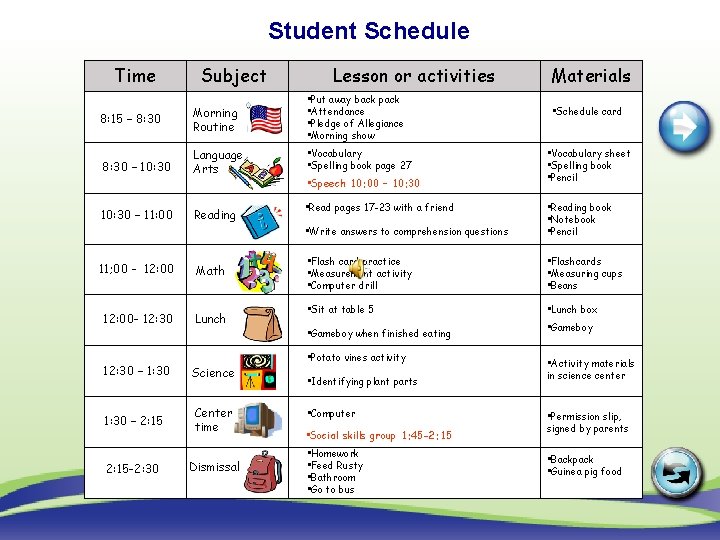
Student Schedule Time Subject Lesson or activities 8: 15 – 8: 30 Morning Routine • Put away back pack • Attendance • Pledge of Allegiance • Morning show 8: 30 – 10: 30 Language Arts • Vocabulary • Spelling book page 27 10: 30 – 11: 00 Reading 11; 00 - 12: 00 Math 12: 00 - 12: 30 Lunch 12: 30 – 1: 30 Science 1: 30 – 2: 15 Center time 2: 15 -2: 30 Dismissal • Speech 10: 00 – 10: 30 • Read pages 17 -23 with a friend Materials • Schedule card • Vocabulary sheet • Spelling book • Pencil • Write answers to comprehension questions • Reading book • Notebook • Pencil • Flash card practice • Measurement activity • Computer drill • Flashcards • Measuring cups • Beans • Sit at table 5 • Lunch box • Gameboy when finished eating • Potato vines activity • Identifying plant parts • Computer • Social skills group 1: 45 -2: 15 • Homework • Feed Rusty • Bathroom • Go to bus • Gameboy • Activity materials in science center • Permission slip, signed by parents • Backpack • Guinea pig food
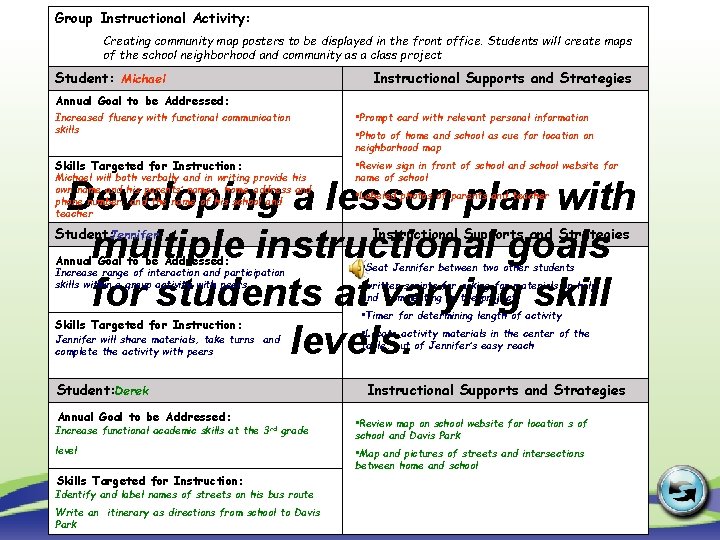
Group Instructional Activity: Creating community map posters to be displayed in the front office. Students will create maps of the school neighborhood and community as a class project Student: Michael Instructional Supports and Strategies Annual Goal to be Addressed: Increased fluency with functional communication skills • Prompt card with relevant personal information Skills Targeted for Instruction: • Review sign in front of school and school website for name of school Michael will both verbally and in writing provide his own name and his parents’ names, home address and phone number, and the name of his school and teacher • Photo of home and school as cue for location on neighborhood map Developing a lesson plan with multiple instructional goals for students at varying skill levels. Student: Jennifer Annual Goal to be Addressed: Increase range of interaction and participation skills within a group activity with peers Skills Targeted for Instruction: Jennifer will share materials, take turns and complete the activity with peers Student: Derek Annual Goal to be Addressed: Increase functional academic skills at the 3 rd grade level Skills Targeted for Instruction: Identify and label names of streets on his bus route Write an itinerary as directions from school to Davis Park • Labeled photos of parents and teacher Instructional Supports and Strategies • Seat Jennifer between two other students • written scripts for asking for materials or help and commenting on the project • Timer for determining length of activity • Locate activity materials in the center of the table, out of Jennifer’s easy reach Instructional Supports and Strategies • Review map on school website for location s of school and Davis Park • Map and pictures of streets and intersections between home and school
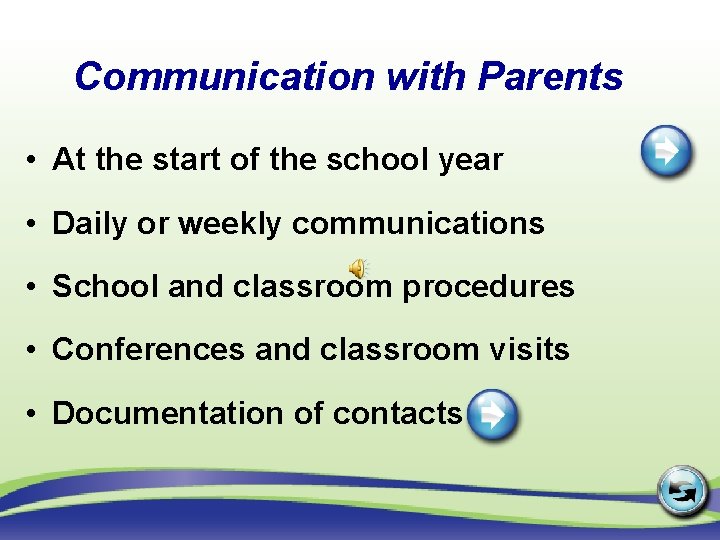
Communication with Parents • At the start of the school year • Daily or weekly communications • School and classroom procedures • Conferences and classroom visits • Documentation of contacts
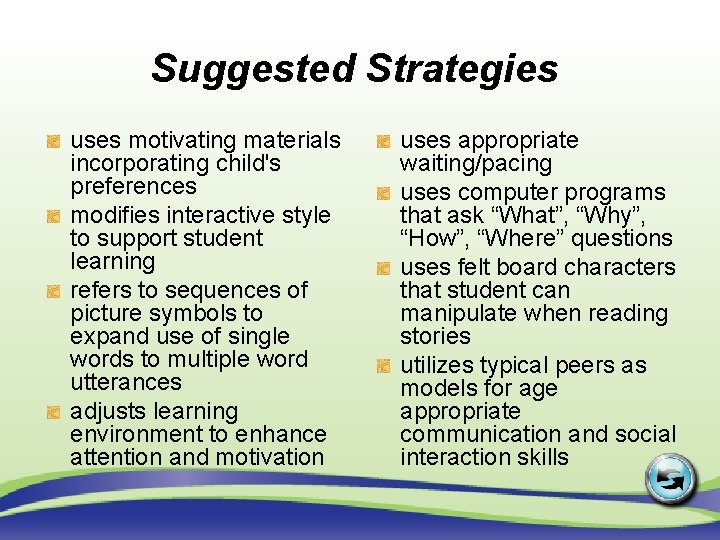
Suggested Strategies uses motivating materials incorporating child's preferences modifies interactive style to support student learning refers to sequences of picture symbols to expand use of single words to multiple word utterances adjusts learning environment to enhance attention and motivation uses appropriate waiting/pacing uses computer programs that ask “What”, “Why”, “How”, “Where” questions uses felt board characters that student can manipulate when reading stories utilizes typical peers as models for age appropriate communication and social interaction skills
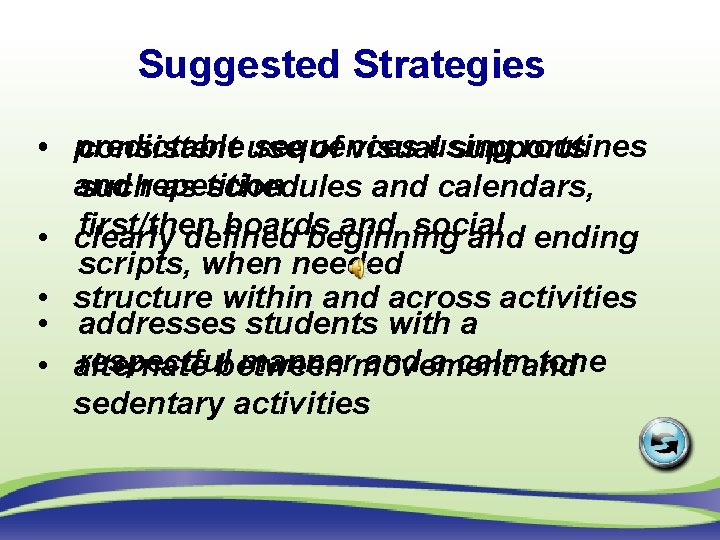
Suggested Strategies sequences routines • predictable consistent use of visualusing supports and suchrepetition as schedules and calendars, first/then boards and social • clearly defined beginning and ending scripts, when needed • structure within and across activities • addresses students with a respectfulbetween mannermovement and a calmand tone • alternate sedentary activities
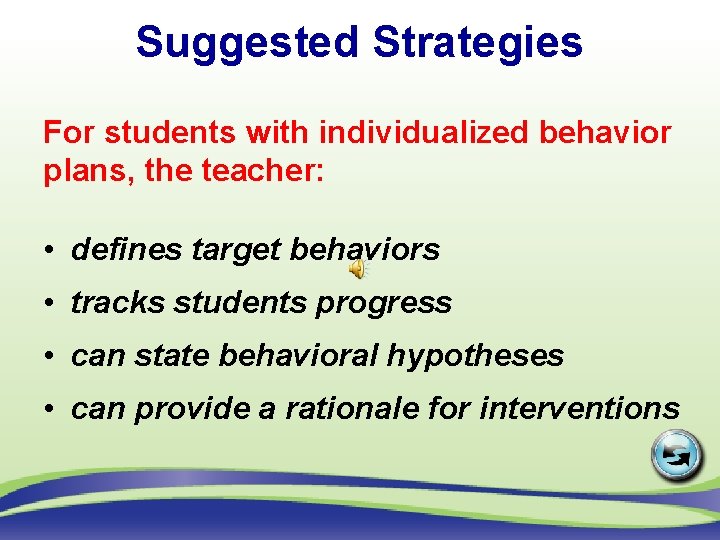
Suggested Strategies For students with individualized behavior plans, the teacher: • defines target behaviors • tracks students progress • can state behavioral hypotheses • can provide a rationale for interventions
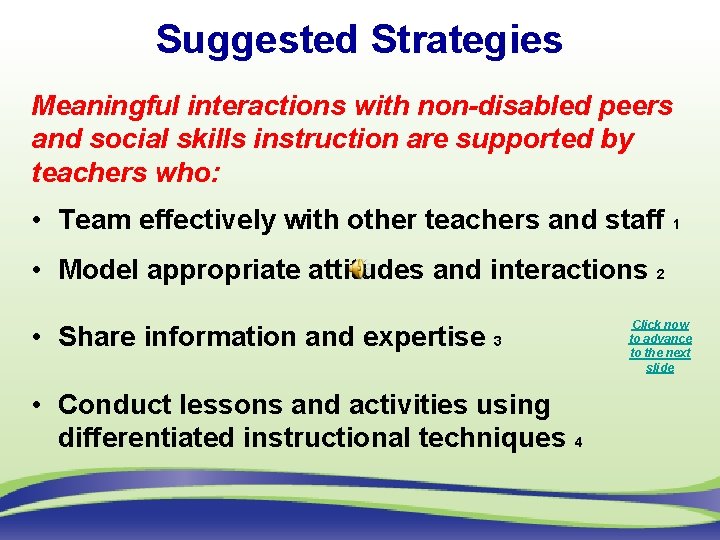
Suggested Strategies Meaningful interactions with non-disabled peers and social skills instruction are supported by teachers who: • Team effectively with other teachers and staff 1 • Model appropriate attitudes and interactions 2 • Share information and expertise 3 • Conduct lessons and activities using differentiated instructional techniques 4 Click now to advance to the next slide
References 1. Rainforth, Beverly and York-Barr, Jennifer (1997). Collaborative Teams for Students with Severe Disabilities, (pp. 3 -13). Baltimore: Paul H. Brookes Publishing Company. 2. Snell, Martha and Brown, Fredda (2006). Instruction of Students with Severe Disabilities, (pp. 389 -290). Upper Saddle River: Pearson Prentice Hall. 3. Giangreco, Michael (1997). Quick Guides to Inclusion, (pp. 128129). Baltimore: Paul H. Brookes Publishing Company. 4. Snell, Martha and Janney, Rachel (2000). Teacher’s guide to Inclusive Practices: Social relationships and Supports, (pp. 104107). Baltimore: Paul H. Brookes Publishing Company.
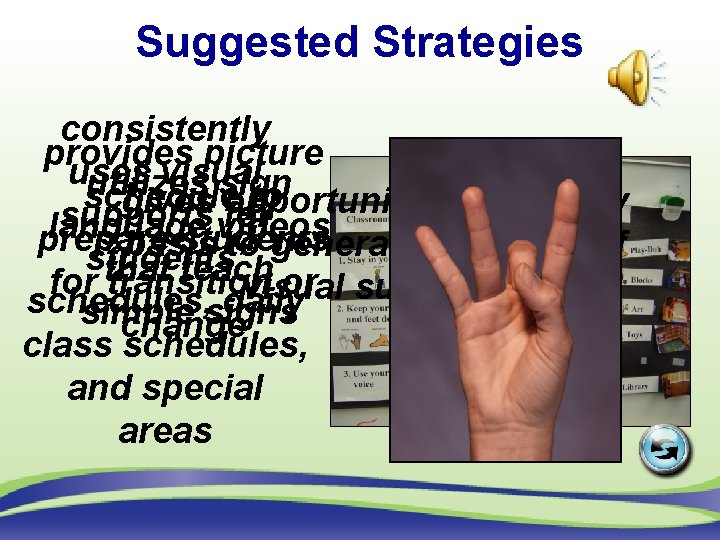
Suggested Strategies consistently provides picture uses visual utilizes sign schedule to gives opportunities on a daily supports for language videos prepare students basis to generalize the use of students’ teach for that transition or supports visual schedules, daily simple signs change class schedules, and special areas
- Slides: 64