
Observable Patterns of Inheritance Chapter 20 Earlobe Variations

Observable Patterns of Inheritance Chapter 20
Earlobe Variations • If you have attached earlobes, you inherited two copies of the recessive allele • If you have detached earlobes, you may have either one or two copies of the dominant allele
Gregor Mendel • Strong background in plant breeding and mathematics • Using pea plants, found indirect but observable evidence of how parents transmit genes to offspring
Alleles • Different molecular forms of a gene • Arise by mutation • Dominant allele masks a recessive allele that is paired with it
Allele Combinations • Homozygous – having two identical alleles at a locus – AA or aa • Heterozygous – having two different alleles at a locus – Aa
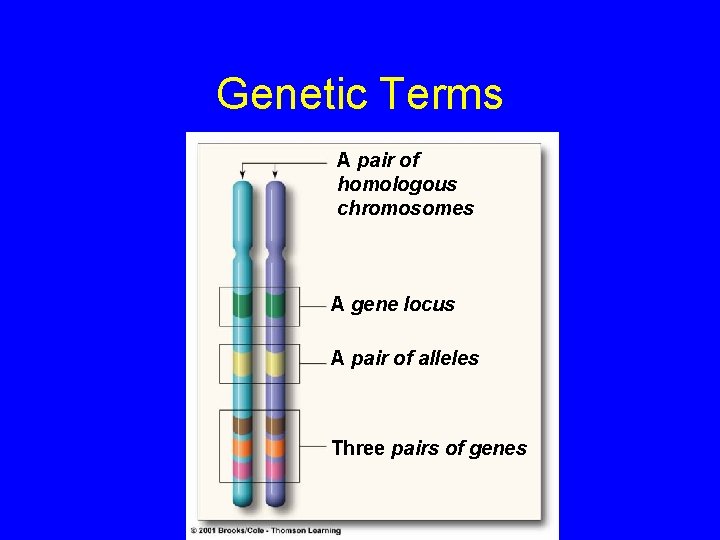
Genetic Terms A pair of homologous chromosomes A gene locus A pair of alleles Three pairs of genes
Genotype & Phenotype • Genotype refers to particular genes an individual carries • Phenotype refers to an individual’s observable traits • Cannot always determine genotype by observing phenotype
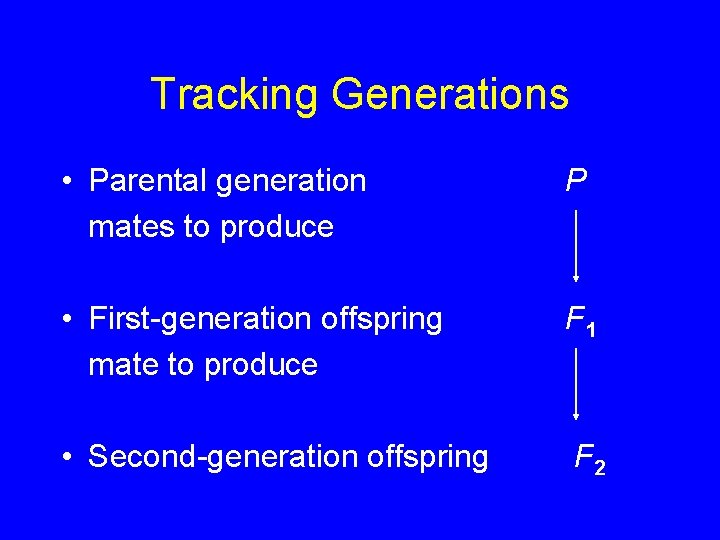
Tracking Generations • Parental generation mates to produce P • First-generation offspring mate to produce F 1 • Second-generation offspring F 2
Mendel’s Theory of Segregation • An individual inherits a unit of information (allele) about a trait from each parent • During gamete formation, the alleles segregate from each other
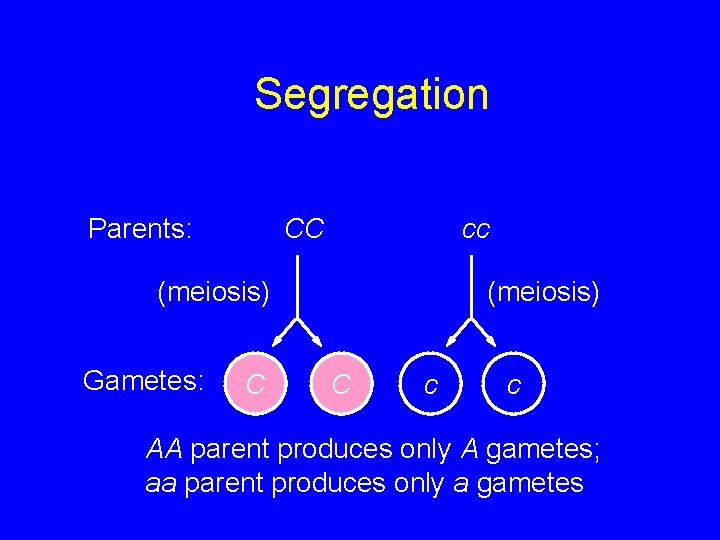
Segregation Parents: CC cc (meiosis) Gametes: C (meiosis) C c c AA parent produces only A gametes; aa parent produces only a gametes
Probability The chance that each outcome of a given event will occur is proportional to the number of ways that event can be reached
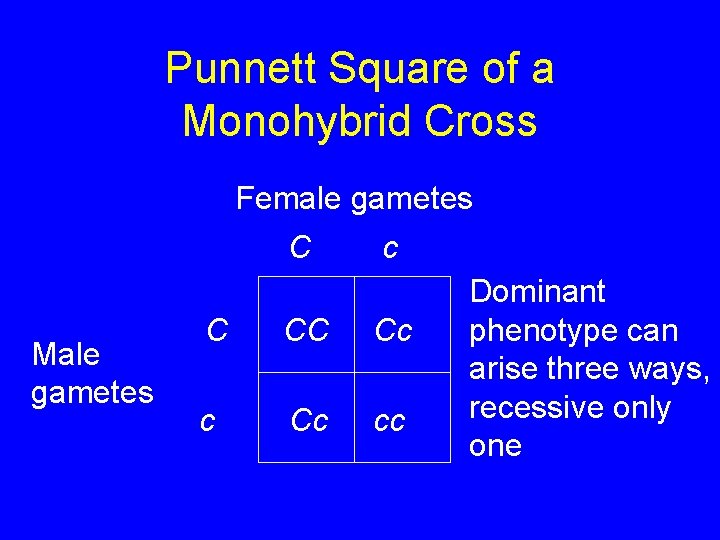
Punnett Square of a Monohybrid Cross Female gametes C Male gametes c C CC Cc cc Dominant phenotype can arise three ways, recessive only one
Test Cross • Individual that shows dominant phenotype is crossed with individual with recessive phenotype • Examining offspring enables you to determine the genotype of the dominant individual
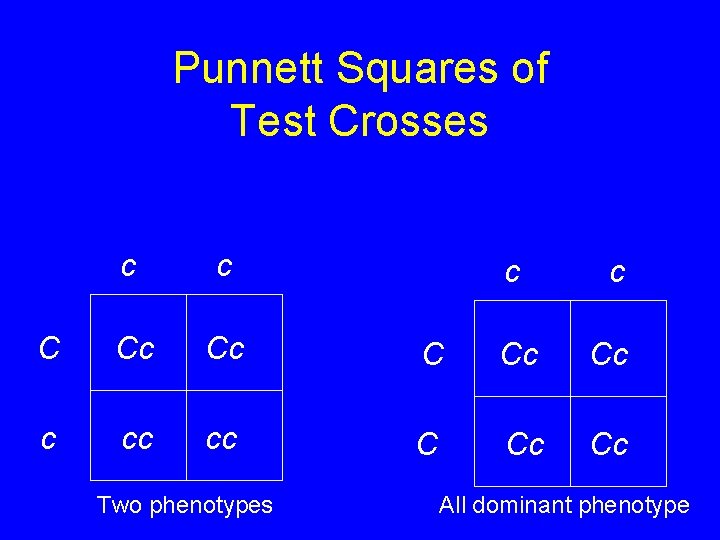
Punnett Squares of Test Crosses c c C Cc Cc c cc cc Two phenotypes c c C Cc Cc All dominant phenotype
Independent Assortment • Mendel concluded that the two “units” for the first trait were to be assorted into gametes independently of the two “units” for the other trait • Members of each pair of homologous chromosomes are sorted into gametes at random during meiosis
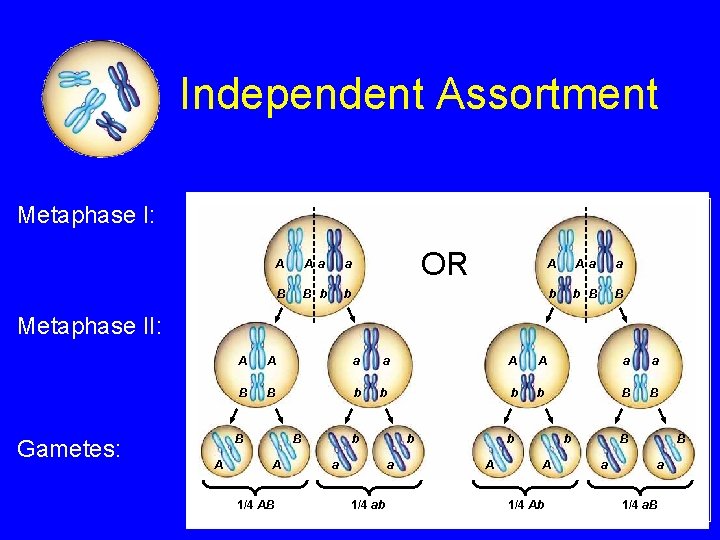
Independent Assortment Metaphase I: A A a a B B b b OR A A a a b b B B Metaphase II: Gametes: A A a a B B b b B B B A 1/4 AB b a 1/4 ab b A 1/4 Ab B a 1/4 a. B
Dihybrid Cross Experimental cross between individuals that are homozygous for different versions of two traits
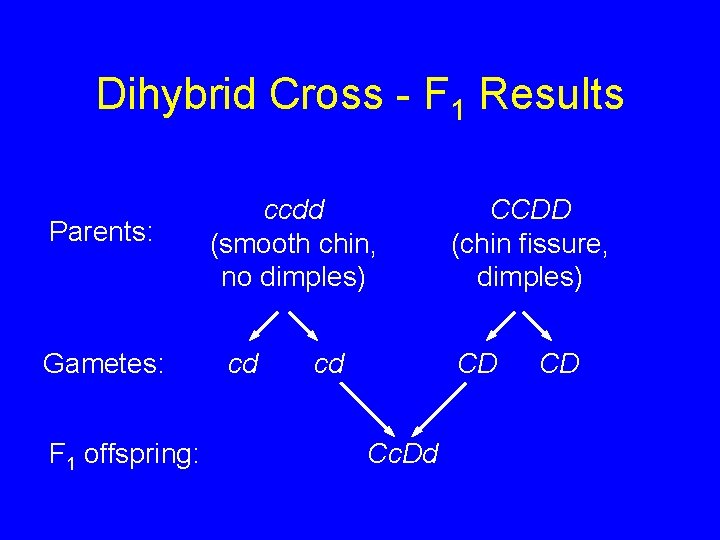
Dihybrid Cross - F 1 Results Parents: Gametes: F 1 offspring: ccdd (smooth chin, no dimples) cd cd CCDD (chin fissure, dimples) CD Cc. Dd CD
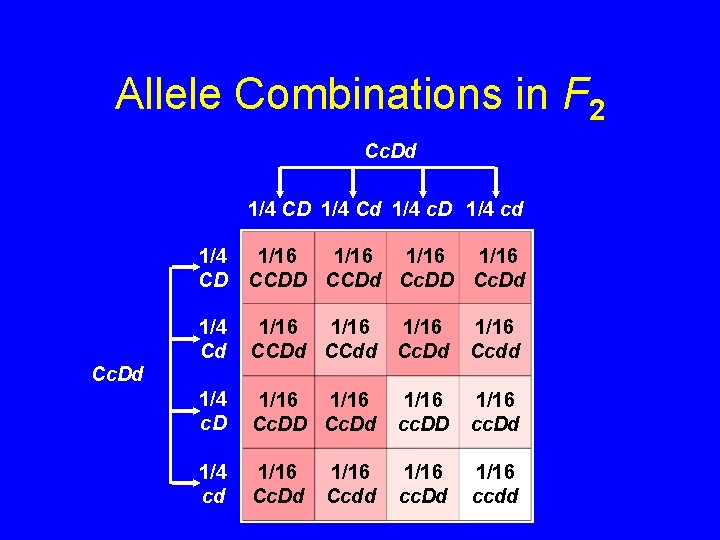
Allele Combinations in F 2 Cc. Dd 1/4 CD 1/4 Cd 1/4 c. D 1/4 cd 1/4 CD 1/16 CCDD CCDd Cc. DD Cc. Dd 1/4 Cd 1/16 CCDd CCdd Cc. Dd 1/16 Ccdd 1/4 c. D 1/16 Cc. DD Cc. Dd 1/16 cc. DD 1/16 cc. Dd 1/4 cd 1/16 Cc. Dd 1/16 ccdd Cc. Dd 1/16 Ccdd
Pleiotropy • Alleles at a single locus may have effects on two or more traits • Classic example is the effects of the mutant allele at the beta-globin locus that gives rise to sickle-cell anemia
Genetics of Sickle-Cell Anemia • Two alleles 1) Hb. A Encodes normal beta-hemoglobin chain 2) Hb. S Mutant allele encodes defective chain • Hb. S homozygotes produce only the defective hemoglobin; suffer from sicklecell anemia
Sickle-Cell Anemia • At low oxygen levels, cells with only Hb. S hemoglobin “sickle” and stick together • This impedes oxygen delivery and blood flow • Over time, it causes damage throughout the body
Campodactyly: Unexpected Phenotypes • Effect of allele varies: – Bent fingers on both hands – Bent fingers on one hand – No effect • Many factors affect gene expression
Polygenic Traits • Result from the combined expression of several genes • Skin color, eye color • Population may show continuous variation
Continuous Variation • A more or less continuous range of small differences in a given trait among individuals • The greater the number of genes and environmental factors that affect a trait, the more continuous the variation in versions of that trait
- Slides: 25