
obliquityoblateness feedback at the Moon Bruce G Bills
obliquity-oblateness feedback at the Moon Bruce G. Bills 1 with help from William B. Moore 2 Matthew A. Siegler 3 William I. Newman 3 1 Jet Propulsion Laboratory, California Institute of Technology, Pasadena, CA 2 Department of Atmospheric and Planetary Sciences, Hampton University, Hampton, VA 3 Department of Earth and Space Sciences, UCLA, Los Angeles, CA
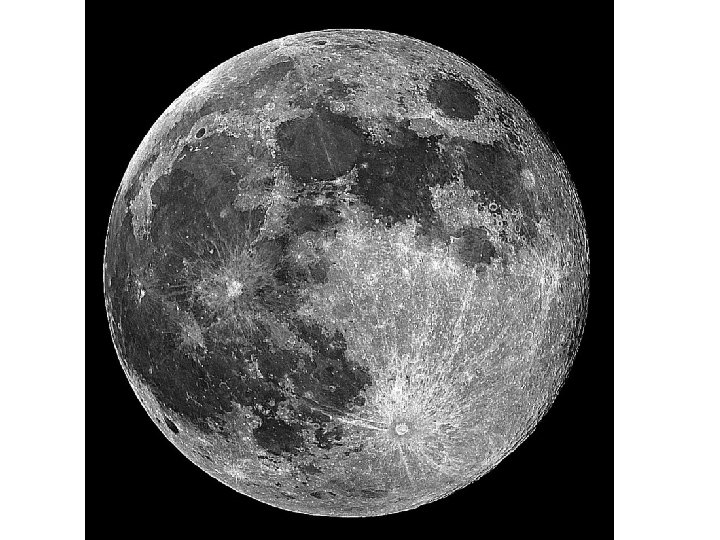
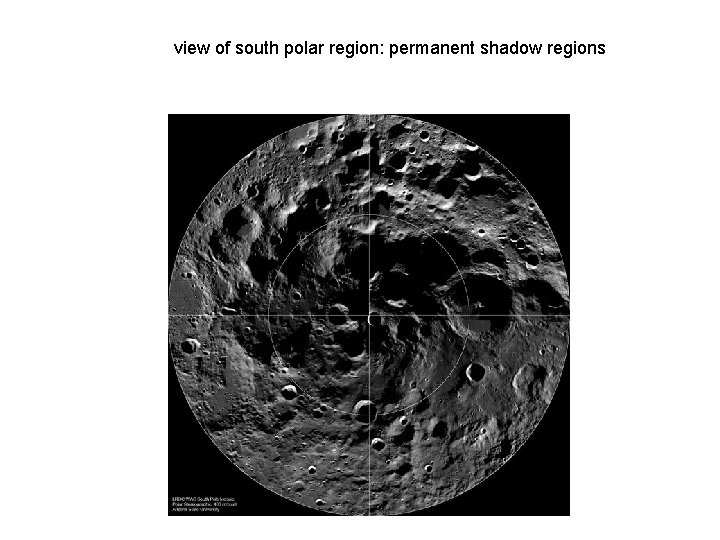
view of south polar region: permanent shadow regions
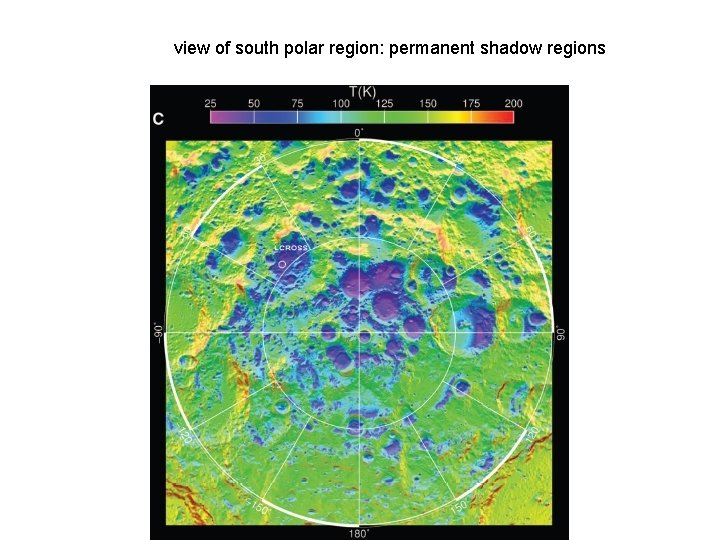
view of south polar region: permanent shadow regions
summary • obliquity is the angular separation of spin and orbit poles, and controls polar radiation balance • during the Moon’s orbital evolution away from Earth, lunar obliquity has changed significantly • details of that change depend upon the degree two lunar gravity field • tides and spin rate variations perturbed the early gravity field • past lunar response is unknown • we examine several possible histories
history of lunar obliquity studies • 1693 Giovanni Domenico Cassini – announced 3 observed “laws” of lunar rotation • 1966 Giuseppe (Bepi) Colombo – explained Cassini’s laws 2 and 3 • 1969 Stan Peale – generalized to triaxial case • 1975 Bill Ward – applied theory to past lunar history
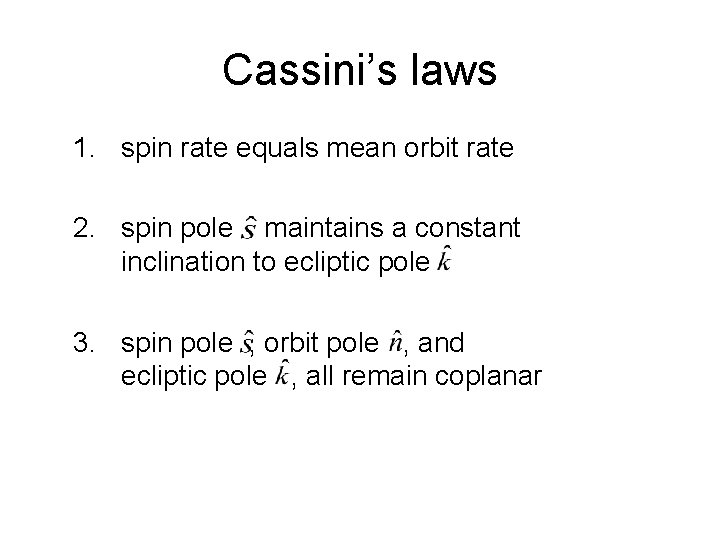
Cassini’s laws 1. spin rate equals mean orbit rate 2. spin pole maintains a constant inclination to ecliptic pole 3. spin pole , orbit pole , and ecliptic pole , all remain coplanar
outline • Bill Ward’s lunar obliquity history • what is a Cassini state? • basics of orbit and spin precession • influence of tides on obliquity history
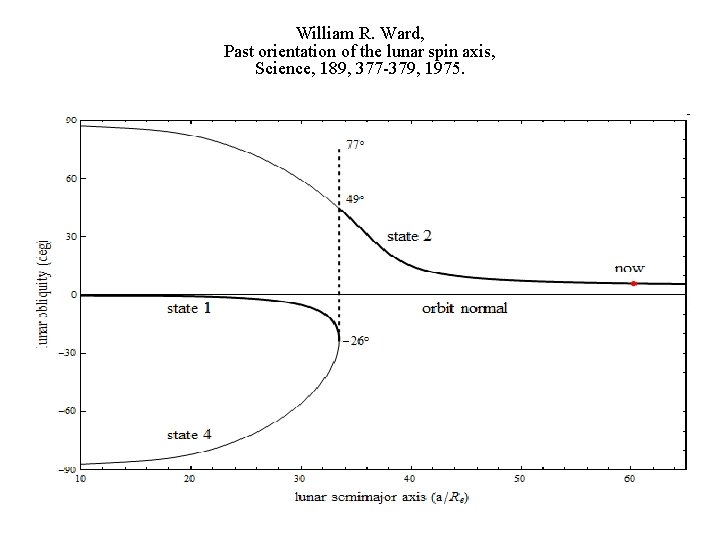
William R. Ward, Past orientation of the lunar spin axis, Science, 189, 377 -379, 1975.
why did the Moon do that? • what is a Cassini state? • why is the Moon in such a state? • what causes obliquity to change? • what did Ward leave out?
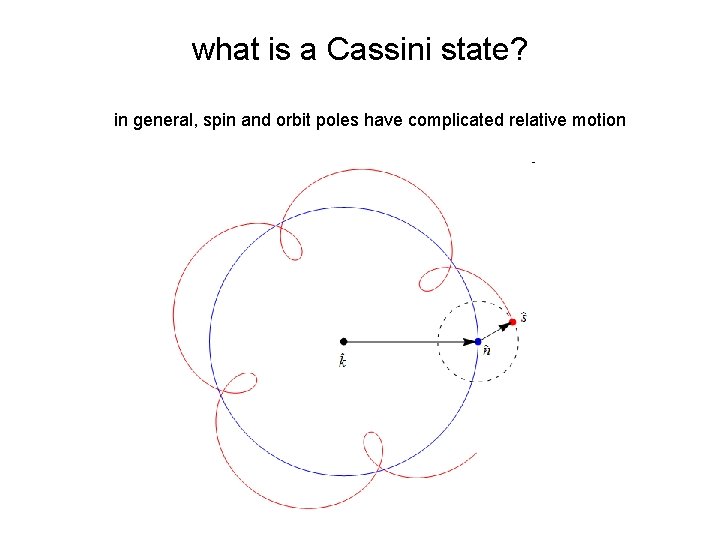
what is a Cassini state? in general, spin and orbit poles have complicated relative motion
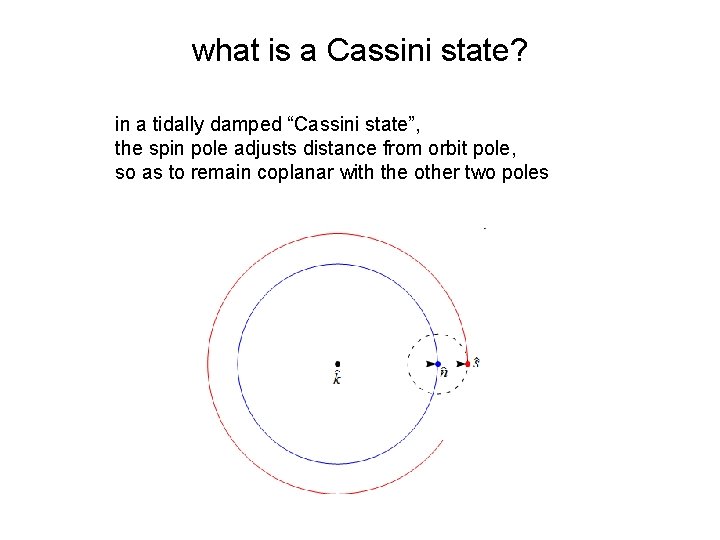
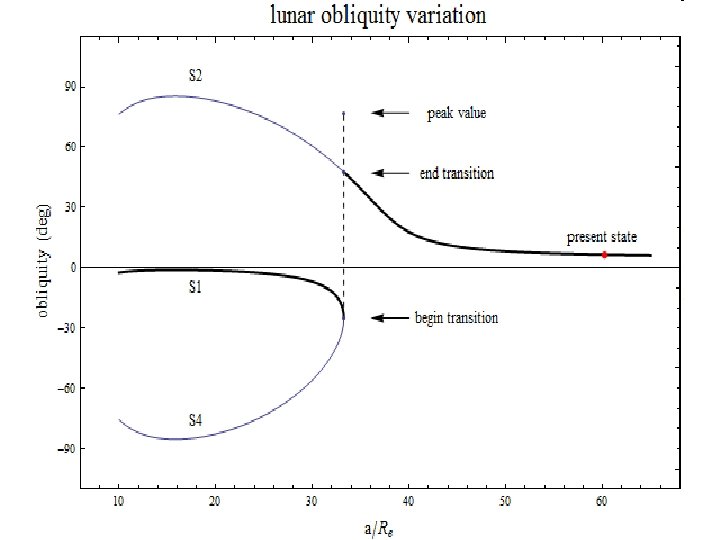
what is a Cassini state? in a tidally damped “Cassini state”, the spin pole adjusts distance from orbit pole, so as to remain coplanar with the other two poles
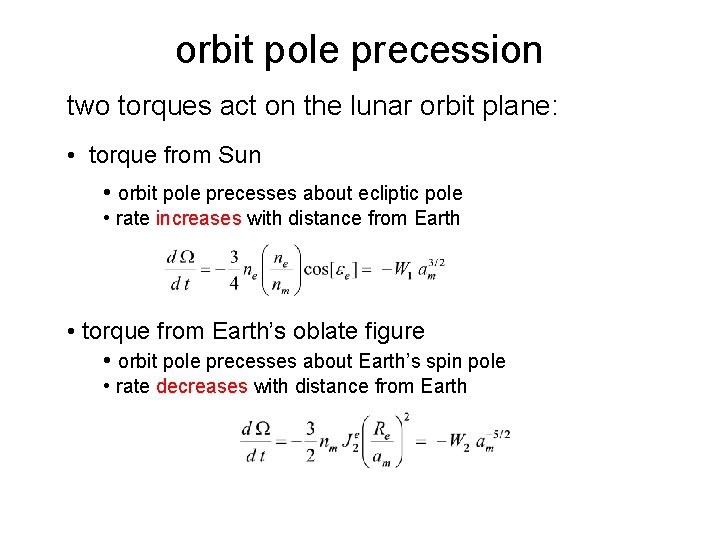
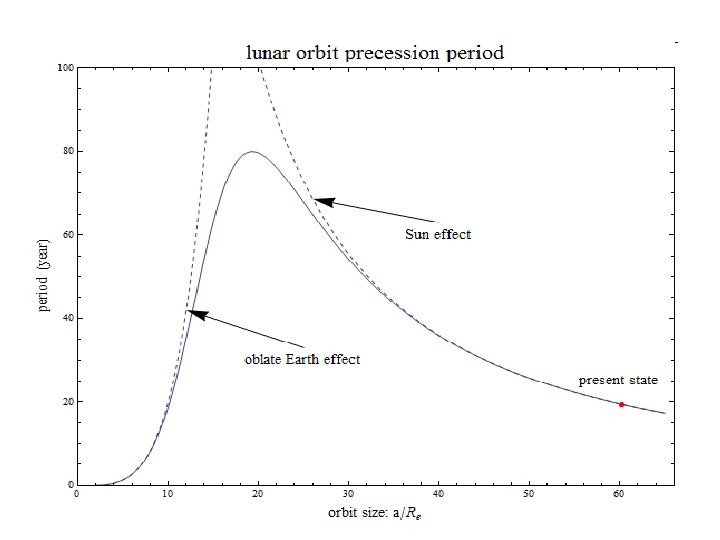
orbit pole precession two torques act on the lunar orbit plane: • torque from Sun • orbit pole precesses about ecliptic pole • rate increases with distance from Earth • torque from Earth’s oblate figure • orbit pole precesses about Earth’s spin pole • rate decreases with distance from Earth
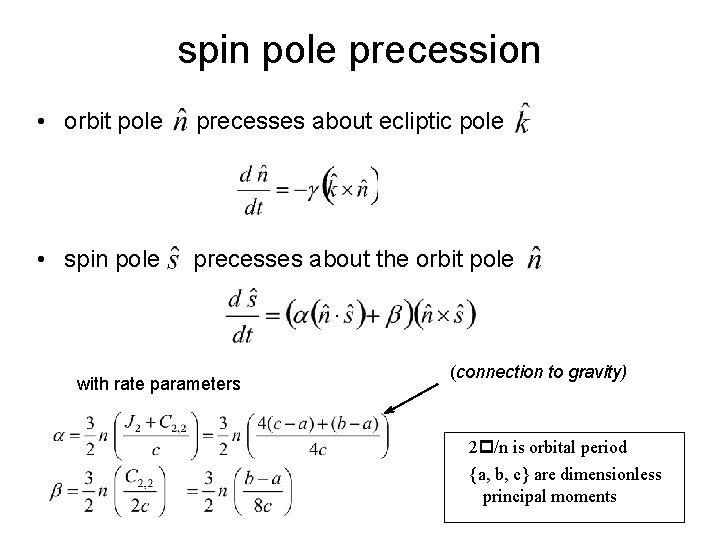
spin pole precession • orbit pole precesses about ecliptic pole • spin pole precesses about the orbit pole with rate parameters (connection to gravity) 2 /n is orbital period {a, b, c} are dimensionless principal moments
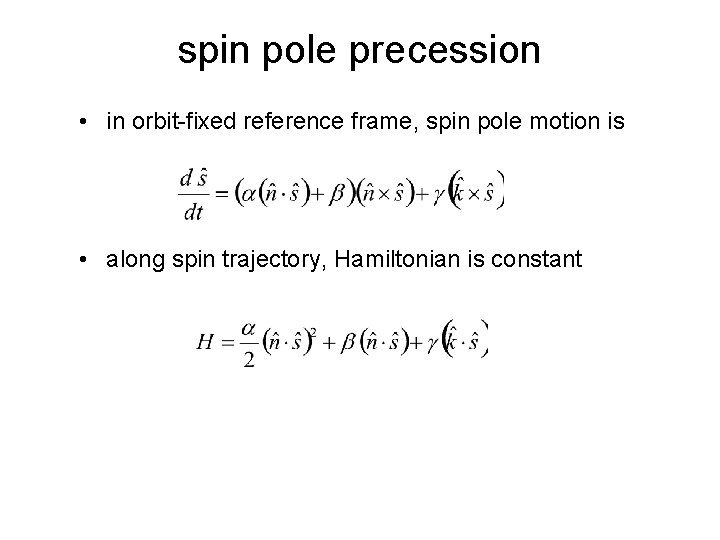
spin pole precession • in orbit-fixed reference frame, spin pole motion is • along spin trajectory, Hamiltonian is constant
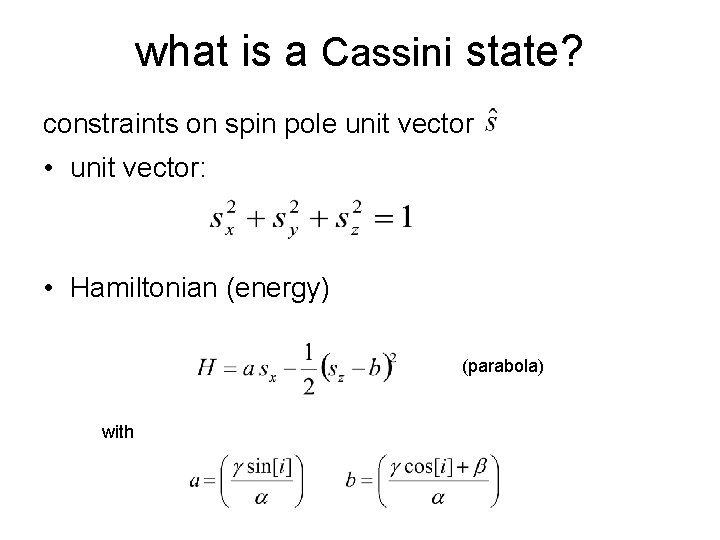
what is a Cassini state? constraints on spin pole unit vector • unit vector: • Hamiltonian (energy) (parabola) with
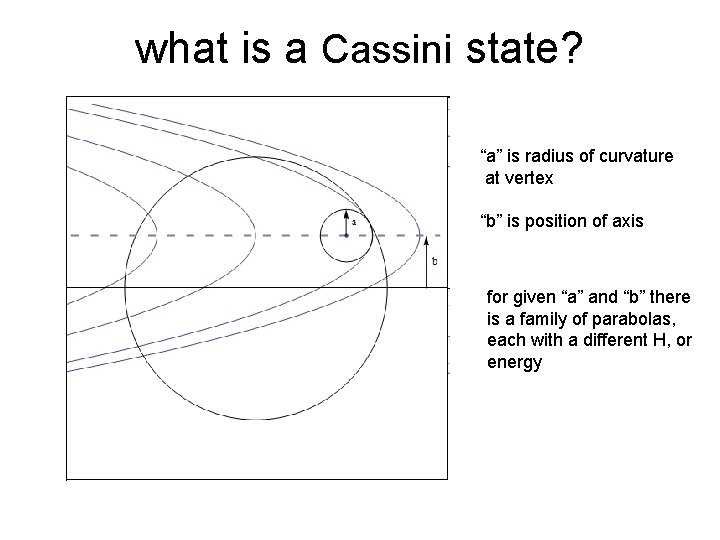
what is a Cassini state? “a” is radius of curvature at vertex “b” is position of axis for given “a” and “b” there is a family of parabolas, each with a different H, or energy
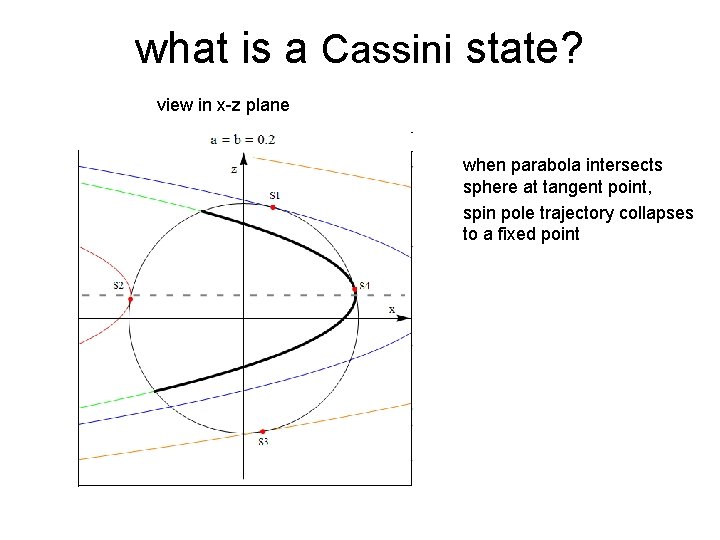
what is a Cassini state? view in x-z plane when parabola intersects sphere at tangent point, spin pole trajectory collapses to a fixed point
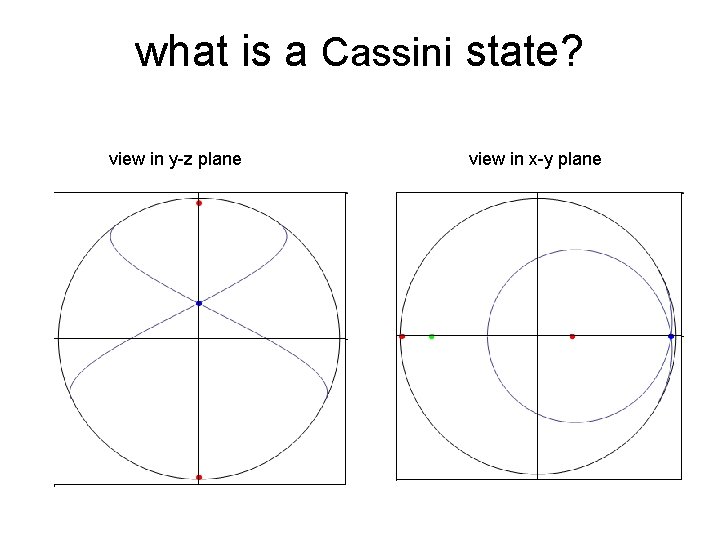
what is a Cassini state? view in y-z plane view in x-y plane
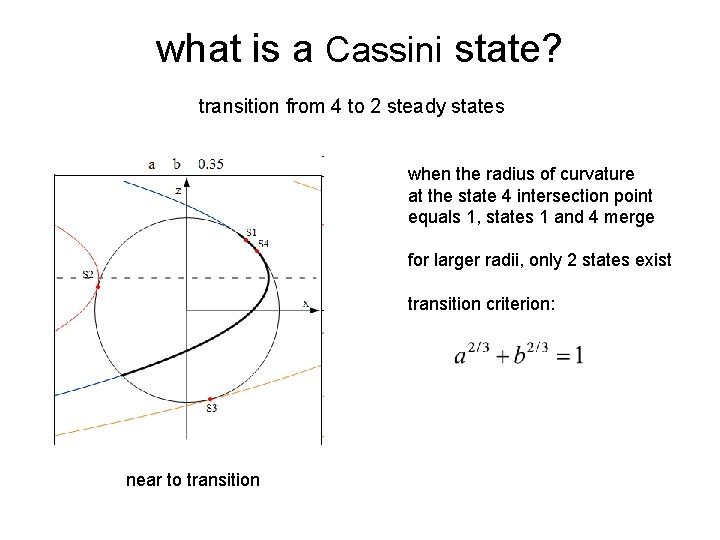
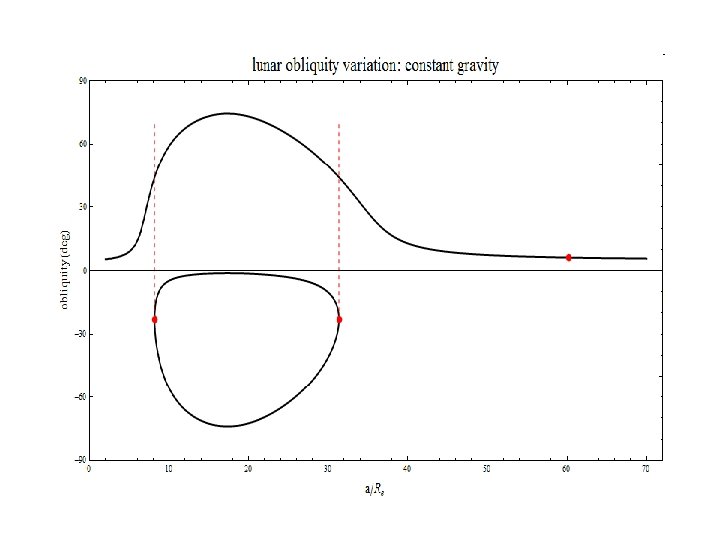
what is a Cassini state? transition from 4 to 2 steady states when the radius of curvature at the state 4 intersection point equals 1, states 1 and 4 merge for larger radii, only 2 states exist transition criterion: near to transition
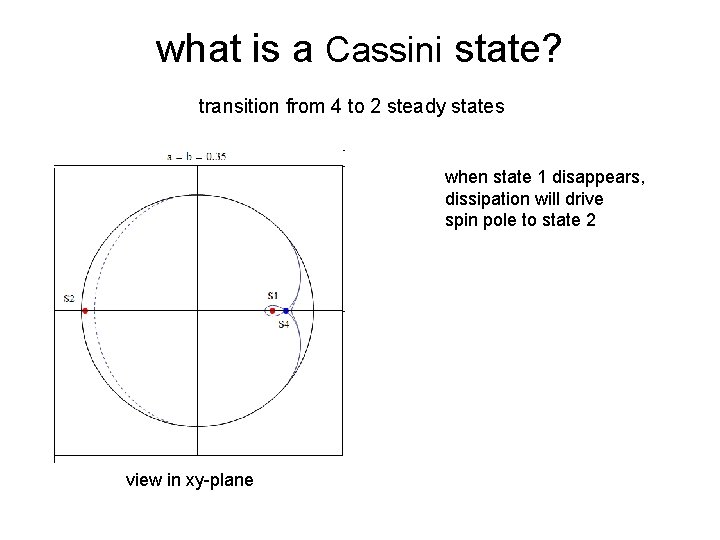
what is a Cassini state? transition from 4 to 2 steady states when state 1 disappears, dissipation will drive spin pole to state 2 view in xy-plane
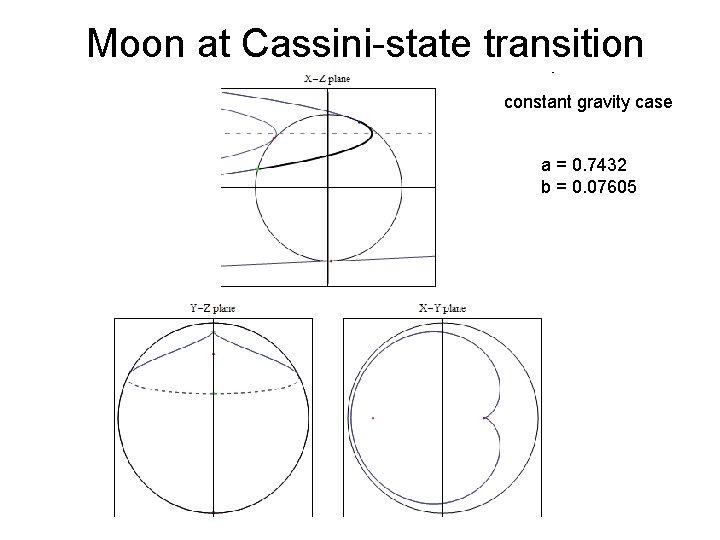
Moon at Cassini-state transition constant gravity case a = 0. 7432 b = 0. 07605
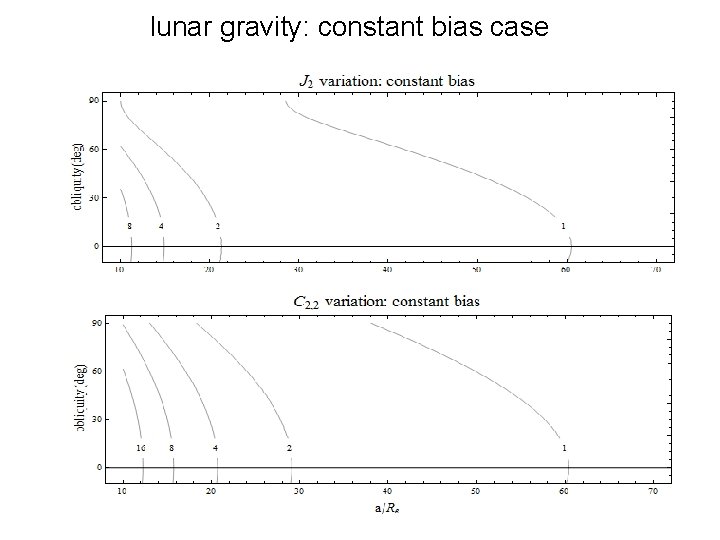
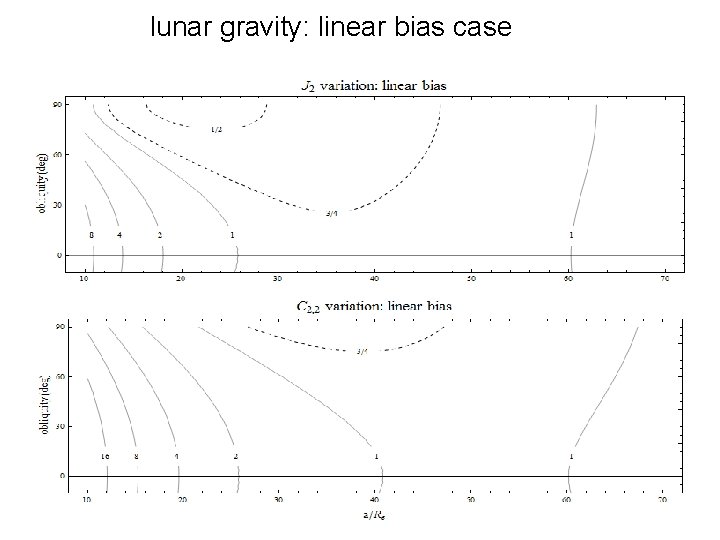
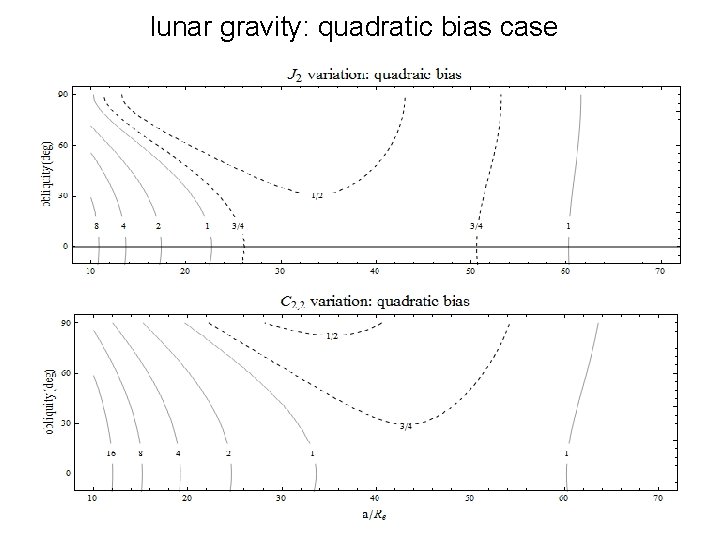
what did Ward leave out? lunar gravity field (J 2 and C 2, 2) – influences • spin precession rate • obliquity – depends upon • distance from Earth (included) • obliquity (not included)
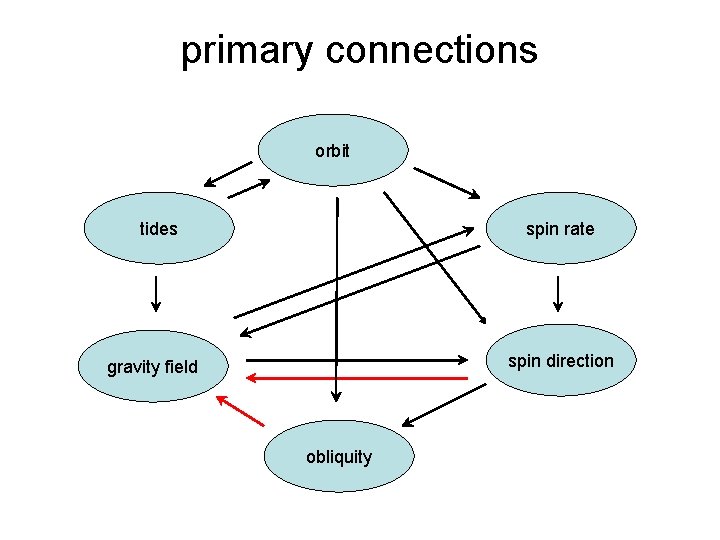
primary connections orbit tides spin rate spin direction gravity field obliquity
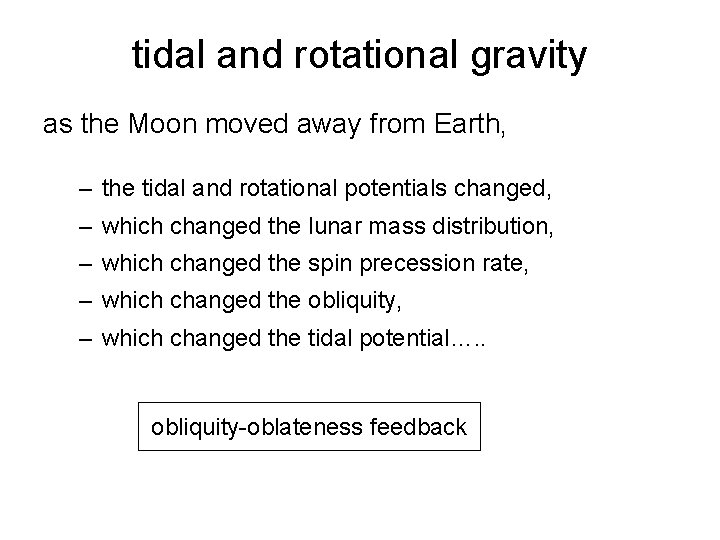
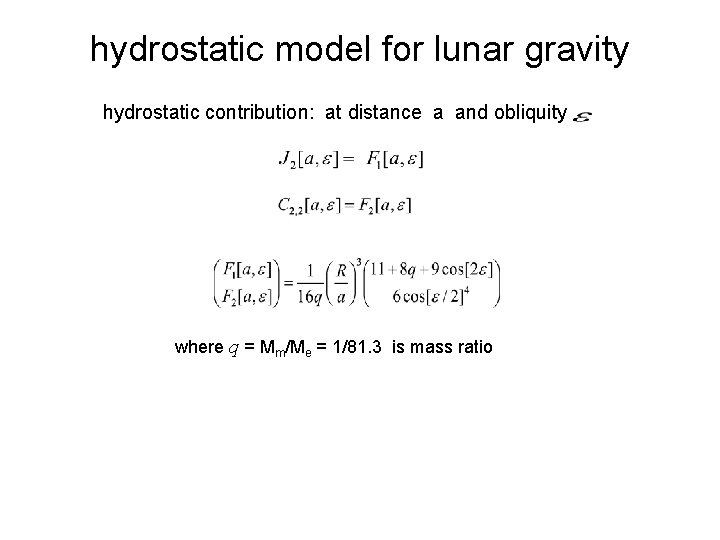
tidal and rotational gravity as the Moon moved away from Earth, – the tidal and rotational potentials changed, – which changed the lunar mass distribution, – which changed the spin precession rate, – which changed the obliquity, – which changed the tidal potential…. . obliquity-oblateness feedback
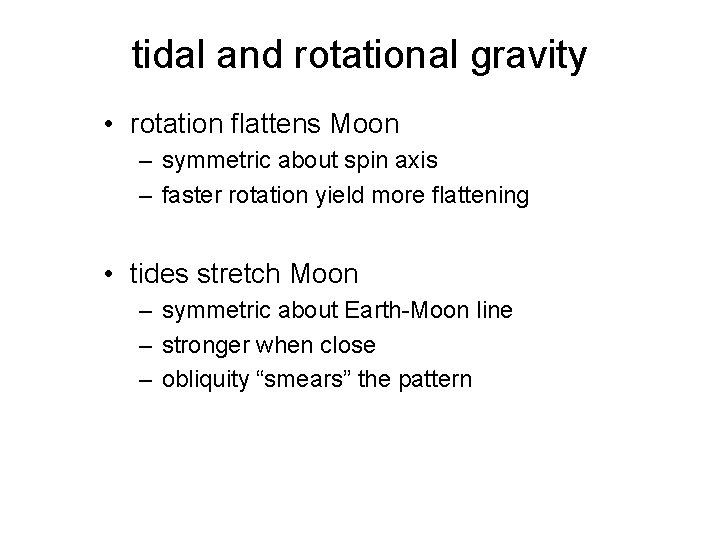
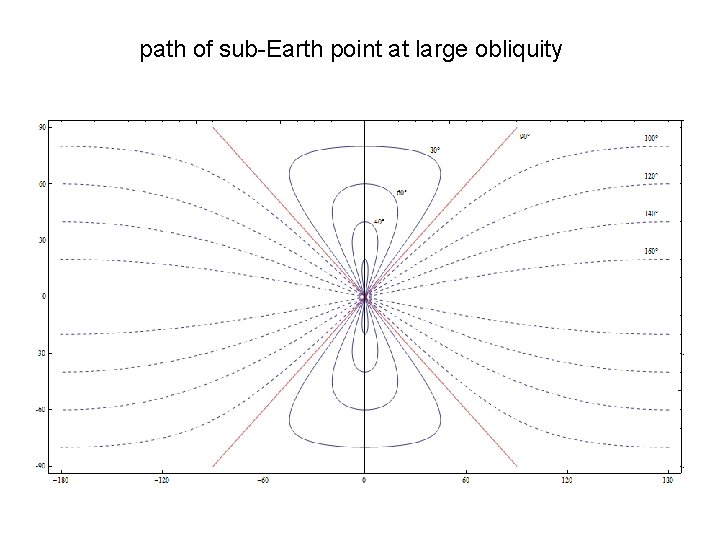
tidal and rotational gravity • rotation flattens Moon – symmetric about spin axis – faster rotation yield more flattening • tides stretch Moon – symmetric about Earth-Moon line – stronger when close – obliquity “smears” the pattern
path of sub-Earth point at large obliquity
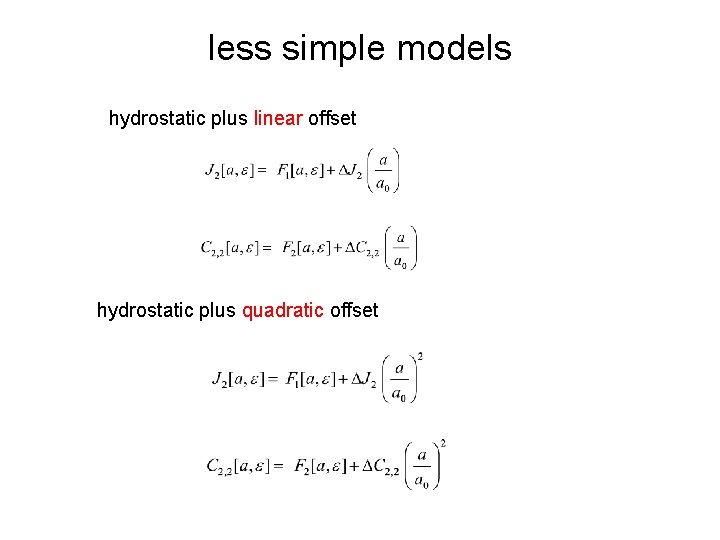
hydrostatic model for lunar gravity hydrostatic contribution: at distance a and obliquity where q = Mm/Me = 1/81. 3 is mass ratio
Moon is far from hydrostatic • gravity coefficients • current values: • hydrostatic values:
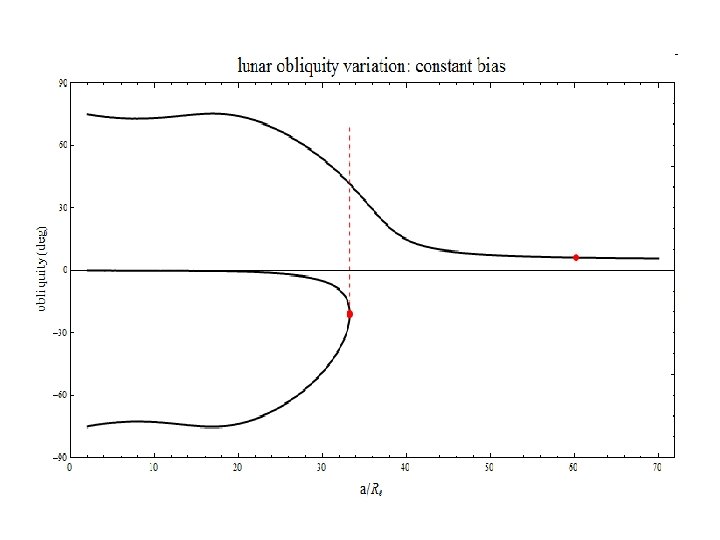
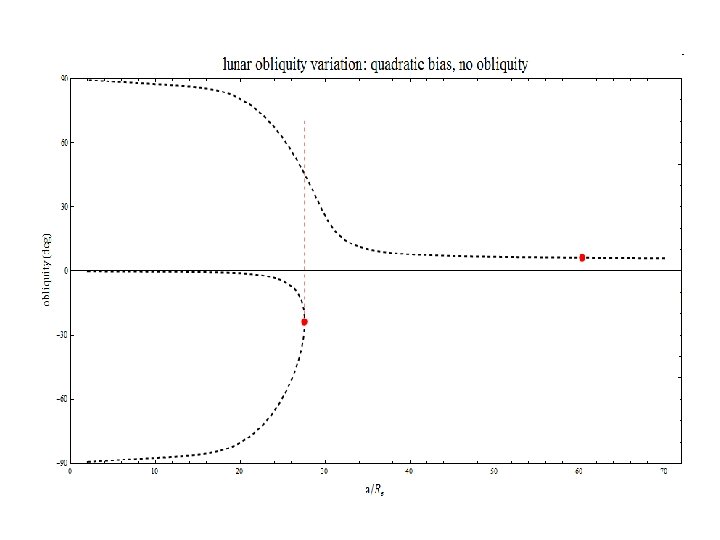
simple model for past variation hydrostatic plus constant offsets: difference between observed and current hydrostatic
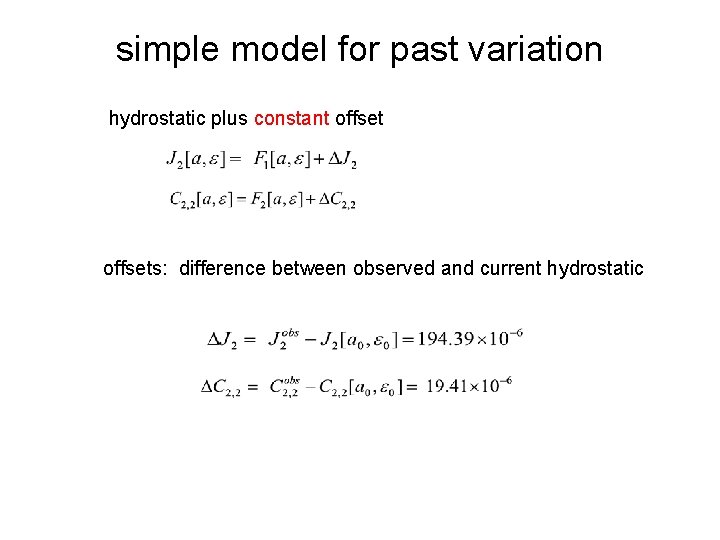
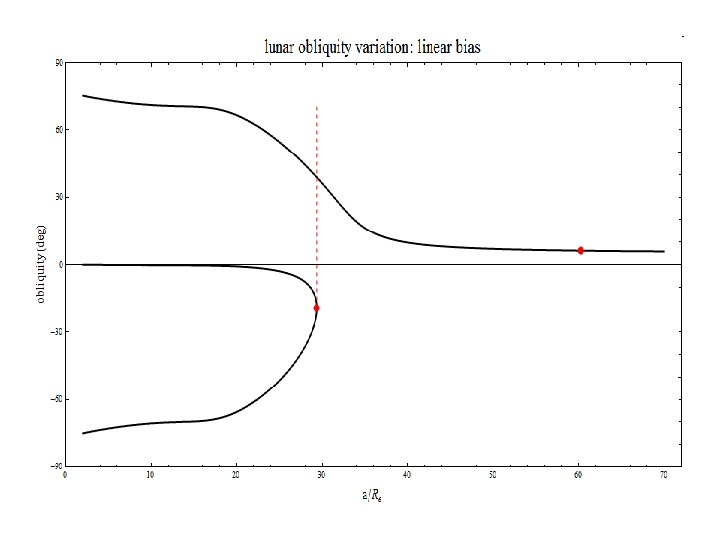
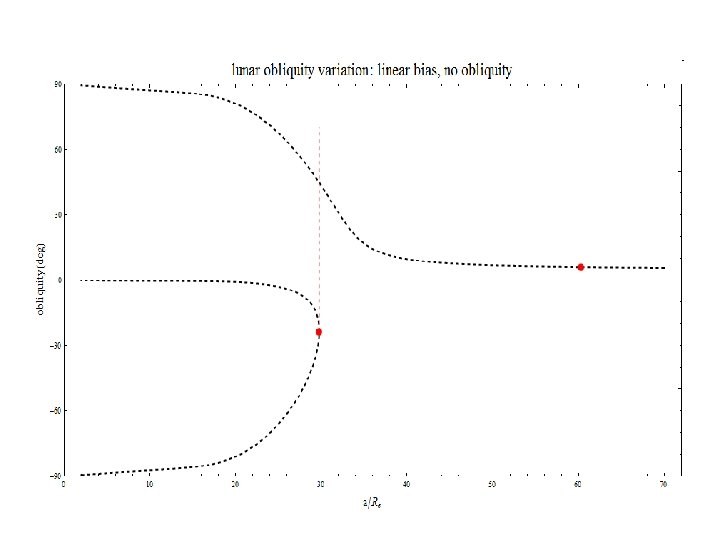
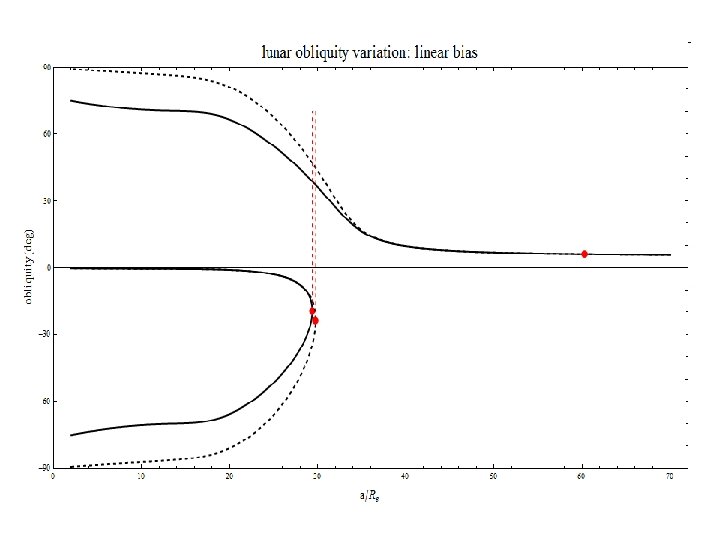
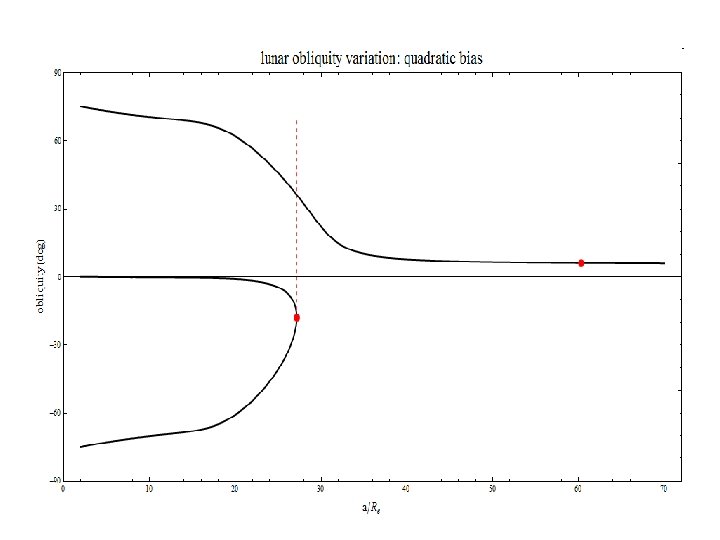
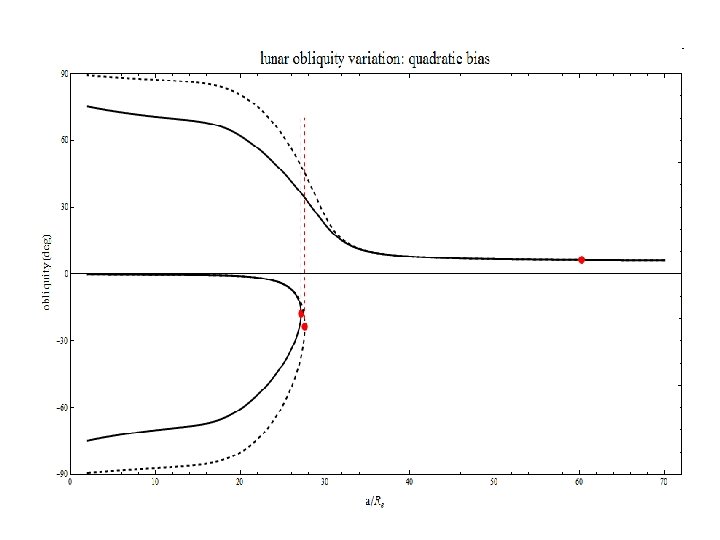
less simple models hydrostatic plus linear offset hydrostatic plus quadratic offset
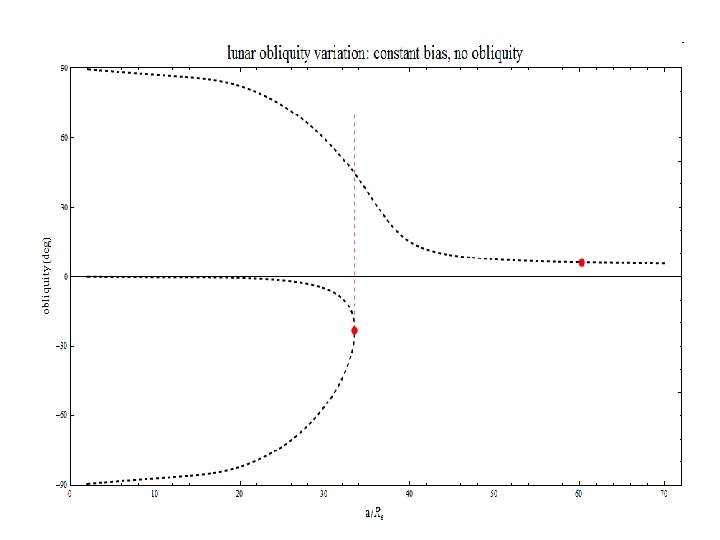
lunar gravity: constant bias case
lunar gravity: linear bias case
lunar gravity: quadratic bias case
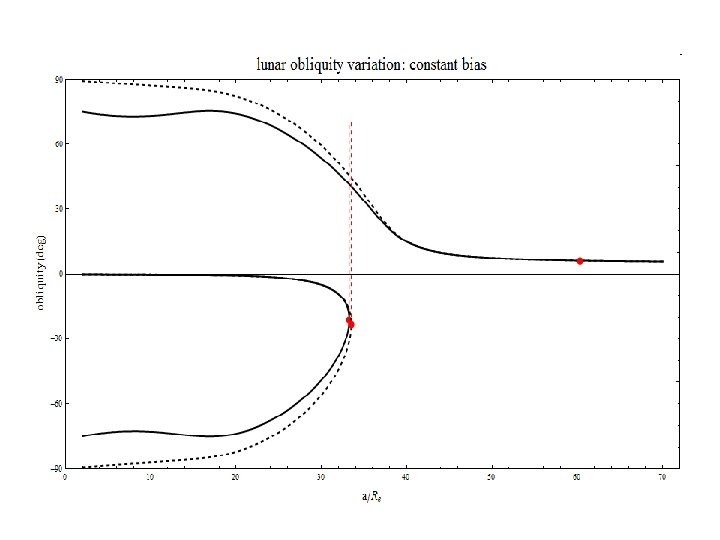
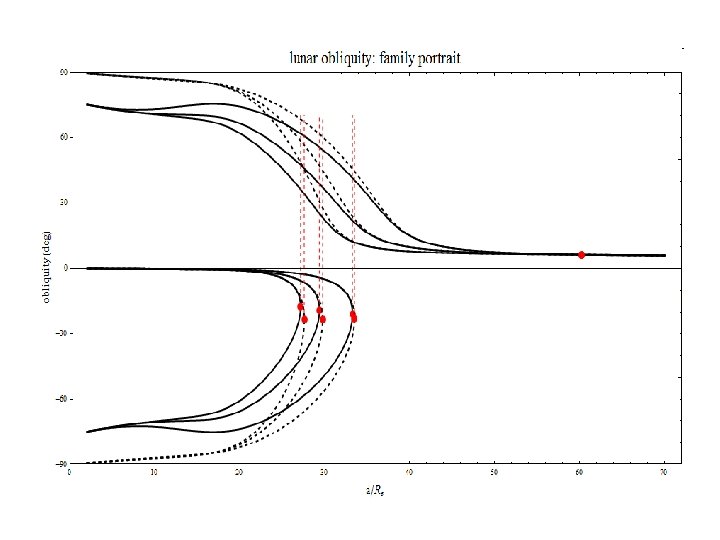
conclusions • obliquity during Cassini state transition – very different that at present – strongly dependent upon lunar gravity • prospects for improving knowledge – grim
- Slides: 48