
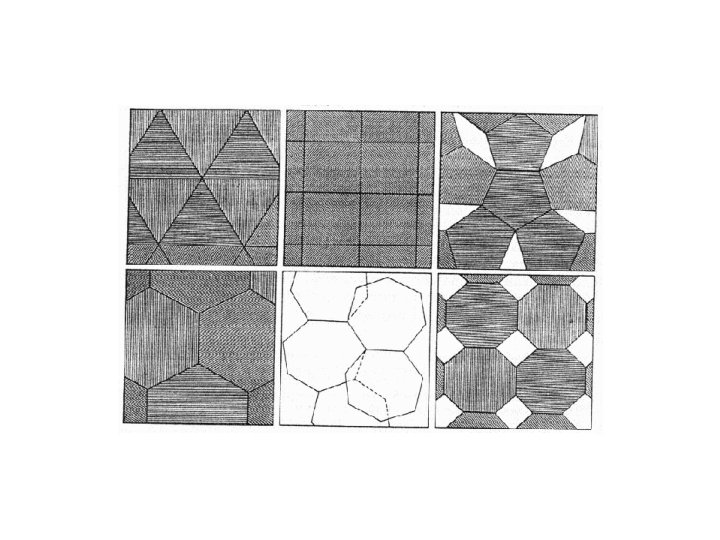
Oblique lattice ab a 90 Symmetry 2 Rectangular

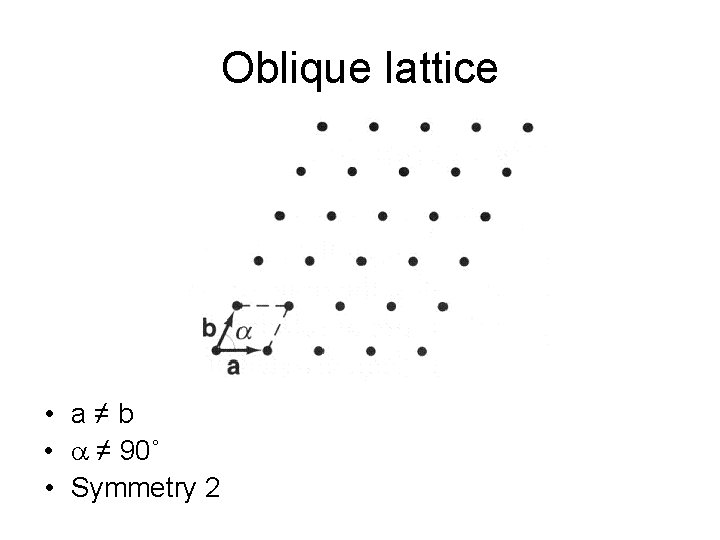
Oblique lattice • a≠b • a ≠ 90˚ • Symmetry 2
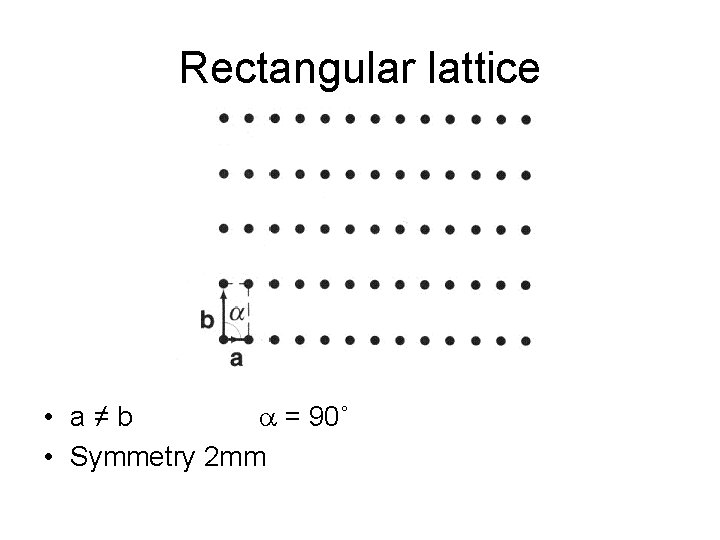
Rectangular lattice • a≠b a = 90˚ • Symmetry 2 mm
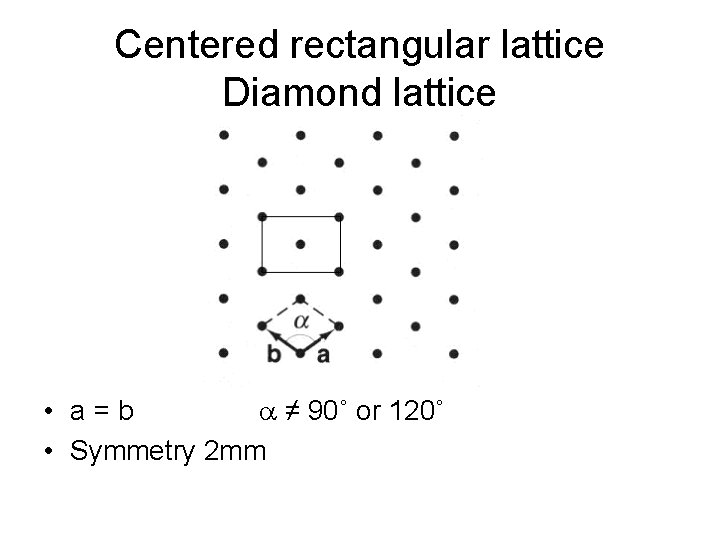
Centered rectangular lattice Diamond lattice • a=b a ≠ 90˚ or 120˚ • Symmetry 2 mm
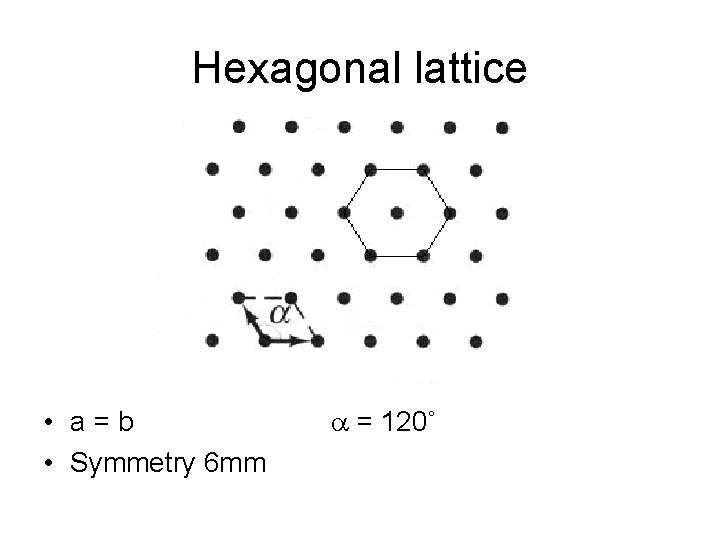
Hexagonal lattice • a=b • Symmetry 6 mm a = 120˚
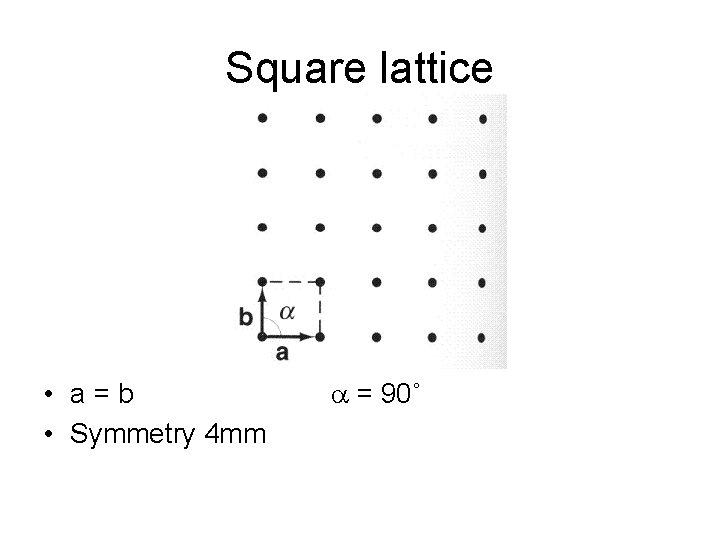
Square lattice • a=b • Symmetry 4 mm a = 90˚
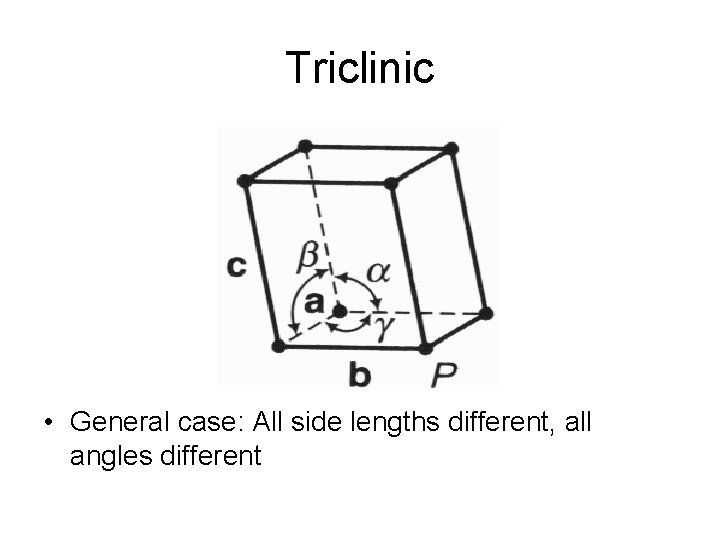
Triclinic • General case: All side lengths different, all angles different
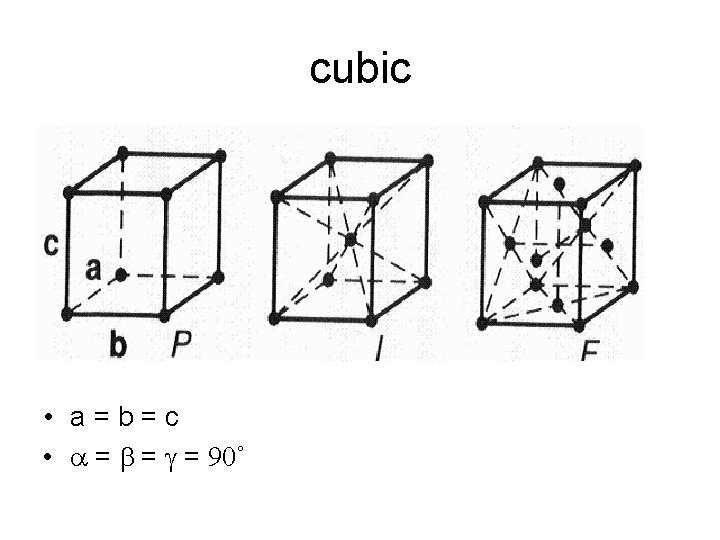
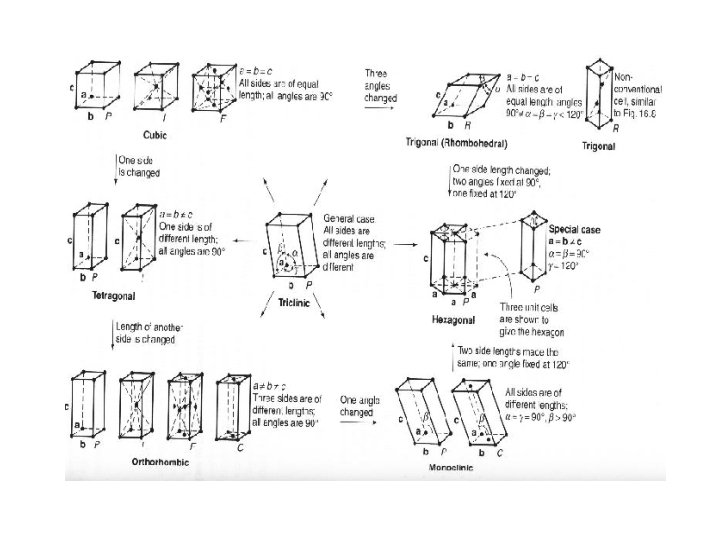
cubic • a=b=c • a = b = g = 90˚
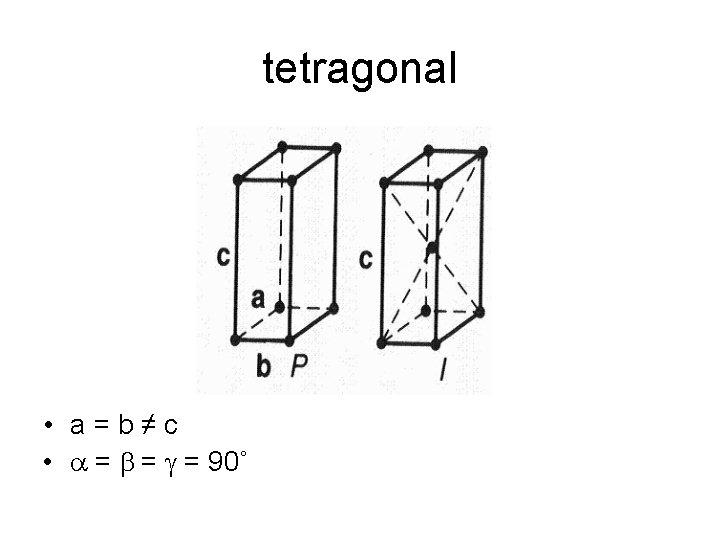
tetragonal • a=b≠c • a = b = g = 90˚
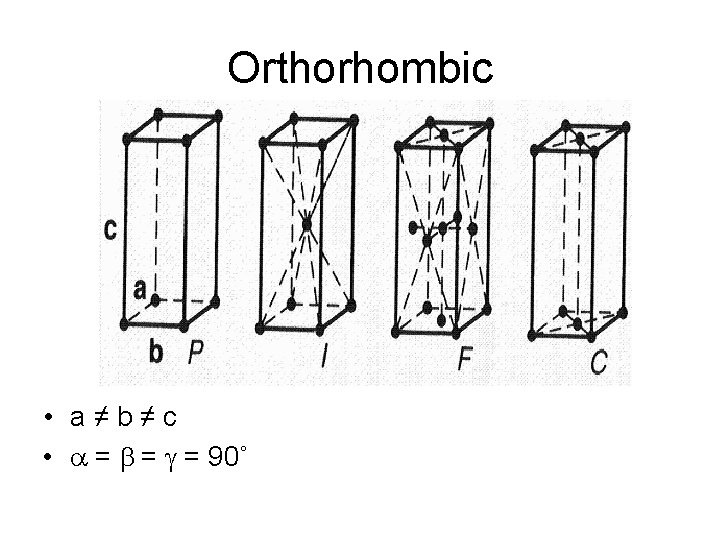
Orthorhombic • a≠b≠c • a = b = g = 90˚
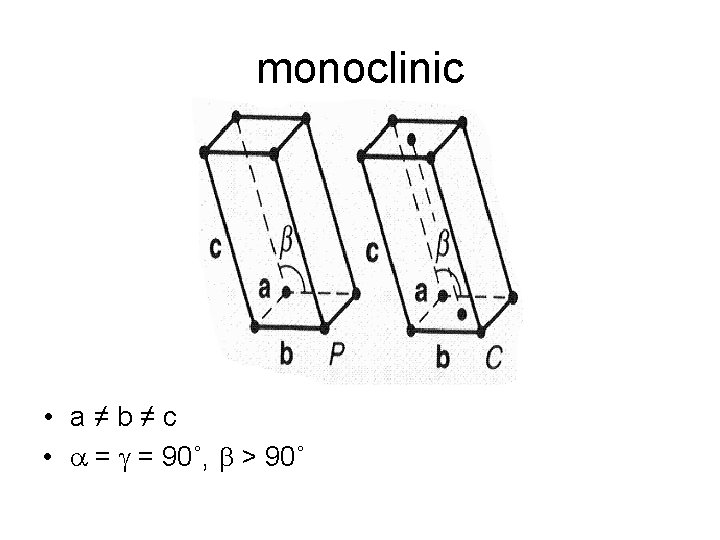
monoclinic • a≠b≠c • a = g = 90˚, b > 90˚
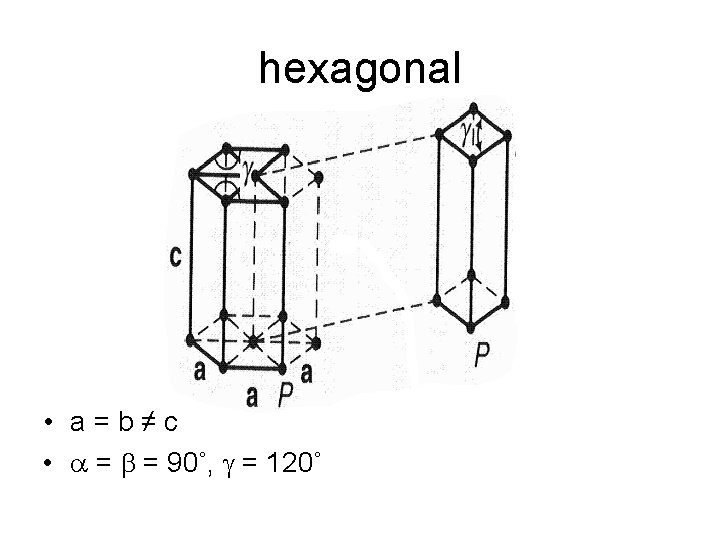
hexagonal • a=b≠c • a = b = 90˚, g = 120˚
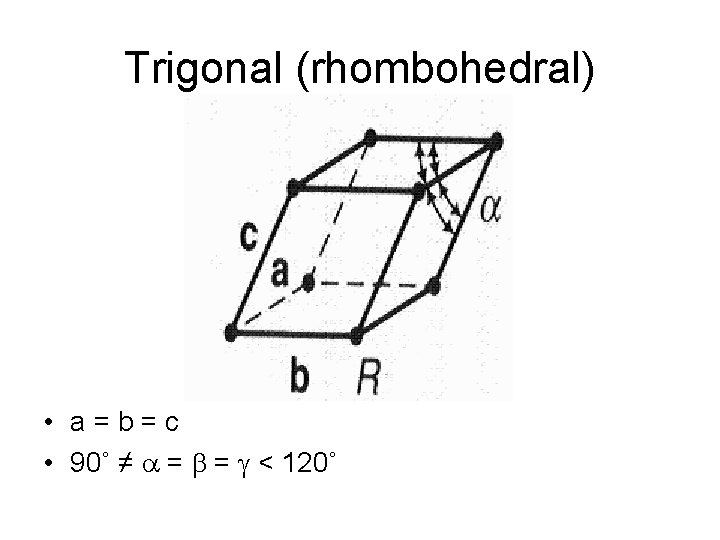
Trigonal (rhombohedral) • a=b=c • 90˚ ≠ a = b = g < 120˚
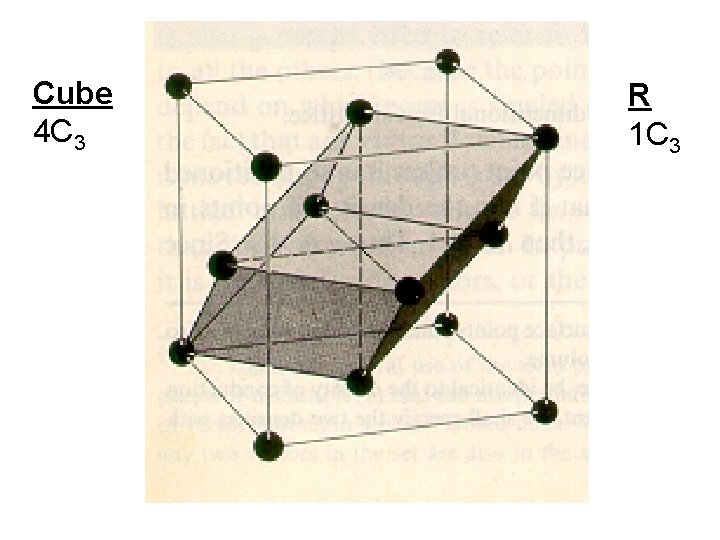
Cube 4 C 3 R 1 C 3

Symmetry axes and planes of the cube C 4 C 3 C 2
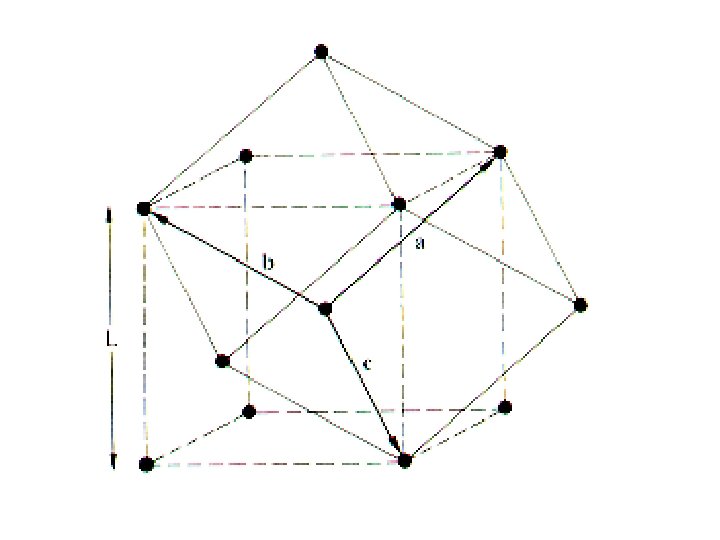
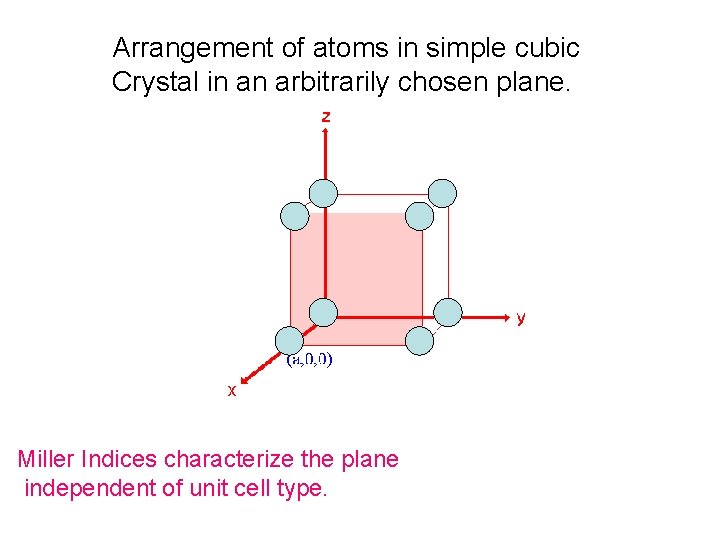
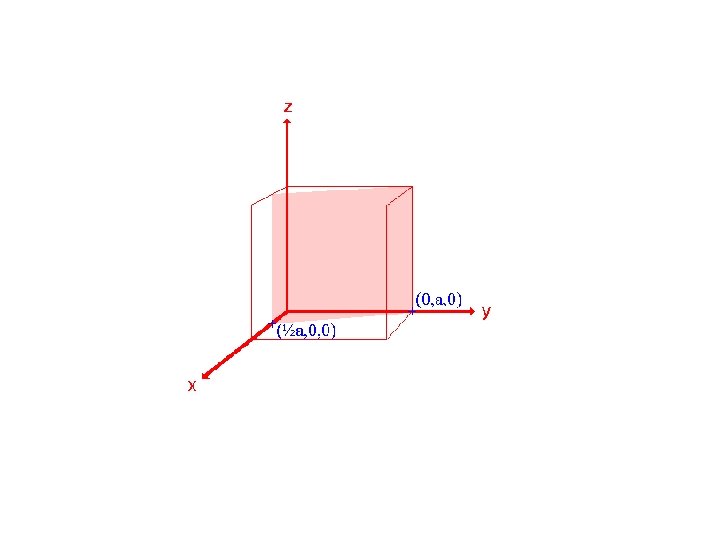
Arrangement of atoms in simple cubic Crystal in an arbitrarily chosen plane. Miller Indices characterize the plane independent of unit cell type.
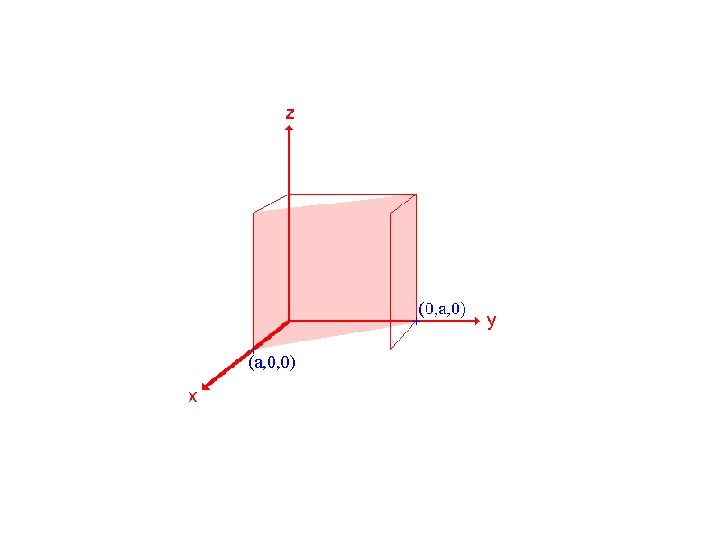
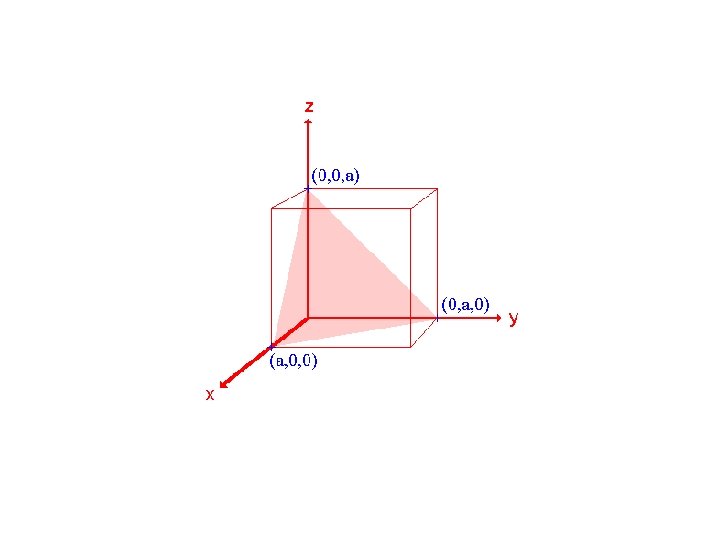
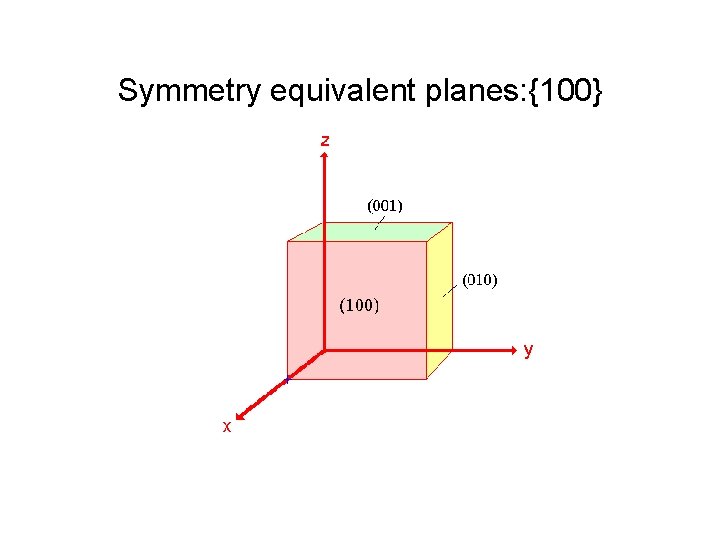
Symmetry equivalent planes: {100}
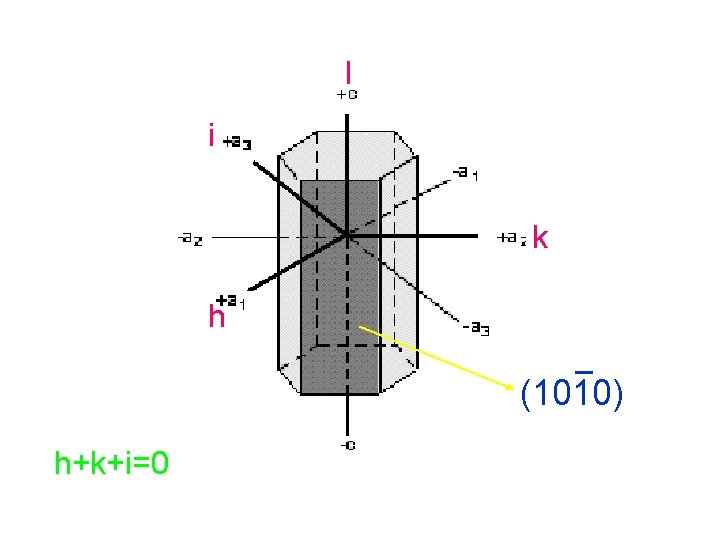
l i k h (1010) h+k+i=0
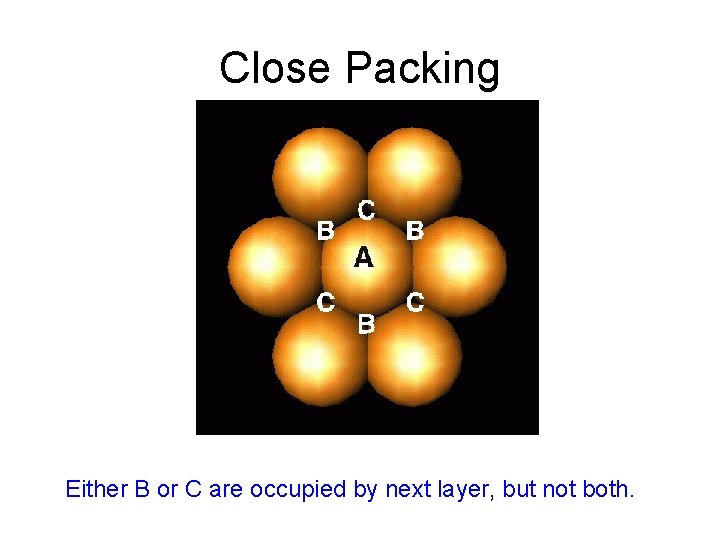
Close Packing Either B or C are occupied by next layer, but not both.
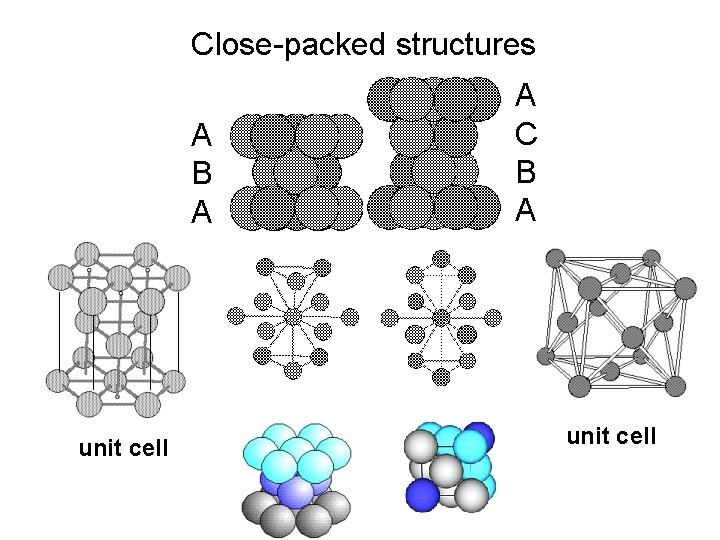
Close-packed structures A B A unit cell A C B A unit cell
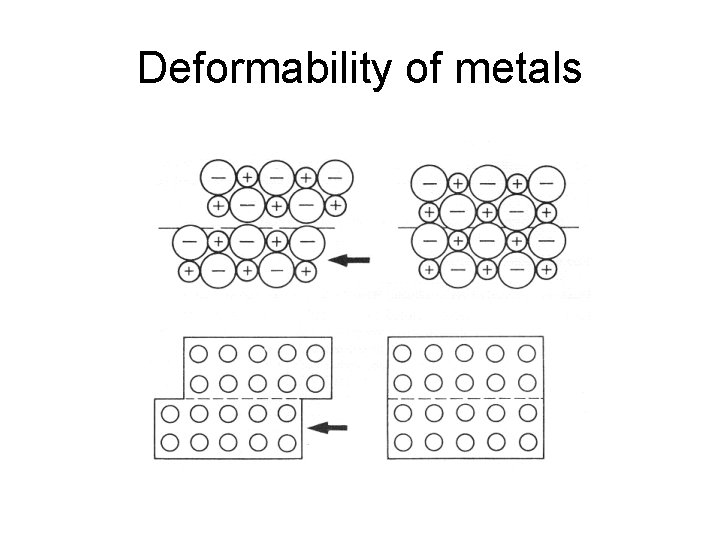
Deformability of metals
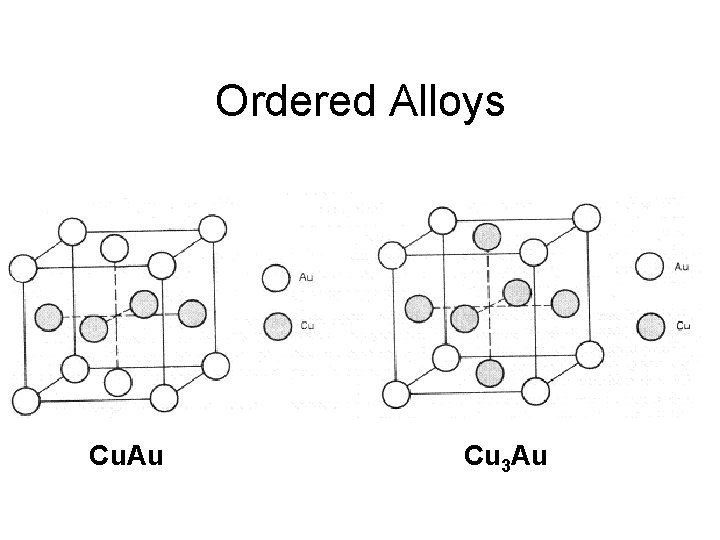
Ordered Alloys Cu. Au Cu 3 Au
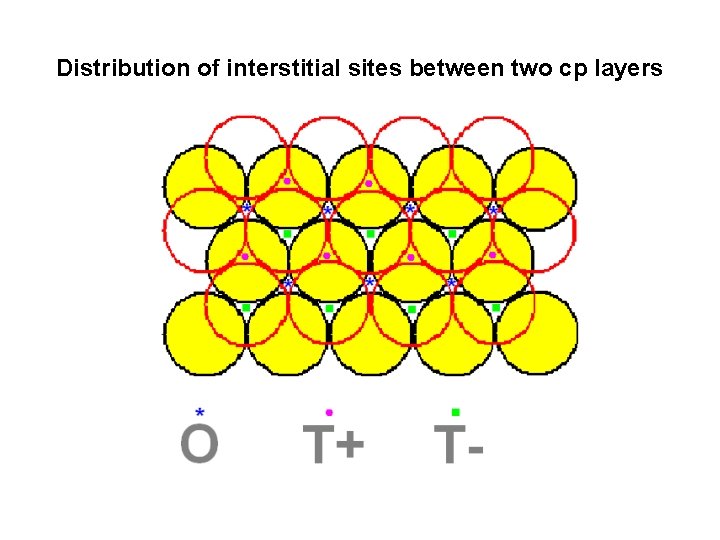
Distribution of interstitial sites between two cp layers
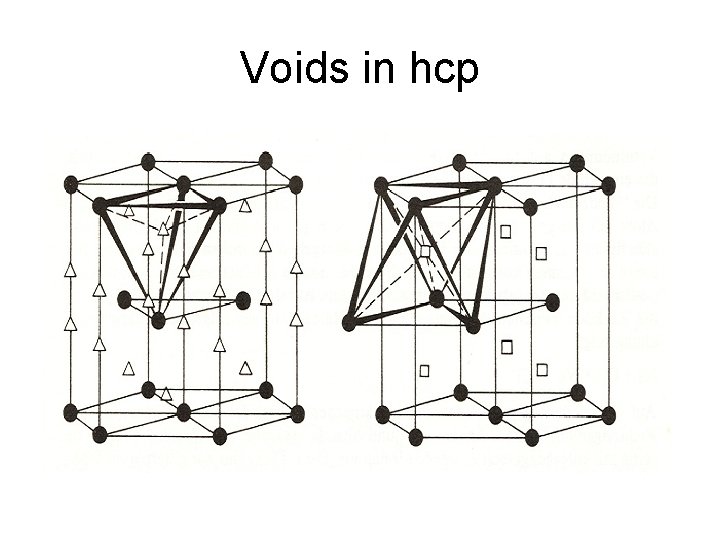
Voids in hcp
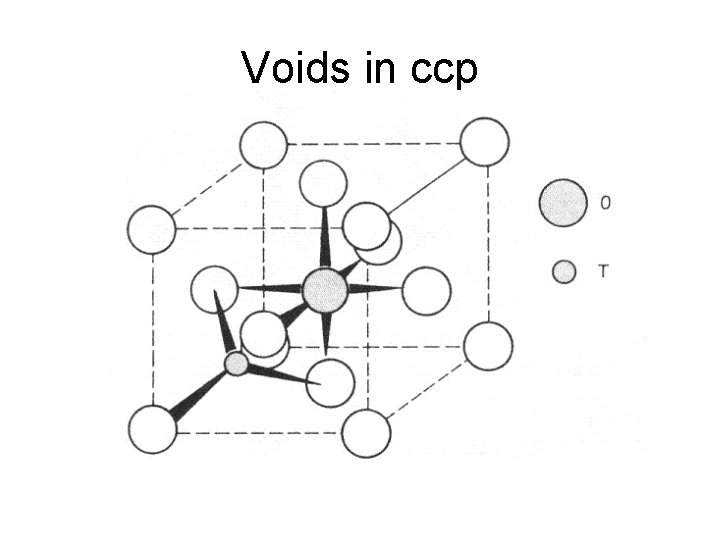
Voids in ccp
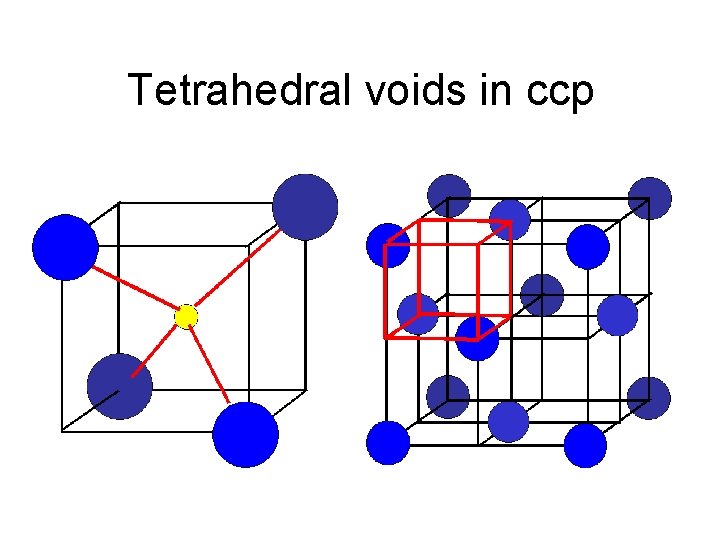
Tetrahedral voids in ccp
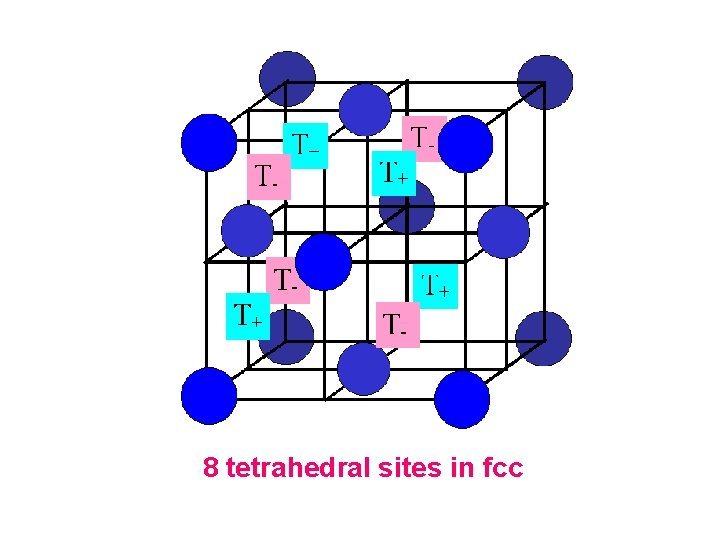
8 tetrahedral sites in fcc
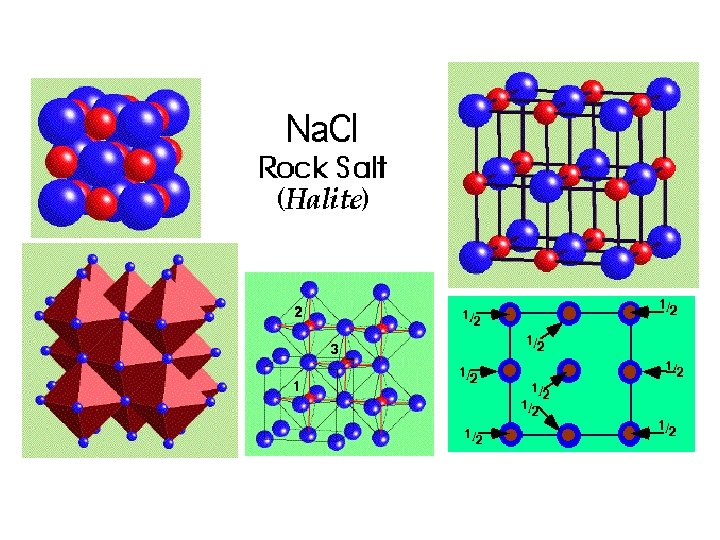
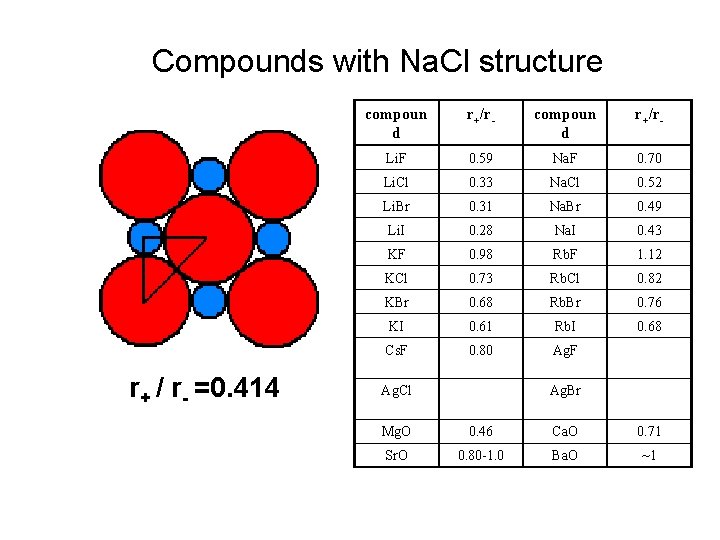
Compounds with Na. Cl structure r+ / r- =0. 414 compoun d r+/r- Li. F 0. 59 Na. F 0. 70 Li. Cl 0. 33 Na. Cl 0. 52 Li. Br 0. 31 Na. Br 0. 49 Li. I 0. 28 Na. I 0. 43 KF 0. 98 Rb. F 1. 12 KCl 0. 73 Rb. Cl 0. 82 KBr 0. 68 Rb. Br 0. 76 KI 0. 61 Rb. I 0. 68 Cs. F 0. 80 Ag. F Ag. Cl Ag. Br Mg. O 0. 46 Ca. O 0. 71 Sr. O 0. 80 -1. 0 Ba. O ~1
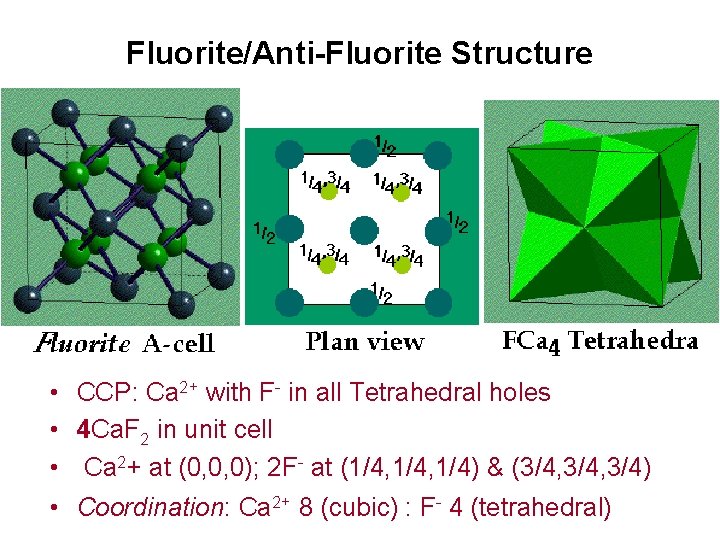
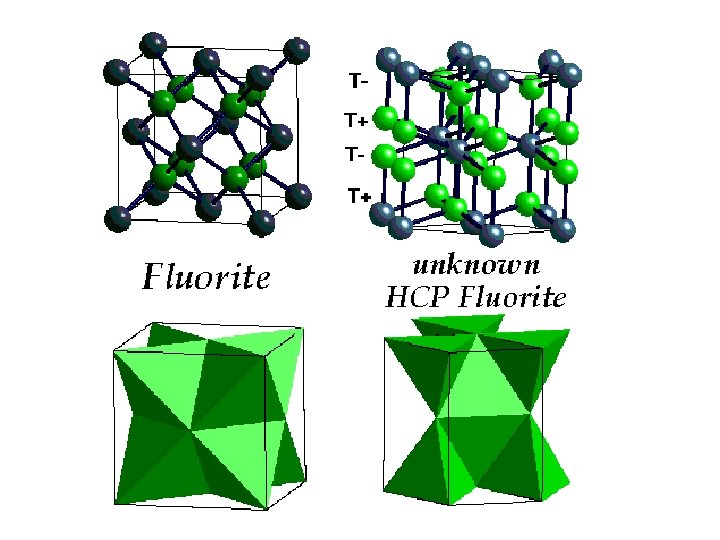
Fluorite/Anti-Fluorite Structure • CCP: Ca 2+ with F- in all Tetrahedral holes • 4 Ca. F 2 in unit cell • Ca 2+ at (0, 0, 0); 2 F- at (1/4, 1/4) & (3/4, 3/4) • Coordination: Ca 2+ 8 (cubic) : F- 4 (tetrahedral)
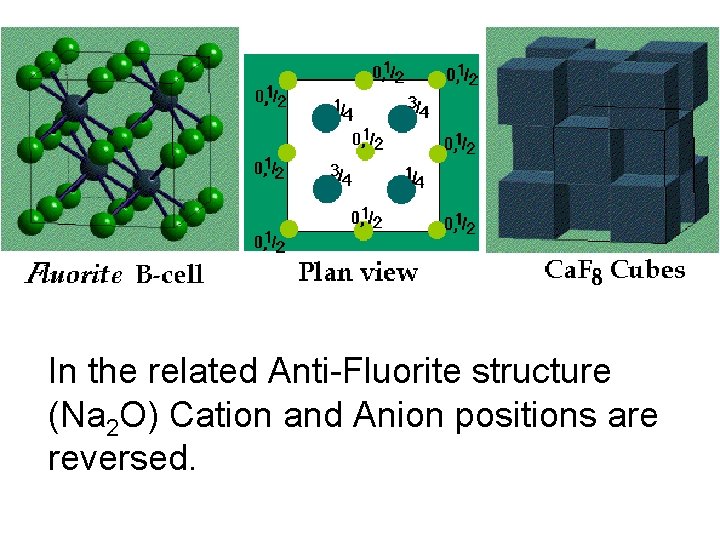
In the related Anti-Fluorite structure (Na 2 O) Cation and Anion positions are reversed.
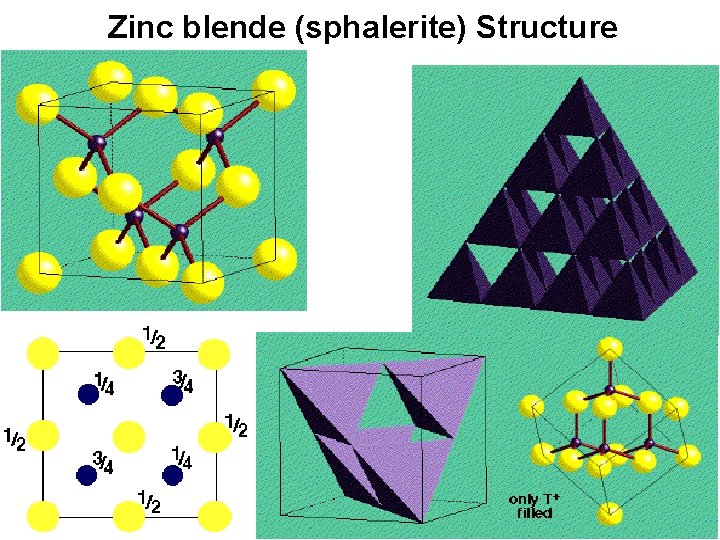
Zinc blende (sphalerite) Structure
Zinc blende (sphalerite) Structure • CCP: S 2 - with Zn 2+ in half Tetrahedral holes (only T+ {or T-} filled) • Lattice: fcc • 4 Zn. S in unit cell • Motif: S at (0, 0, 0); Zn at (1/4, 1/4) • Coordination: 4: 4 (tetrahedral) • Cation and anion sites are topologically identical. • Aa. Bb. Cc
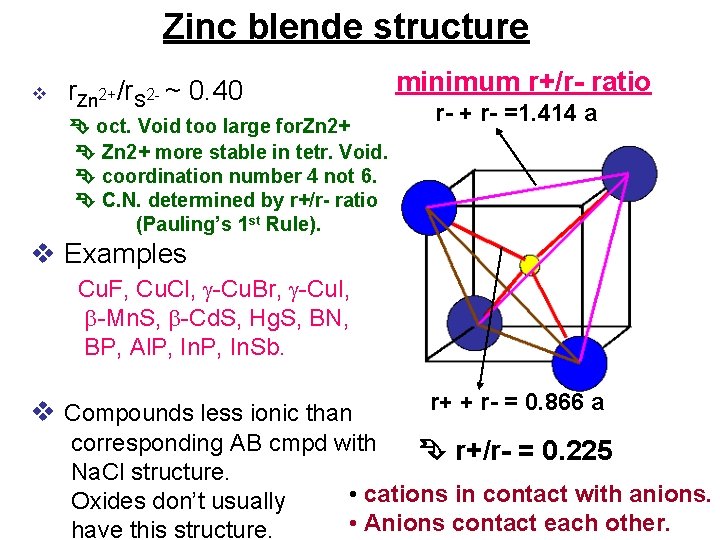
Zinc blende structure v r. Zn 2+/r. S 2 - ~ 0. 40 oct. Void too large for. Zn 2+ more stable in tetr. Void. coordination number 4 not 6. C. N. determined by r+/r- ratio (Pauling’s 1 st Rule). minimum r+/r- ratio r- + r- =1. 414 a v Examples Cu. F, Cu. Cl, g-Cu. Br, g-Cu. I, b-Mn. S, b-Cd. S, Hg. S, BN, BP, Al. P, In. Sb. v Compounds less ionic than r+ + r- = 0. 866 a corresponding AB cmpd with r+/r- = 0. 225 Na. Cl structure. • cations in contact with anions. Oxides don’t usually • Anions contact each other. have this structure.
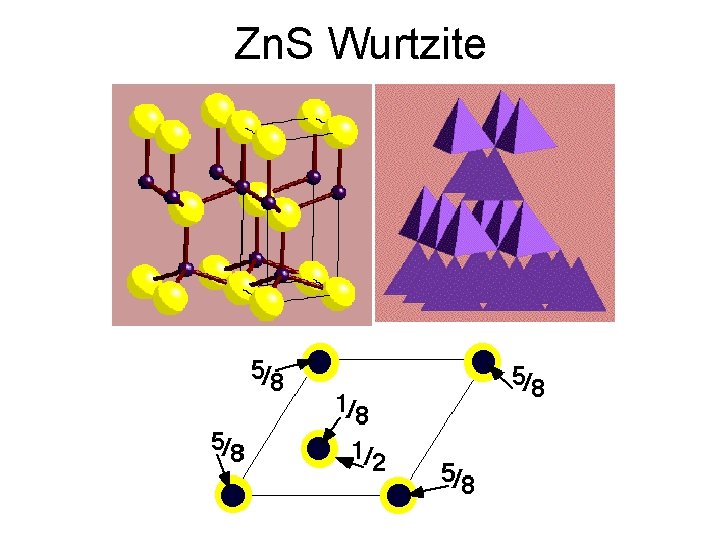
Zn. S Wurtzite
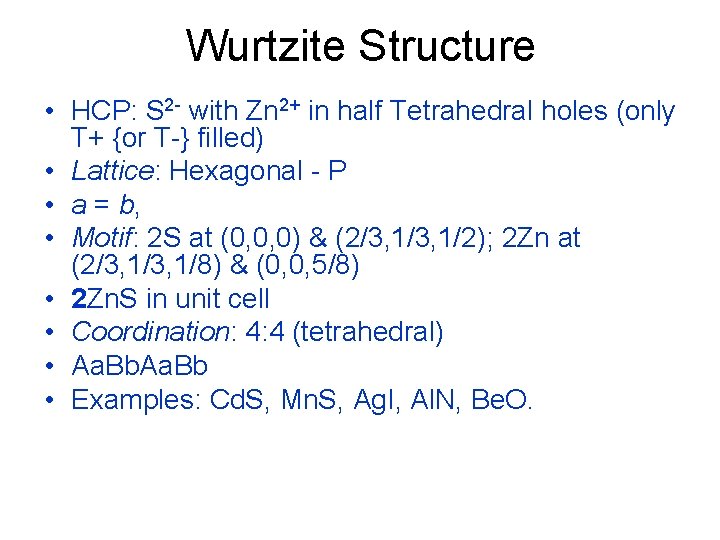
Wurtzite Structure • HCP: S 2 - with Zn 2+ in half Tetrahedral holes (only T+ {or T-} filled) • Lattice: Hexagonal - P • a = b, • Motif: 2 S at (0, 0, 0) & (2/3, 1/2); 2 Zn at (2/3, 1/8) & (0, 0, 5/8) • 2 Zn. S in unit cell • Coordination: 4: 4 (tetrahedral) • Aa. Bb • Examples: Cd. S, Mn. S, Ag. I, Al. N, Be. O.
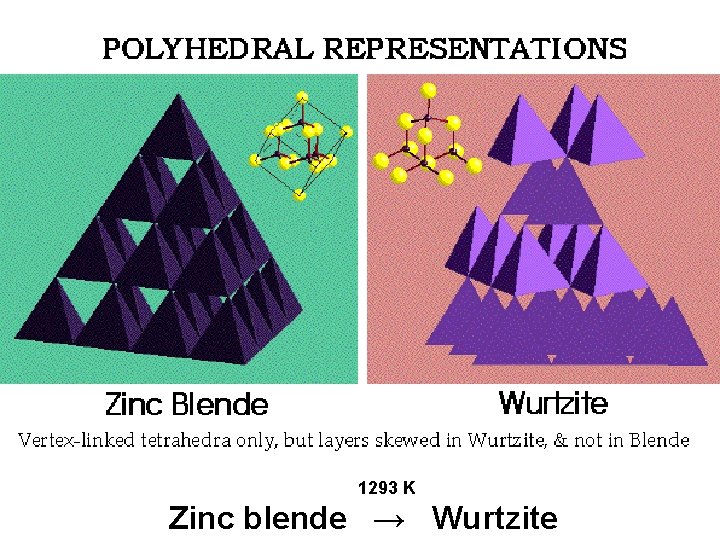
1293 K Zinc blende → Wurtzite
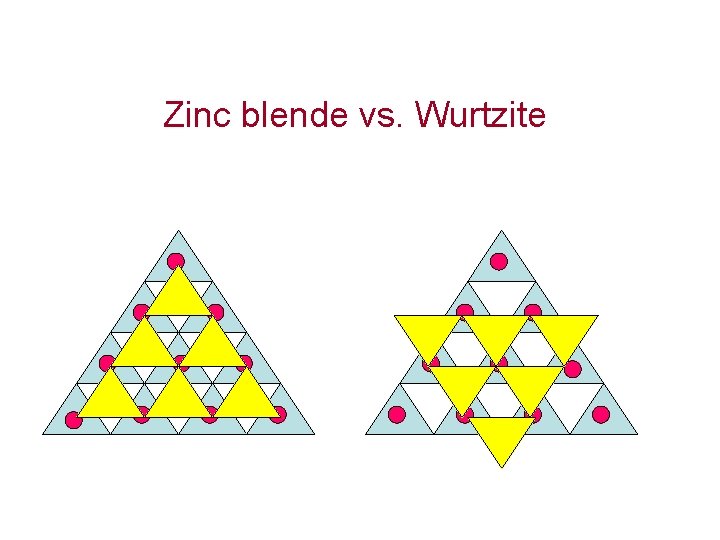
Zinc blende vs. Wurtzite .
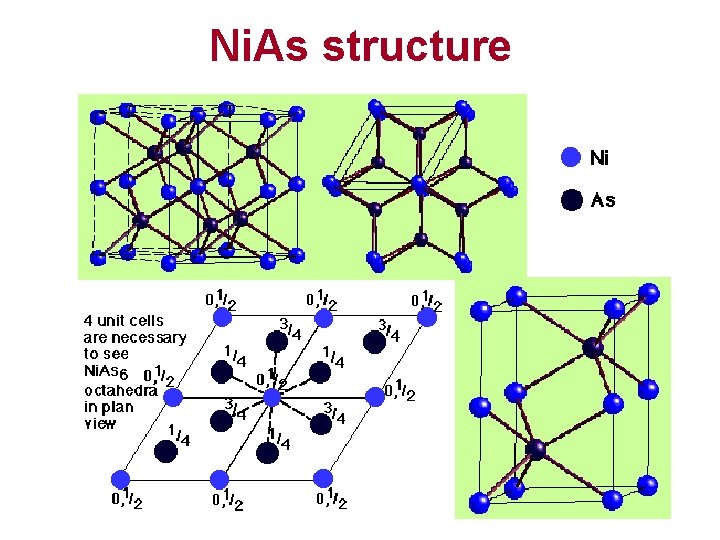
Ni. As structure
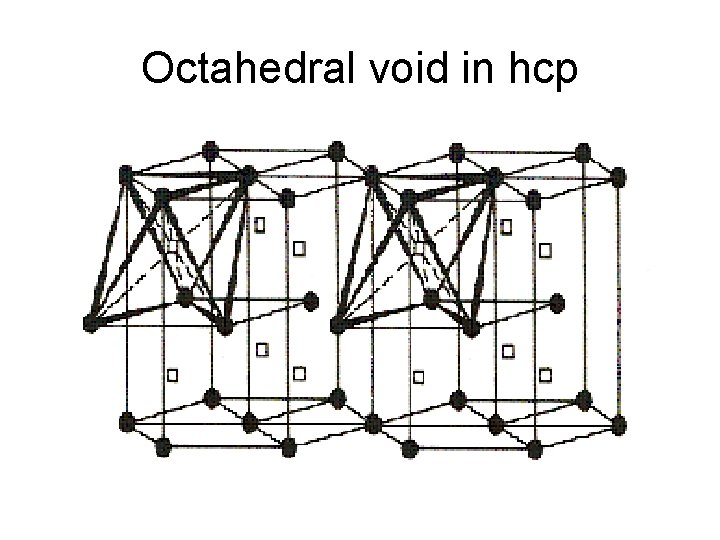
Octahedral void in hcp
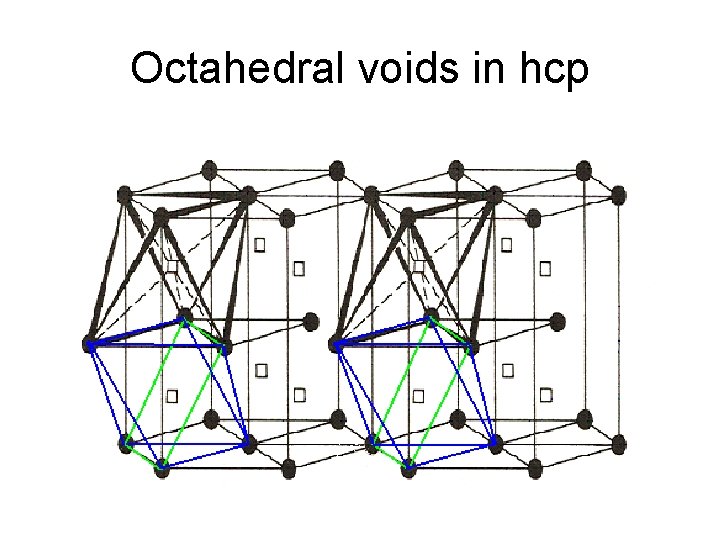
Octahedral voids in hcp
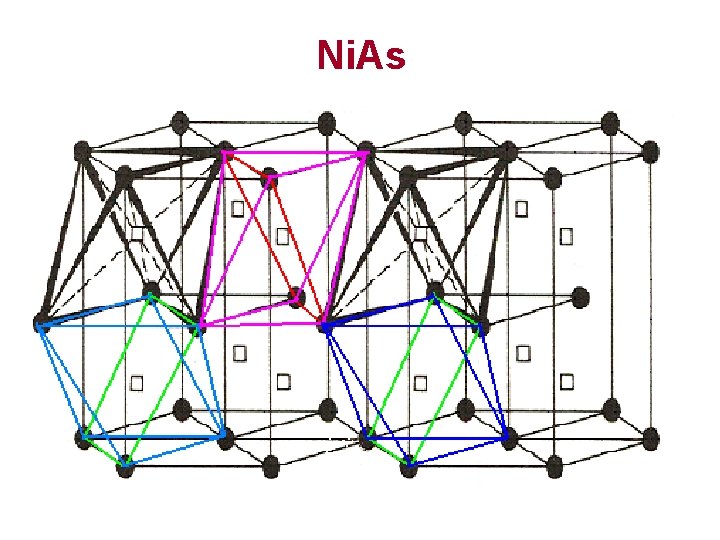
Ni. As
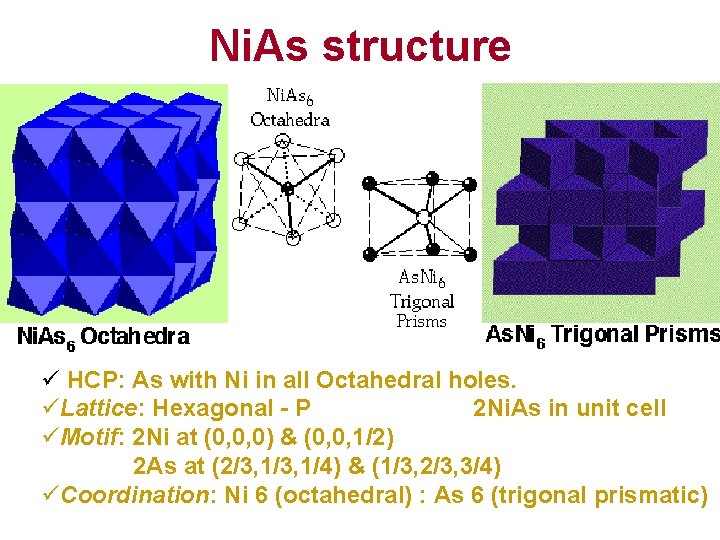
Ni. As structure ü HCP: As with Ni in all Octahedral holes. üLattice: Hexagonal - P 2 Ni. As in unit cell üMotif: 2 Ni at (0, 0, 0) & (0, 0, 1/2) 2 As at (2/3, 1/4) & (1/3, 2/3, 3/4) üCoordination: Ni 6 (octahedral) : As 6 (trigonal prismatic)
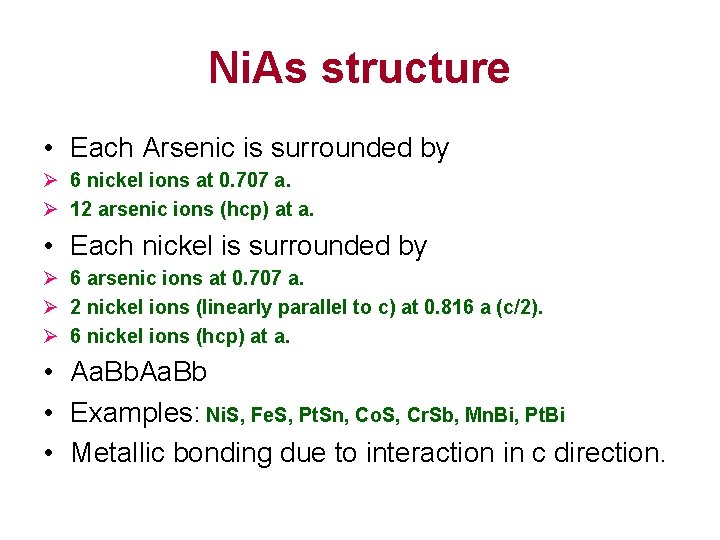
Ni. As structure • Each Arsenic is surrounded by Ø 6 nickel ions at 0. 707 a. Ø 12 arsenic ions (hcp) at a. • Each nickel is surrounded by Ø 6 arsenic ions at 0. 707 a. Ø 2 nickel ions (linearly parallel to c) at 0. 816 a (c/2). Ø 6 nickel ions (hcp) at a. • Aa. Bb • Examples: Ni. S, Fe. S, Pt. Sn, Co. S, Cr. Sb, Mn. Bi, Pt. Bi • Metallic bonding due to interaction in c direction.
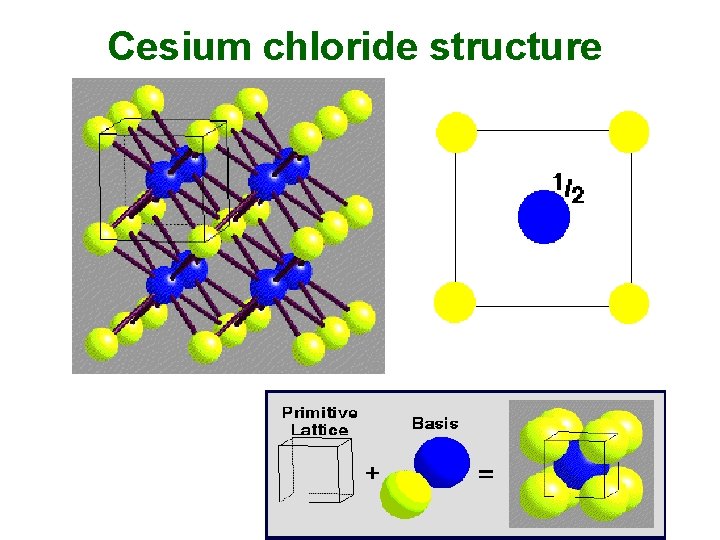
Cesium chloride structure
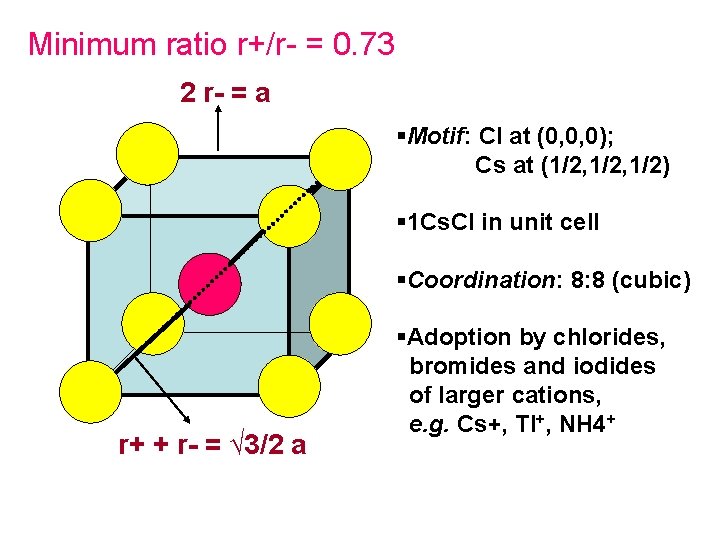
Minimum ratio r+/r- = 0. 73 2 r- = a §Motif: Cl at (0, 0, 0); Cs at (1/2, 1/2) § 1 Cs. Cl in unit cell §Coordination: 8: 8 (cubic) r+ + r- = √ 3/2 a §Adoption by chlorides, bromides and iodides of larger cations, e. g. Cs+, Tl+, NH 4+
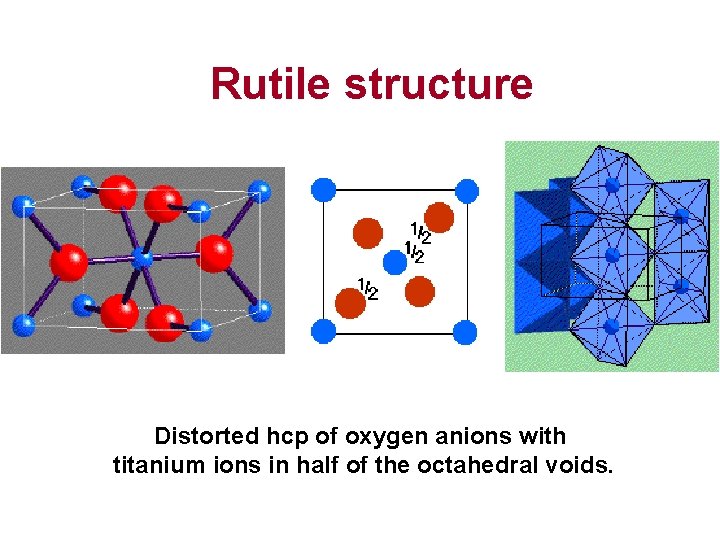
Rutile structure Distorted hcp of oxygen anions with titanium ions in half of the octahedral voids.
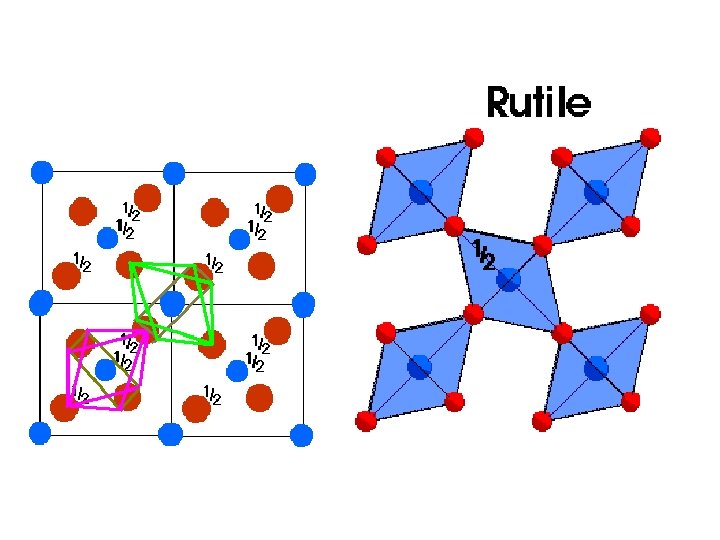
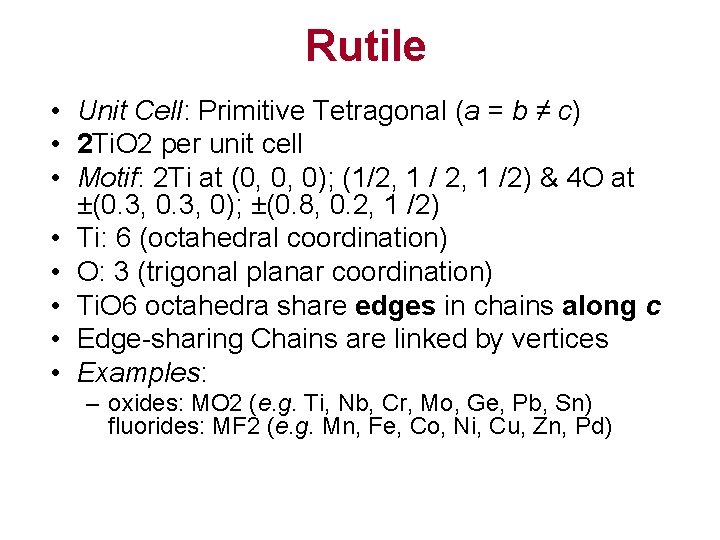
Rutile • Unit Cell: Primitive Tetragonal (a = b ≠ c) • 2 Ti. O 2 per unit cell • Motif: 2 Ti at (0, 0, 0); (1/2, 1 /2) & 4 O at ±(0. 3, 0); ±(0. 8, 0. 2, 1 /2) • Ti: 6 (octahedral coordination) • O: 3 (trigonal planar coordination) • Ti. O 6 octahedra share edges in chains along c • Edge-sharing Chains are linked by vertices • Examples: – oxides: MO 2 (e. g. Ti, Nb, Cr, Mo, Ge, Pb, Sn) fluorides: MF 2 (e. g. Mn, Fe, Co, Ni, Cu, Zn, Pd)
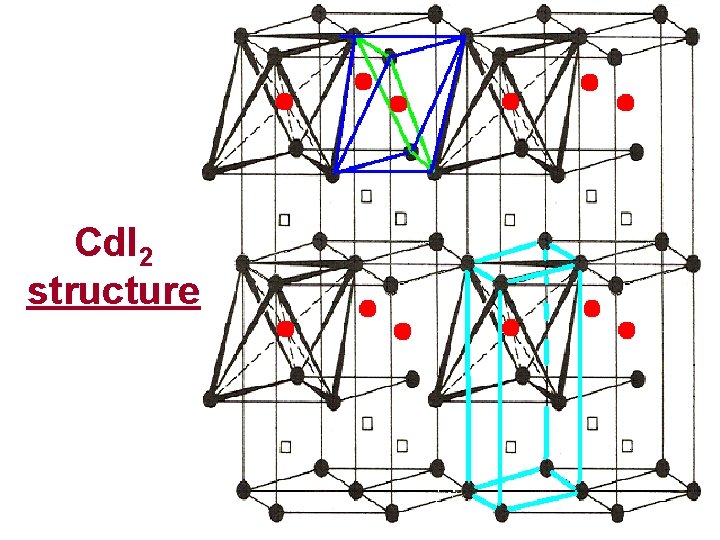
Cd. I 2 structure
Cd. I 2 structure
Cd. I 2 structure
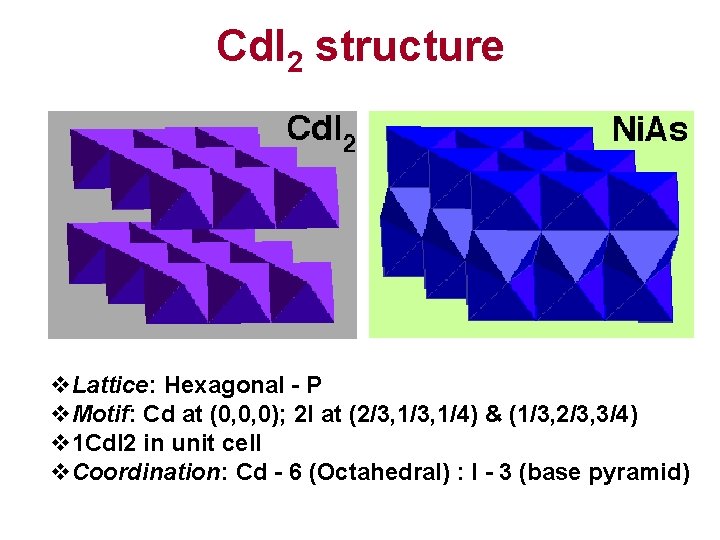
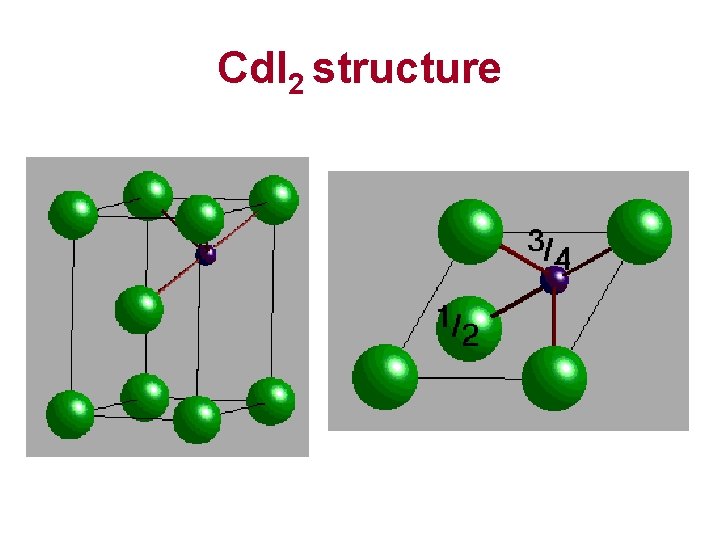
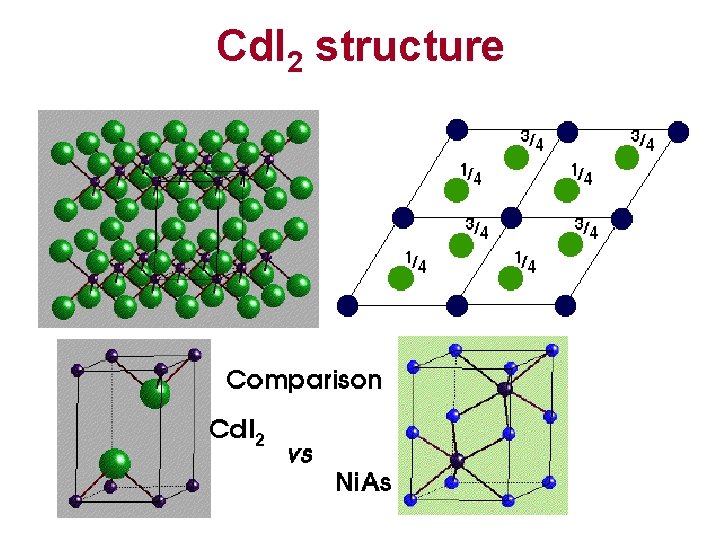
Cd. I 2 structure v. Lattice: Hexagonal - P v. Motif: Cd at (0, 0, 0); 2 I at (2/3, 1/4) & (1/3, 2/3, 3/4) v 1 Cd. I 2 in unit cell v. Coordination: Cd - 6 (Octahedral) : I - 3 (base pyramid)
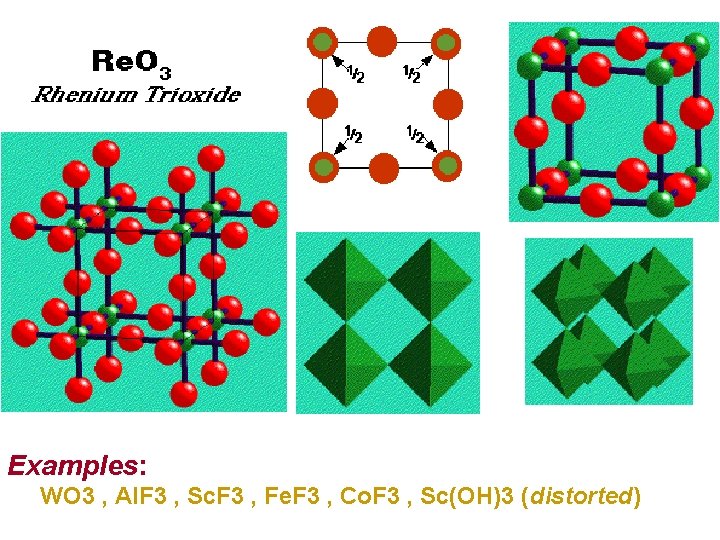
Examples: WO 3 , Al. F 3 , Sc. F 3 , Fe. F 3 , Co. F 3 , Sc(OH)3 (distorted)
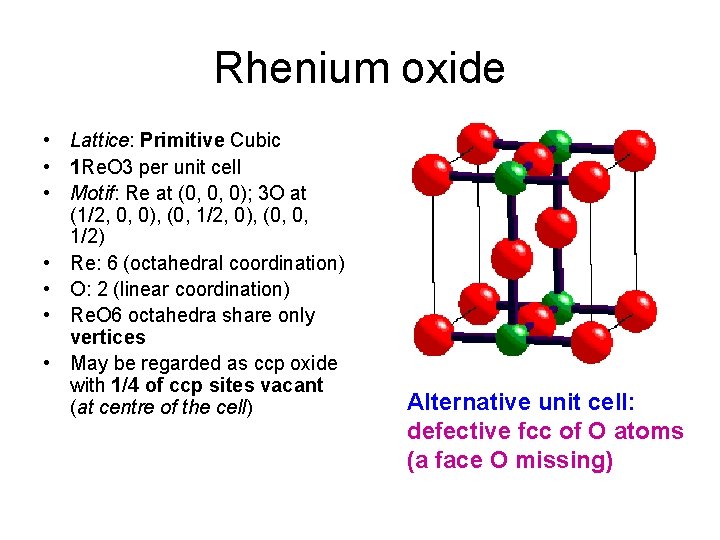
Rhenium oxide • Lattice: Primitive Cubic • 1 Re. O 3 per unit cell • Motif: Re at (0, 0, 0); 3 O at (1/2, 0, 0), (0, 1/2, 0), (0, 0, 1/2) • Re: 6 (octahedral coordination) • O: 2 (linear coordination) • Re. O 6 octahedra share only vertices • May be regarded as ccp oxide with 1/4 of ccp sites vacant (at centre of the cell) Alternative unit cell: defective fcc of O atoms (a face O missing)
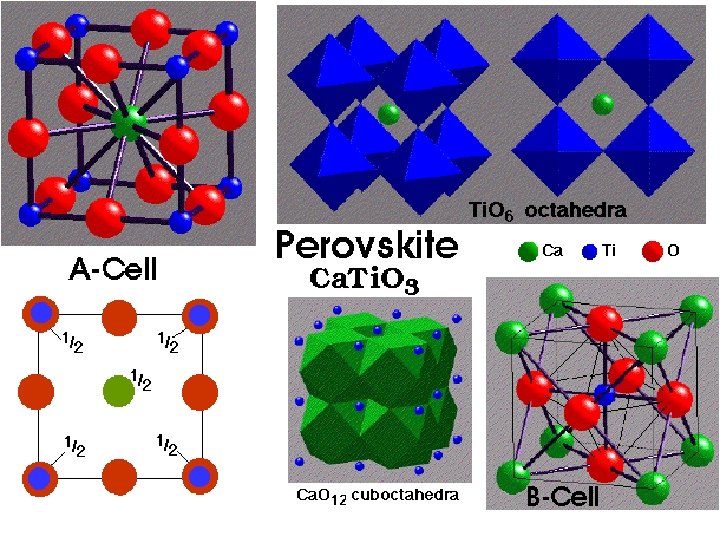
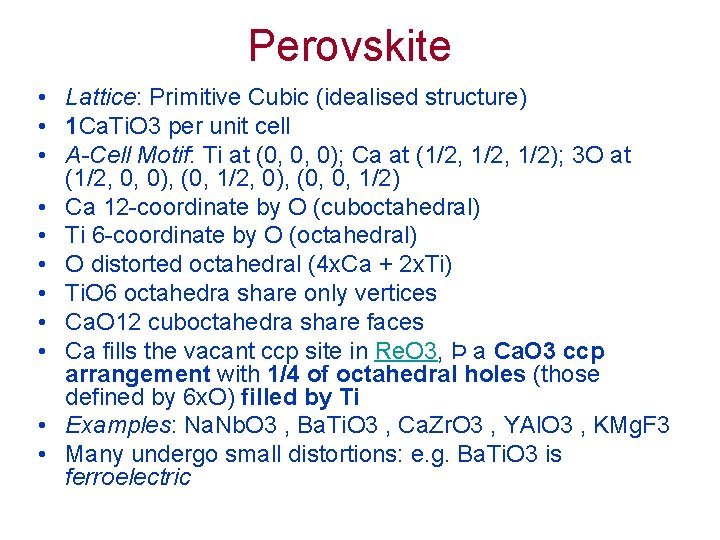
Perovskite • Lattice: Primitive Cubic (idealised structure) • 1 Ca. Ti. O 3 per unit cell • A-Cell Motif: Ti at (0, 0, 0); Ca at (1/2, 1/2); 3 O at (1/2, 0, 0), (0, 1/2, 0), (0, 0, 1/2) • Ca 12 -coordinate by O (cuboctahedral) • Ti 6 -coordinate by O (octahedral) • O distorted octahedral (4 x. Ca + 2 x. Ti) • Ti. O 6 octahedra share only vertices • Ca. O 12 cuboctahedra share faces • Ca fills the vacant ccp site in Re. O 3, Þ a Ca. O 3 ccp arrangement with 1/4 of octahedral holes (those defined by 6 x. O) filled by Ti • Examples: Na. Nb. O 3 , Ba. Ti. O 3 , Ca. Zr. O 3 , YAl. O 3 , KMg. F 3 • Many undergo small distortions: e. g. Ba. Ti. O 3 is ferroelectric
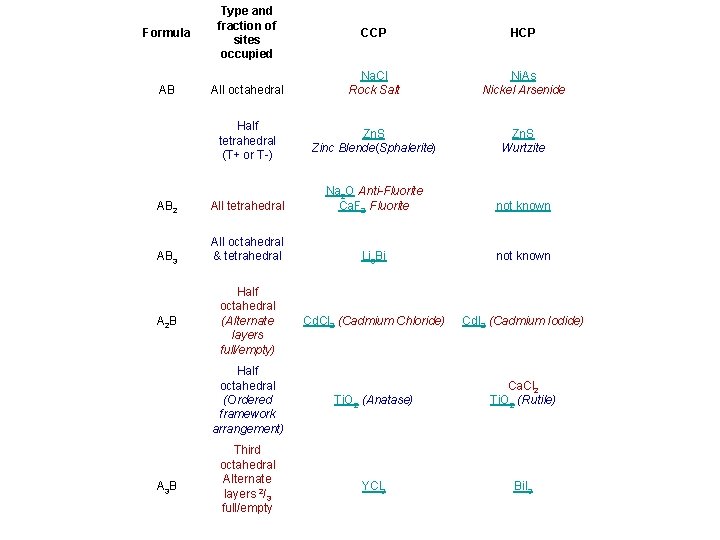
Formula Type and fraction of sites occupied AB All octahedral CCP HCP Na. Cl Rock Salt Ni. As Nickel Arsenide Half tetrahedral (T+ or T-) Zn. S Zinc Blende(Sphalerite) Zn. S Wurtzite AB 2 All tetrahedral Na 2 O Anti-Fluorite Ca. F 2 Fluorite not known AB 3 All octahedral & tetrahedral Li 3 Bi not known Cd. Cl 2 (Cadmium Chloride) Cd. I 2 (Cadmium Iodide) Ti. O 2 (Anatase) Ca. Cl 2 Ti. O 2 (Rutile) YCl 3 Bi. I 3 A 2 B Half octahedral (Alternate layers full/empty) Half octahedral (Ordered framework arrangement) A 3 B Third octahedral Alternate layers 2/3 full/empty
Substances with covalent bonds
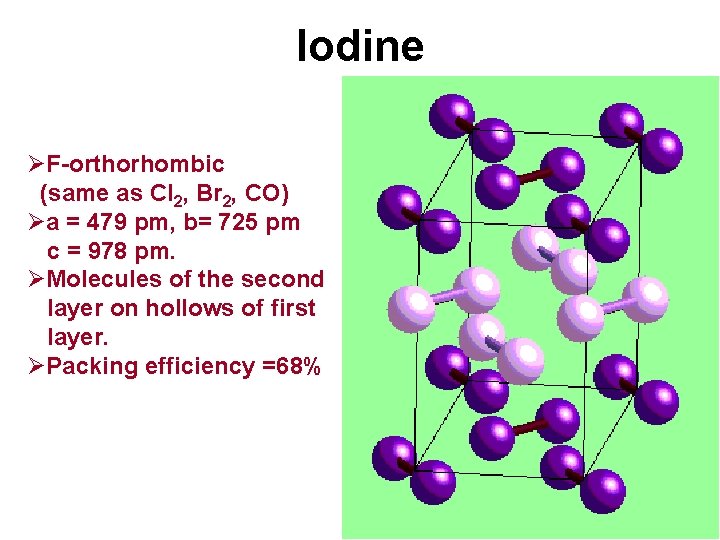
Iodine ØF-orthorhombic (same as Cl 2, Br 2, CO) Øa = 479 pm, b= 725 pm c = 978 pm. ØMolecules of the second layer on hollows of first layer. ØPacking efficiency =68%
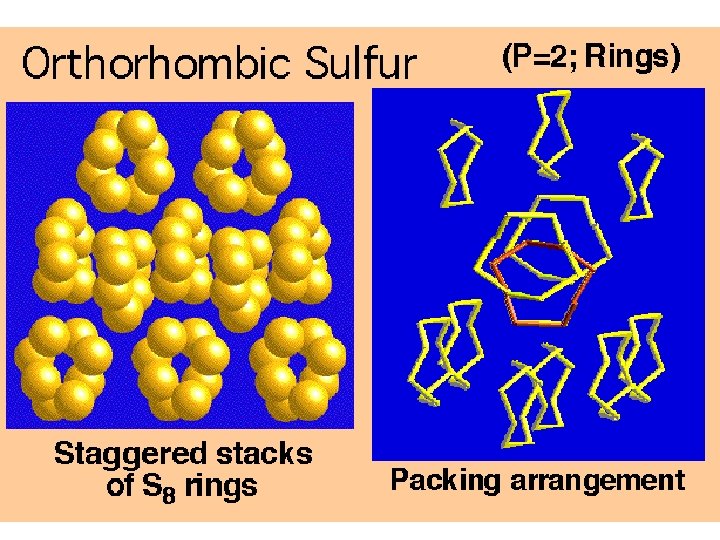
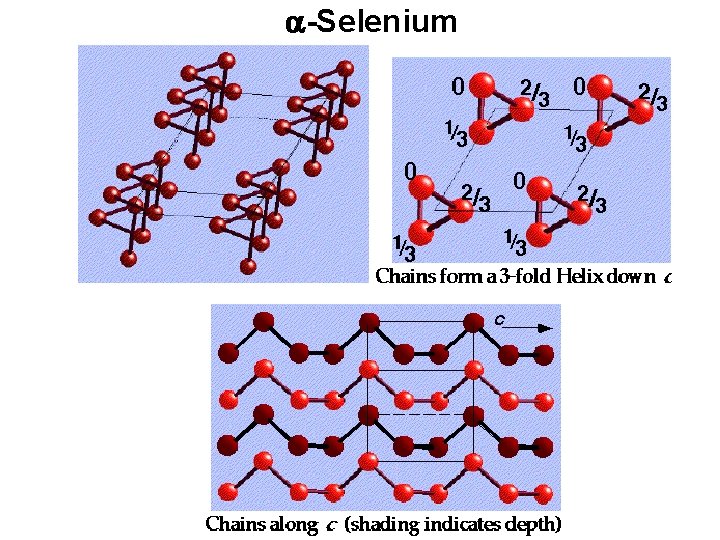
a-Selenium
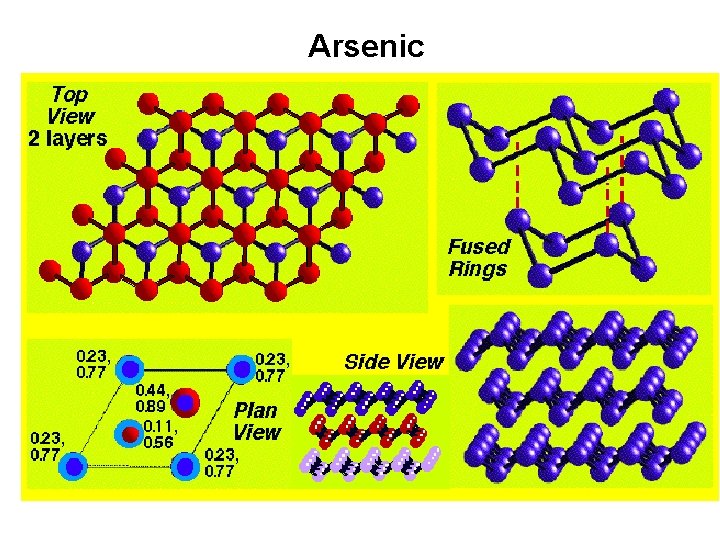
Arsenic
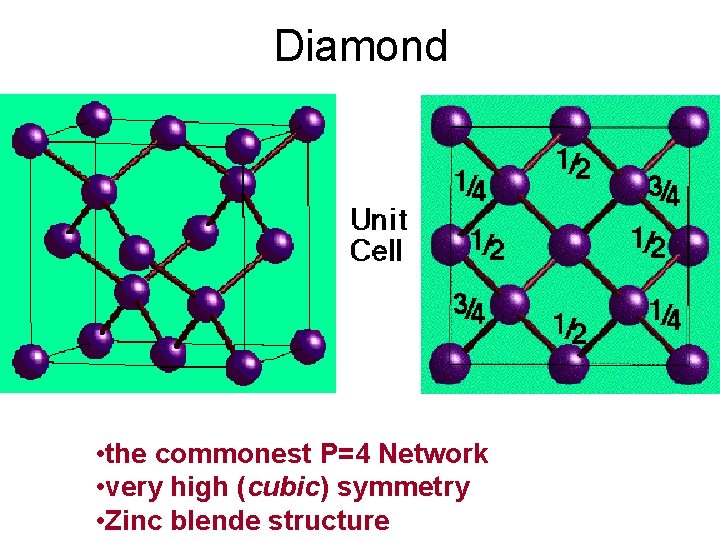
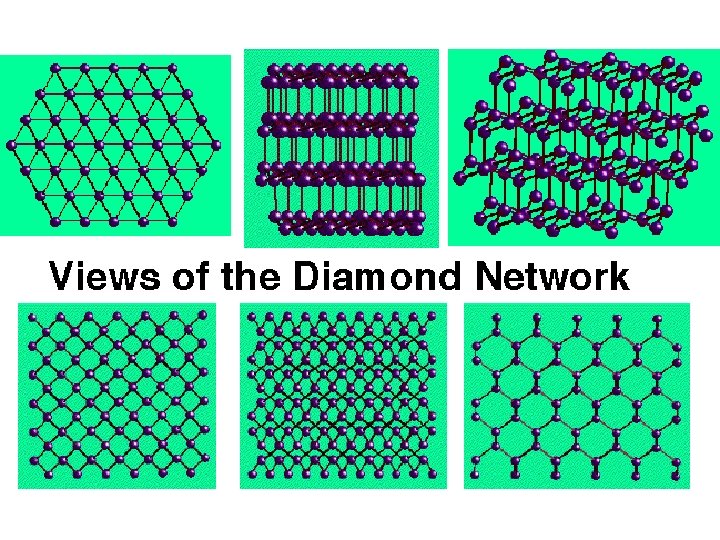
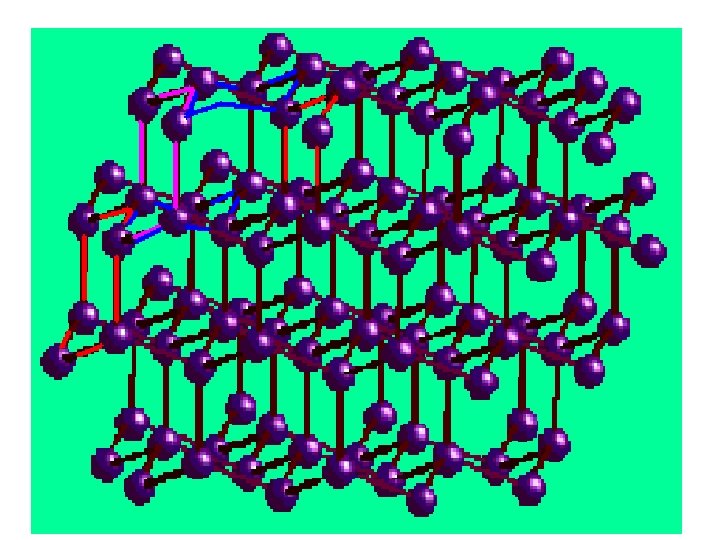
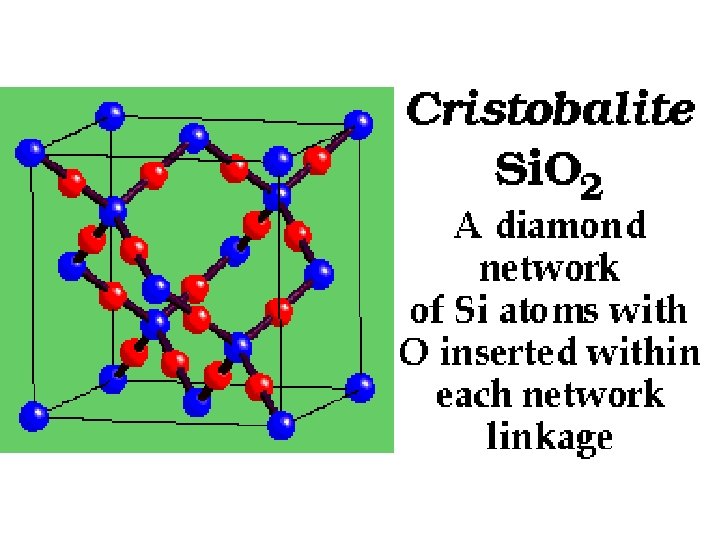
Diamond • the commonest P=4 Network • very high (cubic) symmetry • Zinc blende structure
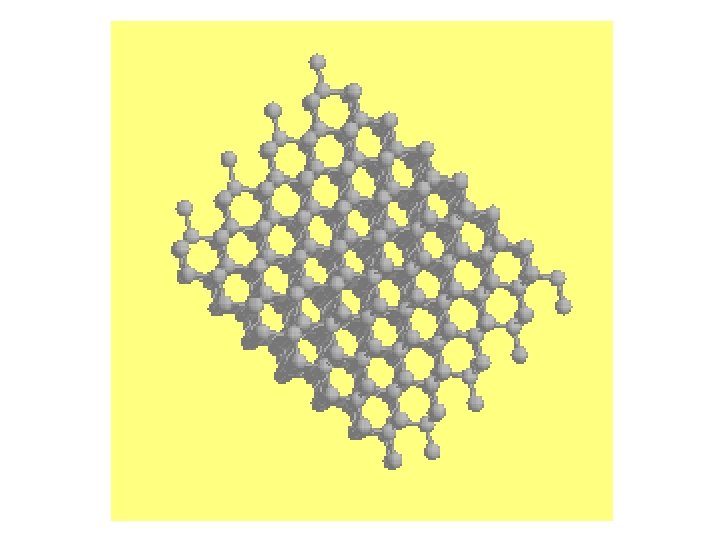
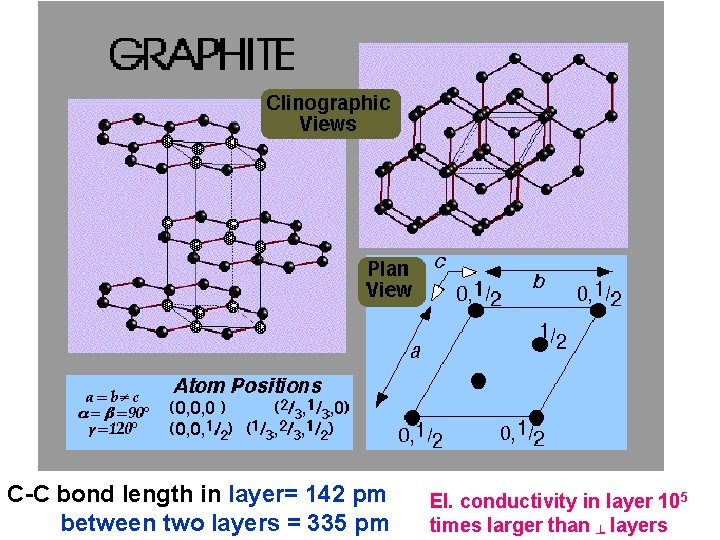
C-C bond length in layer= 142 pm between two layers = 335 pm El. conductivity in layer 105 times larger than ┴ layers
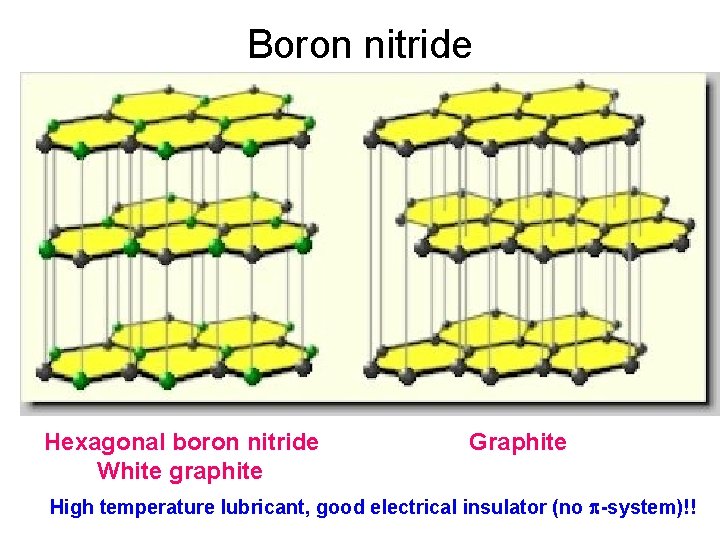
Boron nitride Hexagonal boron nitride White graphite Graphite High temperature lubricant, good electrical insulator (no p-system)!!
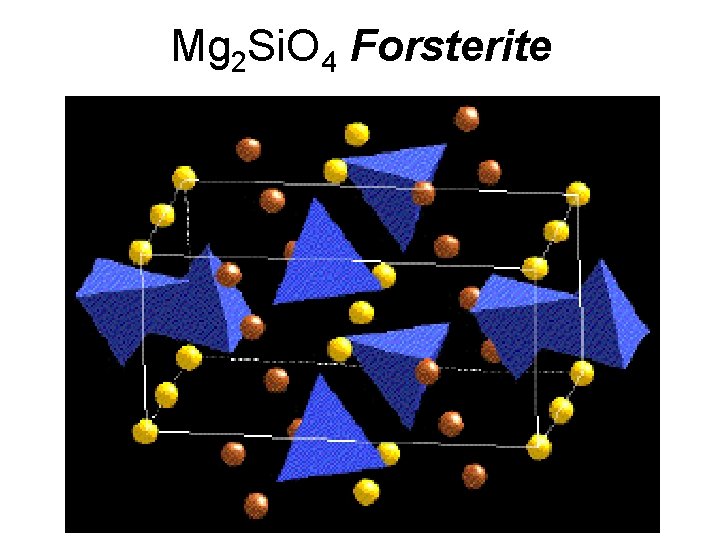
Mg 2 Si. O 4 Forsterite
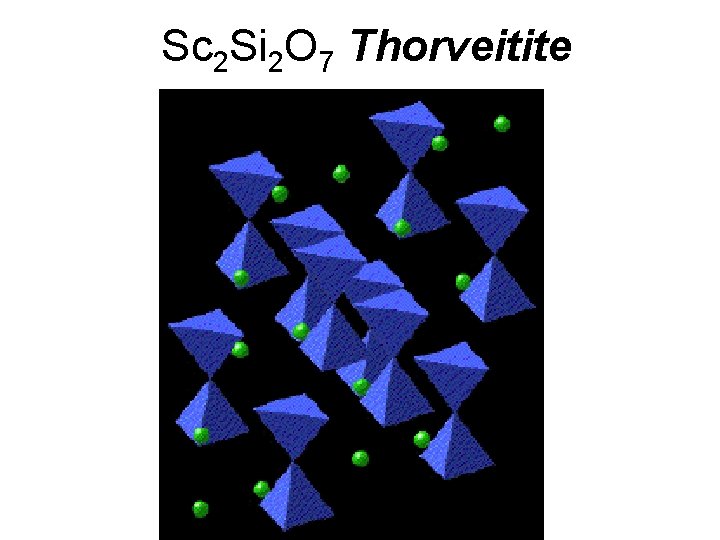
Sc 2 Si 2 O 7 Thorveitite
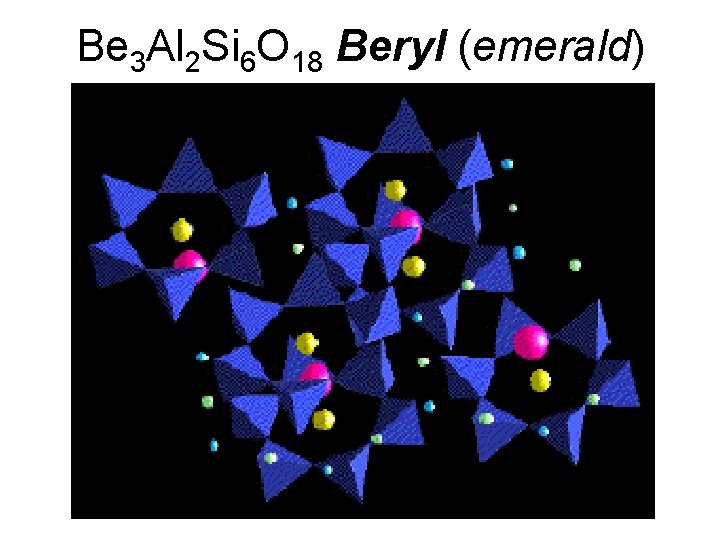
Be 3 Al 2 Si 6 O 18 Beryl (emerald)
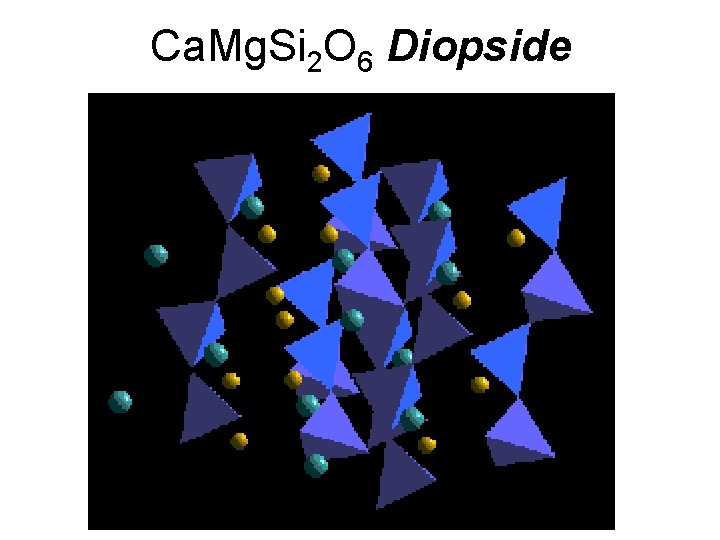
Ca. Mg. Si 2 O 6 Diopside
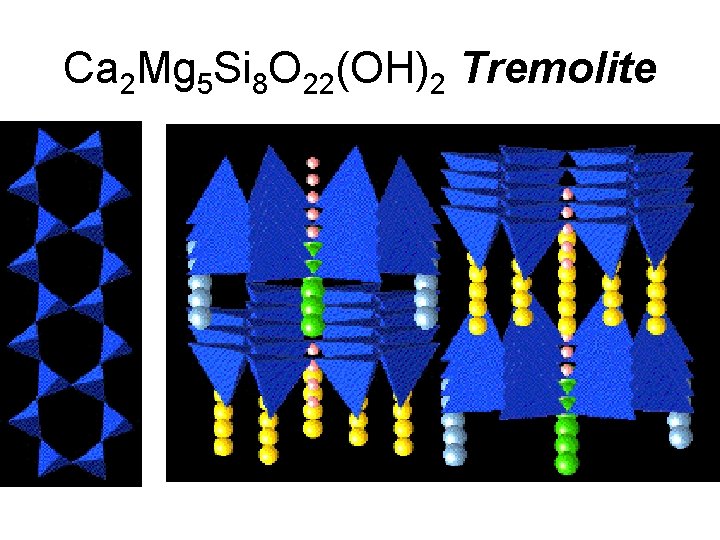
Ca 2 Mg 5 Si 8 O 22(OH)2 Tremolite
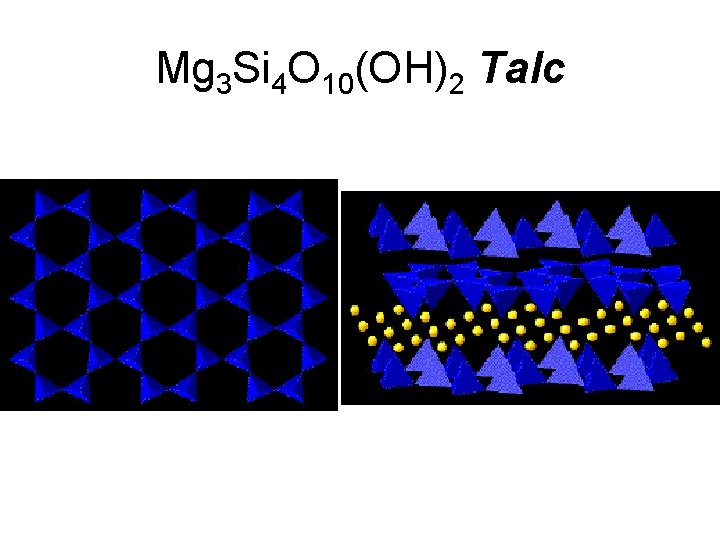
Mg 3 Si 4 O 10(OH)2 Talc
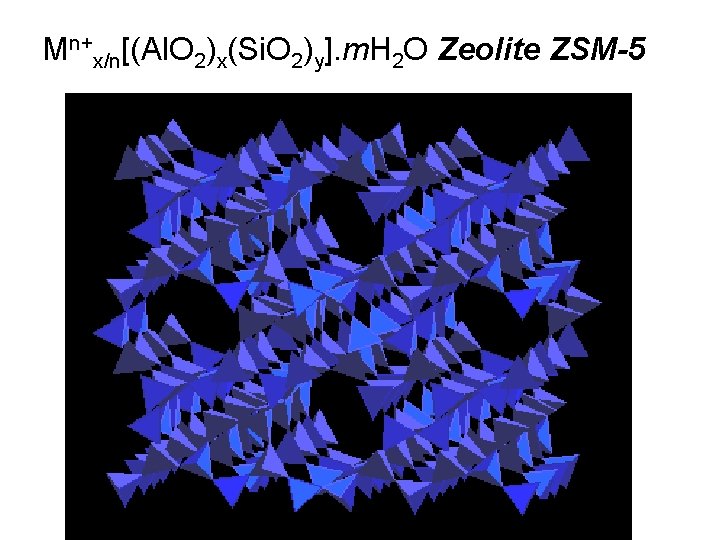
Mn+x/n[(Al. O 2)x(Si. O 2)y]. m. H 2 O Zeolite ZSM-5
STM
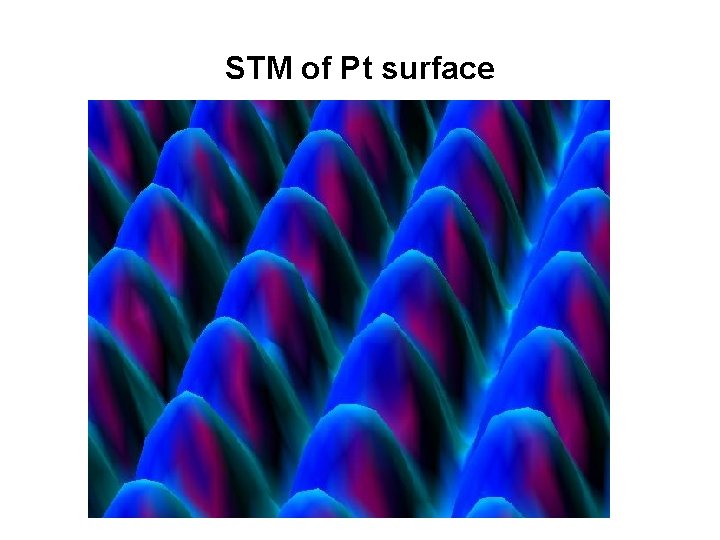
STM of Pt surface
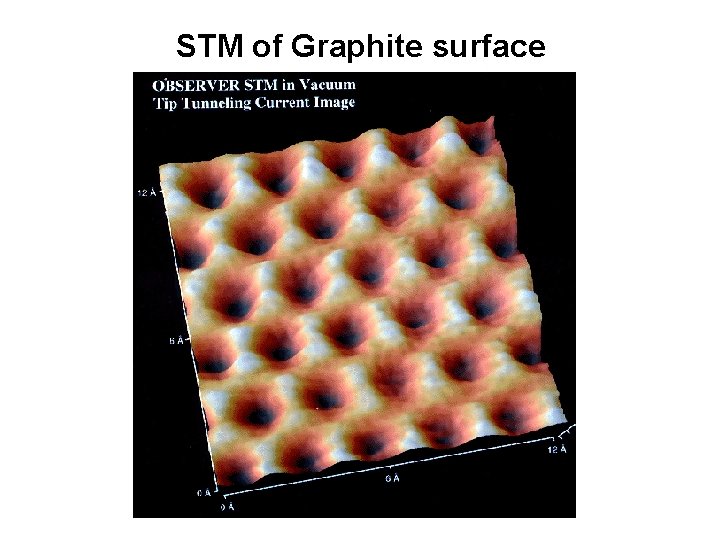
STM of Graphite surface
- Slides: 88