
OBJECTS IN SPACE 8 E 4 B 1
OBJECTS IN SPACE 8. E. 4 B. 1 OBTAIN AND COMMUNICATE INFORMATION TO MODEL AND COMPARE THE CHARACTERISTICS AND MOVEMENTS OF OBJECTS IN THE SOLAR SYSTEM (INCLUDING PLANETS, MOONS, ASTEROIDS, COMETS, AND METEORS).
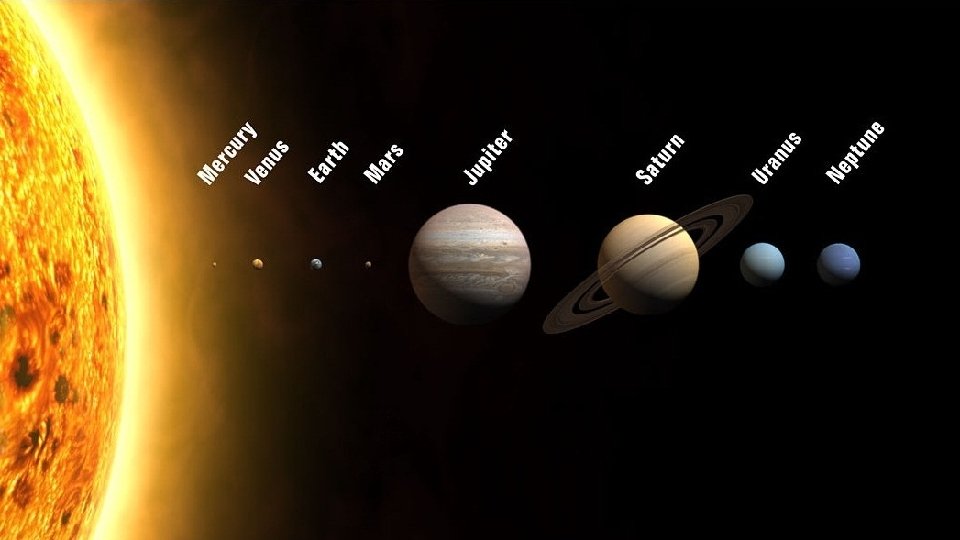
PLANETS • Planets may have either a terrestrial/rocky surface or a gaseous surface. Gaseous planets are considerably larger than terrestrial planets. • Planets may have rings or other unique surface characteristics. • Movement of planets is based on revolution around the Sun and rotation on the planet’s axis.
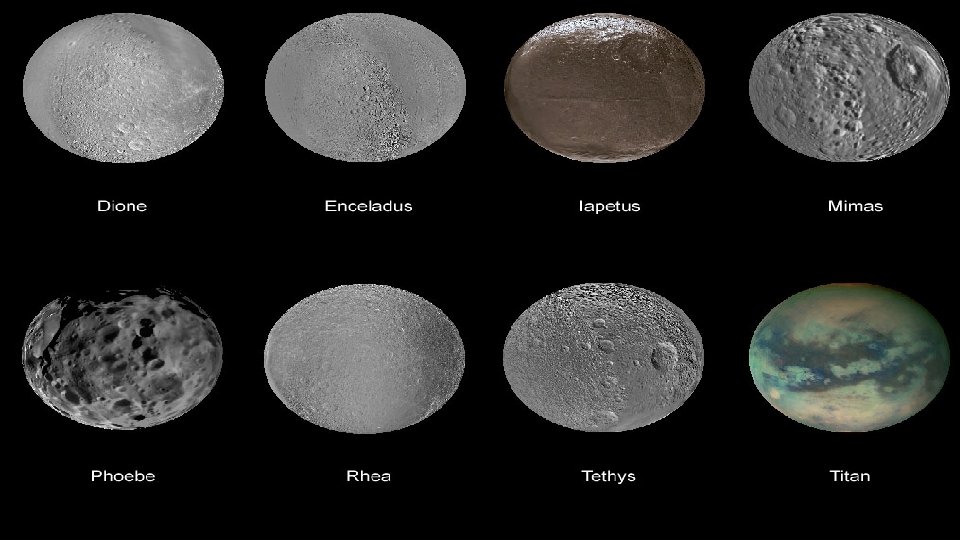
MOONS • Moons are studied in relation to the planet they orbit. Not all planets have moons. • Most are rocky bodies covered with craters, but some have unique characteristics. • Movement of moons is based on revolution around their planets and rotation on their
ASTEROIDS • Most asteroids are rocky bodies that orbit in a region in the solar system known as the Asteroid Belt between Mars and Jupiter. • They vary in size and shape.
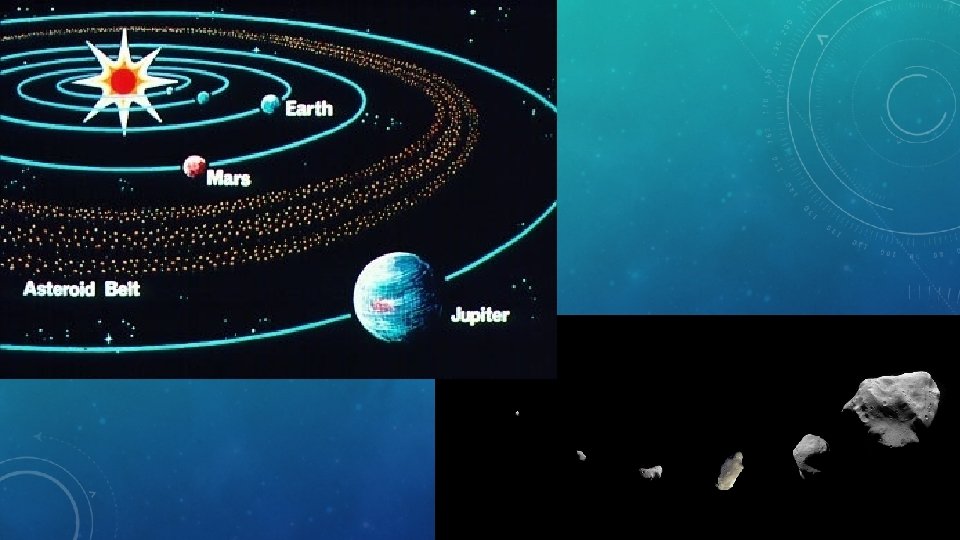
ASTEROIDS • Movement is based on their revolution around the Sun. • Some asteroids outside the asteroid belt have orbits that cross Earth’s orbit, which require scientists to monitor their positions.
COMETS • Comets have a main body or head (ice, methane and ammonia and dust) and a tail that emerges as the comet gets closer to the Sun during its orbit. • The effects of the solar winds result in the tail always pointing away from the Sun.
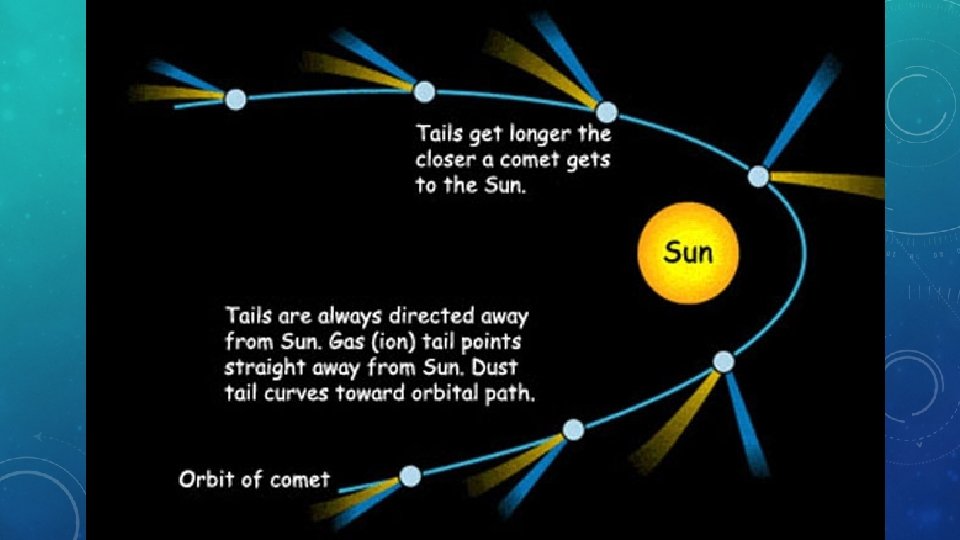
COMETS • Comets have long, narrow, elliptical orbits that cause them to cross paths with other objects in the solar system. • Most comets originate from regions of the solar system that lie beyond the orbit of Neptune.
METEORS • Meteors are chunks of rock that burn upon entering a planet’s atmosphere. • Prior to entering the atmosphere the chunks of rock move about within the solar system and are known as meteoroids.
METEORITE • When the chunk of rock (meteor) strikes the surface of a planet or moon it is known as a meteorite.
PLANETS & THEIR MOONS ISN ACTIVITY • Begin by labeling the next two sheets (side-to-side) in your notebook “PLANETS & THEIR MOONS” • Draw the SUN on the left side of your paper to signify the center of our solar system. • Color your planets. Cut your planets out and paste them in the CORRECT order in your notebook. LABEL THE PLANETS! • Which planets are terrestrial/rocky? Gaseous? Make sure you label them! • Draw the Asteroid Belt in its CORRECT LOCATION! • Where are comets most commonly formed? Asteroids? BE SURE TO DRAW THEM! • Read “PLANET FACTS” and “MOONS” • As you read, write at least two facts about each planet discussed in the reading • How many moons does each planet have? Write how many next to each planet
- Slides: 14