
ObjectOriented Programming OOP Lecture No 24 Example class
Object-Oriented Programming (OOP) Lecture No. 24
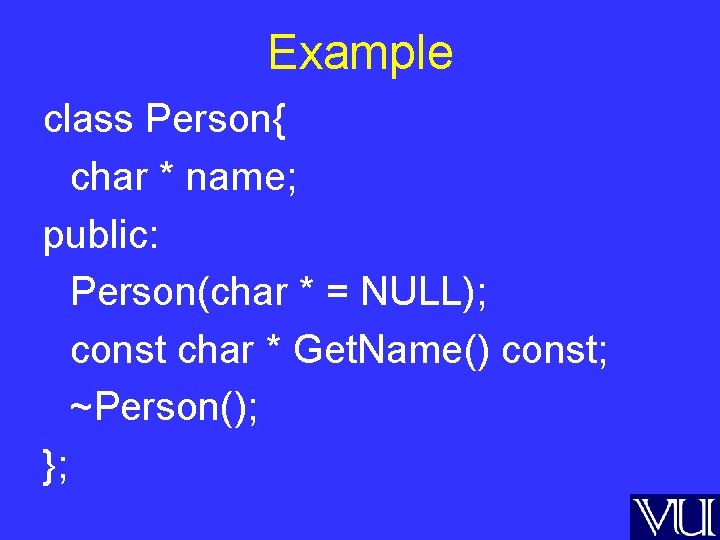
Example class Person{ char * name; public: Person(char * = NULL); const char * Get. Name() const; ~Person(); };
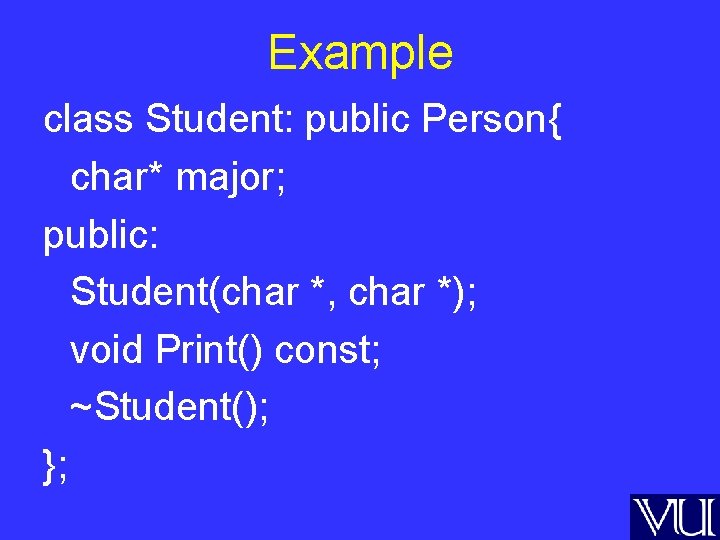
Example class Student: public Person{ char* major; public: Student(char *, char *); void Print() const; ~Student(); };
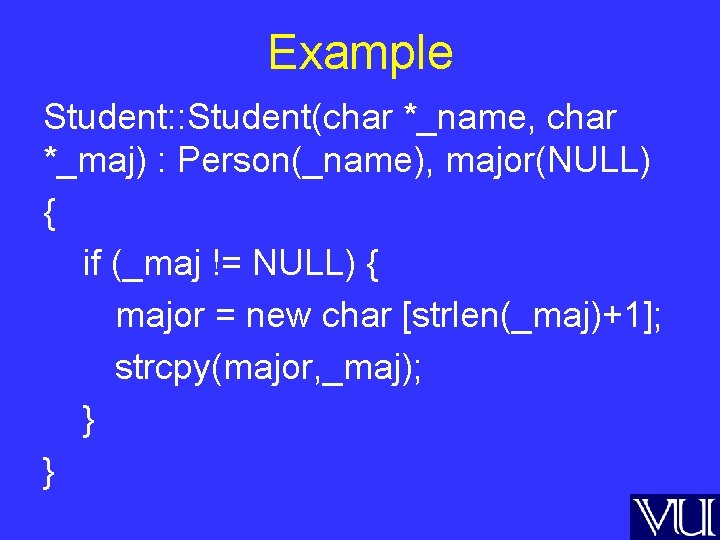
Example Student: : Student(char *_name, char *_maj) : Person(_name), major(NULL) { if (_maj != NULL) { major = new char [strlen(_maj)+1]; strcpy(major, _maj); } }
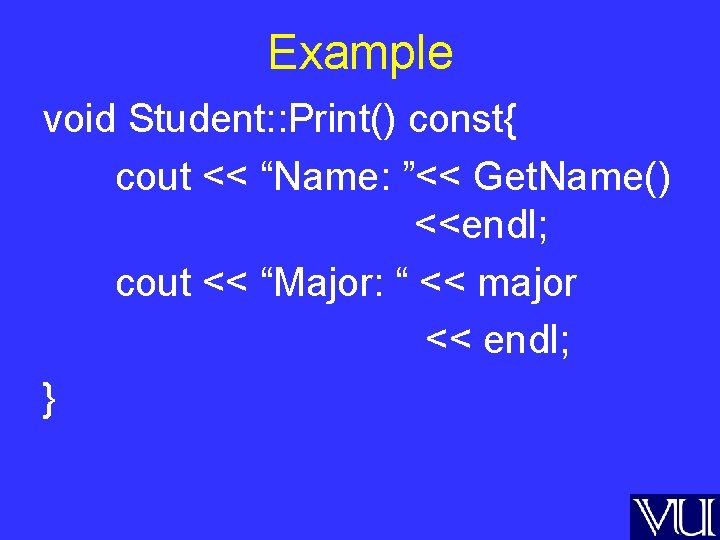
Example void Student: : Print() const{ cout << “Name: ”<< Get. Name() <<endl; cout << “Major: “ << major << endl; }
Example
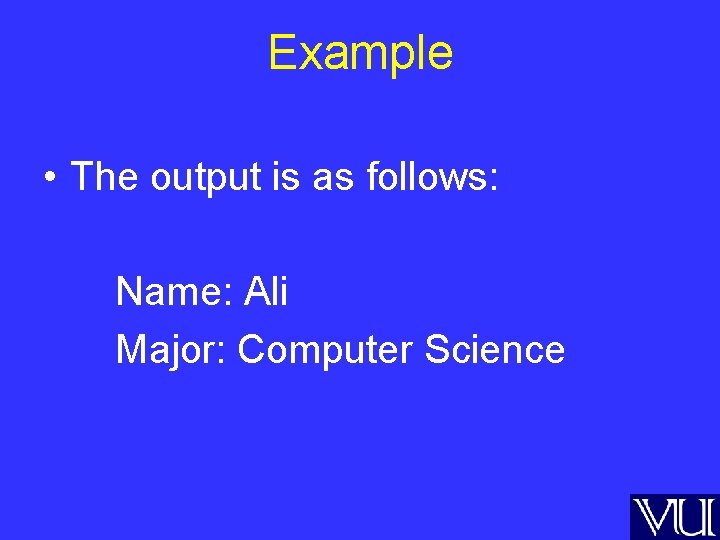
Example • The output is as follows: Name: Ali Major: Computer Science
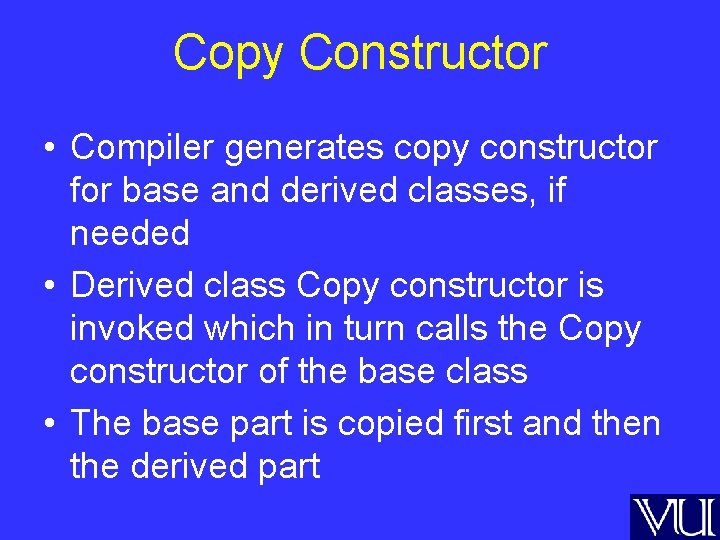
Copy Constructor • Compiler generates copy constructor for base and derived classes, if needed • Derived class Copy constructor is invoked which in turn calls the Copy constructor of the base class • The base part is copied first and then the derived part

Shallow Copy sobj 1 name major. . . A L I C O M. . . sobj 2 name major. . .
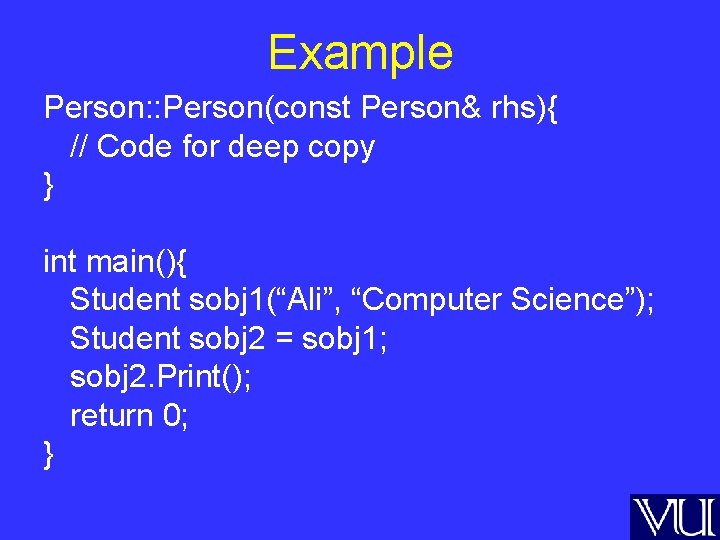
Example Person: : Person(const Person& rhs){ // Code for deep copy } int main(){ Student sobj 1(“Ali”, “Computer Science”); Student sobj 2 = sobj 1; sobj 2. Print(); return 0; }
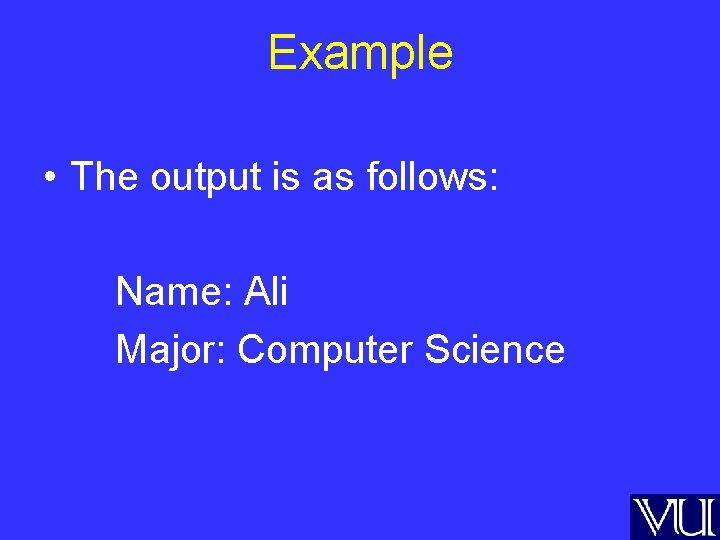
Example • The output is as follows: Name: Ali Major: Computer Science
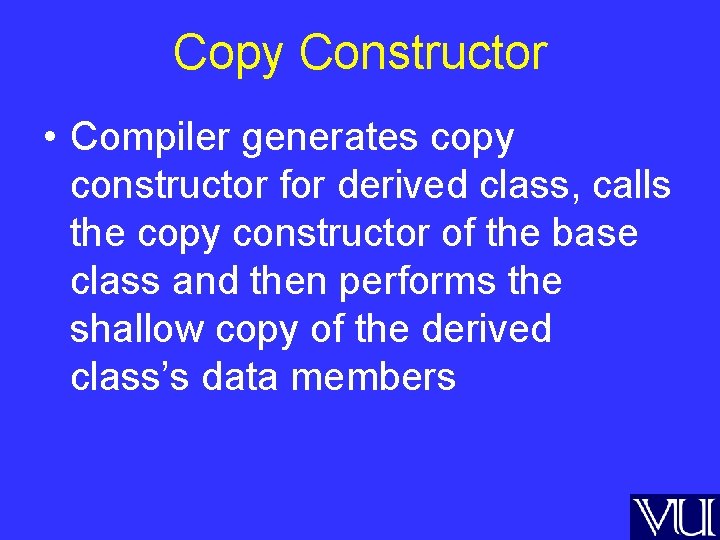
Copy Constructor • Compiler generates copy constructor for derived class, calls the copy constructor of the base class and then performs the shallow copy of the derived class’s data members

Shallow Copy sobj 1 name major. . . A L I C O M. . . sobj 2 name major. . .
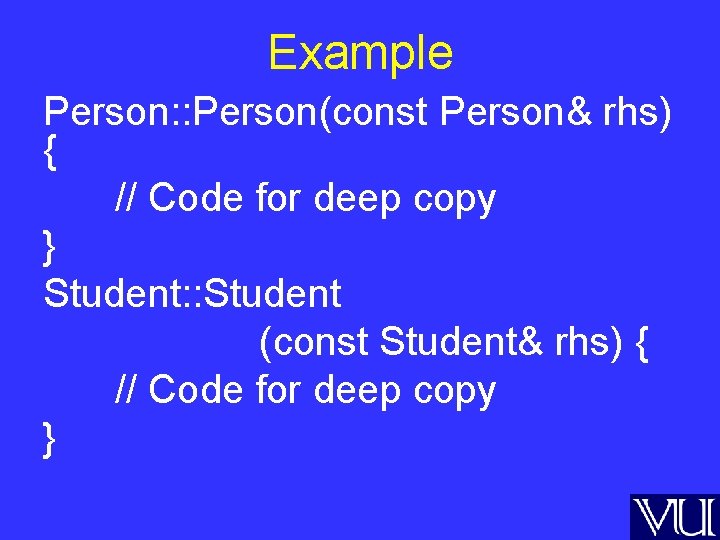
Example Person: : Person(const Person& rhs) { // Code for deep copy } Student: : Student (const Student& rhs) { // Code for deep copy }
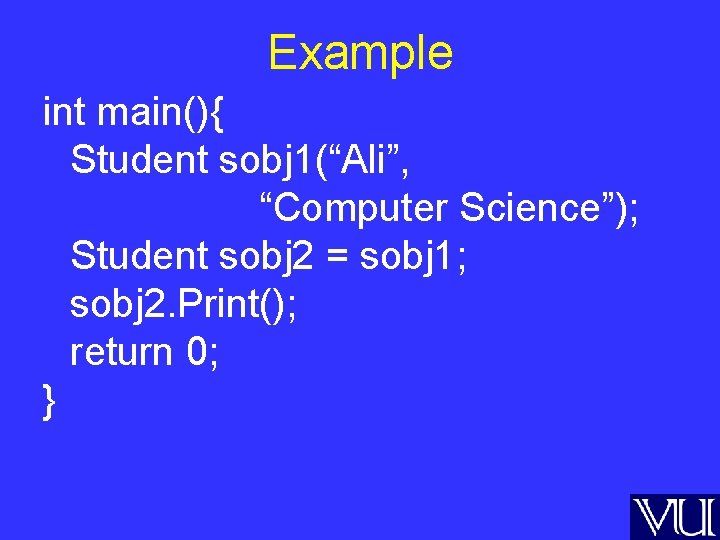
Example int main(){ Student sobj 1(“Ali”, “Computer Science”); Student sobj 2 = sobj 1; sobj 2. Print(); return 0; }
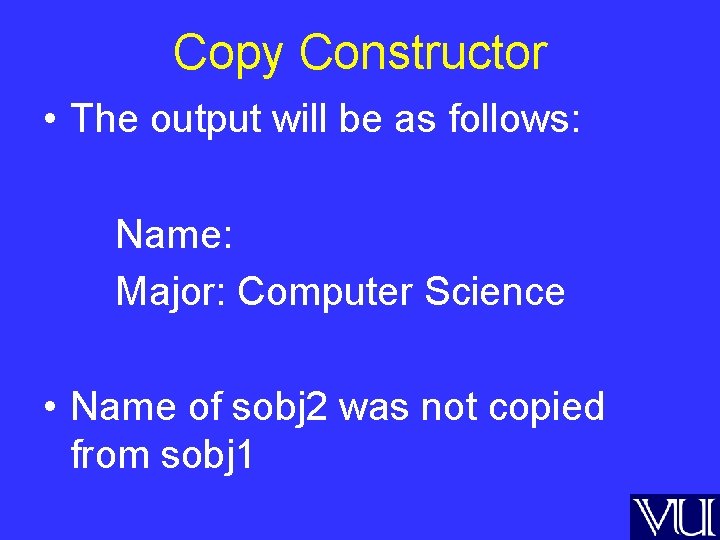
Copy Constructor • The output will be as follows: Name: Major: Computer Science • Name of sobj 2 was not copied from sobj 1
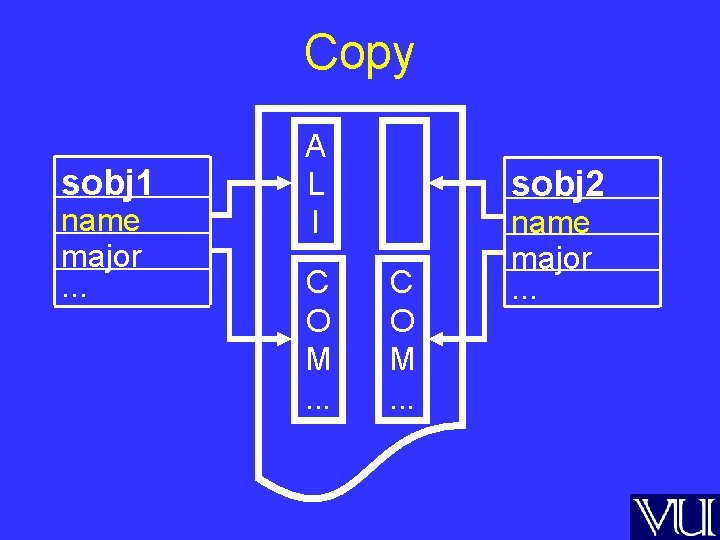
Copy sobj 1 name major. . . A L I C O M. . . sobj 2 C O M. . . name major. . .
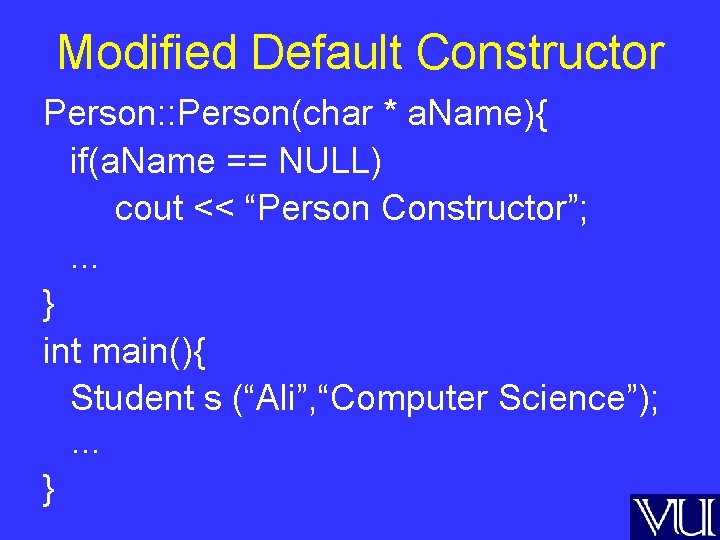
Modified Default Constructor Person: : Person(char * a. Name){ if(a. Name == NULL) cout << “Person Constructor”; . . . } int main(){ Student s (“Ali”, “Computer Science”); … }
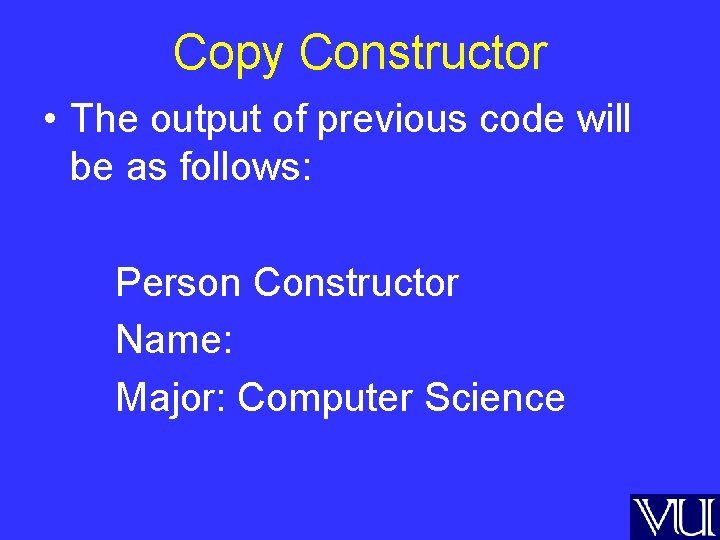
Copy Constructor • The output of previous code will be as follows: Person Constructor Name: Major: Computer Science
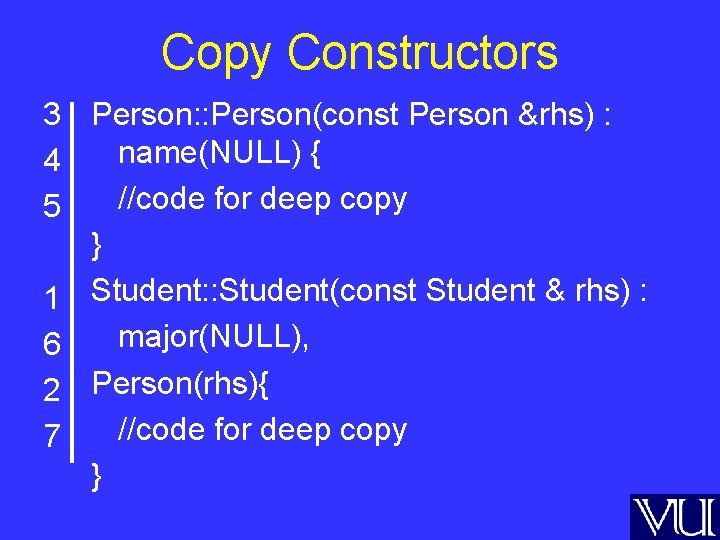
Copy Constructor • Programmer must explicitly call the base class copy constructor from the copy constructor of derived class
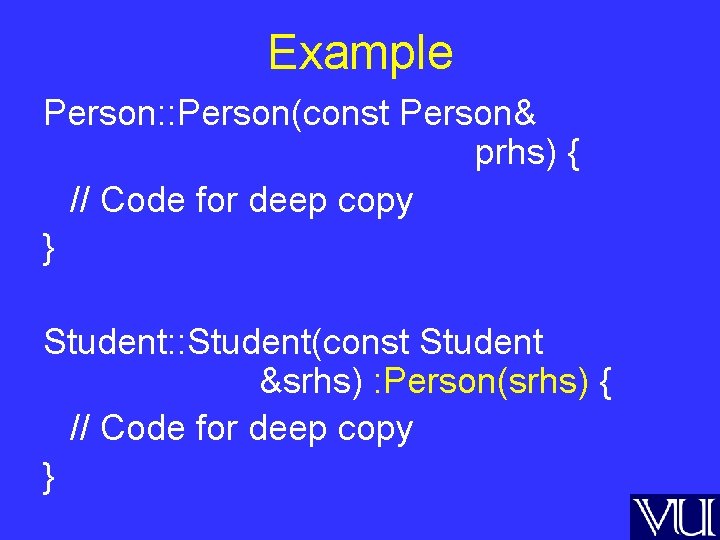
Example Person: : Person(const Person& prhs) { // Code for deep copy } Student: : Student(const Student &srhs) : Person(srhs) { // Code for deep copy }
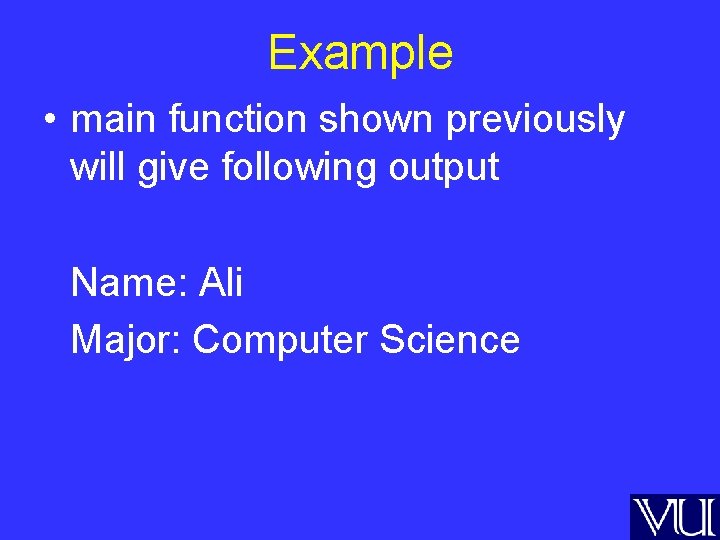
Example • main function shown previously will give following output Name: Ali Major: Computer Science
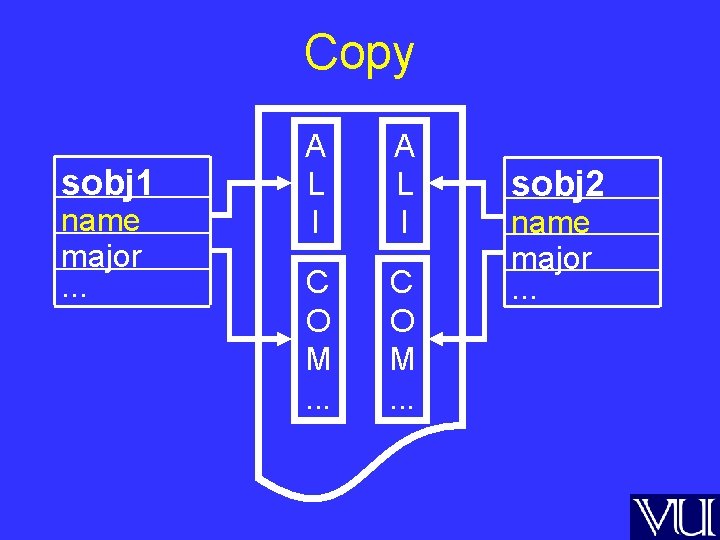
Copy sobj 1 name major. . . A L I C O M. . . sobj 2 name major. . .
Copy Constructors 3 Person: : Person(const Person &rhs) : name(NULL) { 4 //code for deep copy 5 } 1 Student: : Student(const Student & rhs) : major(NULL), 6 2 Person(rhs){ //code for deep copy 7 }
Example int main() { Student sobj 1, sboj 2(“Ali”, “CS”); sobj 1 = sobj 2; return 0; }
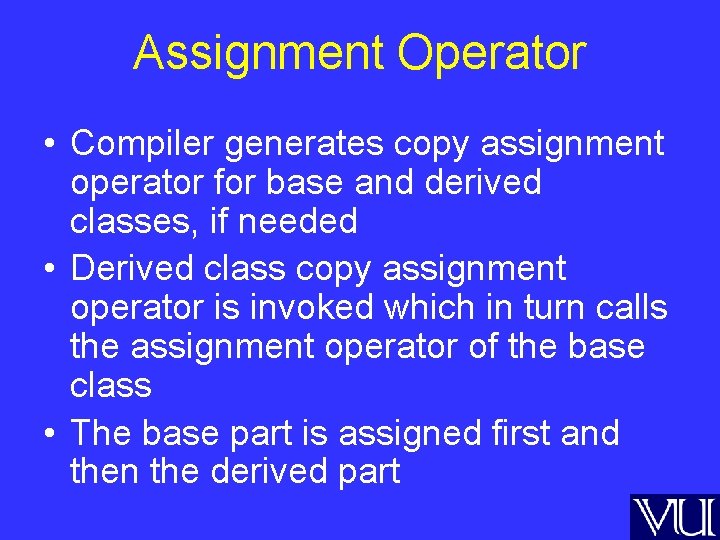
Assignment Operator • Compiler generates copy assignment operator for base and derived classes, if needed • Derived class copy assignment operator is invoked which in turn calls the assignment operator of the base class • The base part is assigned first and then the derived part
Assignment Operator • Programmer has to call operator of base class, if he is writing assignment operator of derived class
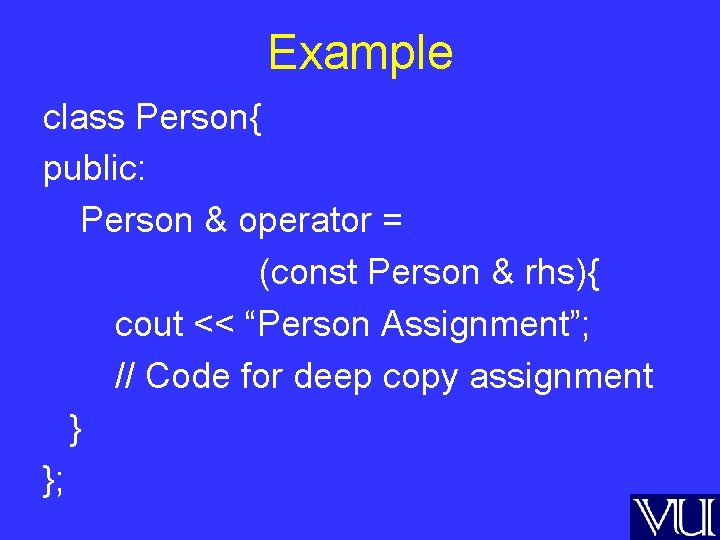
Example class Person{ public: Person & operator = (const Person & rhs){ cout << “Person Assignment”; // Code for deep copy assignment } };
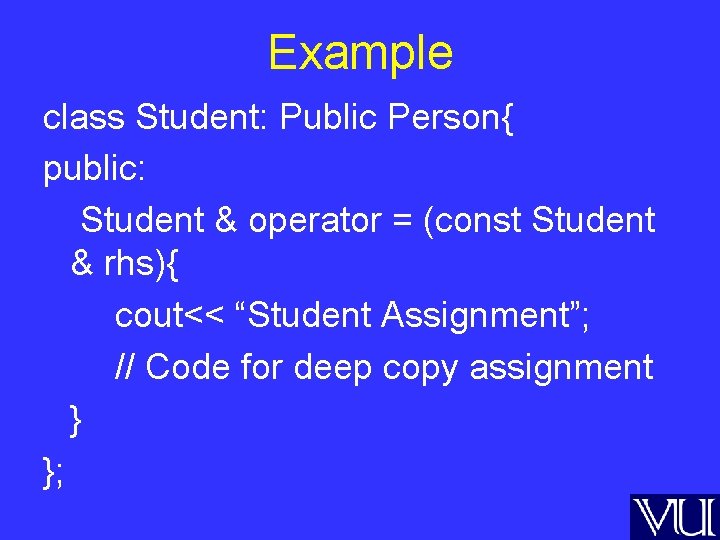
Example class Student: Public Person{ public: Student & operator = (const Student & rhs){ cout<< “Student Assignment”; // Code for deep copy assignment } };
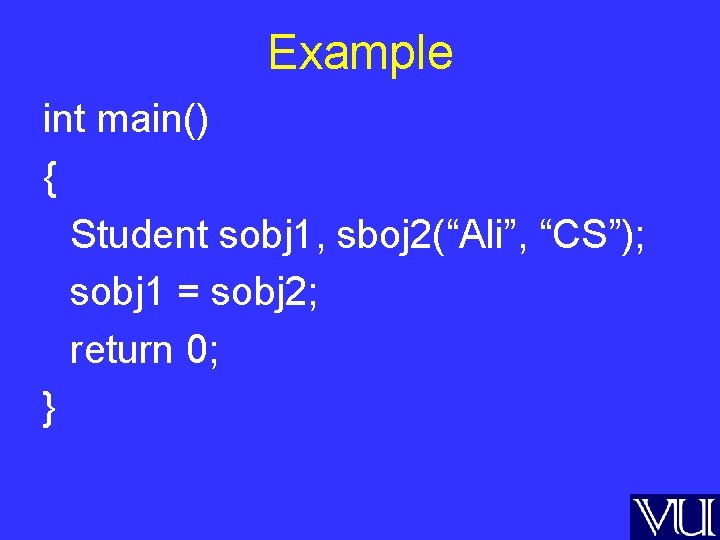
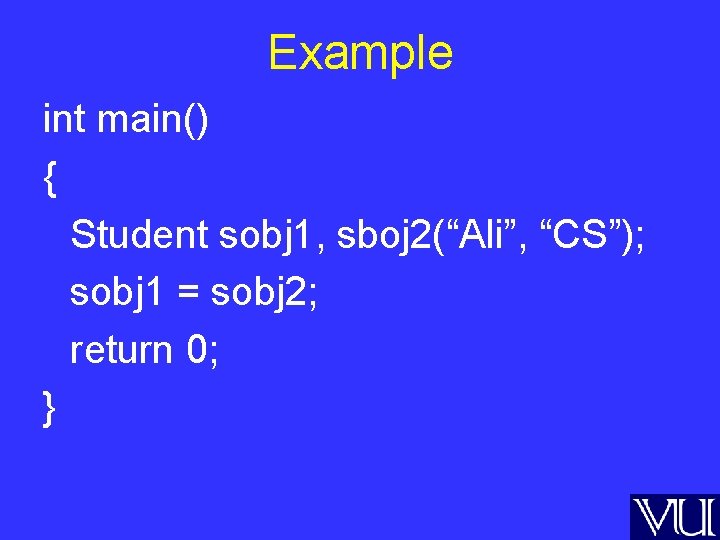
Example int main() { Student sobj 1, sboj 2(“Ali”, “CS”); sobj 1 = sobj 2; return 0; }
Example • The assignment operator of base class is not called • Output Student Assignment
Assignment Operator • There are two ways of writing assignment operator in derived class – Calling assignment operator of base class explicitly – Calling assignment operator of base class implicitly
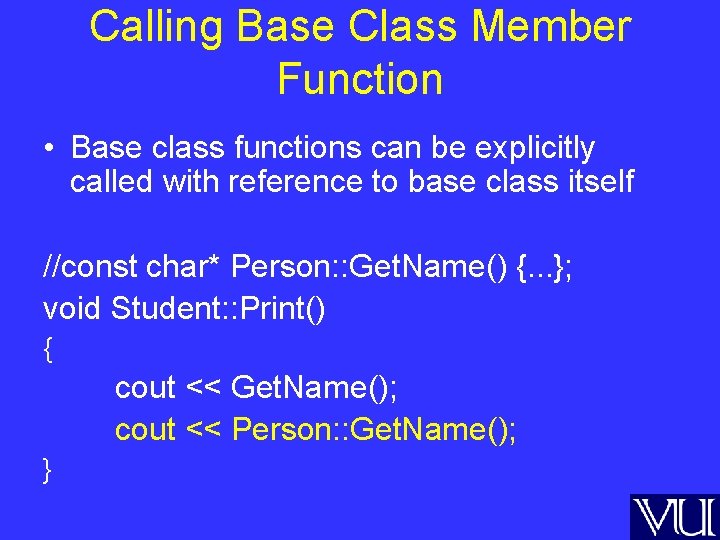
Calling Base Class Member Function • Base class functions can be explicitly called with reference to base class itself //const char* Person: : Get. Name() {. . . }; void Student: : Print() { cout << Get. Name(); cout << Person: : Get. Name(); }
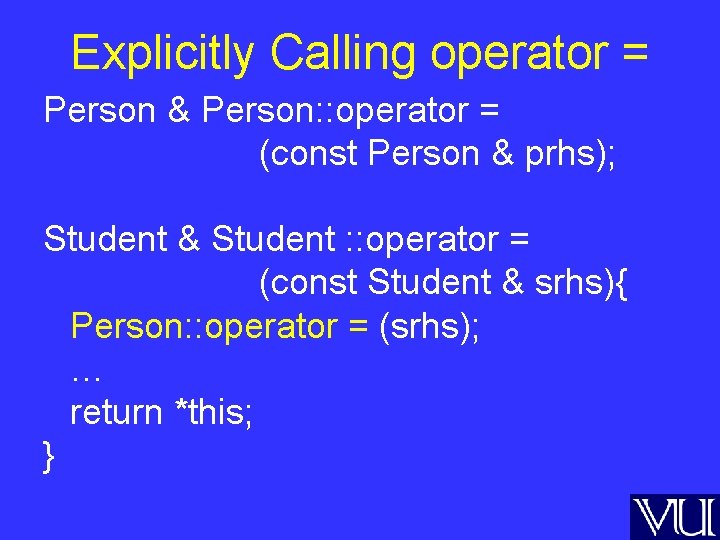
Explicitly Calling operator = Person & Person: : operator = (const Person & prhs); Student & Student : : operator = (const Student & srhs){ Person: : operator = (srhs); … return *this; }
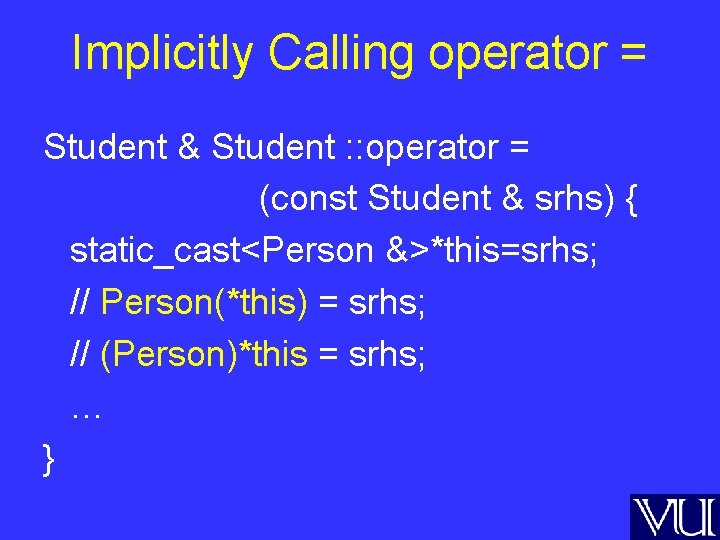
Implicitly Calling operator = Student & Student : : operator = (const Student & srhs) { static_cast<Person &>*this=srhs; // Person(*this) = srhs; // (Person)*this = srhs; … }
- Slides: 35