
Objectives Summarize the steps of the water cycle
Objectives Summarize the steps of the water cycle in a diagram. Explain how carbon and oxygen are cycled through an ecosystem. Describe why nitrogen must cycle through an ecosystem. Summarize the 3 major conversions of nitrogen in ecosystems. Explain why it is important that phosphorus be cycled through an ecosystem.
Vocabulary Carbon Cycle Water Cycle

Warm Up- 8/20 Name 4 major elements that make up our bodies? Where would you find them?

Good Things

Notes cont…
Chemistry of Biology Oxygen, water, carbon, nitrogen, and phosphorus are a few examples of these that we will discuss in this section. Not what roles they play though. We already talked about that in the previous notes. You will learn how these substances cycle through the ecosystems so that they maintain their availability to living organisms.
Water Cycle The water cycle continuously moves water between the atmosphere, the land, and the oceans. We see it first hand in several forms. Rain falls and is soaked up by the ground, or it pools where it’s drank, or it is absorbed by plants, or it will sit and evaporate back up into the atmosphere. Since it’s a cycle there is no starting point. We’ll start with water forming in the atmosphere.
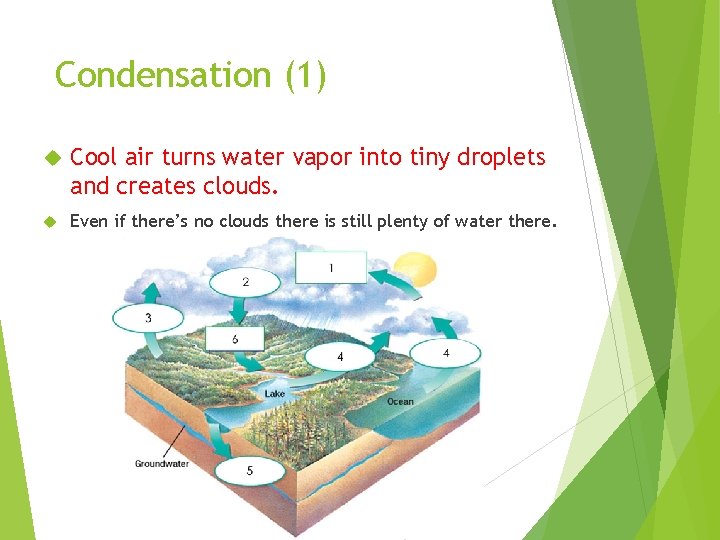
Condensation (1) Cool air turns water vapor into tiny droplets and creates clouds. Even if there’s no clouds there is still plenty of water there.
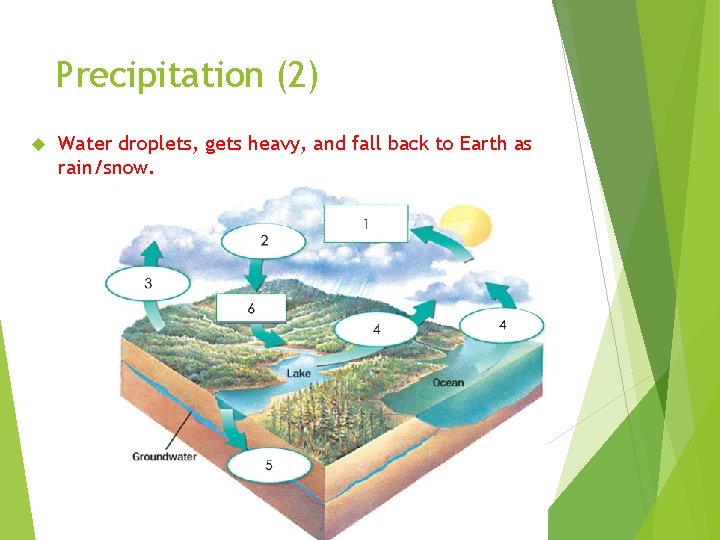
Precipitation (2) Water droplets, gets heavy, and fall back to Earth as rain/snow.
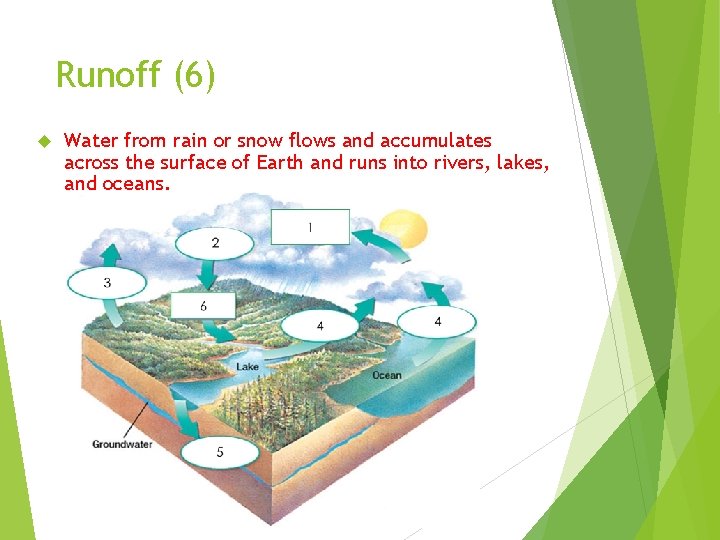
Runoff (6) Water from rain or snow flows and accumulates across the surface of Earth and runs into rivers, lakes, and oceans.
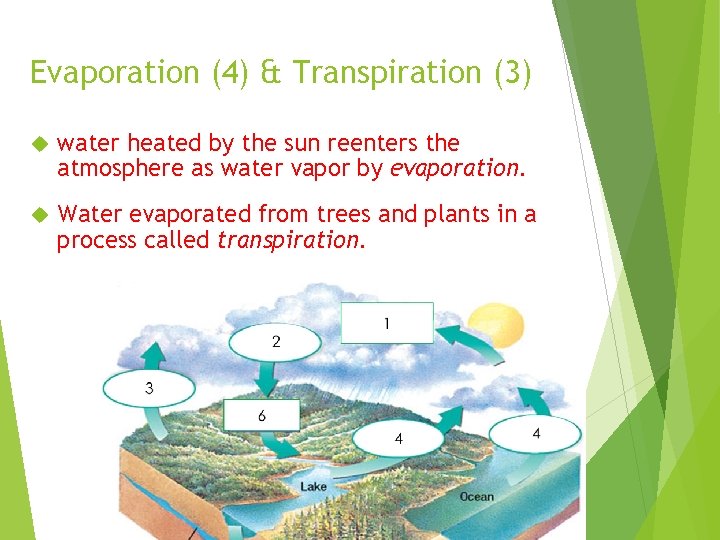
Evaporation (4) & Transpiration (3) water heated by the sun reenters the atmosphere as water vapor by evaporation. Water evaporated from trees and plants in a process called transpiration.
Carbon and Oxygen Cycles Carbon and oxygen are critical for life on Earth, and their cycles are tied closely together. Just as with water, these are both cycled so organisms always have a supply available. The carbon cycle is the continuous movement of carbon from the nonliving environment into living things and back.
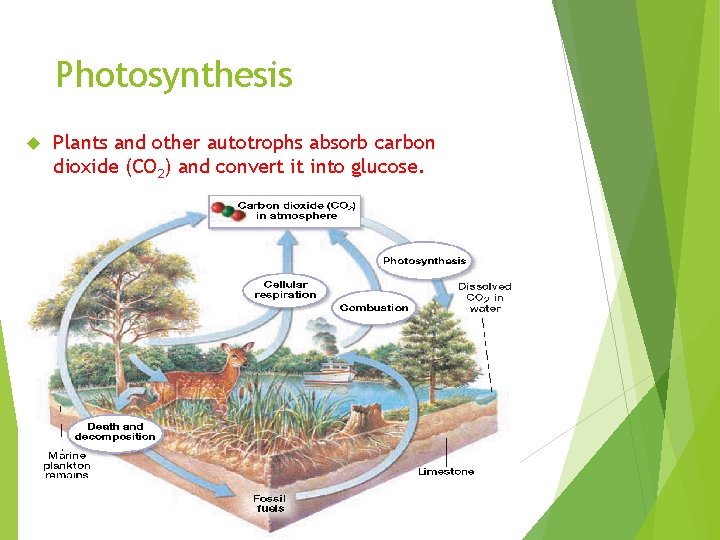
Photosynthesis Plants and other autotrophs absorb carbon dioxide (CO 2) and convert it into glucose.
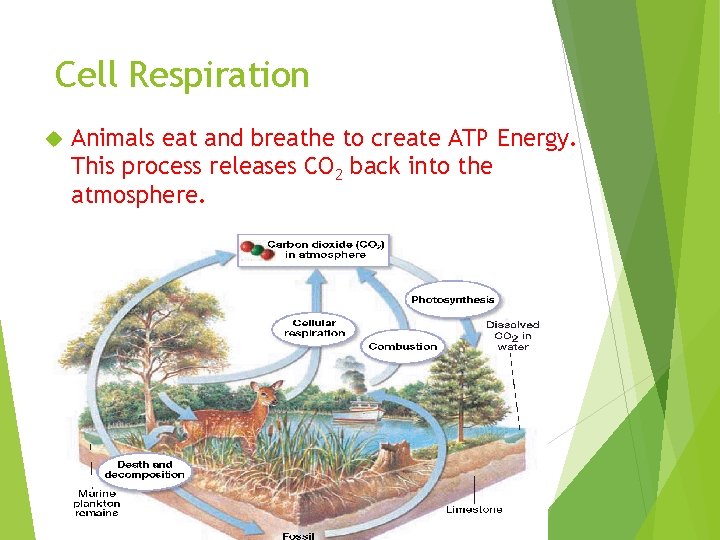
Cell Respiration Animals eat and breathe to create ATP Energy. This process releases CO 2 back into the atmosphere.
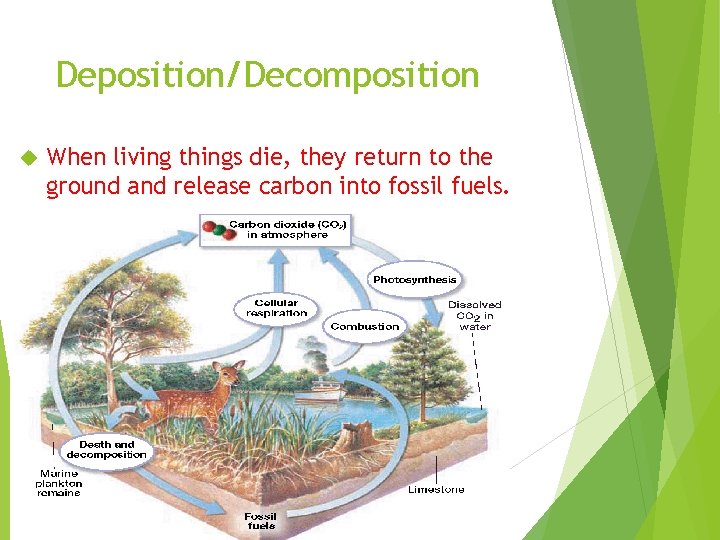
Deposition/Decomposition When living things die, they return to the ground and release carbon into fossil fuels.
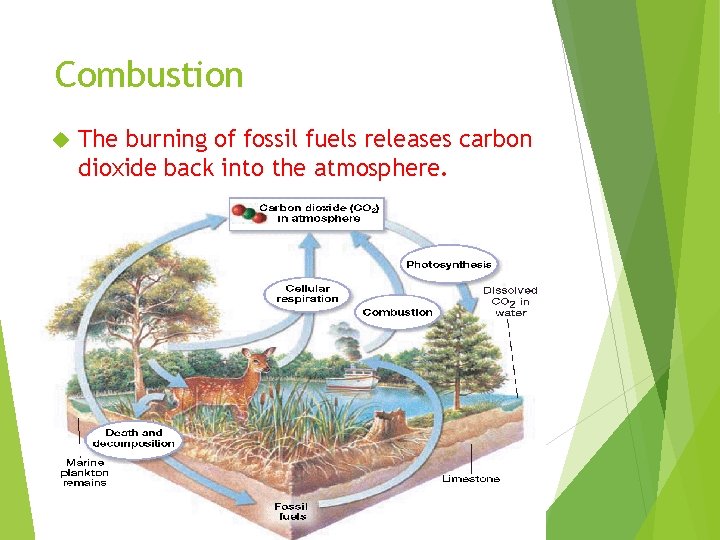
Combustion The burning of fossil fuels releases carbon dioxide back into the atmosphere.
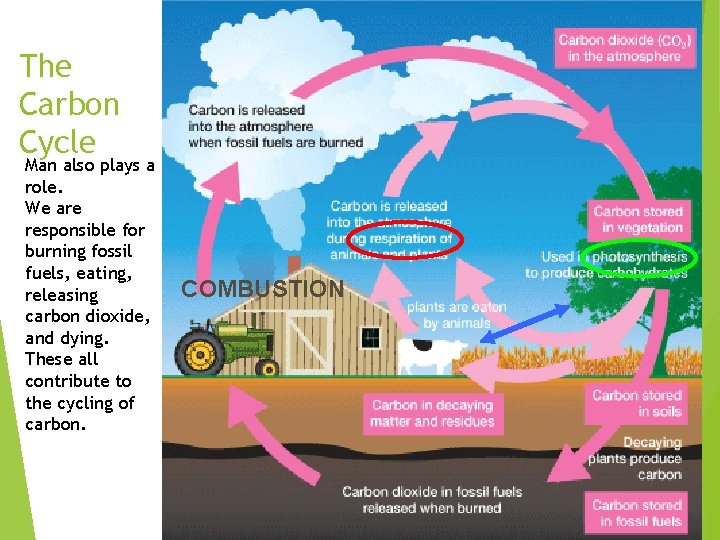
The Carbon Cycle Man also plays a role. We are responsible for burning fossil fuels, eating, releasing carbon dioxide, and dying. These all contribute to the cycling of carbon. COMBUSTION
Concepts Summary These are things you have been exposed to and need to know: 1. What is the difference between food chains and food webs. 2. Why energy is lost in a food chain. 3. The 3 main cycles of matter. 4. Why they are important. 5. What are the steps in the cycles.
Nitrogen Cycle Nitrogen, another essential element, must also be cycled. The atmosphere is about 78% nitrogen gas, N 2. But most organisms cannot use nitrogen gas. The nitrogen cycle is all about getting the nitrogen in the atmosphere into forms that can be used by organisms. Recall, Nitrogen is used for The amino acids of proteins. In the nitrogenous bases of DNA & RNA The nitrogen cycle is the process in which nitrogen circulates among the air, soil, water, and organisms in an ecosystem.
Warm Up- 8/22 1. What gas do plants take IN, and what do they take OUT? 2. Why is this important for all animals?

Good Things

Lunch Forms

Posters 10 minutes.
Warm Up- 8/23 Explain why photosynthesis and cell respiration are considered opposite reactions? ¿Por qué la fotosíntesis y la respiración celular se consideran reacciones opuestas?

Good Things
Title: Nitrogen Cycle
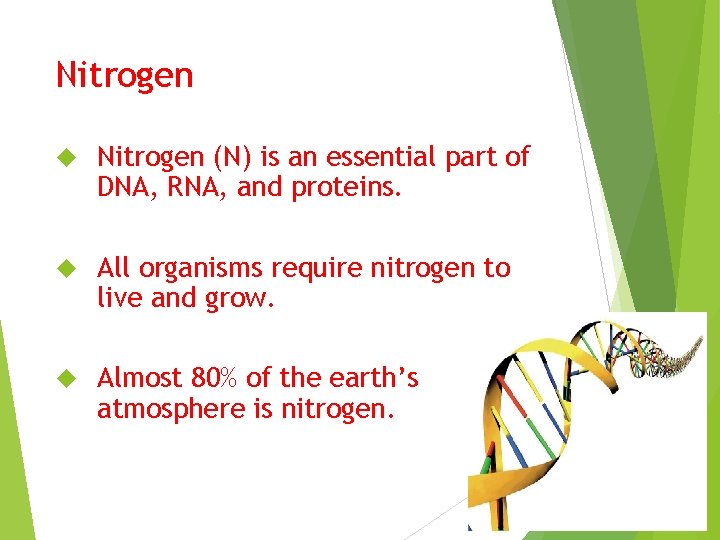
Nitrogen (N) is an essential part of DNA, RNA, and proteins. All organisms require nitrogen to live and grow. Almost 80% of the earth’s atmosphere is nitrogen.
How can we use N 2? WE CAN’T! Animals cannot use nitrogen from the air. It has to go through 5 steps. In order for plants and animals to be able to use nitrogen, N 2 gas must first be converted to more a chemically available form such as ammonium (NH 4+) or nitrate (NO 3 -). But BACTERIA & … can…
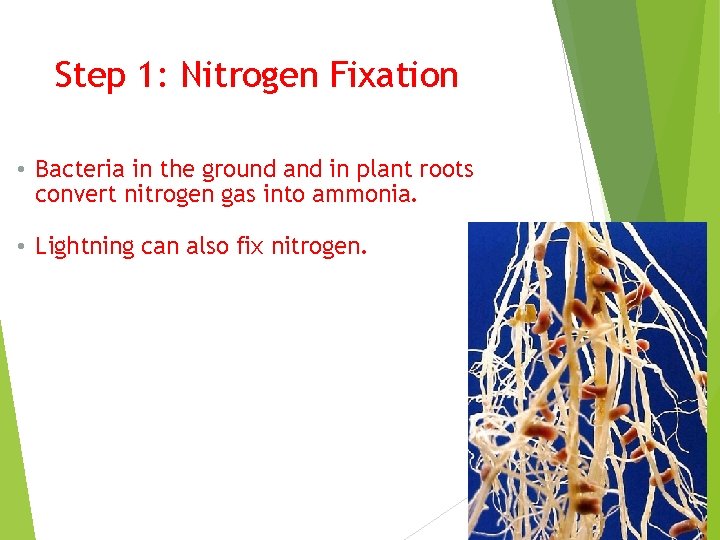
Step 1: Nitrogen Fixation • Bacteria in the ground and in plant roots convert nitrogen gas into ammonia. • Lightning can also fix nitrogen.

Step 2: Ammonification • Nitrogen from animal waste or decaying bodies returns to the soil as ammonia by decomposers.
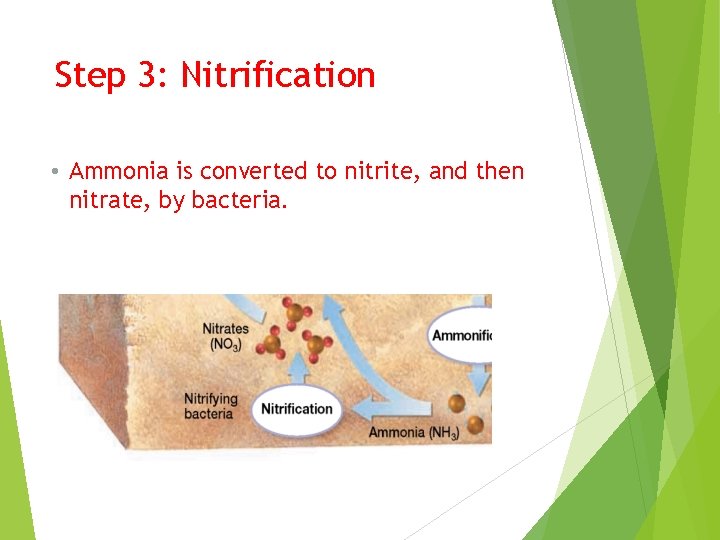
Step 3: Nitrification • Ammonia is converted to nitrite, and then nitrate, by bacteria.

Step 4: Assimilation • Plants absorb nitrogen from the ground, then goes into animals that the plants.
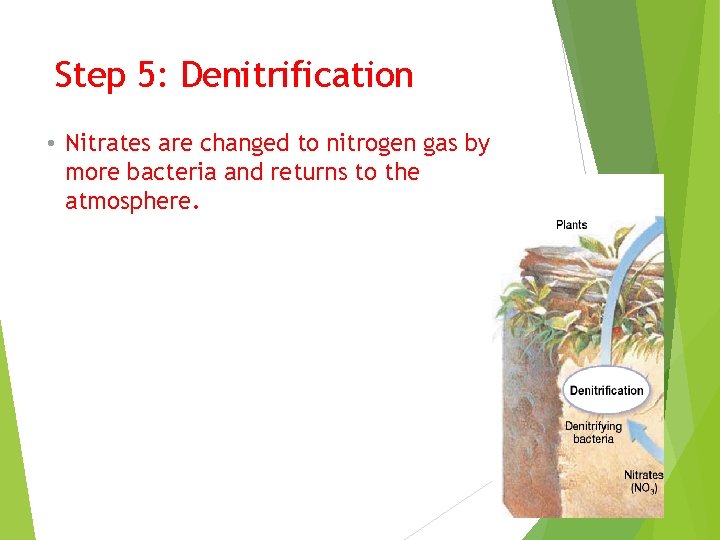
Step 5: Denitrification • Nitrates are changed to nitrogen gas by more bacteria and returns to the atmosphere.
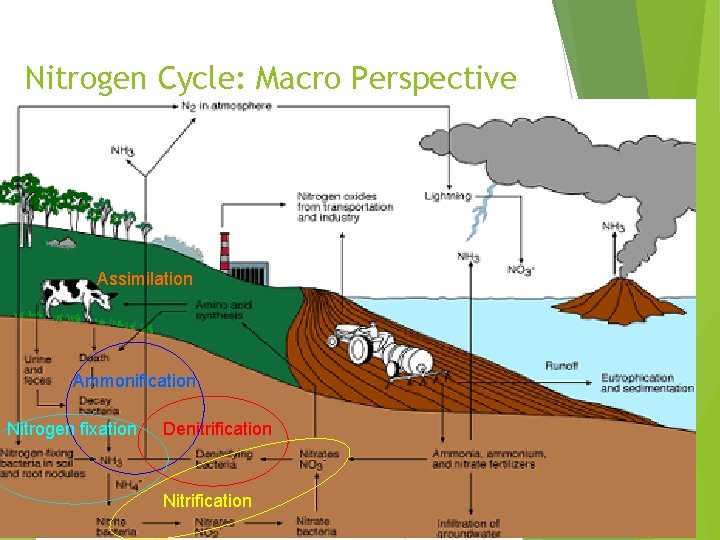
Nitrogen Cycle: Macro Perspective Assimilation Ammonification Nitrogen fixation Denitrification Nitrification
Cycles Practice
PAP: Nitrogen Cycle Reading an annotations (15 minutes) For each paragraph, identify the most important concept. Write it out in the notes section. Use the card template to design your own steps to the nitrogen cycle.
PAP: Nitrogen Cycle Reading Step Cards
PAP: Homework Corn Yield Slope (rise over run)
- Slides: 38