
Objectives Solve examples Learn about refrigerants compressors and
Objectives • Solve examples • Learn about refrigerants, compressors, and expansion valves (Ch. 4) • Compare residential and commercial systems • Introduce heat exchangers (ch. 11) • Next two weeks
Example 1 • • R-22 condensing temp of 30 °C and evaporating temp of 0°C Determine a) qcarnot wcarnot b) COPcarnot c) ηR

Example 2 • • R-22 condensing temp of 60 °C and evaporating temp of 0°C Determine the ηR
Example 3 • • • Two stage compressor R-22 condensing temp of 60 °C Evaporating temp of compressor A 30°C and for compressor B 0°C. • Determine the ηR Assume that condenser temperature for compressor B is the same like evaporation temperature of compressor A
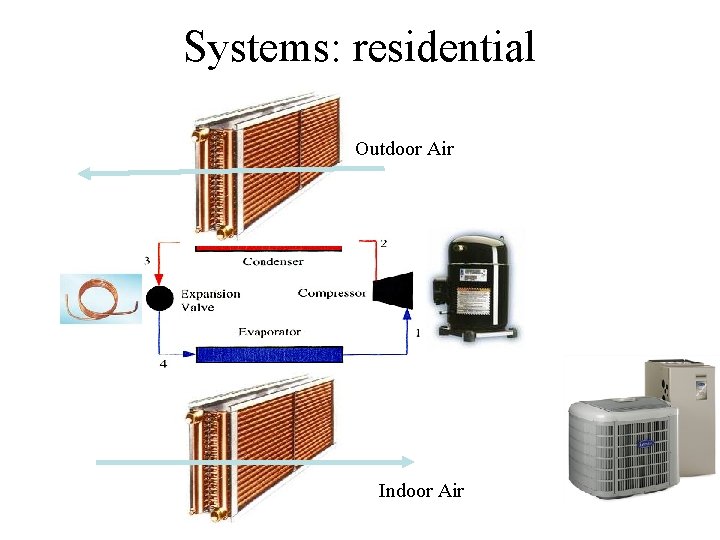
Systems: residential Outdoor Air Indoor Air
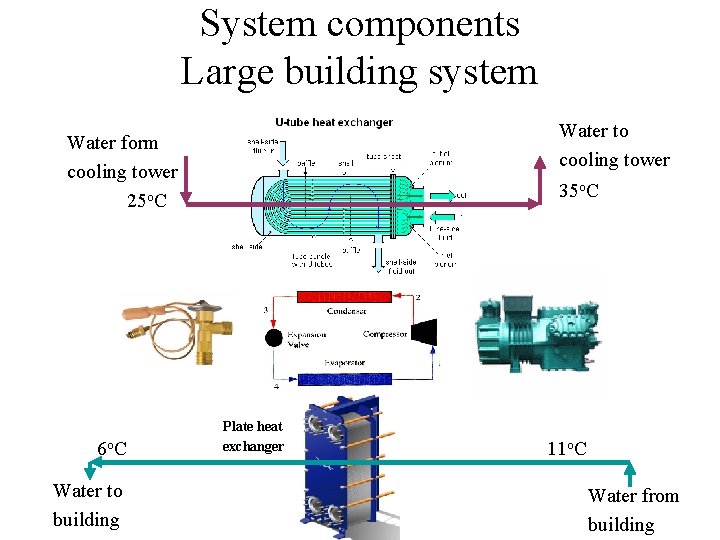
System components Large building system Water to cooling tower Water form cooling tower 25 o. C 6 o. C Water to building 35 o. C Plate heat exchanger 11 o. C Water from building
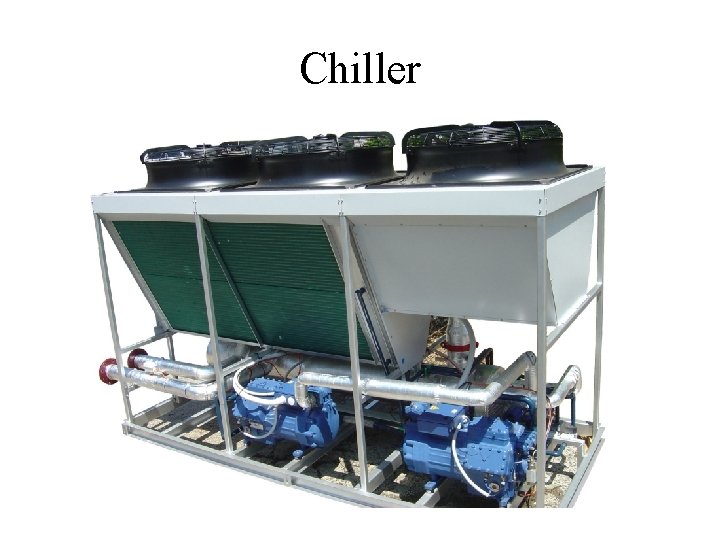
Chiller
Compressors
Compressor • Workhorse of the system • Several types – all compress gas with varying degrees of efficiency • Far from isentropic (our assumption earlier) • Wshaft = work done by shaft • Welec = electric power requirements
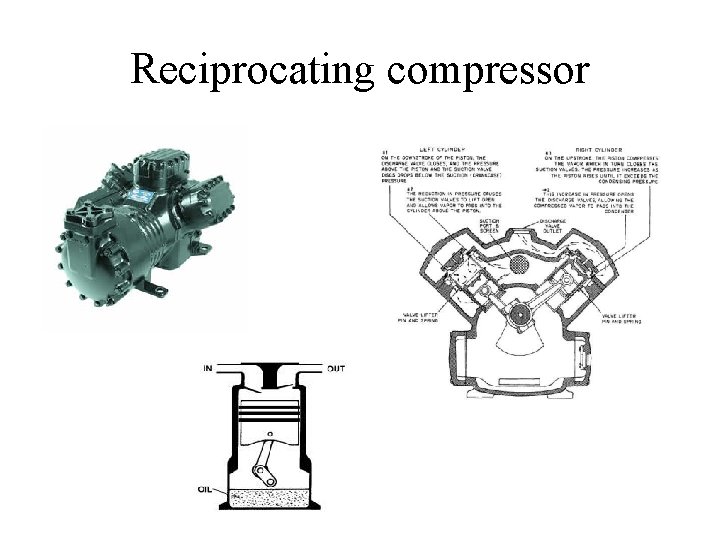
Reciprocating compressor

Reciprocating Compressor • Figures 4. 4, 4. 6
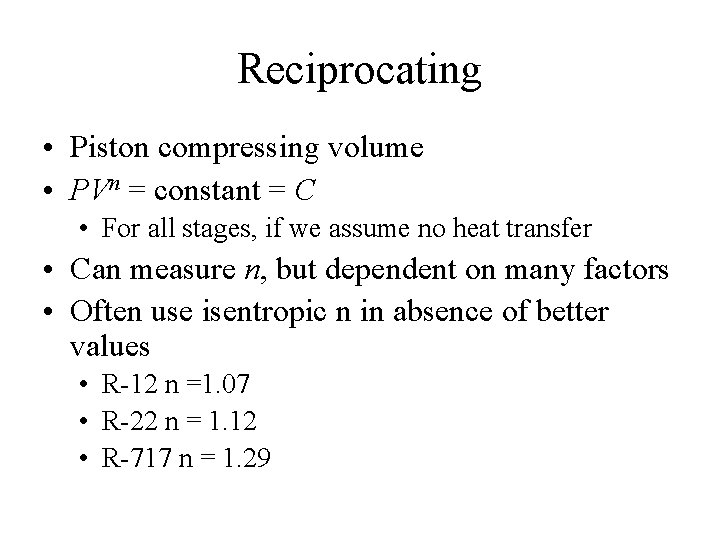
Reciprocating • Piston compressing volume • PVn = constant = C • For all stages, if we assume no heat transfer • Can measure n, but dependent on many factors • Often use isentropic n in absence of better values • R-12 n =1. 07 • R-22 n = 1. 12 • R-717 n = 1. 29
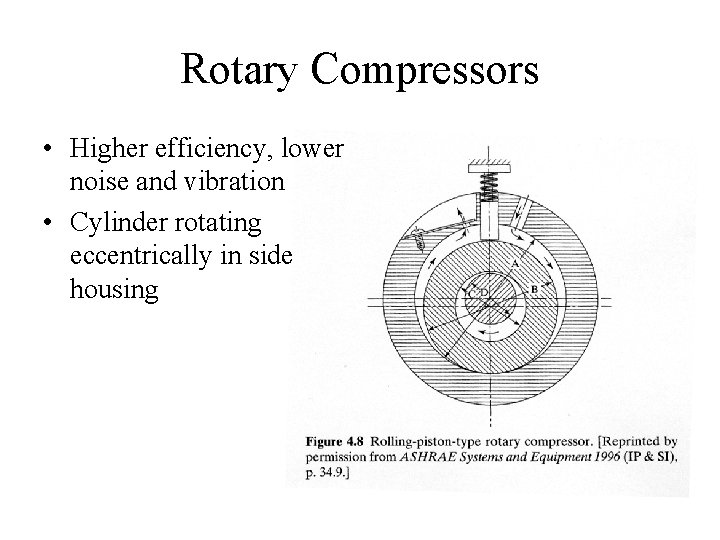
Rotary Compressors • Higher efficiency, lower noise and vibration • Cylinder rotating eccentrically in side housing
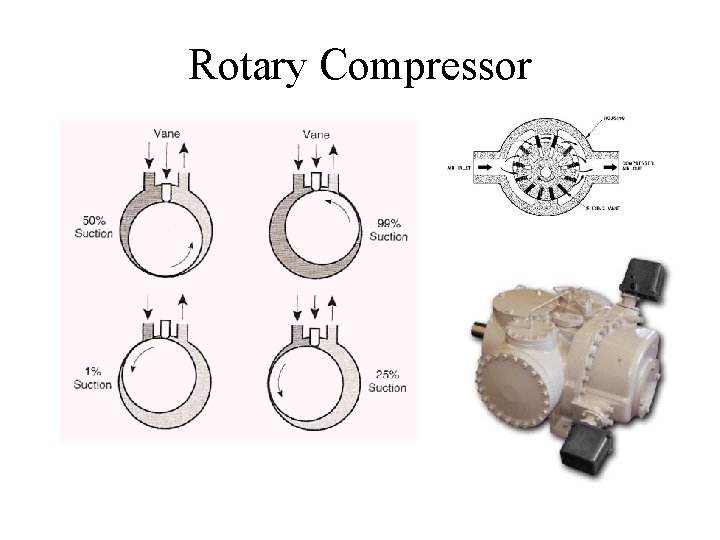
Rotary Compressor
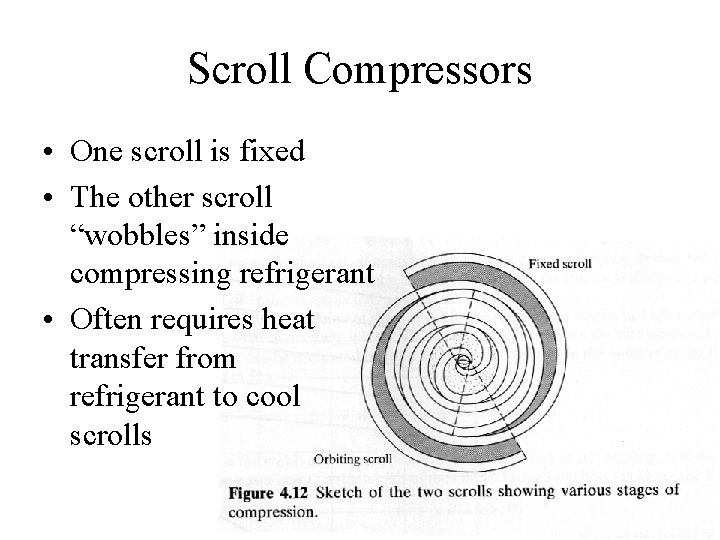
Scroll Compressors • One scroll is fixed • The other scroll “wobbles” inside compressing refrigerant • Often requires heat transfer from refrigerant to cool scrolls

Scroll compressor » http: //www. youtube. com/watch? v=f_6 xol. Doqs 0
Scroll Compressors • • Constant displacement Higher efficiency, but harder to manufacture Close tolerance between scrolls Ugly to analyze – see text for details

Screw compressor » http: //www. youtube. com/watch? v=x. O 7 Ihhz. Im. MU&feature=related

Screw Compressors • Rotating meshed screws • One or two screws
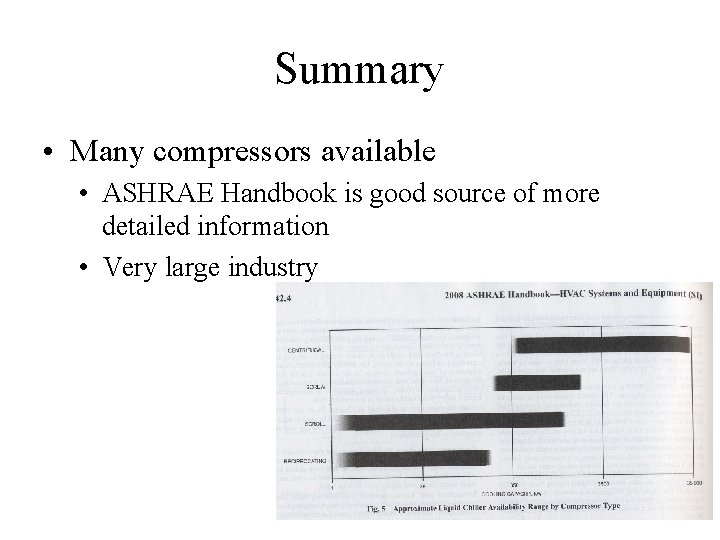
Summary • Many compressors available • ASHRAE Handbook is good source of more detailed information • Very large industry
Expansion Valves • Throttles the refrigerant from condenser temperature to evaporator temperature • Connected to evaporator superheat • Increased compressor power consumption • Decreased pumping capacity • Increased discharge temperature • Can do it with a fixed orifice (pressure reducing device), but does not guarantee evaporator pressure

Thermostatic Expansion Valve (TXV) • Variable refrigerant flow to maintain desired superheat
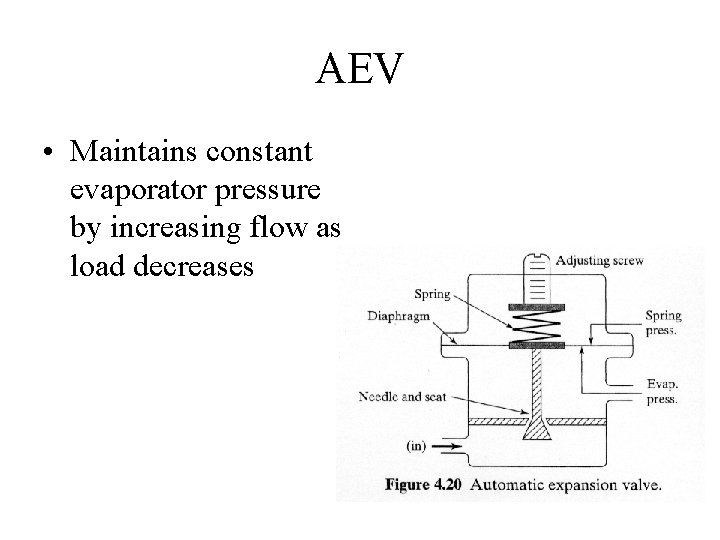
AEV • Maintains constant evaporator pressure by increasing flow as load decreases
Summary • Expansion valves make a big difference in refrigeration system performance • Trade-offs • Cost, refrigerant amount • Complexity/moving parts
Refrigerants
What are desirable properties of refrigerants? • • • Pressure and boiling point Critical temperature Latent heat of vaporization Heat transfer properties Viscosity Stability
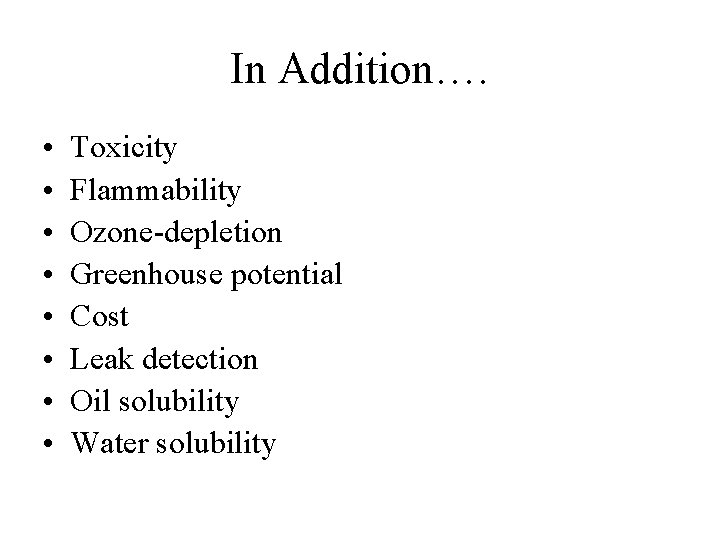
In Addition…. • • Toxicity Flammability Ozone-depletion Greenhouse potential Cost Leak detection Oil solubility Water solubility

Refrigerants • What does R-12 mean? • ASHRAE classifications • From right to left ← • • # fluorine atoms # hydrogen atoms +1 # C atoms – 1 (omit if zero) # C=C double bonds (omit if zero) • B at end means bromine instead of chlorine • a or b at end means different isomer
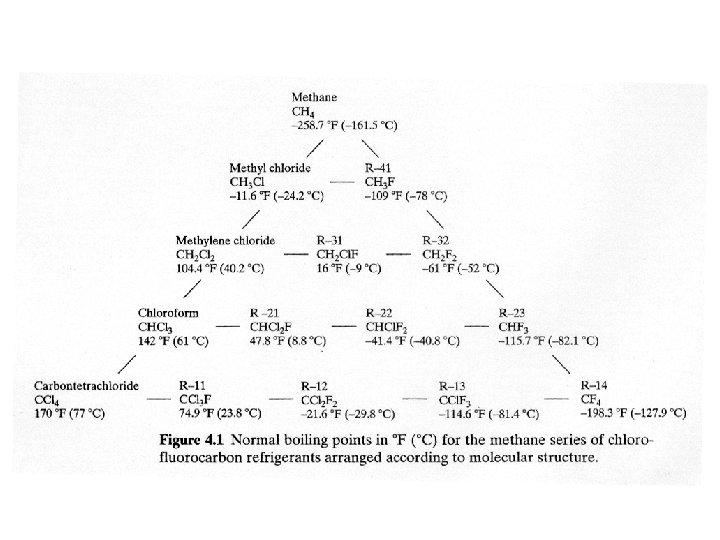

Refrigerant Conventions • Mixtures show mass fractions • Zeotropic mixtures • Change composition/saturation temperature as they change phase at a constant pressure • Azeotropic mixtures • Behaves as a monolithic substance • Composition stays same as phase changes

Inorganic Refrigerants • Ammonia (R 717) • • Boiling point? Critical temp = 271 °F Freezing temp = -108 °F Latent heat of vaporization? • Small compressors • Excellent heat transfer capabilities • Not particularly flammable • But…
Carbon Dioxide (R 744) • Cheap, non-toxic, non-flammable • Critical temp? • Huge operating pressures
Water (R 718) • Two main disadvantages? • ASHRAE Handbook of Fundamentals Ch. 20
Water in refrigerant • Water + Halocarbon Refrigerant = (strong) acids or bases • Corrosion • Solubility • Free water freezes on expansion valves • Use a dryer (desiccant) • Keep the system dry during installation/maintenance
Oil • Miscible refrigerants • High enough velocity to limit deposition • Especially in evaporator • Immiscible refrigerants • Use a separator to keep oil contained in compressor • Intermediate
The Moral of the Story • No ideal refrigerants • Always compromising on one or more criteria
HW 3 Five problems: 1) Book: 3. 1, 2) Book: 3. 5, 3) Solve 3. 5 for ammonia, 4) Same like 3. 5 for R 22 with no intercooler 5) Finish example problem 3 (two cycle and two compressors) for ammonia. Deadline: 03/11 in class.
- Slides: 37