
Objectives Section 3 Nuclear Receptors 1 Define Nuclear
Objectives Section 3: Nuclear Receptors 1. Define Nuclear Receptor – receptors as transcriptional regulators. Outline nuclear receptor classifications Describe basic nuclear receptor structure 2. Define HRE: hormone response element and how they function 3. Describe nuclear receptor binding domain 4. Describe ‘cytosolic’ steroid receptors Estrogen receptors, and other similar family members, GR, MR, PR, AR Describe the process of ligand mediated nuclear translocation 5. Describe ‘nuclear’ hormone receptors Thyroid hormone receptors, and other similar family members, RAR, PPAR, VDR Describe the process of receptor heterodimerization with RXR 6. Describe non-genomic steroid/hormone receptors Estrogen receptors, GPR 30 Thyroid hormone receptors
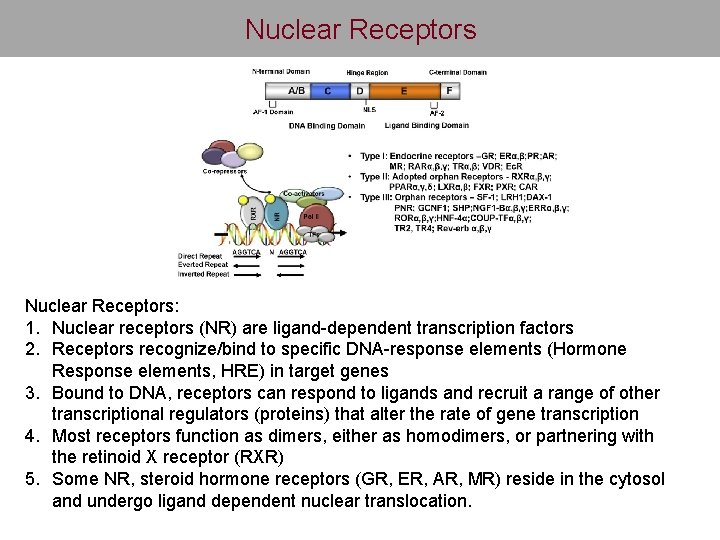
Nuclear Receptors: 1. Nuclear receptors (NR) are ligand-dependent transcription factors 2. Receptors recognize/bind to specific DNA-response elements (Hormone Response elements, HRE) in target genes 3. Bound to DNA, receptors can respond to ligands and recruit a range of other transcriptional regulators (proteins) that alter the rate of gene transcription 4. Most receptors function as dimers, either as homodimers, or partnering with the retinoid X receptor (RXR) 5. Some NR, steroid hormone receptors (GR, ER, AR, MR) reside in the cytosol and undergo ligand dependent nuclear translocation.
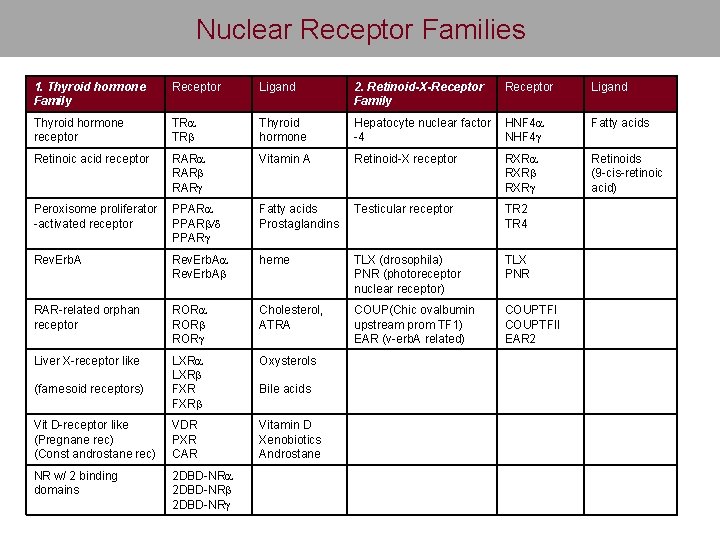
Nuclear Receptor Families 1. Thyroid hormone Family Receptor Ligand 2. Retinoid-X-Receptor Family Receptor Ligand Thyroid hormone receptor TRa TRb Thyroid hormone Hepatocyte nuclear factor -4 HNF 4 a NHF 4 g Fatty acids Retinoic acid receptor RARa RARb RARg Vitamin A Retinoid-X receptor RXRa RXRb RXRg Retinoids (9 -cis-retinoic acid) Peroxisome proliferator -activated receptor PPARa PPARb/d PPARg Fatty acids Prostaglandins Testicular receptor TR 2 TR 4 Rev. Erb. Aa Rev. Erb. Ab heme TLX (drosophila) PNR (photoreceptor nuclear receptor) TLX PNR RAR-related orphan receptor RORa RORb RORg Cholesterol, ATRA COUP(Chic ovalbumin upstream prom TF 1) EAR (v-erb. A related) COUPTFII EAR 2 Liver X-receptor like LXRa LXRb FXRb Oxysterols Vit D-receptor like (Pregnane rec) (Const androstane rec) VDR PXR CAR Vitamin D Xenobiotics Androstane NR w/ 2 binding domains 2 DBD-NRa 2 DBD-NRb 2 DBD-NRg (farnesoid receptors) Bile acids
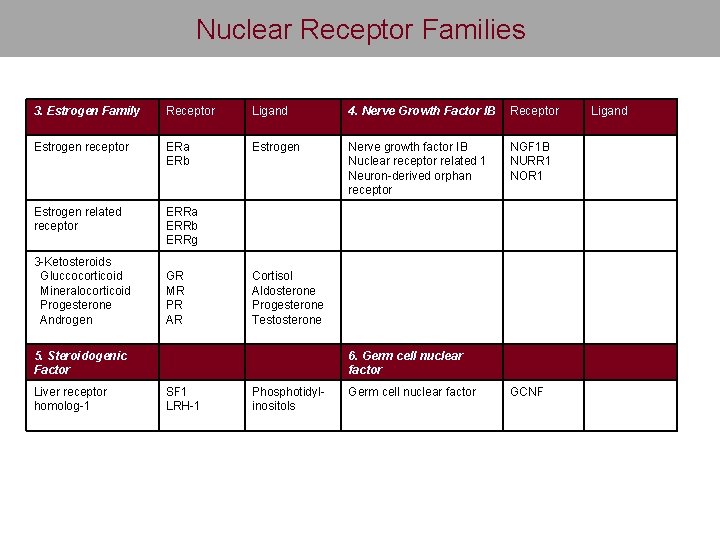
Nuclear Receptor Families 3. Estrogen Family Receptor Ligand 4. Nerve Growth Factor IB Receptor Estrogen receptor ERa ERb Estrogen Nerve growth factor IB Nuclear receptor related 1 Neuron-derived orphan receptor NGF 1 B NURR 1 NOR 1 Estrogen related receptor ERRa ERRb ERRg 3 -Ketosteroids Gluccocorticoid Mineralocorticoid Progesterone Androgen GR MR PR AR Cortisol Aldosterone Progesterone Testosterone 5. Steroidogenic Factor Liver receptor homolog-1 6. Germ cell nuclear factor SF 1 LRH-1 Phosphotidylinositols Germ cell nuclear factor GCNF Ligand
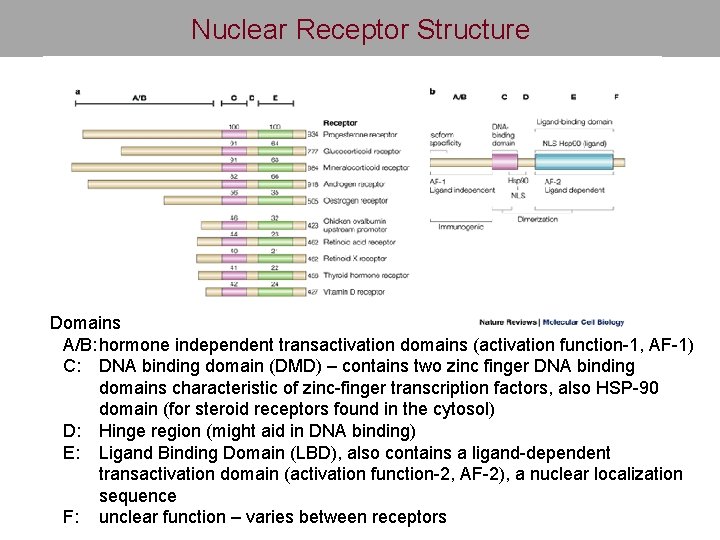
Nuclear Receptor Structure Domains A/B: hormone independent transactivation domains (activation function-1, AF-1) C: DNA binding domain (DMD) – contains two zinc finger DNA binding domains characteristic of zinc-finger transcription factors, also HSP-90 domain (for steroid receptors found in the cytosol) D: Hinge region (might aid in DNA binding) E: Ligand Binding Domain (LBD), also contains a ligand-dependent transactivation domain (activation function-2, AF-2), a nuclear localization sequence F: unclear function – varies between receptors

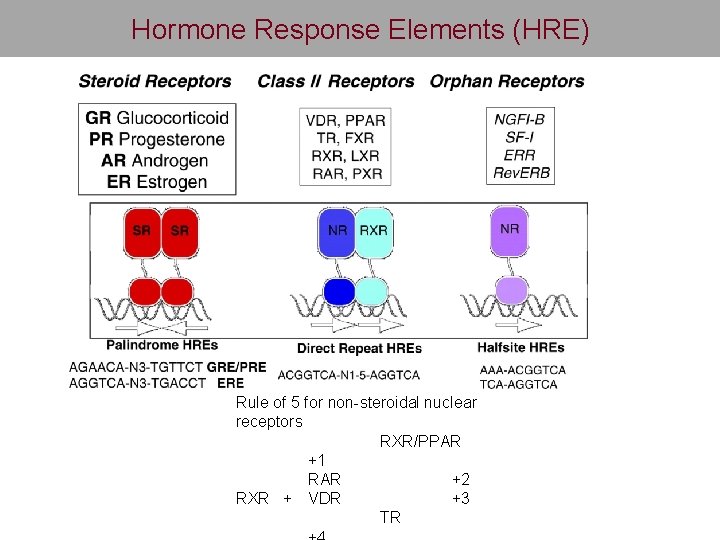
Hormone Response Elements (HRE) Rule of 5 for non-steroidal nuclear receptors RXR/PPAR +1 RAR +2 RXR + VDR +3 TR
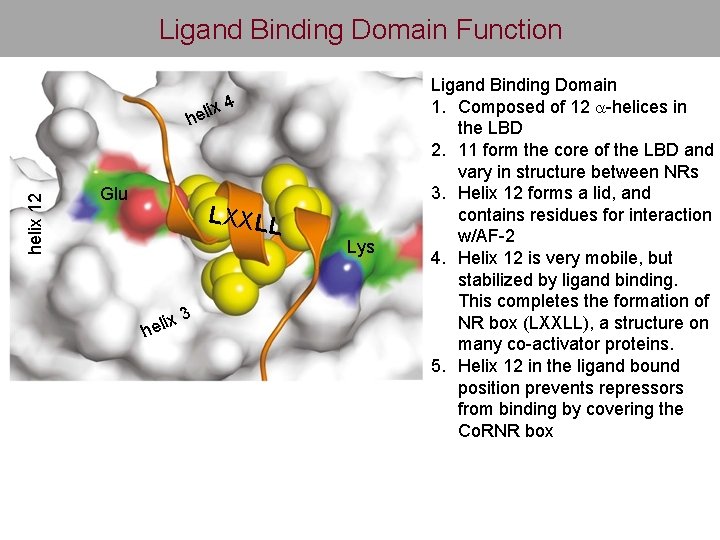
Ligand Binding Domain Function helix 12 ix hel Glu 4 LXXLL ix hel 3 Lys Ligand Binding Domain 1. Composed of 12 a-helices in the LBD 2. 11 form the core of the LBD and vary in structure between NRs 3. Helix 12 forms a lid, and contains residues for interaction w/AF-2 4. Helix 12 is very mobile, but stabilized by ligand binding. This completes the formation of NR box (LXXLL), a structure on many co-activator proteins. 5. Helix 12 in the ligand bound position prevents repressors from binding by covering the Co. RNR box
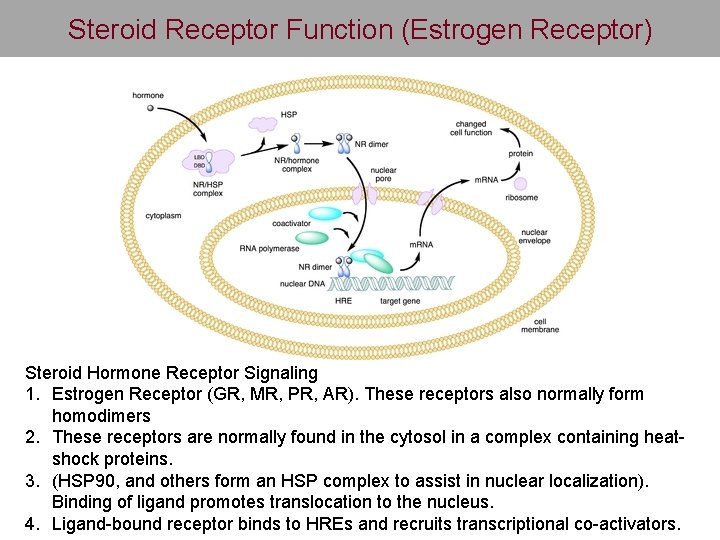
Steroid Receptor Function (Estrogen Receptor) Steroid Hormone Receptor Signaling 1. Estrogen Receptor (GR, MR, PR, AR). These receptors also normally form homodimers 2. These receptors are normally found in the cytosol in a complex containing heatshock proteins. 3. (HSP 90, and others form an HSP complex to assist in nuclear localization). Binding of ligand promotes translocation to the nucleus. 4. Ligand-bound receptor binds to HREs and recruits transcriptional co-activators.
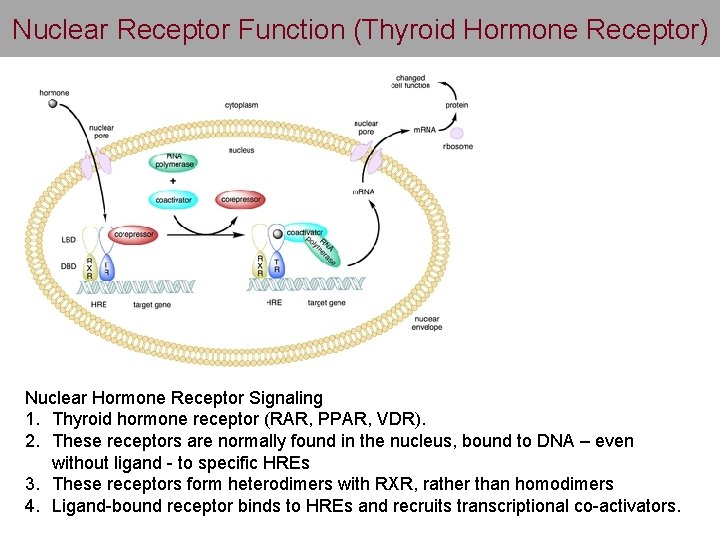
Nuclear Receptor Function (Thyroid Hormone Receptor) Nuclear Hormone Receptor Signaling 1. Thyroid hormone receptor (RAR, PPAR, VDR). 2. These receptors are normally found in the nucleus, bound to DNA – even without ligand - to specific HREs 3. These receptors form heterodimers with RXR, rather than homodimers 4. Ligand-bound receptor binds to HREs and recruits transcriptional co-activators.
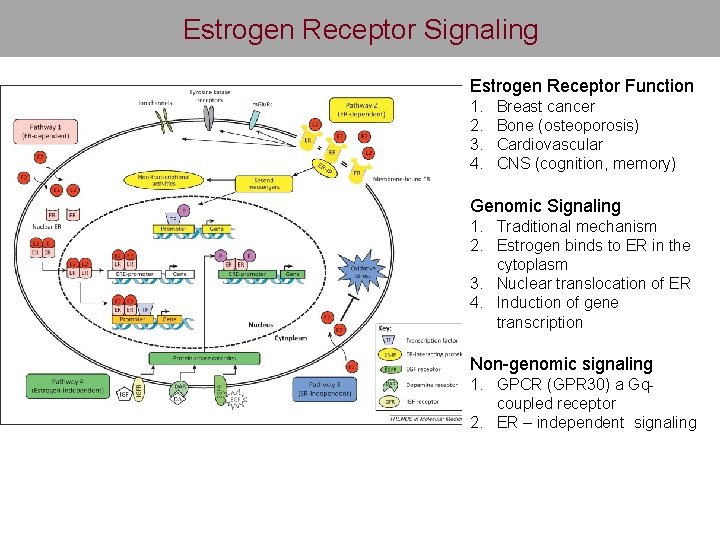
Estrogen Receptor Signaling Estrogen Receptor Function 1. 2. 3. 4. Breast cancer Bone (osteoporosis) Cardiovascular CNS (cognition, memory) Genomic Signaling 1. Traditional mechanism 2. Estrogen binds to ER in the cytoplasm 3. Nuclear translocation of ER 4. Induction of gene transcription Non-genomic signaling 1. GPCR (GPR 30) a Gqcoupled receptor 2. ER – independent signaling
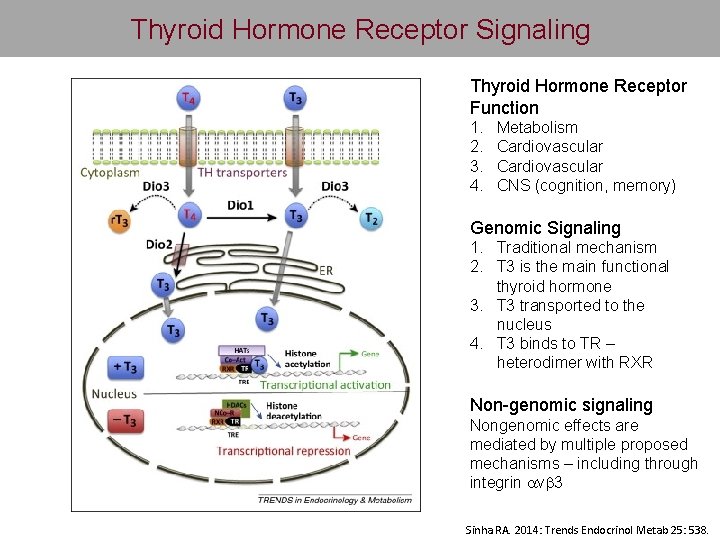
Thyroid Hormone Receptor Signaling Thyroid Hormone Receptor Function 1. 2. 3. 4. Metabolism Cardiovascular CNS (cognition, memory) Genomic Signaling 1. Traditional mechanism 2. T 3 is the main functional thyroid hormone 3. T 3 transported to the nucleus 4. T 3 binds to TR – heterodimer with RXR Non-genomic signaling Nongenomic effects are mediated by multiple proposed mechanisms – including through integrin avb 3 Sinha RA. 2014: Trends Endocrinol Metab 25: 538.
- Slides: 12