
Objectives Review the causes of cystic fibrosis CF
Objectives • Review the causes of cystic fibrosis (CF) • Describe the symptoms and laboratory findings in CF • Review current and emerging CF treatments • Review expectations of quality of life (QOL) for CF patients • Look at current research in the area of CF
By The Numbers • Most common life-shortening disease in the Caucasian population – Frequency of 1 in 2000 -3000 live births • In the 1970’s, patients only survived into their teens • By 2006 advances in care extended survival to 36 years • In 2011 the median predicted survival for patient in the United States was 36. 8 years

The Genetics Of CF • CF is caused by autosomal recessive inheritance

The Genetics Of CF • CF is caused by a mutation of the cystic fibrosis transmembrane regulator (CFTR) gene on Chromosome 7 – Most common mutation is delta F 508 – CFTR can function as a chloride channel • Over 1500 mutations have been identified – Typical panels only screen for 30 of these mutations
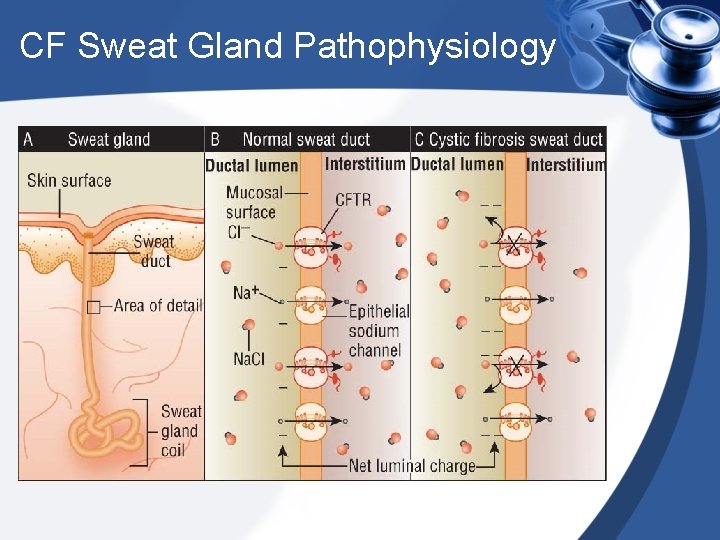
CF Sweat Gland Pathophysiology
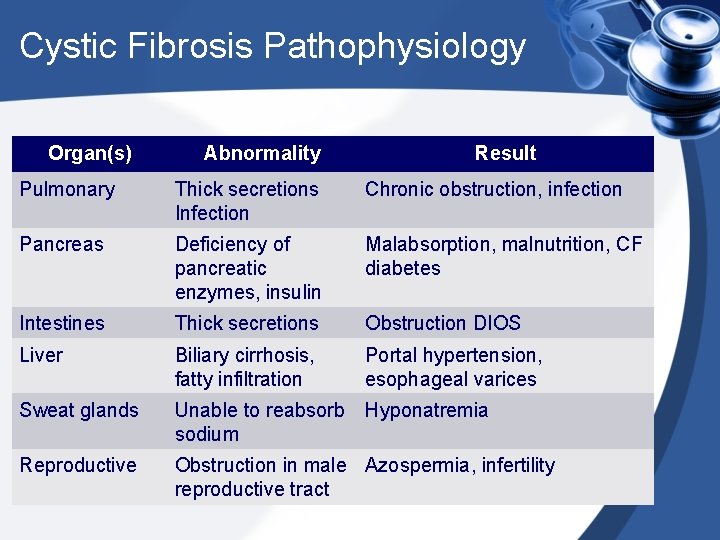
Cystic Fibrosis Pathophysiology Organ(s) Abnormality Result Pulmonary Thick secretions Infection Chronic obstruction, infection Pancreas Deficiency of pancreatic enzymes, insulin Malabsorption, malnutrition, CF diabetes Intestines Thick secretions Obstruction DIOS Liver Biliary cirrhosis, fatty infiltration Portal hypertension, esophageal varices Sweat glands Unable to reabsorb sodium Hyponatremia Reproductive Obstruction in male Azospermia, infertility reproductive tract
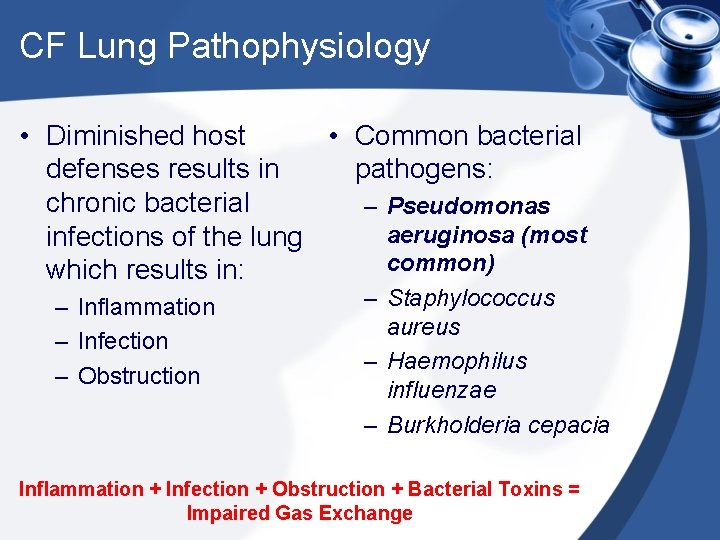
CF Lung Pathophysiology • Diminished host • Common bacterial defenses results in pathogens: chronic bacterial – Pseudomonas aeruginosa (most infections of the lung common) which results in: – Inflammation – Infection – Obstruction – Staphylococcus aureus – Haemophilus influenzae – Burkholderia cepacia Inflammation + Infection + Obstruction + Bacterial Toxins = Impaired Gas Exchange
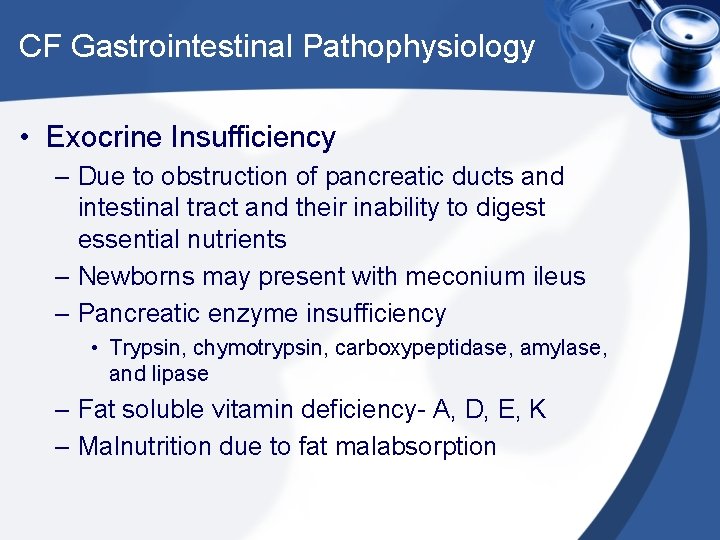
CF Gastrointestinal Pathophysiology • Exocrine Insufficiency – Due to obstruction of pancreatic ducts and intestinal tract and their inability to digest essential nutrients – Newborns may present with meconium ileus – Pancreatic enzyme insufficiency • Trypsin, chymotrypsin, carboxypeptidase, amylase, and lipase – Fat soluble vitamin deficiency- A, D, E, K – Malnutrition due to fat malabsorption

CF Gastrointestinal Pathophysiology • Endocrine Insufficiency – Typically onset occurs between 18 -24 years – Pancreatic malfunction can lead to insulin deficiency • Cystic Fibrosis Related Diabetes (CFRD) – Approximately 25 percent of patients develop CFRD by 20 years of age and up to 50 percent of adults with CF have CFRD – Typically presents with both type 1 and type 2 features – Pancreas cannot meet carbohydrate demands – High blood glucose following meals
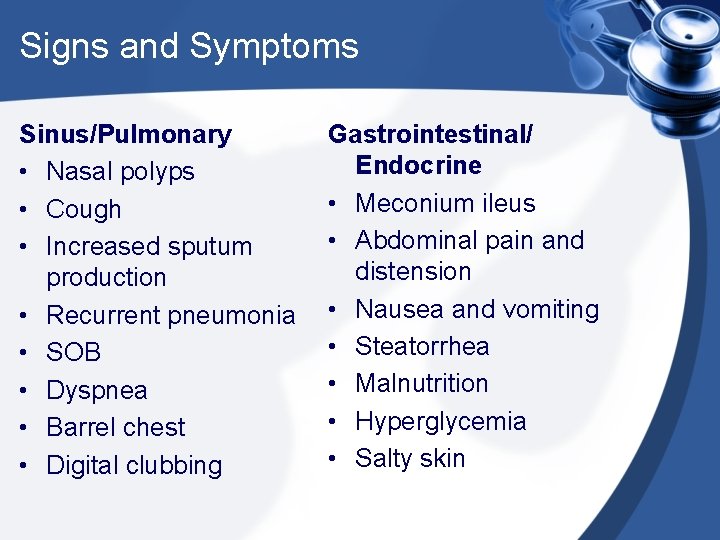
Signs and Symptoms Sinus/Pulmonary • Nasal polyps • Cough • Increased sputum production • Recurrent pneumonia • SOB • Dyspnea • Barrel chest • Digital clubbing Gastrointestinal/ Endocrine • Meconium ileus • Abdominal pain and distension • Nausea and vomiting • Steatorrhea • Malnutrition • Hyperglycemia • Salty skin
- Slides: 11