
Objectives List the name of muscles of the
Objectives ● List the name of muscles of the shoulder region. ● Describe the anatomy of muscles of shoulder ● region regarding: attachments of each of them to scapula & humerus, nerve supply and actions on shoulder joint ● List the muscles forming the rotator cuff and describe the relation of each of them to the shoulder joint. ● Describe the anatomy of shoulder joint regarding: type, articular surfaces, stability, relations & movements. ● ● Text in BLUE was found only in the boys’ slides Text in PINK was found only in the girls’ slides Text in RED is considered important Text in GREY is considered extra notes
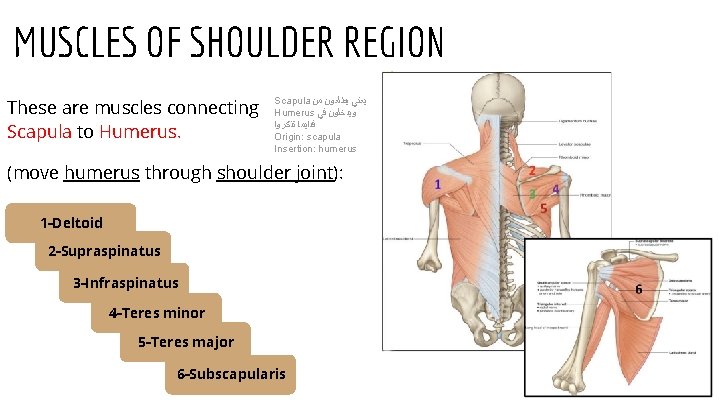
MUSCLES OF SHOULDER REGION These are muscles connecting Scapula to Humerus. Scapula ﻳﻌﻨﻲ ﻳﻄﻠﻌﻮﻥ ﻣﻦ Humerus ﻭﻳﺪﺧﻠﻮﻥ ﻓﻲ ﻓﺪﺍﻳﻤﺎ ﺗﺬﻛﺮﻭﺍ Origin: scapula Insertion: humerus (move humerus through shoulder joint): 1 -Deltoid 2 -Supraspinatus 3 -Infraspinatus 4 -Teres minor 5 -Teres major 6 -Subscapularis
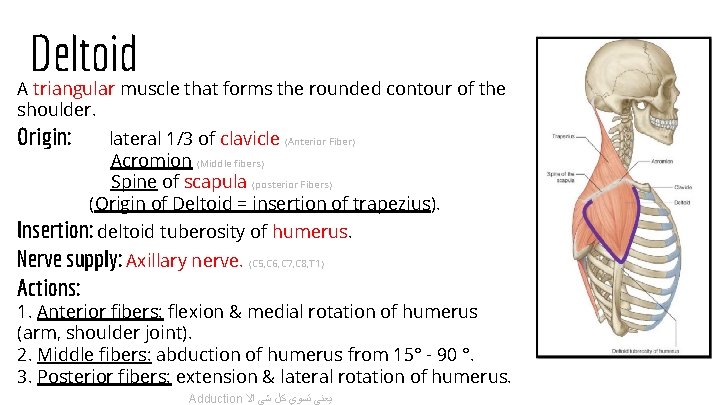
Deltoid A triangular muscle that forms the rounded contour of the shoulder. Origin: lateral 1/3 of clavicle (Anterior Fiber) Acromion (Middle fibers) Spine of scapula (posterior Fibers) (Origin of Deltoid = insertion of trapezius). Insertion: deltoid tuberosity of humerus. Nerve supply: Axillary nerve. (C 5, C 6, C 7, C 8, T 1) Actions: 1. Anterior fibers: flexion & medial rotation of humerus (arm, shoulder joint). 2. Middle fibers: abduction of humerus from 15° - 90 °. 3. Posterior fibers: extension & lateral rotation of humerus. Adduction ﻳﻌﻨﻲ ﺗﺴﻮﻱ ﻛﻞ ﺷﻲ ﺍﻻ

Supraspinatus & Infraspinatus Origin: scapula 1. Supraspinatus: supraspinous fossa. 2. Infraspinatus: infraspinaous fossa. Insertion: greater tuberosity of humerus. Nerve supply: Suprascapular nerve. (Superior Trunk) Action: 1. Supraspinatus: abduction of humerus from 0° - 15°. 2. Infraspinatus: lateral rotation of humerus. Spine
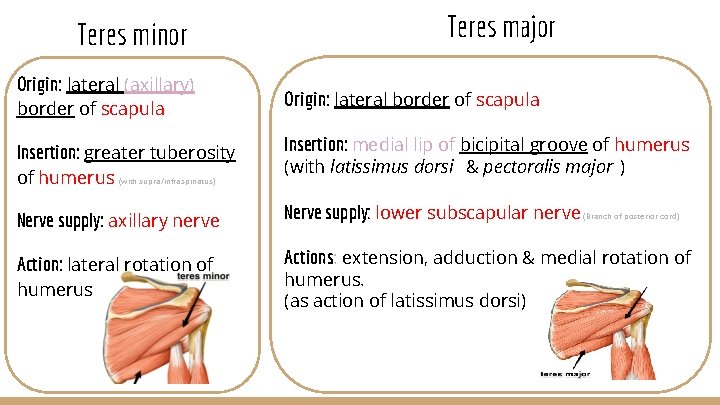
Teres minor Origin: lateral (axillary) border of scapula Insertion: greater tuberosity of humerus (with supra/infraspinatus) Teres major Origin: lateral border of scapula Insertion: medial lip of bicipital groove of humerus (with latissimus dorsi & pectoralis major ) Nerve supply: axillary nerve Nerve supply: lower subscapular nerve Action: lateral rotation of Actions: extension, adduction & medial rotation of humerus. (as action of latissimus dorsi) (Branch of posterior cord)
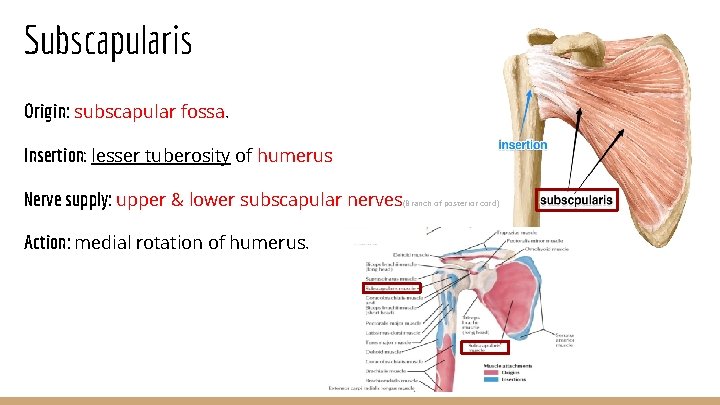
Subscapularis Origin: subscapular fossa. Insertion: lesser tuberosity of humerus Nerve supply: upper & lower subscapular nerves Action: medial rotation of humerus. (Branch of posterior cord)
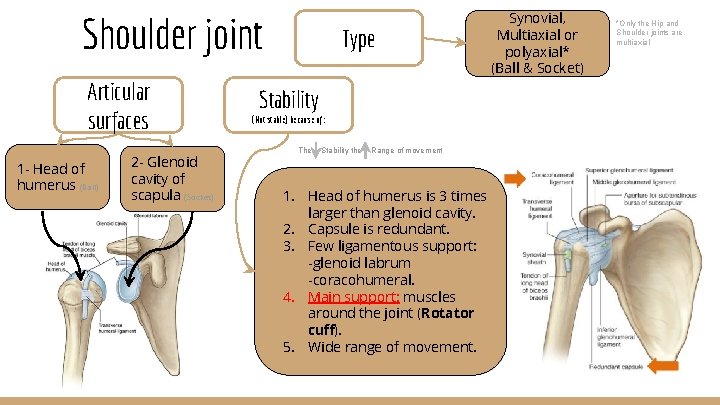
Shoulder joint Articular surfaces 1 - Head of humerus (Ball) 2 - Glenoid cavity of scapula (Socket) Type Stability (Not stable) because of : The Stability the Range of movement 1. Head of humerus is 3 times larger than glenoid cavity. 2. Capsule is redundant. 3. Few ligamentous support: -glenoid labrum -coracohumeral. 4. Main support: muscles around the joint (Rotator cuff). 5. Wide range of movement. Synovial, Multiaxial or polyaxial* (Ball & Socket) *Only the Hip and Shoulder joints are multiaxial
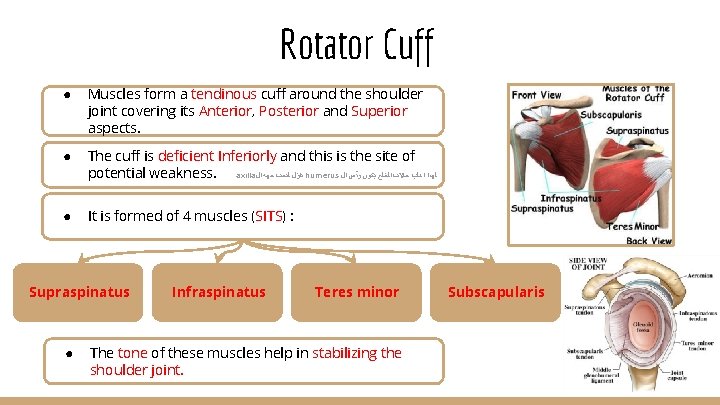
Rotator Cuff ● Muscles form a tendinous cuff around the shoulder joint covering its Anterior, Posterior and Superior aspects. ● The cuff is deficient Inferiorly and this is the site of potential weakness. axilla ﻧﺎﺯﻝ ﻟﺘﺤﺖ ﺟﻬﺔ ﺍﻝ humerus ﻟﻬﺬﺍ ﺍﻏﻠﺐ ﺣﺎﻻﺕ ﺍﻟﺨﻠﻊ ﻳﻜﻮﻥ ﺭﺃﺲ ﺍﻝ ● It is formed of 4 muscles (SITS) : Supraspinatus ● Infraspinatus Teres minor The tone of these muscles help in stabilizing the shoulder joint. Subscapularis
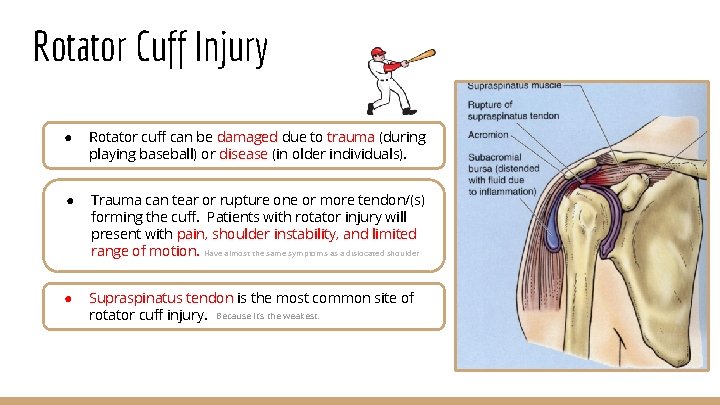
Rotator Cuff Injury ● Rotator cuff can be damaged due to trauma (during playing baseball) or disease (in older individuals). ● Trauma can tear or rupture one or more tendon/(s) forming the cuff. Patients with rotator injury will present with pain, shoulder instability, and limited range of motion. Have almost the same symptoms as a dislocated shoulder ● Supraspinatus tendon is the most common site of rotator cuff injury. Because It’s the weakest.
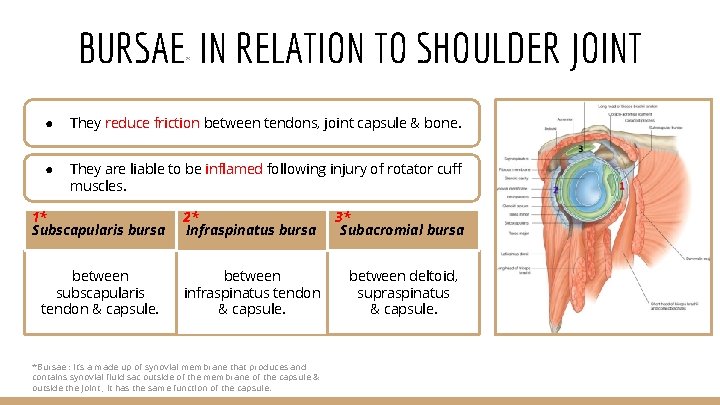
BURSAE IN RELATION TO SHOULDER JOINT * ● They reduce friction between tendons, joint capsule & bone. ● They are liable to be inflamed following injury of rotator cuff muscles. 1* Subscapularis bursa 2* Infraspinatus bursa 3* Subacromial bursa between subscapularis tendon & capsule. between infraspinatus tendon & capsule. between deltoid, supraspinatus & capsule. *Bursae : It’s a made up of synovial membrane that produces and contains synovial fluid sac outside of the membrane of the capsule & outside the joint , it has the same function of the capsule.
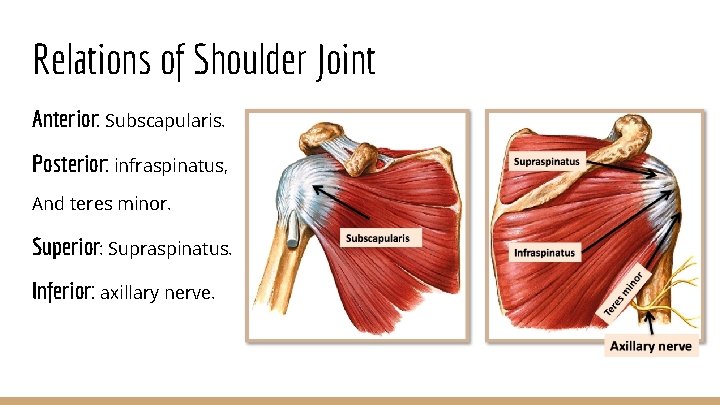
Relations of Shoulder Joint Anterior: Subscapularis. Posterior: infraspinatus, And teres minor. Superior: Supraspinatus. Inferior: axillary nerve.
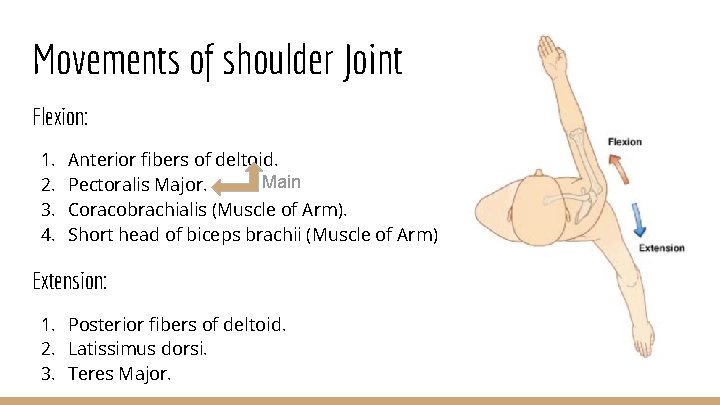
Movements of shoulder Joint Flexion: 1. 2. 3. 4. Anterior fibers of deltoid. Main Pectoralis Major. Coracobrachialis (Muscle of Arm). Short head of biceps brachii (Muscle of Arm) Extension: 1. Posterior fibers of deltoid. 2. Latissimus dorsi. 3. Teres Major.
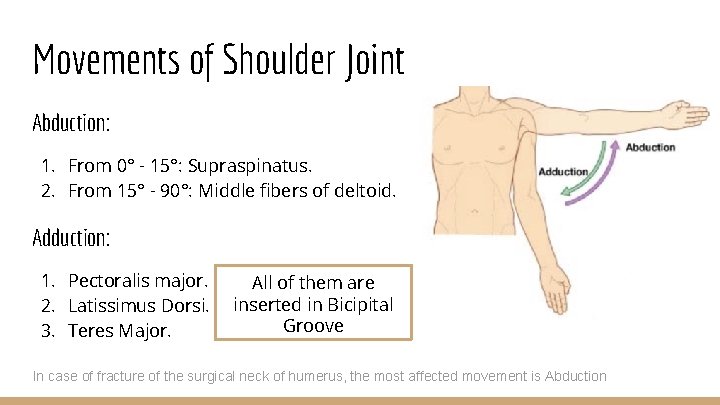
Movements of Shoulder Joint Abduction: 1. From 0° - 15°: Supraspinatus. 2. From 15° - 90°: Middle fibers of deltoid. Adduction: 1. Pectoralis major. 2. Latissimus Dorsi. 3. Teres Major. All of them are inserted in Bicipital Groove In case of fracture of the surgical neck of humerus, the most affected movement is Abduction
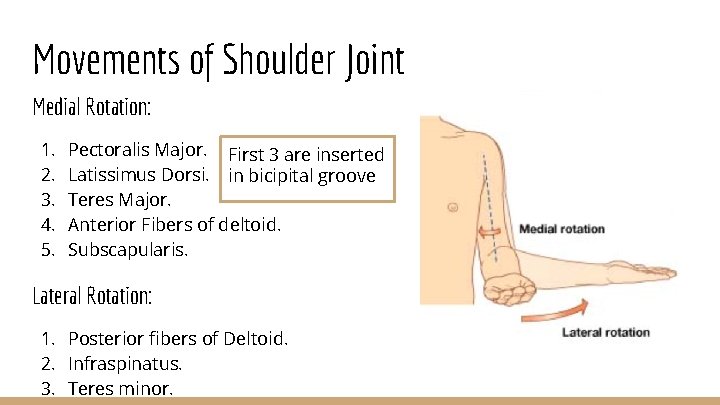
Movements of Shoulder Joint Medial Rotation: 1. 2. 3. 4. 5. Pectoralis Major. First 3 are inserted Latissimus Dorsi. in bicipital groove Teres Major. Anterior Fibers of deltoid. Subscapularis. Lateral Rotation: 1. Posterior fibers of Deltoid. 2. Infraspinatus. 3. Teres minor.
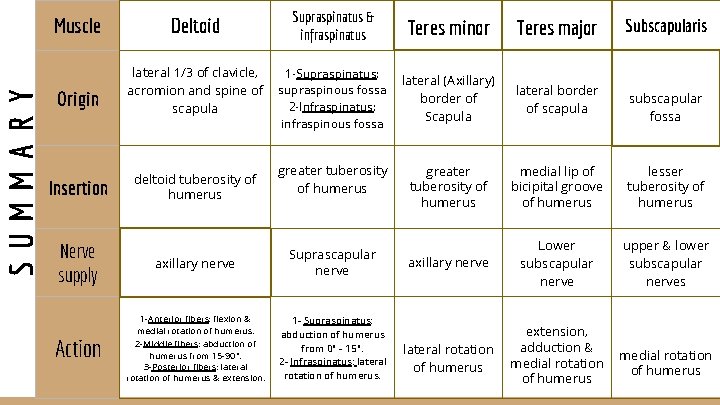
SUMMARY Muscle Origin Insertion Deltoid Supraspinatus & infraspinatus Teres minor Teres major lateral 1/3 of clavicle, acromion and spine of scapula 1 -Supraspinatus: supraspinous fossa 2 -Infraspinatus: infraspinous fossa lateral (Axillary) border of Scapula lateral border of scapula greater tuberosity of humerus medial lip of bicipital groove of humerus lesser tuberosity of humerus axillary nerve Lower subscapular nerve upper & lower subscapular nerves lateral rotation of humerus extension, adduction & medial rotation of humerus deltoid tuberosity of humerus greater tuberosity of humerus Nerve supply axillary nerve Suprascapular nerve Action 1 -Anterior fibers: flexion & medial rotation of humerus. 2 -Middle fibers: abduction of humerus from 15 -90°. 3 -Posterior fibers: lateral rotation of humerus & extension. 1 - Supraspinatus: abduction of humerus from 0° - 15°. 2 - Infraspinatus: lateral rotation of humerus. Subscapularis subscapular fossa medial rotation of humerus
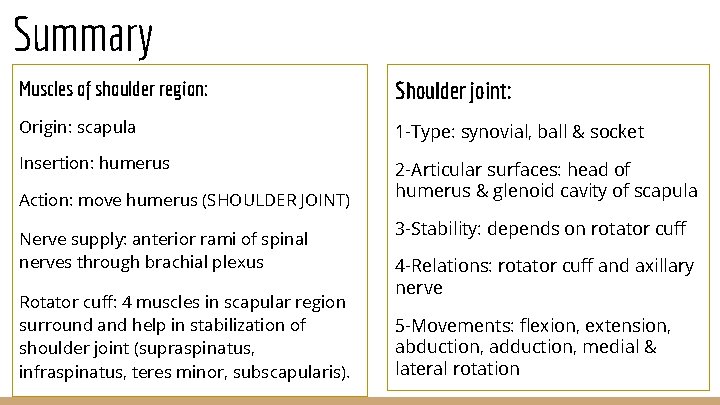
Summary Muscles of shoulder region: Shoulder joint: Origin: scapula 1 -Type: synovial, ball & socket Insertion: humerus 2 -Articular surfaces: head of humerus & glenoid cavity of scapula Action: move humerus (SHOULDER JOINT) Nerve supply: anterior rami of spinal nerves through brachial plexus Rotator cuff: 4 muscles in scapular region surround and help in stabilization of shoulder joint (supraspinatus, infraspinatus, teres minor, subscapularis). 3 -Stability: depends on rotator cuff 4 -Relations: rotator cuff and axillary nerve 5 -Movements: flexion, extension, abduction, adduction, medial & lateral rotation
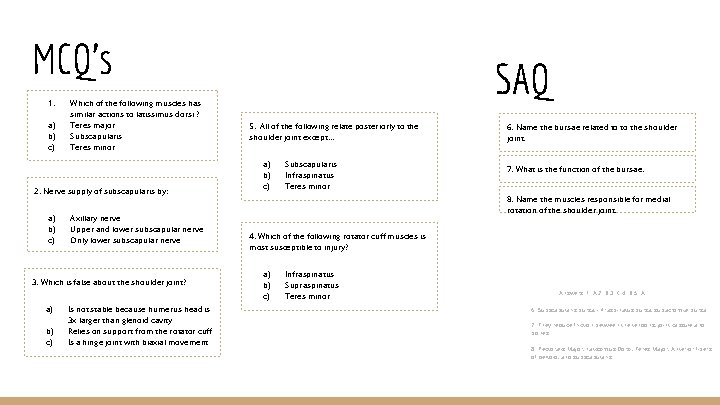
MCQ’s 1. a) b) c) Which of the following muscles has similar actions to latissimus dorsi ? Teres major Subscapularis Teres minor 2. Nerve supply of subscapularis by: a) b) c) Axillary nerve Upper and lower subscapular nerve Only lower subscapular nerve 3. Which is false about the shoulder joint? a) b) c) Is not stable because humerus head is 3 x larger than glenoid cavity Relies on support from the rotator cuff Is a hinge joint with biaxial movement SAQ 5. All of the following relate posteriorly to the shoulder joint except… a) b) c) Subscapularis Infraspinatus Teres minor 6. Name the bursae related to to the shoulder joint. 7. What is the function of the bursae. 8. Name the muscles responsible for medial rotation of the shoulder joint. 4. Which of the following rotator cuff muscles is most susceptible to injury? a) b) c) Infraspinatus Supraspinatus Teres minor Answers: 1. A 2. B 3. C 4. B 5. A 6. Subscapularis bursa, infraspinatus bursa, subacromial bursa 7. They reduce friction between the tendons, joint capsule and bones. 8. Pectoralis Major, Latissimus Dorsi, Teres Major, Anterior fibers of deltoid, and subscapularis
Team Members Lamia Abdullah Alkuwaiz (Team Leader) Rawan Mohammad Alharbi Abeer Alabduljabbar Afnan Abdulaziz Almustafa Ahad Algrain Alanoud Almansour Albandari Alshaye Al. Fhadah abdullah alsaleem Arwa Alzahrani Dana Abdulaziz Alrasheed Dimah Khalid Alaraifi Ghada Alhaidari Ghada Almuhanna Ghaida Alsanad Hadeel Khalid Awartani Haifa Alessa Khulood Alwehabi Layan Hassan Alwatban Lojain Azizalrahman Lujain Tariq Al. Zaid Maha Barakah Majd Khalid Al. Barrak Norah Alharbi Nouf Alotaibi Noura Mohammed Alothaim Rahaf Turki Alshammari Reham Alhalabi Rinad Musaed Alghoraiby Sara Alsultan Shahad Alzahrani Wafa Alotaibi Wejdan Fahad Albadrani Wjdan Al. Shamry Faisal Fahad Alsaif (Team Leader) Abdulaziz Al dukhayel Fahad Alfaiz Akram Alfandi Saad Aloqile Saleh Almoaiqel Abdulaziz Alabdulkareem Abdullah Almeaither Yazeed Aldossari Muath Alhumood Abdulrahman Almotairi Abdulelah Aldossari Abdulrahman Alduhayyim Hamdan Aldossari Abdullah Alqarni Mohammed Alomar Abdulrahman Aldawood Saud Alghufaily Hassan Aloraini Khalid Almutairi Abdulmajeed Alwardi Abdulrahman Alageel Rayyan Almousa Sultan Alfuhaid Ali Alammari Fahad alshughaithry Fayez Ghiyath Aldarsouni Mohammed Alquwayfili Abduljabbar Al-yamani Sultan Al-nasser Majed Aljohani Zeyad Al-khenaizan Mohammed Nouri Abdulaziz Al-drgam Fahad Aldhowaihy Omar alyabis
- Slides: 19