
Objectives List the components of the cell theory
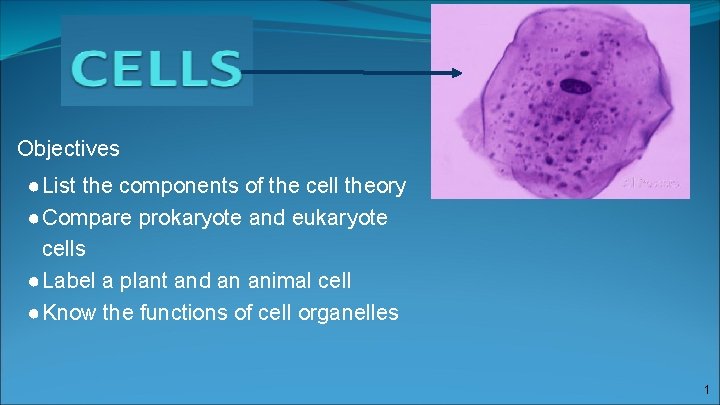
Objectives ●List the components of the cell theory ●Compare prokaryote and eukaryote cells ●Label a plant and an animal cell ●Know the functions of cell organelles 1
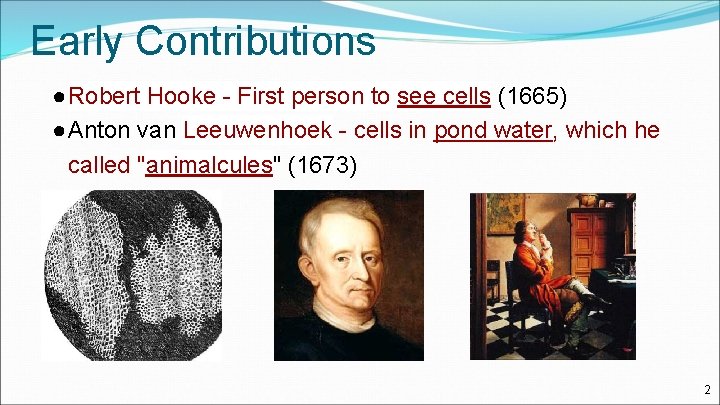
Early Contributions ●Robert Hooke - First person to see cells (1665) ●Anton van Leeuwenhoek - cells in pond water, which he called "animalcules" (1673) 2
The Cell Theory 1. Every living thing is made of one or more cells. 2. The cell is the basic unit of structure and function. 3. All cells come from other cells. *Why is the Cell Theory called a Theory and not a fact? 3
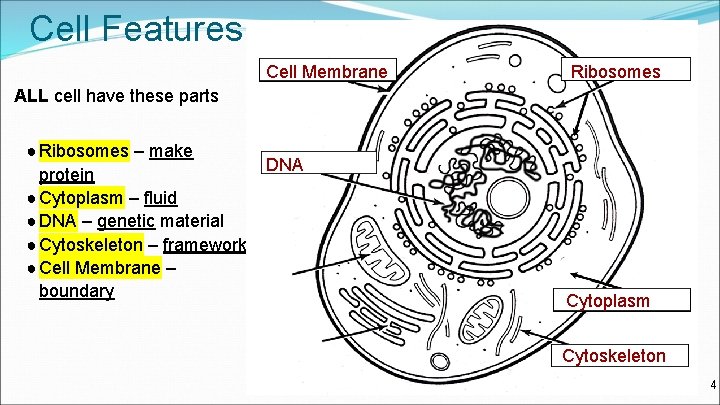
Cell Features Cell Membrane Ribosomes ALL cell have these parts ● Ribosomes – make protein ● Cytoplasm – fluid ● DNA – genetic material ● Cytoskeleton – framework ● Cell Membrane – boundary DNA Cytoplasm Cytoskeleton 4
Comprehension Checkpoint Answer true or false 1. Robert Hooke was the first person to see cells. 2. Bacteria cells have a cell membrane. 3. Plant cells have cytoplasm. 4. Cells taken from fungi do not have DNA. 5. Cells can only come from pre-existing cells. 6. The framework of the cell is called the cytoplasm. 7. The outer boundary of the cell is the cell membrane. 5
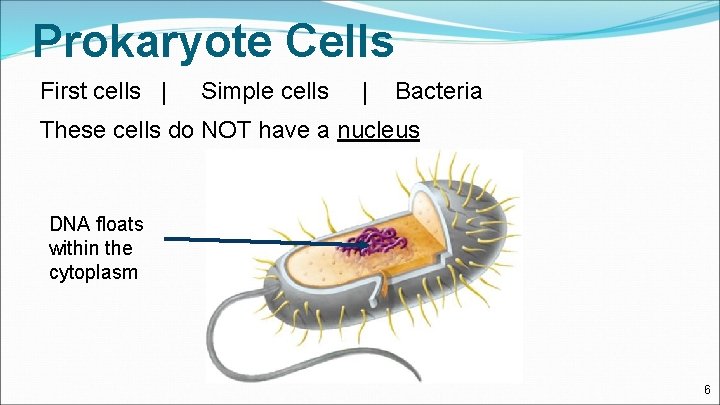
Prokaryote Cells First cells | Simple cells | Bacteria These cells do NOT have a nucleus DNA floats within the cytoplasm 6
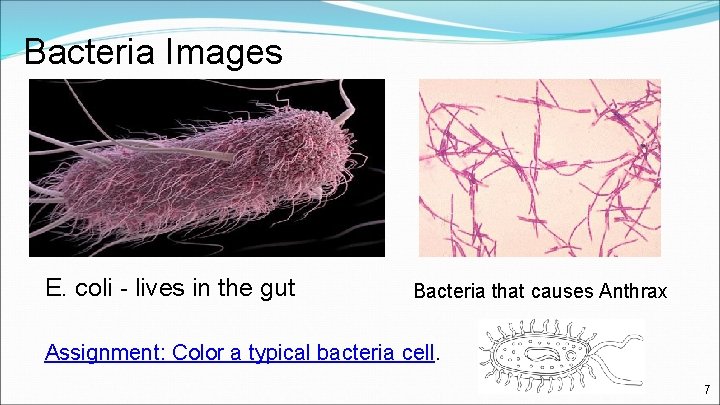
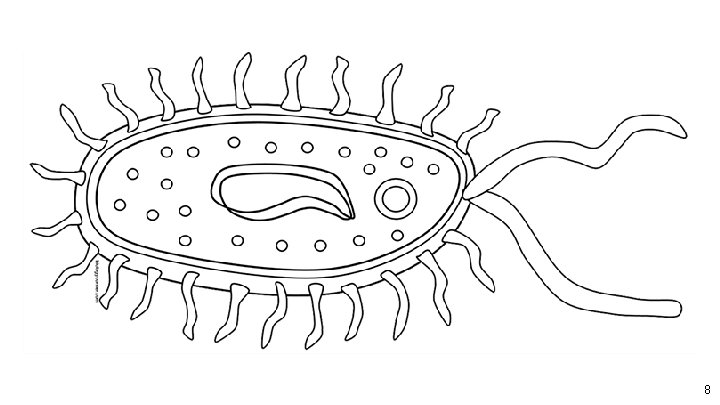
Bacteria Images E. coli - lives in the gut Bacteria that causes Anthrax Assignment: Color a typical bacteria cell. 7
8
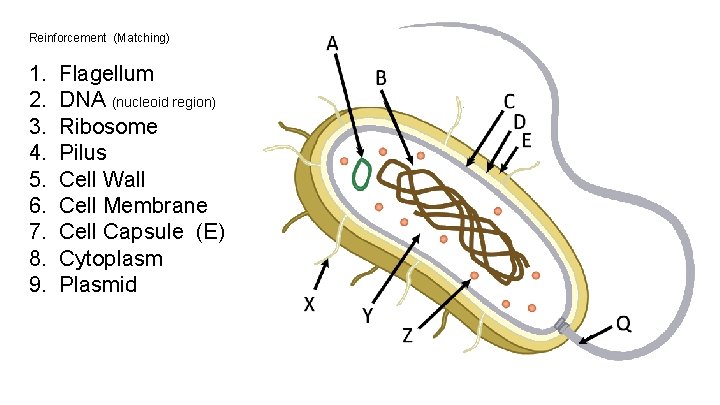
Reinforcement (Matching) 1. 2. 3. 4. 5. 6. 7. 8. 9. Flagellum DNA (nucleoid region) Ribosome Pilus Cell Wall Cell Membrane Cell Capsule (E) Cytoplasm Plasmid 9
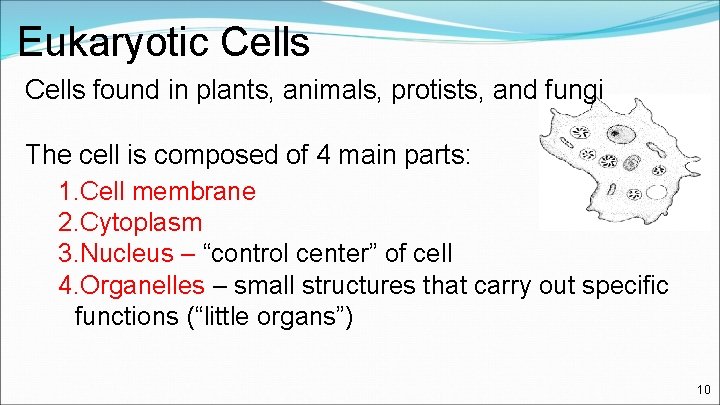
Eukaryotic Cells found in plants, animals, protists, and fungi The cell is composed of 4 main parts: 1. Cell membrane 2. Cytoplasm 3. Nucleus – “control center” of cell 4. Organelles – small structures that carry out specific functions (“little organs”) 10
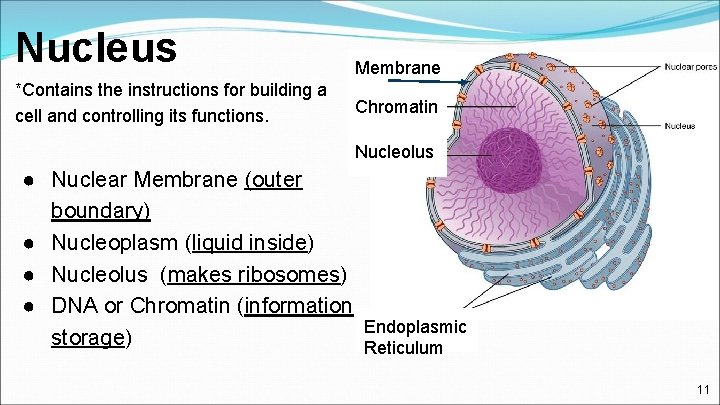
Nucleus Membrane *Contains the instructions for building a cell and controlling its functions. Chromatin Nucleolus ● Nuclear Membrane (outer boundary) ● Nucleoplasm (liquid inside) ● Nucleolus (makes ribosomes) ● DNA or Chromatin (information Endoplasmic storage) Reticulum 11
True or False 1. All cells have a nucleus. 2. All cells have a cell membrane. 3. The nucleus contains the cell’s DNA. 4. Chromatin is made of DNA. 5. The nucleolus makes the cell’s DNA. 12
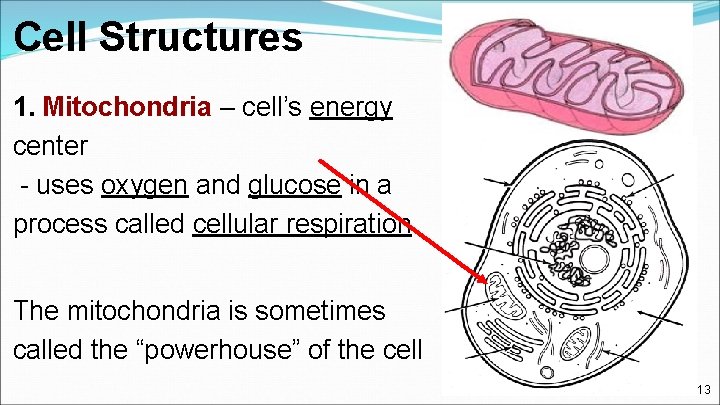
Cell Structures 1. Mitochondria – cell’s energy center - uses oxygen and glucose in a process called cellular respiration. The mitochondria is sometimes called the “powerhouse” of the cell 13
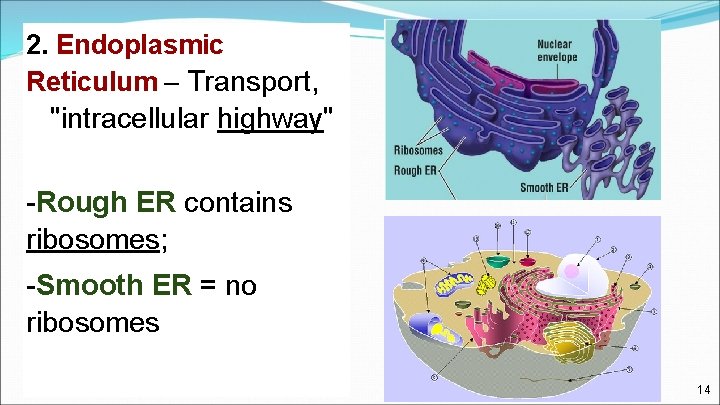
2. Endoplasmic Reticulum – Transport, "intracellular highway" -Rough ER contains ribosomes; -Smooth ER = no ribosomes 14
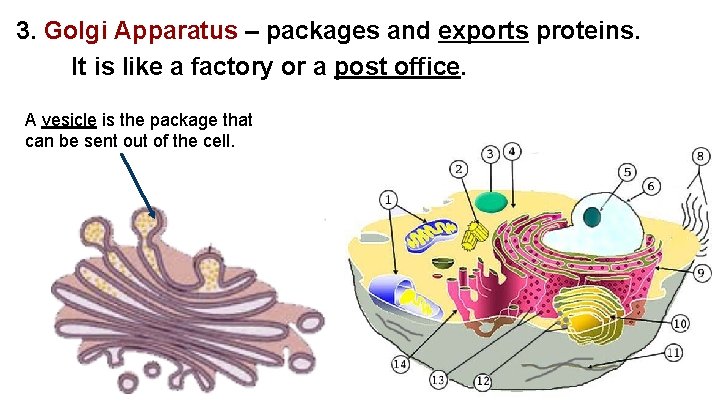
3. Golgi Apparatus – packages and exports proteins. It is like a factory or a post office. A vesicle is the package that can be sent out of the cell. 15
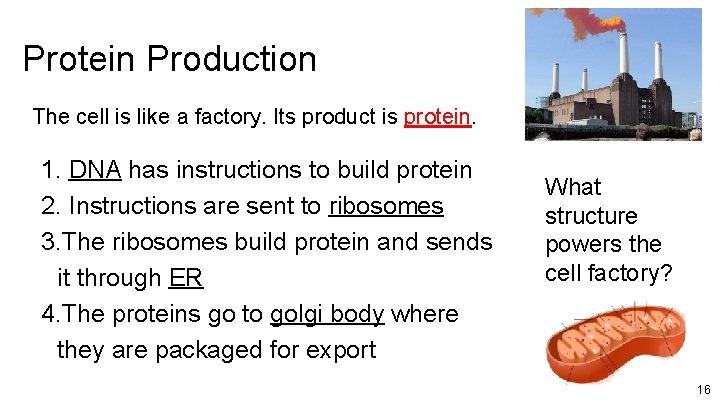
Protein Production The cell is like a factory. Its product is protein. 1. DNA has instructions to build protein 2. Instructions are sent to ribosomes 3. The ribosomes build protein and sends it through ER 4. The proteins go to golgi body where they are packaged for export What structure powers the cell factory? 16
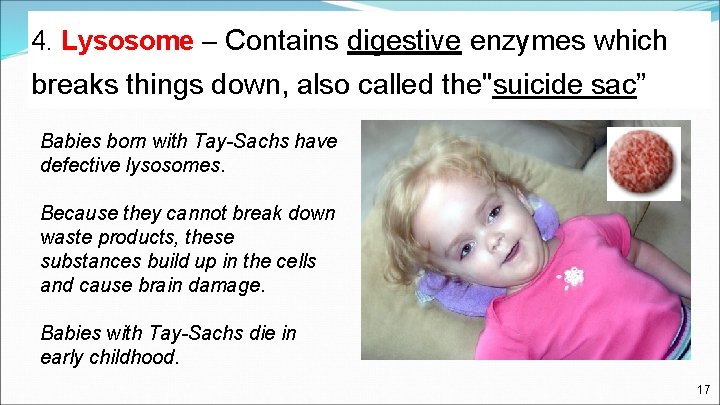
4. Lysosome – Contains digestive enzymes which breaks things down, also called the"suicide sac” Babies born with Tay-Sachs have defective lysosomes. Because they cannot break down waste products, these substances build up in the cells and cause brain damage. Babies with Tay-Sachs die in early childhood. 17
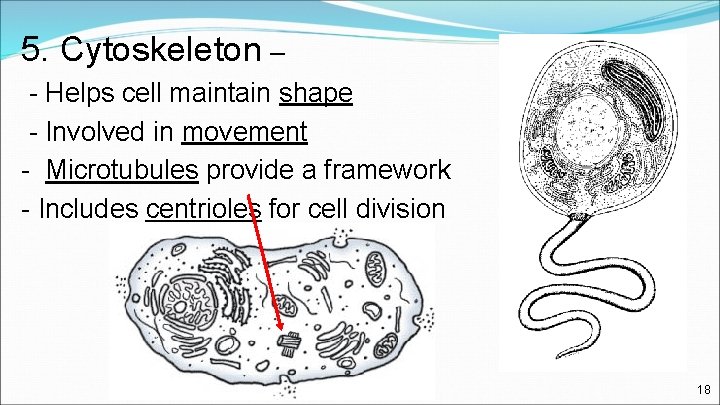
5. Cytoskeleton – - Helps cell maintain shape - Involved in movement - Microtubules provide a framework - Includes centrioles for cell division 18
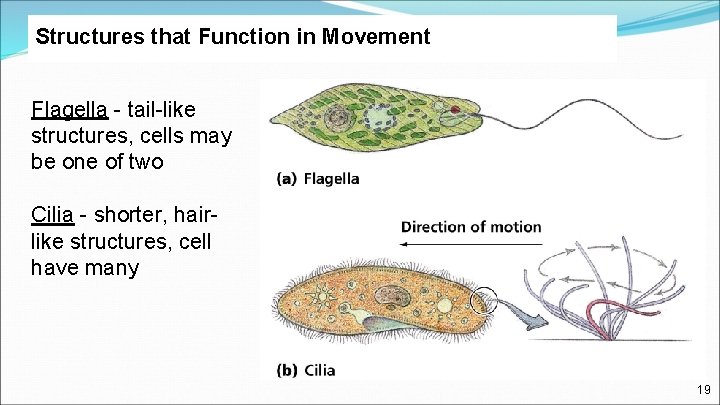
Structures that Function in Movement Flagella - tail-like structures, cells may be one of two Cilia - shorter, hairlike structures, cell have many 19
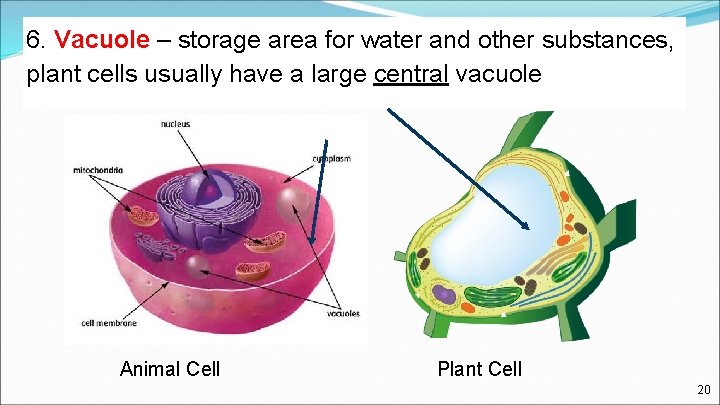
6. Vacuole – storage area for water and other substances, plant cells usually have a large central vacuole Animal Cell Plant Cell 20
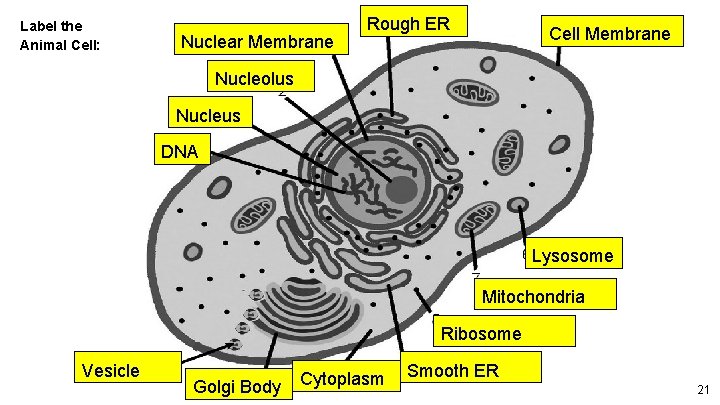
Label the Animal Cell: Nuclear Membrane Rough ER Cell Membrane Nucleolus Nucleus DNA Lysosome Mitochondria Ribosome Vesicle Golgi Body Cytoplasm Smooth ER 21
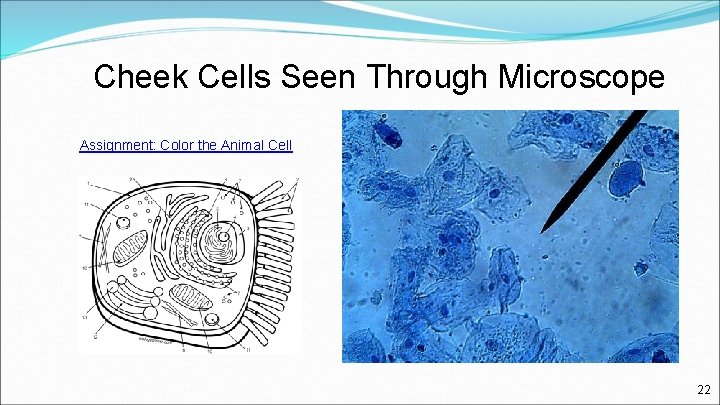
Cheek Cells Seen Through Microscope Assignment: Color the Animal Cell 22
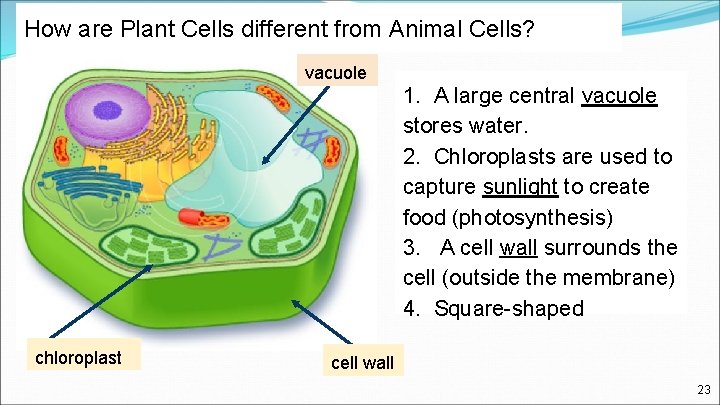
How are Plant Cells different from Animal Cells? vacuole chloroplast 1. A large central vacuole stores water. 2. Chloroplasts are used to capture sunlight to create food (photosynthesis) 3. A cell wall surrounds the cell (outside the membrane) 4. Square-shaped cell wall 23
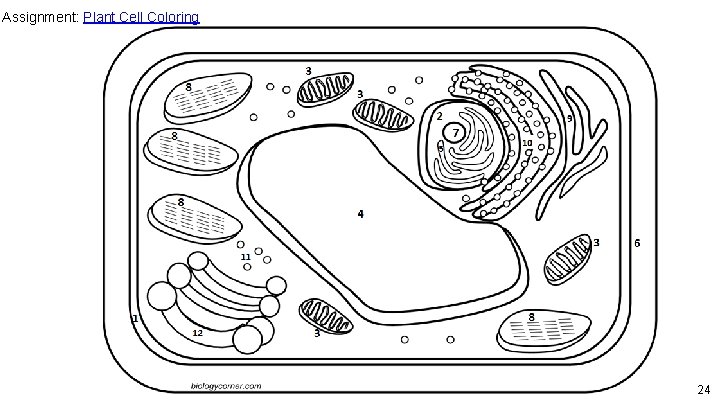
Assignment: Plant Cell Coloring 24
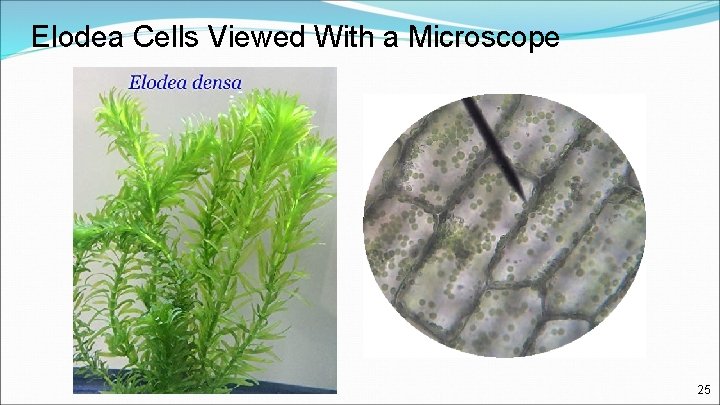
Elodea Cells Viewed With a Microscope 25
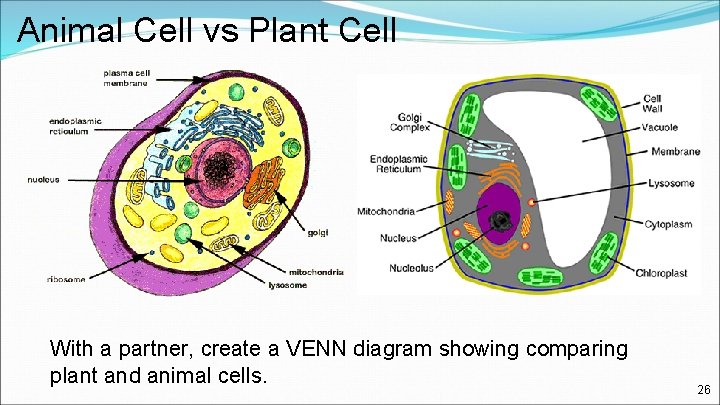
Animal Cell vs Plant Cell With a partner, create a VENN diagram showing comparing plant and animal cells. 26
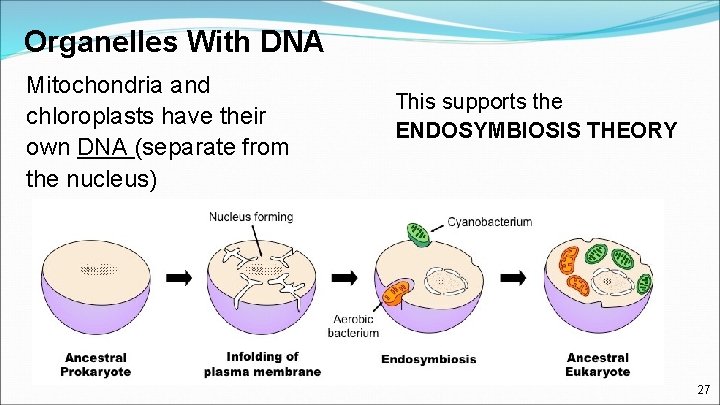
Organelles With DNA Mitochondria and chloroplasts have their own DNA (separate from the nucleus) This supports the ENDOSYMBIOSIS THEORY 27
- Slides: 27