
OBJECTIVES l To understand the function of the
OBJECTIVES l To understand the function of the pentose phosphate pathway in production of NADPH and ribose precursors for nucleic acid synthesis. l To examine the importance of NADPH in protection of cells against highly reactive oxygen species. l To relate defects in the pentose phosphate pathway to disease conditions.
HMP Shunt Hexose Mono Phosphate Shunt = Pentose Phosphate Pathway = Complete Glucose Oxidation Function : Production of Ø For NADPH Ø Ribose 5 P Site : Ø In the cytoplasm of all cells except muscle, and nonlactating mammary gland (low activity)
l Generation of NADPH - mainly used for reductive syntheses of fatty acids, steroids, amino acids via glutamate dehydrogenase; and production of reduced glutathione in erythrocytes and other cells. - active in liver, adipose tissue, adrenal cortex, thyroid, erythrocytes, testes, and lactating mammary gland - not active in non-lactating mammary gland has low activity in skeletal muscle. l Production of ribose residues for nucleotide and nucleic acid synthesis.
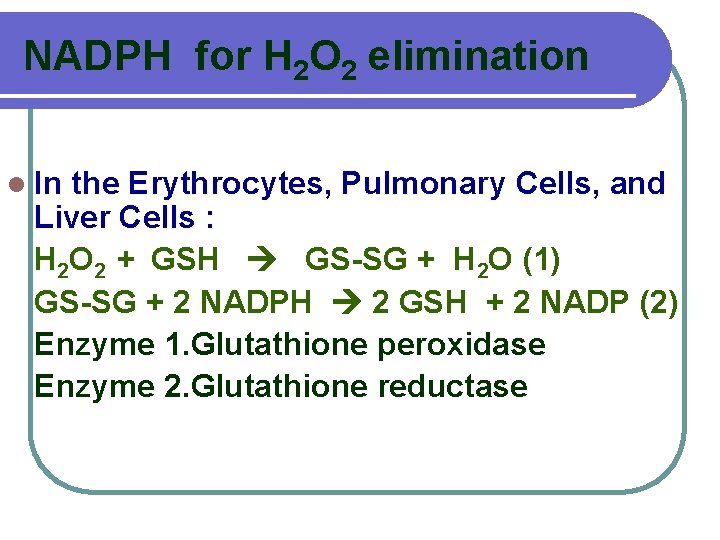
NADPH for H 2 O 2 elimination l In the Erythrocytes, Pulmonary Cells, and Liver Cells : H 2 O 2 + GSH GS-SG + H 2 O (1) GS-SG + 2 NADPH 2 GSH + 2 NADP (2) Enzyme 1. Glutathione peroxidase Enzyme 2. Glutathione reductase
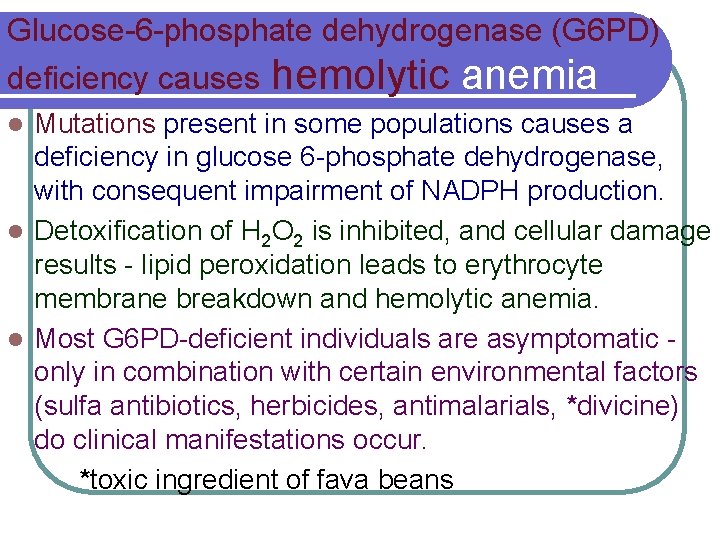
Glucose-6 -phosphate dehydrogenase (G 6 PD) deficiency causes hemolytic anemia Mutations present in some populations causes a deficiency in glucose 6 -phosphate dehydrogenase, with consequent impairment of NADPH production. l Detoxification of H 2 O 2 is inhibited, and cellular damage results - lipid peroxidation leads to erythrocyte membrane breakdown and hemolytic anemia. l Most G 6 PD-deficient individuals are asymptomatic only in combination with certain environmental factors (sulfa antibiotics, herbicides, antimalarials, *divicine) do clinical manifestations occur. *toxic ingredient of fava beans l
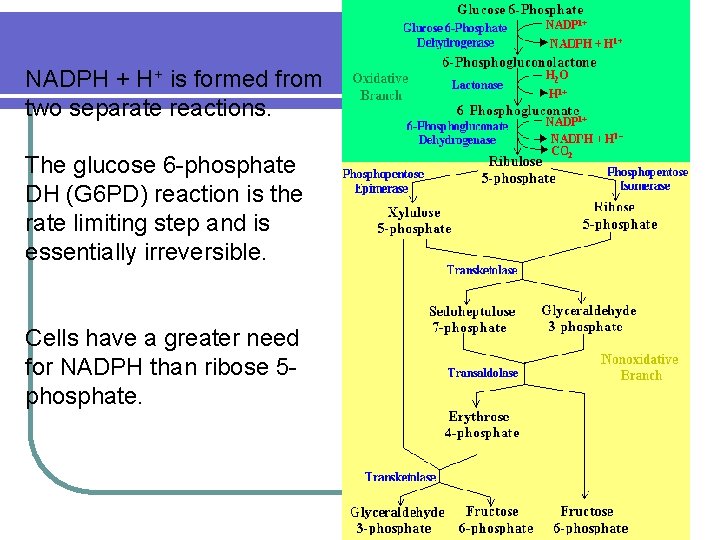
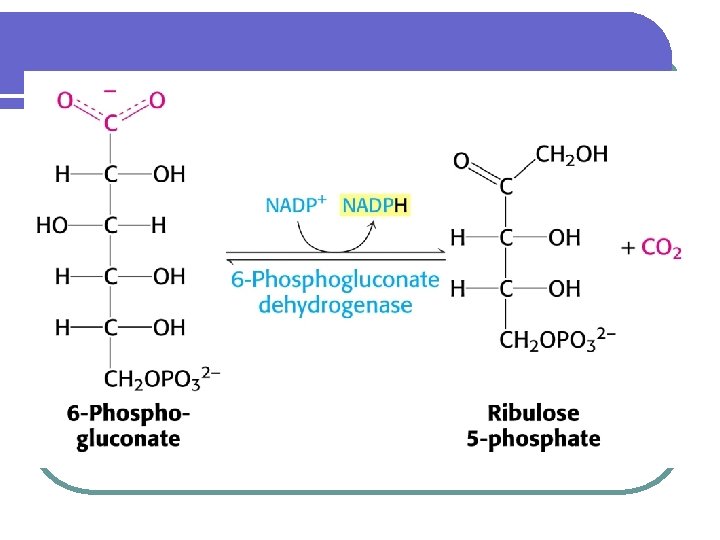
NADPH + H+ is formed from two separate reactions. The glucose 6 -phosphate DH (G 6 PD) reaction is the rate limiting step and is essentially irreversible. Cells have a greater need for NADPH than ribose 5 phosphate.
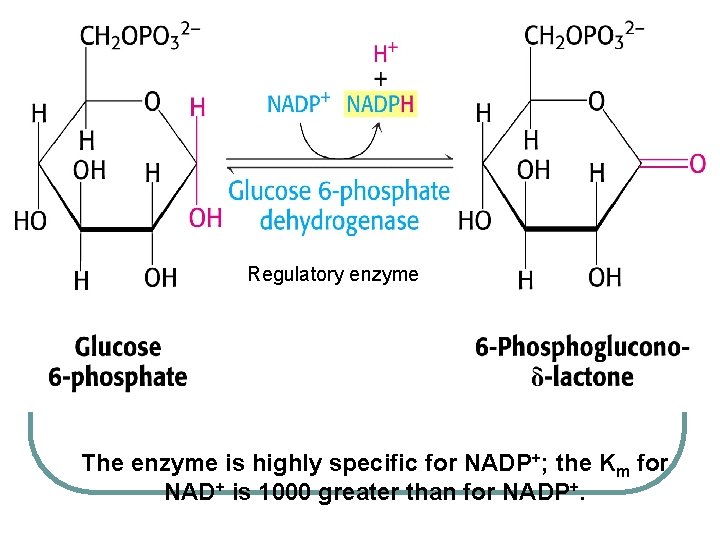
Regulatory enzyme The enzyme is highly specific for NADP+; the Km for NAD+ is 1000 greater than for NADP+.
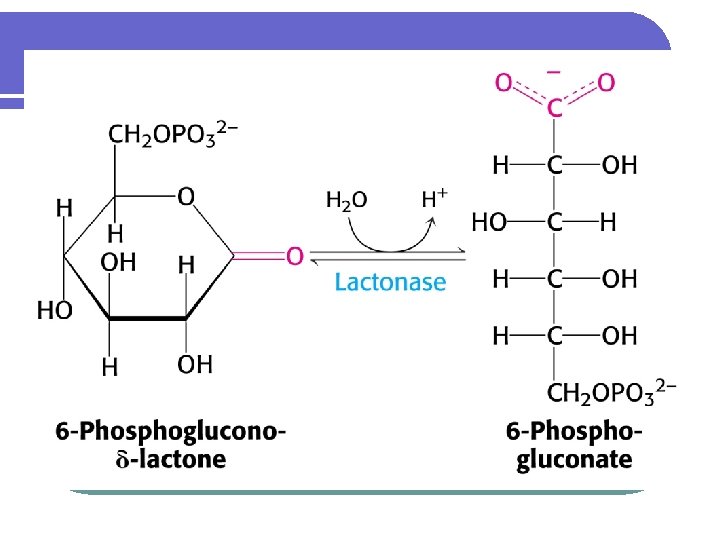
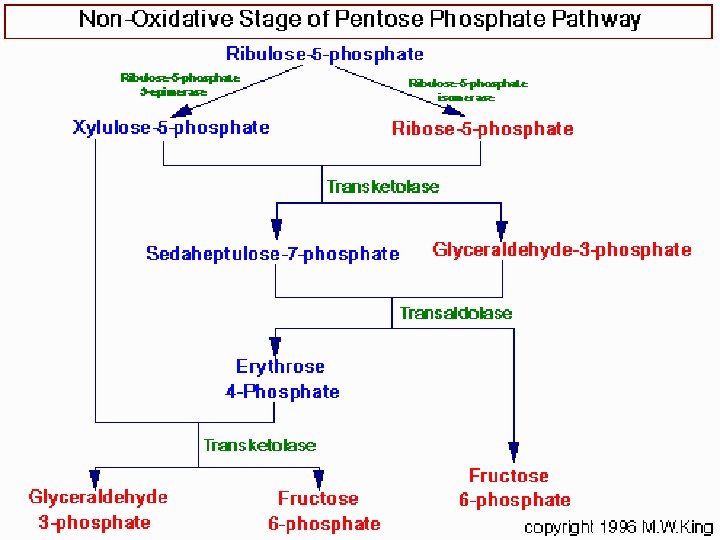
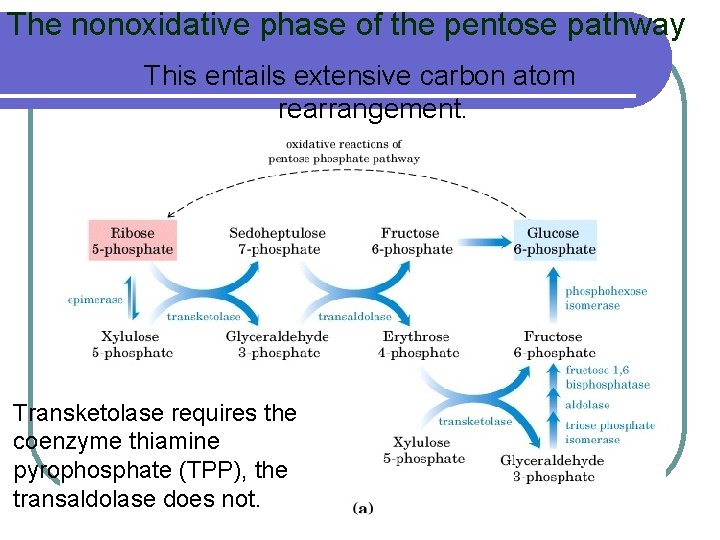
The nonoxidative phase of the pentose pathway This entails extensive carbon atom rearrangement. Transketolase requires the coenzyme thiamine pyrophosphate (TPP), the transaldolase does not.
l Transketolase (TPP) and transaldolase are the link back to glycolysis. l Glyceraldehyde 3 -phosphate l Fructose 6 -phosphate l Net result: 3 C 5 2 C 6 + C 3
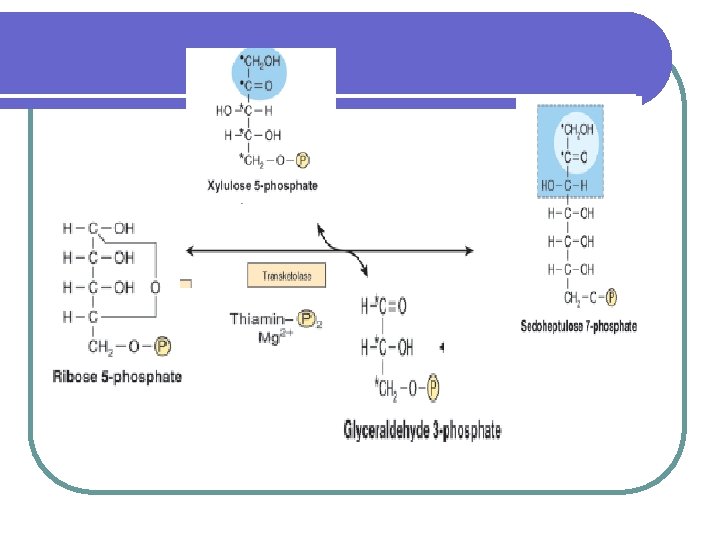
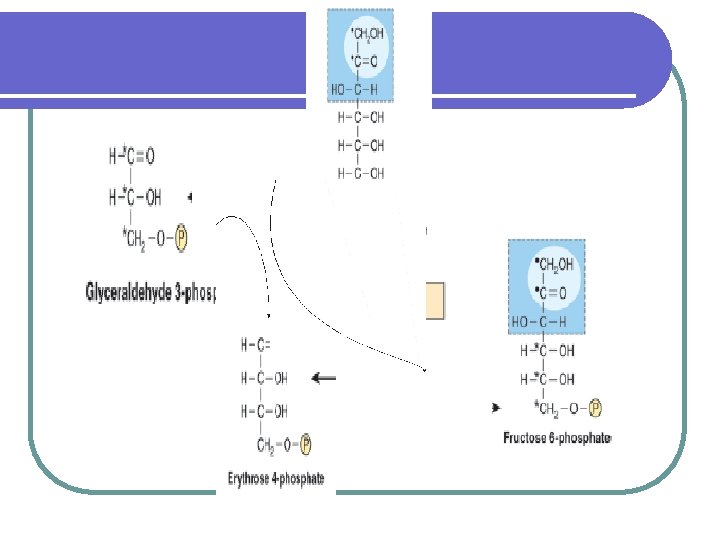
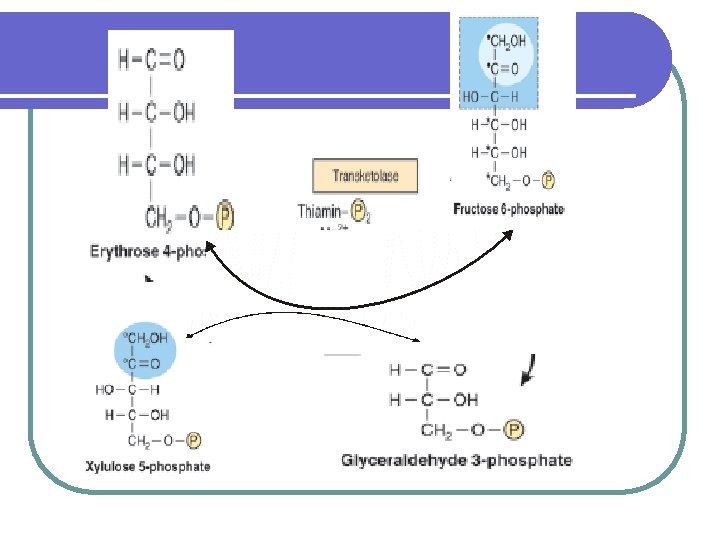
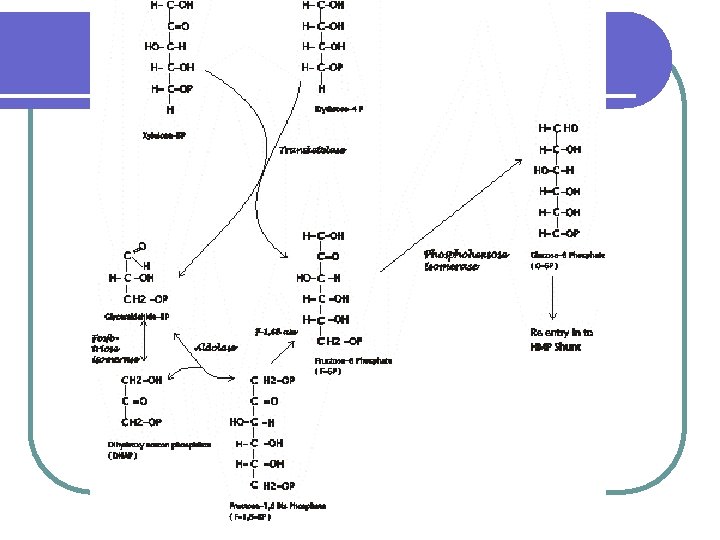
In the muscle l HMP Shunt inactive because G 6 P Dehydrogenase and 6 P Gluconate Dehydrogenase deficient l Ribose 5 P synthesized in the way of reverse HMP Shunt or through Transketolase path.
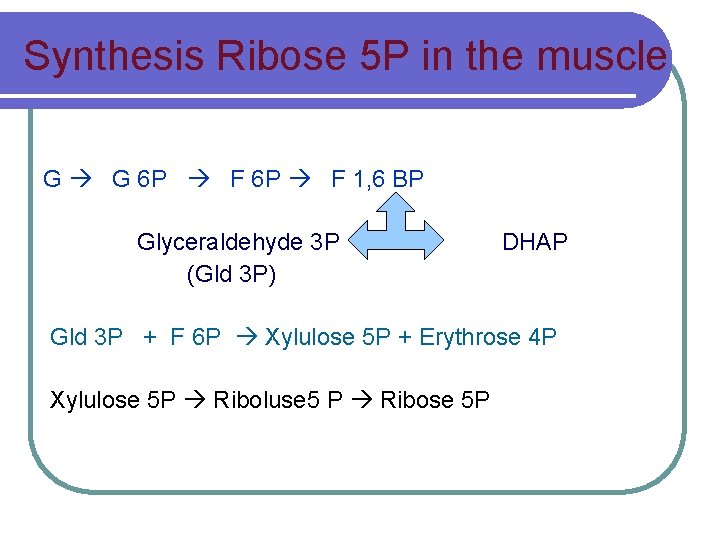
Synthesis Ribose 5 P in the muscle G G 6 P F 1, 6 BP Glyceraldehyde 3 P (Gld 3 P) DHAP Gld 3 P + F 6 P Xylulose 5 P + Erythrose 4 P Xylulose 5 P Riboluse 5 P Ribose 5 P
- Slides: 18