
Objectives In this chapter you will learn about
Objectives In this chapter, you will learn about: • Basic loop structures • while loops • Interactive while loops • for loops • Loop programming techniques C++ for Engineers and Scientists, Third Edition 1
Objectives (continued) • Nested loops • do while loops • Common programming errors C++ for Engineers and Scientists, Third Edition 2
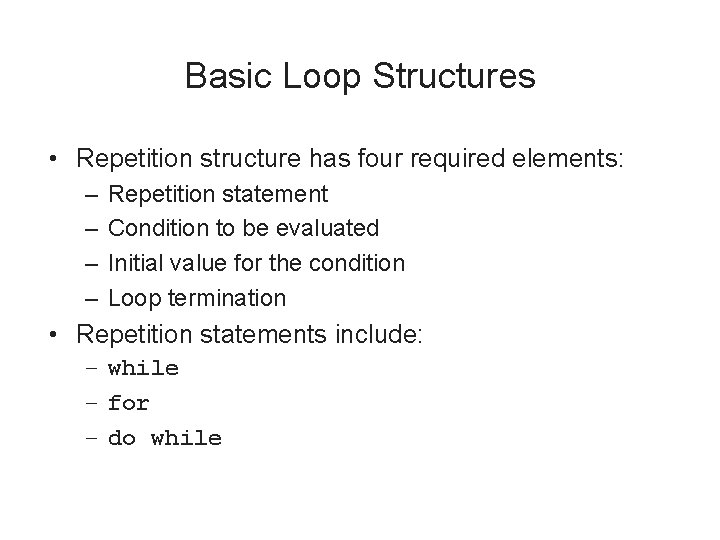
Basic Loop Structures • Repetition structure has four required elements: – – Repetition statement Condition to be evaluated Initial value for the condition Loop termination • Repetition statements include: – while – for – do while C++ for Engineers and Scientists, Third Edition 3
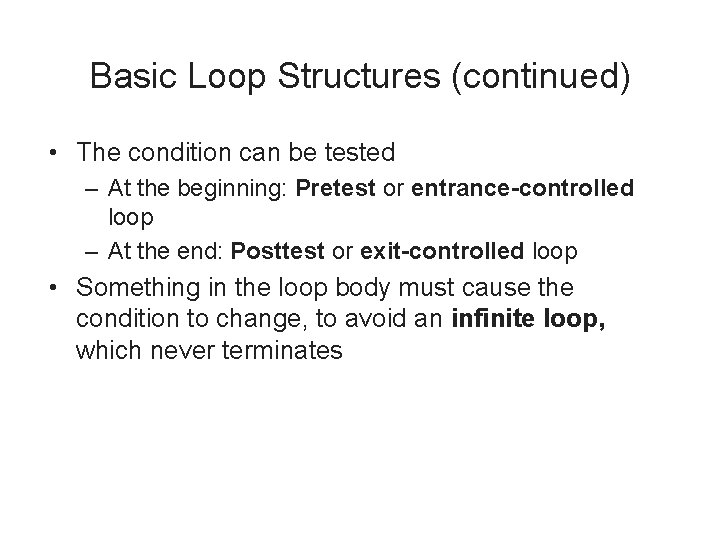
Basic Loop Structures (continued) • The condition can be tested – At the beginning: Pretest or entrance-controlled loop – At the end: Posttest or exit-controlled loop • Something in the loop body must cause the condition to change, to avoid an infinite loop, which never terminates C++ for Engineers and Scientists, Third Edition 4
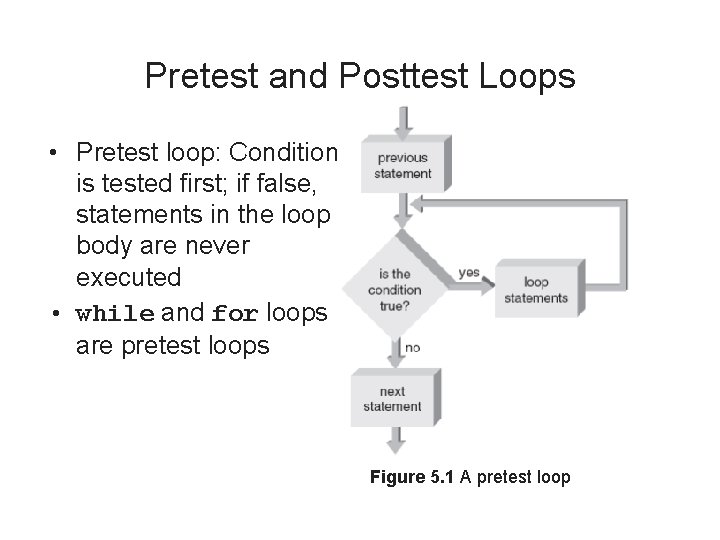
Pretest and Posttest Loops • Pretest loop: Condition is tested first; if false, statements in the loop body are never executed • while and for loops are pretest loops Figure 5. 1 A pretest loop C++ for Engineers and Scientists, Third Edition 5

Pretest and Posttest Loops (continued) • Posttest loop: Condition is tested after the loop body statements are executed; loop body always executes at least once • do while is a posttest loop Figure 5. 2 A posttest loop C++ for Engineers and Scientists, Third Edition 6
Fixed-Count Versus Variable-Condition Loops • Fixed-count loop: Loop is processed for a fixed number of repetitions • Variable-condition loop: Number of repetitions depends on the value of a variable C++ for Engineers and Scientists, Third Edition 7
while Loops • while statement is used to create a while loop – Syntax: while (expression) statement; • Statements following the expressions are executed as long as the expression condition remains true (evaluates to a non-zero value) C++ for Engineers and Scientists, Third Edition 8
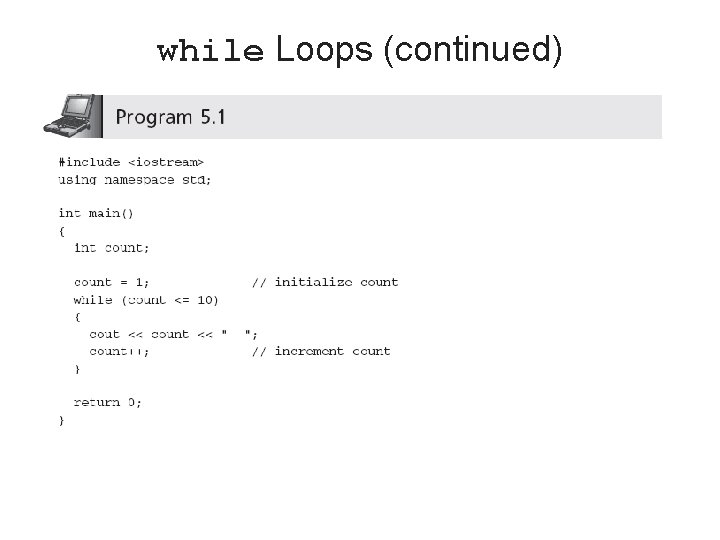
while Loops (continued) C++ for Engineers and Scientists, Third Edition 9
Lab Ex. • P. 247 • Ex. 2 C++ for Engineers and Scientists, Third Edition 10
Interactive while Loops • Combining interactive data entry with the while statement provides for repetitive entry and accumulation of totals C++ for Engineers and Scientists, Third Edition 11
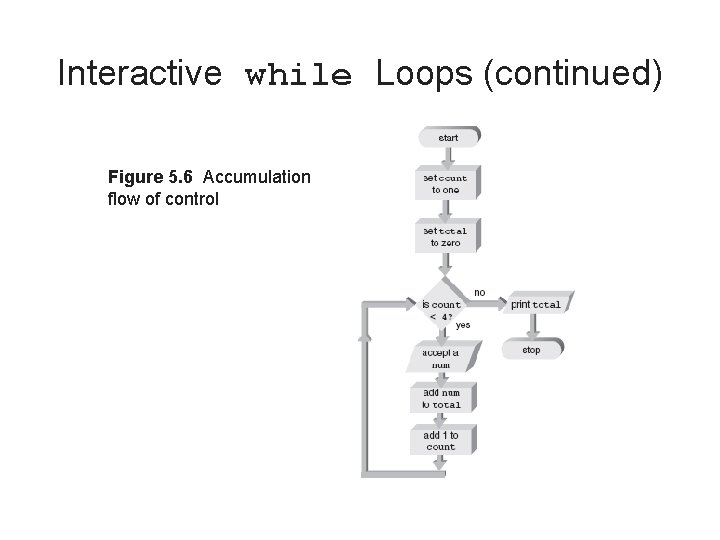
Interactive while Loops (continued) Figure 5. 6 Accumulation flow of control C++ for Engineers and Scientists, Third Edition 12
Sentinels • Sentinel: A data value used to signal either the start or end of a data series • Use a sentinel when you don’t know how many values need to be entered C++ for Engineers and Scientists, Third Edition 13
break and continue Statements • break statement – Forces an immediate break, or exit, from switch, while, for, and do-while statements – Violates pure structured programming, but is useful for breaking out of loops when an unusual condition is detected C++ for Engineers and Scientists, Third Edition 14
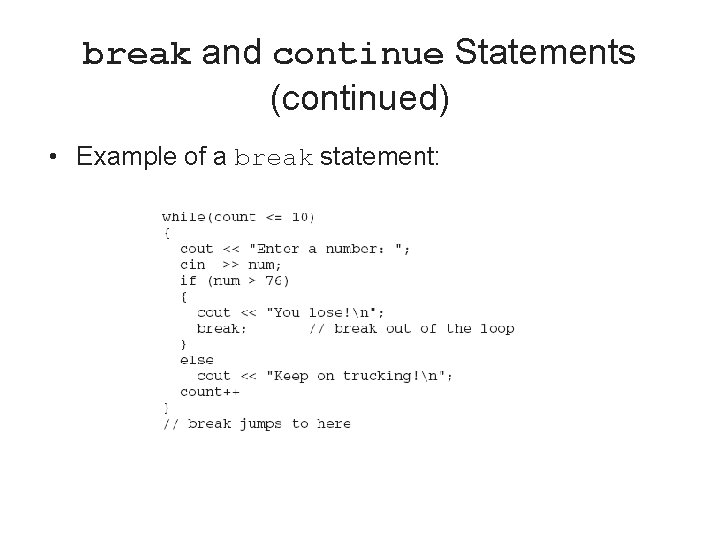
break and continue Statements (continued) • Example of a break statement: C++ for Engineers and Scientists, Third Edition 15
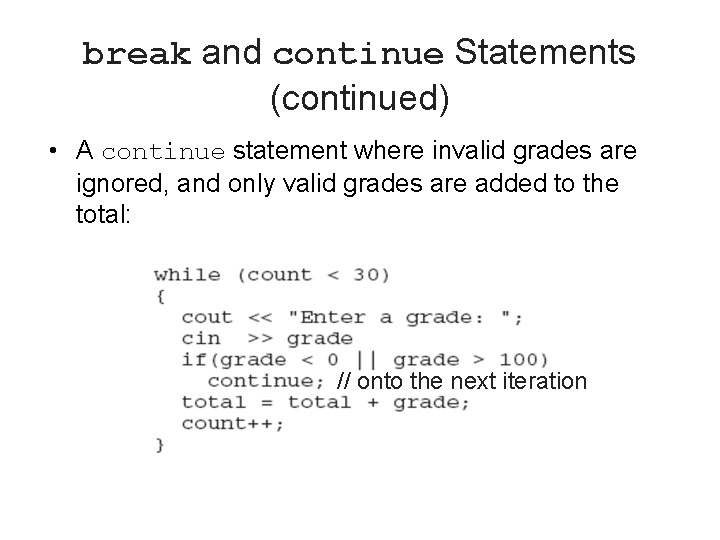
break and continue Statements (continued) • A continue statement where invalid grades are ignored, and only valid grades are added to the total: // onto the next iteration C++ for Engineers and Scientists, Third Edition 16
break and continue Statements (continued) • continue statement – Applies to while, do-while, and for statements; causes the next iteration of the loop to begin immediately – Useful for skipping over data that should not be processed in this iteration, while staying within the loop C++ for Engineers and Scientists, Third Edition 17
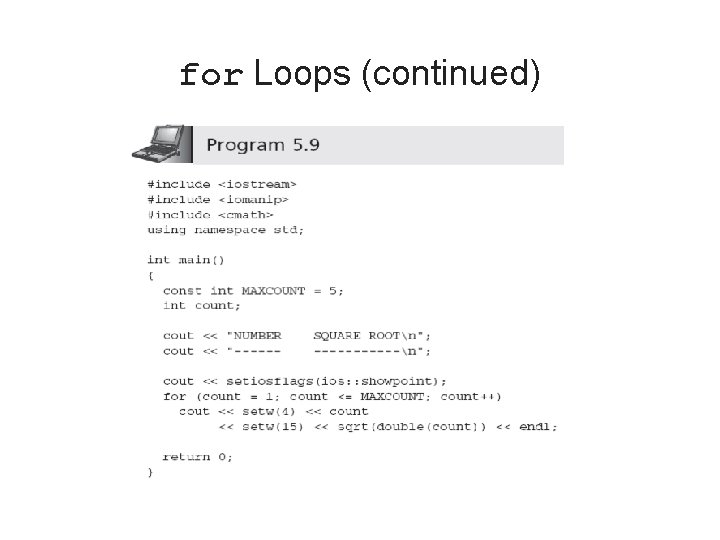
for Loops (continued) C++ for Engineers and Scientists, Third Edition 18
for Loops • for statement: A loop with a fixed count condition that handles alteration of the condition – Syntax: for (initializing list; expression; altering list) statement; • Initializing list: Sets the starting value of a counter • Expression: Contains the maximum or minimum value the counter can have; determines when the loop is finished C++ for Engineers and Scientists, Third Edition 19
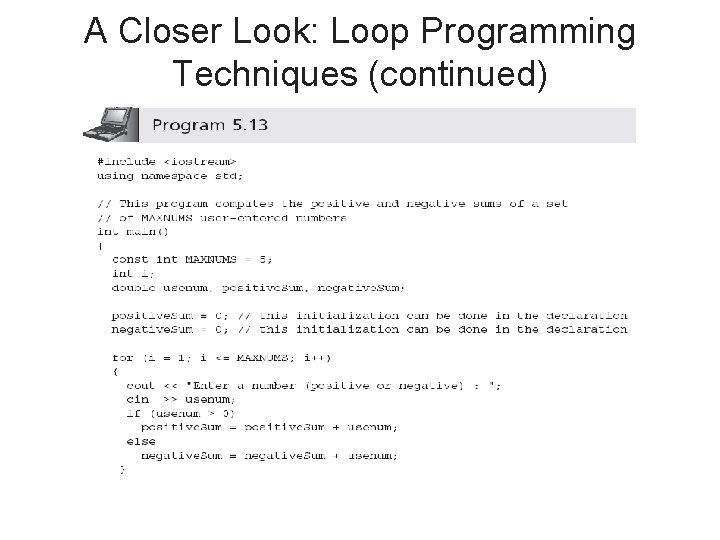
A Closer Look: Loop Programming Techniques (continued) C++ for Engineers and Scientists, Third Edition 20
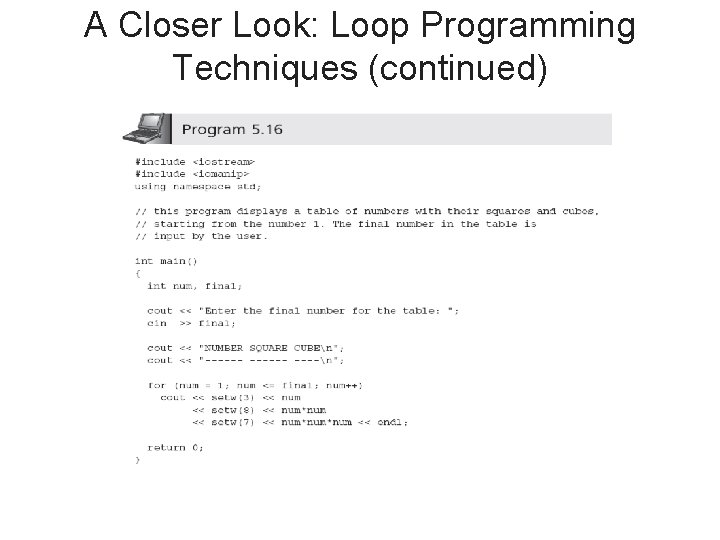
A Closer Look: Loop Programming Techniques (continued) C++ for Engineers and Scientists, Third Edition 21
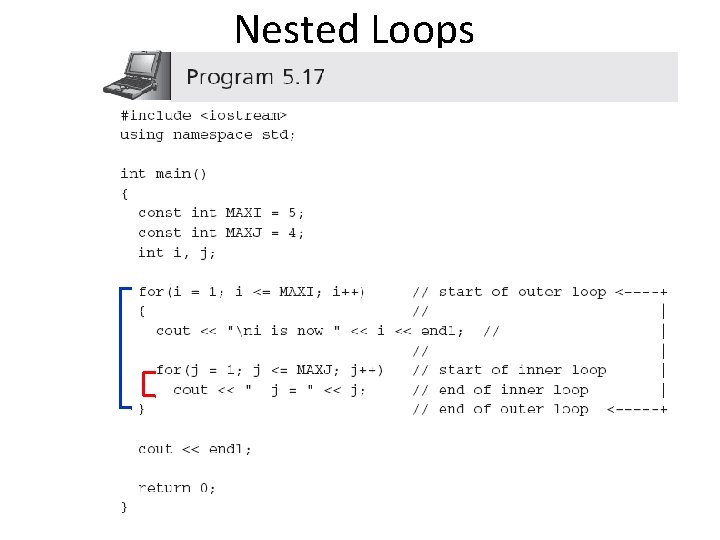
Nested Loops
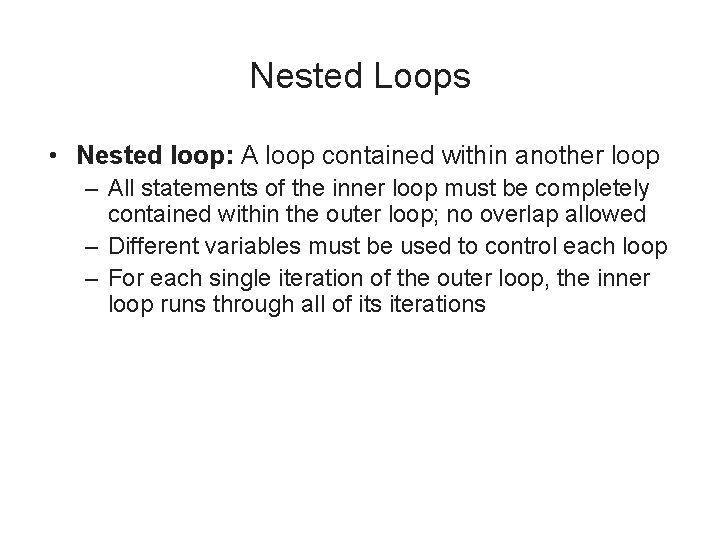
Nested Loops • Nested loop: A loop contained within another loop – All statements of the inner loop must be completely contained within the outer loop; no overlap allowed – Different variables must be used to control each loop – For each single iteration of the outer loop, the inner loop runs through all of its iterations C++ for Engineers and Scientists, Third Edition 23
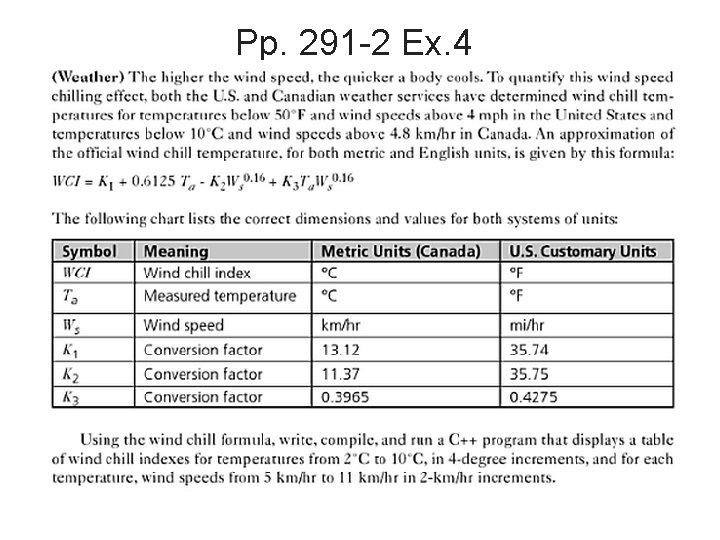
Pp. 291 -2 Ex. 4
• Send lab work • To: Chan. T@ucj. edu. sa • Subject: 32110236, Ex. 5. 6. 4, CS 125, 2013
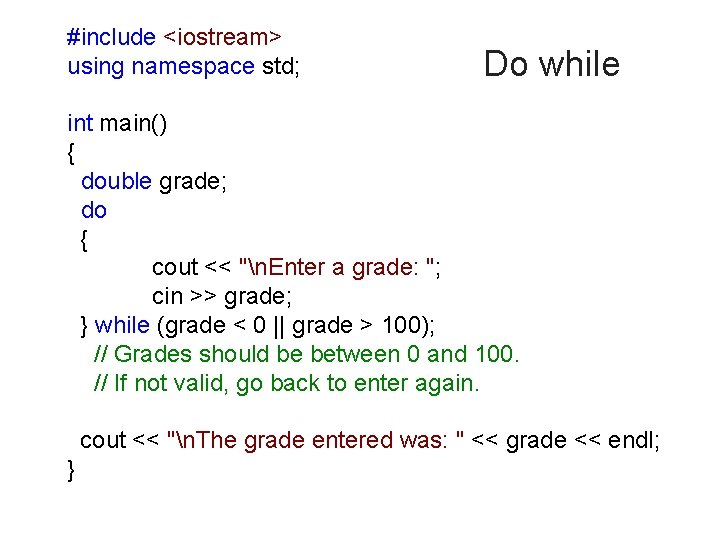
#include <iostream> using namespace std; Do while int main() { double grade; do { cout << "n. Enter a grade: "; cin >> grade; } while (grade < 0 || grade > 100); // Grades should be between 0 and 100. // If not valid, go back to enter again. cout << "n. The grade entered was: " << grade << endl; }
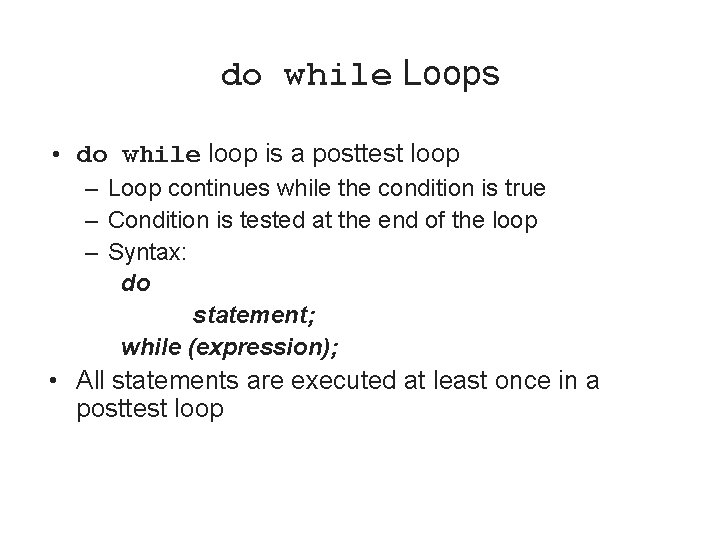
do while Loops • do while loop is a posttest loop – Loop continues while the condition is true – Condition is tested at the end of the loop – Syntax: do statement; while (expression); • All statements are executed at least once in a posttest loop C++ for Engineers and Scientists, Third Edition 27
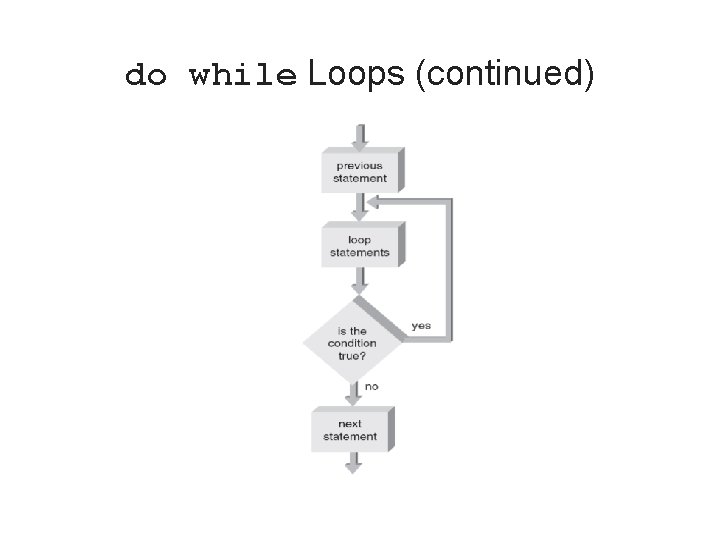
do while Loops (continued) C++ for Engineers and Scientists, Third Edition 28
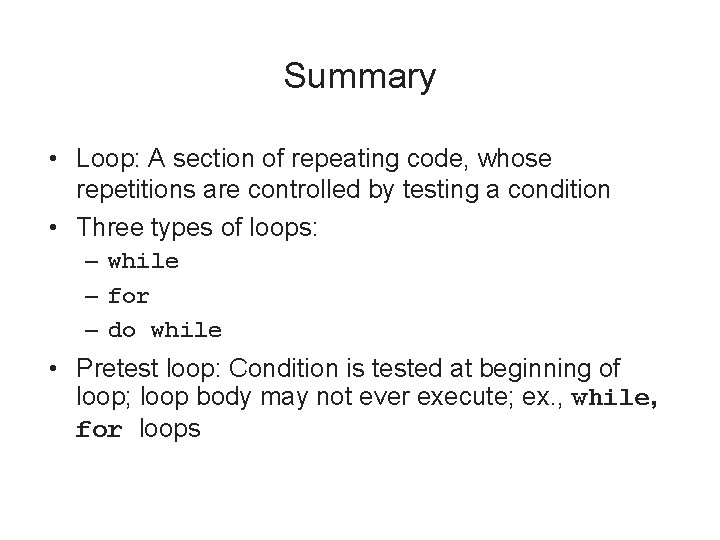
Summary • Loop: A section of repeating code, whose repetitions are controlled by testing a condition • Three types of loops: – while – for – do while • Pretest loop: Condition is tested at beginning of loop; loop body may not ever execute; ex. , while, for loops C++ for Engineers and Scientists, Third Edition 29

Summary (continued) • Posttest loop: Condition is tested at end of loop; loop body executes at least once; ex. , do while • Fixed-count loop: Number of repetitions is set in the loop condition • Variable-condition loop: Number of repetitions is controlled by the value of a variable C++ for Engineers and Scientists, Third Edition 30
- Slides: 30