
Objectives Finish cooling cycles Learn about and cooling
Objectives • Finish cooling cycles • Learn about and cooling system components and refrigerants
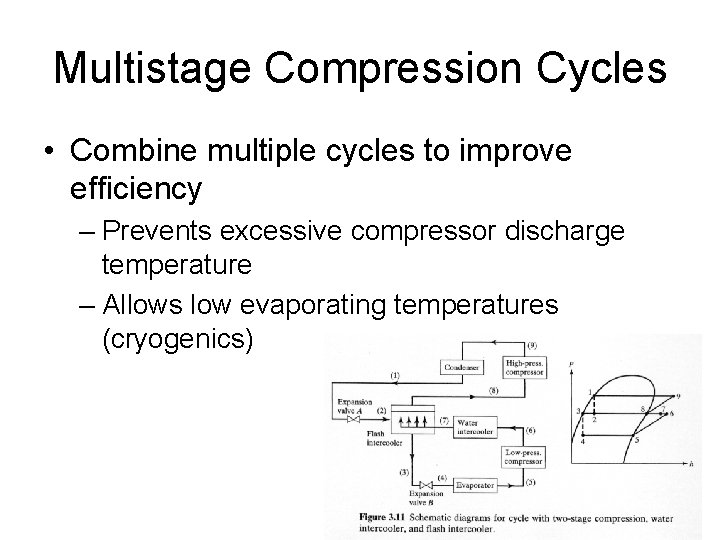
Multistage Compression Cycles • Combine multiple cycles to improve efficiency – Prevents excessive compressor discharge temperature – Allows low evaporating temperatures (cryogenics)
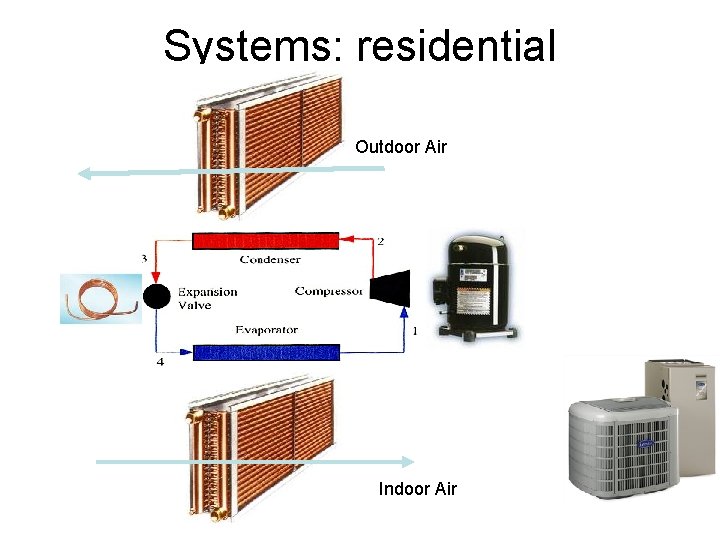
Systems: residential Outdoor Air Indoor Air
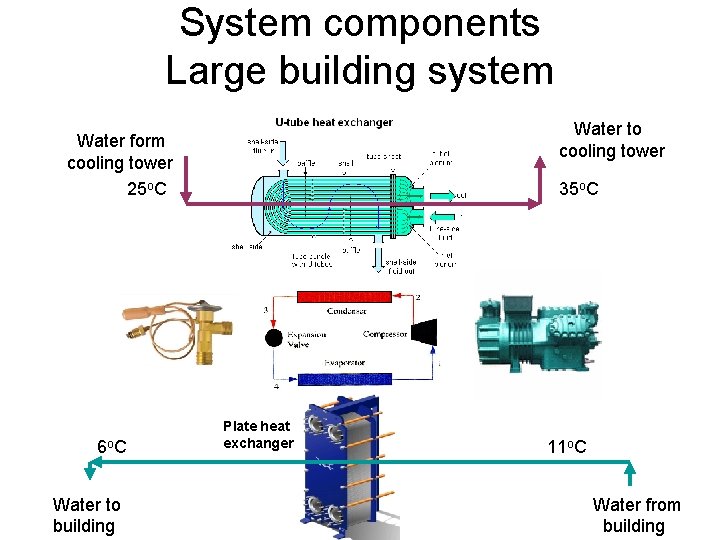
System components Large building system Water to cooling tower Water form cooling tower 25 o. C 6 o C Water to building 35 o. C Plate heat exchanger 11 o. C Water from building
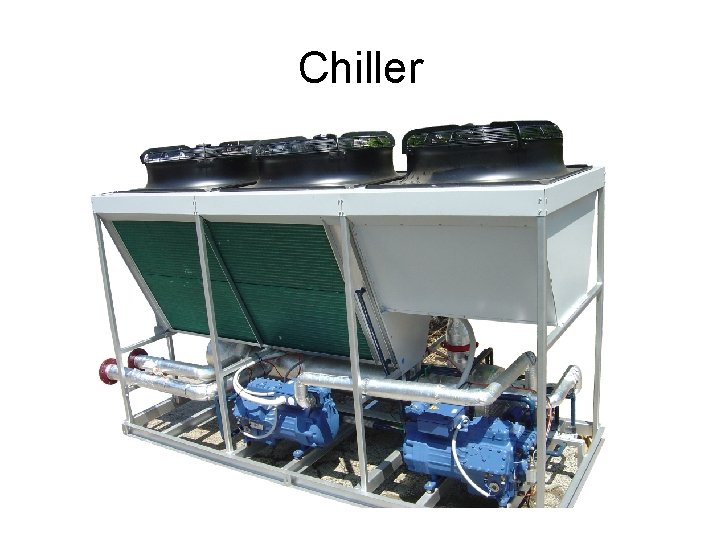
Chiller
Compressors
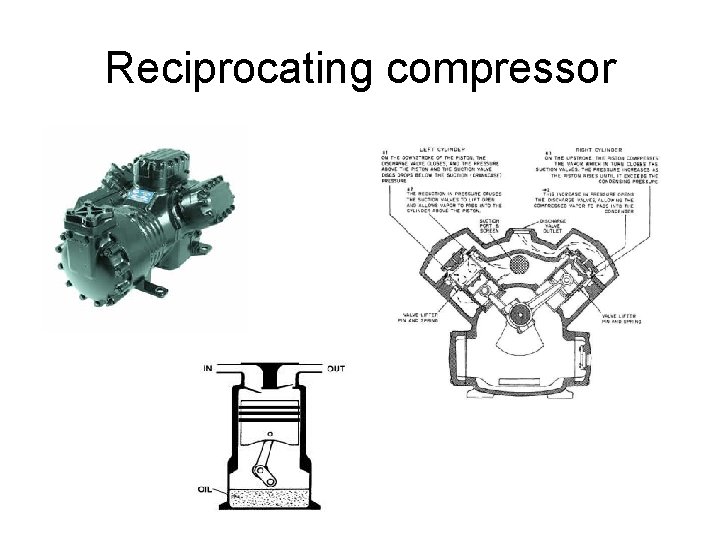
Reciprocating compressor
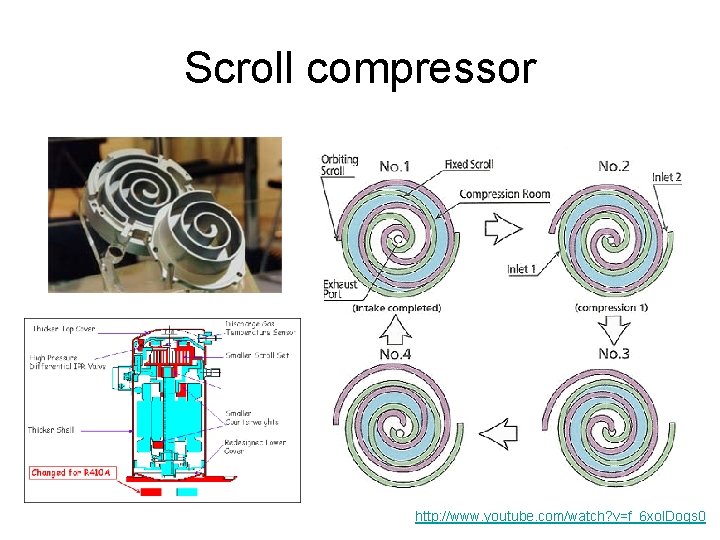
Scroll compressor http: //www. youtube. com/watch? v=f_6 xol. Doqs 0
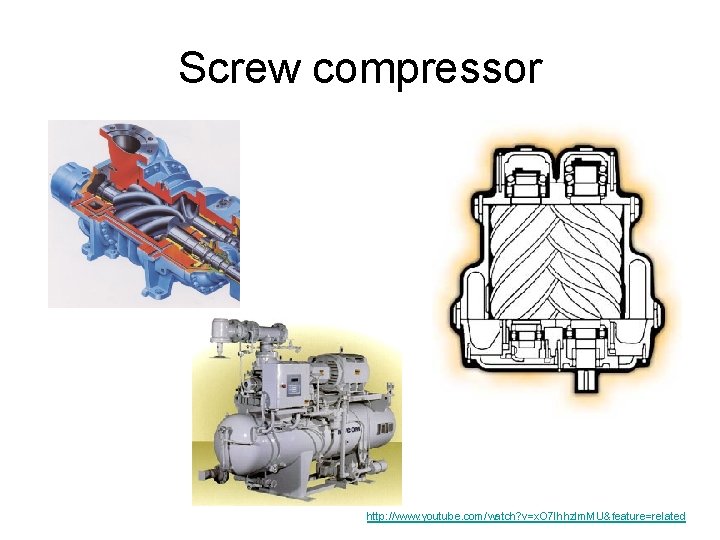
Screw compressor http: //www. youtube. com/watch? v=x. O 7 Ihhz. Im. MU&feature=related
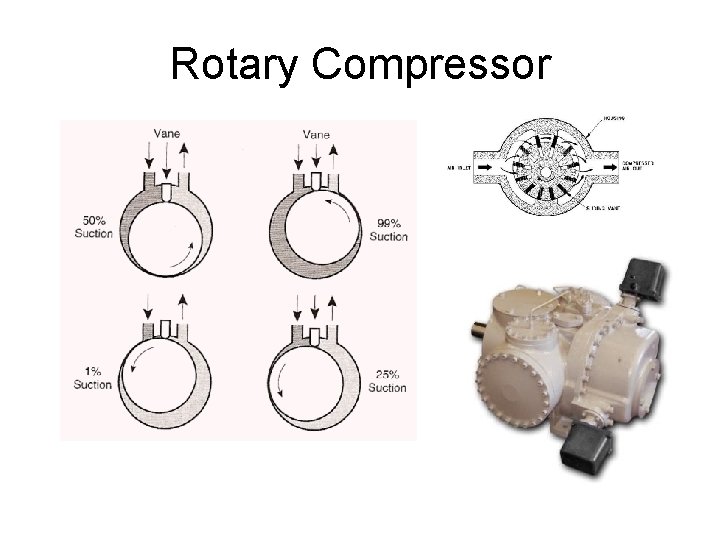
Rotary Compressor
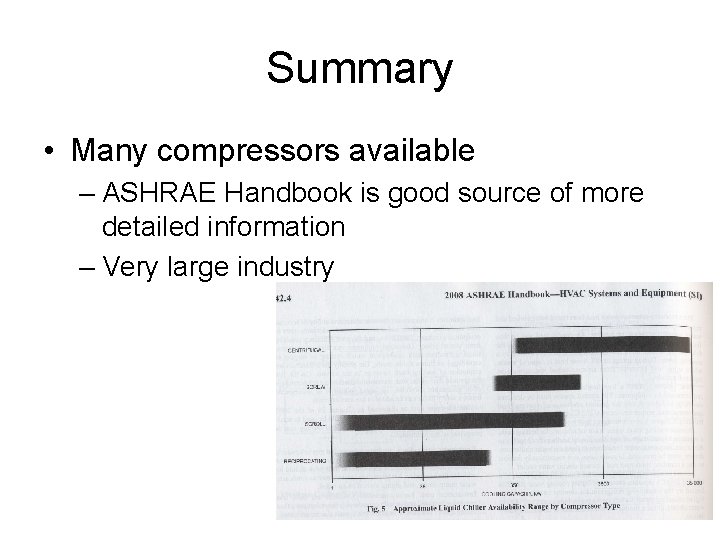
Summary • Many compressors available – ASHRAE Handbook is good source of more detailed information – Very large industry
Refrigerants
What are desirable properties of refrigerants? • • • Pressure and boiling point Critical temperature Latent heat of vaporization Heat transfer properties Viscosity Stability
In Addition…. • • Toxicity Flammability Ozone-depletion Greenhouse potential Cost Leak detection Oil solubility Water solubility
Refrigerants • What does R-12 mean? • ASHRAE classifications • From right to left ← – – # fluorine atoms # hydrogen atoms +1 # C atoms – 1 (omit if zero) # C=C double bonds (omit if zero) • B at end means bromine instead of chlorine • a or b at end means different isomer
Expansion Valves • Throttles the refrigerant from condenser temperature to evaporator temperature • Connected to evaporator superheat – Increased compressor power consumption – Decreased pumping capacity – Increased discharge temperature • Can do it with a fixed orifice (pressure reducing device), but does not guarantee evaporator pressure
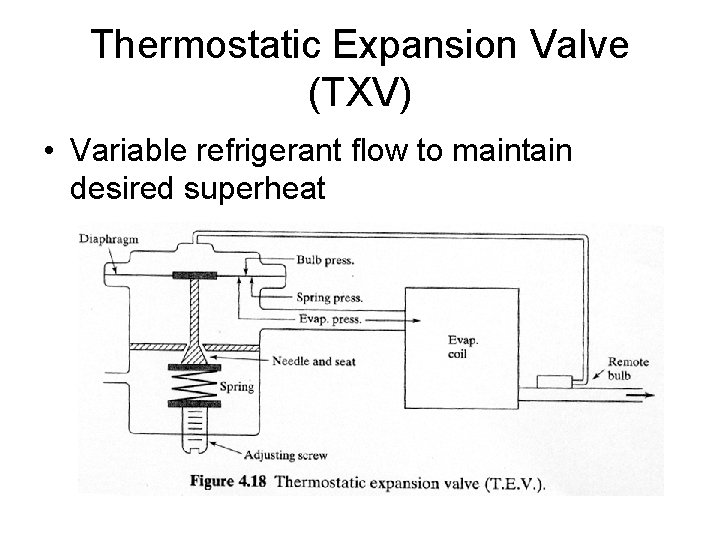
Thermostatic Expansion Valve (TXV) • Variable refrigerant flow to maintain desired superheat
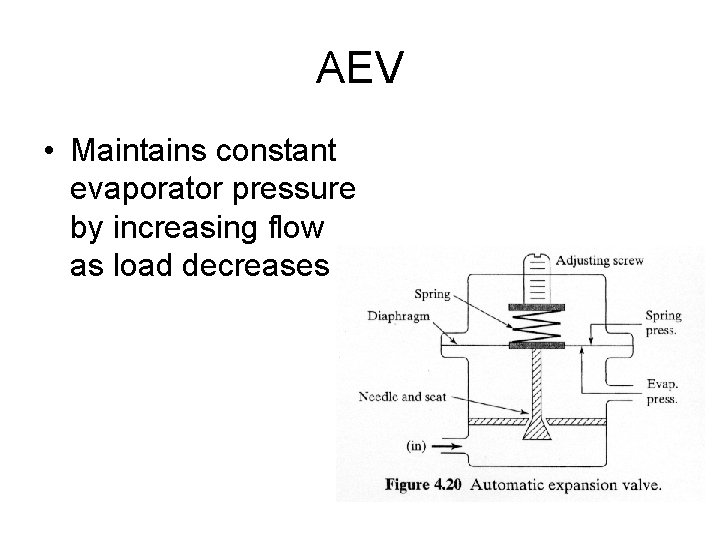
AEV • Maintains constant evaporator pressure by increasing flow as load decreases
- Slides: 18