
Objectives Describe Bohrs model of the atom and
Objectives § Describe Bohr’s model of the atom and the evidence for energy levels § Explain how the electron cloud model represents the behavior and locations of electrons in atoms Summative Test/Lab – Wednesday/Thursday
Bohr’s Model of the Atom § Bohr’s Model - an early conceptual model of the atom - classic planetary model in which electrons whirl around the small but dense nucleus: like planets orbiting the Sun - developed by the Danish physicist Niels Bohr in 1911 - each electron has a certain energy that is determined by it’s path around the nucleus - explains how atoms (lose) emit or (gain) absorb energy resulting energy: energy level

Bohr’s Model: Energy Levels § Definition - any of the possible energies an electron may have in an atom § Evidence - measured amount of energy gained or lost - when energy is lost we often see it as a light ex. fireworks - 1925 this model no longer explained all observations being made by scientists and new models were created ex. Electron cloud model
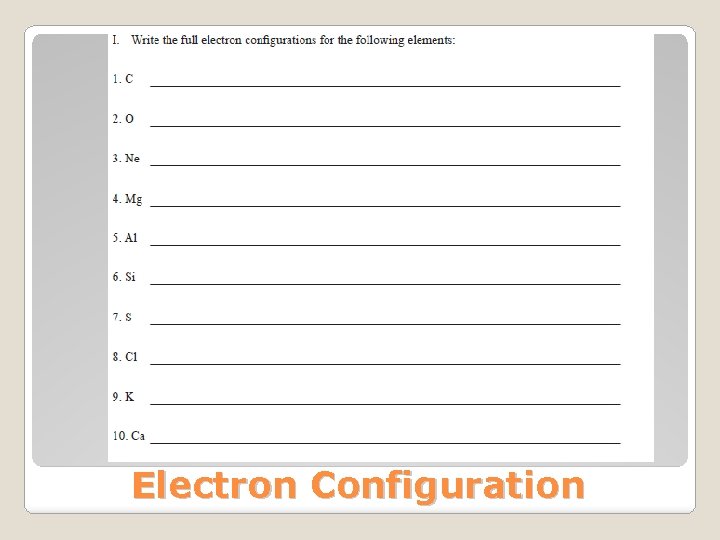
Electron Configurations § Definition - arrangement of electrons in the orbitals of an atom (similar to seating assignments on an airplane) - when all electrons at their lowest energies this is called ground state
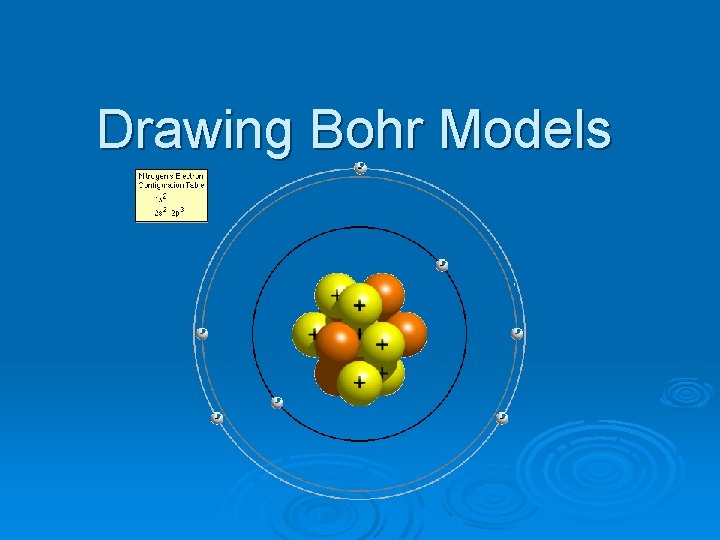
Drawing Bohr Models
Bohr Models Bohr models are used to predict reactivity in elements. 2. Reactivity refers to how likely an element is to form a compound with another element. 3. When looking at Bohr models, we look at its valence electrons (the electrons on the last energy level) to determine reactivity. 1.
Drawing Bohr Models 1. 2. 3. 4. 5. Draw the nucleus. Write the number of neutrons and the number of protons in the nucleus. Draw the first energy level. Draw the electrons in the energy levels according to the rules below. Make sure you draw the electrons in pairs. Keep track of how many electrons are put in each level and the number of electrons left to use.
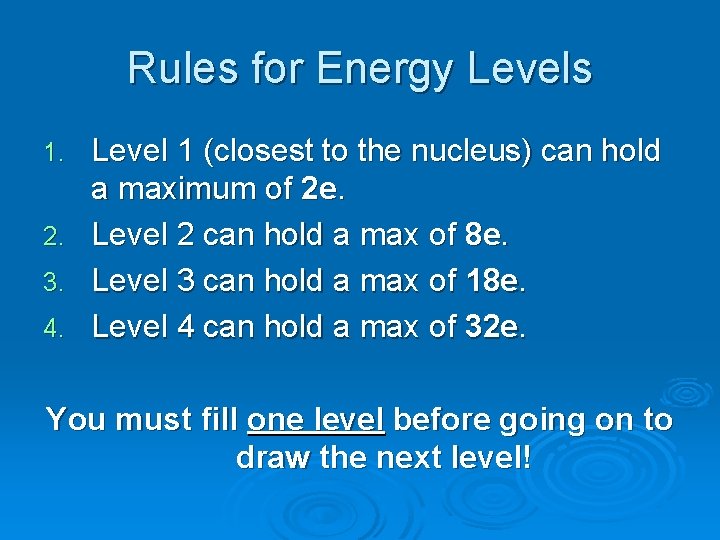
Rules for Energy Levels 1. 2. 3. 4. Level 1 (closest to the nucleus) can hold a maximum of 2 e. Level 2 can hold a max of 8 e. Level 3 can hold a max of 18 e. Level 4 can hold a max of 32 e. You must fill one level before going on to draw the next level!
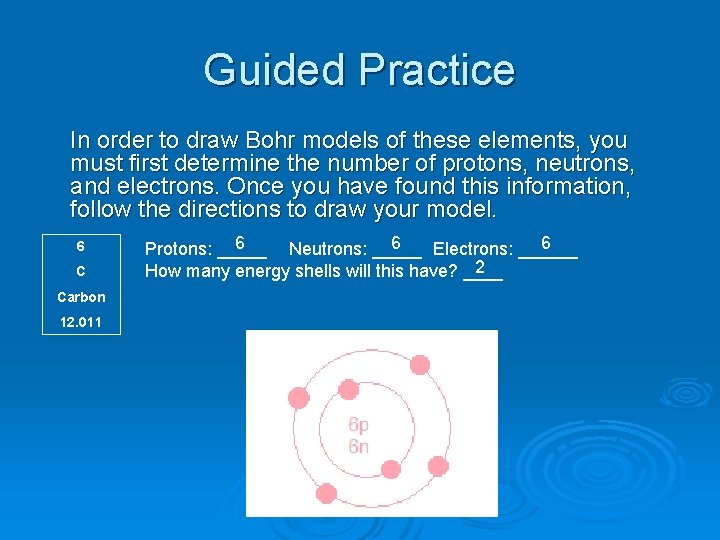
Guided Practice In order to draw Bohr models of these elements, you must first determine the number of protons, neutrons, and electrons. Once you have found this information, follow the directions to draw your model. 6 C Carbon 12. 011 6 6 6 Protons: _____ Neutrons: _____ Electrons: ______ 2 How many energy shells will this have? ____
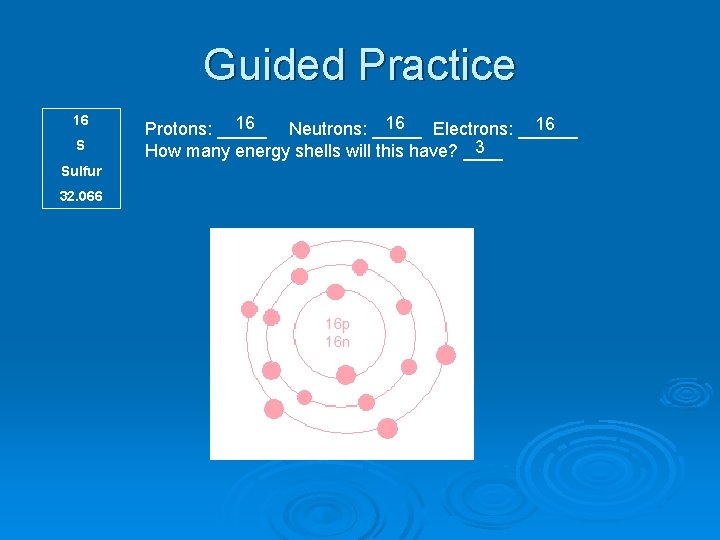
Guided Practice 16 S Sulfur 32. 066 16 16 16 Protons: _____ Neutrons: _____ Electrons: ______ 3 How many energy shells will this have? ____
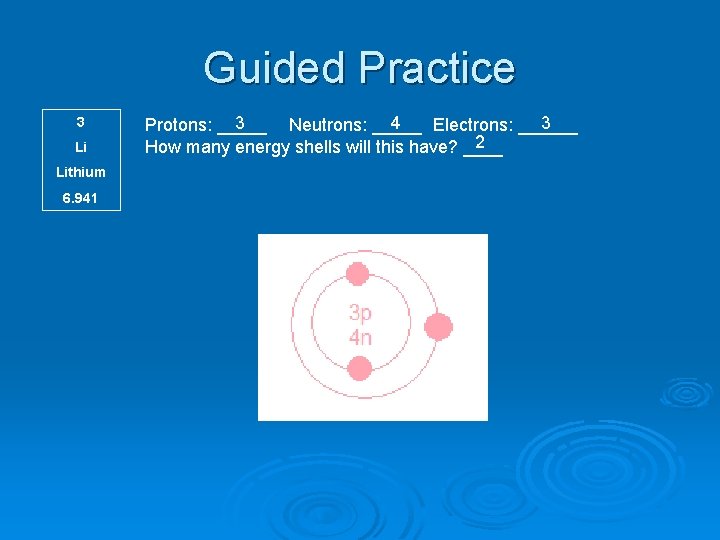
Guided Practice 3 Li Lithium 6. 941 3 4 3 Protons: _____ Neutrons: _____ Electrons: ______ 2 How many energy shells will this have? ____

Guided Practice 10 Ne Neon 20. 180 10 10 10 Protons: _____ Neutrons: _____ Electrons: ______ 2 How many energy shells will this have? ____
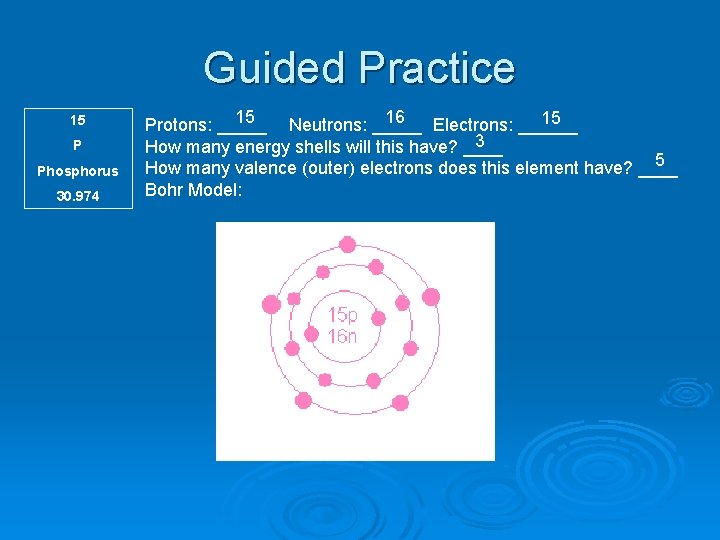
Guided Practice 15 P Phosphorus 30. 974 15 16 15 Protons: _____ Neutrons: _____ Electrons: ______ 3 How many energy shells will this have? ____ 5 How many valence (outer) electrons does this element have? ____ Bohr Model:
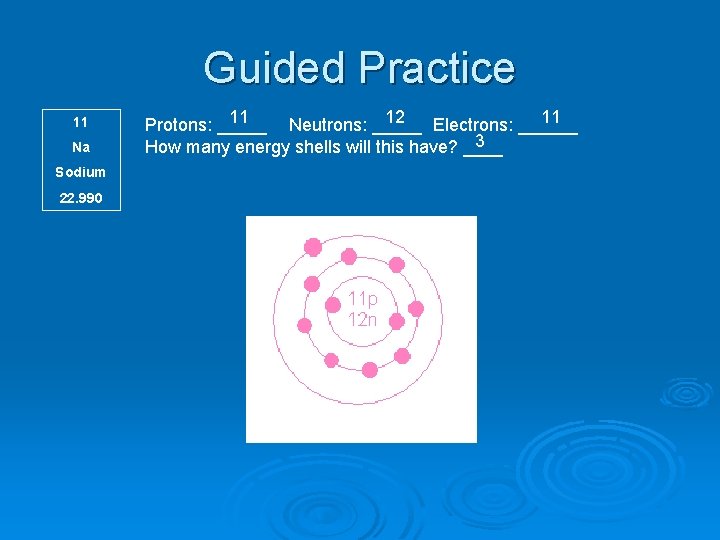
Guided Practice 11 Na Sodium 22. 990 11 12 11 Protons: _____ Neutrons: _____ Electrons: ______ 3 How many energy shells will this have? ____
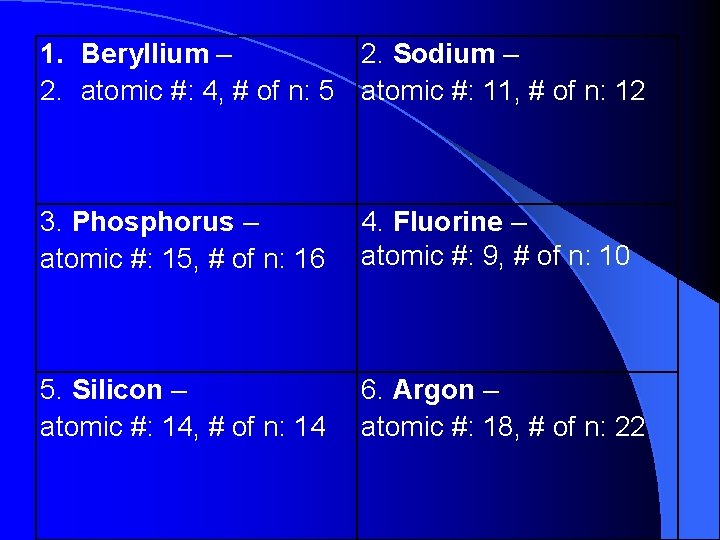
1. Beryllium – 2. Sodium – 2. atomic #: 4, # of n: 5 atomic #: 11, # of n: 12 3. Phosphorus – atomic #: 15, # of n: 16 4. Fluorine – atomic #: 9, # of n: 10 5. Silicon – atomic #: 14, # of n: 14 6. Argon – atomic #: 18, # of n: 22
Valence Electrons Everything that is underlined should get filled in on your notes!
Valence Electrons Valence electrons that are in the highest (outermost) energy level that level is also called the valence shell of the atom they are held most loosely
�The number of valence electrons in an atom determines: �The properties of the atom �The way that atom will bond chemically �As a rule, the fewer electrons in the valence shell, the more reactive the element is. �When an atom has eight electrons in the valence shell, it is stable.
Atoms usually react in a way that makes each atom more stable. There are two ways this can happen: The number of valence electrons increases to eight Loosely held valence electrons are given up
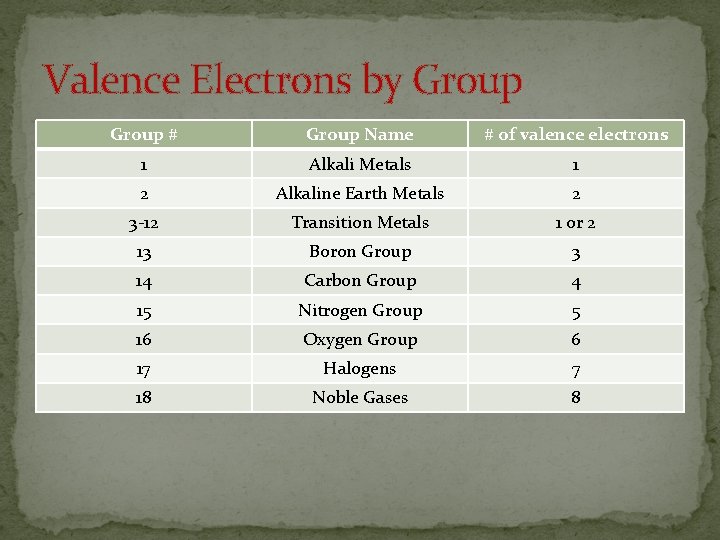
Valence Electrons by Group # Group Name # of valence electrons 1 Alkali Metals 1 2 Alkaline Earth Metals 2 3 -12 Transition Metals 1 or 2 13 Boron Group 3 14 Carbon Group 4 15 Nitrogen Group 5 16 Oxygen Group 6 17 Halogens 7 18 Noble Gases 8
Patterns on the Periodic Table �The number of valence electrons increases as you go across the periodic table. �When you start each new period, the number of valence electrons drops down to one and begins increasing.
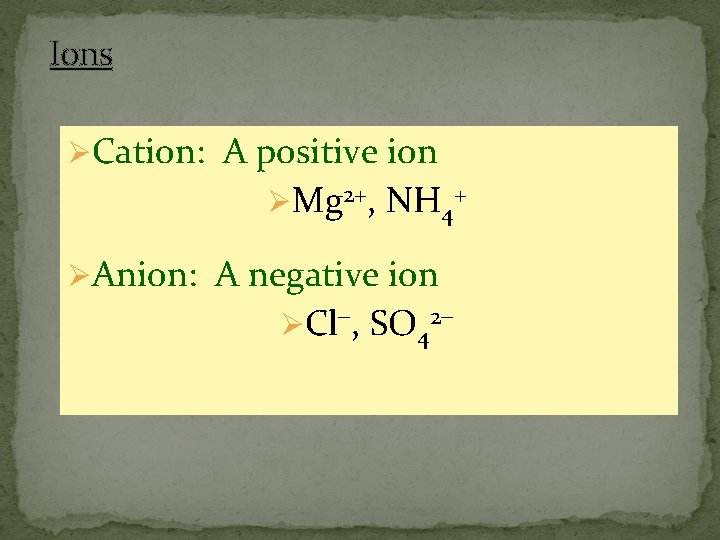
Ions ØCation: A positive ion ØMg 2+, NH 4+ ØAnion: A negative ion ØCl-, SO 42 -
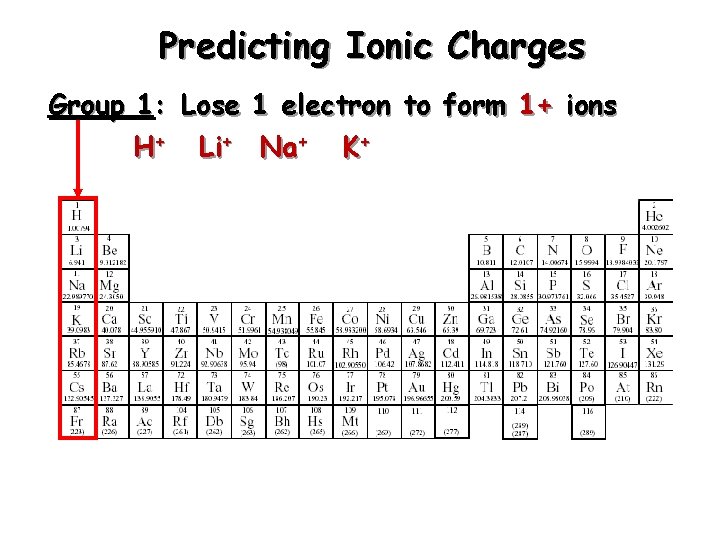
Predicting Ionic Charges Group 1: Lose 1 electron to form 1+ ions H+ Li+ Na+ K+
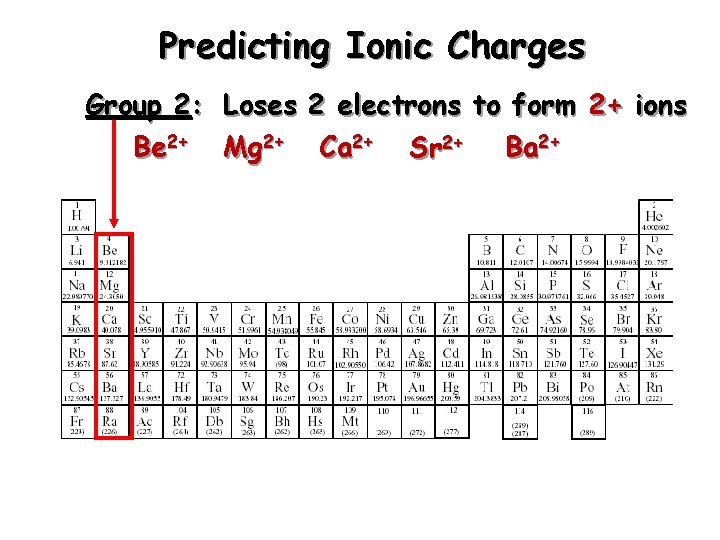
Predicting Ionic Charges Group 2: Loses 2 electrons to form 2+ ions Be 2+ Mg 2+ Ca 2+ Sr 2+ Ba 2+
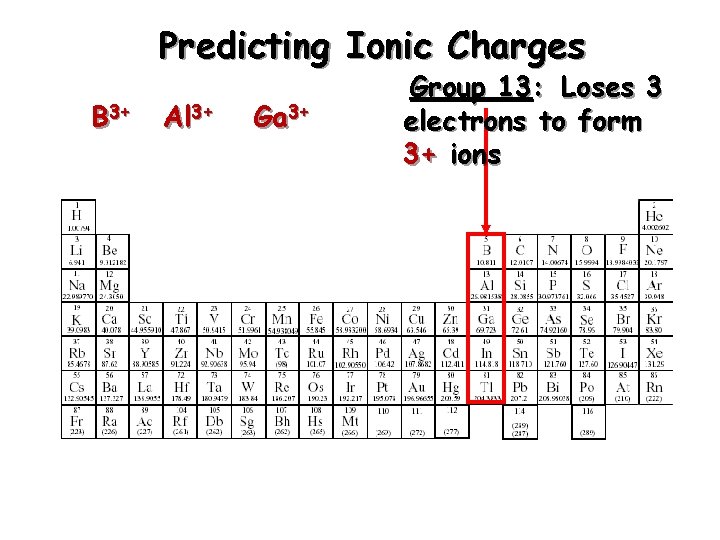
Predicting Ionic Charges B 3+ Al 3+ Ga 3+ Group 13: Loses 3 electrons to form 3+ ions
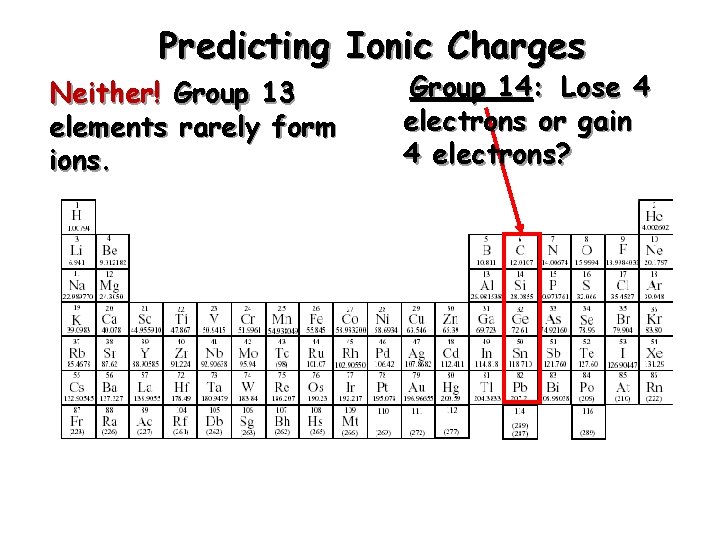
Predicting Ionic Charges Neither! Group 13 elements rarely form ions. Group 14: Lose 4 electrons or gain 4 electrons?
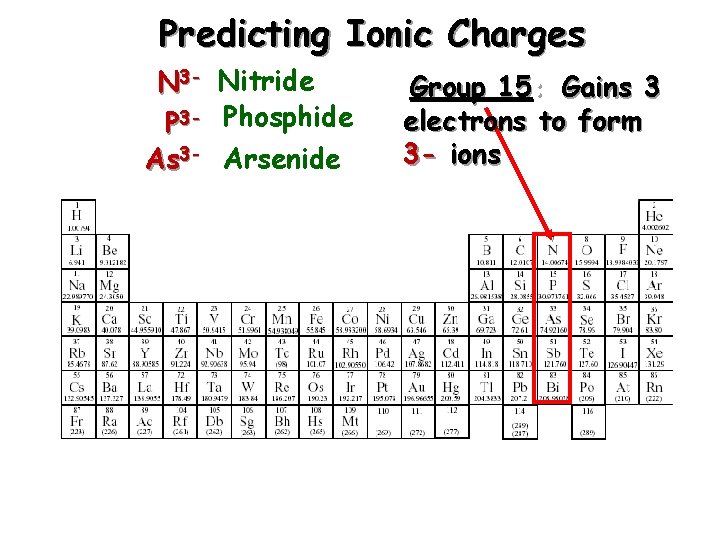
Predicting Ionic Charges N 3 - Nitride P 3 - Phosphide As 3 - Arsenide Group 15: Gains 3 electrons to form 3 - ions
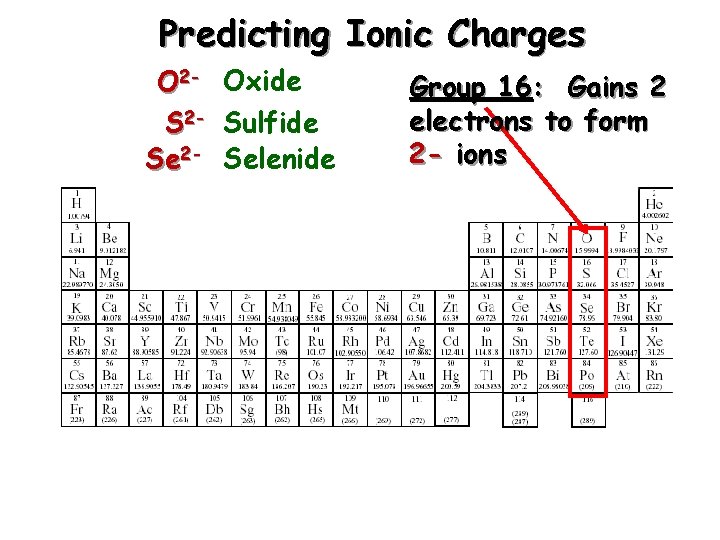
Predicting Ionic Charges O 2 - Oxide S 2 - Sulfide Se 2 - Selenide Group 16: Gains 2 electrons to form 2 - ions
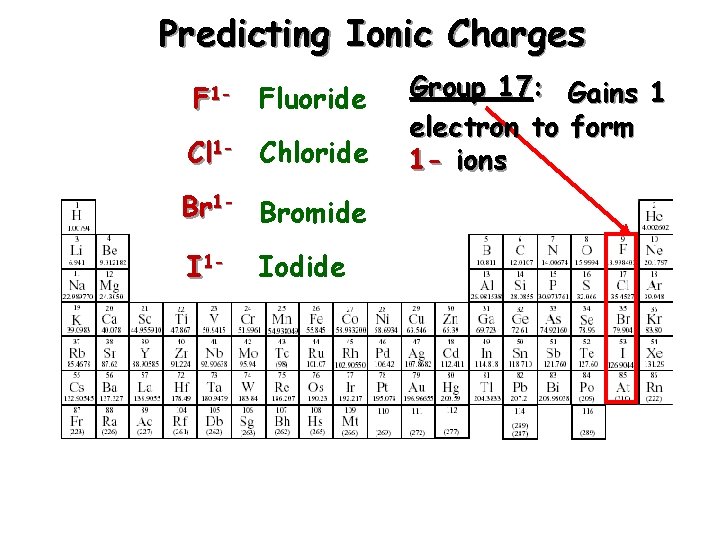
Predicting Ionic Charges F 1 - Fluoride Cl 1 - Chloride Br 1 - Bromide I 1 - Iodide Group 17: Gains 1 electron to form 1 - ions
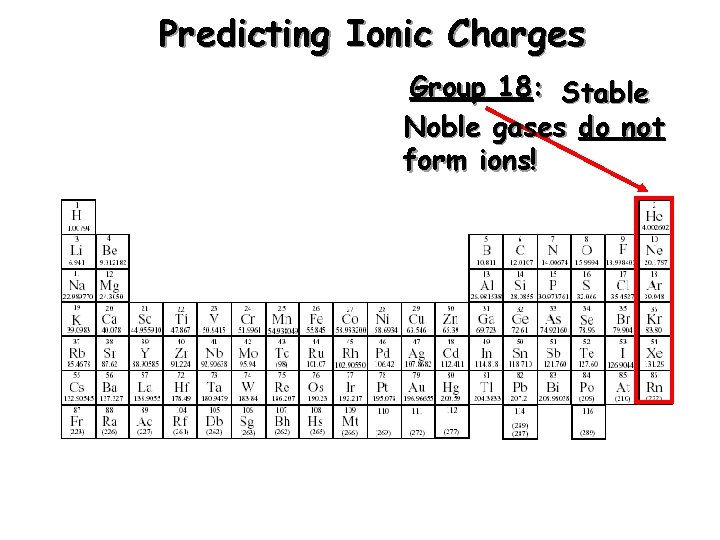
Predicting Ionic Charges Group 18: Stable Noble gases do not form ions!
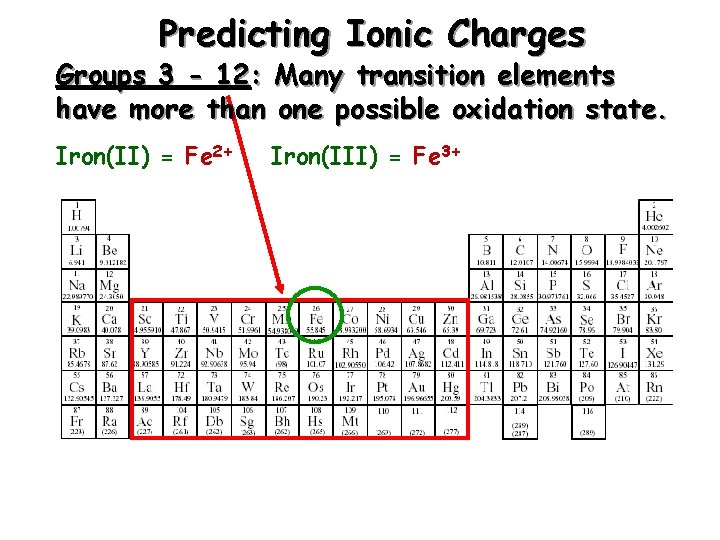
Predicting Ionic Charges Groups 3 - 12: Many transition elements have more than one possible oxidation state. Iron(II) = Fe 2+ Iron(III) = Fe 3+
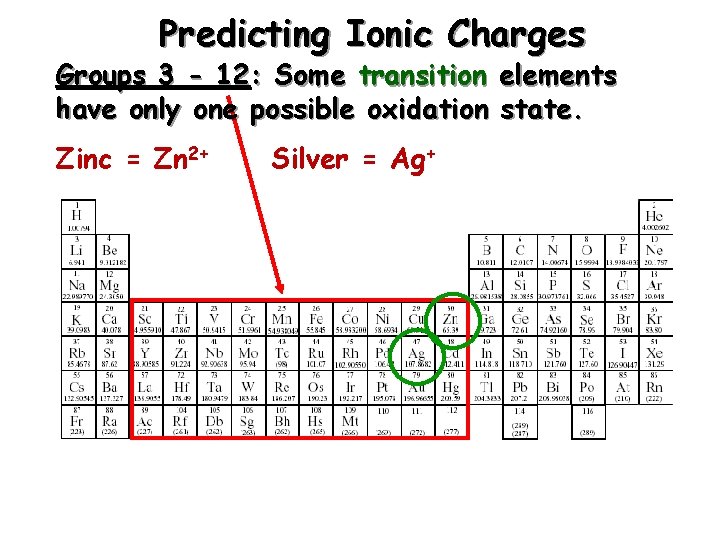
Predicting Ionic Charges Groups 3 - 12: Some transition elements have only one possible oxidation state. Zinc = Zn 2+ Silver = Ag+
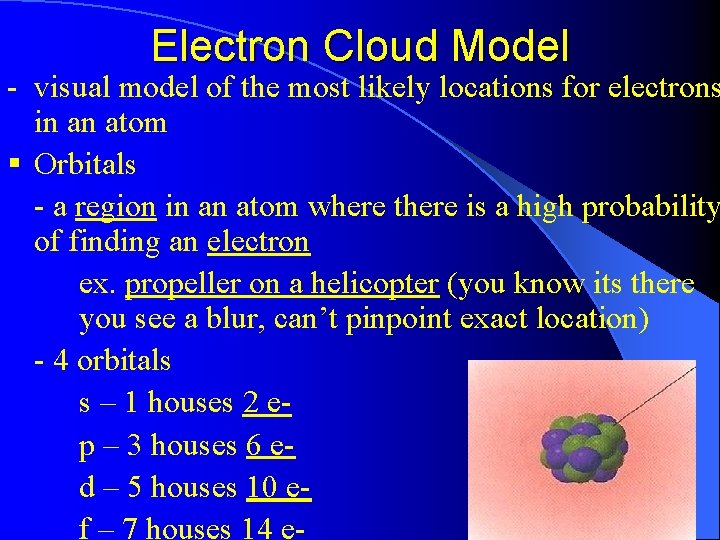
Electron Cloud Model - visual model of the most likely locations for electrons in an atom § Orbitals - a region in an atom where there is a high probability of finding an electron ex. propeller on a helicopter (you know its there you see a blur, can’t pinpoint exact location) - 4 orbitals s – 1 houses 2 ep – 3 houses 6 ed – 5 houses 10 ef – 7 houses 14 e-
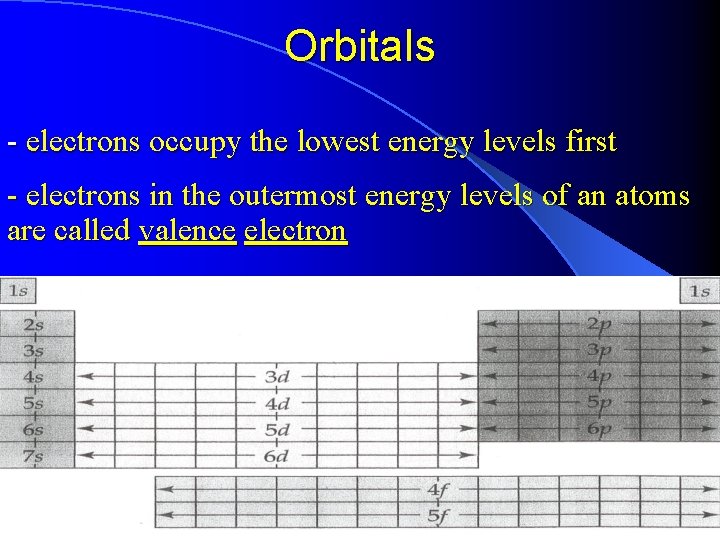
Orbitals - electrons occupy the lowest energy levels first - electrons in the outermost energy levels of an atoms are called valence electron
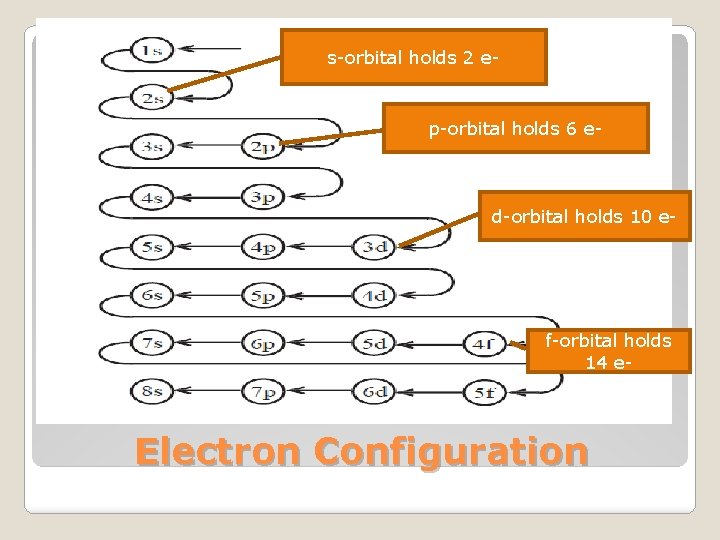
s-orbital holds 2 e- p-orbital holds 6 e- d-orbital holds 10 e- f-orbital holds 14 e- Electron Configuration
Electron Configuration
- Slides: 36