
Objectives 1 To learn the types of radioactive
Objectives 1. To learn the types of radioactive decay 2. To learn to write nuclear equations for radioactive decay 3. To learn how one element may be changed to another by particle bombardment 4. To learn about radiation detection instruments 5. To understand half-life
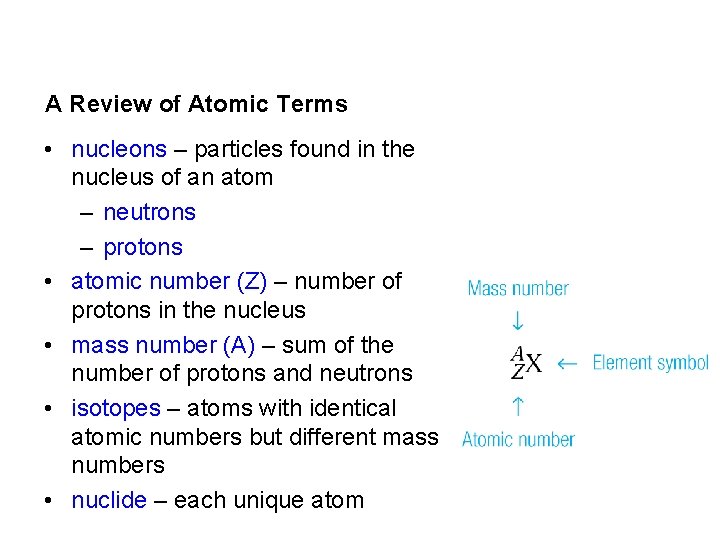
A Review of Atomic Terms • nucleons – particles found in the nucleus of an atom – neutrons – protons • atomic number (Z) – number of protons in the nucleus • mass number (A) – sum of the number of protons and neutrons • isotopes – atoms with identical atomic numbers but different mass numbers • nuclide – each unique atom

A. Radioactive Decay • radioactive – nucleus which spontaneously decomposes forming a different nucleus and producing one or more particles • nuclear equation – shows the radioactive decomposition of an element
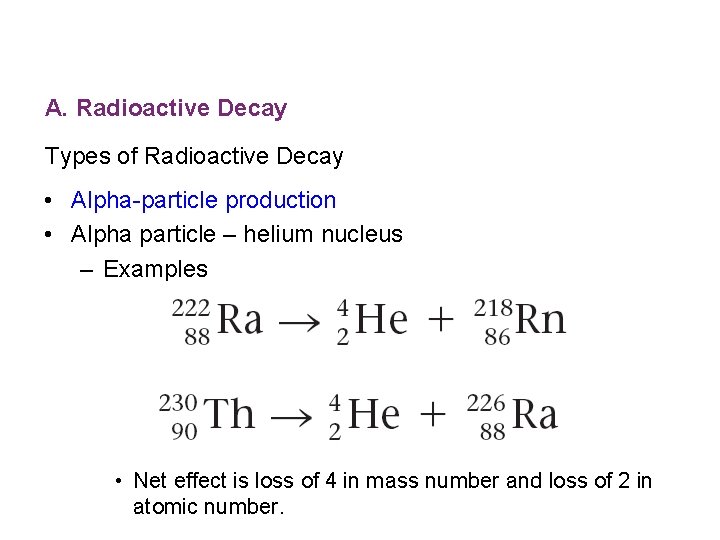
A. Radioactive Decay Types of Radioactive Decay • Alpha-particle production • Alpha particle – helium nucleus – Examples • Net effect is loss of 4 in mass number and loss of 2 in atomic number.
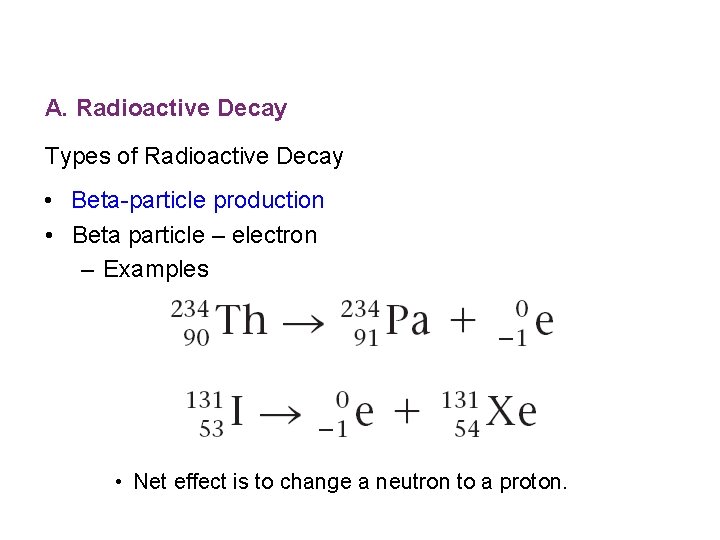
A. Radioactive Decay Types of Radioactive Decay • Beta-particle production • Beta particle – electron – Examples • Net effect is to change a neutron to a proton.
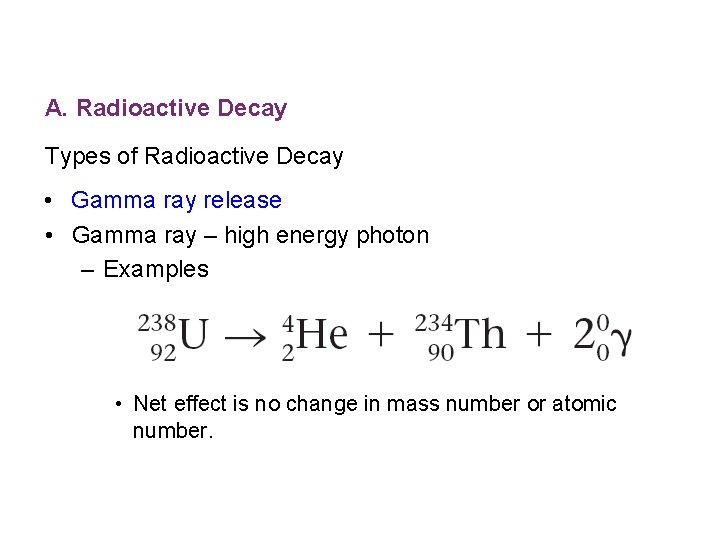
A. Radioactive Decay Types of Radioactive Decay • Gamma ray release • Gamma ray – high energy photon – Examples • Net effect is no change in mass number or atomic number.
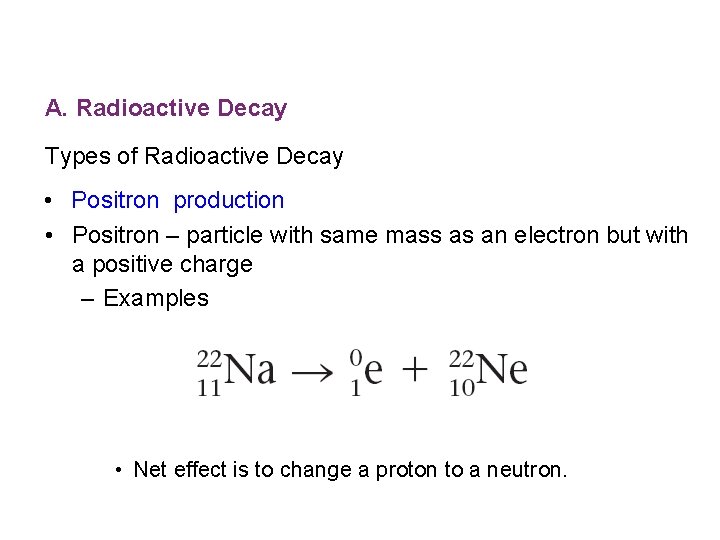
A. Radioactive Decay Types of Radioactive Decay • Positron production • Positron – particle with same mass as an electron but with a positive charge – Examples • Net effect is to change a proton to a neutron.
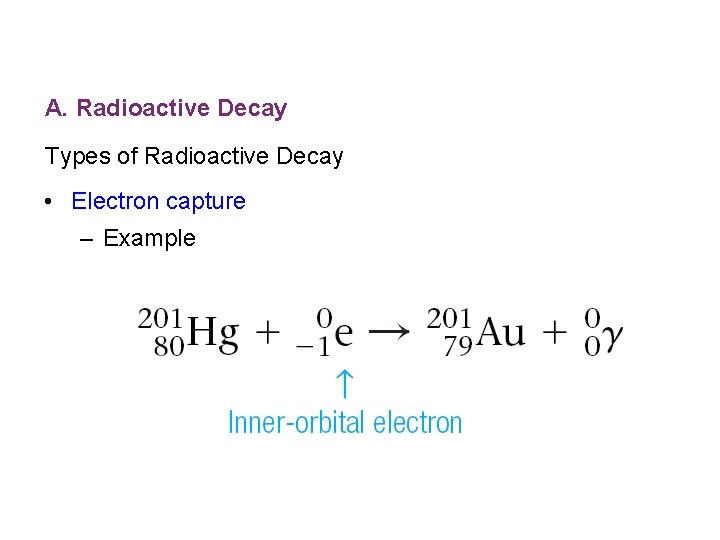
A. Radioactive Decay Types of Radioactive Decay • Electron capture – Example
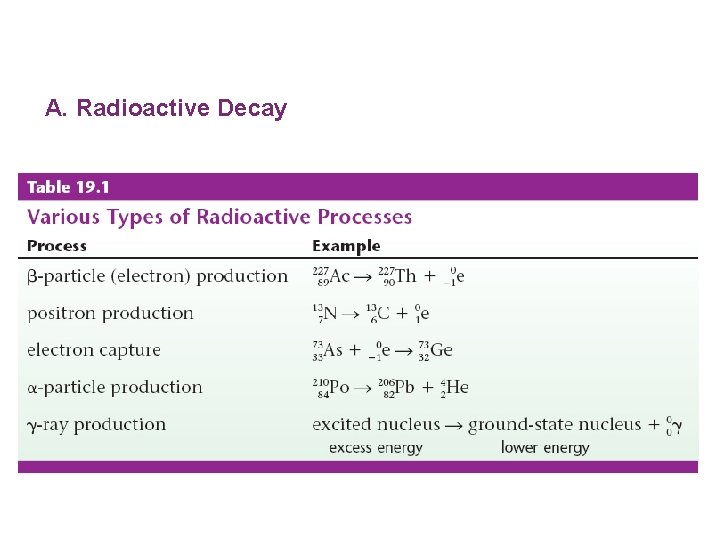
A. Radioactive Decay
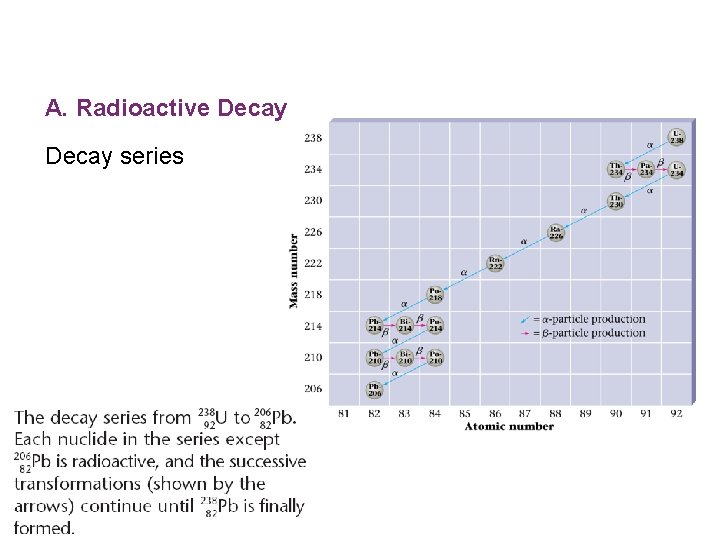
A. Radioactive Decay series
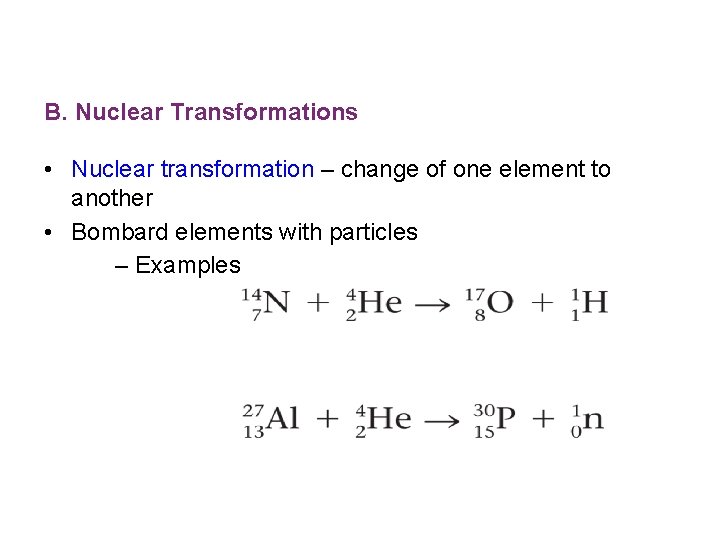
B. Nuclear Transformations • Nuclear transformation – change of one element to another • Bombard elements with particles – Examples
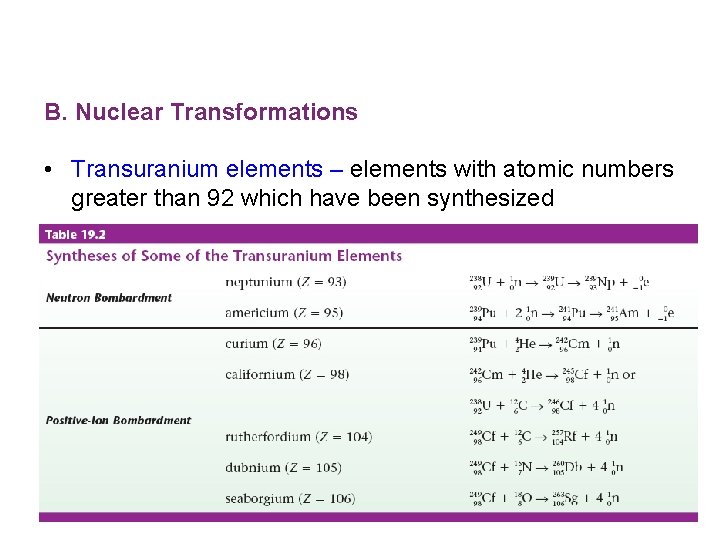
B. Nuclear Transformations • Transuranium elements – elements with atomic numbers greater than 92 which have been synthesized
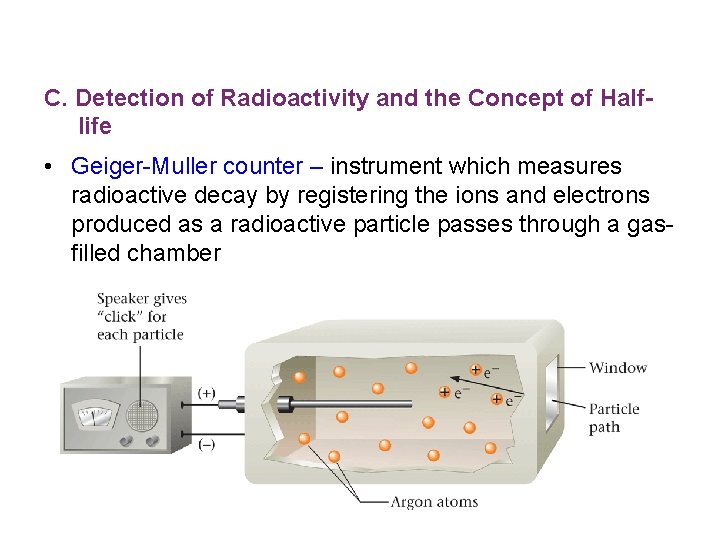
C. Detection of Radioactivity and the Concept of Halflife • Geiger-Muller counter – instrument which measures radioactive decay by registering the ions and electrons produced as a radioactive particle passes through a gasfilled chamber
C. Detection of Radioactivity and the Concept of Halflife • Scintillation counter – instrument which measures the rate of radioactive decay by sensing flashes of light that the radiation produces in the detector
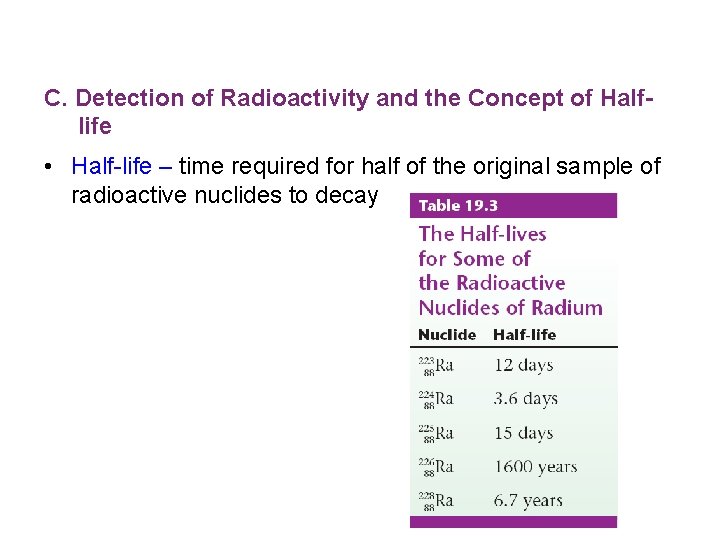
C. Detection of Radioactivity and the Concept of Halflife • Half-life – time required for half of the original sample of radioactive nuclides to decay
Objectives 1. To learn how objects can be dated by radioactivity 2. To understand the use of radiotracers in medicine
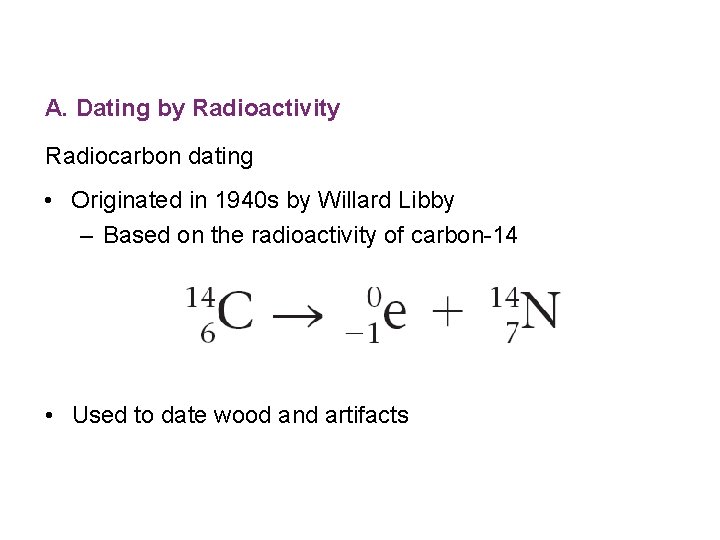
A. Dating by Radioactivity Radiocarbon dating • Originated in 1940 s by Willard Libby – Based on the radioactivity of carbon-14 • Used to date wood and artifacts
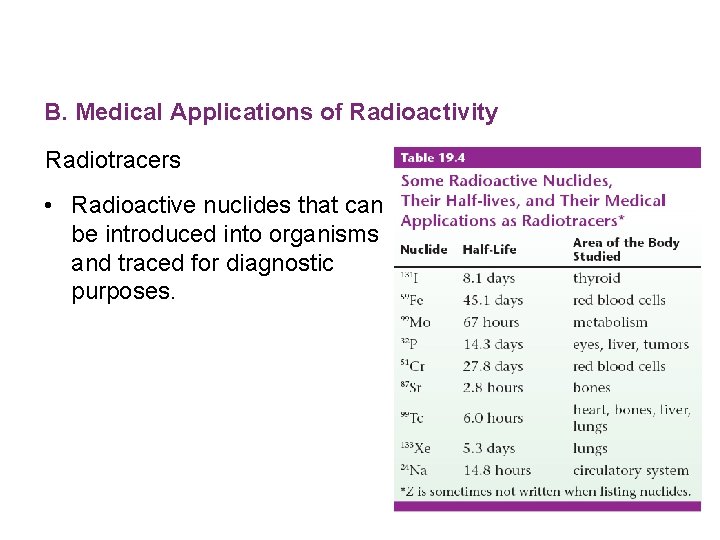
B. Medical Applications of Radioactivity Radiotracers • Radioactive nuclides that can be introduced into organisms and traced for diagnostic purposes.
Objectives 1. 2. 3. 4. 5. To introduce fusion and fission as sources of energy To learn about nuclear fission To understand how a nuclear reactor works To learn about nuclear fusion To see how radiation damages human tissue
A. Nuclear Energy • Two types of nuclear processes can produce energy – Combining 2 light nuclei to form a heavier nucleus fusion – Splitting a heavy nucleus into 2 nuclei with smaller mass numbers - fission
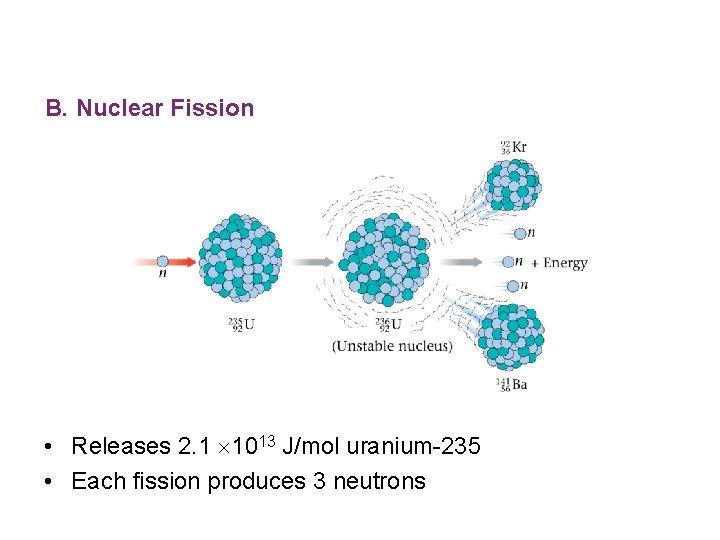
B. Nuclear Fission • Releases 2. 1 1013 J/mol uranium-235 • Each fission produces 3 neutrons
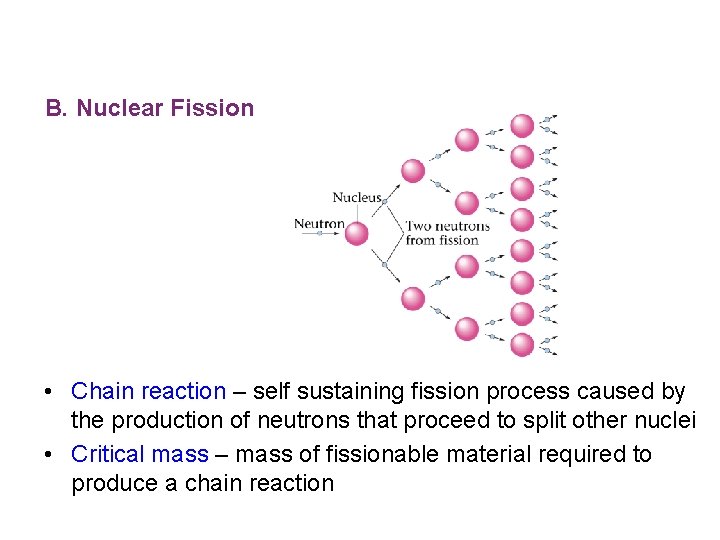
B. Nuclear Fission • Chain reaction – self sustaining fission process caused by the production of neutrons that proceed to split other nuclei • Critical mass – mass of fissionable material required to produce a chain reaction
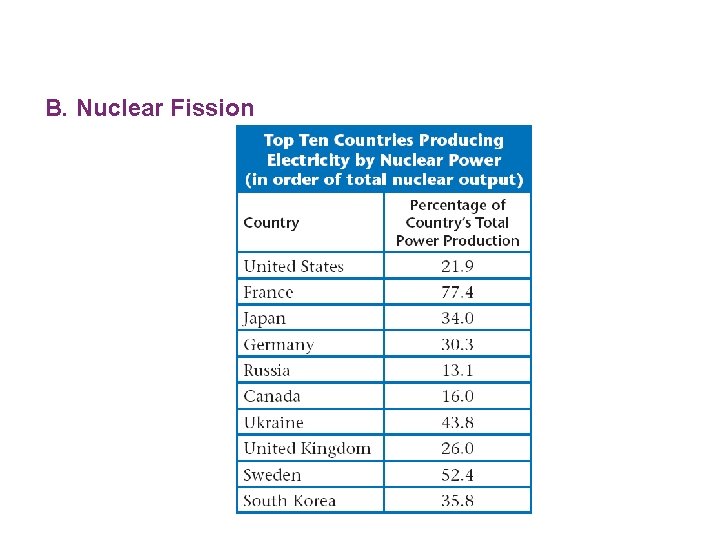
B. Nuclear Fission
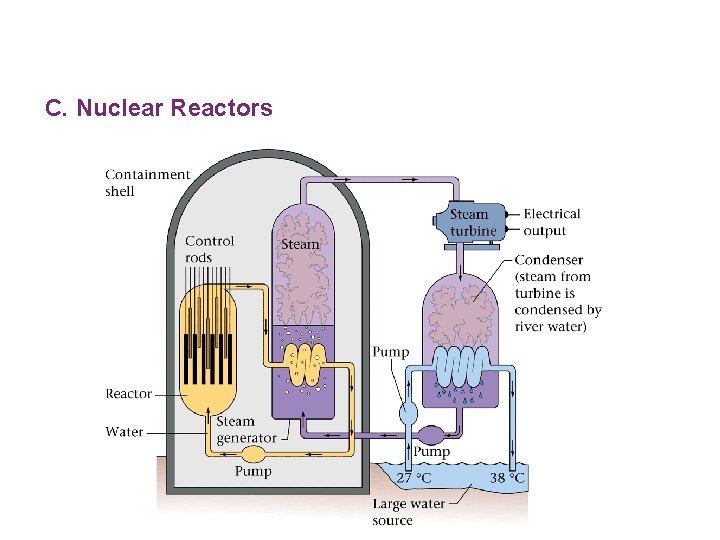
C. Nuclear Reactors
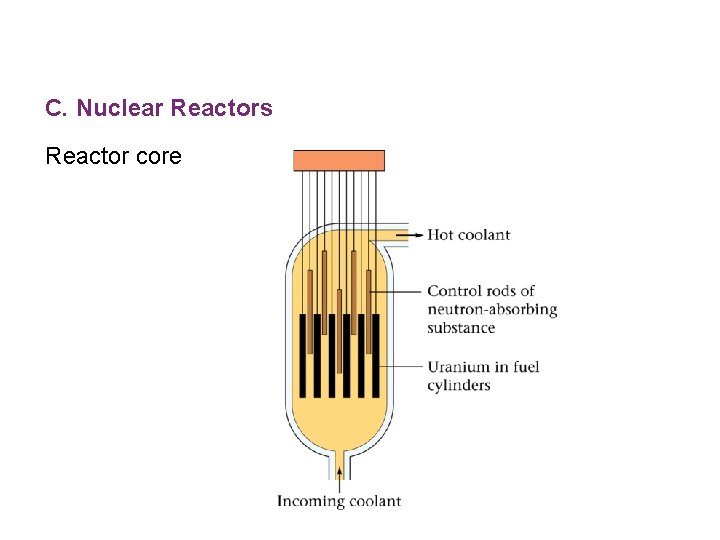
C. Nuclear Reactors Reactor core
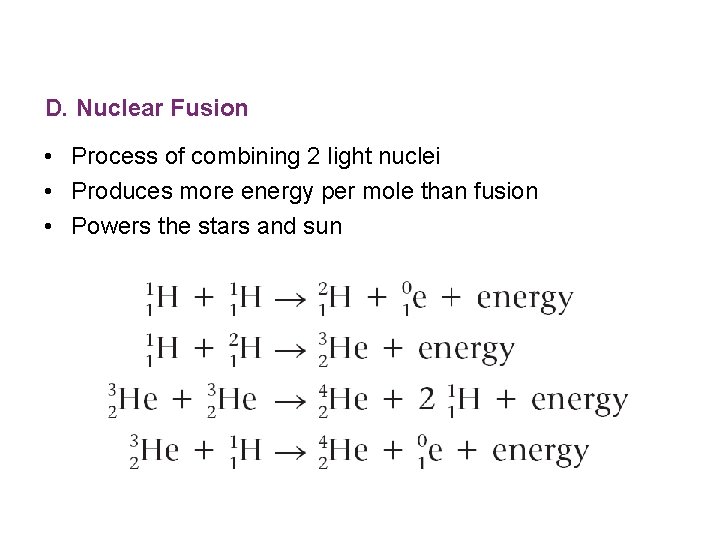
D. Nuclear Fusion • Process of combining 2 light nuclei • Produces more energy per mole than fusion • Powers the stars and sun
D. Nuclear Fusion • Requires extremely high temperatures • Currently not technically possible for us to use as an energy source
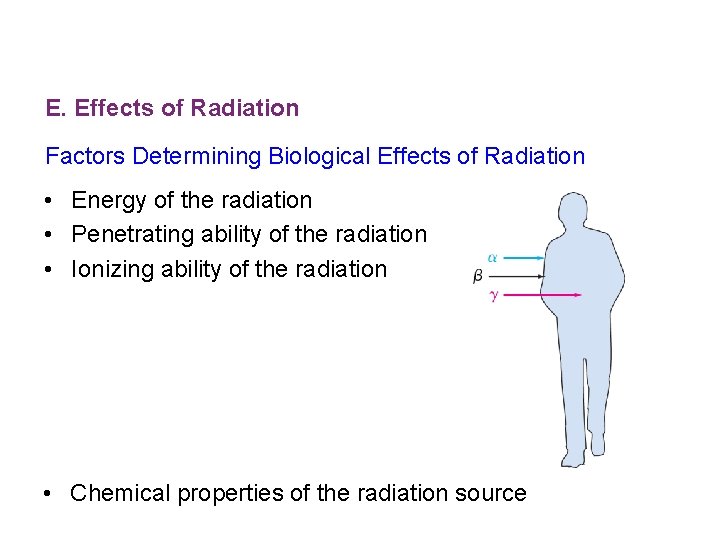
E. Effects of Radiation Factors Determining Biological Effects of Radiation • Energy of the radiation • Penetrating ability of the radiation • Ionizing ability of the radiation • Chemical properties of the radiation source
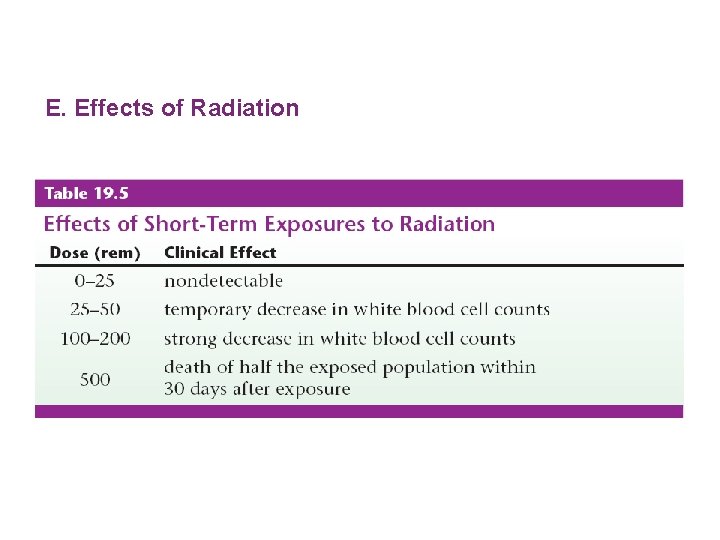
E. Effects of Radiation
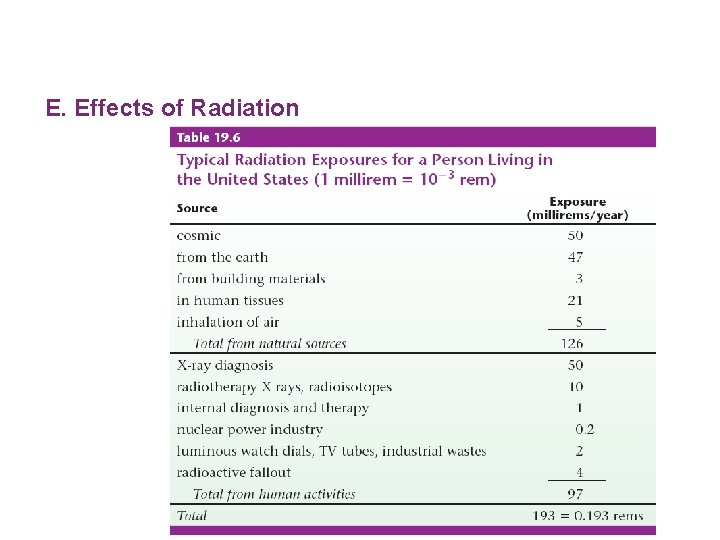
E. Effects of Radiation
- Slides: 30