
Objectives 1 Describe the primary function of blood
Objectives • 1. Describe the primary function of blood • 2. Describe the characteristics of blood plasma • 3. Identify the formed elements of blood and identify the most important function of each • 4. Discuss anemia in terms of red blood cell numbers and hemoglobin content • 5. List the steps in blood clotting
Blood • Function- transportation; carries nutrients and oxygen to all body cells, then eliminates carbon dioxide and other wastes • Alkaline – p. H 7. 35 -7. 45 • Acidosis – alkalinity of blood decreases toward neutral; very sick • Note: Blood almost never becomes the least bit acidic
Blood Formation • Red bone marrow (myeloid tissue) forms all blood cells EXCEPT some lymphocytes and monocytes, which are formed by lymph tissue in lymph nodes, thymus, and spleen
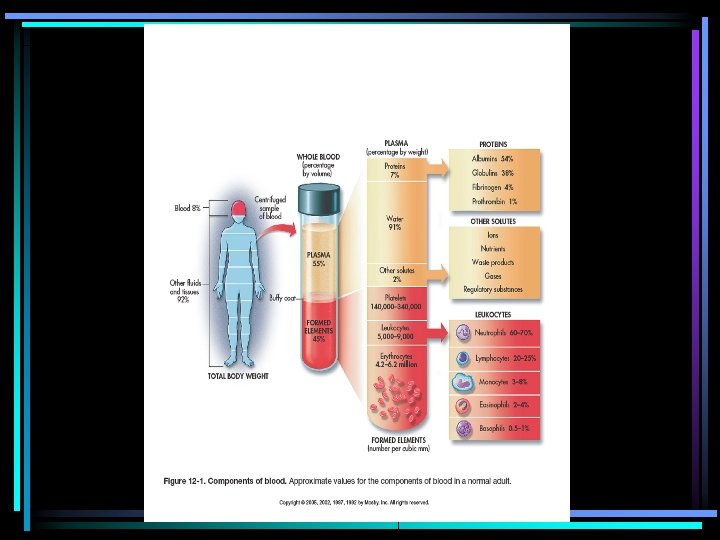
Blood plasma • Blood minus its cells • Water containing dissolved substances (foods, salts, hormones, small amount of oxygen) Note: Most oxygen is carried by RBCs as oxyhemoglobin • Most abundant type of solute- plasma proteins
Plasma proteins • Albumins – help thicken blood, IV administration in cases of hemorrhage, severe burns, or kidney disease can be life-saving • Globulins – antibodies that help protect us from infection • Fibrinogen – necessary for blood clotting • Prothrombin – necessary for blood clotting
Blood serum • Plasma minus its blood clotting factors (fibrinogen and prothrombin) • Obtained from whole blood by allowing blood to clot in the bottom of a tube and then pouring off the liquid serum • Serum contains antibodies so it can be used to treat patients who have a need for a specific antibody

Approximate Normal Counts • RBCs – 5 million per mm 3 • Anemia – deficiency in number or function of RBCs and the hemoglobin (iron containing protein in RBC) • Total WBC – 4, 500 to 11, 000/mm 3 • Platelets – 150, 000 to 400, 000/mm 3
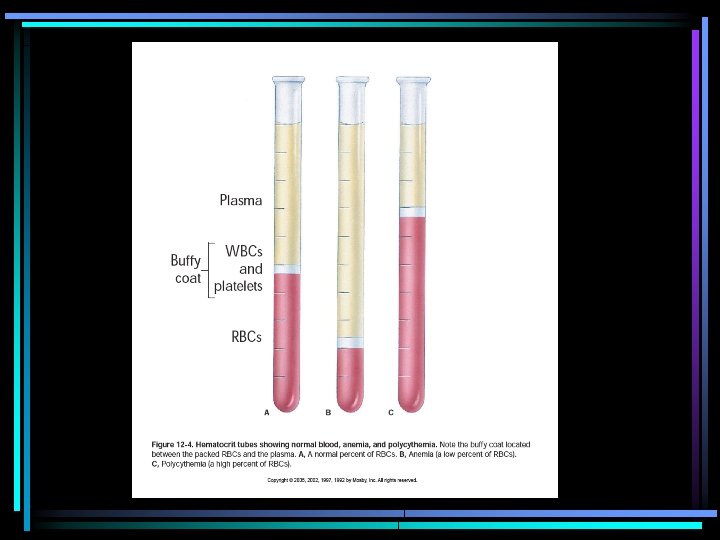
Questions • If you had a red blood cell count of 3 million what does that mean in comparison with what is considered a normal range? • With this information, your physician concludes that you are anemic. How did the doctor arrive at this conclusion?
Question • Because of a fractured left femur sustained while playing football, an acute infection developed. The doctor ordered a lab test to check your WBC count. Would you expect the WBC count to be 3000, 5000, or 15, 000? • Explain your answer.
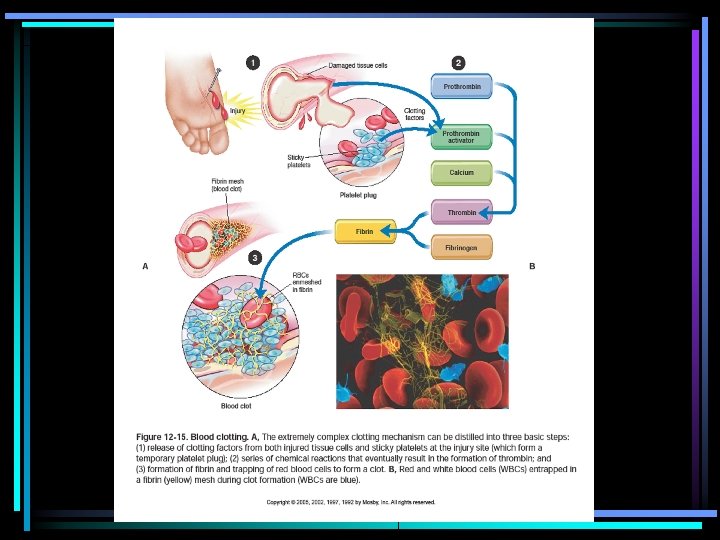
Blood Clotting • 1. Release of clotting factors from both injured tissue cells and sticky platelets at the injury site (platelet plug) • Clotting factors: • prothrombin (a protein in normal blood) • prothrombin activator (formed when clotting factors in damaged cells react with plasma) • normal amount of blood calcium
• 2. Formation of thrombin • If normal amount of blood calcium is present, prothrombin activator converts prothrombin ( a protein in normal blood) to thrombin ( a protein used for blood clotting)
• 3. Formation of fibrin and trapping of RBCs to form a clot • Thrombin reacts with fibrinogen (a normal plasma protein) to change it to a fibrous gel called fibrin
- Slides: 15